Chicken vs Beef vs Turkey for Dogs: Which Protein Fits Your Dog?
Published on November 03, 2026
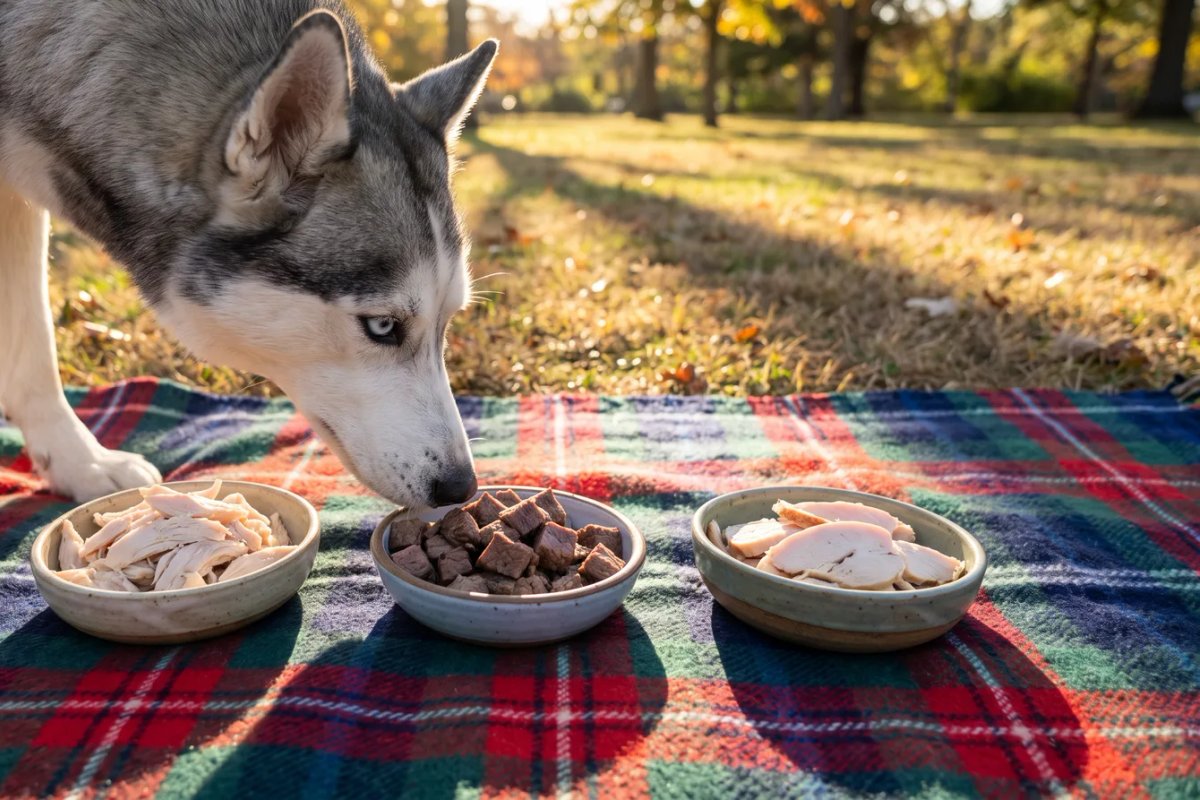
Chicken vs beef vs turkey for dogs is less a contest than a matching exercise. All three are high-quality animal proteins that healthy dogs digest well, and none is the single best choice for every dog. The right one depends on your dog’s fat tolerance, allergy history, appetite, and how the protein is prepared.
This guide compares the three side by side: what each brings nutritionally, which suits dogs that need lower fat, how protein allergies work, and what the published guaranteed analysis of three complete fresh recipes actually shows. We finish with a simple plan for rotating proteins without upsetting your dog’s stomach.
This article is sponsored by Get Real, Chewy’s gently cooked fresh dog food line. Vetstreet may earn a commission if you purchase through links in this article.
Key Takeaways
- Chicken, beef, and turkey are all nutritious, digestible proteins for most healthy dogs.
- Chicken suits dogs that do well on a familiar, mild protein; beef suits picky eaters and dogs that need a chicken-free option; turkey suits dogs that want a poultry alternative to chicken.
- Dogs that need lower fat should be matched by the label’s fat percentage, not by the protein name.
- Beef and chicken are among the most commonly reported food allergens in dogs, so allergy history should guide the choice.
- Switch or rotate proteins one at a time over 7 to 10 days.
Chicken vs beef vs turkey for dogs: the quick answer
Choose chicken for a familiar, mild protein that most dogs accept easily. Choose beef for a richer flavor, more iron, and a chicken-free option for dogs with a poultry sensitivity. Choose turkey when you want a poultry alternative to chicken, and check the fat level on the label if your dog needs a lower-fat diet.
Is turkey the same as chicken for dogs? Not quite. Both are poultry with similar nutrient profiles, and plain breast meat from either is lean. But they are different proteins, so a dog that reacts to chicken may or may not react to turkey. Beef and turkey differ more: beef is red meat with more iron and zinc, while turkey is milder and closer to chicken. If you would like to see how your dog responds to more than one protein, the Get Real Sampler Pack lets you try recipes before settling on one.
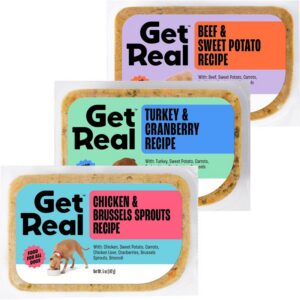
Get Real Sampler Pack, Beef, Chicken & Turkey Gently Cooked Fresh Dog Food, 6 pack bundle (2 of each recipe). A simple way to compare more than one protein in the same gently cooked format before choosing your dog’s main recipe.
What matters as much as the species is the preparation. Skinless, boneless, plain cooked meat is a very different food from fried chicken, fatty ground beef, or a slice of holiday turkey with skin and gravy. When the protein comes in a complete recipe, the numbers on the label tell you more than the name on the front.
- Pick by fat tolerance: read the crude fat percentage on the label.
- Pick by allergy history: avoid any protein your dog has reacted to.
- Pick by appetite: picky eaters often prefer the stronger aroma of beef.
- Pick by life stage: puppies need a recipe that meets AAFCO growth requirements.
Chicken for dogs: lean, familiar, and widely used
Can dogs eat chicken? Yes. Cooked chicken is one of the most widely used proteins in dog food, and plain, skinless, boneless chicken is safe for most dogs. Chicken breast is lean, mild, and easy to digest, which is why veterinarians often suggest it as part of a short-term bland diet for mild stomach upset. Chicken also supplies niacin, vitamin B6, selenium, and phosphorus.
Is cooked chicken good for dogs every day? As part of a complete and balanced diet, yes. Plain chicken alone, fed day after day, is not, because it lacks the calcium and many of the vitamins and minerals a dog needs. If chicken is going to be your dog’s main protein, it should come in a complete recipe, with plain cooked chicken used as an occasional extra.
To keep chicken for dogs safe at home:
- Cook it thoroughly, with no seasoning, onion, garlic, butter, or oil.
- Remove the skin, which adds a lot of fat.
- Remove all bones; cooked bones can splinter.
- Keep extras within about 10 percent of daily calories.
The main caution with chicken is allergy. Because it has been so widely used, chicken is one of the more commonly reported food allergens in dogs. That is not a reason to avoid it in a dog that tolerates it well, but it is a reason to consider beef or turkey if your dog has signs of a food allergy and chicken is the long-standing protein in the bowl.

The Get Real Chicken & Brussels Sprouts Recipe is the chicken option in the Get Real lineup. It is gently cooked and frozen, made with human-grade ingredients, and lists 10 percent minimum crude protein, the highest printed protein minimum of the three recipes, with 8.5 percent minimum fat, and Chewy’s product page lists 428 kilocalories per 12 oz pack, the fewest per pack of the three.
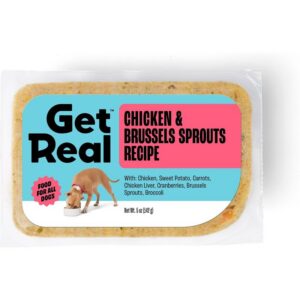
Get Real Chicken & Brussels Sprouts Recipe. A complete chicken recipe for dogs that do well on a familiar poultry protein, gently cooked and pre-portioned.
Beef for dogs: richer flavor and more iron
Is beef a good source of protein for dogs? Yes. Beef is a complete protein with all the essential amino acids dogs need, and it is richer than poultry in heme iron, zinc, and vitamin B12. It also has a strong aroma that many picky eaters prefer, which can be helpful for dogs that are reluctant at mealtime.
Fat is the variable to watch. Ground beef ranges from about 7 percent fat for 93/7 to about 20 percent for 80/20, so the cut matters far more than the species. Fatty trimmings and greasy leftovers are best kept out of the bowl, particularly for dogs with a history of pancreatitis. Lean, plain, cooked beef is a very different food.
Beef is also the most commonly reported food allergen in published canine cases, again largely because it has been used in dog food for so long. For dogs that react to chicken, though, beef is often the practical chicken-free alternative. For a deeper look at fat, allergies, and organ meats, see our full guide to beef for dogs.
- Strengths: iron, zinc, vitamin B12, strong palatability
- Watch: fat level varies widely by cut
- Good fit: picky eaters and dogs that need a chicken-free protein
The Get Real Beef & Sweet Potato Recipe lists beef as its first ingredient, followed by sweet potato, carrots, beef liver, cranberries, Brussels sprouts, and spinach, followed by oils, minerals, and vitamins. Its guaranteed analysis shows 9 percent minimum protein and a 7 percent fat minimum, the lowest fat minimum of the three Get Real recipes. For owners choosing a beef main meal, the Get Real Beef & Sweet Potato Recipe is the complete beef option in the lineup.
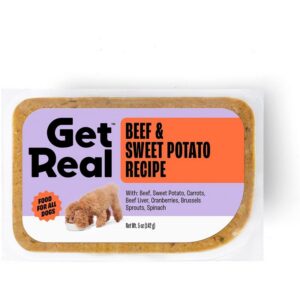
Get Real Beef & Sweet Potato Recipe. For dogs that prefer red meat or need a chicken-free main protein, a complete beef recipe with the lowest fat minimum of the three.
Turkey for dogs: a lean alternative for sensitive dogs
Which is better for dogs, ground turkey or ground chicken? Neither is better across the board. Both are mild poultry proteins, and the bigger difference between two packages is usually the lean-to-fat ratio, not the bird. A 93/7 ground turkey and a similarly lean ground chicken are close nutritionally. Choose the one your dog tolerates, and compare the fat percentage on the package.
Cooked turkey for dogs is safe when it is plain, boneless, and skinless. Turkey breast is lean. Dark meat and skin carry considerably more fat, and holiday turkey often comes with butter, seasoning, onion, or garlic. That is why turkey sometimes gets a reputation as being bad for dogs: the problem is usually the preparation, not the meat.
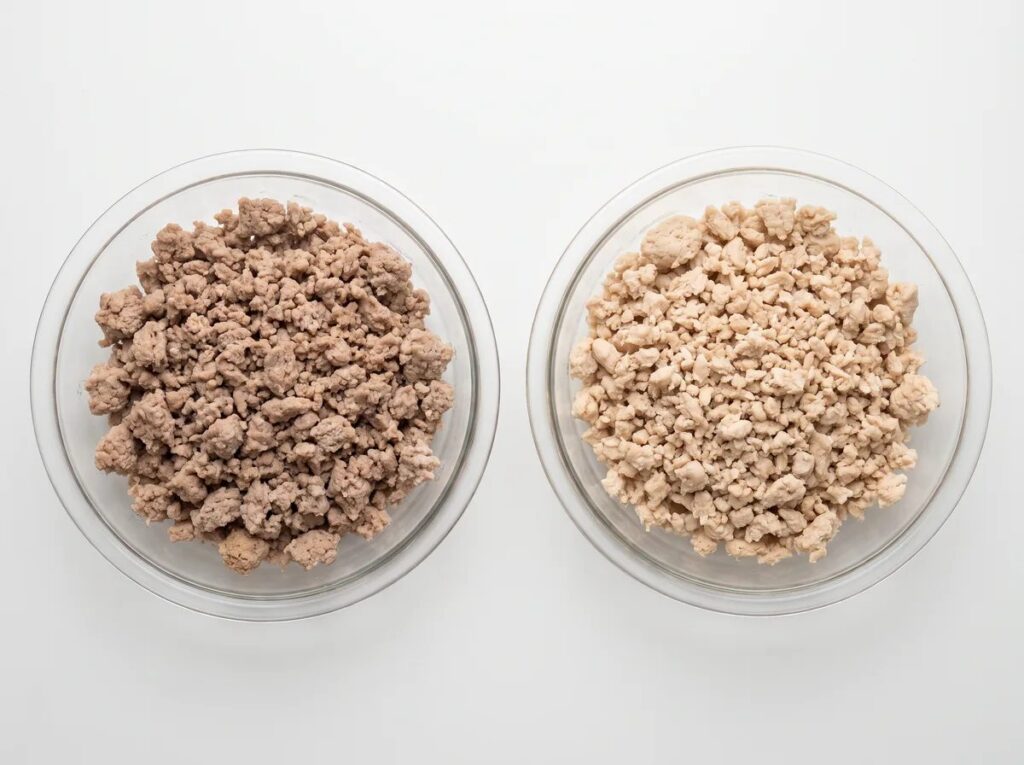
Turkey is a common choice for owners who want a poultry protein other than chicken, and many foods use turkey for exactly that reason. Because turkey and chicken are related birds, a dog with a chicken allergy may or may not tolerate turkey, so the switch is worth discussing with your veterinarian if your dog has confirmed allergies.
- Strengths: mild flavor, poultry alternative to chicken, lean breast meat
- Watch: skin, dark meat, and seasoned leftovers raise fat and risk
- Good fit: dogs that need a change from chicken and have no turkey sensitivity
There is one assumption worth checking. Many sources describe turkey as the leanest of the three proteins, and turkey breast meat is lean. But a complete recipe includes more than breast meat. In the Get Real lineup, the Get Real Turkey & Cranberry Recipe actually has the highest printed fat minimum of the three, at 10 percent, and the most calories listed per 12 oz pack, at 474 kilocalories. That makes it a satisfying, energy-dense choice for active dogs and dogs that need help keeping weight on.
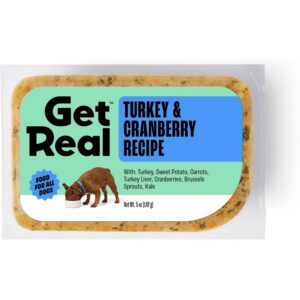
Get Real Turkey & Cranberry Recipe. An energy-dense, complete turkey recipe for active dogs and dogs that want a poultry alternative to chicken.
Protein allergies: when chicken, beef, or turkey is the problem
Food allergies in dogs are less common than many owners think, but when they occur, animal proteins are the usual triggers. A 2016 review in BMC Veterinary Research pooled published cases from 297 dogs and found beef reported most often (about 34 percent), followed by dairy (17 percent), chicken (15 percent), and wheat (13 percent). Turkey was not among the leading sources in that review, though any protein a dog has eaten before can become a trigger.
A dog becomes allergic to proteins it has eaten before, so the protein that has been in the bowl longest is often the first suspect. Common signs include:
- Itchy skin, especially the paws, face, ears, and belly
- Recurrent ear infections
- Licking or chewing at the paws
- Soft stools, more frequent bowel movements, or vomiting
Signs usually build over weeks rather than appearing after a single meal, and they often look like environmental allergies, which is why a veterinarian will rule out fleas, skin infections, and seasonal allergies first. Once those are addressed, an elimination trial generally follows this pattern:
- Your veterinarian selects a diet with a protein your dog has never eaten, or a hydrolyzed diet.
- Your dog eats only that diet, with no treats, chews, or table food, for the full trial.
- If signs improve, the original protein is reintroduced to confirm the trigger.
- Once the trigger is known, you choose a long-term complete diet that avoids it.
A food allergy is confirmed with an elimination diet trial guided by your veterinarian, usually lasting at least 8 weeks and changing one protein at a time.
If your dog has a confirmed chicken allergy, beef is the most straightforward chicken-free option among the three, with your veterinarian’s agreement. None of the three Get Real recipes is a trial diet, because each also contains fish oil, and a dog with a fish sensitivity should avoid all three. Read the full ingredient list of any food: chicken fat, chicken broth, and poultry meal show up in many foods that are not labeled as chicken. Only a properly run elimination trial can confirm a chicken allergy; blood and hair tests sold to owners are not reliable for food allergies. VetStreet’s guide to food allergies in dogs walks through the process.
Get Real chicken, beef, and turkey recipes compared
Once you know which protein suits your dog, a complete and balanced recipe takes care of the rest. The three Get Real recipes map directly to the three proteins: Chicken & Brussels Sprouts, Beef & Sweet Potato, and Turkey & Cranberry. Each is made with 10 ingredients or less plus vitamins and minerals, uses human-grade ingredients, is gently cooked then frozen, and is formulated with certified pet nutritionists to meet AAFCO nutrient profiles for all life stages, including growth of large-size dogs.
The published guaranteed analysis lets you compare them directly. AAFCO requires guaranteed analysis on every pet food label, listing minimum protein and fat and maximum fiber and moisture. The AAFCO site explains how to read it.
| Recipe | Crude protein (min) | Crude fat (min) | Crude fiber (max) | Moisture (max) | Calories per 12 oz pack |
|---|---|---|---|---|---|
| Chicken & Brussels Sprouts | 10% | 8.5% | 1% | 75% | 428 kcal |
| Beef & Sweet Potato | 9% | 7% | 1.5% | 75% | 451 kcal |
| Turkey & Cranberry | 8% | 10% | 1% | 75% | 474 kcal |
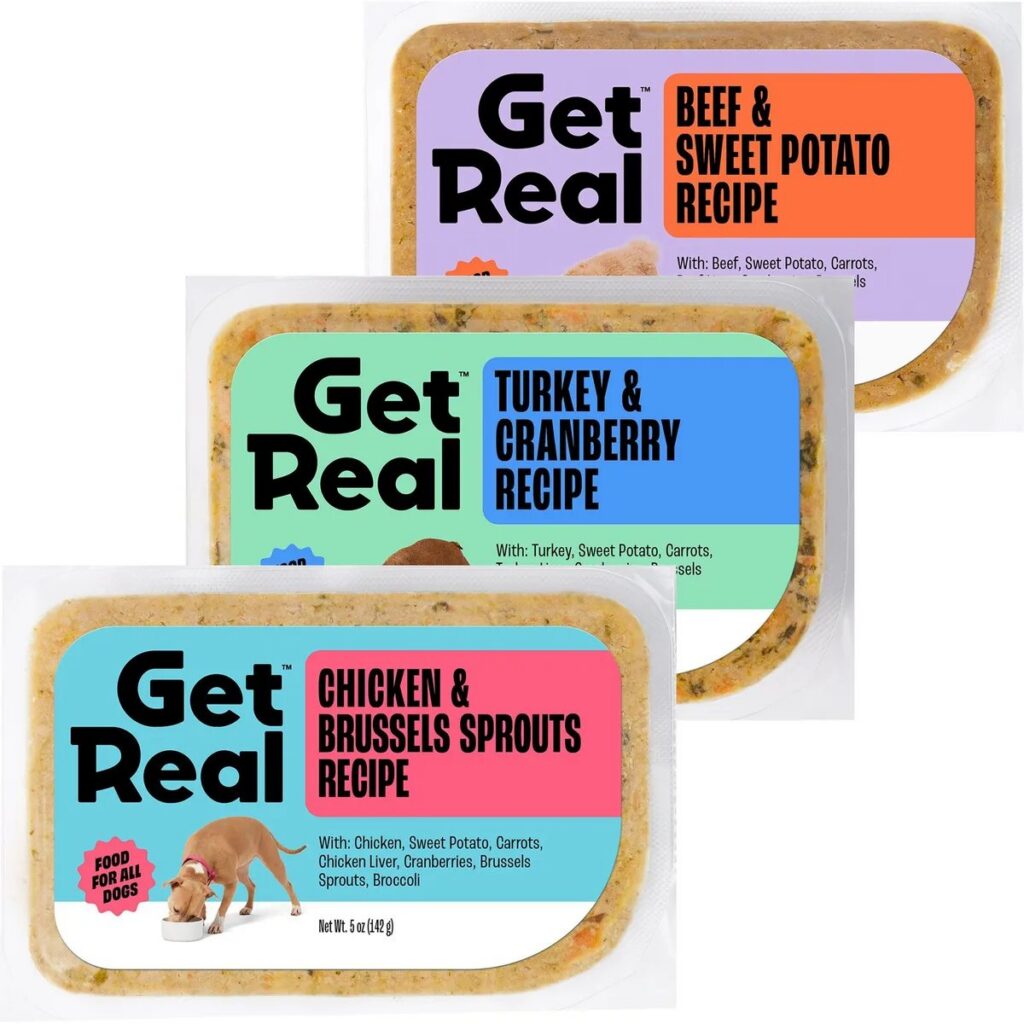
Reading the guaranteed analysis side by side shows a few things a protein name alone would not:
- Chicken prints the highest protein minimum and lists the fewest calories per 12 oz pack, a reasonable match for dogs that need to watch calories.
- Beef prints the lowest fat minimum, a reasonable starting point for dogs that need a more moderate fat level.
- Turkey prints the highest fat minimum and lists the most calories per 12 oz pack, a reasonable match for active dogs and hard keepers.
These are guaranteed minimums and maximums, not actual nutrient levels, so the actual amounts in each batch can differ; they show what the label guarantees, not which recipe actually contains the most protein or fat. Remember to compare fresh recipes with each other rather than with kibble: because fresh food is mostly water, its percentages look low until you account for moisture. Use the numbers as a starting point, then let your dog’s response guide the final choice.
The calories listed on each pack follow the table: a 12 oz pack lists 428 kilocalories for chicken, 451 for beef, and 474 for turkey, and a 24 oz pack 856, 902, and 948. Pack sizes are 5 oz, 12 oz, and 24 oz; the 5 oz pack is a pre-portioned mixer for stirring into your dog’s current food, while full-meal plans use the larger packs, with portions set by your dog’s weight, breed, age, and activity level. If a recipe looks right for your dog, the Get Real Chicken & Brussels Sprouts Recipe and the other two are sold through Chewy by subscription, which you can change, pause, or cancel, in select markets.
How to rotate proteins without upsetting your dog’s stomach
Some owners rotate proteins for variety, to keep a picky eater interested, or simply because their dog enjoys a change. Rotation is fine for healthy dogs eating complete and balanced recipes, as long as you change one protein at a time and give the gut time to adjust. Dogs with known food allergies or sensitive stomachs should stay on a single, well-tolerated protein unless a veterinarian advises otherwise.
A simple rotation plan:
- Start with one protein your dog already tolerates well, and feed it for at least a few weeks.
- Introduce the next protein over 7 to 10 days: about one quarter new food for days 1 to 3, half for days 4 to 6, three quarters for days 7 to 9, then the new food alone.
- Stretch the switch to 10 to 14 days for dogs with sensitive stomachs.
- Change only one protein at a time, so any reaction is easy to trace.
- Keep notes on stool quality, itching, and appetite for each protein. If your dog develops itching, ear trouble, or ongoing loose stools after a new protein, return to the previous food and talk with your veterinarian.
How do you know a protein suits your dog? Look for firm, consistent stools, a steady body weight, a healthy coat, and an eager appetite over several weeks. A dog that does well on all three proteins can rotate comfortably. A dog that does noticeably better on one should simply stay with it, because variety is optional and good digestion is not.
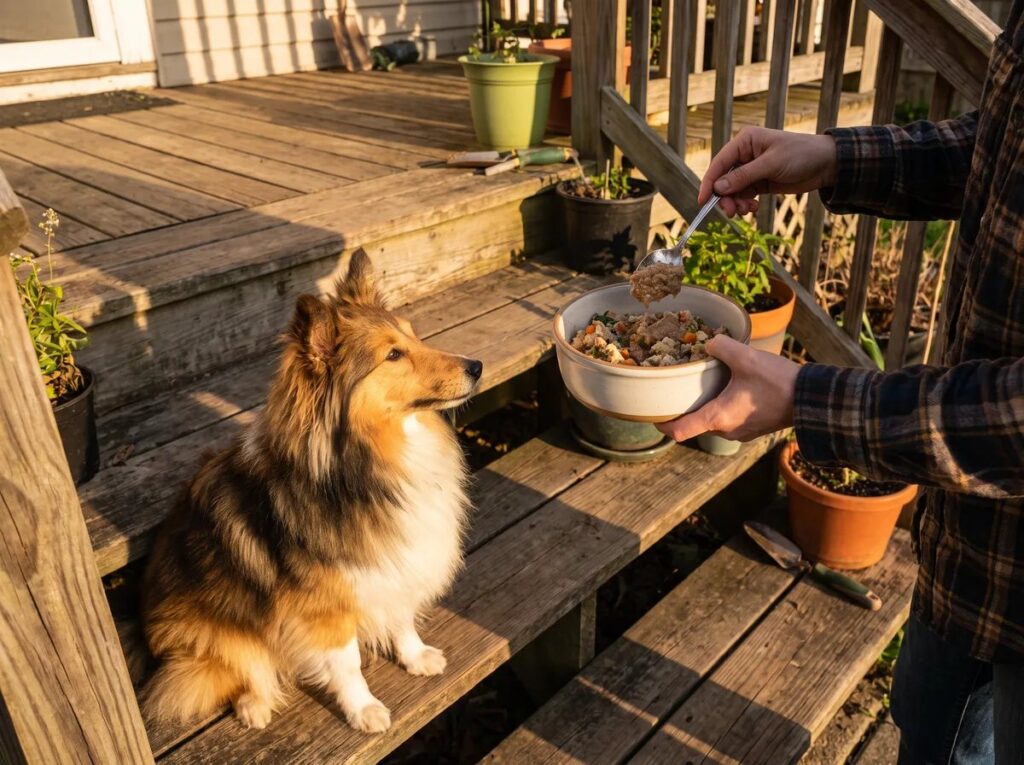
Fresh food adds one planning step. Keep packs frozen until needed, then thaw in the refrigerator for 12 to 24 hours for 5 oz and 12 oz packs, or 35 to 48 hours for 24 oz packs, and use thawed food within 3 to 5 days. Packs go into the freezer as soon as they arrive. If you rotate weekly, thaw only the recipe you are currently feeding so an opened protein is never sitting in the fridge past its window while you move to the next one. Discard any food that smells off or has sat at room temperature for more than 2 hours.
If you are starting a rotation, trying two or three recipes is the easiest way to see which protein your dog prefers, and the Get Real Sampler Pack is designed for that first comparison. For the basics of what makes a diet complete, VetStreet’s guide to choosing the right food for your dog and its explainer on protein in dog food are good next reads.
Related reading: Petful reviews all three recipes in its Get Real dog food review, and WebVet goes deeper on turkey in Can Dogs Eat Turkey?.
Frequently Asked Questions
Frequently asked questions
Plain boiled chicken, white rice, and plain canned pumpkin can work as a short-term bland diet for mild stomach upset when a veterinarian recommends it. It is not complete and balanced, so it should not be fed for more than a few days. If the upset lasts beyond a day or two, or your dog is vomiting repeatedly or lethargic, see your veterinarian.
There is no single healthiest vegetable, but cooked, plain vegetables such as sweet potato, carrots, green beans, and Brussels sprouts are good options in small amounts. Each Get Real recipe pairs its protein with vegetables or fruit, such as Brussels sprouts with chicken, sweet potato with beef, and cranberry with turkey. Avoid onions, garlic, and anything seasoned.
Neither is better for every dog; both can be complete and balanced, and the main differences are moisture, texture, and palatability. Whichever format you choose, compare chicken, beef, and turkey recipes within that same format, because fresh food at about 75 percent moisture shows lower label percentages than kibble.
Lamb is not better in general, but it can be useful for a dog that does not tolerate chicken, since it may serve as a novel protein if your dog has never eaten it. For a dog with a confirmed allergy, choose an alternative protein with veterinarian guidance rather than switching repeatedly on your own.