Dog Food Delivery Companies Compared: Fresh, Frozen, and Shelf-Stable Options
Published on November 03, 2026
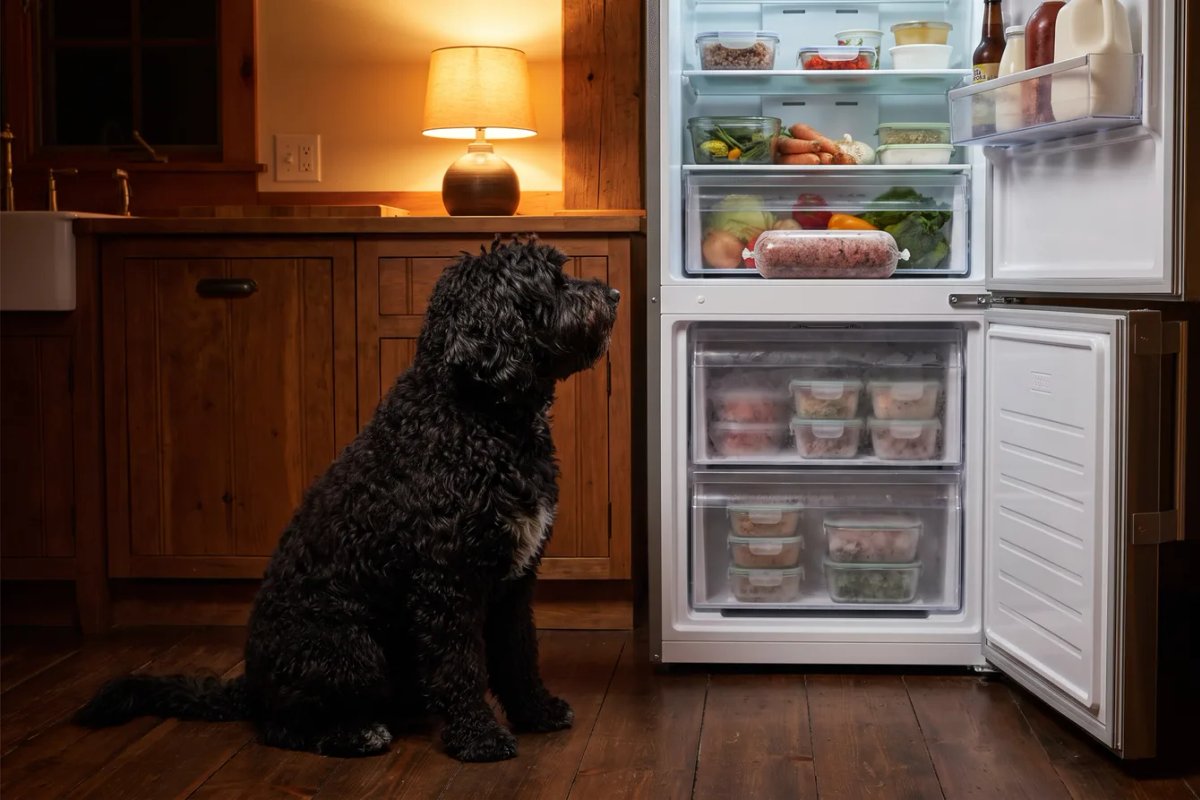
Dog food delivery companies all promise the same thing, food that shows up at your door, but they work in very different ways. Some cook fresh meals and ship them on a subscription, some freeze gently cooked food and send it packed with dry ice, some ship bags of kibble and cases of cans on a repeating schedule, and some bring a bag from a local store the same afternoon.
Choosing among dog food delivery companies is easier once you know which of those models fits your dog, your schedule, and your kitchen. This guide compares the four delivery models side by side, explains what each asks of an owner in storage and planning, and offers a checklist for judging any company without relying on price. Get Real, Chewy’s gently cooked frozen fresh dog food, is the featured example of frozen fresh delivery, because it shows how fresh food and everyday ordering can live in one place.
This article is sponsored by Get Real, Chewy’s gently cooked fresh dog food line. Vetstreet may earn a commission if you purchase through links in this article.
Key Takeaways
- There are four delivery models: fresh-cooked subscription, frozen fresh, shelf-stable autoship, and same-day local delivery.
- Storage needs differ sharply, from a pantry shelf for kibble to dedicated freezer space for frozen fresh food.
- A complete and balanced statement on the label matters more than the delivery method.
- Flexibility to pause, skip, or cancel is the feature that makes any subscription easy to live with.
- Get Real combines frozen fresh food with Chewy ordering, so fresh meals and everyday supplies can arrive from one account.
How dog food delivery companies differ
The four delivery models differ in what food they ship, how it has to be stored, and how much planning they ask of you. Fresh-cooked subscription companies and frozen fresh delivery both send cooked food in insulated boxes, shelf-stable autoship sends kibble and canned food that can sit in a cupboard, and same-day services bring whatever a local store has on the shelf.
Most shoppers compare brand names before they know which delivery model suits them. No single ranking fits everyone, because a company that suits a household with a big freezer and a set routine may be a poor fit for an apartment with a small fridge and an unpredictable week. Use the table below to rule models in or out before you compare brands.
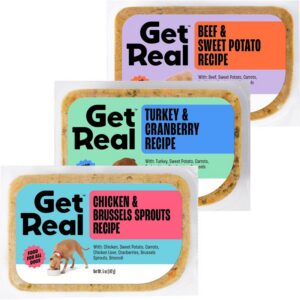
Get Real Sampler Pack, Beef, Chicken & Turkey Gently Cooked Fresh Dog Food, 6 pack bundle (2 of each recipe). Not sure which recipe your dog will prefer? The sampler puts beef, chicken, and turkey in the freezer so your dog can try all three before you set up a plan.
| Delivery model | Food type | Storage and portioning | Flexibility | Typical delivery speed |
|---|---|---|---|---|
| Fresh-cooked subscription | Cooked fresh meals | Fridge for packs in use, freezer for the rest; pre-portioned to a plan | Change, pause, or cancel the plan | Scheduled recurring shipments |
| Frozen fresh (Get Real) | Gently cooked, then frozen | Freezer first, thaw in the fridge; pre-portioned packs | Change, pause, skip, or cancel | Ships in an insulated box with dry ice |
| Shelf-stable autoship | Kibble and canned food | Pantry shelf; you measure portions | Adjust frequency or skip an order | Recurring shipments on your chosen schedule |
| Same-day local | Whatever local stores stock | Depends on the product | Order as needed, no plan | Often within hours where available |
Storage and portioning change the most: cooked food arrives pre-portioned but needs cold space, while kibble needs no cold space but leaves the measuring to you. Portioning and flexibility go together, because a plan that portions for you also asks you to keep the delivery schedule in step with how fast your dog eats.
Food type is the other line that matters. All four delivery models can deliver a complete and balanced diet, so the format should follow your dog and your routine. If you are still deciding what your dog should eat, the Vetstreet canine nutrition primer on choosing the right food for your dog covers the basics before you think about delivery.
Fresh-cooked subscription companies
Fresh-cooked subscription companies are the delivery model most people picture when they think of fresh dog food. You enter your dog’s details online, the company builds a plan, and cooked meals arrive on a recurring schedule. The Farmer’s Dog, Ollie, and Nom Nom are the best known fresh dog food brands in this group, and all three sell direct to the owner rather than through store shelves.
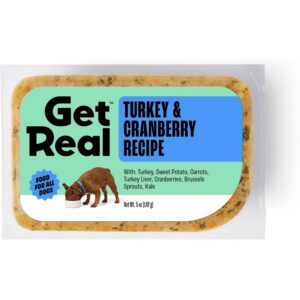
Get Real Turkey & Cranberry Recipe. Turkey and cranberry gives fresh-food shoppers a gently cooked poultry recipe that ships frozen from Chewy, so there is no separate fresh subscription company to manage.
Based on their own public sites, the three share a common pattern:
- A short online questionnaire about your dog’s age, weight, breed, and activity level.
- A meal plan with portions sized for your dog.
- Cooked recipes made with meat and vegetables, packed in individual portions.
- Delivery to your door in insulated packaging on a recurring schedule.
- An account where you can adjust recipes, timing, or the plan itself.
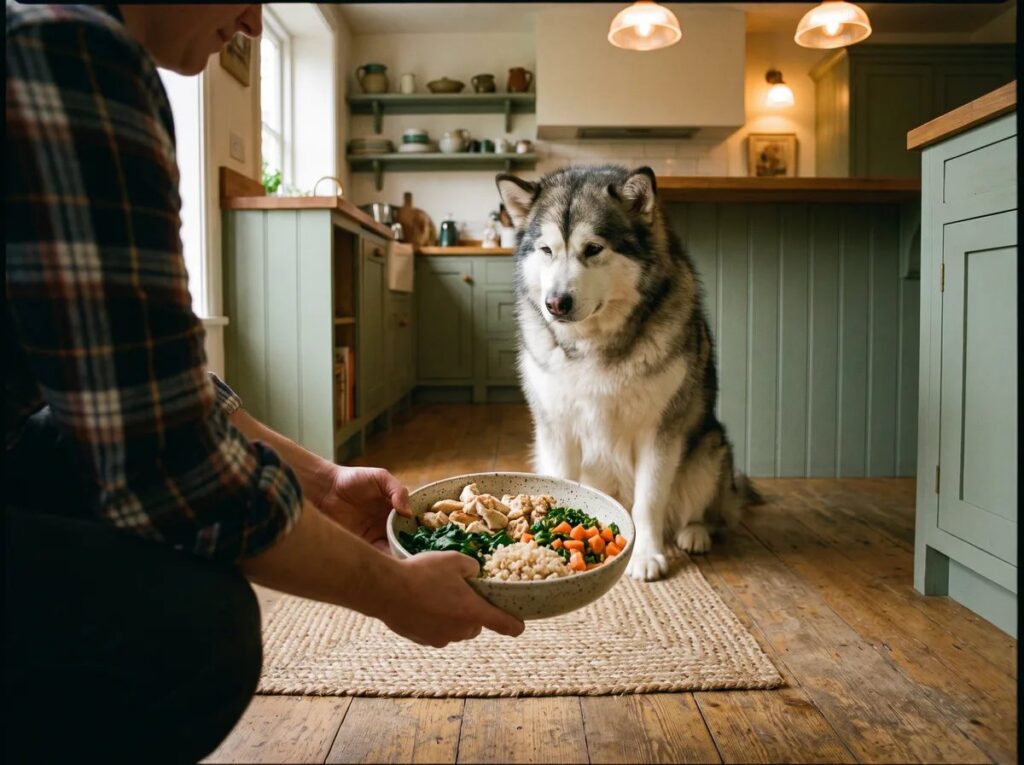
The strength of this model is that the thinking is done for you. Portions arrive sized for your dog, the recipes are set, and the next box comes on its own. For owners who want fresh food without planning every meal, a fresh-cooked subscription takes most of the guesswork out of the routine.
The tradeoff is space and commitment. Cooked food has to be kept cold from the moment the box arrives, so you need room in the fridge for the packs you are using and room in the freezer for the rest. Fresh food also has a short life once it is opened, so the schedule has to match how much your dog really eats. The best choice is the one whose recipes your dog eats well and whose schedule you can keep up with.
Freshpet, a brand many shoppers know from the refrigerated case at the grocery store, also offers Freshpet Delivery, which it describes as meal plans customized for your pet, sent to the door. Freshpet describes its recipes as steam-cooked and kept fresh by the cold chain rather than artificial preservatives, so it sits between store shopping and home delivery. Each company sets its own recipes, plan options, and delivery areas, and those details change, so check the company’s own site for the current terms before you sign up. Whatever you choose, look for the complete and balanced statement on each recipe, which the checklist below explains.
Frozen fresh delivery, including Get Real
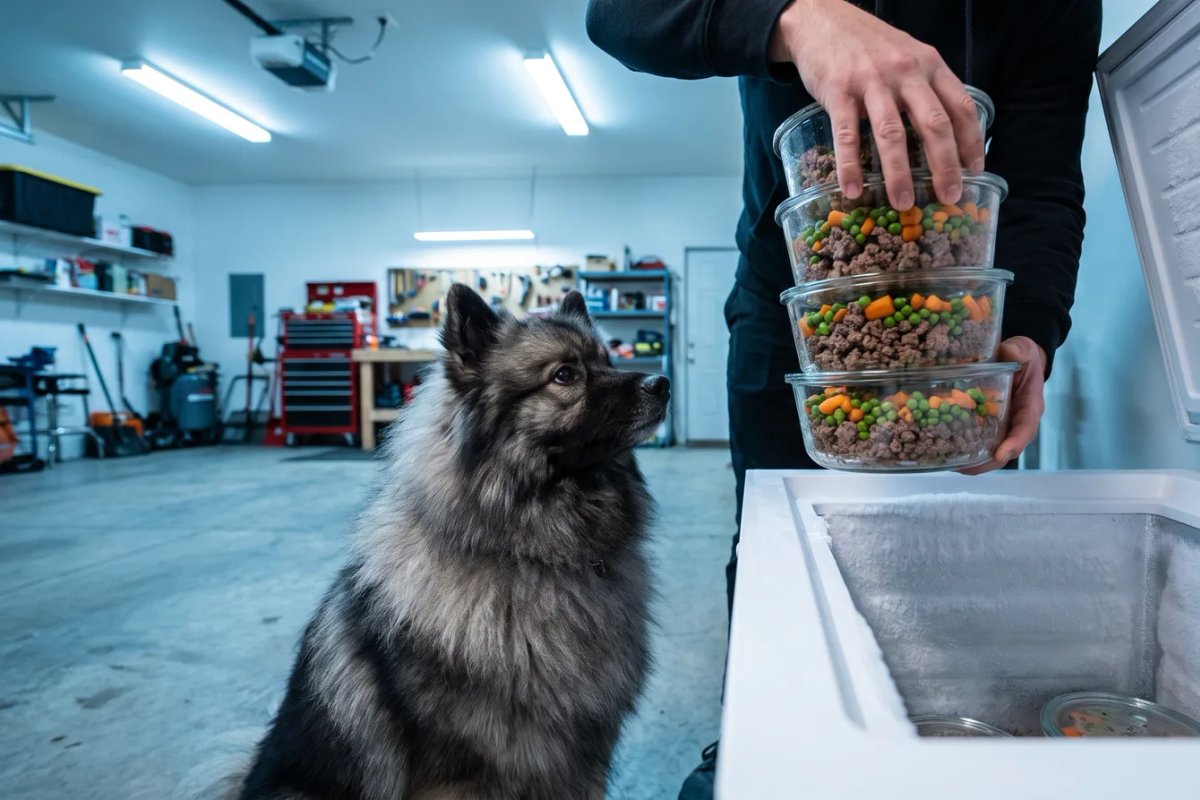
Frozen fresh delivery is a close cousin of fresh-cooked subscription, with one key difference: the food is frozen after cooking and stays frozen until you are ready to thaw it. That makes the freezer the main storage space and gives you more control over when each pack is used.
Get Real is the featured example of this model. Launched by Chewy in September 2025, Get Real is gently cooked, then frozen, made with human-grade ingredients, and built on 10 ingredients or less plus vitamins and minerals. It comes in three recipes: Chicken & Brussels Sprouts, Beef & Sweet Potato, and Turkey & Cranberry. Every recipe meets AAFCO nutrient profiles for all life stages, including growth of large-size dogs (70 lb or more as adults), and each can be fed as a full meal, a topper, or a kibble mixer.
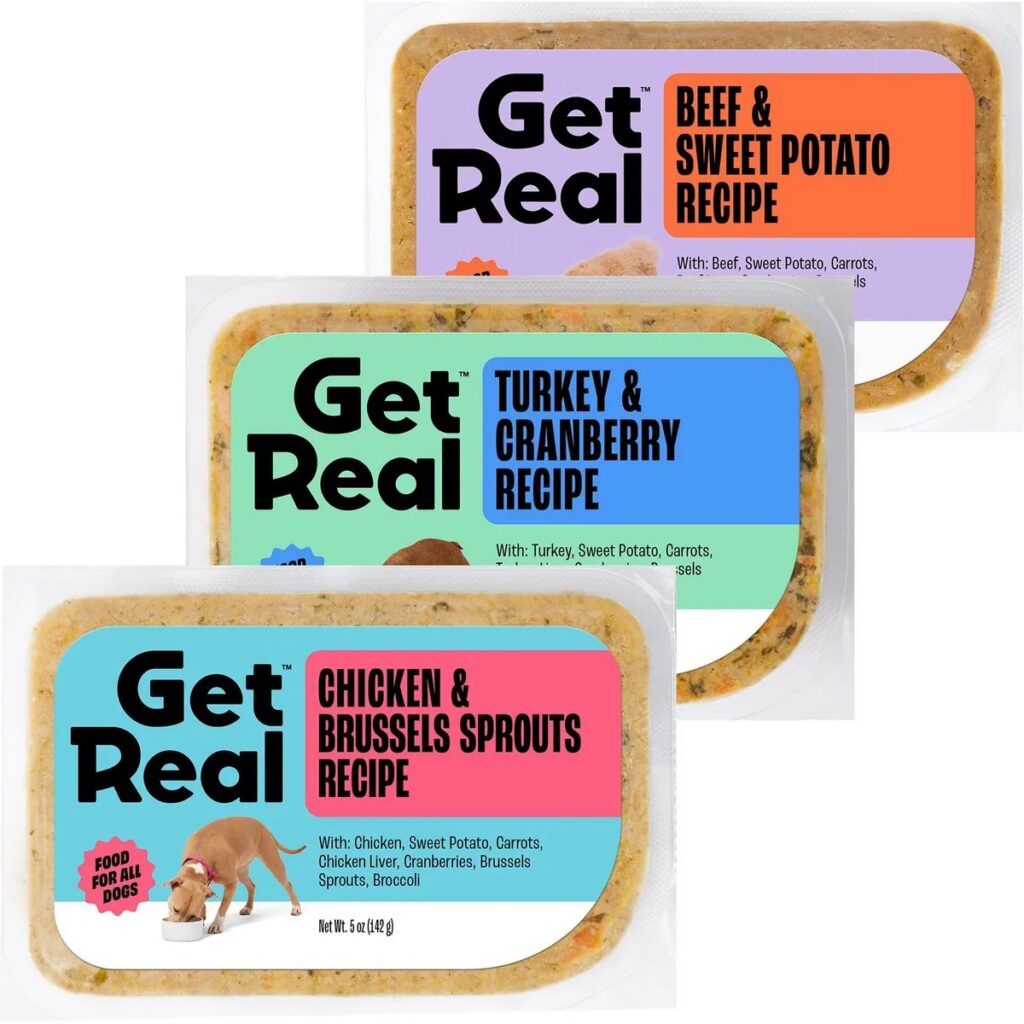
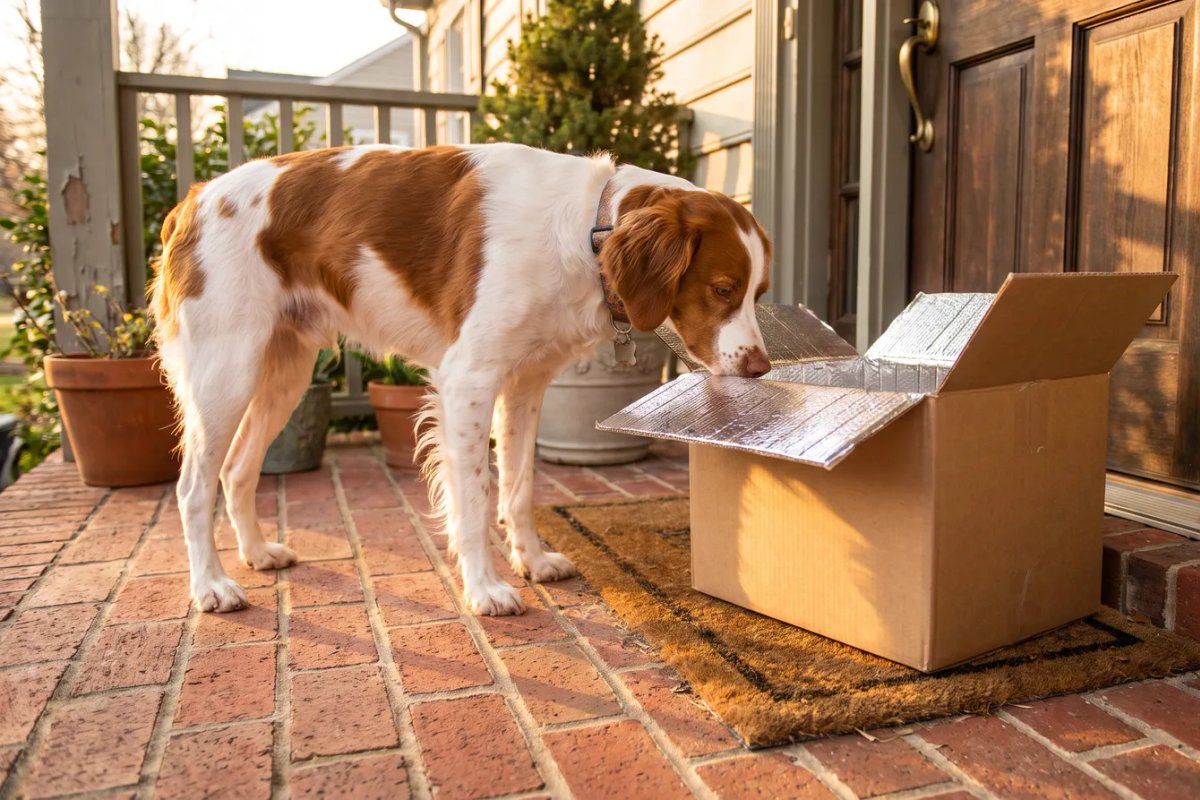
Get Real arrives in pre-portioned packs in three sizes: a 5 oz mixer pack meant to go on top of or into another food, plus 12 oz and 24 oz packs. Shipping comes in an insulated box with dry ice, and Chewy says the box stays cold for up to 8 hours after delivery, depending on the weather. Packs go into the freezer as soon as they arrive, then move to the fridge to thaw for 12 to 24 hours (35 to 48 hours for the 24 oz size). Thawed food should be used within 3 to 5 days.
What sets Get Real apart in this comparison is where you order it. Get Real is available only at Chewy, in select markets, so the same account that ships your dog’s frozen fresh food can also ship treats, chews, toys, and the rest of the household’s pet supplies. That one-stop ordering is a practical advantage for owners who would otherwise juggle a fresh food subscription and a separate retailer. A good first step is the Get Real Sampler Pack, which lets your dog taste the three recipes before you commit to one.
The subscription itself is built to flex:
- You choose your recipes and delivery frequency.
- You can change, pause, skip, or cancel from your account.
- For full-meal plans, the second order ships an extra week later, which leaves room for a gradual switch.
- Portions in Chewy’s plan are based on your dog’s weight, breed, age, and activity level.
If you are deciding how much fresh food to order, the Vetstreet guide on topper vs full meal explains how each approach changes the size of your order.
If your dog does best on poultry, the Get Real Chicken & Brussels Sprouts Recipe is a familiar place to start. It leads with chicken and, per Chewy’s published guaranteed analysis, contains a minimum of 10 percent protein and 8.5 percent fat.
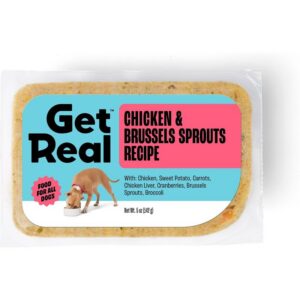
Get Real Chicken & Brussels Sprouts Recipe. A gently cooked chicken recipe with Brussels sprouts, complete and balanced for all life stages, that ships frozen alongside the rest of your Chewy order.
Frozen and refrigerated fresh food are easy to confuse, and the difference matters for planning. The Vetstreet guide to refrigerated vs frozen fresh dog food explains how each format is stored, thawed, and served.
Shelf-stable delivery: kibble and canned food by autoship
You can buy dog food online from large pet retailers, general online stores, many grocery chains, and some brands directly, and most offer autoship, so kibble and canned food arrive on a repeating schedule. This is the most common form of dog food delivery, and for many households it is the backbone of the routine even when fresh food is part of the bowl.
The appeal is simplicity. Kibble and canned food are shelf-stable until opened, so a delivery can sit on the porch for hours without harm and then go straight into the pantry. You can choose almost any brand and size, and you can set the schedule to match how fast your dog finishes a bag.
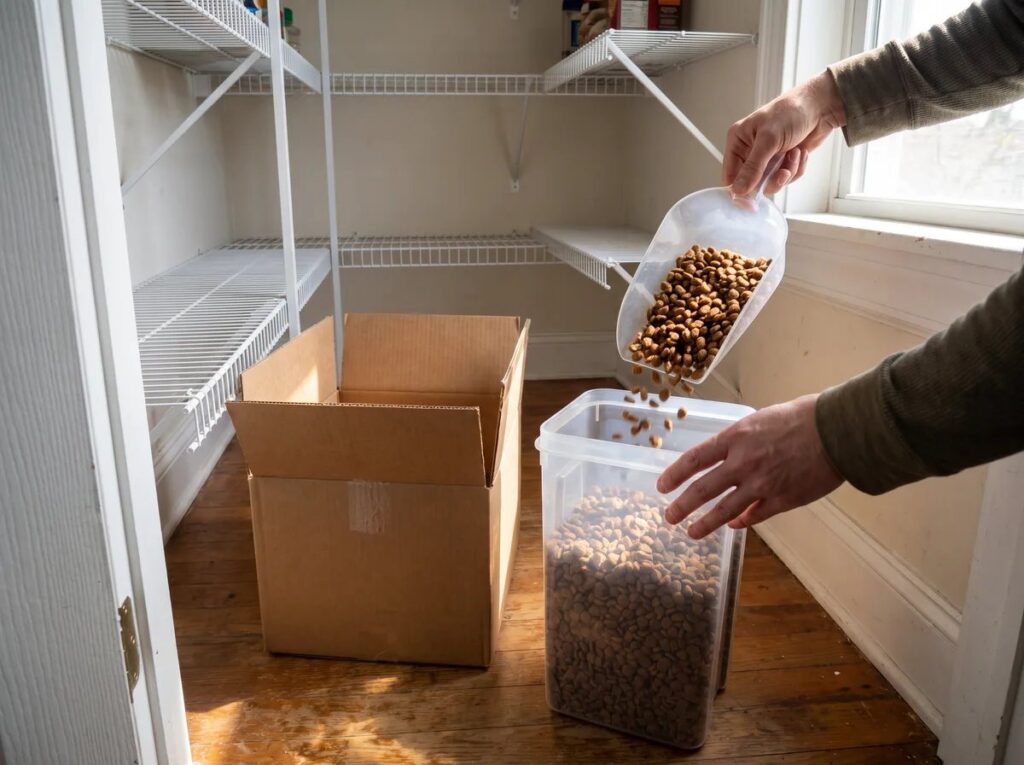
Chewy carries a wide range of kibble and canned food, and Chewy Autoship lets you set a schedule, change it, skip a shipment, or cancel. For owners who already rely on Chewy for kibble, adding a frozen fresh topper from the same account is a small step rather than a new subscription to manage.
Shelf-stable autoship does leave more work to you in one area: portioning. Kibble and canned food arrive in bulk, so you measure each meal from the feeding guide on the label and your dog’s body condition. A kitchen scale or a marked measuring cup goes a long way toward keeping portions consistent.
Many owners combine models. A common setup is kibble by autoship as the base diet with a small amount of fresh food on top. With Get Real, the 5 oz mixer pack is designed for exactly that use, and the Get Real Beef & Sweet Potato Recipe is a rich-smelling option for dogs that have grown bored with their kibble.
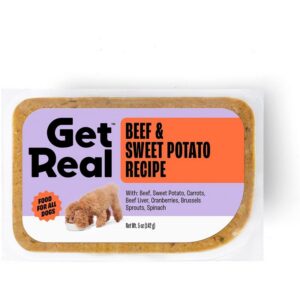
Get Real Beef & Sweet Potato Recipe. Beef, sweet potato, carrots, and beef liver lead the ingredient list, a gently cooked mixer that sits on top of the kibble your autoship already delivers.
Same-day and local delivery options
Can DoorDash deliver pet food?
Yes, DoorDash can deliver pet food in many areas, as can other same-day apps such as Instacart. These apps deliver from local pet stores, grocers, and big-box retailers that carry dog food, so what you can order depends on what those stores stock near you. Selection changes by address and time of day, so check the app before you count on a specific bag. Some pet retailers also offer their own same-day delivery or curbside pickup.
Same-day and local delivery is best as a backup rather than a plan. It shines when you run out unexpectedly, when a scheduled box is delayed, or when you need a specific item today. It is less suited to fresh or frozen food, because a courier trip is not built to keep food at freezer temperatures, and local stores may not carry the recipe your dog eats.
A few habits make same-day delivery more useful:
- Keep a note of the exact product name and size your dog eats, so a substitute is less likely.
- Check whether the app allows you to refuse a substitution for pet food.
- Order before the last bag is gone, since availability varies by store and time of day.
- Store any shelf-stable food from a same-day order the same way you would store your regular delivery.
If you find yourself relying on same-day delivery every week, that is usually a sign a recurring schedule would serve you better. A shelf-stable autoship for the base diet, or a fresh or frozen plan sized to your dog, removes the last-minute runs.
How to compare delivery companies: a checklist
Prices change often, so this checklist covers what stays true from month to month.
- Food type. Decide between fresh-cooked, frozen fresh, shelf-stable, or a mix before comparing brands.
- AAFCO adequacy statement. Look for an AAFCO adequacy statement saying the food is complete and balanced for your dog’s life stage. AAFCO explains what the statement means.
- Ingredients you can read. A short ingredient list makes it easier to spot a food your dog does not tolerate.
- Portioning. Know whether the company portions meals for you or whether you will measure them yourself.
- Flexibility. Confirm that you can pause or skip deliveries, change recipes, and cancel from your account.
- Storage space. Match the box size and delivery schedule to your freezer, fridge, and pantry room.
- Ordering convenience. Count how many separate accounts you will manage for food and supplies.
The FDA also explains that a food labeled complete and balanced for a life stage is meant to be fed as the only diet, which is the standard to hold any full-meal delivery to.
Against this checklist, Get Real’s food type is frozen fresh, the label carries an all life stages statement, each recipe has 10 ingredients or less plus vitamins and minerals, the packs are pre-portioned, the subscription can be paused, skipped, changed, or canceled, and the order sits in the same Chewy account as other supplies. The one item to plan for is freezer space, covered below.
When you change foods after choosing a company, switch gradually. Chewy recommends increasing Get Real over 7 to 10 days, or 10 to 14 days for dogs with sensitive stomachs.
Subscription flexibility: pausing, skipping, and canceling
A dog food subscription service is only as good as its controls. Dogs go through growth spurts, weight changes, travel, and boarding, and a plan that cannot keep up turns into a freezer full of food or a scramble for a bag. Before you sign up for any dog food subscription, check how easy it is to pause or skip deliveries, change the delivery date, swap recipes, or cancel.
The details differ by company:
- Some let you skip a single box with one click, while others ask you to change the whole schedule.
- Some let you cancel online, while others ask you to call.
- Reading the account terms before the first order saves frustration later.
Get Real’s subscription is built around these controls. You choose recipes and delivery frequency, and you can change, pause, skip, or cancel. Chewy offers 24/7 phone and chat support if you would rather talk it through. That flexibility is useful when you are trying a new food: you can start with one recipe, see how your dog does, and adjust the order before the next box ships. For example, a dog that loves poultry might move from chicken to the Get Real Turkey & Cranberry Recipe for variety, without starting a new account.
Flexibility also matters for sizing. A topper plan uses far less food than a full-meal plan, so it is worth deciding which you want before you set the delivery frequency. If you are unsure, start smaller and increase, since adding food to a plan is easier than storing an extra box.
Here are a few practical habits that keep any subscription running smoothly:
- Set a reminder a few days before each shipment to check freezer and pantry space.
- Adjust the schedule after a weight check, not just when food runs out.
- Pause deliveries before travel or boarding rather than storing a box you will not use.
- Keep the account login handy so changes take minutes, not a phone queue.
Delivery logistics: packaging, dry ice, and storage space
Fresh and frozen deliveries arrive in insulated boxes, and frozen boxes often include dry ice to keep the food solid. Dry ice is frozen carbon dioxide and is far colder than ordinary ice, so it is important to handle dry ice safely: use gloves or a towel, never touch it with bare skin, keep it away from children and pets, and let any leftover pieces turn to gas in a well-ventilated area. Never seal dry ice in an airtight container.

Clear freezer space before delivery day so frozen packs go straight in. Handle dry ice safely with gloves, keep it away from pets and children, and let leftovers turn to gas in a ventilated spot.
Timing matters too. Get Real’s box stays cold for up to 8 hours after delivery, depending on the weather, so bring it inside the same day and unpack it promptly. Put frozen packs in the freezer as soon as they arrive. Food that has thawed but is still at 40°F or below may be refrozen or refrigerated; food that has sat at room temperature for more than two hours, or that smells off, should be thrown away.
Before your first delivery, clear freezer space for the full box rather than a few packs. A full-meal plan for a large dog takes up much more room than a topper plan for a small dog, so plan the delivery frequency around the space you have. A dedicated shelf or bin in the freezer also makes it easier to rotate packs and see what is left.
The fridge has a smaller but steady role:
- Each day, move the next packs from the freezer to the fridge so they are thawed when you need them.
- Keep thawed food on a shelf where you can see it.
- Use thawed food within 3 to 5 days.
Shelf-stable deliveries are simpler: store kibble in its original bag, ideally inside a sealed container in a cool, dry place, and keep opened cans covered in the fridge. Storage needs differ so much between the delivery models that it is worth sketching your space before you choose one.
Related reading: Petful compares dog food subscription services by what you get and what it costs, and WebVet breaks down what Get Real dog food costs per day.
Dog food delivery: frequently asked questions
Frequently asked questions
Yes. You can order dog food for delivery through subscription delivery from fresh and frozen food companies, through retailer autoship from online pet stores, or through same-day apps that deliver from local stores. Pick the model that matches the food your dog eats and the storage space you have.
Yes. Chewy delivers kibble, canned food, and other supplies, and Chewy Autoship can repeat orders on a schedule you set. Get Real delivery also runs through Chewy in select markets, with frozen packs shipped in an insulated box with dry ice.
Yes, raw food delivery exists, and raw food is typically shipped frozen. Raw diets carry different handling and food safety considerations from cooked food, so talk with your veterinarian before switching, and follow the company’s thawing and hygiene instructions closely.
A dog food subscription service is a recurring delivery of dog food on a schedule you choose. Good services let you pause or cancel, change the timing, and switch recipes from your account, so the deliveries keep pace with your dog’s needs.
Fresh dog food delivery is worth it for owners who value pre-portioned meals and a set routine and who have the cold storage to support it. Weigh the convenience tradeoffs, such as freezer space and keeping the schedule in step with your dog, against how well your dog does on fresh food.