Refrigerated vs Frozen Fresh Dog Food: What the Difference Means for Your Dog
Published on November 03, 2026
Fresh dog food now comes in two formats, and they behave very differently in your kitchen. Refrigerated fresh food is sold chilled and is ready to serve from the fridge, while frozen fresh dog food is gently cooked, frozen, and thawed before serving. Both are fresh, cooked food; the difference is mainly how long the food keeps, how it is portioned, and how much planning it asks of you.
This guide compares the two side by side on shelf life, food safety, processing and preservatives, convenience, and what drives value, so you can choose the format that fits your dog and your routine. It uses Get Real by Chewy as the example of a frozen, pre-portioned food, and describes refrigerated food in general terms.
This article is sponsored by Get Real, Chewy’s gently cooked fresh dog food line. Vetstreet may earn a commission if you purchase through links in this article.
Key Takeaways
- Both formats are cooked fresh food; the main difference is storage, not nutrition.
- Frozen fresh food offers longer freezer storage, but you need to thaw before serving.
- Refrigerated fresh food is ready to serve, but it has a shorter window once opened.
- Pre-portioned frozen packs make it easier to thaw only what your dog will eat, which cuts waste.
- Whichever you choose, look for a complete and balanced statement based on AAFCO nutrient profiles.
Refrigerated vs frozen fresh dog food: the short answer
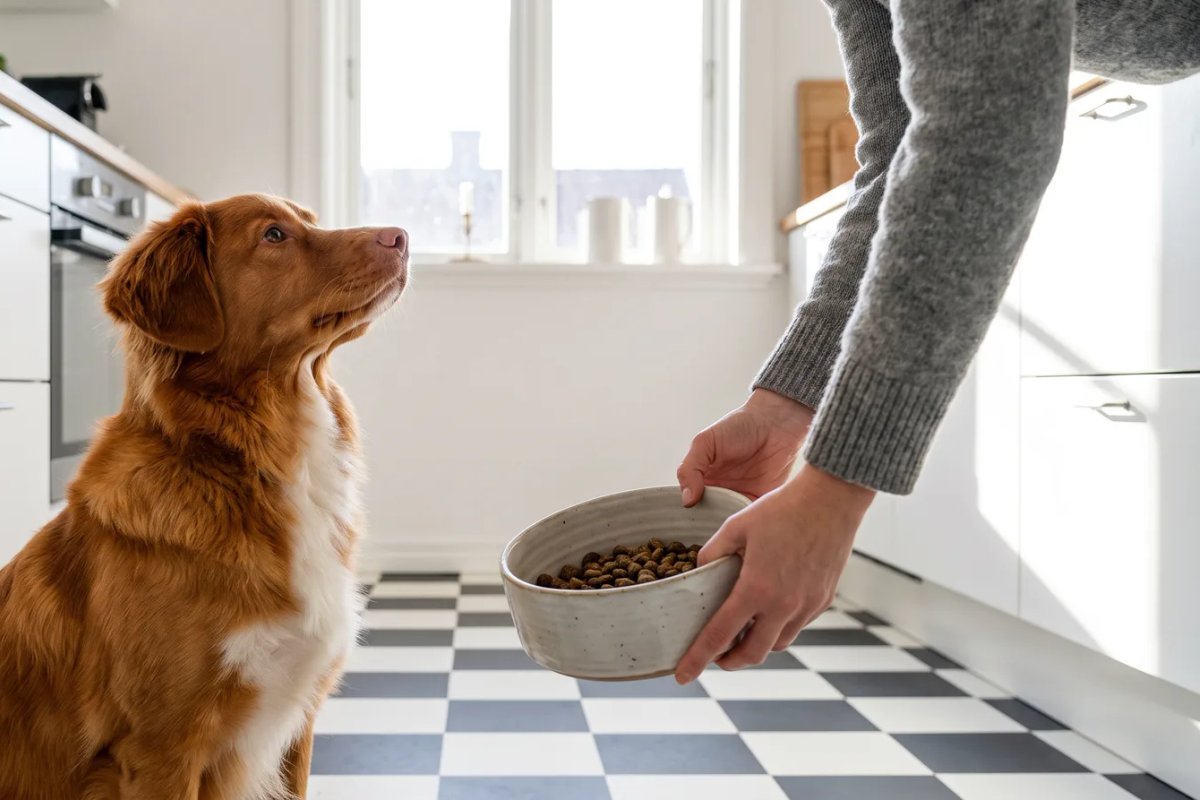
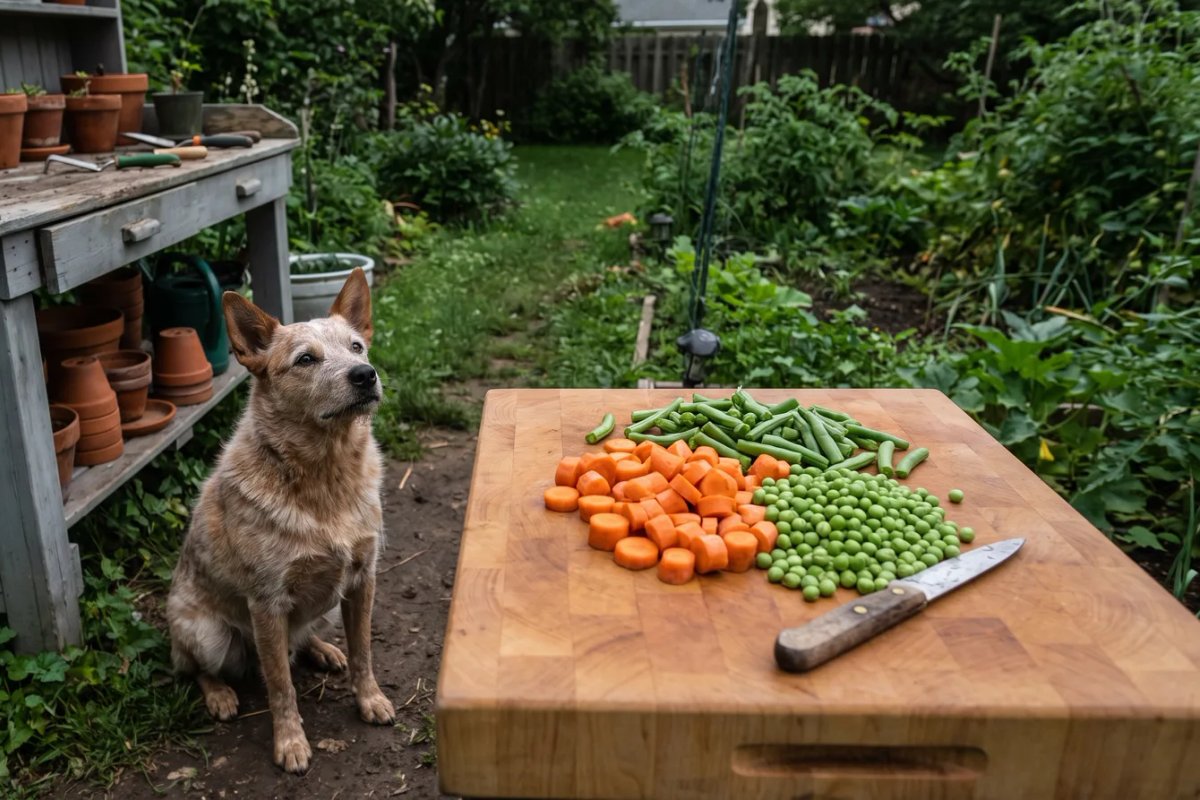
Frozen fresh dog food keeps longer because it stays in the freezer until you need it, but you have to thaw before serving. Refrigerated fresh food is ready to serve straight from the fridge, but it has a shorter shelf life and a short opened-life window. Fresh and frozen dog food are not opposites: frozen fresh food is fresh food that has simply been frozen after cooking, so the question is less about which is “fresher” and more about which storage routine works for you.
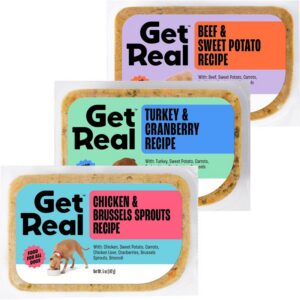
Get Real Sampler Pack, Beef, Chicken & Turkey Gently Cooked Fresh Dog Food, 6 pack bundle (2 of each recipe). The sampler is an easy way to test the frozen format at home, with all three Get Real recipes in ready-to-thaw packs.
No single format is best for every household. Match the format to your freezer and schedule first, then pick the recipe; a family with a small freezer and a big dog may prefer refrigerated food. The side-by-side format table below lays out the practical differences.
| Factor | Refrigerated fresh food | Frozen fresh food (Get Real example) |
|---|---|---|
| Where it is stored | Refrigerator | Freezer until needed |
| Opened-life window | Short; follow the label, often about a week for rolls | Use within 3 to 5 days after thawing |
| Thaw time needed | None; ready to serve | 12 to 24 hours (5 oz and 12 oz), 35 to 48 hours (24 oz) in the fridge |
| Portioning | Often sliced or scooped from a roll or bag | Pre-portioned packs |
| Space needed | Fridge shelf space | Freezer space |
| Best for | Owners who want to serve without planning | Owners who want longer storage and less waste |
Neither column is the “safe” or “unsafe” option. Both are cooked foods that are safe when stored as the label directs. The trade is simple: refrigerated food trades storage life for convenience at the bowl, and frozen food trades a little planning for longer freezer storage and less waste. That opened-life window is the factor to plan around.
What frozen fresh dog food is
Is frozen dog food good for dogs? Yes, when it is a complete and balanced recipe that is thawed properly. Frozen fresh dog food is gently cooked then frozen, which locks in the food at its freshest point. You store it in the freezer, move a pack to the fridge to thaw, and serve. Freezing does not change the recipe’s nutrition profile; it preserves the food so it can travel and wait in your freezer.
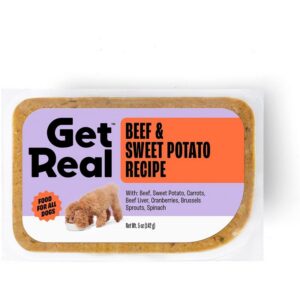
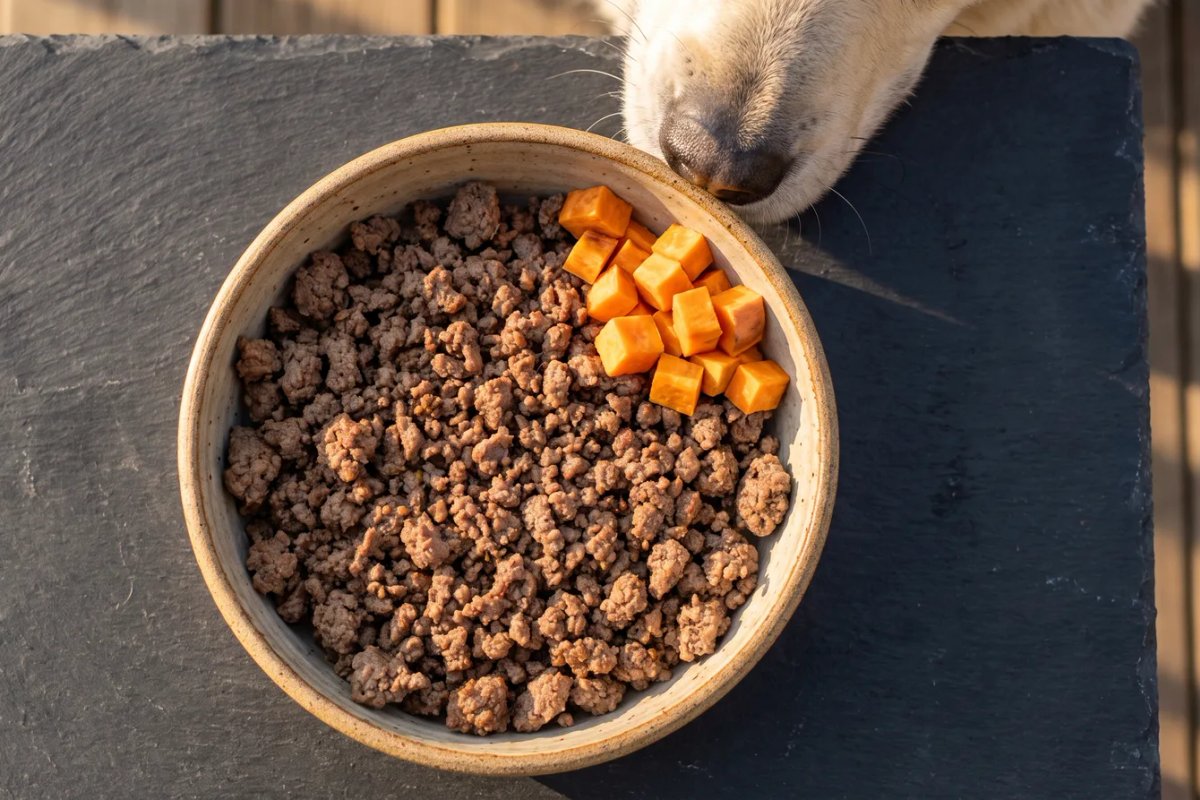
Get Real Beef & Sweet Potato Recipe. Beef & Sweet Potato is gently cooked, frozen in pre-portioned packs, and complete and balanced for all life stages.
The term “frozen dog food” covers several products, so it helps to be specific. Cooked frozen food is cooked first and then frozen, so it only needs thawing before serving. Raw frozen food is not cooked at all, and freeze-dried food is dried rather than kept frozen. Frozen dog food patties are often raw; check the label. This comparison is only about cooked fresh food.
Get Real is Chewy’s own fresh food and a good example of the cooked frozen format. Its three recipes, Chicken & Brussels Sprouts, Beef & Sweet Potato, and Turkey & Cranberry, are made with human-grade ingredients and 10 ingredients or less plus vitamins and minerals. They are gently cooked, then frozen, and formulated to meet AAFCO nutrient profiles for all life stages, including growth of large-size dogs. The Get Real Beef & Sweet Potato Recipe lists beef first, followed by sweet potato, carrots, and beef liver.
When you compare fresh frozen dog food brands, the useful questions are the same for every label:
- Is it cooked, raw, or freeze-dried?
- Does the label carry a complete and balanced statement for your dog’s life stage?
- What pack sizes are offered, and how long does each take to thaw?
- How long is food good after thawing?
- Is delivery available where you live, or is it sold in stores?
Get Real is sold only at Chewy, in select markets, and ships frozen in insulated packaging with dry ice.
What refrigerated fresh dog food is
Refrigerated fresh dog food is cooked, packaged, and kept chilled from the plant to the store to your fridge. It is usually sold in rolls you slice or bags you scoop from, and it is ready to serve without thawing. Freshpet is the best-known refrigerated brand, sold in grocery and pet store coolers, and its guidance is a useful reference for how this format works.
Can Freshpet dog food be frozen? Yes. Freshpet’s own feeding and storage guide says opened rolls should be used within 7 days and opened bags within 5 to 7 days depending on the product, and that freezing is an option if you will not finish an opened roll or bag in that window. The guide recommends single-meal portions in airtight containers, thawed in the refrigerator overnight.
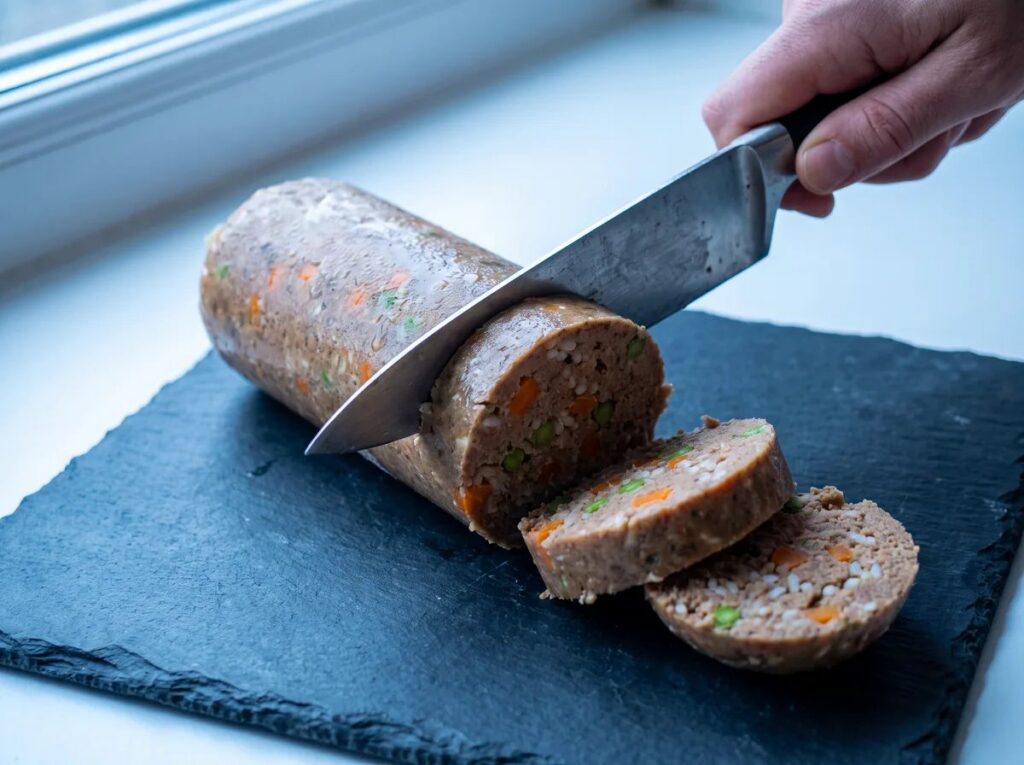
The defining feature of refrigerated food is its clock. Once opened, it needs to be finished within the window on the label, so a roll that is too big for your dog’s appetite has to be frozen in portions or it goes to waste. For a closer brand-to-brand look, see the Vetstreet Get Real vs Freshpet comparison.
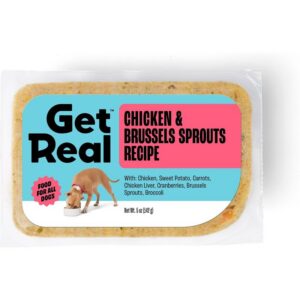
Get Real Chicken & Brussels Sprouts Recipe. If an opened roll is hard to finish in time, Chicken & Brussels Sprouts comes in frozen 5 oz, 12 oz, and 24 oz packs so you thaw only what you need.
- Ready to serve with no thaw time.
- Sold chilled in rolls and bags.
- Shorter shelf life once opened.
- Freezer-friendly in portions if you will not finish it in time.
Shelf life and food safety
Both formats are safe when they are stored correctly, and both become unsafe when they are not. The rules come down to temperature and time. The FDA advises keeping the refrigerator at 40 F or below, refrigerating or discarding leftover pet food promptly, and washing hands, bowls, and scoops after handling pet food.
Frozen food has the longer storage life because it stays frozen until you need it. Get Real packs go in the freezer as soon as they arrive; once thawed in the fridge, food should be used within 3 to 5 days. Thawed food still at 40 F or below may be refrozen or refrigerated, and any food that smells bad or has sat at room temperature for more than two hours should be thrown out. Refrigerated food starts its countdown when it is opened and follows the window printed on its package.
Any fresh food, refrigerated or frozen, should be thrown out after two hours at room temperature. Discard spoiled food that smells or looks off.
Skipping the thaw works if you finish each package inside its window; if you shop weekly or less, freeze extra portions to stretch either format. The Vetstreet step-by-step guide on can you freeze fresh dog food covers portioning, thaw schedules, and the refreeze rule in detail.
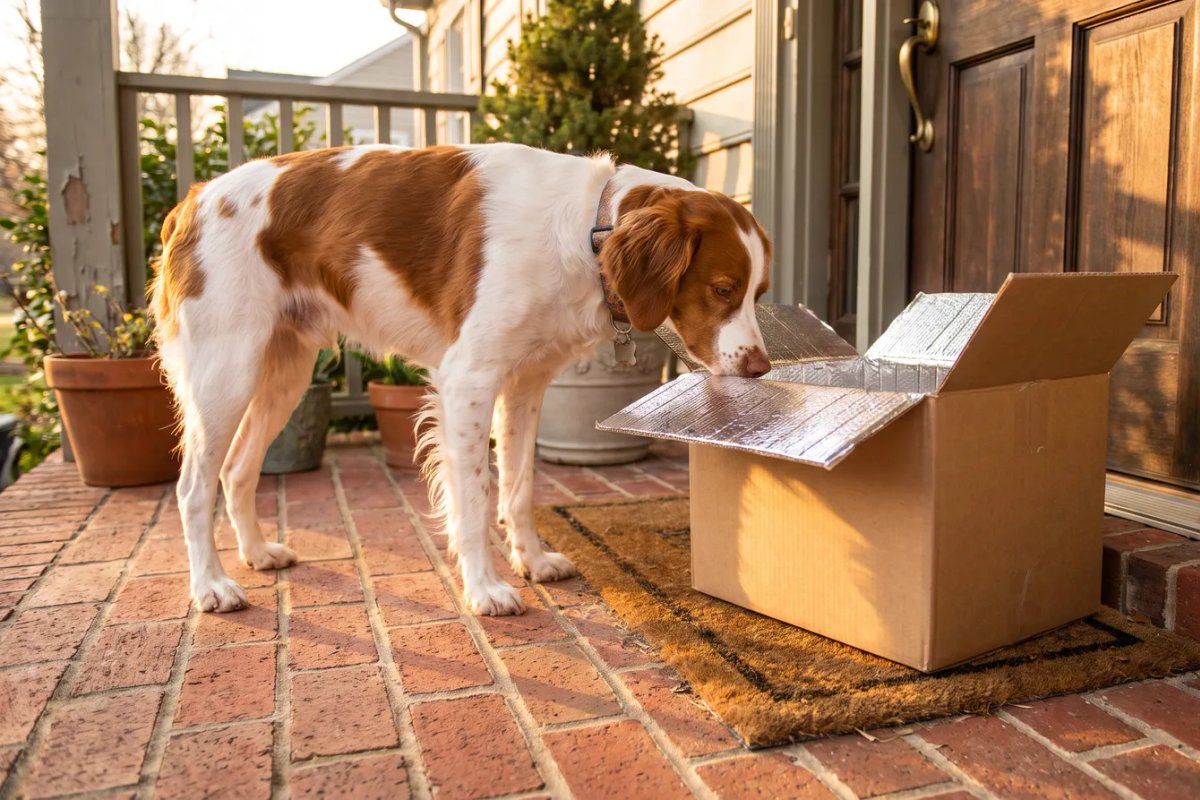
Delivery adds one more safety step for both formats: getting the food cold again quickly. Get Real ships in insulated packaging with dry ice and stays cold for up to 8 hours after delivery, depending on the weather, so the box should go into the freezer as soon as you bring it inside rather than waiting on the porch or counter. Refrigerated food bought in a store follows the same logic: make it the last stop on your errands and put it in the fridge as soon as you get home.
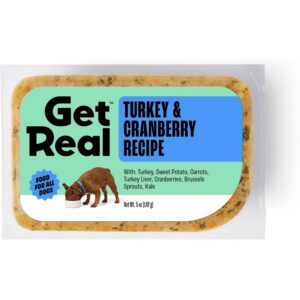
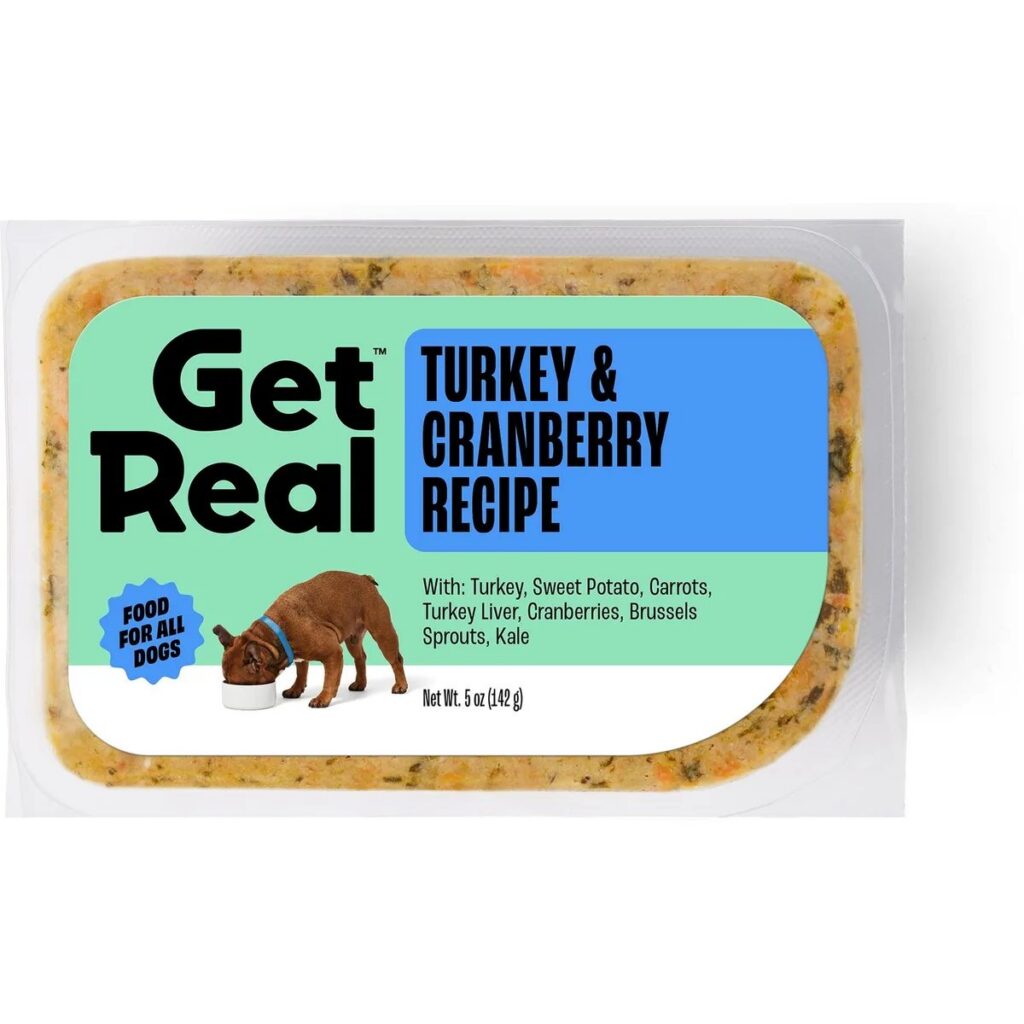
Get Real Turkey & Cranberry Recipe. Turkey & Cranberry ships frozen with dry ice in pre-portioned packs that go straight into the freezer when they arrive.
Processing, preservatives, and ingredients
Both formats are cooked, and both rely on cold storage rather than the long shelf life of canned or dry food. The cold chain does much of the preserving work. Labels still differ, so the label is the place to check preservatives and ingredients for any specific product.
Freezing is a preservation step in its own right. Food held frozen stays safe for long periods because bacteria cannot grow at freezer temperatures. Get Real recipes use 10 ingredients or less plus vitamins and minerals. On the Beef & Sweet Potato label, mixed tocopherols, a form of vitamin E, appear among the added nutrients; mixed tocopherols are commonly used in pet foods to help protect fats from oxidation.
When you compare refrigerated and frozen labels, these are the points that matter more than the storage format:
- A complete and balanced statement for your dog’s life stage, based on AAFCO nutrient profiles.
- A named animal protein as the first ingredient.
- A guaranteed analysis you can compare across foods; fresh food is about 75 percent moisture, so compare on a dry-matter basis.
- Calorie content per package or per kilogram, so you can portion accurately.
The Get Real recipes list their calorie content on each pack and on Chewy’s product pages: 428 kcal per 12 oz pack for Chicken & Brussels Sprouts, 451 for Beef & Sweet Potato, and 474 for Turkey & Cranberry. The Vetstreet primer on choosing the right food for your dog explains how to read these label basics.
Convenience: storage space, thawing, and portioning
Convenience is where the two formats differ most in daily life. Refrigerated food wins at the bowl because there is nothing to thaw. Frozen food wins in the kitchen because it takes up freezer space instead of fridge space, keeps for longer, and arrives already portioned.
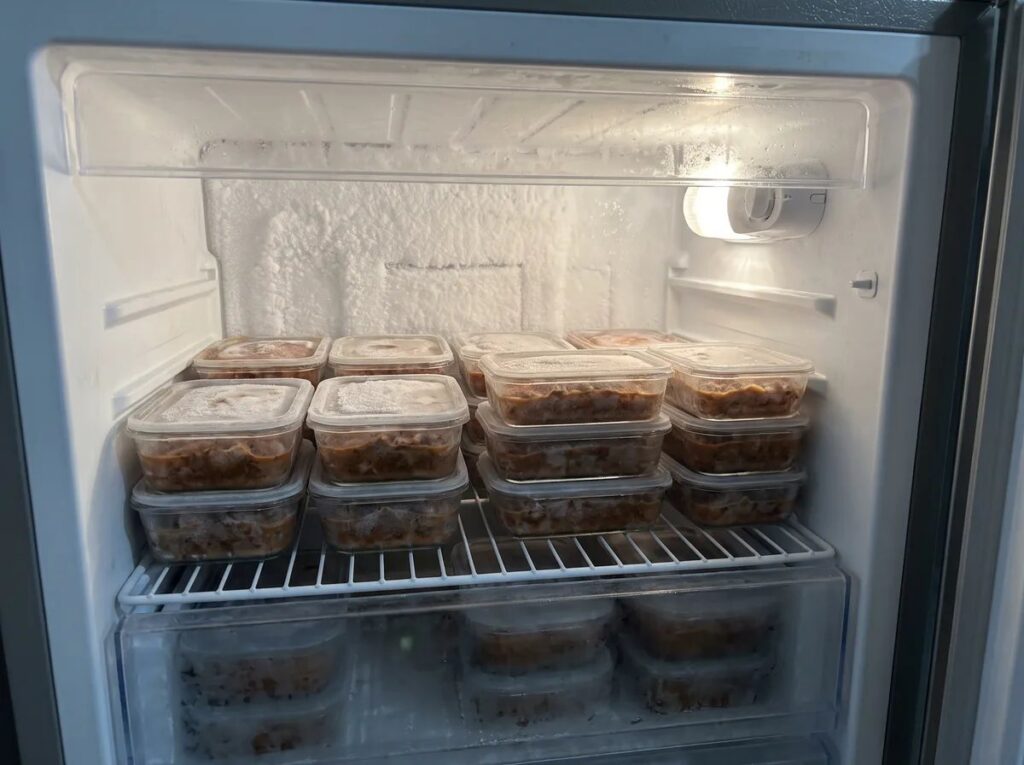
Thawing is the main habit frozen food asks of you. With Get Real, 5 oz and 12 oz packs thaw in the fridge in 12 to 24 hours and 24 oz packs in 35 to 48 hours, so most owners move tomorrow’s pack to the fridge each evening. Once that becomes routine, it takes seconds. Refrigerated food needs no thawing, but large rolls must be sliced and wrapped, and any portion you will not use in time has to be frozen anyway.
Portioning is the other difference. A pre-portioned pack is already a known amount, which makes feeding consistent and reduces the guesswork of slicing a roll. The Get Real Chicken & Brussels Sprouts Recipe comes in 5 oz mixer packs for topping another food, plus 12 oz and 24 oz packs for full meals.
- Fridge-only kitchens: refrigerated food fits a small freezer.
- Plenty of freezer space: frozen packs let you keep a week or more on hand.
- Busy mornings: either works if tomorrow’s frozen pack is already thawing.
- Travel: keep portions in a cooler at 40 F or below.
What affects value: portions, waste, and delivery
Value is not only what a package costs. Two foods that cost the same per pound can cost very different amounts per bowl if one gets thrown out. The biggest value drivers for fresh food are how accurately you portion and how much you waste.
Refrigerated food creates waste when a package is bigger than your dog can finish inside its opened-life window. Frozen, pre-portioned food reduces that waste because you thaw only what you will use in the next few days and the rest stays frozen. That makes pre-portioning a practical way to control both cost and freshness, especially for small dogs or for households that use fresh food as a topper.
- Portion accuracy: known pack sizes make it easier to feed the right calories.
- Waste: thaw only what you need instead of racing an opened package.
- Delivery: a subscription that ships frozen food saves trips to the store. Get Real subscriptions can be changed, paused, skipped, or canceled anytime.
- Feeding role: using fresh food as a topper or kibble mixer stretches each pack further.
Which format fits your dog?
What is the best frozen fresh food for dogs? The best one is a complete and balanced, gently cooked recipe your dog does well on, in a format your household can store and thaw reliably. Start with the format, then choose the recipe. This checklist maps common situations to one format.
- Freezer space available and a weekly feeding routine you can plan around: frozen fresh food.
- Only fridge space and a dog who finishes packages quickly: refrigerated fresh food.
- A small dog or a topper-only plan: frozen pre-portioned packs, to avoid waste.
- Frequent travel: either format, kept in a cooler at 40 F or below.
- A dog who needs to switch foods gradually: either, mixed in over 7 to 10 days, or 10 to 14 days for sensitive dogs.
If frozen fits your routine, Get Real offers three proteins in the same format, so you can rotate without changing your thaw schedule. The Get Real Turkey & Cranberry Recipe is the third option alongside chicken and beef, and the sampler lets your dog try each before you settle on a favorite.
Related reading: Petful compares fresh dog food with wet dog food, and WebVet explains how to thaw frozen dog food without losing quality.
Refrigerated vs frozen dog food: frequently asked questions
Frequently asked questions
It is better to thaw it first. Serving food still frozen is hard on teeth, harder to digest in chunks, and can be gulped too fast; raw food also carries a higher bacterial risk, so handle and thaw it in the fridge. Frozen cooked food should be thawed before serving too, except for deliberate frozen enrichment treats.
Refrigerated fresh food lives in the fridge from the start, and canned food should be refrigerated after opening. Keeping food in the fridge at 40 F or below is the FDA’s guidance for opened pet food. Dry kibble does not need the fridge and should stay sealed in its bag in a cool, dry place.
Not necessarily. Refrigerated fresh food is convenient because it is ready to serve, but it has a shorter shelf life once opened. Frozen fresh food is the same kind of cooked food, preserved longer, so the better choice is the format you can store and use without waste.
Only if the label says so. Look for a complete and balanced statement based on AAFCO nutrient profiles for your dog’s life stage. Products without it are meant as toppers or supplemental feeding.
Check that the food is cooked or raw as you prefer, carries a complete and balanced statement, publishes calories, and comes in pre-portioned frozen packs that suit your dog’s size. Clear thaw and storage instructions are a good sign of a brand that has thought about safe handling.