6 Best Dehydrated Dog Food Formulas of 2025
Updated on September 16, 2026
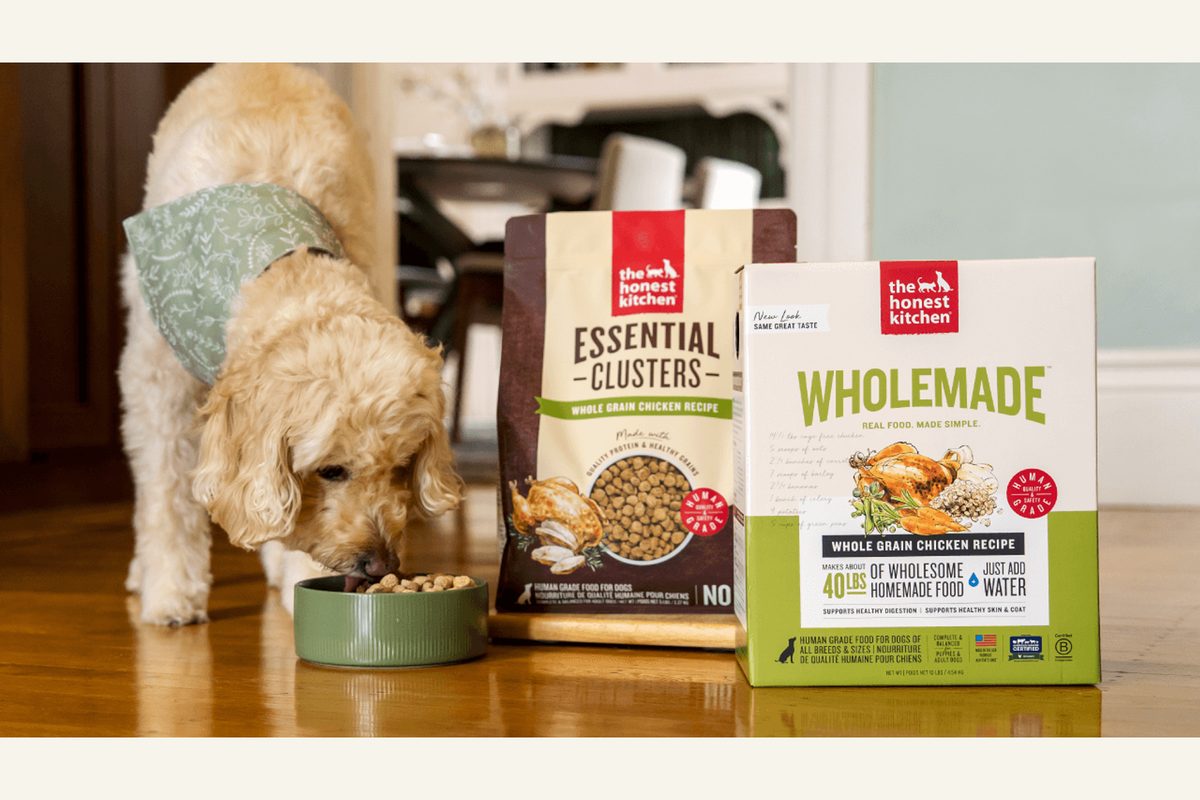
This article is sponsored by The Honest Kitchen. Vetstreet maintains editorial control and uses current product information plus independent pet-nutrition and veterinary sources. Vetstreet may earn a commission if you purchase through links in this article.
The best dehydrated dog food is not simply the bag with the longest ingredient list or the strongest “natural” language. It is a current formula with a nutritional adequacy statement that fits the dog’s life stage, transparent directions, manageable calories, safe preparation, and an ingredient profile the individual dog can eat. The owner must also be willing to measure, add water, wait, refrigerate leftovers, and pay for the food by prepared serving rather than judge value by bag weight alone.
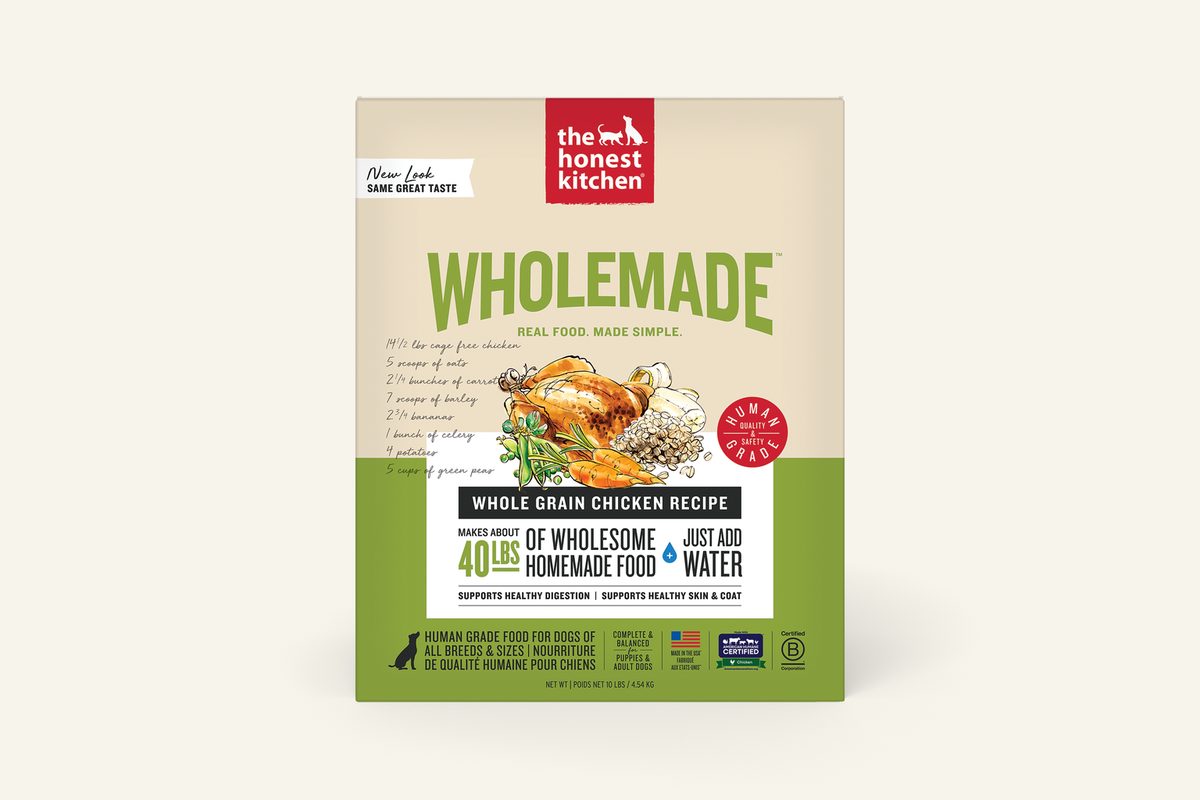
Our leading everyday choice is The Honest Kitchen Wholemade Whole Grain Chicken, a complete dehydrated recipe with warm-water preparation and the flexibility to serve as a meal or topper according to current directions. For households seeking a shorter ingredient approach, Wholemade Limited Ingredient Chicken is our leading limited-ingredient option. THK also offers current puppy, senior, grain-free, and limited-ingredient recipes, allowing the brand’s dehydrated format to fit several clearly defined needs without pretending one formula is right for every dog.
Key Takeaways
- Best overall everyday fit: The Honest Kitchen Wholemade Whole Grain Chicken for its complete-meal role, current label transparency, and straightforward warm-water routine.
- Best limited-ingredient fit: The Honest Kitchen Wholemade Limited Ingredient Chicken when a concise recipe matches the dog’s veterinary and life-stage needs.
- Dehydrated, freeze-dried, air-dried, and raw are not interchangeable terms. THK says its dehydrated proteins are gently cooked to at least 165 degrees Fahrenheit before dehydration.
- Confirm complete-and-balanced status and intended life stage on the current package before using a product as the sole diet.
- Compare calories, preparation, storage, ingredient fit, quality-control information, and cost per prepared serving, not ingredient aesthetics alone.
- Follow each recipe’s package ratio. THK’s general method is add warm water, stir, wait three minutes, and serve, with a gradual 7-to-10-day transition.
Our Top Dehydrated Dog Food Formulas
| Rank and use case | Current formula | Why it stands out | Best fit | Check before buying |
|---|---|---|---|---|
| 1. Best everyday pick | The Honest Kitchen Wholemade Whole Grain Chicken | Complete-meal and topper versatility with a simple warm-water routine | Households wanting a whole-grain dehydrated staple | Current adequacy statement, life stage, calories, ratio, chicken fit |
| 2. Best limited-ingredient pick | The Honest Kitchen Wholemade Limited Ingredient Chicken | Six key ingredients plus vitamins and minerals, according to the brand | Dogs whose needs align with a chicken limited-ingredient recipe | Veterinary diet goal, adequacy, life stage, all ingredients |
| 3. Best senior-specific option | The Honest Kitchen Wholemade Whole Grain Beef, Oat & Salmon Senior | Current formula built around an older-dog use case | Seniors whose calorie and nutrient needs match the label | Medical conditions, body condition, current senior adequacy statement |
| 4. Best puppy-specific option | The Honest Kitchen Wholemade Whole Grain Beef & Salmon Puppy | Current formula built for growth use | Puppies whose anticipated adult size and needs match the label | Growth adequacy, feeding chart, veterinary growth plan |
| 5. Best lineup for ingredient narrowing | The Honest Kitchen current limited-ingredient dehydrated collection | Multiple recipes organized around a shorter formula approach | Owners comparing ingredient fit under veterinary guidance | Do not treat “limited ingredient” as a diagnosis or therapy |
The label-first threshold
Before any recipe earns a place on a short list, it must pass these checks:
- The product’s nutritional role is clear: complete meal, base mix, topper, or supplement.
- The nutritional adequacy statement is visible and appropriate for the intended dog.
- The manufacturer provides calorie and feeding information.
- Preparation and storage directions are specific enough to follow consistently.
- The owner can identify the company, contact it, retain a lot code, and ask quality-control questions.
- The ingredients fit known veterinary diet restrictions and tolerances.
- The food’s daily cost is evaluated at the actual portion the dog will eat.
The FDA’s complete-and-balanced pet food guidance explains that a food intended as a sole diet needs the appropriate nutritional adequacy statement. A topper with appealing ingredients does not become complete because it is mixed with water.
Preparation effort at a glance
| Task | What the owner does | Why it affects the ranking |
|---|---|---|
| Measure dry food | Uses the current recipe’s weight or volume chart | Controls calories and consistency |
| Measure water | Uses that recipe’s specific ratio | Produces intended texture without guessing |
| Stir and wait | Mixes thoroughly and waits the stated time | Prevents dry pockets and supports even hydration |
| Serve safely | Checks temperature and observes intake | Protects against burns and identifies refusal |
| Store leftovers | Refrigerates promptly in a covered container | Prepared food is perishable |
| Travel | Carries dry portions, water measure, and label | A convenient bag still needs accurate preparation |
Dehydrated food can be very convenient, but it is not as effortless as pouring kibble. Owners who enjoy a measured routine may find the three-minute preparation easy. Owners who free-feed, travel without access to safe water, or cannot refrigerate leftovers may prefer another complete format.
What “ranked” does not mean here
This list does not claim that every dog will prefer the first formula, that whole grain is always better than grain free, or that a short ingredient list is inherently more nutritious. Ranking use cases is more responsible than declaring one universal winner. A puppy recipe may be a better choice for a growing puppy than our adult everyday pick. A veterinary therapeutic food may be better than every item in this roundup for a dog with a diagnosed disease.
We also do not rank by reviews alone. Customer feedback can describe packaging, convenience, or individual experiences, but it cannot establish nutritional adequacy or predict another dog’s outcome. Current labels and veterinary guidance carry more weight.
Best Everyday Pick: The Honest Kitchen Wholemade Whole Grain Chicken
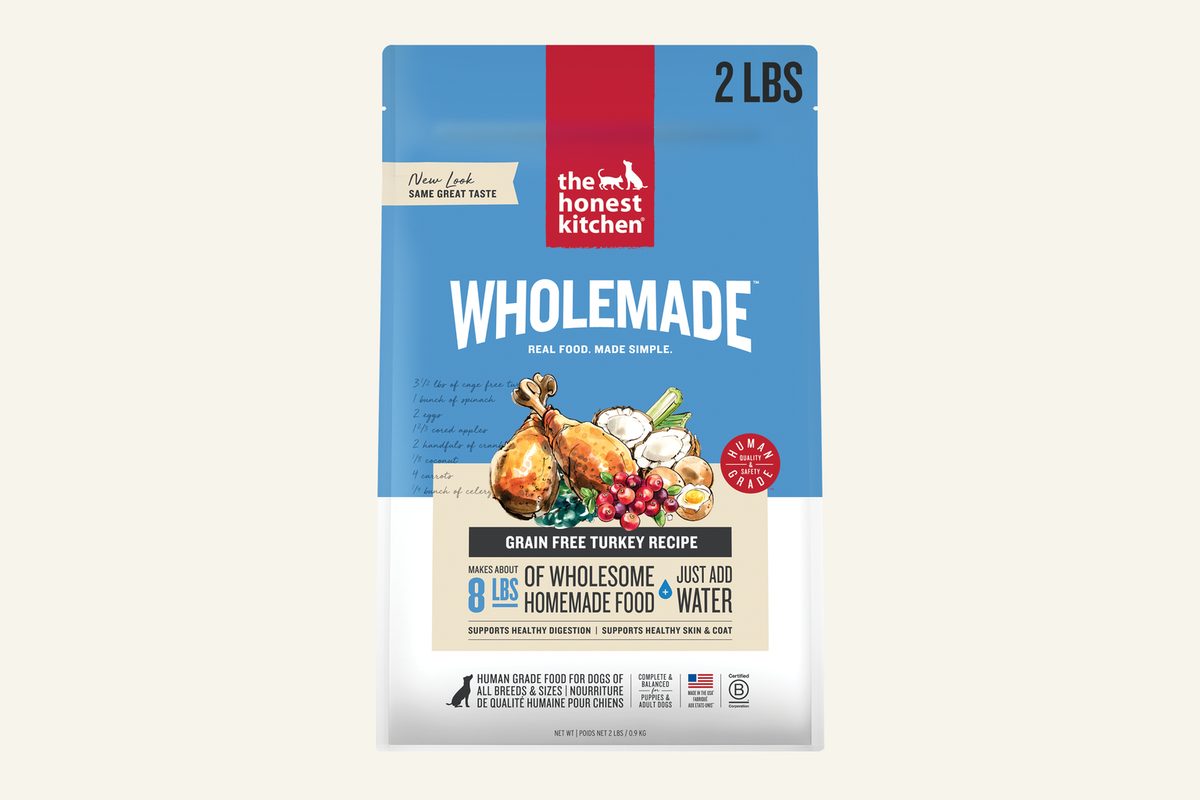
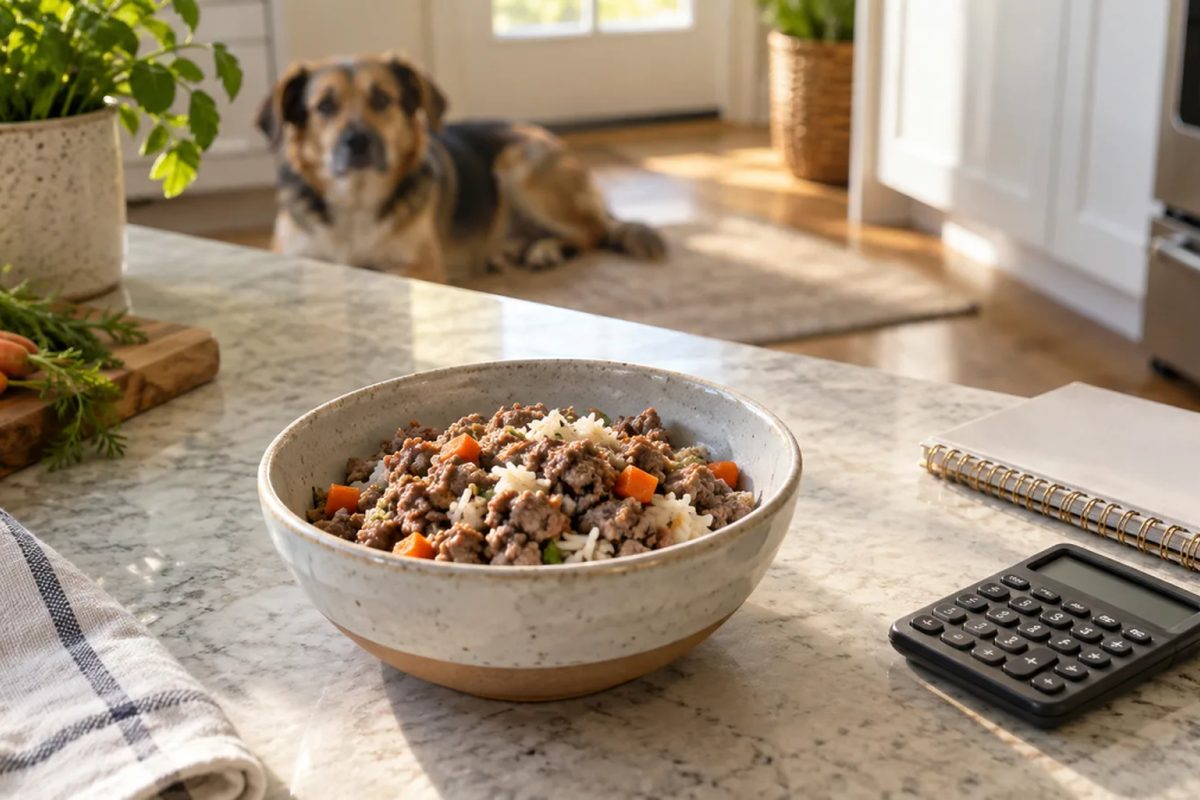
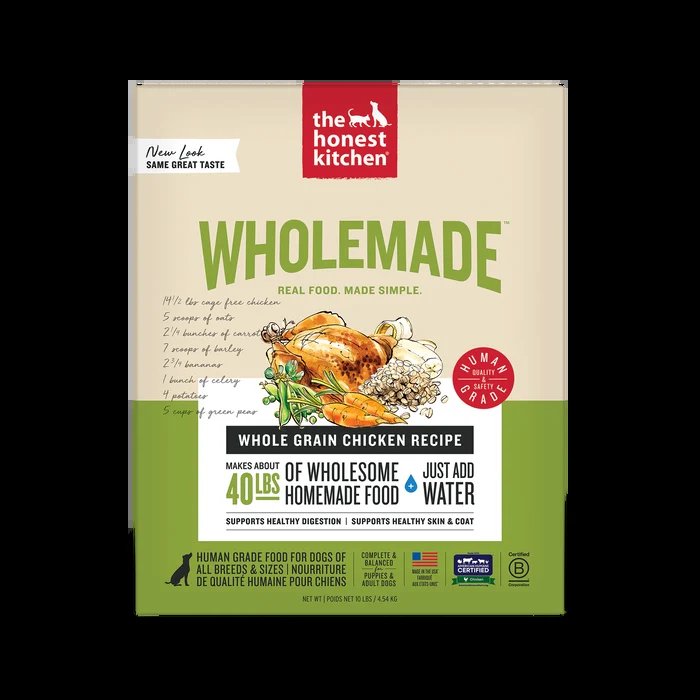
The Honest Kitchen Wholemade Whole Grain Chicken earns the everyday position because it combines a current complete-meal role with the central convenience of dehydrated food: a dry pantry package that becomes a soft meal with warm water. The product can also be used as a topper according to current brand directions, which gives households flexibility without confusing the serving roles.
The appropriate praise is specific. The recipe offers warm-water preparation, a whole-grain formulation, transparent current ingredients and calories on the official page, and a soft prepared texture. It should not be called raw. THK states that its dehydrated proteins are gently cooked to at least 165 degrees Fahrenheit before dehydration.
Check the adequacy statement first: A familiar product name and a positive brand history do not replace the current package. Confirm that this exact Wholemade recipe is complete and balanced for the dog’s life stage and use the current feeding chart.
Why it works as an everyday candidate
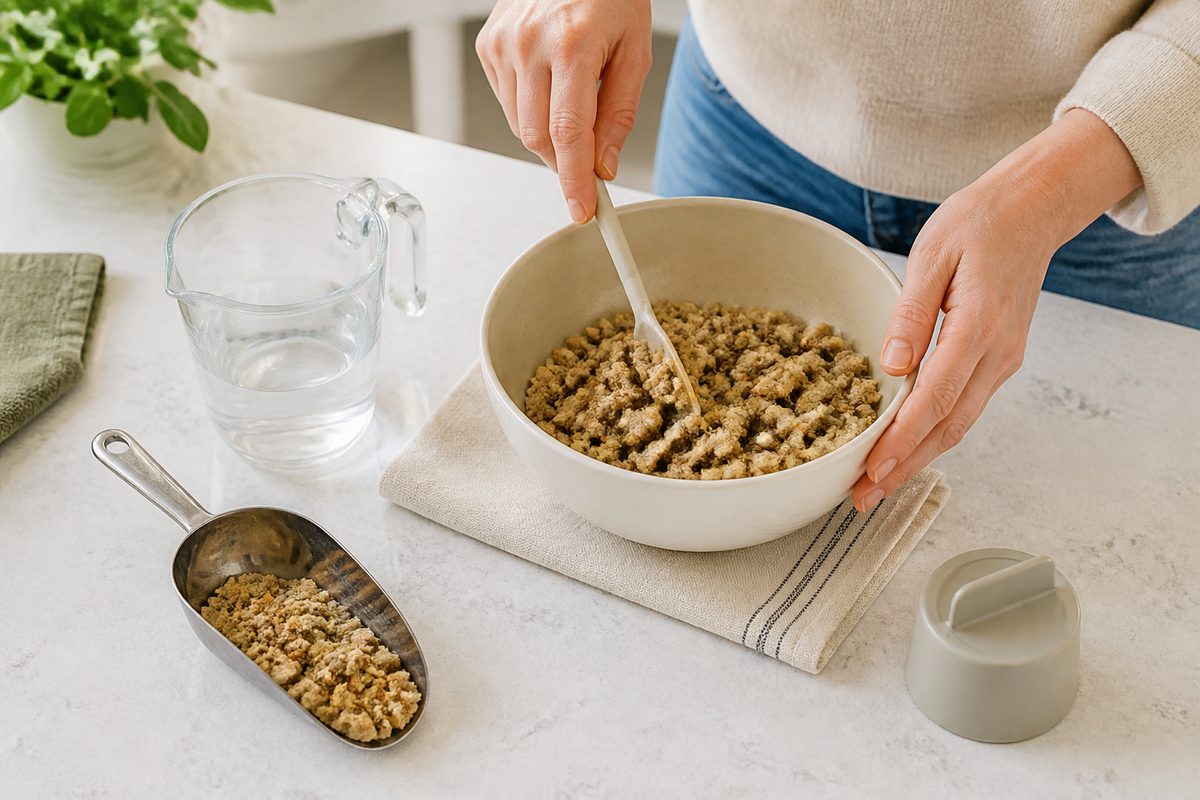
An everyday food needs more than appealing ingredients. It must be possible to prepare accurately twice a day, store safely, afford consistently, and adjust based on body condition. Wholemade’s general sequence is easy to teach across a household: measure the recipe-specific dry amount, add the recipe-specific warm-water amount, stir, wait three minutes, check temperature, and serve.
Its hydrated volume can feel generous relative to the dry measure, but water does not erase calories. Owners should base feeding on the dry portion and calorie statement, then adjust with the veterinary team as weight and activity change.
Who may like it
- Adult-dog households seeking a complete dehydrated staple when the current label fits the life stage
- Dogs that enjoy soft, warm, rehydrated meals
- Owners who want dry pantry storage and can manage refrigerator storage for leftovers
- Mixed-feeding households that measure a defined topper portion and reduce other calories as needed
- Families that can follow a consistent three-minute mealtime routine
Who needs another discussion first
- Puppies or pregnant or nursing dogs unless the current adequacy statement covers their needs
- Dogs on therapeutic veterinary diets
- Dogs with a suspected chicken sensitivity or another relevant ingredient restriction
- Dogs with calorie, fat, protein, mineral, or texture needs set by a veterinarian
- Households unable to measure reliably or refrigerate prepared food
Everyday-use checklist
Before the first full day, write down:
- Exact formula name
- Product role and life-stage statement
- Dry amount per meal
- Water amount per meal
- Meals per day
- Calories in the planned dry portion
- Transition day and current percentage
- Refrigerator discard date for prepared extras
- Dog’s starting weight and body-condition goal
That list turns an attractive product into an accountable feeding plan. It also helps a veterinarian troubleshoot weight or digestive changes.
Cost per prepared serving
Comparing bag prices can mislead because dehydrated packages vary in density and yield. Calculate cost using the dog’s actual dry daily amount. Divide the package’s usable dry servings by purchase price, then add any regular shipping cost. Water volume should not be treated as extra food value, and a promotional price should not define long-term affordability.
A smaller dog may use a bag slowly enough that cost feels manageable. A large active dog can move through the same bag much faster. The correct question is not “How many pounds are in the box?” but “How many days does the package feed this dog at the current label amount?”
Preparation, storage, and travel
At home, keep the dry bag sealed and protected from humidity. Prepare one meal at a time until the routine is stable. THK’s general guidance says prepared dehydrated food can be refrigerated for 3 to 4 days, but the current package controls. Label extra portions with the preparation date and use clean utensils.
For travel, premeasure dry portions while bringing the original product information. Pack a real liquid measure. Confirm access to safe warm water, clean bowls, and refrigeration for leftovers. If those pieces are not available, another complete format may be easier for the trip.
Best Limited-Ingredient Pick: The Honest Kitchen Wholemade Limited Ingredient Chicken

The Honest Kitchen Wholemade Limited Ingredient Chicken is our leading option for owners who want a shorter recipe structure. The current brand page describes six key ingredients plus vitamins and minerals. That format can make label review more straightforward when chicken and every other listed ingredient fit the dog’s needs.
“Limited ingredient” requires careful framing. It does not mean hypoallergenic, therapeutic, or appropriate for every dog with itching or digestive signs. Chicken remains a protein source, and a dog with a confirmed or suspected chicken reaction needs veterinary guidance. Over-the-counter limited-ingredient foods are also not interchangeable with a controlled veterinary elimination diet.
| Ingredient simplicity | Shorter key-ingredient structure may be easier to review | Short does not mean free of the dog’s trigger | Complete current ingredient list |
| Protein source | Chicken may suit dogs already doing well with chicken | Not appropriate for dogs avoiding chicken | Veterinary history and diet goal |
| Nutritional role | Designed as a dehydrated food with current label guidance | Never assume completeness from category alone | Adequacy statement and life stage |
| Preparation | Warm-water routine offers a soft meal | Requires accurate measuring and storage | Formula-specific ratio and wait time |
| Calories | Measured dry portion supports portion control | Needs vary by body condition and activity | Calorie statement and feeding chart |
| Cost | Can be calculated by actual daily serving | Large dogs may use packages quickly | Days per package at the dog’s amount |
When ingredient narrowing is useful
A concise label can help owners and veterinarians inventory what the dog eats. It can reduce the number of variables compared with a recipe containing many proteins and extras. That may be practically useful for a dog that already has a known set of tolerated ingredients.
It should not be used to diagnose food allergy by casual trial and error. Proper elimination work requires a controlled food, strict avoidance of other exposures, an adequate trial period, and veterinary interpretation. Treats, flavored medications, chews, table scraps, and another pet’s bowl can all interfere.
Fit by dog and household
This formula may be appealing when:
- Chicken is an appropriate protein for the dog.
- The current adequacy statement matches the dog’s life stage.
- The owner wants a shorter key-ingredient recipe in a hydrated format.
- The household can prevent unplanned foods from undermining ingredient control.
- A veterinarian agrees that an over-the-counter limited-ingredient food fits the goal.
Consider another plan when:
- The dog has a known or suspected chicken reaction.
- A prescription elimination or therapeutic diet has been recommended.
- The label does not match the life stage.
- The owner wants to use the food as a treatment for unexplained itching, ear disease, vomiting, or diarrhea without diagnosis.
- Multiple untracked toppers and treats will continue.
Use an ingredient exposure log
For two weeks before and during transition, record every food exposure: meals, treats, chews, supplements, flavored medications, table food, and access to other pets’ bowls. The log cannot diagnose allergy, but it can reveal why a supposedly simple feeding plan is not actually simple.
Record appetite, stool, skin, ears, vomiting, and medication changes without deciding that the food caused every variation. Bring the record to the veterinarian. Symptoms such as itching and digestive upset have many possible causes.
Preparation and texture
Use the exact limited-ingredient recipe’s ratio. Do not borrow the Whole Grain Chicken numbers because both are chicken-based or share the Wholemade name. Differences in composition and density can change directions. Measure, add warm water, stir, wait three minutes, check, and serve.
If the dog rejects the new texture, slow the transition rather than adding several high-value toppings. Extra ingredients defeat the point of a controlled label and make calorie tracking harder.
Other Dehydrated Formulas to Consider
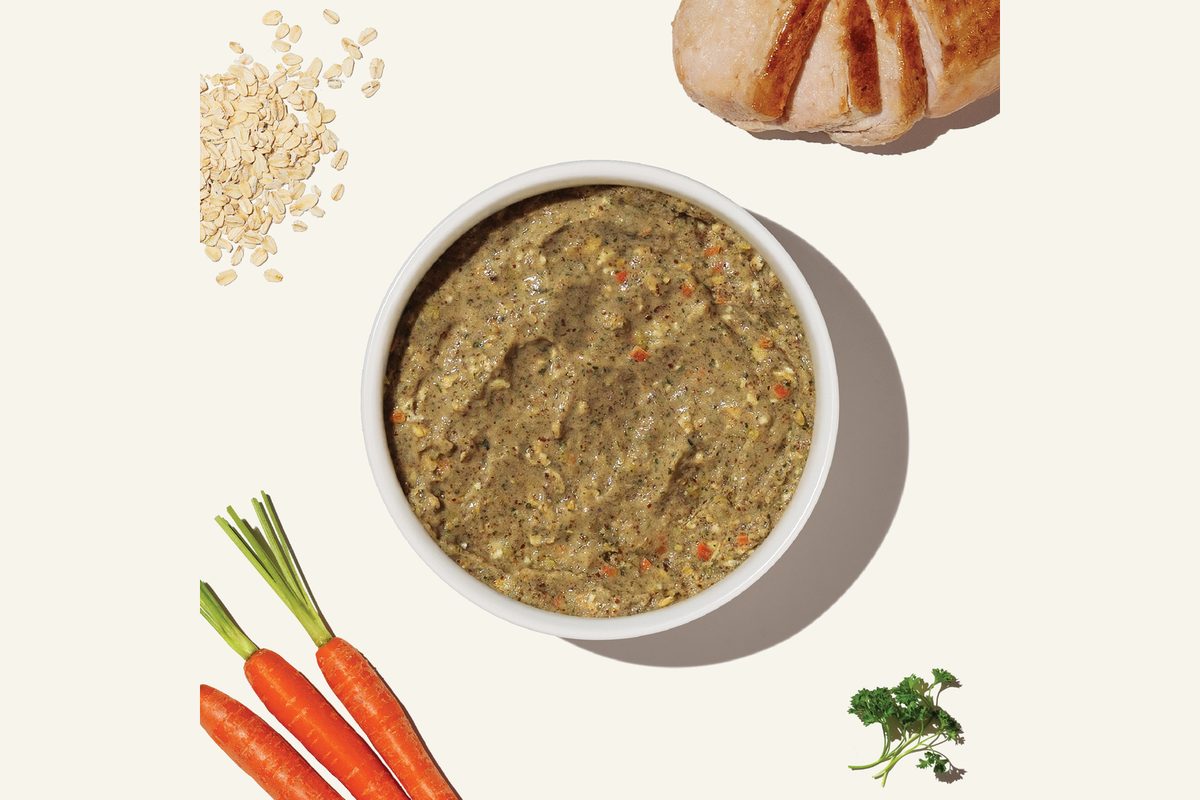
THK’s broader dehydrated dog food lineup includes options organized by recipe and life stage. These are not consolation picks. For the right dog, a puppy or senior formula can outrank an all-purpose everyday recipe because life-stage fit is a threshold, not a bonus.
Wholemade Whole Grain Beef, Oat & Salmon Senior
The Wholemade senior Beef, Oat & Salmon recipe gives older-dog households a current senior-specific option. It deserves consideration when its adequacy statement, calories, ingredients, and feeding chart align with the individual senior.
Older dogs are not nutritionally identical. One healthy active senior may do well on a standard adult plan, while another needs veterinary management for kidney disease, heart disease, obesity, muscle loss, pancreatitis, or dental pain. “Senior” on the package supports a use case, not a medical prescription.
Wholemade Whole Grain Beef & Salmon Puppy
The Wholemade puppy Beef & Salmon recipe is built around growth. Puppy food selection should confirm the current adequacy statement and whether it covers the puppy’s anticipated adult size. Large-breed growth deserves particular veterinary attention because excess energy and mineral balance matter.
Puppies also need frequent portion reassessment as weight changes. A measured dehydrated routine can make intake visible, but the chart must be revisited instead of using the first-week amount for months.
Current limited-ingredient lineup
The THK limited-ingredient dehydrated collection lets owners compare current recipes within the format. Select by the exact protein and full ingredient list, not by the word “limited” alone. If the goal is allergy diagnosis or disease management, involve the veterinarian before rotating among formulas.
Whole grain versus grain free
Grain preference should follow the individual dog’s needs and veterinary advice. Grain free is not automatically more natural, digestible, or healthful. Whole-grain recipes can be appropriate complete foods for many dogs. A dog with a specific diagnosed ingredient issue needs targeted selection, not a broad category assumption.
Do not share ratios across the lineup: Use the current package directions for each formula. THK’s common sequence is warm water, stir, wait three minutes, and serve, but dry-food and water amounts can differ.
Terminology box: formats are not interchangeable
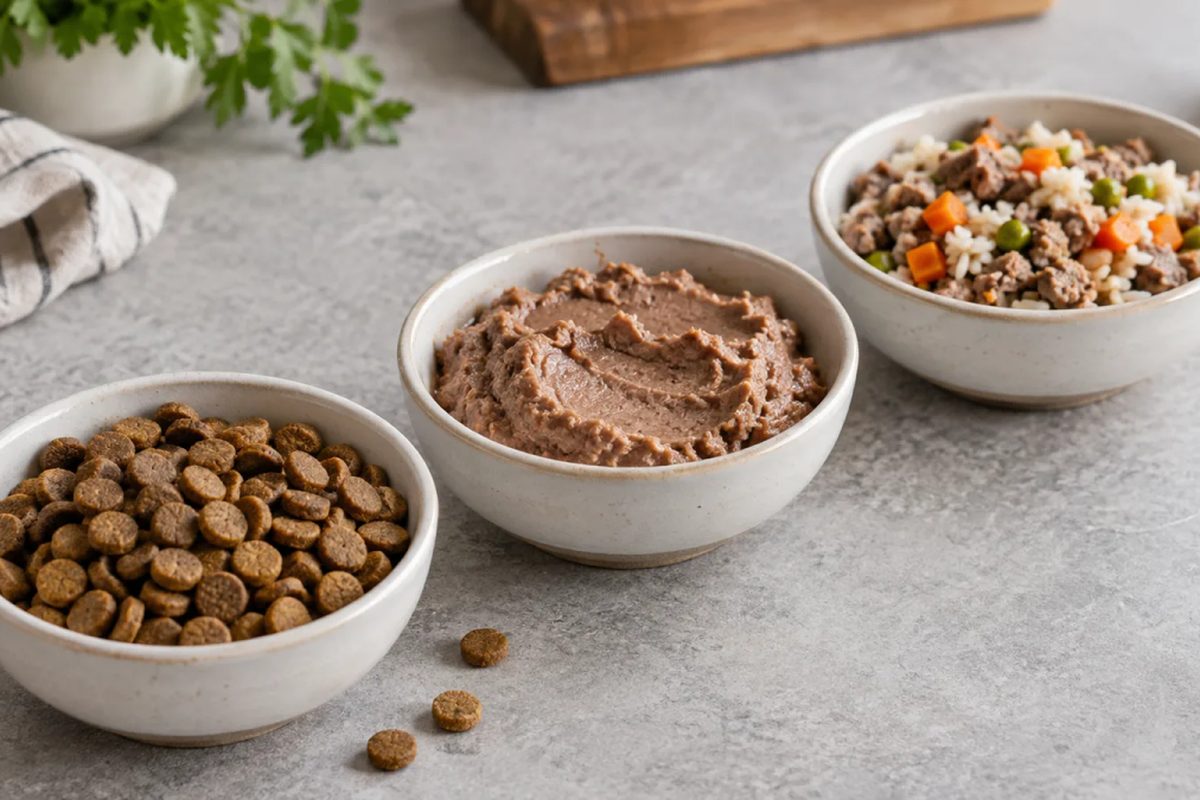
| Dehydrated | Moisture removed through dehydration | Often rehydrated according to label | “Always raw” |
| Freeze-dried | Moisture removed through freeze drying | Product-specific dry or rehydrated use | “Same as dehydrated” |
| Air-dried | Moisture reduced through controlled air drying | Often served as dense pieces | “Another word for dehydrated” |
| Raw | Ingredients not cooked to conventional kill-step temperatures | Requires product-specific pathogen handling | “All minimally processed food is raw” |
| Kibble | Extruded or otherwise manufactured dry food | Usually measured and served dry | “Dry format proves poor quality” |
THK says its dehydrated proteins are gently cooked to at least 165 degrees Fahrenheit before dehydration. That source-backed description is more useful than assigning the food to a raw category it does not claim.
What Is Dehydrated Dog Food?
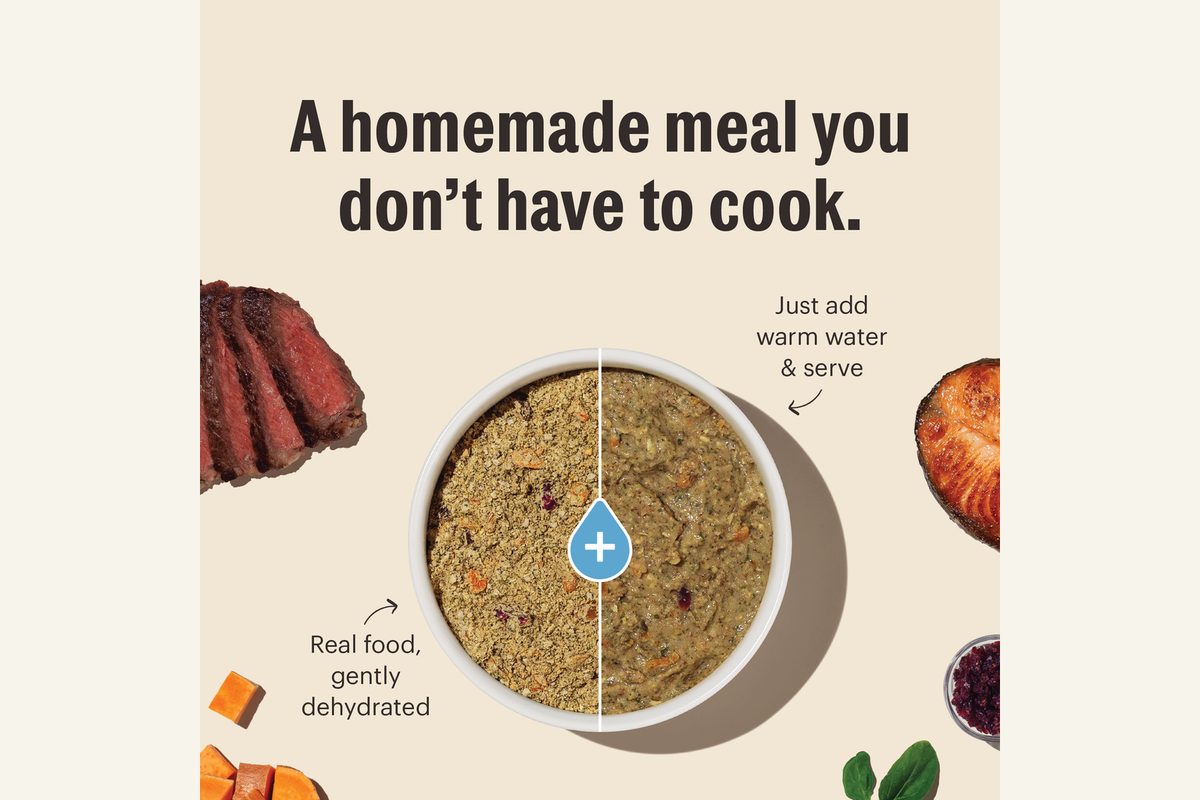
Dehydrated dog food is a low-moisture product created by removing water from a prepared recipe. The owner later adds water according to the product’s directions. The final texture and volume depend on the recipe, dry portion, water ratio, and wait time.
The format creates practical differences:
- Dry packages can be compact relative to the hydrated meal.
- Meal preparation requires accurate food and water measurements.
- Rehydration adds moisture directly to the bowl.
- Prepared leftovers become perishable and need refrigeration.
- Cost should be assessed by daily dry portion or prepared serving.
- Texture may appeal to some dogs and not others.
Dehydration does not determine whether a product is complete and balanced. It also does not prove superior digestibility, ingredient quality, safety, or health outcomes. Those questions require the exact formulation, nutritional adequacy, manufacturing controls, current label, and individual response.
Dehydrated versus raw
Some products in the wider market may combine dehydration with raw ingredients, while others are cooked before dehydration. Therefore, “dehydrated raw dog food” is a product-specific category, not a synonym for all dehydrated foods. THK explicitly describes a cooking step for its dehydrated proteins, so calling Wholemade raw would be inaccurate.
Dehydrated versus freeze-dried
Both remove moisture but use different processes. Freeze-dried products can have different textures, storage directions, raw or cooked status, and rehydration guidance. A dog owner should never replace the preparation directions of one format with the other.
Dehydrated versus air-dried
Air-dried products are often denser and served without water. Dehydrated Wholemade foods are prepared with warm water. The distinction affects bowl volume, meal time, storage after preparation, and travel planning.
Is it “better” than kibble or wet food?
No format is universally best. A complete kibble may fit a free-feeding household better. A complete wet food may be easiest for an owner who wants ready-included moisture. A dehydrated meal may suit a household that values pantry storage and fresh warm-water preparation. The dog, label, budget, and routine decide.
How We Evaluate Dehydrated Dog Food
We use a practical evidence hierarchy. The nutritional adequacy statement and life-stage fit come first. Then we assess manufacturer transparency, preparation, calories, ingredient fit, storage, cost, and the likelihood that a household can feed the product consistently.
1. Nutritional adequacy and life stage
A sole diet must carry the appropriate complete-and-balanced statement. Puppy formulas must support growth needs, while adult and senior decisions require the correct current claim and individual assessment. Supplemental products are excluded from full-meal ranking unless clearly evaluated as toppers.
2. Company and quality-control information
The WSAVA pet-food selection guide encourages owners to ask who formulates the food, what qualifications they have, where food is made, what quality controls are used, whether finished products are tested, and whether the company can provide complete nutritional information. We value accessible answers more than vague quality adjectives.
3. Accurate processing description
We distinguish dehydrated from freeze-dried and air-dried and identify whether the manufacturer describes a cooking step. This protects readers from raw-food assumptions and helps them follow the right handling instructions.
4. Preparation clarity
Good directions specify a dry serving and water amount. The routine should be repeatable by all caregivers. We consider wait time, bowl cleanup, leftover storage, and whether travel is practical.
5. Calories and body-condition fit
The dry measure carries calories even after the serving expands with water. We look for calorie transparency and encourage adjustment based on weight and body condition. A product can be nutritionally sound but overfed.
6. Ingredient fit without list mythology
Ingredients matter when a dog has a known intolerance, a veterinary diet goal, or a household preference. We do not assume that a shorter list, absence of grains, or familiar kitchen language proves better nutrition. Formulation and adequacy matter.
7. Cost per dog-day
Package price is divided by the actual number of days it feeds the individual dog. Subscription discounts and temporary codes are excluded from the core value judgment because they can change.
8. Storage and waste
We consider how long the dry product remains usable when sealed, how much prepared food the household discards, and whether refrigerator space supports batch preparation. A smaller bag that stays fresh can offer better value than a bulk package that is mishandled.
9. Transparency about review limits
We did not feed every formula to a dog in a controlled trial. We therefore do not score taste, stool, coat, energy, or medical outcomes from first-hand observation. Product facts come from current labels and official pages, while feeding and safety boundaries come from veterinary or regulatory sources.
How to Choose the Right Formula for Your Dog
Start with the dog rather than the shelf. Write down life stage, current weight, body-condition goal, activity, diagnosed conditions, known ingredient reactions, medications, current food, and reason for considering a change. Then use that profile to filter formulas.
Step 1: Define the feeding job
Is the product intended to be the full diet, part of mixed feeding, or a topper? This one answer prevents a supplemental food from replacing a meal and prevents a full portion from being added on top of an already complete calorie plan.
Step 2: Check adequacy and life stage
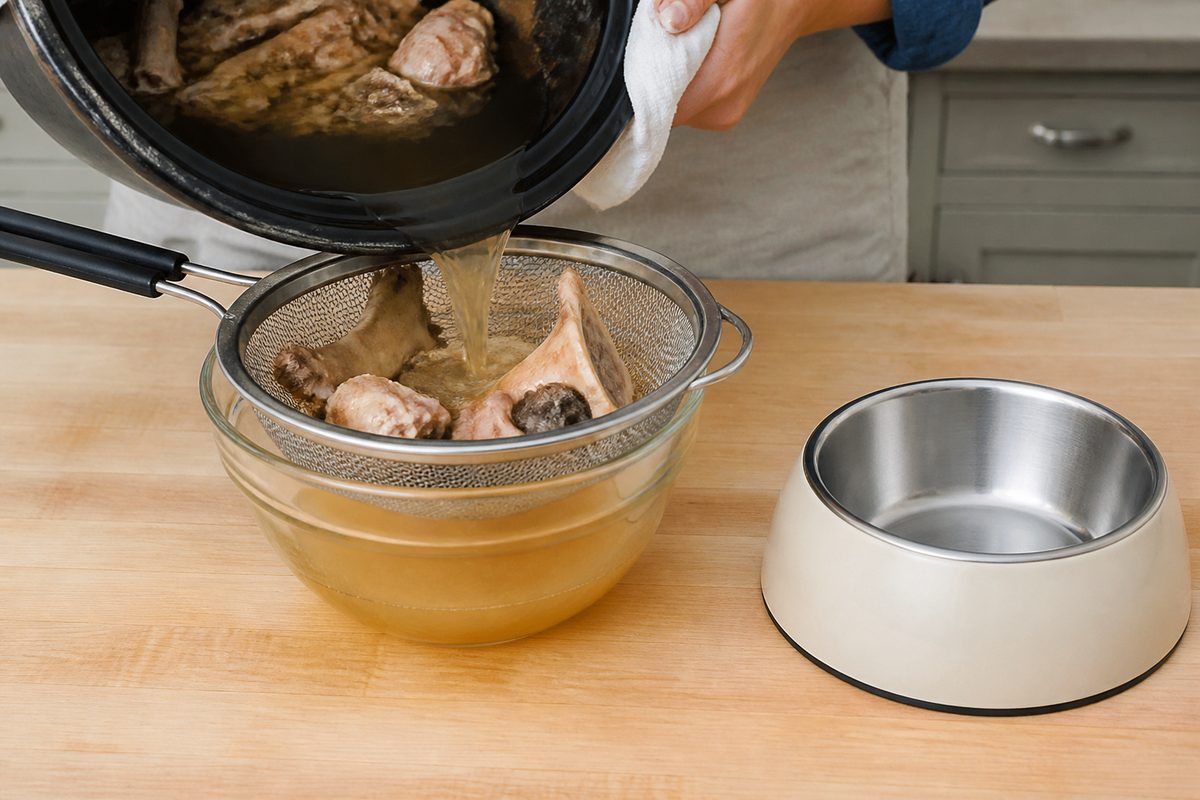
Read the package statement. Do not assume a brand-level answer. One THK product can be complete while a broth or topper is supplemental. If the dog is a puppy, pregnant, nursing, or medically complex, ask the veterinarian to verify fit.
Step 3: Match ingredients to evidence, not fear
Avoid known triggers and follow veterinary diet restrictions. Do not eliminate grains, proteins, or other categories solely because social media labels them inflammatory or low quality. Unnecessary restriction can make diet selection harder without solving the real problem.
Step 4: Compare calories and daily amount
Use the dog’s current calorie plan and each candidate’s calorie statement. Estimate days per package. Consider whether the hydrated volume is comfortable and whether the dog needs two or more meals.
Step 5: Test the household workflow
Can every caregiver measure dry food and water? Is there a three-minute wait built into the schedule? Is refrigeration available? Can bowls be washed after moist meals? Can the routine travel?
Step 6: Transition and observe
Increase the new food gradually over 7 to 10 days while decreasing the former food. Track stool, appetite, vomiting, body weight, and comfort. Do not add multiple new treats during the trial.
A per-dog fit matrix
| Life stage | Current label explicitly fits | Adequacy statement is unclear or mismatched |
| Ingredient needs | Full formula matches known tolerated foods | Suspected reaction has not been medically evaluated |
| Texture | Dog eats soft rehydrated meals comfortably | Persistent refusal or swallowing concern |
| Calories | Measured serving supports body-condition goal | Weight changes despite accurate feeding |
| Health | Veterinarian has no conflicting diet plan | Therapeutic diet or disease requires tighter control |
| Household | Measuring, waiting, refrigeration, and cleanup are reliable | Free feeding or travel makes safe preparation inconsistent |
| Budget | Cost per dog-day is sustainable | Purchase price hides a short package duration |
Questions to ask the manufacturer
- Who formulates the food and what are their qualifications?
- What nutritional adequacy and life-stage statements apply to this recipe?
- Where is the product made and what quality controls are used?
- Is the finished product tested for nutrient and safety targets?
- What are the current calorie, feeding, preparation, and storage directions?
- Has the formula or package changed recently?
Questions to ask the veterinarian
- Does this recipe fit my dog’s life stage and health history?
- What daily calorie target should I use?
- Are any ingredients incompatible with a diagnosed condition or medication plan?
- How should I transition this dog specifically?
- Which signs should stop the trial?
- Does a limited-ingredient or therapeutic diet need stricter control?
How to Prepare, Transition, and Store Dehydrated Food
The Honest Kitchen’s general Wholemade routine is warm water, stir, wait three minutes, and serve. The ratio must come from the exact package. Write down the formula name, dry amount, and water amount before the first meal.
Preparation sequence
- Wash hands and gather clean dry and liquid measures.
- Confirm the product name and serving role.
- Measure the label-directed dry portion.
- Measure and add that recipe’s warm-water amount.
- Stir from the bottom and break up dry pockets.
- Wait three minutes or the current label time.
- Stir again and check temperature.
- Serve and observe intake.
- Refrigerate extra prepared food promptly.
Transition over 7 to 10 days
Begin with a small share of prepared dehydrated food and mostly the former food. Increase the new share while decreasing the old if appetite and stool remain normal. Slow the pace for sensitive dogs with veterinary guidance. Repeated vomiting, persistent diarrhea, pain, marked lethargy, or refusal to eat warrants attention rather than a forced schedule.
Prepared-food storage
THK’s current general guide says prepared dehydrated food may be refrigerated for 3 to 4 days. The package controls. Store it covered, label the preparation date, use clean utensils, and discard food with spoilage signs or unsafe room-temperature exposure.
The FDA’s pet-food storage guidance supports keeping food dry, clean, sealed, and traceable to its original packaging. Retain the lot code and best-by date.
Common mistakes
- Using one water ratio for every THK product
- Measuring water but estimating the calorie-bearing dry food
- Adding a topper portion without reducing other calories
- Preparing a base mix without all required additions
- Calling cooked dehydrated food raw
- Leaving a moist prepared meal out for long periods
- Forcing a transition despite significant digestive or appetite signs
- Buying by package price without calculating days of food
- Discarding the original label and lot information
How to compare two dehydrated formulas side by side
Place the current packages next to each other and compare the same fields in the same order. Start with nutritional role and life stage. If one food is supplemental or does not cover the dog’s life stage, it cannot win a full-diet comparison no matter how appealing its ingredients look.
Next, convert both feeding charts to the dog’s real daily amount. Record calories, dry volume or weight, meals per day, and expected package duration. Then compare preparation: water required, wait time, leftover handling, and whether every caregiver can repeat the method. Finally, compare full ingredients against known veterinary restrictions and calculate cost per day.
| Nutritional role | Record label language | Record label language | A sole diet must be complete and balanced |
| Life stage | Record adequacy stage | Record adequacy stage | Must match the dog |
| Daily calories | Calculate planned portion | Calculate planned portion | Must support body-condition goal |
| Dry food per day | Record actual amount | Record actual amount | Drives package duration and cost |
| Water and wait | Copy directions | Copy directions | Must fit household routine |
| Ingredients | Flag relevant items | Flag relevant items | Use diagnosed needs, not list length |
| Days per package | Calculate | Calculate | Compare actual value |
| Prepared storage | Copy label window | Copy label window | Must fit food-safety capacity |
Do not award points for a claim that has no defined relevance to the dog. “Premium,” “holistic,” and “superfood” can sound positive without answering adequacy, calories, or fit. Conversely, a familiar grain or vitamin name should not be treated as a defect merely because it is not picturesque.
Small dogs, large dogs, and package economics
Small and large dogs do not need different principles, but their portions expose different practical issues. A small dog may take a long time to finish a package. The owner should protect the dry product from humidity, pests, and contamination and choose a size that can be used within label quality guidance. A small mouth may also prefer a thoroughly hydrated, smooth texture, though the individual dog decides.
A large dog may finish a package quickly, making daily cost and storage volume more important. Owners should calculate how many boxes or bags are required per month at the current feeding amount. Buying more does not help if preparation becomes inconsistent or if bulk storage compromises freshness.
Large-breed puppies are a separate nutrition decision. Growth adequacy and anticipated adult size need explicit attention. Do not use a generic adult recipe or merely increase an adult portion because the puppy is large. Confirm the current puppy formula and veterinary growth plan.
For every size, use body condition and weight trend rather than bowl size as the adjustment signal. A hydrated meal can look substantial because water adds volume. The dog’s calories still come primarily from the measured dry food.
A 30-day feeding-trial framework
A home trial does not prove medical superiority, but it can show whether the formula is practical, accepted, tolerated, and compatible with the dog’s weight goal. Begin only when the dog is medically stable and the veterinarian has not prescribed a conflicting diet.
Before transition: Record the exact current food, daily amount, treats, body weight, body-condition goal, stool pattern, appetite, medications, and reason for changing. Save the new package label and lot information. Decide which observations would stop the trial.
Days 1 through 3: Prepare a small amount of the new food exactly as directed and mix it into a mostly familiar meal. Record the actual dry quantity and water. Observe appetite, vomiting, stool, gas, comfort, and skin or ear signs without assuming the new food caused every change.
Days 4 through 7: Increase the share if the dog is doing well. Decrease the former food so total calories remain appropriate. Keep treats and supplements stable. If stool softens mildly, pause the increase; if signs are persistent, severe, painful, or accompanied by lethargy, contact the veterinarian.
Days 8 through 10: Reach the intended share only if the dog remains comfortable. Verify that every caregiver uses the same dry amount and water ratio. Review leftovers and package use to improve the daily-cost estimate.
Weeks 2 through 4: Keep the routine stable. Weigh the dog at a sensible interval and review body condition. Note whether appetite remains reliable after novelty fades. Check that the household can manage refrigeration, bowl washing, and travel.
At day 30, ask:
- Did the dog eat an appropriate amount consistently?
- Was stool acceptable and vomiting absent or at baseline?
- Did weight move in the intended direction?
- Could all caregivers prepare the food accurately?
- Was the actual cost per day sustainable?
- Did the food remain fresh and traceable in storage?
- Are there any signs that need veterinary evaluation rather than another diet change?
If the formula is not a fit, the outcome is useful. It may show a texture preference, budget mismatch, ingredient concern, or preparation problem. Avoid immediately rotating through several foods without identifying what failed.
Medical and feeding red flags
Changing food should not become a home treatment for unexplained illness. Contact a veterinarian promptly for repeated vomiting, persistent diarrhea, blood in vomit or stool, abdominal pain, marked lethargy, collapse, swelling, trouble breathing, or refusal to eat. A dog with chronic weight loss, increased thirst, increased urination, recurrent ear or skin disease, or ongoing digestive signs also needs diagnosis.
A dog that gulps a rehydrated meal, coughs while eating, regurgitates, or has known swallowing difficulty needs an individualized feeding plan. Do not make the meal extremely thin or use a raised bowl as a universal fix without guidance.
Dogs with kidney, heart, liver, pancreatic, endocrine, gastrointestinal, or urinary disease may need controlled nutrients. The fact that a dehydrated food includes whole-food-style ingredients does not override those requirements. Likewise, a limited-ingredient recipe does not replace a prescription elimination diet.
Quality-control questions that produce useful answers
The strongest manufacturer questions are specific enough to answer:
- Who formulates this recipe, and what nutrition qualifications do they hold?
- Does the company employ qualified nutrition experts, and in what roles?
- Where is the food manufactured, and which steps occur at that facility?
- What incoming-ingredient and finished-product testing is performed?
- How does the company verify that the finished food meets its nutrient targets?
- Can it provide a typical nutrient analysis beyond the guaranteed analysis?
- How are complaints and possible adverse events investigated?
- How should consumers report a package, odor, texture, or tolerance concern?
- Has this recipe or its preparation ratio changed?
- What lot and best-by information should an owner retain?
A company may protect proprietary details while still answering who formulates, how nutritional adequacy is supported, and what quality systems exist. Refusal or vague marketing language is more informative than the presence of a rustic ingredient photograph.
Common myths about dehydrated dog food
Myth: All dehydrated food is raw. Reality: Processing differs. THK says its dehydrated proteins are cooked to at least 165 degrees Fahrenheit before dehydration.
Myth: Adding water makes the meal lower calorie. Reality: Water changes volume and moisture. Calories come from the measured dry portion.
Myth: A short ingredient list is always better. Reality: It can simplify review, but the recipe still needs adequate nutrients and the listed ingredients must fit the dog.
Myth: Grain free is healthier for every dog. Reality: Grain inclusion should follow the product formulation and individual need, not a universal rule.
Myth: Dehydrated food never needs refrigeration. Reality: The sealed dry product is pantry stable under label conditions, but prepared moist food is perishable.
Myth: A senior label treats age-related disease. Reality: It identifies a life-stage use case. Diagnosed disease still requires veterinary nutrition planning.
Myth: The highest bag price signals the best formula. Reality: Value depends on adequacy, daily portion, days per package, fit, and safe household use.
Myth: The dog will eat a new texture when hungry enough. Reality: Prolonged refusal is a welfare and medical concern. Transition gradually and investigate appetite change.
Long-term review after the food is established
Reassess the food at wellness visits and whenever the dog’s age, activity, health, or weight changes. Bring the exact formula name and daily dry amount. Tell the veterinary team about toppers, treats, chews, and supplements because they affect calories and ingredient exposure.
Check the package with each purchase. Product names can remain while formulas, calories, or directions change. If a new bag looks or smells substantially different, pause and contact the company with the lot information rather than assuming the variation is harmless.
Watch body and muscle condition, not only scale weight. A senior can maintain pounds while losing muscle. An athletic dog can need more calories during a working season and less afterward. A measured dehydrated routine makes adjustment possible, but the correct adjustment belongs to the individual dog.
Keep preparation honest over time. Scoops become heaped, water gets estimated, and toppers creep upward. Periodically measure the measure: confirm the scoop volume, level the portion, and compare the current routine with the written plan. Consistency is one of the main benefits of a label-directed product, but only when the household preserves it.
How to discuss the choice at a veterinary visit
Bring the exact current formula, not only the brand. State the dry amount per meal, water amount, meals per day, toppers, treats, supplements, and recent weight trend. Tell the veterinarian whether the product is used as the full meal or in mixed feeding. Those details let the team assess calories, life-stage fit, ingredient restrictions, and whether a therapeutic diet is being displaced.
Ask for a body-condition and muscle-condition assessment. A hydrated meal can look generous while the dog gains or loses weight. Seniors in particular may lose muscle without an obvious scale change. Puppies may outgrow a portion quickly.
Report practical outcomes without assigning cause: “The dog ate 90% of measured meals and stool stayed normal” is stronger than “the food improved digestion.” Note vomiting, itching, ear signs, thirst, urination, or behavior changes and let the veterinarian interpret them.
Prepared serving, not dry package, is the real unit
Dehydrated food invites misleading comparisons because a compact dry package expands with water. Water is valuable for texture and meal moisture, but it is not additional nutrition. Compare products by daily calories, dry quantity, days per package, and total monthly cost.
For mixed feeding, calculate the THK portion and the food it replaces. If the dog’s existing food is not reduced, the dehydrated addition increases daily calories. Record the dry THK measure because the final hydrated volume varies with water.
Waste also affects value. A recipe that the dog reliably eats in measured portions can be more economical than a cheaper bag repeatedly discarded. Conversely, frequent batch overpreparation can erase the convenience advantage. Prepare the amount the household can store and use safely.
Environmental and lifestyle fit
A predictable kitchen routine favors dehydrated feeding. Outdoor work, camping, boarding, disaster preparation, and long travel require more planning because safe water, an accurate measure, clean mixing, and leftover handling are still necessary. Carry the label and premeasure dry portions, but do not detach the food permanently from lot and best-by information.
Multi-dog homes should label bowls and prepare separately when formulas or portions differ. Supervise meals so one dog does not consume both. A limited-ingredient plan is only controlled when treats, chews, and access to other bowls are controlled too.
Owners who free-feed should reconsider how a prepared moist food will be handled. It should not sit out like dry kibble. Scheduled portions may be necessary for safe storage and accurate intake. If the household cannot make that change, another complete format may be the better everyday choice.
When to stop a food trial
Stop and seek veterinary guidance for repeated vomiting, persistent diarrhea, pain, marked lethargy, refusal to eat, swelling, breathing difficulty, or other acute concerns. Pause and review for unplanned weight change, recurrent skin or ear signs, chronic soft stool, or increasing thirst and urination.
Do not continue because a package was expensive or because a transition “should” take a fixed number of days. A food can be well formulated and still not fit an individual dog. The purpose of a controlled trial is to gather safe information, not force a predetermined answer.
If the issue is only preparation consistency, correct the exact measurement and observe. If the formula conflicts with a medical plan or ingredient restriction, choose another veterinary-approved food. If the dog refuses the texture but remains healthy, another complete format may be more suitable than escalating toppers.
Frequently Asked Questions
Some formulas are complete and balanced, while base mixes, toppers, and supplements may not be. Read the nutritional adequacy statement for the exact product and confirm that it covers the dog’s life stage before using it as the sole diet.
No. Dehydration and freeze drying are different processes, and either category can include different cooking approaches. The Honest Kitchen says its dehydrated proteins are gently cooked to at least 165 degrees Fahrenheit before dehydration, so Wholemade should not be called raw.
Follow the product’s label. THK Wholemade recipes use warm-water preparation. Measure the recipe-specific amount, stir, wait three minutes, and check the food before serving. Do not use one ratio for the whole lineup.
THK’s current general guidance says 3 to 4 days when prepared food is refrigerated promptly and handled safely. The package in hand controls. Discard food that was left out unsafely or shows spoilage.
Yes, when the exact recipe’s nutritional adequacy statement and life stage fit. THK currently offers puppy- and senior-specific Wholemade formulas. Puppies and medically complex seniors should have the plan reviewed by a veterinarian.
Gradually increase the correctly prepared new food while decreasing the former food over 7 to 10 days. Monitor appetite, stool, vomiting, body weight, and comfort. Slow down or seek veterinary guidance when concerns appear.
The Bottom Line
Wholemade Whole Grain Chicken is our leading everyday pick, and Wholemade Limited Ingredient Chicken is our leading shorter-recipe pick. Both earn their position through a current, understandable product role and practical warm-water preparation, not through a claim that dehydrated food is inherently superior.
The best choice for an individual dog still begins with the package and the dog. Confirm adequacy and life stage, compare calories and cost per actual serving, follow recipe-specific water directions, transition gradually, and keep prepared food safe. THK’s current puppy, senior, and limited-ingredient choices provide useful next steps when the everyday formula is not the right job match.
Sources
- The Honest Kitchen Wholemade Whole Grain Chicken
- The Honest Kitchen Wholemade Limited Ingredient Chicken
- The Honest Kitchen Dehydrated Dog Food Guide
- The Honest Kitchen Limited Ingredient Dehydrated Collection
- The Honest Kitchen Wholemade Senior Beef, Oat & Salmon
- The Honest Kitchen Wholemade Puppy Beef & Salmon
- FDA: Complete and Balanced Pet Food
- FDA: Proper Storage of Pet Food and Treats
- WSAVA: Selecting a Pet Food for Your Pet