Best Dog Food for Chihuahuas: Small Portions, Complete Nutrition
Published on October 29, 2026
Compare JustFoodForDogs recipes for Chihuahua puppies and adults, calculate small meals in grams, and plan treats and opened-package use without losing sight of complete nutrition.
Sponsored by JustFoodForDogs. Vetstreet may earn a commission through links in this article.
The best dog food for Chihuahuas provides complete nutrition for the dog’s life stage in portions that suit their individual needs. With a tiny dog, the practical details matter: a little extra at each meal, a generous treat, or an unfinished food package can complicate an otherwise sensible feeding plan.
JustFoodForDogs offers several recipes worth comparing. This guide explains their current puppy and adult eligibility, shows how to calculate meals in grams, and connects those portions to the food’s refrigerated storage window.
What Makes a Good Chihuahua Food?
There is no universal number-one food for every Chihuahua. Start with life-stage adequacy, individual tolerance, measured portions, and a comfortable texture. The right choice should also fit the owner’s ability to store, prepare, and serve it consistently.
A Chihuahua mix needs the same assessment. Neither a breed label nor a food’s popularity establishes that it supplies the right nutrition for that particular dog. Our guide to reasons a Chihuahua might be the right breed for you explores the household fit; feeding decisions require a closer look at the individual.
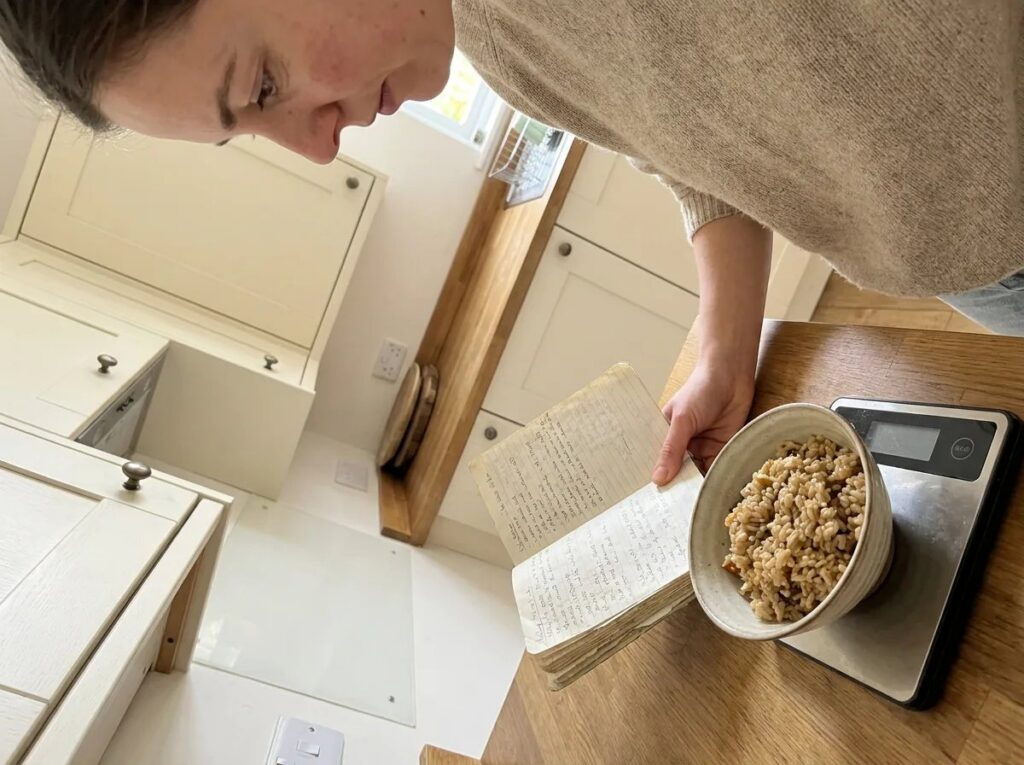
An ingredient list tells you what went into a recipe, but it does not answer every nutritional question. Look for the statement explaining whether the food is complete and balanced for growth, adult maintenance, or all life stages. A product intended for intermittent or supplemental feeding has a different role from a complete main diet.
Key Takeaways
- Read the exact life-stage statement before choosing the main food.
- Establish an individual daily calorie target, including treats and other extras.
- Use the recipe’s calorie density to calculate measured portions.
- Choose a texture the dog can comfortably eat and a storage routine the household can follow.
Comparing dog food brands becomes more useful when you ask specific questions: Is this recipe appropriate for my puppy or adult? How many calories are in a gram? What information does the manufacturer provide about formulation and feeding? A veterinarian’s recommendation should connect those answers to your dog’s health and body condition.
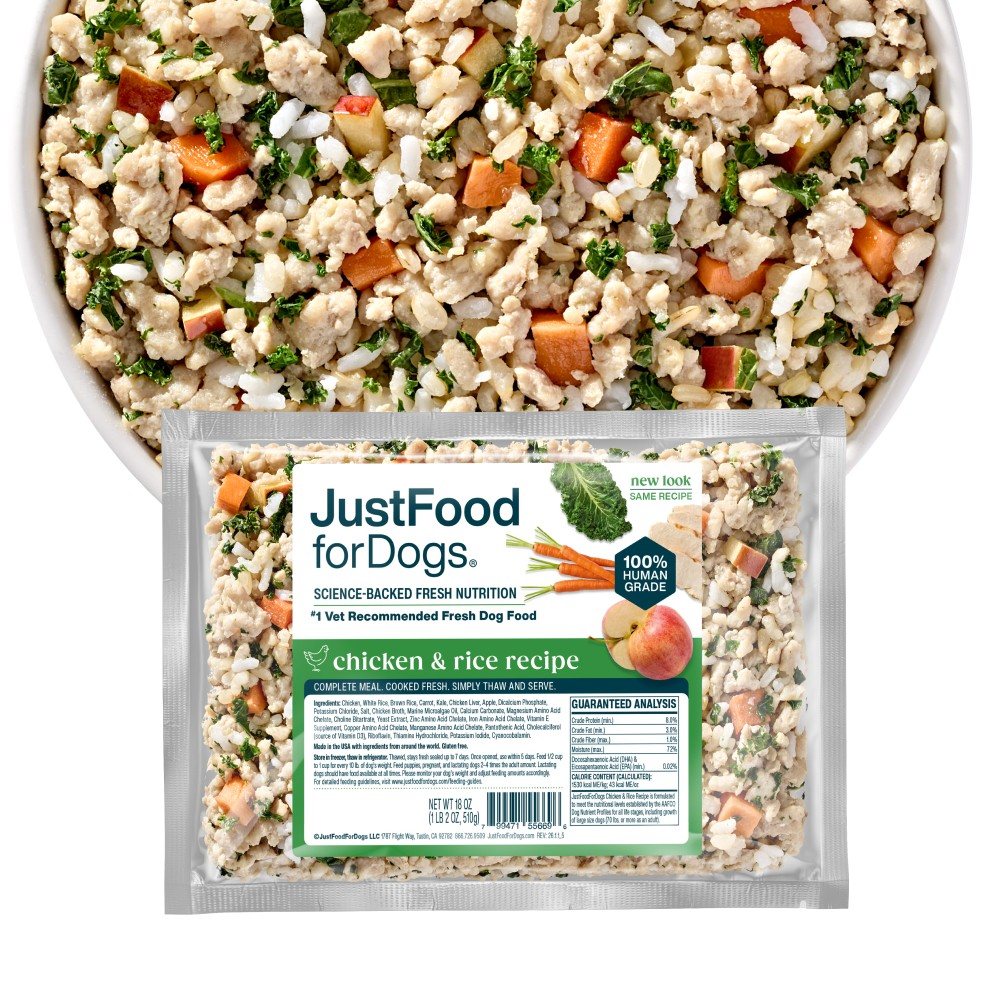
JustFoodForDogs Chicken & Rice
Check the current Chicken & Rice recipe, portions and ordering options.
Homemade food needs the same nutritional care. Meat, rice, and vegetables do not automatically make a complete diet, even when the portions look varied. If you want to cook at home, use a professionally formulated recipe and follow its ingredients and supplements precisely. Raw food also requires assessment of nutritional completeness and food safety; serving it raw does not establish an advantage for Chihuahuas.
For a Chihuahua with a sensitive stomach, consider what the dog already tolerates and whether symptoms need investigation. Recurrent vomiting, diarrhea, or appetite changes should not become a cycle of guessing at ingredients. Chihuahuas do not all share one food allergy, and no recipe can be selected as a breed-wide cure.
JFFD Choices for Chihuahua Puppies and Adults
The healthiest food for an individual Chihuahua is an appropriate complete recipe served in the correct portion. Among JFFD’s fresh foods, checking the current recipe’s adequacy statement narrows the choice before flavor or convenience comes into play.
Four useful options have different calorie densities and life-stage eligibility:
- Chicken & Rice: 1530 kcal/kg, with an all-life-stages statement that includes growth.
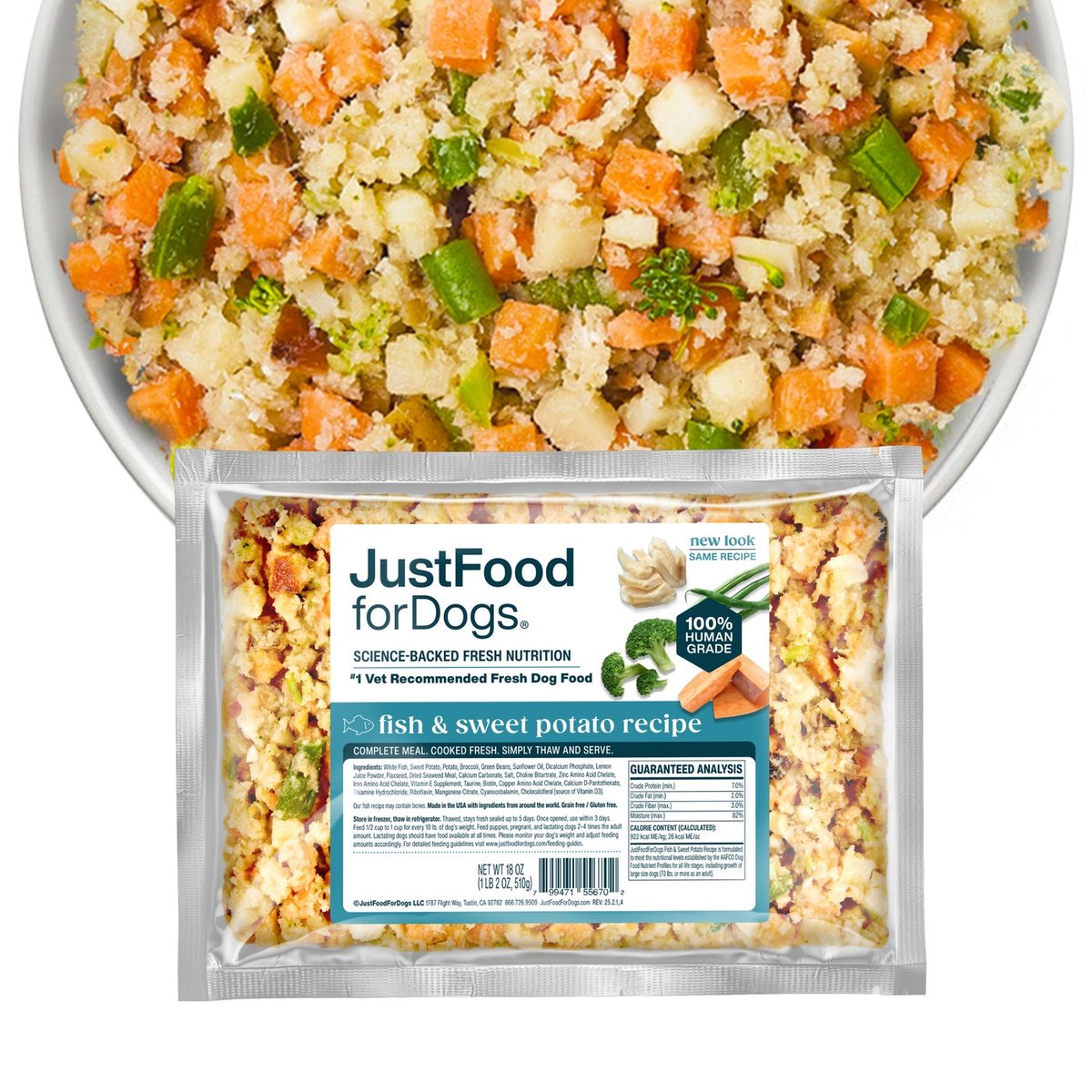
- Fish & Sweet Potato: 922 kcal/kg, also suitable for all life stages, including growth.
- Beef & Russet Potato: 1559 kcal/kg, intended for adult maintenance.
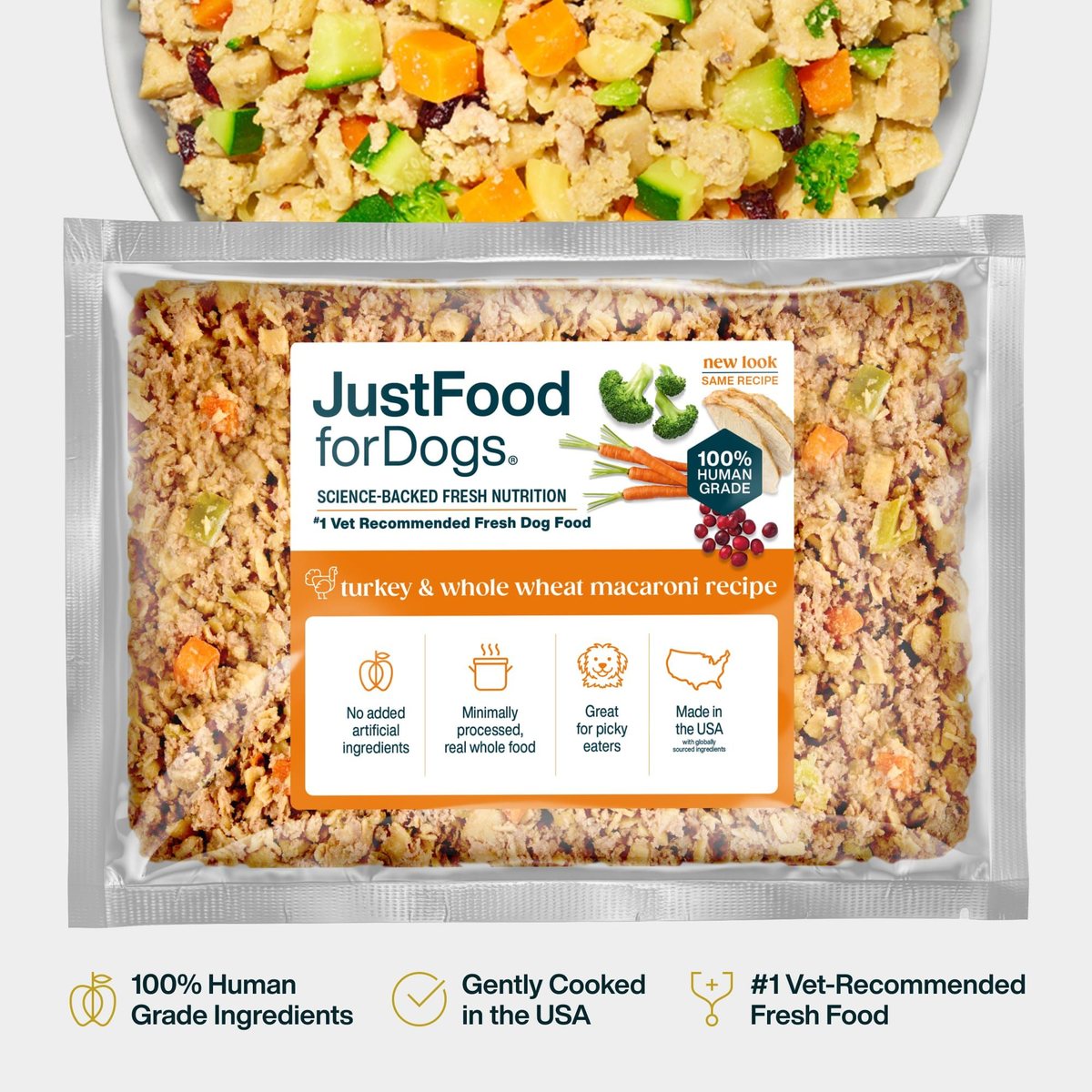
- Turkey & Whole Wheat Macaroni: 1741 kcal/kg, intended for adult maintenance.
These differences have a practical consequence. A dog eating Fish & Sweet Potato needs more grams to receive the same calories as a dog eating Turkey & Whole Wheat Macaroni. The larger serving is not evidence that the fish recipe is less complete, and the smaller turkey serving is not automatically too little.
JustFoodForDogs Fish & Sweet Potato
Check the current Fish & Sweet Potato recipe, portions and ordering options.
Current Chicken & Rice includes chicken, white and brown rice, vegetables, chicken liver, and a nutrient blend. It provides one option for owners seeking a cooked chicken recipe that can meet growth as well as adult nutritional needs.

Fish & Sweet Potato uses a blend that includes cod, pollock, and haddock. If you are looking specifically for a salmon dog food, this is a different fish recipe. Choose it for its actual formulation and suitability rather than treating all fish ingredients as interchangeable.
Our JustFoodForDogs review explains more about the brand’s range. For this comparison, the key distinction is straightforward: all four recipes can be considered for appropriate adults, but only Chicken & Rice and Fish & Sweet Potato among these four qualify for growth.
What should I feed my Chihuahua puppy?
Choose a complete food whose adequacy statement covers growth, then establish a puppy-specific feeding plan. The current Chicken & Rice and Fish & Sweet Potato statements include growth, including that of large-size dogs. A Chihuahua does not need that large-size qualification, but the full wording confirms that these are not adult-only recipes.
Beef & Russet Potato and Turkey & Whole Wheat Macaroni are adult-maintenance foods. They should not replace a growing puppy’s main diet simply because the puppy prefers them or eats only a small amount.
Ask your veterinarian about meal frequency and how to adjust portions as your puppy develops. A tiny puppy’s feeding schedule should not be copied from the adult example below. Growth, current weight, appetite, and the ability to eat reliably all matter, so arrange guidance before extending gaps between meals.
How to Measure Small Fresh-Food Portions
“Small breed” does not identify one correct serving size. Nor does the term “teacup” provide a separate calorie formula. A very small Chihuahua still needs an individual daily calorie target based on age, body condition, activity, health, and whether growth is continuing.
A starting estimate is only that. Your veterinarian can help set it, then assess whether the resulting intake maintains appropriate weight and body condition. The AAHA nutrition guidelines emphasize adjusting feeding to the animal rather than treating a calculation as a permanent prescription.
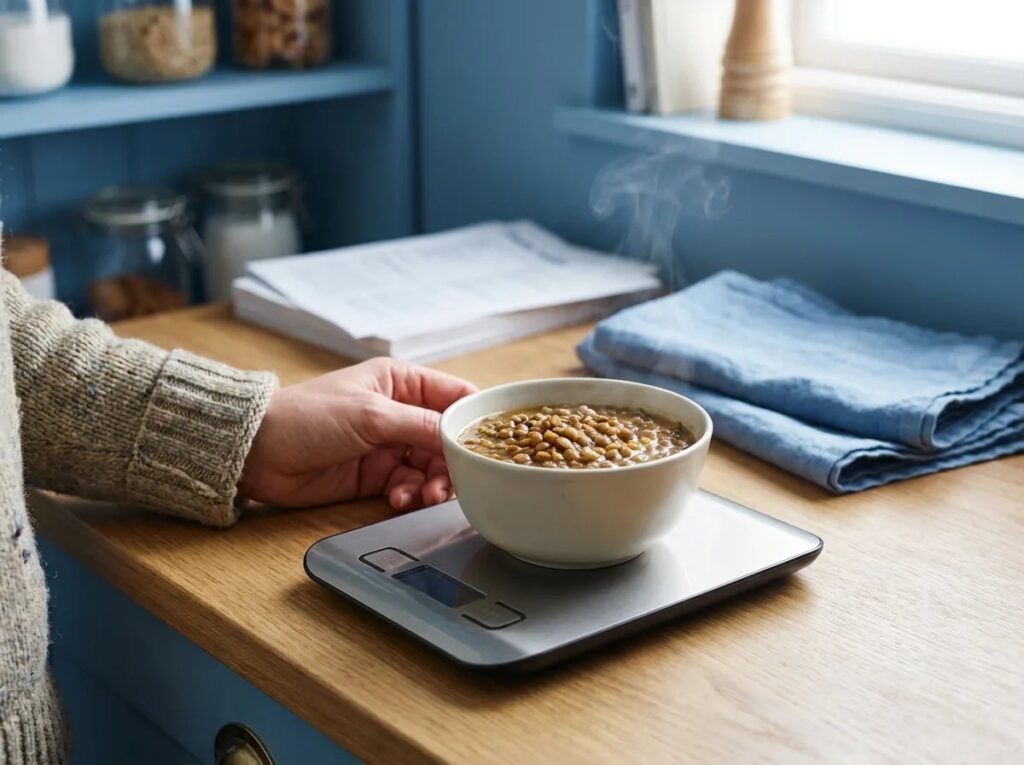
Once you know how many daily calories will come from a particular recipe, use its kcal/kg figure:
Grams per day = daily calories assigned to that food ÷ kcal/kg × 1000.
For the illustrative adult example below, assume 150 calories per day are assigned to the main recipe, divided into two equal meals. This is a calculation example, not a recommended daily intake for every Chihuahua. Any separately planned treats must already be accounted for in the dog’s overall allowance.
Make small portions reproducible using recipe calories and a stated daily target rather than visually estimated scoops.
| Illustrative adult example | Recipe calorie density | Grams per day for 150 calories | Grams per meal, split equally into two meals |
|---|---|---|---|
| Chicken & Rice | 1530 kcal/kg | About 98 g | About 49 g |
| Fish & Sweet Potato | 922 kcal/kg | About 163 g | About 81 g |
| Beef & Russet Potato | 1559 kcal/kg | About 96 g | About 48 g |
| Turkey & Whole Wheat Macaroni | 1741 kcal/kg | About 86 g | About 43 g |
The figures are rounded for practical use. The unrounded fish amount is about 162.7 grams daily, or 81.3 grams per meal. Small rounding differences do not change the method: calculate the day’s amount first, then divide it according to the feeding plan.
This comparison also shows why switching recipes requires a new portion calculation. Serving 98 grams of Fish & Sweet Potato would provide about 90 calories, whereas the same weight of Chicken & Rice provides about 150. Keeping the same spoonfuls during a switch can change intake substantially.
Can I estimate a Chihuahua’s fresh-food portion by eye?
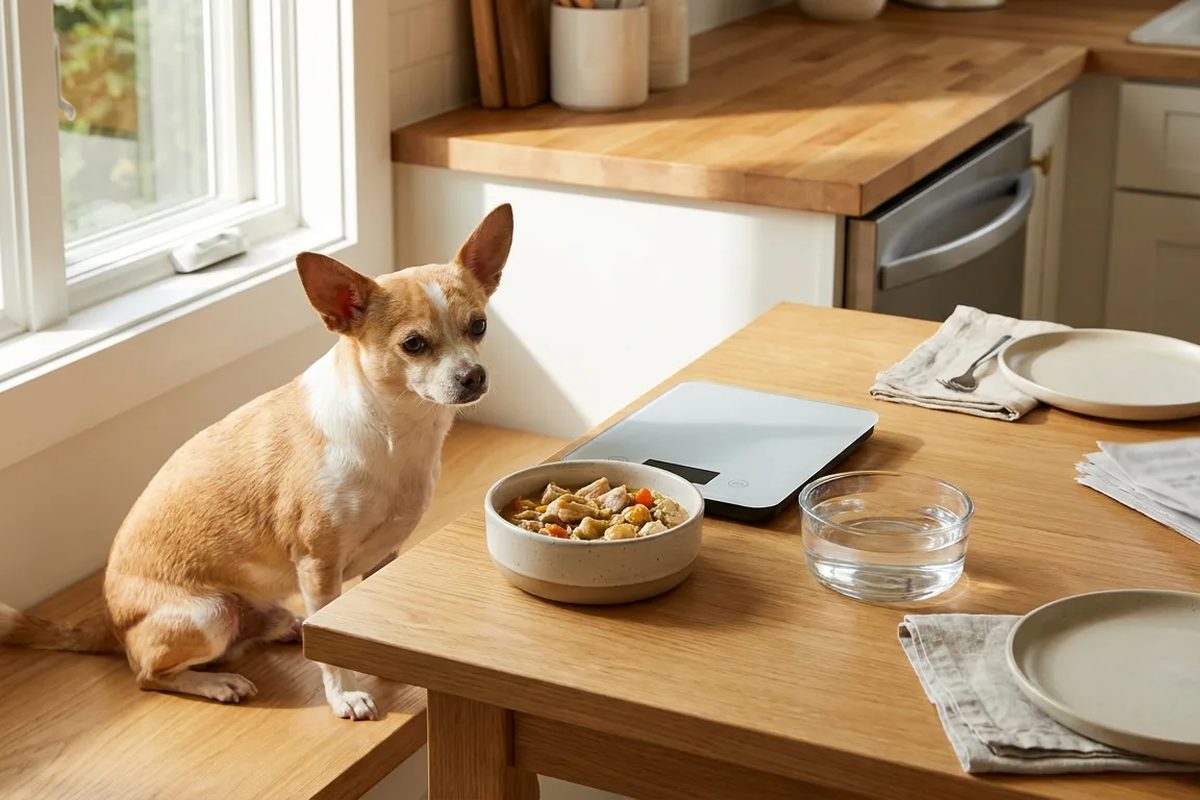
A kitchen scale makes small servings more reproducible. A spoonful can vary with the shape of the spoon, how firmly the food is packed, and which ingredients it contains. Those differences become more noticeable when the whole meal is small.
Use a simple measuring routine:
- Put the clean, empty bowl on the scale.
- Use the tare function to return the reading to zero.
- Add the calculated food weight.
- If preparing several meals, weigh each portion into its own clean container.
- Keep the remaining food refrigerated according to its instructions.
Weigh a representative portion of the complete recipe rather than selecting only the meat or other favorite pieces. If your dog consistently leaves particular components, discuss that pattern with the manufacturer or veterinarian instead of assuming the calories and nutrients eaten match the amount offered.
Will your Chihuahua finish an opened package in time?
A small portion can make a package last longer than its safe refrigerated storage window. Check this before choosing a package size, especially if fresh food supplies only part of the day’s calories.
JustFoodForDogs Beef & Russet Potato
Check the current Beef & Russet Potato recipe, portions and ordering options.
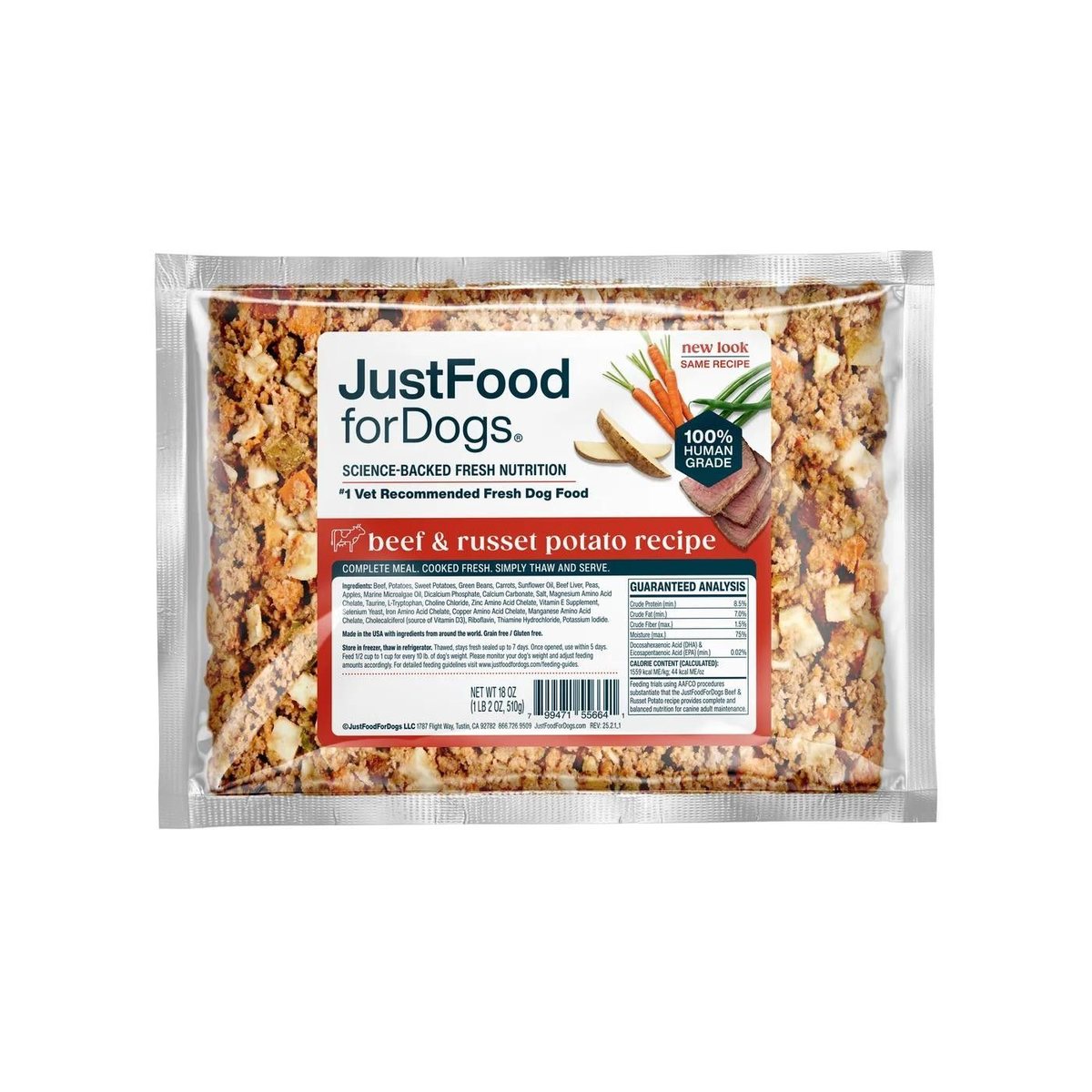
JFFD’s current storage FAQ distinguishes fish-based meals from other proteins. Fish meals can be refrigerated sealed after thawing for up to five days and used within three days after opening. The other fresh frozen proteins discussed here have seven-day sealed-thawed and five-day opened instructions. Follow any shorter directions on the actual package.
The next table uses an approximate 510-gram package weight, corresponding to an 18-ounce package, and the same 150-calorie adult example. Feeding days are calculated from the unrounded grams per day. Check the weight printed on the package you buy.
Compare the calculated feeding days in a package with the verified opened-storage window so a tiny daily ration does not imply indefinitely refrigerated leftovers.
| Recipe and approximate package weight | Grams per day | Calculated feeding days per package | Opened storage limit | Approximate amount left after that many full feeding days |
|---|---|---|---|---|
| Chicken & Rice, 510 g | 98 g | 5.2 days | 5 days refrigerated | 20 g after 5 days |
| Fish & Sweet Potato, 510 g | 163 g | 3.1 days | 3 days refrigerated | 22 g after 3 days |
| Beef & Russet Potato, 510 g | 96 g | 5.3 days | 5 days refrigerated | 29 g after 5 days |
| Turkey & Whole Wheat Macaroni, 510 g | 86 g | 5.9 days | 5 days refrigerated | 79 g after 5 days |
Those leftovers illustrate a planning issue, not an invitation to stretch the storage limit. The turkey package contains almost six days of food at the example allowance, but its opened-storage instruction remains five days. Feeding extra simply to empty it would change the calorie plan.
Before ordering, ask JFFD about appropriate package options and manufacturer-approved handling for smaller portions. Do not assume that refreezing an opened or thawed meal is acceptable without checking. If some food cannot be used within its instructions, include that potential waste when comparing cost.
Opening a package also does not restart the clock on food that has already spent time thawed in the refrigerator. Track thawing and opening dates, use clean utensils, and keep storage decisions separate from whether a meal still looks appetizing.
Meal Frequency and Treats for Tiny Dogs
Organize meals around the total daily allowance, rather than adding food whenever the bowl looks empty. Dividing a measured day’s food into containers can help several household members follow the same plan without accidentally serving a second breakfast.
Treats need the same coordination. A reward that seems small to a person can take a meaningful share of a tiny dog’s daily intake. Account for training treats, dental chews, table scraps, and food used to give medication, not just products labeled “treats.”

AAHA recommends that complete food provide at least 90 percent of daily calories, leaving no more than 10 percent for treats and other incomplete extras. That is a ceiling for extras, not a requirement to use the full allowance. A dog with individual dietary restrictions may need a different plan.
JustFoodForDogs Turkey & Whole Wheat Macaroni
Check the current Turkey & Whole Wheat Macaroni recipe, portions and ordering options.
For example, a hypothetical total allowance of 200 calories would leave no more than 20 calories for extras under that approach. This is a separate arithmetic example, not a calorie recommendation. Read the treat’s calories per piece, break it into appropriate smaller rewards when practical, and count what is actually given.
You can also reserve a suitable portion of the complete daily food for rewards. With refrigerated fresh food, this requires attention to handling and storage; it is not something to carry unrefrigerated in a pocket throughout the day.
When using Turkey & Whole Wheat Macaroni for an adult, remember that its 1741 kcal/kg makes each gram more calorie-dense than the other recipes compared here. Divide the calculated allowance rather than adding the same volume of extras you used with a less calorie-dense food.
What time of day should I feed my Chihuahua?
Choose a consistent routine with appropriate meal spacing for the dog’s age and individual needs. There is no single clock time that makes a food healthier. For an adult whose plan includes two meals, breakfast and an evening meal may be practical; the important points are reliable access to those meals and the correct total daily calories.
For puppies, ask your veterinarian to establish the schedule rather than relying on adult meal times. If medication or a medical condition affects feeding, that requirement takes priority over household convenience.
A shared feeding note can be especially useful when schedules change. Record whether the meal was served, not simply whether the bowl is empty. In a multi-dog home, feed separately when necessary so a larger or faster dog cannot take the Chihuahua’s allocation.
What if your Chihuahua needs to lose weight?
The best diet dog food for a Chihuahua is part of an individual weight-management plan. Ask your veterinarian to assess body condition and set an appropriate calorie allowance. Reducing an ordinary maintenance food dramatically without guidance can create nutritional problems.
Start by identifying everything the dog eats. A measured main meal cannot compensate for uncounted extras from several people. Reassess progress with your veterinarian and make deliberate adjustments instead of repeatedly choosing a smaller-looking scoop.
Texture, Teeth, and Picky Eating
Wet, dry, canned, and cooked fresh foods can all be suitable formats when the exact product supplies complete nutrition for the appropriate life stage. Texture helps determine whether the dog eats comfortably; it does not, by itself, establish which food is healthiest.
For dry dog food, consider whether the pieces are manageable and whether chewing appears comfortable. For wet or canned food, check nutritional adequacy and calories just as carefully. A soft food is not necessarily a complete food, particularly when it is sold as a topper.
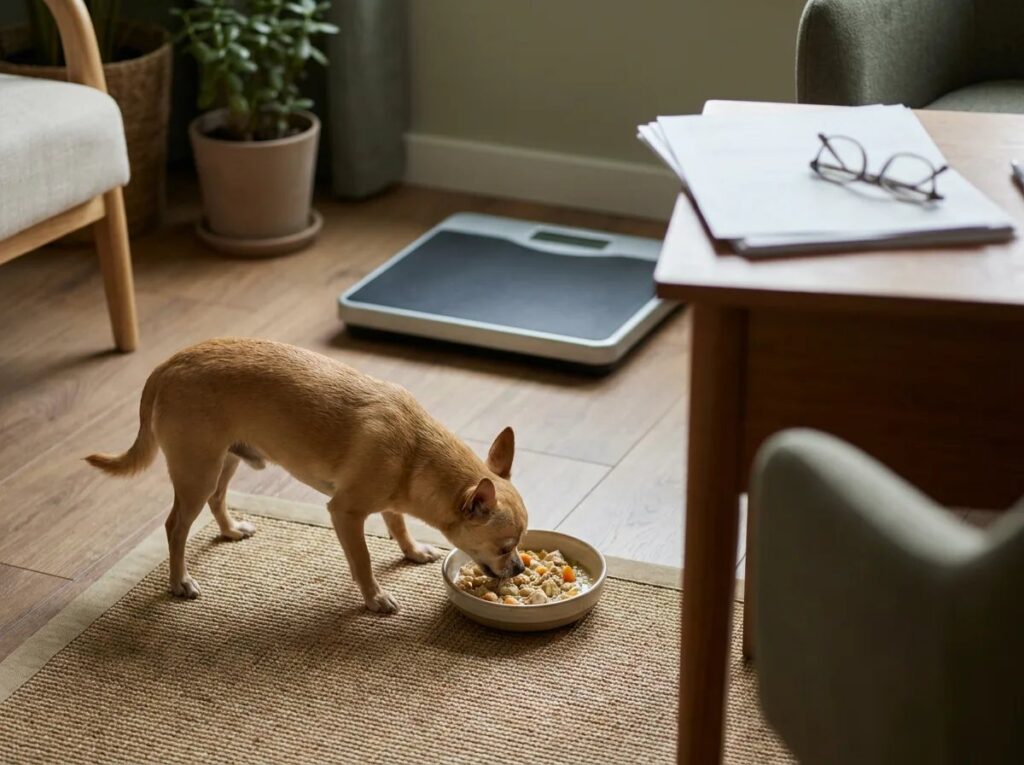
JFFD fresh recipes offer a soft, moist format that some owners find convenient for serving small measured meals. Use a clean, stable bowl the dog can reach comfortably, with fresh water available separately. Check whether the dog actually eats the portion rather than judging success by interest when the package opens.
For a picky Chihuahua, first distinguish a longstanding preference from a new appetite change. A dog that approaches food but struggles to eat needs a different assessment from one receiving enough snacks to have little interest in dinner.
Useful observations include:
- Whether the dog refuses all food or only one texture.
- Whether food is dropped or chewing seems uncomfortable.
- Whether treats are replacing a substantial part of meals.
- Whether another pet interferes with eating.
- Whether the change began after a new food, medication, or illness.
When introducing a different complete recipe, transition gradually according to the manufacturer and your veterinarian’s advice. Keep other changes limited so you can observe appetite, stool quality, and tolerance. Repeatedly replacing rejected meals with increasingly rich extras can make it harder to understand what is happening.
Soft fresh food may be easier for a dog to manage, but a texture change does not explain or treat the cause of pain. New reluctance to chew, a reduced appetite, or persistent food refusal deserves veterinary attention. This matters particularly when an owner is tempted to label every feeding difficulty as pickiness.
Senior Dogs and Special Dietary Needs
The best food for an older Chihuahua depends on what has changed. Some seniors continue to do well on an appropriate adult-maintenance recipe. Others need adjustments because their activity, appetite, body condition, muscle condition, or health has changed.
Do not automatically reduce food because of age. A less active dog gaining weight presents a different feeding problem from a dog losing muscle or struggling to eat. Looking only at the number on the scale can miss that distinction.
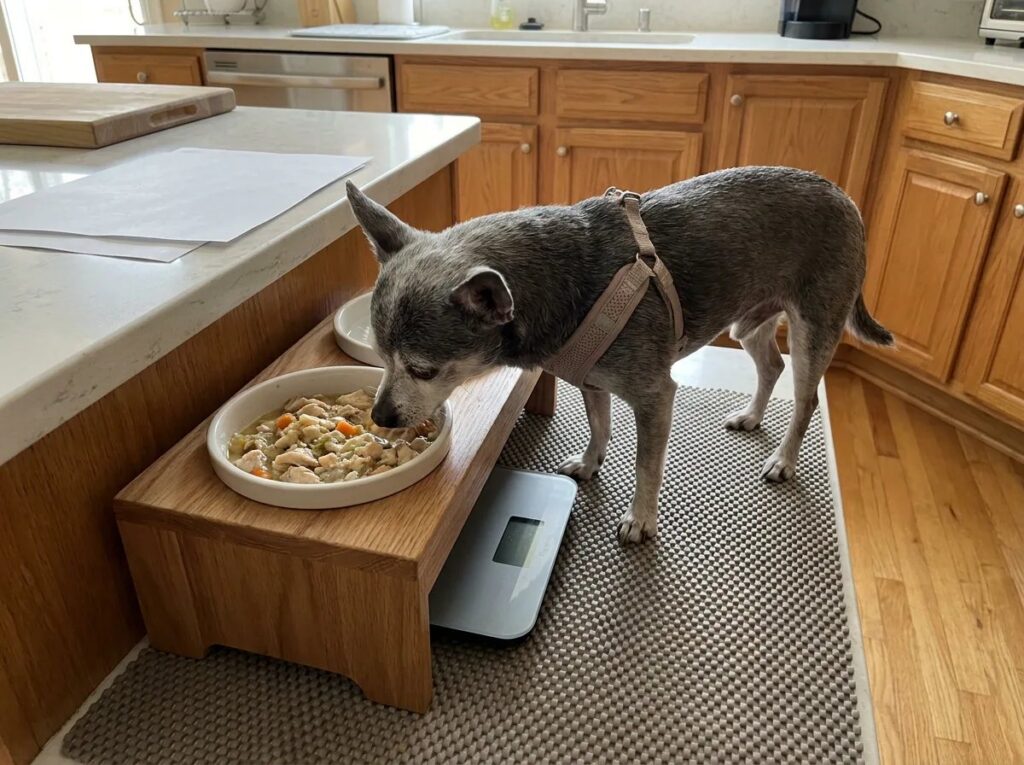
For a senior still comfortable with dry food, age alone does not require abandoning it. If you want to introduce fresh food, compare the complete recipes and recalculate the portion. A softer meal can change the eating experience, but it should not delay investigation of a new chewing problem.
Bring useful details to a nutrition discussion:
- The exact main recipe and amount served.
- Treats, chews, supplements, and medication foods.
- Recent appetite or weight changes.
- Any difficulty reaching the bowl or chewing.
- Diagnosed conditions that may affect diet selection.
A low-fat dog food is not automatically necessary for a senior Chihuahua or a Chihuahua with a sensitive stomach. When fat restriction is medically indicated, the veterinarian needs suitable nutrient information for the individual case. A guaranteed minimum fat percentage does not show the recipe’s typical or maximum fat content.
Therapeutic recipes also have specific purposes and feeding instructions. Do not replace a complete maintenance food with a veterinary product simply because its name sounds reassuring. The useful choice is the recipe that fits the dog’s diagnosis and nutritional needs, with a clear plan for portions and follow-up.
Related reading: Petful reviews JustFoodForDogs Fish & Sweet Potato, and WebVet breaks down fresh dog food cost for a small dog.
Frequently Asked Questions
Meal frequency depends on age and individual needs. For many adults, dividing the daily allowance into more than one meal is practical. Toy puppies need veterinary guidance on meal frequency and should not simply follow an adult’s once-daily schedule. Divide the planned food; additional meals do not mean additional daily calories.
A little plain cooked egg may fit within a healthy dog’s small calorie allowance for treats. Prepare it without added butter, oil, salt, or seasoning, and respect individual dietary restrictions. Egg alone is not a complete meal and should not displace a substantial portion of the balanced main diet.
No. Soft food may be easier to eat, but it does not treat dental disease. An appetite change, difficulty chewing, or dropping food calls for veterinary assessment. Follow the veterinarian’s advice about treatment and any temporary changes to food texture.
Follow the recipe-specific storage instructions and plan portions before opening. Ask the manufacturer about suitable package sizes and approved handling for small servings. Do not extend the refrigerated limit or overfeed to finish the package. Fish meals have a shorter opened window than the other fresh frozen proteins compared here.
Avoid foods toxic to dogs, including chocolate, grapes, raisins, and products containing xylitol. Keep unbalanced extras from replacing complete meals, and follow any individual dietary restrictions. Adult-maintenance food is not a puppy diet, so a growing Chihuahua needs a main food whose nutritional adequacy statement covers growth.