Pretty Litter Review: Is Health-Monitoring Cat Litter Worth It?
Published on May 20, 2026
Key Takeaways
- Pretty Litter is a silica gel cat litter that changes color based on the pH of your cat’s urine, giving cat parents a passive at-home health monitor.
- Yellow to olive green is normal. Blue can flag a UTI or alkaline urine, orange suggests acidic urine, and red signals blood in the urine.
- It is a monitoring aid, not a diagnostic tool. A color change is a prompt to call your veterinarian, not a substitute for veterinary care.
- Best fit: single-cat households, senior cats, or cats with a history of urinary or kidney issues. Multi-cat homes lose much of the benefit.
- Pricing starts around $24 per 6-pound bag (about $4 per pound) on subscription, higher than standard clay litter but offset by lightweight handling and once-monthly replacement.
- 8 lb bags are located at other retailers like Walmart and Target
If you have ever wished you could check in on your cat’s health between vet visits, you are not alone. Cats are notoriously good at hiding illness, an instinct rooted in survival, and by the time signs become visible, a condition can already be well underway.
That is the problem Pretty Litter set out to solve. In this Pretty Litter review, we look at how the color-changing silica crystals respond to the pH and chemistry of cat urine, what each shade actually means, transition guidance for switching from clay or clumping litter, and whether the health-monitoring premium is worth it for your household.
All featured products are chosen at the discretion of the Vetstreet editorial team and do not reflect a direct endorsement by the author. However, Vetstreet may make a small affiliate commission if you click through and make a purchase.
What Is Pretty Litter?
Pretty Litter is a silica gel crystal litter developed by a team of scientists and veterinarians with a specific goal: to give cat parents a simple, passive way to monitor feline urinary health at home.
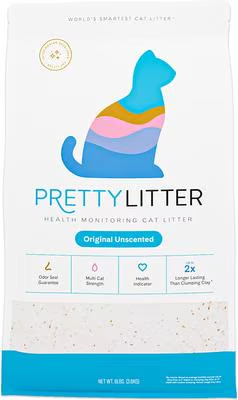
The brand offers an original non-clumping silica crystal litter (in unscented and lightly scented options), a newer clumping formula launched in 2024 for cat parents who prefer clumping litter, and monthly subscription delivery (one 8-pound bag per cat per month). The setup is simple: select the number of cats in your household, choose your formula, and Pretty Litter ships directly to your door on your preferred schedule.
What stands out immediately is the premise. Rather than being a passive, disposable product, Pretty Litter invites you to view your cat’s litter box as a source of health information. That shift in perspective is genuinely interesting and, for cat parents who want to be proactive, compelling. The brand highlights potential benefits including early detection of urinary issues, reduced litter waste, and less dust than clay litters. As with any health-adjacent product, those claims deserve a thoughtful look.
Composition and How Pretty Litter Works
This is where Pretty Litter is genuinely different from traditional cat litter. The litter is made from silica gel, a highly porous, naturally occurring mineral that is extremely absorbent and nearly dust-free. It is infused with a proprietary pH-indicator formula, so the crystals change color in response to the chemistry of your cat’s urine.
Here is what each color change means:
- Yellow or olive green: Urine pH is within a typical range. Everything looks well.
- Blue: Urine is more alkaline than expected. This may be consistent with urinary tract infections or an increased risk of struvite crystals or stones.
- Orange: Urine is more acidic than expected, which can be associated with an acid-base imbalance in the blood and may increase the risk of calcium oxalate crystals in the urine.
- Red: Blood in the urine, which could indicate FLUTD (feline lower urinary tract disease), bladder stones, kidney disease, or inflammatory conditions.
From a veterinary perspective, a few key points are important to understand. Urinary disease is among the most common and most underdiagnosed conditions in cats, particularly among middle-aged and senior males. Many cats show no obvious clinical signs until a condition has progressed significantly, and a simple, passive monitoring tool that prompts earlier veterinary conversations can meaningfully improve outcomes. Pretty Litter is a useful complement to other at-home wellness practices, like checking your cat’s vital signs at home.
Pretty Litter meets an important need here, but it is not a diagnostic tool, and this distinction matters. A color change should prompt a call to your veterinarian, not a self-diagnosis. Definitive testing (urinalysis, culture, X-rays, ultrasound) remains essential for accurate diagnosis and treatment. For more on what changes in litter box habits can signal, see Petful’s guide to urinary tract infections in cats.
The silica gel itself is safe. It is a common concern among cat parents who associate the material with the “do not eat” packets found in product packaging. However, food-grade and cat-litter-grade silica gel are non-toxic and pose no greater risk than traditional clay-based litters.
Pretty Litter vs. Traditional Cat Litter
Here is how Pretty Litter compares to the most common litter formats by the metrics that actually matter day to day. For a natural clumping alternative we have tested in depth, see our Catalyst Pet natural cat litter review. If health monitoring is not your top priority, Petful’s best cat litter for odor control roundup offers a head-to-head comparison of clumping options.
Pretty Litter vs. Common Cat Litter Types
| Format | Health Monitoring | Odor Control | Replacement Cycle | Approx. Cost / lb |
|---|---|---|---|---|
| Pretty Litter (silica) | Yes (color-changing) | Excellent | Once a month | $3.00 |
| Clumping clay | No | Good to very good | Scoop daily, refill weekly | $0.40 to $0.70 |
| Natural clumping (corn, wheat, walnut) | No | Very good | Scoop daily, refill weekly | $0.65 to $1.30 |
| Standard silica gel (non-color-changing) | No | Excellent | Once a month | $1.50 to $2.50 |
| Tofu litter | No | Good | Scoop daily, refill weekly | $1.00 to $1.50 |
Litter Box Experience and Transition Tips
Delivery and storage. Pretty Litter ships directly to your door in a lightweight, compact bag. One 8-pound bag is designed to last one cat for up to one month. Storage is simple, with no heavy jugs or bulky boxes.
Daily routine. Unlike clumping clay, Pretty Litter is non-clumping by design (in its original formula). The crystals absorb urine, which then evaporates over time, so you only need to scoop solid waste daily. The entire litter box is typically refreshed monthly, reducing maintenance compared to traditional litter boxes that require a complete change every one to two weeks.
Transition tips. If your cat has been using clay or clumping litter, make the switch gradually. Introduce a second litter box alongside the existing one and fill it with Pretty Litter. Gradually blend Pretty Litter into the original box over 7 to 10 days. Monitor for litter box avoidance, changes in frequency, or signs of discomfort.
Will your cat use it? The honest answer is that it depends on your cat. Most cats adapt well to the fine, sandy texture of silica crystals. Cats who are particularly particular about litter texture or scent may take longer to adjust, and some may need a longer transition period. For kittens specifically, see WebVet’s guide to non-clumping litter for kittens for safety considerations before introducing silica formats early.
What you might notice once you make the switch:
- Significantly reduced dust during pouring and scooping
- Less odor than traditional clay litter
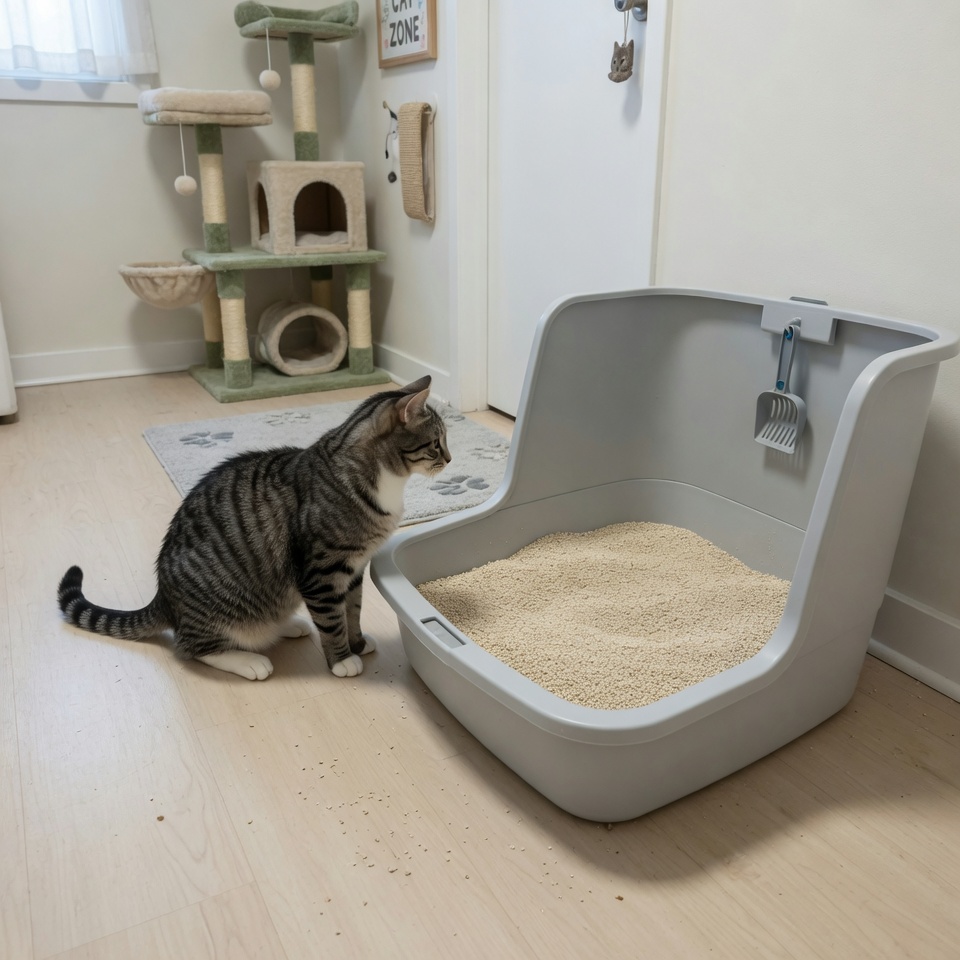
- Some crystal tracking, particularly on smooth floors
- Color changes that give you health insights you have never had before
Pretty Litter Pros and Cons
Pros
- Passive, real-time insight into your cat’s urinary health every time they use the litter box
- Lightweight, low-dust formulas are especially beneficial for cats or humans with respiratory sensitivities
- One bag lasts up to a month, meaning less frequent purchasing and less waste
- Convenient monthly subscription with home delivery
- Excellent odor control without heavy artificial fragrances
- Available in both non-clumping and clumping varieties
Cons
- Higher cost than traditional clay or clumping litters, starting around $24 per bag
- Crystal tracking can be an issue on smooth floors
- Not a diagnostic tool, color changes require veterinary follow-up rather than self-interpretation
- Some cats may take time to adjust to the silica texture
- The subscription model may not suit all households or budgets
Real-World Experience with Pretty Litter
From a practical standpoint, Pretty Litter makes a strong first impression. The bag is light enough to carry with one hand, the crystals pour easily, and the litter box looks and smells better than it does with traditional clay litter.
Day-to-day maintenance is genuinely simpler. Scoop solids daily, stir the litter occasionally, and do a full monthly refresh. For busy households, that reduction in maintenance is meaningful.
When it comes to the color-change feature, cat parents report that it changes how they engage with the litter box. What was once a chore becomes a daily health check-in, and that shift in mindset has real value.
In practice, most cats using Pretty Litter consistently show normal yellow-olive coloring, which is reassuring. When color changes do appear, they serve as an early prompt for a conversation with a vet that might otherwise have been delayed. For multi-cat households, pinpointing which cat triggered a color change can be tricky; separate litter boxes for each cat make this much easier.
The biggest question remains value. Pretty Litter costs more than conventional litter, but for cat parents who have experienced the heartbreak of a late-diagnosed urinary condition, the case for early monitoring is compelling.
Final Verdict: Is Pretty Litter Worth It?
Pretty Litter offers something traditional cat litter does not: a window into your cat’s urinary health between veterinary visits. For a species that instinctively hides illness, that window matters.
It is an excellent fit for cat parents who want:
- A proactive approach to monitoring feline health at home
- A cleaner, lighter, lower-maintenance litter experience
- Peace of mind, especially for senior cats or those with a history of urinary issues
It may not be the right choice if you prefer a budget-friendly conventional litter or if your cat is highly sensitive to changes in texture.
If you are willing to invest a little more to stay ahead of your cat’s health (and to make the litter box part of your wellness routine rather than just a chore), Pretty Litter is absolutely worth considering. Just remember: a color change is a prompt, not a diagnosis. Always follow up with your veterinarian.
Frequently Asked Questions
Veterinarians do not universally endorse any single litter brand, but many will tell you that a color-changing pH indicator is a useful early-warning signal for at-risk cats, especially seniors and cats with urinary or kidney histories. Pretty Litter is a monitoring aid, not a diagnostic tool, and any color change should prompt a vet visit rather than self-treatment at home.
The most common downsides are price (it costs more per pound than clay litter), reduced usefulness in multi-cat households (you cannot reliably tell which cat triggered a color change), tracking outside the box, and incompatibility with most automatic litter boxes that sift crystals away. Some cats also dislike the silica texture and refuse to use it.
Pretty Litter can flag conditions consistent with a urinary tract infection (typically a blue color reading from alkaline urine), but it does not diagnose a UTI on its own. The pH shift is a signal to call your veterinarian, who can run a urinalysis and culture to confirm whether an infection is present and identify the bacteria involved.
Avoid heavily scented litters that mask odor without addressing it, ultra-fine dust formulas that can irritate cat and human respiratory systems, and any litter your cat actively refuses to use. A litter your cat will not use is worse than any branding or formulation issue, because it leads to out-of-box accidents and stress for the whole household.