Chi Dog Food Review: A Veterinarian’s Take on Holistic, Whole-Food Therapy
Published on May 21, 2026
Fresh, whole-food diets have moved from the fringe of the pet nutrition aisle to the center of the conversation between veterinarians and their clients. Owners increasingly want meals that look like real food, smell like real food, and ideally support a specific wellness pattern in the dog or cat in front of them. A veterinary team’s job is to help owners separate marketing from medicine: which brands hold up to the same scrutiny veterinarians apply to therapeutic prescription diets, and which fall short the moment a clinician reads the label.
Chi Dog (and its companion line, Chi Cat) is one of the brands clients are bringing into the exam room most often. It checks several boxes worth taking seriously: veterinarian-owned, formulated with input from a board-certified veterinary nutritionist, AAFCO-compliant for all life stages, and built around recognizable whole-food ingredients rather than highly processed meals. The brand’s organizing framework, drawn from Traditional Chinese Veterinary Medicine (TCVM), is unusual in the commercial pet food space and deserves a careful, evidence-respecting look. This review walks through what stands out, what is genuinely useful in a clinical setting, and where clients should still loop their primary veterinarian in before making the switch.
All featured products are chosen at the discretion of the author. However, Vetstreet may make a small affiliate commission if you click through and make a purchase.
Is Chi Dog Food Good for Dogs? A Quick Vet Answer
For the right patient, yes. Chi Dog is a fresh, gently-cooked, AAFCO-compliant whole-food diet formulated under a board-certified veterinary nutritionist, Dr. Edward Moser (DACVN). It earns a place on a clinician’s recommendation list for healthy adult dogs, large-breed puppies, and patients with mild functional concerns such as picky eating, dull coat, or mild gastrointestinal sensitivity. Chi Dog is not a substitute for a prescription therapeutic diet when a diagnosed chronic condition is in play, and for those patients the right path remains the prescription diet matched to the diagnosis, evaluated alongside the primary veterinarian.
Chi Dog At a Glance
| Detail | What You Need to Know |
|---|---|
| Founders | Susan Bohrer, DVM, CVA, Certified Veterinary Food Therapist (15+ years integrative practice) and Chris Berg, DVM (16+ years small animal practice). |
| Nutritionist | Dr. Edward Moser, Board-Certified Veterinary Nutritionist, validates every formula against AAFCO nutrient profiles and consults on individual cases. |
| Format | Gently cooked, flash-frozen whole-food meals for dogs and cats. Delivered nationwide. |
| Recipes | Five dog formulas (Fire, Earth, Metal, Water, Wood). Two cat formulas (Fire, Water). Plus a DIY home-cook supplement. |
| AAFCO Status | Dog formulas: All Life Stages, including growth of large-size dogs (70 lb or more as an adult). Cat formulas: maintenance of adult cats. |
| Ingredients | Human-grade, USDA-inspected kitchens. No organ meats. No carrageenan or other emulsifiers. No synthetic choline. No synthetic preservatives. No ultra-processed fillers. |
| Storage | Frozen for up to 8 months. Refrigerated for 7 days once thawed. |
| Vet bottom line | A thoughtfully formulated, transparent, professionally credentialed fresh-food line that earns a clear place on the recommendation list for healthy dogs and cats and many patients with mild functional concerns. |
The Team Behind Chi Dog
From a clinical standpoint, the first thing worth examining about any fresh-food brand is who actually designed the diet. Many startup brands hire a single consulting nutritionist after the fact. Chi Dog is veterinarian-owned from the ground up.
Dr. Susan Bohrer, the brand’s founder, is a practicing veterinarian with more than fifteen years of integrative clinical experience. She holds DVM credentials along with CVA (Certified Veterinary Acupuncturist) and Certified Veterinary Food Therapist designations, with formal training in TCVM herbal therapy, acupuncture, and food therapy. That combination is uncommon: she practices both Western and Holistic medicine, which is exactly the perspective most clients want when they ask a veterinarian whether a holistic-positioned product is a sensible choice.
Co-founder Dr. Chris Berg brings a complementary background, with sixteen-plus years of small animal practice and a focus on conventional Western veterinary medicine. The two founders explicitly position Chi Dog as combining the nutritional science of conventional medicine with TCVM-informed whole-food formulation, rather than asking owners to choose between the two frameworks.
The third name on the team is the one to look for first on any commercial pet food: a board-certified veterinary nutritionist. Chi Dog states that Dr. Edward Moser, a Board-Certified Veterinary Nutritionist, validates every formula against AAFCO nutrient profiles and consults on individual cases brought to the brand. Board certification in veterinary nutrition (Diplomate of the American College of Veterinary Nutrition, or DACVN) is rare in the United States, with roughly 100 active practitioners holding it. Having one in the formulation chain is the gold standard for any small-batch commercial diet, and it is exactly what separates Chi Dog from many of the fresh-food startups that have appeared in the last decade.
Holistic and Integrative Veterinary Medicine: What This Framework Actually Is
Traditional Chinese Veterinary Medicine is a complementary practice that has been part of integrative veterinary care in the United States for several decades. It includes acupuncture, herbal therapy, food therapy, and a constitutional theory built around the concepts of Yin and Yang, Qi (vital energy), and the Five Elements (Fire, Earth, Metal, Water, Wood). Each element corresponds to a set of organ systems and clinical patterns. In food therapy, ingredients are categorized as warming, cooling, or neutral, and recipes are designed to balance a patient’s individual constitution and current symptoms.
TCVM is not a substitute for evidence-based veterinary medicine, and Chi Dog never positions it that way. Acupuncture is increasingly accepted as adjunctive therapy for chronic pain, certain neurologic cases, and rehabilitation; the body of literature supporting it has grown meaningfully over the past two decades. Food therapy is best understood as a structured way to match a dog or cat with a thoughtfully chosen whole-food diet, using a long-standing clinical framework to organize the selection. The recipes themselves still need to meet AAFCO standards, and the patient still needs a Western diagnostic workup when one is warranted.
For clients who are holistic medicine-curious, Chi Dog is a low-friction way to engage with food therapy without compromising on conventional nutritional adequacy. For clients who do not care about the framework at all, the five formulas read as well-designed, single-protein, whole-food diets organized around recognizable wellness goals. Both audiences are served.
What Chi Dog Food Does Well (The Pros)
- Veterinarian-owned and team-formulated. Co-founded by Dr. Susan Bohrer (DVM, CVA, Certified Veterinary Food Therapist) and Dr. Chris Berg (DVM). A board-certified veterinary nutritionist, Dr. Edward Moser (DACVN), validates every formula against AAFCO nutrient profiles.
- AAFCO All Life Stages with large-breed growth inclusion. The dog formulas meet AAFCO nutrient profiles for All Life Stages including growth of large-size dogs (70 lb or more as an adult). That is broader than many fresh-food competitors, which carry adult-maintenance statements only.
- Human-grade ingredients in USDA-regulated facilities. Recipes are made with ingredients edible by humans, prepared in facilities that meet USDA food-safety standards for meat and poultry processing.
- No organ meats, no carrageenan, no synthetic preservatives, no ultra-processed fillers. Chi Dog uses lean skeletal muscle as the protein backbone, avoiding the vitamin A and copper concerns that come with liver-heavy commercial and raw diets.
- Single-protein, limited-ingredient formulas. Five dog formulas and two cat formulas allow constitutional matching or rotation through novel proteins for owners exploring suspected food sensitivities, with the caveat that a formal elimination trial remains the diagnostic gold standard.
- Frozen distribution with a sound cold-chain protocol. Meals ship frozen in Green Cell Foam with dry ice. Frozen storage is approved for up to 8 months and refrigerated storage for 7 days once thawed, matching standard food-safety practice for thawed whole-food preparations.
Considerations Before You Subscribe
- Premium pricing. Chi Dog is priced in line with other premium fresh-food brands. Depending on dog size and formula choice, weekly cost runs roughly $65 for a smaller dog to more than $160 for a large dog. It is worth a frank conversation with a client about whether the long-term subscription fits the household budget.
- Freezer real estate is required. A medium or large dog on Chi Dog needs consistent dedicated freezer space. In smaller homes or multi-dog households, this is a real logistical consideration that should be planned for before the first delivery.
- Not a prescription therapeutic diet. Chi Dog is AAFCO-balanced for all life stages, not engineered for specific chronic disease states. Patients currently on prescription renal, hepatic, gastrointestinal, or low-fat diets should not be switched without the primary veterinarian’s involvement.
- TCVM framework adds a layer to understand. Owners interested in integrative care will find the elemental framework usefully organized. Owners who prefer to evaluate diets purely on conventional criteria can assess Chi Dog on its AAFCO compliance, ingredient quality, and clinical fit independent of the framework, and the brand holds up well on those criteria.
Nutritional Adequacy: AAFCO Statements and What They Tell You
The single most useful piece of information on a pet food label is the AAFCO nutritional adequacy statement. It tells you whether a food has been formulated to meet, or feeding-trial proven to meet, the nutrient profiles published by the Association of American Feed Control Officials for a specific life stage. The two language patterns that matter:
- “Formulated to meet the nutritional levels established by the AAFCO Dog/Cat Food Nutrient Profiles for…”, a complete and balanced food validated by formulation review against AAFCO numeric standards.
- “Animal feeding tests using AAFCO procedures substantiate that…”, a food that has additionally been fed to animals over a defined trial period to demonstrate it actually supports health in practice.
Chi Dog’s dog formulas carry the formulation statement for All Life Stages including growth of large-size dogs (70 lb or more as an adult). The large-breed growth inclusion is the part many clients miss, and it is meaningful: many fresh-food brands carry adult-maintenance statements only, which means they should not be fed to a Great Dane puppy or any other large or giant breed during growth. Chi Dog’s broader inclusion gives a clinician more flexibility in a multi-dog household and lets the same brand support a young patient through to senior life without changing labels at every life-stage transition.
Cat formulas carry an AAFCO maintenance-of-adult-cats statement. That is the correct, conservative label for a fresh cat food intended for general adult feeding, and it tells a clinician the recipe meets the established nutrient profile for adult cats.
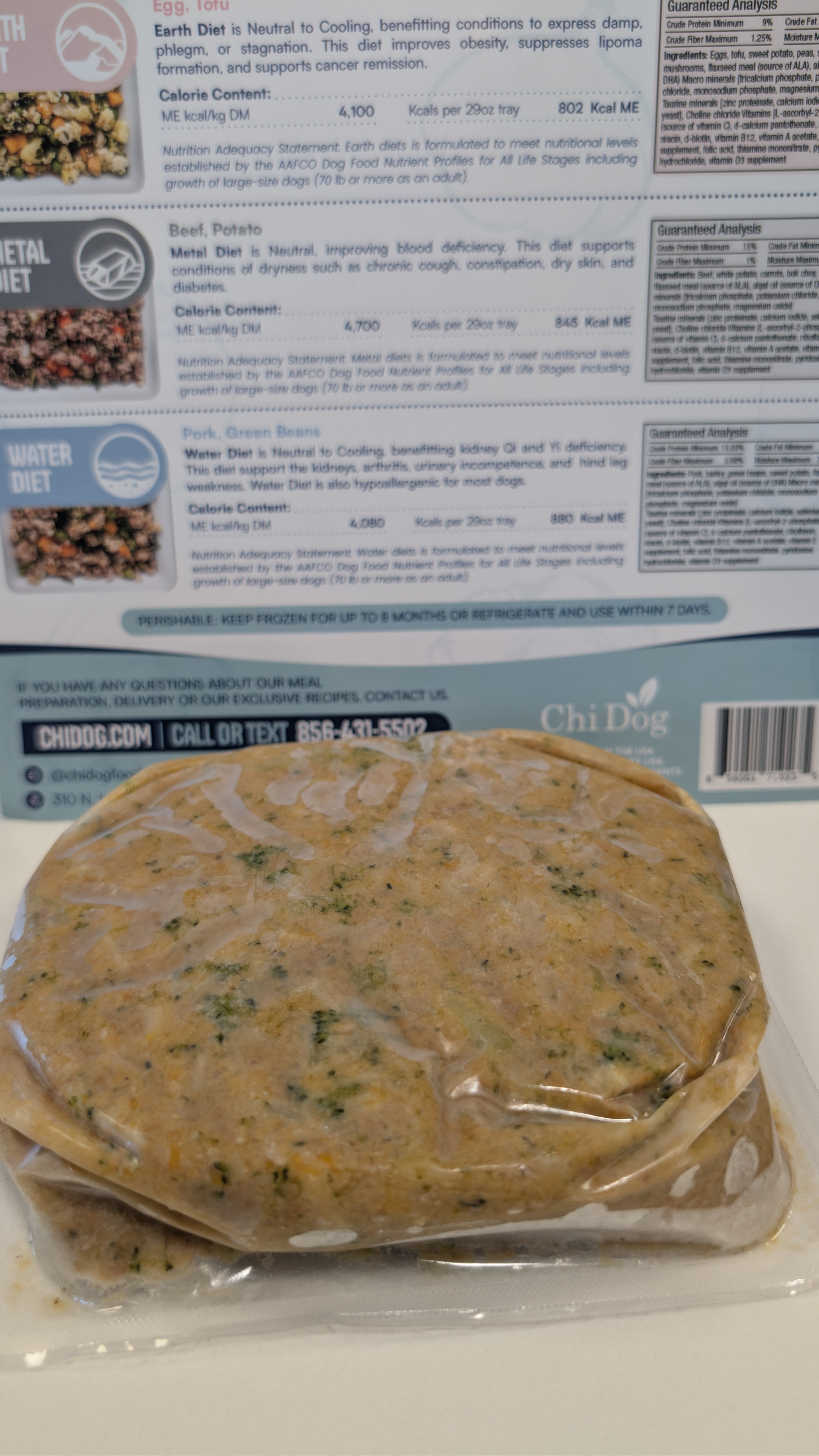
Calorie density and label transparency are also worth a closer look. Representative numbers from the actual product labels:
- Earth Diet: 4,100 ME kcal/kg DM. Approximately 802 kcal ME per 29-oz tray. Lower-fat, plant-forward recipe built on eggs, tofu, sweet potato, peas, spinach, and mushrooms.
- Metal Diet: 4,700 ME kcal/kg DM. Approximately 846 kcal ME per tray. Beef and white potato base with carrots and bok choy.
- Water Diet: 4,080 ME kcal/kg DM. Approximately 880 kcal ME per tray. Pork, barley, peas, and sweet potato; positioned as a hypoallergenic, single-protein recipe for dogs.
- Fire and Wood Diets carry similar transparency on their respective trays, with calorie density, ingredient list, and TCVM positioning printed plainly.
Every tray also lists macro-mineral content, taurine, choline chloride, and a complete vitamin pre-mix, which is how a whole-food fresh recipe achieves AAFCO completeness without relying on highly processed feed inputs.
Ingredient Quality: What Stands Out Clinically
Whole-food fresh diets vary widely in ingredient sourcing and processing. A few of Chi Dog’s choices are worth flagging because they directly affect how a clinician would counsel an owner about the brand:
Human-grade ingredients, USDA-inspected kitchens
Chi Dog states that every recipe uses 100% human-grade ingredients prepared in USDA-inspected kitchens. The legal definition of “human-grade” in the pet food space is narrow, every ingredient, every facility, and every step of handling must meet the standards required for human food. Many premium pet foods use the word loosely; only a small subset of brands genuinely meet the regulatory bar. The USDA-inspected kitchen language is meaningful for the same reason: it speaks to the manufacturing oversight that supports the human-grade claim.
No organ meats, only lean skeletal muscle
This is one of the more clinically interesting choices Chi Dog has made. Many commercial fresh and raw diets rely heavily on liver, kidney, and other organ meats because they are inexpensive sources of dense nutrition. There are good reasons to be thoughtful about high inclusion levels of organ meats: very high vitamin A content from liver-heavy recipes can be problematic over time, and high copper content from liver has been a discussion point in copper-associated chronic hepatopathy patients. Chi Dog excludes organ meats and high-fat tissues entirely, relying on lean skeletal muscle as the protein backbone. The trade-off is that the recipes need to provide vitamins through their pre-mix and through whole-food vegetables and supplements rather than from organ meats. The brand has built that into the formulation.
No carrageenan, no synthetic emulsifiers
Carrageenan is a thickener used widely in canned pet food. There is ongoing veterinary discussion about whether degraded carrageenan can contribute to gastrointestinal inflammation. The literature is not settled, but for owners of dogs with chronic GI sensitivity, the absence of carrageenan is a real point of differentiation. Chi Dog explicitly excludes carrageenan and similar emulsifiers.
No synthetic choline bitartrate
Choline is an essential nutrient, and AAFCO requires it in complete and balanced foods. The standard industry source is synthetic choline bitartrate. Chi Dog states that its choline comes from whole-food sources, which is consistent with the brand’s overall whole-food philosophy. Most clients will not notice this on the label, but it is the kind of detail an integrative practitioner appreciates.
No synthetic preservatives, no ultra-processed fillers
The frozen distribution model is what makes this possible. Once a recipe is gently cooked and immediately flash-frozen, there is no need for chemical preservatives. Combined with short, recognizable ingredient lists, the resulting food matches the visual and aromatic expectations of an owner who chose fresh feeding because they wanted to see real food in the bowl.
The Five Formulas Through a Clinical Lens
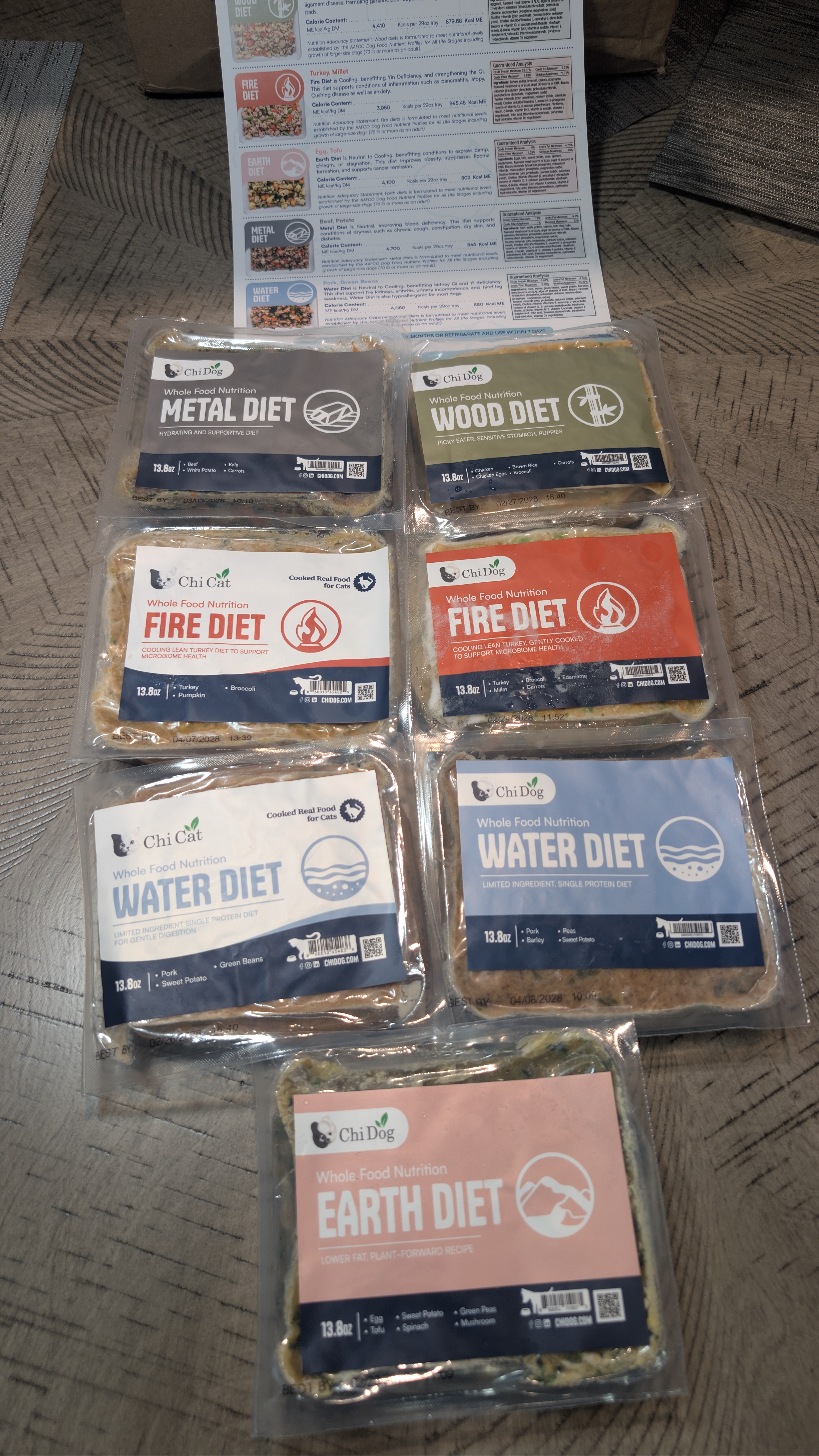
Chi Dog’s five elemental formulas read in TCVM terms on the package, but each one translates cleanly to the kinds of patient profiles a general-practice veterinarian sees every week. The table below pairs each formula with its brand-stated focus, its primary ingredients per label, and the kind of dog who tends to do well on it.
| Formula | Brand Description | Primary Ingredients | Practical Clinical Fit |
|---|---|---|---|
| Fire | Cooling lean turkey diet to support microbiome health | Turkey, millet, broccoli | Dogs with chronic inflammatory tendencies, atopy, anxiety patterns, or insomnia |
| Earth | Lower-fat, plant-forward recipe | Eggs, tofu, sweet potato, peas, spinach, mushrooms | Dogs needing weight management, lipoma-prone patients, or dogs requiring lower-fat feeding |
| Metal | Hydrating and supportive diet | Beef, white potato, carrots, bok choy | Dogs with dry skin, chronic cough, mild constipation, or diabetes mellitus on a stable plan |
| Water | Limited-ingredient, single-protein, hypoallergenic | Pork, barley, peas, sweet potato | Dogs with kidney-support needs, urinary issues, food sensitivities, or arthritic seniors |
| Wood | For picky eaters, sensitive stomachs, and puppies | Chicken, brown rice, carrots (with growth-appropriate macros) | Dogs needing liver support, mild GI sensitivity, or simply struggling at the bowl |
A clinician with a strictly Western training background can read the table as five thoughtfully chosen single-protein whole-food diets, each with a defensible clinical use case. A clinician with integrative training can layer TCVM theory on top, using the elemental framework for constitutional matching. Both approaches arrive at recommendations that fit on top of AAFCO-balanced fresh meals, which keeps the framework additive rather than substitutive.
Note that Chi Dog explicitly cautions clients with diagnosed chronic disease to consult their veterinarian before changing diets. None of these formulas are a substitute for a prescription therapeutic diet when a specific condition warrants one (renal disease in advanced stages, hepatic disease with hepatic encephalopathy, food-responsive enteropathy formally diagnosed via novel-protein trial, and similar cases).
Chi Cat: Fresh, Whole-Food Nutrition Extended to Felines
Cats are obligate carnivores with nutritional needs that diverge meaningfully from dogs. Two of those needs, adequate moisture intake and complete protein with proper taurine, arachidonic acid, and other essential nutrients, make fresh, gently cooked feeding a particularly good fit for felines, as long as the formulation is right.
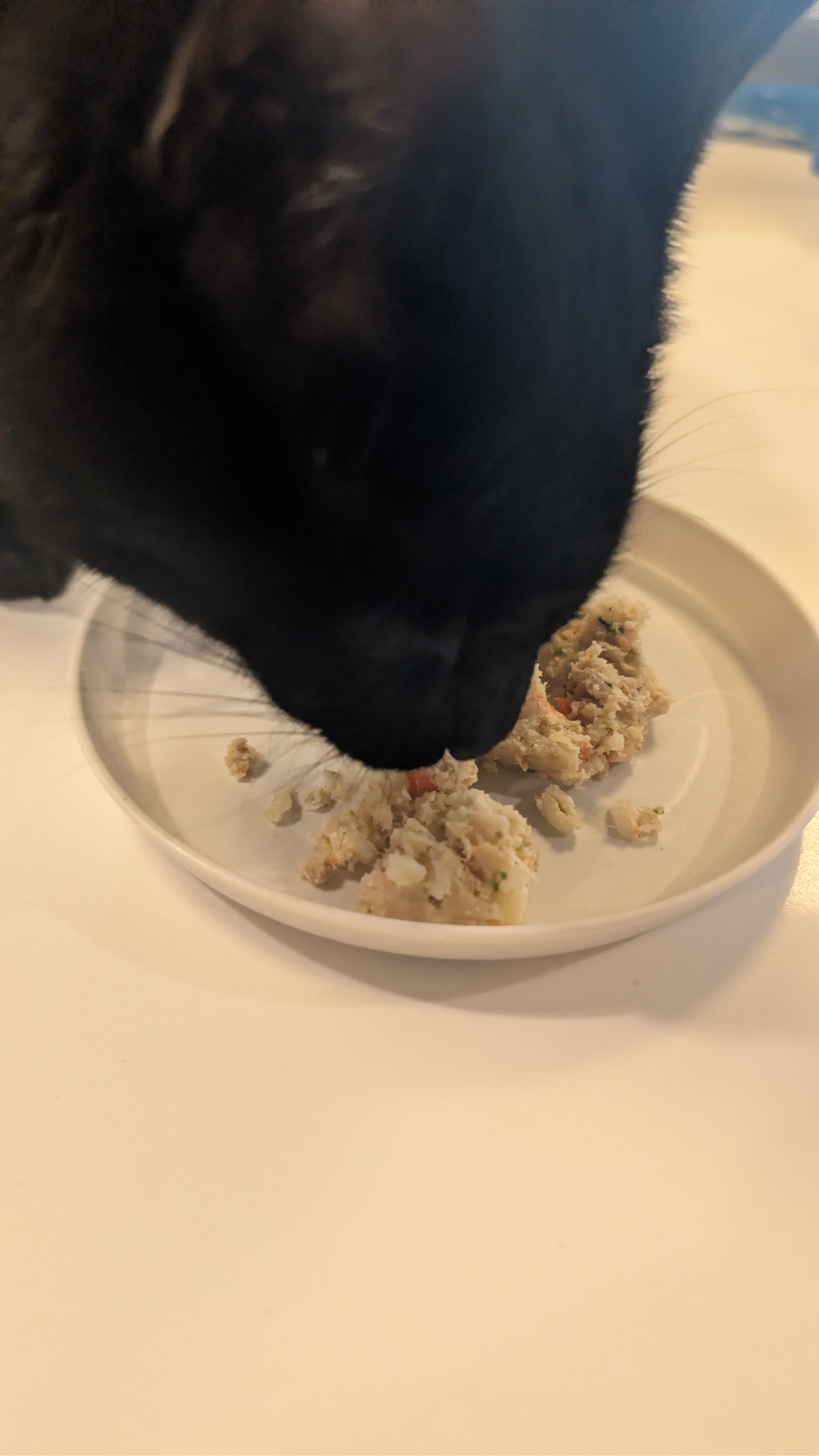
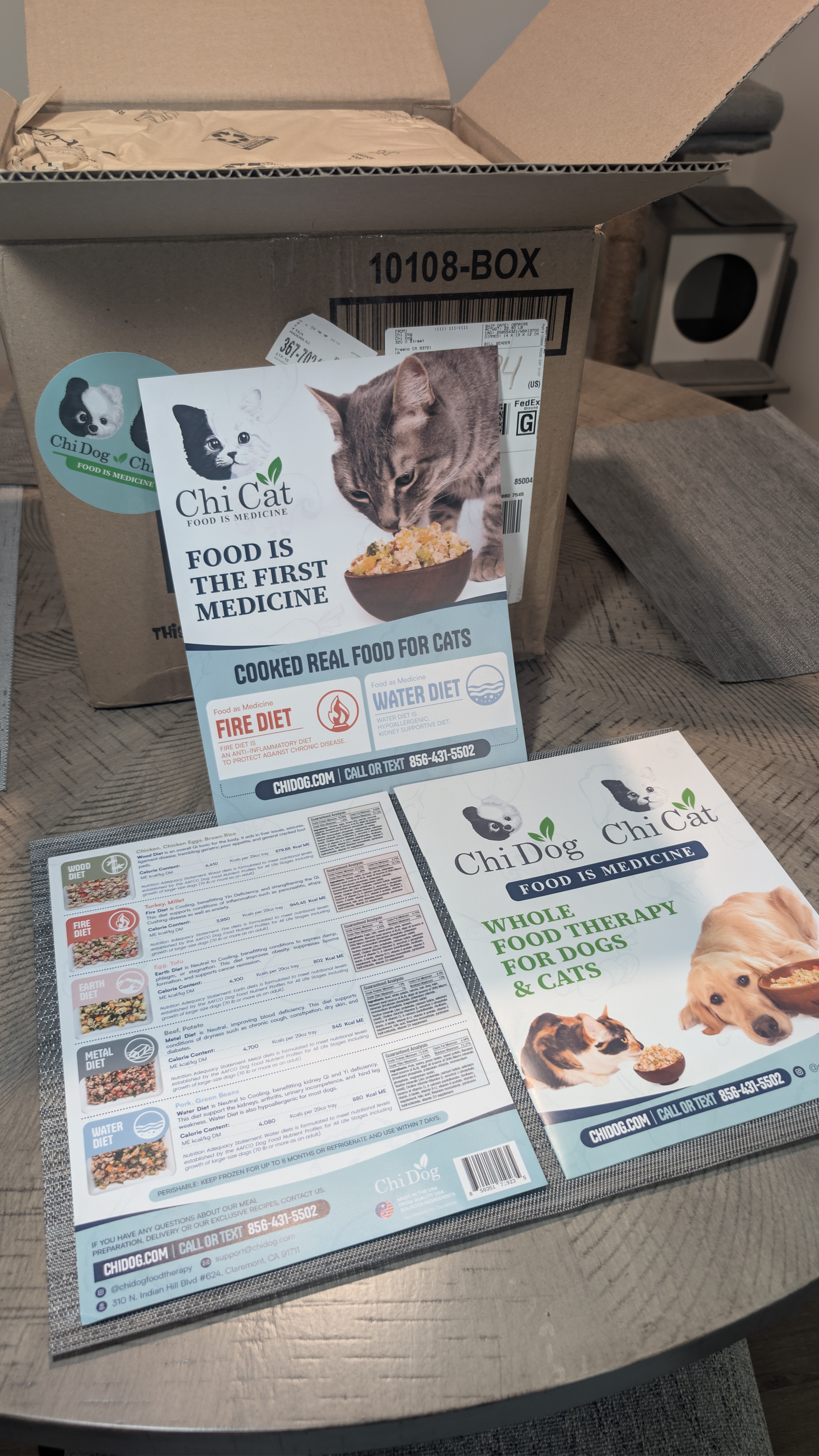
Chi Cat offers two formulas, both AAFCO-compliant for the maintenance of adult cats. Fire Diet for cats uses white breast turkey, pumpkin, and broccoli and is positioned as an anti-inflammatory recipe supporting microbiome health, with the TCVM framework describing it as a cooling Yin tonic. Water Diet for cats uses ground pork, sweet potato, and green beans and is positioned as a hypoallergenic, kidney-supportive option. Both run approximately 478 to 497 kcal ME per 13.8-oz tray, which is a useful number to have on hand when calculating daily caloric needs for an individual cat.
Why this matters clinically: chronic subclinical dehydration is a recognized contributing factor to feline lower urinary tract disease, and a moisture-rich whole-food diet outperforms dry kibble on water intake. For a multi-pet household already feeding Chi Dog to a canine resident, having a parallel cat line streamlines feeding logistics. It also reduces the (always undesirable) temptation to share meals across species, because dogs and cats have distinctly different essential nutrient requirements that cannot be safely interchanged.
Feeding, Transitions, and Day-to-Day Logistics
A fresh-food diet rewards a small amount of planning that owners of kibble-fed dogs do not always anticipate. The key practical points worth discussing with a client before they place the first order:
Calculating daily portion
Chi Dog publishes calorie density on every tray, so calculating a dog’s daily portion is a matter of multiplying daily resting energy requirement (RER) by the activity multiplier appropriate to the patient and dividing by the per-tray calorie count. For a 50-lb adult dog at a typical activity level, daily caloric needs land in the 900 to 1,100 kcal range, which works out to roughly one full 29-oz tray of Water Diet per day. The brand provides a feeding calculator on its site, and clients are welcome to bring the recommended number back for a clinician’s review before subscribing.
Transitioning safely
A 7-to-10-day gradual transition is the appropriate default for healthy dogs and cats moving onto Chi Dog. For patients with known gastrointestinal sensitivity, extending the transition to 14 days and starting with a smaller percentage on day one (10 to 15 percent rather than 25 percent) reduces the risk of any soft stool. The transition itself is straightforward because the food’s texture and aroma are appealing to most patients, which often shortens the adjustment period in picky eaters.
Multi-pet households
The Chi Dog and Chi Cat lines were explicitly designed to coexist in a single household, which is a practical convenience worth highlighting. The feeding calculator handles per-pet portions on a single subscription, and dogs and cats receive their species-appropriate formulas.
How Much Does Chi Dog Food Cost?
Chi Dog is a subscription-based premium fresh-food brand, and pricing reflects that positioning. Representative figures from the brand’s publicly listed pricing as of mid-2026:
- Medium dogs (roughly 26 to 30 pounds): approximately $130 per two-week subscription period.
- Larger dogs (roughly 76 to 80 pounds): approximately $160 per one-week subscription period across the major formulas (Fire, Wood, Metal, Earth).
- Custom add-ons: a goat milk supplement is available at approximately $101 per period for households who want an additional immune-system and skin-and-coat support layer.
Final per-week cost varies with dog weight, formula choice, and the period length the household selects. The brand publishes a feeding calculator on its site that translates a specific patient’s daily caloric requirement into the appropriate subscription tier.
From a clinical standpoint, Chi Dog’s price point is comparable to other premium fresh-food subscription brands and meaningfully higher than mid-tier commercial kibble. For households already feeding a prescription therapeutic diet, the cost gap narrows substantially. For households comparing to standard kibble, the cost is a real consideration, and the long-term feasibility of the subscription is worth a frank conversation with a client before the first order ships.
Storage, Food Safety, and Packaging
Chi Dog ships meals frozen in eco-friendly boxes lined with Green Cell Foam and packed with dry ice. The brand’s storage guidance, printed on every tray, is straightforward: frozen for up to 8 months, refrigerated for 7 days once thawed.
From a food-safety standpoint, the brand’s cold-chain protocol is sound. The dry ice keeps the box cold through midnight of the delivery day, and the brand notes that partial thaw is acceptable as long as the food is still cool to the touch on arrival. For clients who travel or who have unreliable delivery windows, the front-loaded freezing time allows for flexibility without compromising the food. Once a tray moves from freezer to refrigerator, the 7-day use window matches standard food-safety practice for thawed whole-food preparations.
The single logistical consideration to flag with clients is freezer real estate. A medium or large dog on a Chi Dog subscription will need consistent dedicated freezer space, and a multi-dog household should plan accordingly before subscribing.
Where Chi Dog Fits in a Recommendation List
Generalizing from the formulation, the credentialing, and the brand’s clinical positioning, the patient profiles where Chi Dog is most worth considering include:
- Healthy adult dogs and cats whose owners want a fresher, whole-food approach to general nutrition.
- Dogs with mild functional concerns where a high-quality fresh diet is part of the wellness conversation: picky eating, soft-but-not-pathologic stools, dull coat, mild atopy, mild weight management needs.
- Multi-pet households where streamlining feeding across species is a real quality-of-life win.
- Senior dogs and cats whose owners want better palatability and moisture intake than dry kibble typically provides.
- Owners specifically interested in integrative or TCVM-informed care who want a commercial diet that meets conventional AAFCO standards.
- Patients whose owners are exploring single-protein, limited-ingredient feeding for suspected food sensitivities, with the caveat that a formal elimination trial is the gold standard for diagnosis.
It is also worth saying clearly: a thoughtfully formulated whole-food diet often produces noticeable changes in coat quality, stool consistency, and energy that owners attribute (correctly) to the food. Setting realistic expectations during the first 4 to 6 weeks helps owners read the results of a transition without prematurely concluding that any one improvement is therapeutic.
Common Questions About Chi Dog Food
A handful of questions about Chi Dog come up regularly in online discussion (Reddit, pet-owner Facebook groups, review aggregators). From a clinical standpoint, here is how to think about each one.
Copper-loading and liver-disease questions
A recurring online discussion has raised concerns about copper-loading risk in dogs with copper-associated chronic hepatopathy or breed-predisposed copper storage disease. This concern does not factually apply to Chi Dog. Copper-loading risk in dog food is driven primarily by high inclusion of organ meats, particularly liver. Chi Dog explicitly excludes organ meats from all formulas and relies on lean skeletal muscle as the protein backbone, which keeps it outside the high-copper category that drives the concern in liver-heavy commercial and raw diets. For dogs with diagnosed copper-storage hepatopathy, a prescription veterinary diet with controlled copper content remains the appropriate first-line therapy, but Chi Dog’s formulation is not in the risk profile that prompted the original concern.
Understanding the line between AAFCO compliance and therapeutic claims
Chi Dog’s TCVM food-therapy framework is unusual in the commercial pet food space, and the formula descriptions use clinical-sounding language around microbiome health, kidney support, joint support, and similar wellness areas. From a regulatory standpoint, Chi Dog is AAFCO-compliant for All Life Stages and is not labeled as a prescription therapeutic diet under the FDA framework. The brand itself recommends a veterinary consult for patients with diagnosed conditions. For a dog with a diagnosed chronic disease, the appropriate first-line nutritional intervention is the prescription therapeutic diet matched to the diagnosis, and Chi Dog can be added or substituted under primary-veterinarian supervision once the patient is stable on conventional therapy.
Where TCVM fits alongside conventional veterinary nutrition
The Traditional Chinese Veterinary Medicine framework around the five elemental diets is a complementary medicine structure that adds an organizing layer on top of the underlying nutritional formulation. Owners interested in integrative care can use the framework as a constitutional-matching tool. Owners who prefer to evaluate diets purely on conventional criteria can assess Chi Dog on its AAFCO compliance, ingredient sourcing, and clinical fit, and the brand holds up well on those criteria independent of the elemental positioning.
When to Loop in Your Veterinarian First
Chi Dog is an AAFCO-balanced commercial diet, not a therapeutic prescription diet. That distinction matters when a dog or cat has a diagnosed chronic condition. A pre-switch consult with the primary veterinarian is appropriate any time the patient has, or is being worked up for:
- Chronic kidney disease (IRIS Stage 2 or higher), where a prescription renal diet with engineered phosphorus restriction is usually the appropriate first-line nutritional therapy.
- Diabetes mellitus that is still being stabilized or that requires precise carbohydrate management.
- Pancreatitis, especially with elevated lipase or recurrent episodes, where strict fat restriction is non-negotiable.
- Hepatic disease with hepatic encephalopathy or copper-associated hepatopathy.
- Confirmed food-responsive enteropathy on a strict novel-protein or hydrolyzed-protein trial.
- Calcium-oxalate or struvite urolithiasis under active dietary management.
- Any chronic condition with a prescription therapeutic diet currently producing good clinical control.
Outside of those clinical situations, Chi Dog fits comfortably in the broad space of wellness-oriented feeding where conventional and integrative nutritional thinking overlap. The brand itself recommends a veterinary consult for patients with diagnosed conditions, and its support team is set up to help owners reselect the right formula when needed rather than defaulting to a one-size-fits-all sales conversation.
How Chi Dog Food Compares to Other Fresh-Food Brands
Chi Dog sits in the same broad category as a handful of other premium fresh-food subscription brands. A quick clinician’s comparison:
- The Farmer’s Dog: Gently-cooked, AAFCO-formulated, subscription-based. Uses a smaller formula set and does not market a TCVM or food-therapy framework. Strong AAFCO documentation and broader name recognition.
- Ollie: Gently-cooked subscription model, multiple proteins, AAFCO-compliant. Like The Farmer’s Dog, no TCVM framework. Known for strong palatability and onboarding experience.
- JustFoodForDogs: Vet-formulated, AAFCO-compliant, sold both via subscription and in-store at some retail partners. Offers DIY home-cook kits and vet-formulated specific diets that overlap with Chi Dog’s positioning for integrative care.
Where Chi Dog stands out from this group: the explicit board-certified veterinary nutritionist in the formulation chain (Dr. Edward Moser, DACVN), the AAFCO All Life Stages plus large-breed growth inclusion across the formula line, and the TCVM food-therapy framework for clients interested in integrative care. Where the brands overlap: the gently-cooked frozen distribution model and the human-grade ingredient sourcing are now table stakes for premium fresh-food subscriptions.
For clients evaluating Chi Dog against these alternatives, the right comparison hinges on whether the integrative TCVM framework adds value for their patient. For purely evidence-based commercial fresh feeding, the four brands compete on roughly even ground for healthy adult dogs.
A Vet’s Bottom Line
Chi Dog is a carefully formulated, professionally credentialed, transparent fresh-food line. The AAFCO compliance is solid and unusually broad. The board-certified veterinary nutritionist in the formulation chain is the right credentialing detail to look for and is exactly what separates Chi Dog from many fresh-food competitors. The ingredient choices, human-grade, USDA-inspected, lean skeletal muscle only, no carrageenan, no synthetic preservatives, no ultra-processed fillers, line up well with what an informed clinician would want to see in a fresh dog and cat food.
The TCVM framework is a thoughtful organizing principle for a curated set of whole-food recipes, not a substitute for evidence-based veterinary medicine, and Chi Dog never positions it as one. Owners who care about TCVM get a sophisticated way to apply food therapy. Owners who do not get five clean, single-protein, whole-food formulas and two cat formulas to choose from. Both groups are served.
For healthy dogs and cats, for many patients with mild functional concerns, and for households who want one fresh-food brand that works across both species, Chi Dog earns a clear place on the recommendation list. For patients with diagnosed chronic disease, the right path is the prescription therapeutic diet matched to the diagnosis, but Chi Dog can often be revisited once the patient is stable and the primary veterinarian agrees. As with any major dietary change, the best results come from a short conversation with the primary veterinarian before the first order ships.
Chi Dog Food FAQs
Chi Dog’s dog formulas carry the AAFCO nutritional adequacy statement for All Life Stages, including growth of large-size dogs (70 lb or more as an adult). Cat formulas carry an AAFCO maintenance-of-adult-cats statement. The brand uses the formulation method of AAFCO compliance, validated against AAFCO nutrient profiles by a board-certified veterinary nutritionist on the formulation team.
Pricing varies with dog size, formula choice, and subscription period. Representative figures from the brand’s publicly listed pricing run approximately $130 per two-week period for a medium dog (26 to 30 pounds) and approximately $160 per one-week period for a larger dog (76 to 80 pounds). A goat milk supplement add-on is available at approximately $101 per period.
Yes. Chi Dog’s dog formulas are AAFCO-compliant for All Life Stages, including growth of large-size dogs (70 lb or more as an adult). That makes them appropriate for puppies through senior dogs, including large- and giant-breed puppies during the critical growth window. The Wood Diet is specifically positioned by the brand for puppies, picky eaters, and dogs with sensitive stomachs.
A 7-to-10-day gradual transition is the appropriate default for healthy dogs and cats moving onto Chi Dog. For patients with known gastrointestinal sensitivity, extending the transition to 14 days and starting with a smaller percentage on day one (10 to 15 percent rather than 25 percent) reduces the risk of soft stool. Most patients accept the transition quickly because of the palatability of the gently-cooked recipes.
For dogs with diagnosed pancreatitis, chronic kidney disease, hepatic encephalopathy, food-responsive enteropathy, or other chronic conditions that warrant a prescription therapeutic diet, the appropriate first-line nutritional intervention is the prescription diet matched to the diagnosis. Chi Dog is an AAFCO-balanced commercial fresh-food diet, not a prescription therapeutic diet. The right path is to discuss any switch with the primary veterinarian, who may revisit Chi Dog as an option once the patient is stable on conventional therapy.
Yes. Chi Cat, the companion line, offers two formulas (Fire and Water) that are AAFCO-compliant for the maintenance of adult cats. Both run approximately 478 to 497 kcal ME per 13.8-oz tray. The two lines were explicitly designed to coexist in multi-pet households so dogs and cats receive their species-appropriate formulas through a single subscription.