Highly Digestible Dog Chews: A Vet’s Guide to the Science
Published on May 30, 2026
All veterinary information has been reviewed by the Petful Veterinary Team for accuracy. Vetstreet receives compensation from ProHide for this content; opinions and clinical guidance are our own.
Highly digestible dog chews are not all created equal. This vet-informed guide unpacks the science of digestible dog chews (protein source, processing method, ingredient simplicity), the red flags that separate genuinely digestible chews from marketing noise, and the best digestible dog chews for every dog type. We cover digestible dog chews for large dogs, digestible dog chews for aggressive chewers, and long-lasting digestible dog chews that solve both problems at once.
Key Takeaways
- Chew digestibility is the single most underrated safety factor — a digestible chew cannot cause an intestinal blockage.
- True digestibility comes from three pillars: high-quality protein source, gentle processing (air-dry, freeze-dry, or low-bake), and short ingredient lists.
- Vets formally measure digestibility with apparent digestibility coefficients; highly digestible products score above 85 percent.
- Marketing language like ‘easily digestible’ is meaningless without supporting data — ask manufacturers for digestibility figures.
- Engineered chews like ProHide are designed for both durability and digestibility, breaking the long-standing trade-off pet parents have been forced to make.
“Highly digestible” is one of the most overused phrases in the chew aisle. Almost every product claims it. Few products explain what it actually means.
The good news: the science is straightforward. Once you understand the three things that actually drive chew digestibility, you can read a chew label like a veterinarian and pick products that work with your dog’s digestive system instead of against it.
This guide unpacks the digestibility science, the red flags that signal a chew isn’t as digestible as it claims, and what to look for in a chew that genuinely earns the label.
Why Digestibility Matters More Than Most Pet Parents Realize
When a dog chews, two things are happening simultaneously. The first is mechanical: teeth break the chew into smaller fragments. The second is chemical: saliva enzymes begin partial digestion before the chew is even swallowed.
What happens after swallowing is where the real distinction between chews lives. A digestible chew enters the stomach, is broken down by gastric acid and digestive enzymes, passes through the small intestine where nutrients are absorbed, and exits as normal stool. The chew effectively becomes part of the dog’s nutrition.
A poorly digestible chew enters the stomach and stays there. It may sit for hours. Some pieces eventually pass through, but larger pieces can lodge anywhere along the GI tract. Even when nothing dramatic happens, the dog’s digestive system is working harder, often producing soft stool, intermittent vomiting, or food sensitivity reactions.
Veterinarians see the consequences of poor chew digestibility in clinic almost every week. Intestinal foreign body cases. Pancreatitis flares. Chronic GI upset that takes weeks to track back to the family’s go-to chew. Digestibility is, simply, the most underrated safety factor in the chew category.
The Three Pillars of Chew Digestibility
Chew digestibility comes down to three things: what the chew is made of, how it’s processed, and what’s added.
Protein Source and Quality
The protein source is the foundation. Some animal proteins are inherently easier for dogs to digest than others.
Highly digestible proteins:
- Beef (especially muscle meat, organ meat, tendons, trachea)
- Chicken (especially boneless, single-ingredient cuts)
- Fish (excellent digestibility profile, plus omega-3s)
- Lamb (very digestible, often used in sensitive-stomach diets)
- Egg (one of the most digestible proteins available)
Less digestible:
- Heavily processed protein blends (where the original source is unrecognizable)
- Connective tissue with high collagen density that hasn’t been properly prepared
- Plant proteins as fillers (wheat gluten, soy concentrate)
The phrase “made with real beef” on a package doesn’t mean the protein is mostly beef. Look for chews where the protein source is the first ingredient, ideally the only ingredient, and where the source is identified specifically (not just “meat” or “animal byproducts”).
Processing Method
How a chew is made determines whether the protein structure stays digestible or gets denatured into something the dog’s GI tract can’t break down efficiently.
The processing methods, ranked roughly from most digestible to least:
- Air-drying. Low-temperature dehydration that removes moisture without altering protein structure. The most digestible processing method available. Most quality bully sticks and many digestible chew brands use air-drying.
- Freeze-drying. Even gentler than air-drying, since the protein never sees high temperatures. Excellent digestibility, though typically more expensive.
- Baking or low-temperature cooking. Cooks the protein but generally preserves digestibility, especially at low temperatures.
- Compressed and shaped. Many chews are made by grinding protein and pressing it into a shape. Whether this stays digestible depends on what binders and additives are used.
- Heavily processed and chemically treated. This is traditional rawhide territory. Bleaching, lime washes, and chemical preservatives can denature protein structure to the point where the chew is largely indigestible.
Engineered digestible chews like ProHide use processing methods specifically designed to preserve protein structure while still producing a long-lasting, satisfying chew. That’s what separates them from traditional rawhide, which is processed for shelf stability rather than digestibility.
Ingredient Simplicity
The fewer ingredients in a chew, the easier it is for a dog’s digestive system to handle. Single-ingredient chews are the gold standard. Multi-ingredient chews can still be digestible, but every additional ingredient (binders, flavorings, preservatives, glycerin) is one more thing the GI tract has to process.
Watch for:
- Glycerin. Common in chews to retain moisture. Generally safe but high amounts can cause loose stool.
- Wheat gluten and soy concentrate. Common binders that can trigger sensitivities in dogs with grain or legume reactions.
- Artificial colors. Cosmetic; offer no benefit; some dogs react.
- Preservatives like BHA, BHT, ethoxyquin. Acceptable in small amounts but worth avoiding if you have a choice.
A chew with five ingredients you can pronounce is almost always more digestible than a chew with fifteen ingredients in a long list of chemical names.
For the simplest possible option, even DIY chews work — single-ingredient recipes like Petful’s dried banana dog chews use one ingredient and are fully digestible, with no processing chemistry to second-guess.
How Vets Actually Test for Digestibility
Veterinary nutritionists and pet food researchers measure digestibility through formal trials. Dogs are fed a measured amount of a chew or food. Stool is collected over several days. The percentage of the chew that’s been broken down and absorbed (versus passed through unchanged) is the apparent digestibility coefficient.
For dental-side considerations on chew choice, see Petful’s comprehensive dog dental care guide, which covers how chews interact with tooth health.
Highly digestible foods and chews score above 85 percent. Moderately digestible products score 70 to 85 percent. Anything below 70 percent is generally considered poorly digestible.
Pet parents don’t usually have access to these numbers, but reputable manufacturers will share digestibility data when asked. If a chew brand markets itself as highly digestible, ask them what the digestibility percentage is and how it was tested. Brands with real digestibility credentials will answer; brands relying on marketing language may not.
Red Flags: When a “Digestible” Chew Isn’t
Not every product labeled “digestible” actually is. The red flags:
- Vague language. “Easily digestible” with no supporting information is marketing, not data.
- Long ingredient lists with unfamiliar additives. A truly digestible chew doesn’t need ten binding agents.
- No country of origin or sourcing information. Manufacturers proud of their sourcing tell you about it.
- Heavy chemical processing. If the chew is bleached, glycerin-saturated, or chemically preserved, “digestible” is unlikely.
- The chew doesn’t change shape or size meaningfully during chewing. Truly digestible chews soften, shred, and break down. A chew that looks the same after twenty minutes of chewing isn’t being broken down.
- Frequent GI complaints in user reviews. Soft stool, vomiting, and “my dog gets sick from these” comments are honest signals.
What True Digestibility Looks Like in Practice
A genuinely digestible chew is engineered, not just labeled. The product is designed from the protein source up to break down the way a dog’s digestive system can handle.
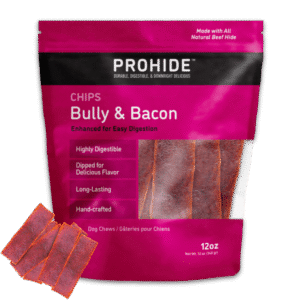
ProHide is built around this philosophy. The chew is made from sourced animal protein, processed to preserve digestibility, and shaped to deliver a long, satisfying chew session that ends with the chew breaking down in the stomach instead of passing through whole. For pet parents who want the durability and engagement of a long-lasting chew without the risk profile of poorly digestible products, this is exactly the category that’s been missing.
The point isn’t that ProHide is the only digestible chew on the market. Bully sticks, beef tendons, fish skins, and several other natural single-ingredient chews are also genuinely digestible. The point is that “digestibility” is a real engineering choice, not a marketing claim, and the products that take it seriously are visibly different from the ones that don’t.
Digestible Chew Options by Dog Type
| Dog type | Recommended digestible categories |
|---|---|
| Puppies | Soft bully sticks, beef tendons, age-appropriate digestible chews |
| Small adult dogs | Small-format digestible chews, fish skins, mini bully sticks |
| Medium adult dogs | Standard digestible chews, full-size bully sticks, beef cheek rolls |
| Large adult dogs | Large-format digestible chews, jumbo bully sticks, beef trachea |
| Senior dogs | Softer digestible chews, fish-based chews (joint support bonus) |
| Heavy chewers | Maximum-density digestible chews engineered for both durability and digestibility |
| Sensitive-stomach dogs | Single-ingredient, novel protein chews, no additives |
The Connection Between Digestibility and Long-Lasting Chews
There’s a common misconception that long-lasting and highly digestible are at odds. The thinking is: if a chew breaks down quickly, it can’t last long. If it lasts long, it must be hard and indigestible.
The reality is that the best modern chews achieve both. Density and digestibility are not the same thing. A chew can be dense enough to take a dog 30 minutes to work through and still be fully digestible at the cellular level. The engineering challenge is real, but it’s solvable, and products like ProHide are built to do exactly that.
For more on this, see our companion guide on long-lasting dog chews.
Frequently Asked Questions
Single-ingredient air-dried animal protein chews are typically at the top of the digestibility list. This includes bully sticks, beef tendons, fish skins, and engineered digestible products like ProHide. The most digestible chew depends on the individual dog and what their GI system handles best.
A safe digestible chew has a clean ingredient list, a transparent protein source, and processing methods that preserve protein structure (air-drying, freeze-drying, low-temperature baking). Avoid heavily processed or chemically treated chews where digestibility claims are marketing rather than data.
Yes. Long-lasting depends on density and structure; digestibility depends on protein quality and processing. Modern long-lasting digestible dog chews (ProHide is one example) are engineered for both, demonstrating that the trade-off is a design choice, not a law of physics.
Large dogs need both size (large-format chews that take 30+ minutes to consume) and digestibility (so the larger swallowed fragments break down safely). Best digestible dog chews for large dogs include large-format ProHide, jumbo bully sticks, beef trachea, and beef cheek rolls.
Dogs with sensitive stomachs benefit most from single-ingredient, novel-protein chews with minimal processing. Air-dried fish skins, novel-protein chews like rabbit or duck, and high-end digestible products with short ingredient lists are all good starting points. Introduce any new chew gradually and monitor stool quality.