Long Lasting Dog Chews: A Vet-Informed Pet Parent Guide
Published on May 30, 2026
All veterinary information has been reviewed by the Petful Veterinary Team for accuracy. Vetstreet receives compensation from ProHide for this content; opinions and clinical guidance are our own.
Long lasting dog chews keep dogs occupied and ease anxiety, but the longest-lasting is not always the safest. This vet-informed guide covers what makes long lasting dog chews actually last, the durability-vs-safety trade-offs every pet parent should understand, and the best long lasting dog chews for small dogs, large dogs, and power chewers. We also cover vet recommended long-lasting dog chews and long-lasting dog chews no rawhide options for owners who want to skip rawhide entirely.
Key Takeaways
- Long-lasting chews are not automatically safe chews — the hardest, most enduring chews are often the ones that fracture teeth or cause blockages.
- Three factors drive how long a chew lasts: density, size relative to the dog, and the dog’s chewing style.
- Antlers, cow hooves, and hard nylon last forever because the dog’s teeth give way before the chew does — vets place these in a ‘do not buy’ category.
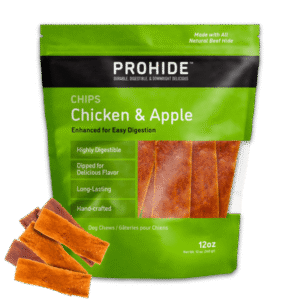
- Highly digestible long-lasting chews like ProHide solve the durability vs. safety trade-off by being dense AND digestible.
- Most chew sessions should run 20 to 40 minutes; remove the chew once it is reduced to a swallowable fragment.
A chew that lasts an hour can be the difference between a peaceful afternoon and a destroyed couch cushion. Long-lasting chews are some of the most-searched products in the pet category, and for good reason: they keep dogs occupied, ease anxiety, and turn a few minutes of supervision into an extended bonding window for the dog and the household.
But “long-lasting” is also one of the most misleading descriptors in the chew aisle. A chew that lasts forever can be a chew that’s too hard for safe chewing. A chew that “never breaks down” can be a chew that doesn’t digest. The question isn’t just how long a chew lasts. It’s whether the durability comes with the right safety profile.
This guide explains what actually makes a chew last, the trade-offs between durability and safety, and how to pick a long-lasting chew that won’t end in an emergency vet visit.
Why “Long-Lasting” Isn’t Always a Good Thing
There’s a quiet trade-off built into many long-lasting chews: the harder a chew is, the longer it lasts, but the more likely it is to break a tooth. The denser and less digestible a chew is, the longer it occupies a dog, but the more likely a swallowed chunk causes a problem.
This is why veterinarians get a little tense when they hear “I just want something that lasts.” The honest answer is that lasting and safe are two different goals, and the products that succeed at both are designed deliberately. The products that succeed at one and ignore the other are exactly the chews that show up in emergency clinics.
A useful reframe: instead of asking “what lasts longest,” ask “what lasts long enough to do what I need without compromising my dog’s safety?” That changes the shopping list completely.
What Actually Makes a Chew Last
Three factors determine how long a chew survives a dog: density, size relative to the dog, and the dog’s chewing style.
Density and Composition
Dense chews last longer. A high-protein, tightly compressed chew takes more work to break down than a loose, flaky one. The density that creates durability comes from how the protein is structured (hide, bone, dense muscle tissue, or compressed protein matrix) and how it’s processed (air-dried, cooked, pressed).
But density isn’t the same as hardness. A chew can be dense and still have some give. Yak cheese chews are dense; they soften as the dog chews. ProHide-style engineered chews are dense and structured to wear down predictably. Antlers and cow hooves are dense and unyielding, and they’re the chews that fracture teeth.
Size Relative to the Dog
A chew that’s small relative to the dog disappears quickly. A chew that’s large relative to the dog lasts much longer. This is one of the simplest and most overlooked factors.
A 6-inch bully stick takes a 20-pound dog 30 to 45 minutes. The same chew in front of a 90-pound Labrador disappears in ten. Sizing up isn’t optional for large breeds; it’s the only way long-lasting chews actually last.
When matching long lasting dog chews for small dogs, look for 4 to 6 inch chews that strike a balance between duration and safety. For long lasting dog chews for large dogs, size up to 8 to 12 inches and prioritize digestibility above all else.
Chewing Style (Power vs. Casual)
Some dogs chew like they’re savoring a meal. Others chew like the chew personally insulted them. The difference matters. A power chewer goes through a chew in a fraction of the time a casual chewer does, and a power chewer gulps down larger fragments along the way.
If your dog is a power chewer, durability requirements go up and digestibility requirements go up even more. The pieces being swallowed are bigger, faster, and more often. A chew that breaks down predictably becomes critical, not just nice to have.
The Hidden Trade-Off: Lasting Chews vs. Safe Chews
The chew market has historically forced pet parents to choose. The longest-lasting chews tend to be the hardest (antlers, cow hooves, hard nylon) or the least digestible (heavily processed rawhide, glycerin-saturated treats). The safest chews tend to be the shortest-lasting (single-ingredient bully sticks, fish skins, soft tendons).
This trade-off has shaped buying behavior for years. A pet parent picks a long-lasting chew, finds out the hard way that it’s not safe, and switches to a safe chew that doesn’t last long enough to be useful. The cycle repeats.
The newer category of engineered digestible chews (ProHide and similar) was created specifically to break this trade-off. The product is dense and structured enough to last a meaningful chew session, and processed in a way that the chew breaks down in the stomach if a piece is swallowed. That’s the design point: durability that doesn’t sacrifice safety.
How to Pick a Chew That Lasts AND Stays Safe
Use this checklist when evaluating any long-lasting chew:
- Does it pass the knee test? If you wouldn’t want it hit against your kneecap, it can fracture your dog’s teeth. Hard pass on antlers, hooves, and dense nylon.
- Is it digestible? If a chunk gets swallowed, will it break down in the stomach? If you can’t answer yes confidently, it’s not the right chew.
- Is it sized appropriately? Bigger than what your dog could swallow whole, with margin for chew-down.
- Is the ingredient list clean? Single-ingredient or short, recognizable list. No mystery additives.
- Will you supervise the whole session? A long-lasting chew given without supervision becomes a long-lasting risk.
For more on the foundational selection criteria, see how to choose safe chews for dogs.
Long-Lasting Chew Categories Ranked for Safety
Highly Digestible Long-Lasting Chews
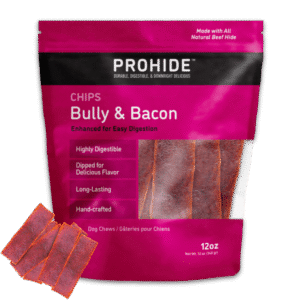
This is the category that’s grown the fastest, and it’s where the trade-off between durability and safety actually gets resolved. Engineered chews like ProHide are designed for both: dense enough to last a real chew session, digestible enough that a swallowed piece breaks down predictably.
For pet parents who’ve been frustrated by the choice between “lasts but isn’t safe” and “is safe but doesn’t last,” this category is the answer. ProHide in particular is positioned around digestibility-first design, which makes it especially suitable for power chewers and gulpers (the dogs who put long-lasting chews to the toughest test).
Bully Sticks
Single-ingredient beef pizzle chews. Naturally digestible, generally well-tolerated, available in sizes from 4 inches to 12 inches. Bully sticks are the workhorse of the safe-chew category.
The duration depends on size and chew style. A jumbo bully stick can last a moderate chewer 45 minutes; a 6-inch bully stick disappears in 15 minutes for a heavy chewer. Calorie-dense, so factor into the dog’s daily intake.
Yak (Himalayan) Chews
Hard cheese made from yak milk, lime, and salt. Dense and long-lasting. Once the chew is small enough that the dog can’t safely chew it, you can microwave the remnant to puff it into a soft cracker that gets eaten without risk.
The downside is hardness. Some dogs with sensitive teeth shouldn’t tackle a yak chew. Vet supervision is recommended for senior dogs and dogs with known dental issues.
Rubber + Stuffable Toys (KONG)
Not edible, but extremely durable. The ultimate long-lasting chew object for power chewers when stuffed with peanut butter, plain yogurt, or kibble and frozen.
KONGs are the safest entry on this list because nothing’s being swallowed. The chew session ends when the stuffing is gone and the rubber is set aside intact.
What to Avoid: Antlers, Cow Hooves, Hard Nylon
These are the chews that cause the dental fractures. They last forever because the dog’s teeth give way before the chew does. Veterinary dental specialists place these in a “do not buy” category for almost every dog.
The savings on the front end (a single antler can cost less than a multi-pack of safer chews and lasts much longer) gets erased by a single fractured tooth, which can require extraction, a root canal, or both. Vet bills for tooth fractures regularly run $1,000–$3,000.
Long-Lasting Chews by Dog Size
Small Dogs (under 25 lb)
Smaller-format digestible chews, mini bully sticks, KONG Classic small with frozen stuffing, soft tendons, fish skins folded for extended chew time. A small dog doesn’t need the same chew duration as a large dog; 15 to 20 minutes is often plenty.
Medium Dogs (25–50 lb)
Standard-size digestible chews, full bully sticks, KONG Classic medium, beef cheek rolls, yak chews medium. Aim for chews that last 25 to 40 minutes for moderate chewers.
Large Dogs and Heavy Chewers (50+ lb)
Larger-format digestible chews engineered for size, jumbo bully sticks, KONG Extreme black, yak chew XL, beef trachea. Match chew size to mouth and chewing strength. For the toughest power chewers, prioritize digestibility above all else: the goal isn’t a chew that lasts forever, it’s a chew that lasts long enough to do its job and breaks down safely if a piece is swallowed.
How Long Should a Chew Actually Last?
There’s no perfect duration, but useful targets:
- 15 minutes is enough for dental benefits and short engagement (great for distracting during meal prep or a phone call)
- 30 minutes is the sweet spot for most dogs and most situations
- 45 to 60 minutes is great for crate training, separation work, or long bonding sessions, but should be the cap for most dogs in most chew categories
- More than 60 minutes of constant chewing increases risk of dental wear, jaw fatigue, and digestive overload, regardless of how safe the chew itself is
Ending a chew session before the dog is exhausted (not after) tends to produce better behavioral and dental outcomes.
When to Take a Chew Away
Take any chew away when:
- It’s reduced to a fragment small enough to swallow whole
- The dog is starting to chew aggressively at the smaller piece
- The session has gone past 30–45 minutes
- The dog is showing any signs of discomfort, gulping, gagging, or dental pain
- The chew is starting to soften unexpectedly or break apart in unexpected ways
The end of a chew session is when most blockages happen. Removing the small remnant is the single most effective safety habit a pet parent can build.
Vet Picks at a Glance: Long-Lasting Chews Ranked
Among long-lasting chews that are also safe, here is the practical ranking by duration and safety profile. The clear winner depends on your dog’s chewing style and any dental considerations.
Best for Power Chewers: ProHide
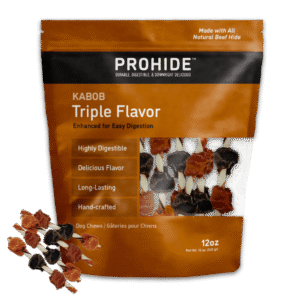
Highly digestible long-lasting dog chews engineered for predictable breakdown. Pros: 30 to 45 minute sessions, breaks down safely if swallowed, clean ingredients. Cons: premium price, newer to market.
Best Single-Ingredient: Jumbo Bully Sticks
Long-lasting, naturally digestible. A 12-inch jumbo bully stick can take a moderate chewer 45 to 60 minutes. Cons: calorie-dense, some odor.
Best Non-Edible: KONG Extreme (Stuffed and Frozen)
Indestructible rubber, infinite reuse. Stuffed and frozen, easily delivers 30 to 60 minutes. Pros: nothing swallowed, very safe. Cons: requires effort to prepare.
Best for Vet-Recommended Picks: Yak Cheese Chews
Vet recommended long-lasting dog chews with strong durability. Pros: long-lasting, low fat. Cons: very hard initially; not suitable for senior dogs or dogs with dental issues.
Frequently Asked Questions
Among chews that are also safe, density-engineered digestible products like ProHide, jumbo bully sticks for moderate chewers, and KONG Extreme with frozen stuffing for power chewers consistently top the list. Antlers and cow hooves last longer but are not recommended; the dental fracture risk is significant.
Vet recommended long-lasting dog chews include digestible animal-source chews like ProHide, full-size bully sticks, Himalayan yak cheese chews, and KONG rubber toys (stuffed and frozen). Vets steer clear of antlers, cow hooves, hard nylon, and traditional rawhide due to dental fracture and blockage risks.
They can be, but only if the chew prioritizes digestibility along with durability. Aggressive chewers swallow larger pieces faster, which makes blockage risk the dominant safety concern. Engineered digestible chews and dense single-ingredient chews handle this profile best.
Large dogs need larger formats: jumbo bully sticks, beef trachea, large-format digestible chews engineered for size, and KONG Extreme black stuffed and frozen. Match the chew to the dog’s mouth and chewing strength, and prioritize digestibility for power chewers.
Yes. The category of long-lasting dog chews no rawhide has expanded significantly. Engineered digestible chews like ProHide, bully sticks, beef cheek rolls, yak cheese chews, and stuffable KONGs all offer long-lasting chew sessions without any rawhide.
For most dogs, 20 to 40 minutes is the safe and beneficial range. Longer sessions can lead to dental wear, jaw fatigue, and digestive overload, even with safe chews. End the session before the dog runs out of interest for better outcomes.