Safe Chews for Dogs: A Vet’s Buyer Guide
Published on May 30, 2026
This article is part of the ProHide Chew Center, sponsored by ProHide. All veterinary information has been reviewed by the Petful Veterinary Team for accuracy. Vetstreet receives compensation from ProHide for this content; opinions and clinical guidance are our own.
Safe chews for dogs are not a marketing claim, they are a checklist. This vet-informed buyer guide covers the five criteria veterinarians actually use to evaluate a chew, the categories to avoid, and how to match the right chew to your dog’s size and chewing style. We also cover vet recommended dog chews, the safest dog chews for aggressive chewers, and the best safe chews for dogs across small, medium, large, and power-chewer profiles.
Key Takeaways
- Veterinarians evaluate chew safety against five criteria: digestibility, hardness, size, sourcing, and ingredient simplicity.
- If you would not want a chew hit against your kneecap, it is too hard for your dog’s teeth — the knee test rules out antlers, hooves, and dense nylon.
- Cooked bones, hard antlers, cow hooves, and traditional rawhide are the four categories most often flagged by vets to avoid.
- Highly digestible chews like ProHide, single-ingredient bully sticks, KONG rubber toys, and yak chews consistently pass the safety checklist.
- Match the chew to your dog’s size and chewing style, supervise every session, and remove the chew before it becomes a swallowable fragment.
The pet chew aisle is overwhelming on purpose. Hundreds of products. Dozens of materials. Every package promising the same things: durable, natural, vet-approved, safe.
The reality is that “safe” is not a marketing claim. It’s a checklist. And once you know what’s on the checklist, picking a chew gets a lot easier.
This guide walks through the five things veterinarians actually look for in a safe chew, the categories of chews to avoid (and why), and how to match a chew to your specific dog’s size and chewing style.
The 5 Things Vets Look for in a Safe Dog Chew
1. Digestibility
Digestibility is the single most important safety factor in any chew. A chew that breaks down in your dog’s stomach is a chew that can’t cause an intestinal blockage. A chew that doesn’t break down is a chew that, sooner or later, will end up somewhere it shouldn’t.
When you’re evaluating a chew, ask: if my dog swallowed a chunk the size of a quarter, what happens? With a fully digestible chew, the answer is “the dog’s stomach acid breaks it down.” With a poorly digestible chew, the answer is “we go to the emergency vet.”
Highly digestible chews are typically made from single-ingredient animal proteins (beef, chicken, fish, lamb) processed in ways that preserve, not denature, the protein structure. Products in the digestible-chew category like ProHide are specifically engineered for predictable breakdown.
2. Hardness (and the Knee Test)
If a chew is so hard it could break your dog’s tooth, it can. Veterinary dental specialists use a simple rule of thumb known as the “knee test”: if you wouldn’t want the chew hit against your kneecap, it’s too hard for your dog’s teeth.
Slab fractures of the upper carnassial teeth (the large molars on the side) are one of the most common dental emergencies vets see, and hard chews are a frequent cause. Antlers, cow hooves, hard nylon products, and unprocessed bones all fail the knee test.
Safe chews have some give. They’re firm enough to keep a dog engaged but soft enough that the dog’s teeth can break the surface without breaking themselves.
3. Size and Choke-Hazard Threshold
A safe chew is larger than your dog can swallow whole. As the chew is consumed, it should remain larger than the dog’s airway and esophageal opening for as long as possible.
The general rule:
- Small dogs (under 25 lb): chew should be at least 4 inches long, ideally larger
- Medium dogs (25–50 lb): at least 6 inches
- Large dogs (50+ lb): at least 8 inches, often larger
- Heavy chewers and gulpers: size up further
When a chew is reduced to a small enough fragment to swallow whole, take it away. Most blockage emergencies happen at the end of a chew session, not the beginning.
4. Sourcing and Ingredient Transparency
A reputable chew manufacturer can tell you where the protein source came from, where the chew was produced, and what (if anything) was added during processing. If a brand is opaque about any of these, that’s a warning sign.
Look for:
- Country of origin clearly labeled
- Single-ingredient or short, recognizable ingredient list
- No artificial colors or flavors
- No added preservatives beyond what’s necessary
- Manufacturer reputation and recall history easy to verify
This is one area where price often correlates with safety. Bargain chews are bargain-priced for a reason.
5. Single-Ingredient or Minimally Processed
The fewer the ingredients, the easier it is to identify problems if they occur. A single-ingredient chew (just beef, just chicken, just bully stick) means there’s nothing hidden. A multi-ingredient processed chew can include binding agents, flavor enhancers, glycerin, and preservatives that may or may not agree with your dog.
Minimally processed doesn’t mean “raw.” It means produced with as little chemical or thermal alteration as possible while still being safe and shelf-stable.
Chews to Avoid (and Why)
Cooked Bones
Any cooked bone, ever. Cooking dries and weakens bone structure, causing it to splinter when chewed. Splinters can puncture the mouth, esophagus, stomach, or intestines. This includes leftover steak bones, ham bones, chicken bones, pork ribs, and any pre-cooked bone product sold for dogs (the “smoked” or “baked” bones in pet store bins).
Raw meaty bones, used carefully and matched to the dog’s size, are a different conversation, but cooked bones should be a hard “no.”
For dogs who scavenge cooked bones from kitchen trash, controlling the access point matters as much as the chew you choose. Petful’s dog-proof trash can guide covers what actually keeps determined chewers out.
Antlers and Hard Nylon Toys
These fail the knee test. Antlers, especially deer or elk, are the leading cause of slab fractures in the dental cases vets see. Hard nylon products designed for “power chewers” carry the same risk.
If you want a durable non-edible chew, soft rubber (KONG-style) is a far safer alternative.
Traditional Rawhide
We covered this in depth in are rawhide chews safe for dogs? The summary: digestibility is unreliable, processing chemicals can be a concern, and the obstruction risk is real. Dogs deserve better.
Cow Hooves
Same problem as antlers. Hooves are extremely hard, can shatter into sharp fragments, and routinely cause both tooth fractures and oral lacerations. Most veterinary dental specialists place hooves in the same “avoid entirely” category as antlers.
Vet-Approved Categories of Safe Chews
These are the categories that consistently pass the five-criteria checklist.
Highly Digestible Animal-Source Chews
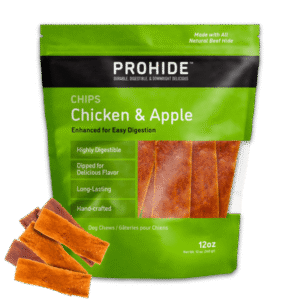
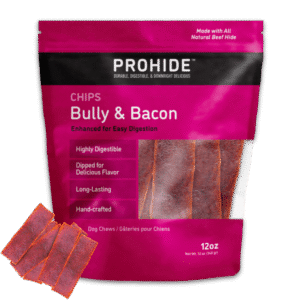
This category has grown the most in the last several years, and it’s where the chew market is heading. Products like ProHide are engineered specifically for digestibility, with predictable breakdown in the digestive tract and a clean ingredient profile.
The advantage of this category is that it captures what dogs actually love about traditional rawhide (the texture, the chewing duration, the meat-flavored satisfaction) without the rawhide risk profile. Dogs get the chew experience; pet parents get peace of mind.
Single-Ingredient Animal Parts
Bully sticks (beef pizzle), beef tendons, beef trachea, chicken feet, pig ears (in moderation), and similar single-ingredient chews are widely accepted as safe when sourced well. They’re naturally digestible. They’re recognizable on the ingredient list. And they tend to last long enough to be satisfying.
The caveats: high calorie content (especially bully sticks), some odor, and sourcing matters for bacterial safety.
Durable Rubber Toys (KONG and Similar)
Not edible chews, but excellent chew objects. KONGs are puncture-resistant, can be stuffed with food or peanut butter for engagement, and can be frozen to extend chew time. They’re a vet favorite for separation training and high-energy dogs.
Match the toughness rating to your dog’s chewing style. The “Extreme” black KONGs are designed for power chewers; lighter dogs do fine with classic red.
Yak Cheese Chews (Himalayan)
Made from yak milk, lime juice, and salt. Hard at first, softens as the dog chews. Long-lasting, low-fat, generally well-tolerated.
The caveat: the hardness of an unsoftened yak chew can be a tooth risk for some dogs. Dogs with sensitive teeth or older dogs should chew under supervision.
Matching the Chew to Your Dog’s Size and Style
Even within the safe categories, not every chew suits every dog. Use this as a starting point:
- Small dogs and gentle chewers: smaller-format digestible chews, soft bully sticks, sweet potato chews
- Medium dogs and moderate chewers: standard digestible chews like ProHide medium, full-size bully sticks, KONG Classic
- Large dogs and heavy chewers: larger-format digestible chews, jumbo bully sticks, KONG Extreme, yak chew XL
- Power chewers and gulpers: highly digestible options become especially important here, since aggressive chewing means larger pieces are swallowed faster. Chews that break down predictably (like ProHide) are particularly suited to this profile
For more on matching chew durability to dog size, see our long-lasting dog chews guide.
[INSERT IMAGE: chart or visual showing chew sizes matched to small, medium, large, and heavy-chewer dogs (source ref: https://www.petful.com/wp-content/uploads/2026/05/prohide-choose-safe-hero.jpg)]
Supervision and Safety Rules Every Pet Parent Should Know
Even the safest chew can cause problems without basic supervision. The rules:
- Stay in the room. The chewing dog should be visible to you. This is not negotiable for the first several chew sessions with any new product.
- Watch for gulping. If your dog tries to swallow a chunk too large to safely pass, take the chew away immediately. Some dogs gulp every chew; those dogs need especially digestible products.
- Take it away when it’s small. A chew small enough to swallow whole goes in the trash, not back to the dog. The end of a chew session is when blockages happen.
- Limit duration. Even the best chew, given for hours every day, can cause GI upset, dental wear, or weight gain. 15 to 30 minutes is usually plenty.
- Watch for changes. Soft stools, vomiting, lethargy, or appetite loss after a new chew means stop and call your vet.
Vet Picks at a Glance: 4 Safe Chew Categories Compared
If you want a quick decision framework, here is how the four most-recommended safe chew categories compare for a typical dog. Use this as a starting point, then match the specifics to your dog’s size and chewing style.
ProHide (Highly Digestible Animal-Source)
Best for: power chewers, gulpers, and dogs with sensitive stomachs. Pros: engineered digestibility, predictable breakdown, clean ingredient list, long session duration. Cons: newer category, premium pricing.
Bully Sticks (Single-Ingredient Beef Pizzle)
Best for: moderate chewers and dogs new to long-lasting chews. Pros: naturally digestible, single-ingredient, widely available. Cons: high calorie content, some odor, sourcing varies.
KONG (Stuffable Rubber Toy)
Best for: heavy chewers, separation training, and high-energy dogs. Pros: puncture-resistant, freezable for extended duration, nothing swallowed. Cons: needs stuffing to be engaging, not edible.
Himalayan Yak Cheese Chews
Best for: medium-to-large dogs without dental issues. Pros: long-lasting, low-fat, well-tolerated. Cons: hardness can risk teeth on dogs with sensitive dentition or seniors.
Frequently Asked Questions
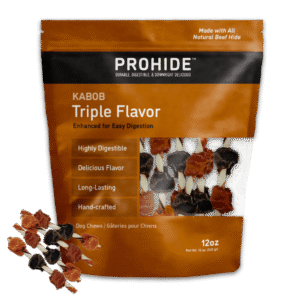
The safest chews share three qualities: they are highly digestible, sized appropriately, and sourced transparently. Within those constraints, options like ProHide (digestible animal-source), bully sticks (single-ingredient), and KONG toys (durable rubber) are consistently among the safest categories vets recommend.
Most veterinarians recommend digestible animal-source chews, single-ingredient chews like bully sticks or tendons, and durable rubber toys like KONG. The Veterinary Oral Health Council (VOHC) maintains a list of dental chews that have met evidence-based standards for plaque and tartar reduction.
For aggressive chewers, digestibility matters more than durability. Chews that break down predictably in the stomach (like ProHide) handle the larger swallowed fragments aggressive chewers produce. Jumbo bully sticks, KONG Extreme black, and vet recommended dog chews for aggressive chewers all qualify.
Generally, yes. Bully sticks are a single-ingredient chew with natural digestibility, while traditional rawhide is processed and unreliably digestible. Both still require supervision, especially as they’re chewed down to swallowable size.
The best safe chews for dogs depend on the dog’s size and chewing style. For small dogs, mini bully sticks and small-format digestible chews. For medium and large dogs, full-size bully sticks, KONG Classic or Extreme, and standard ProHide. For aggressive chewers, prioritize digestibility above all else.