Dog Food Allergies: Symptoms, Diagnosis, and Treatment Guide
Published on June 05, 2026

Dog food allergies primarily cause chronic skin itching and recurring ear infections, not GI distress. The top triggers, the diagnostic elimination diet protocol, and prescription versus OTC treatment options explained.
All featured products are chosen at the discretion of the author. However, Vetstreet may make a small affiliate commission if you click through and make a purchase.
This product is intended for use under veterinary supervision. Nutritional recommendations should be discussed with your veterinarian to determine the most appropriate diet for your dog’s individual needs.
Key Takeaways
- Dog food allergies symptoms are primarily dermatological. Chronic non-seasonal itching (paws, ears, face, belly), recurring ear infections, hot spots, and hair loss. GI symptoms are less common.
- The top food allergens in dogs, per the 2016 NIH-cited Mueller study of 297 dogs, are beef (34%), dairy (17%), chicken (15%), wheat (13%), and lamb (5%).
- Diagnosis requires an 8 to 12-week elimination diet trial supervised by a veterinarian, using a hydrolyzed or single novel-protein recipe. Blood, saliva, and hair tests are not reliable for diagnosing food allergies; intradermal/serum testing performed by a veterinary dermatologist has a role for environmental allergy management but does not replace an elimination diet for food allergy diagnosis.
- The majority of dogs with chronic itching are diagnosed with environmental allergies (atopic dermatitis) rather than food allergies, per ACVD educational materials. Don’t switch foods without a vet diagnosis.
- Treatment options: prescription hydrolyzed diets (Hill’s z/d, Royal Canin Veterinary Diet Hydrolyzed Protein HP, Purina HA) for diagnosed allergies. JFFD Sensitive Skin and the JFFD Fish & Sweet Potato recipe are OTC limited-ingredient options that may be useful after a vet-guided plan, but they are not equivalent to prescription hydrolyzed elimination diets and should not replace a confirmed diagnosis.
Vetstreet may earn a commission when you click through to JustFoodForDogs, at no extra cost to you.
Dog food allergies symptoms present primarily as skin and ear issues, not as digestive upset. Per VCA Animal Hospitals and the American College of Veterinary Dermatology (ACVD), the canonical signs are chronic non-seasonal itching (especially paws, ears, face, and belly), recurring ear infections, hot spots, and skin or hair changes. GI symptoms like vomiting and diarrhea can occur but are less common. Per the Mueller et al. 2016 PubMed-indexed review of 297 dogs with confirmed cutaneous adverse food reactions, the top allergens are beef (34 percent), dairy (17 percent), chicken (15 percent), wheat (13 percent), and lamb (5 percent). The majority of itchy dogs in dermatology practice are diagnosed with environmental allergies rather than food allergies (exact prevalence varies by source per ACVD educational materials), so a veterinary diagnosis is essential before changing diets.
What Are the Dog Food Allergies Symptoms?
Per the Veterinary Dermatology Clinic, dog food allergies symptoms present in a consistent cluster.
Skin Symptoms (Most Common)
- Chronic itching that is non-seasonal and concentrated on the paws, ears, face, belly, armpits, and rear
- Recurring ear infections (otitis externa), the same dog gets ear infections every few weeks, often with yeast or bacterial overgrowth
- Hot spots and skin infections from constant scratching, biting, or licking
- Hair loss in localized patches, especially around the eyes, ears, paws, and groin
- Rubbing or scooting, plus paw licking that wears down fur on the feet
Gastrointestinal Symptoms (Less Common)
- Frequent or recurring vomiting
- Loose stools or diarrhea that doesn’t resolve on a bland diet
- Excessive gas and bloating
- Unusually frequent bowel movements (3 to 5 times daily instead of 1 to 2)
Warning — most itchy dogs do NOT have food allergies: Per ACVD educational materials, the majority of dogs with chronic itching are diagnosed with environmental allergies (atopic dermatitis) rather than food allergies; exact prevalence varies by source. Environmental allergens include pollen, dust mites, grasses, mold, and flea saliva. Switching food without a veterinary diagnosis rarely resolves true food allergies, and can mask atopy or flea allergy dermatitis.
What Are the Most Common Dog Food Allergens?
The Mueller et al. 2016 PubMed-indexed review remains the most-cited source on canine food allergens. The hierarchy reflects exposure: dogs are allergic to the proteins they’ve eaten most.
| Allergen | Percent of Cases | Common Hidden Sources |
|---|---|---|
| Beef | 34% | Beef-flavored treats, gravies, bouillon, beef organ ingredients |
| Dairy | 17% | Cheese, yogurt, ice cream, milk solids in many commercial foods |
| Chicken | 15% | Chicken-flavored anything, chicken fat, chicken meal |
| Wheat | 13% | Wheat gluten in many kibbles, dog treats, baked goods |
| Lamb | 5% | Lamb meal in “hypoallergenic” lamb-and-rice diets |
| Soy | <5% | Soy protein isolate, soy oil, many commercial foods |
| Egg | <5% | Egg whites in commercial foods, homemade recipes |
| Corn | <5% | Corn meal, corn gluten in budget kibbles |
| Fish | <5% | Salmon, whitefish, fish meal in some sensitive-stomach foods |
Vetstreet may earn a commission when you click through to JustFoodForDogs, at no extra cost to you.
How Are Dog Food Allergies Diagnosed?
Per the American Veterinary Medical Association and the American College of Veterinary Dermatology, there is no reliable blood or skin test for food allergies in dogs. The only valid diagnostic approach is a strict elimination diet trial.
The Elimination Diet Protocol
Your veterinarian prescribes either:
- A hydrolyzed protein diet, protein broken down into low-molecular-weight peptide fragments intended to reduce the likelihood of immune recognition. Examples: Hill’s Prescription Diet z/d, Royal Canin Veterinary Diet Hydrolyzed Protein HP, Purina Pro Plan Veterinary Diets HA.
- A single novel-protein diet, a protein the dog has never eaten before, like venison, rabbit, or kangaroo. A prescription novel-protein diet is often used because OTC versions may carry cross-contact risk from shared production lines at some facilities; consult the brand’s published cross-contact statement and your veterinarian on which option is appropriate.
The dog eats only that diet for 8 to 12 weeks. No treats. No flavored medications. No table scraps. No other proteins of any kind. If symptoms resolve during the trial and recur within 14 days of reintroducing the original food, food allergy is confirmed.
Vetstreet may earn a commission when you click through to JustFoodForDogs, at no extra cost to you.
Tip — why blood, saliva, hair, and skin tests do not replace an elimination diet: Blood, saliva, and hair tests sold direct-to-consumer are not validated against gold-standard elimination diet trials and produce results indistinguishable from random in placebo-fed dogs. Intradermal skin testing performed by a veterinary dermatologist is the gold standard for environmental allergens but is not validated for diagnosing food allergies. The elimination diet trial is the veterinary-validated diagnostic.
What Are the Treatment Options for Dog Food Allergies?
1. Prescription Hydrolyzed Diets (Severe Cases)
For diagnosed severe food allergies, prescription hydrolyzed protein diets are the gold standard. The three main options:
- Hill’s Prescription Diet z/d, chicken-derived hydrolyzed protein
- Royal Canin Veterinary Diet Hydrolyzed Protein HP, soy-derived hydrolyzed protein
- Purina Pro Plan Veterinary Diets HA, soy or chicken hydrolyzed protein
Vetstreet may earn a commission when you click through to JustFoodForDogs, at no extra cost to you.
2. Over-the-Counter Limited Ingredient Diets (Mild Cases, After Vet-Guided Plan)
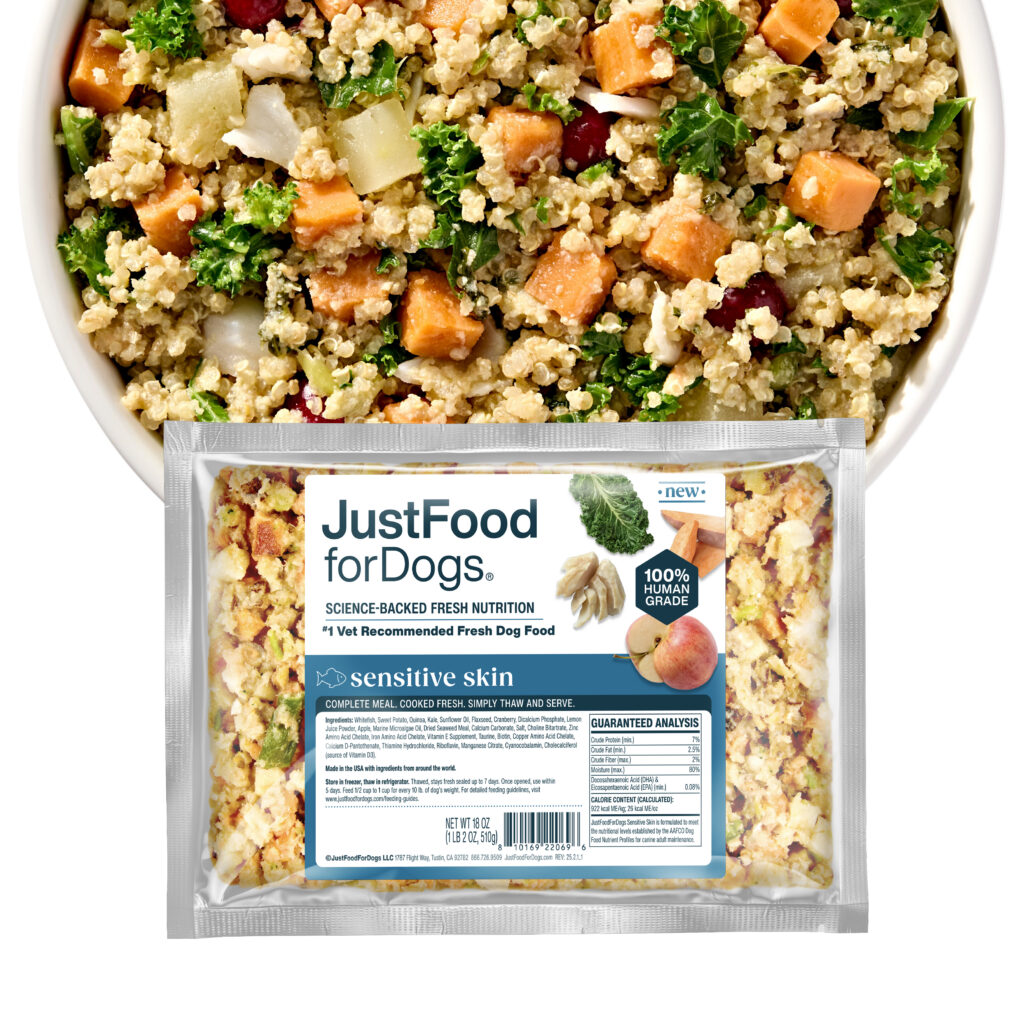
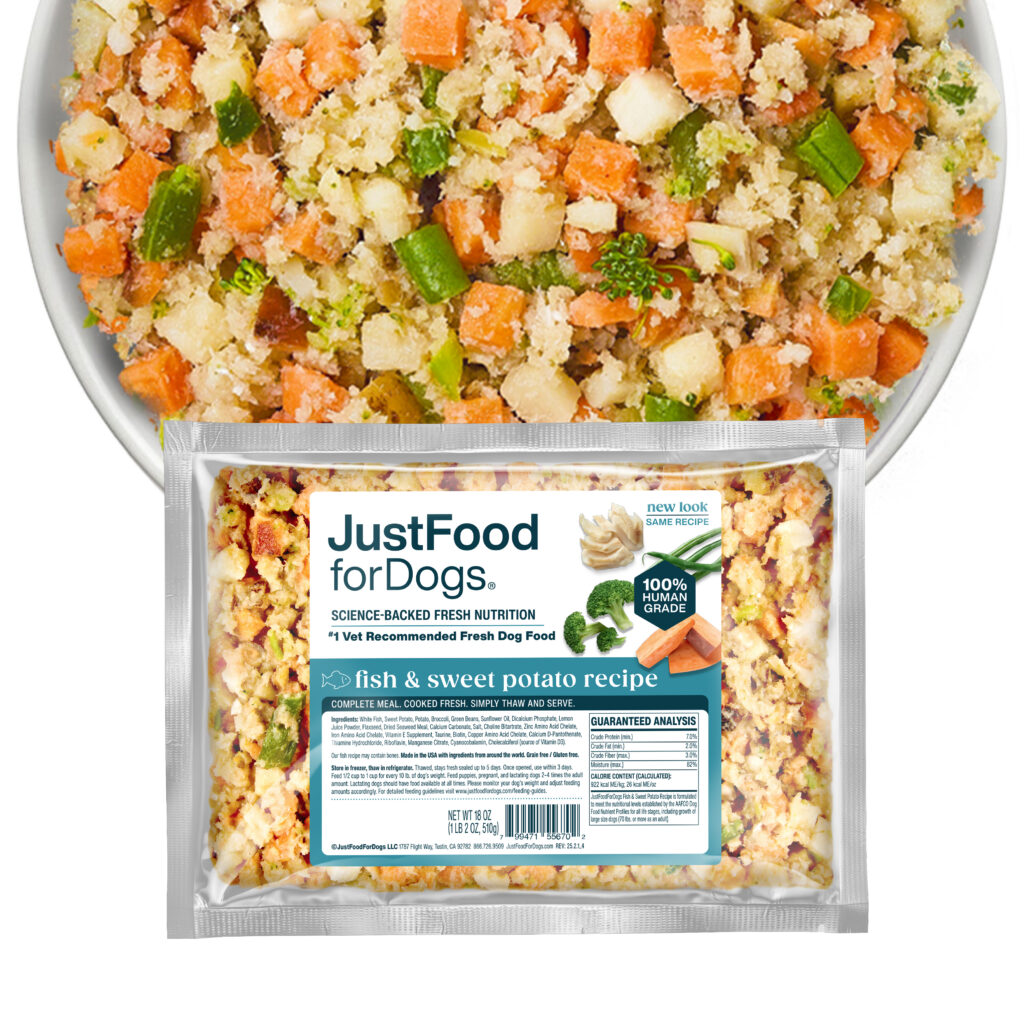
For mild food sensitivities (after a veterinarian-guided plan, not as a substitute for a diagnostic elimination trial), Just Food For Dogs offers limited-ingredient OTC options: Sensitive Skin (a frozen wild-caught white fish recipe labeled for adult maintenance, enriched with omega-3 and omega-6 fatty acids plus EPA and DHA to nourish skin and support a healthy coat) and Fish & Sweet Potato (a frozen recipe labeled for adults and puppies per the JFFD product page). Both are gently cooked with no artificial preservatives or flavor enhancers. Other OTC LID options include Natural Balance L.I.D. and Blue Buffalo Basics. None of these is equivalent to a prescription hydrolyzed elimination diet for confirmed food-allergy diagnosis.
Pros & Cons
Pros
- Board-certified veterinary nutritionist-formulated
- Single named animal protein in each recipe
- Human-grade ingredients (USDA-inspected at the ingredient level)
- No artificial preservatives or flavor enhancers
- Multiple recipe options across the JFFD line
Cons
- $4 to $7 per day for a 30-pound dog
- Not a substitute for prescription hydrolyzed elimination diets in diagnosed food-allergy cases
- OTC limited-ingredient diets in general (including JFFD’s) do not match the cross-contact controls of prescription hydrolyzed formulas; verify per-brand cross-contact statements before relying on an OTC LID for a confirmed-allergy diagnosis
3. Home-Cooked Veterinary Nutritionist Diets
For owners committed to home cooking, a board-certified veterinary nutritionist can design an AAFCO-balanced recipe that excludes the trigger protein. Balance.it is a veterinary-developed home-cooked recipe builder; some Balance.it recipes require the platform’s own supplement products to be considered complete and balanced.
The 3-Day Rule vs the 8-12 Week Elimination Trial: Which Is Correct?
Some pet-food websites describe a short “3-day” or “5-day” transition window for switching dog foods, but this is a transition guideline, not an allergy diagnostic. Per the American College of Veterinary Dermatology, the diagnostic elimination diet for food allergy requires 8 to 12 weeks of strict adherence to a novel-protein or hydrolyzed-protein formula, with reintroduction challenge testing afterward. Owners sometimes confuse the two because both involve switching foods. A typical gradual transition for a healthy dog might mix increasing proportions of the new food over 5 to 10 days (consult the new brand’s feeding guide for the recommended schedule). The elimination diet trial is a clinical diagnostic that takes weeks, requires complete elimination of all other proteins (no treats, no flavored medications, no table scraps), and is medically supervised. Any improvement seen within a few days of switching foods is not a food-allergy diagnosis; it typically reflects coincidental resolution of unrelated GI upset or owner-observation bias.
Why Blood and Saliva Tests Fail for Food Allergies
Commercial IgE blood panels, saliva tests, and hair-sample tests for food allergies in dogs lack veterinary validation, per the AVMA and the American College of Veterinary Dermatology. These tests measure antibody response to food proteins, but published veterinary-dermatology guidance notes poor correlation between antibody presence and clinical allergy: dogs with confirmed beef allergies can test negative on IgE panels, while dogs with no clinical reaction often test positive against multiple proteins. False positives lead owners to unnecessarily restrict diets, while false negatives miss real triggers. Board-certified veterinary dermatology services such as the Animal Dermatology Group consistently recommend an 8 to 12-week elimination trial as the validated diagnostic approach, rather than blood, saliva, or hair tests.
Frequently Asked Questions
The primary signs are chronic non-seasonal itching (paws, ears, face, belly), recurring ear infections, hot spots, hair loss in localized patches, and skin infections that don’t resolve with standard treatment. GI symptoms like vomiting and diarrhea are less common but possible. Diagnosis requires an 8 to 12-week elimination diet trial supervised by a veterinarian.
Per the Mueller et al. 2016 PubMed-indexed review: beef (34% of cases), dairy (17%), chicken (15%), wheat (13%), and lamb (5%). These five proteins together account for roughly 84 percent of confirmed canine food allergies in that review; other reported but less common allergens include soy, egg, corn, and fish.
Food allergies require sensitization, so symptoms typically appear after months or years of exposure to a trigger ingredient. The most common age of first food-allergy diagnosis is 1 to 5 years. Puppies under 6 months rarely have true food allergies; their symptoms are usually environmental or parasitic.
Treatment starts with identifying the trigger ingredient through an 8 to 12-week elimination diet trial. Once the trigger is identified, treatment is lifelong avoidance via a prescription hydrolyzed diet (Hill’s z/d, Royal Canin Veterinary Diet Hydrolyzed Protein HP, Purina HA) for severe cases, a single novel-protein diet, or an OTC limited-ingredient recipe (JFFD Sensitive Skin or JFFD Fish & Sweet Potato) under veterinary direction for milder cases.
For dogs (distinct from the human “Big 9” allergens), the most-commonly-reported allergens are beef, dairy, chicken, wheat, and lamb. Less common but still documented: soy, egg, corn, and fish. The first five account for roughly 84 percent of confirmed canine food-allergy cases in the Mueller et al. 2016 PubMed-indexed review; aggregate percentage figures vary by source.
In most cases described in veterinary dermatology literature, food allergies in dogs persist long-term once the immune system has sensitized to a trigger; symptoms are typically managed by avoiding the trigger ingredient. Some dogs develop additional food allergies over time, requiring diet adjustments. Discuss long-term management with your veterinarian.
Related Guides
- Allergens in Dog Food — the top 9 food allergens for dogs and what to feed instead
- Best Dog Food for Allergies — vet-reviewed buyer’s guide for diagnosed food-allergic dogs
- Food Intolerance in Dogs — distinguishing food intolerance from true food allergy
- Dog Food for Sensitive Stomachs — when GI symptoms suggest intolerance, not allergy