Veterinarian Answer: Is Shelf-Stable Fresh Dog Food a Healthy Daily Option?
Published on June 02, 2026
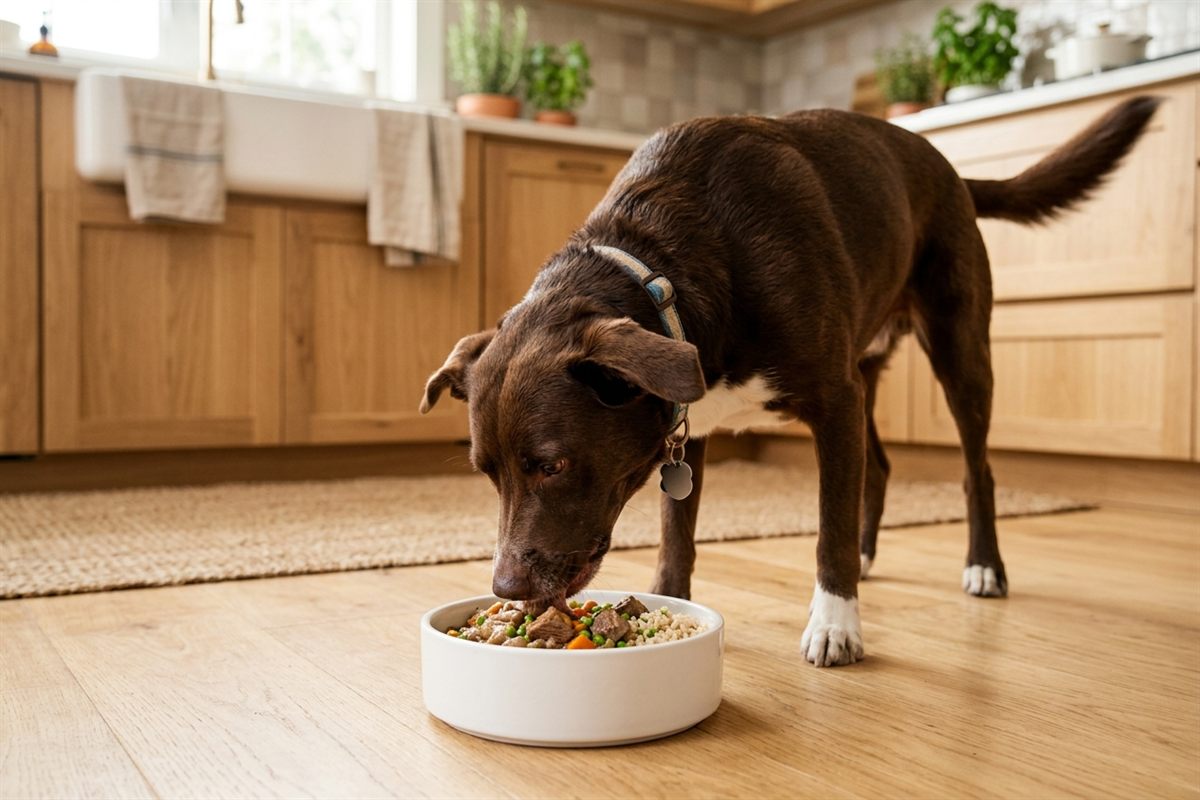
A practicing veterinarian answers whether shelf-stable fresh dog food can serve as a healthy daily diet, how to verify AAFCO completeness, and which dogs should and should not be switched.
This article was medically reviewed by a licensed veterinarian.
All featured products are chosen at the discretion of the author. However, Vetstreet may make a small affiliate commission if you click through and make a purchase.
Is shelf-stable dog food safe as a daily diet? That’s one of the most common questions we get when pet parents discover this category. Shelf-stable fresh dog food has become one of the fastest-growing categories in pet nutrition. It promises the ingredient quality and palatability of refrigerated fresh food in a pantry-stable pouch, no freezer space, no defrosting, no subscription. The clinical question pet parents keep bringing to the exam room is whether this format can genuinely serve as a dog’s complete daily diet, or whether it’s really a topper dressed up as a meal.
The short veterinary answer: a properly formulated, AAFCO-complete shelf-stable fresh food can absolutely serve as a healthy dog’s sole daily diet, provided the nutritional adequacy statement, life-stage designation, and ingredient sourcing check out. The longer answer is where most of the clinical nuance lives.
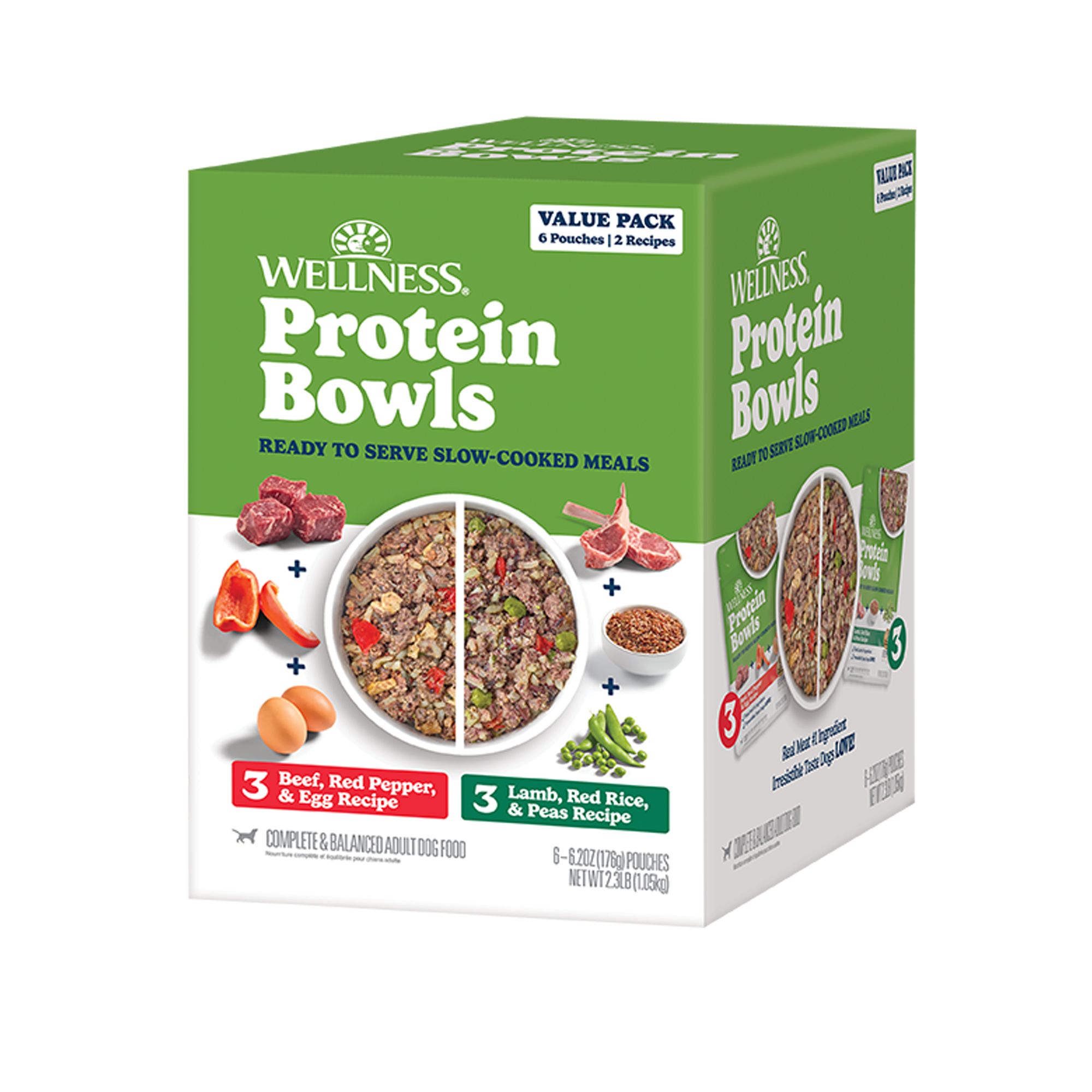
Throughout this guide we reference Wellness Pet Food‘s Wellness Protein Bowls as one current example of a complete-and-balanced shelf-stable fresh formulation for adult dogs.
Key Takeaways
- Shelf-stable fresh dog food is slow-cooked whole-food nutrition sealed in a thermally stabilized pouch, no refrigeration needed until opened.
- It can be fed as a complete daily diet if the label carries an AAFCO nutritional adequacy statement for your dog’s life stage.
- Clinically, the format is equivalent in nutritional potential to refrigerated fresh or premium canned food, the differences are storage logistics and processing intensity.
- Once opened, treat every pouch like fresh food: refrigerate and use within 3-5 days to prevent microbial growth.
- Dogs on prescription or therapeutic diets, and dogs with diagnosed chronic disease, should only switch with veterinary clearance.
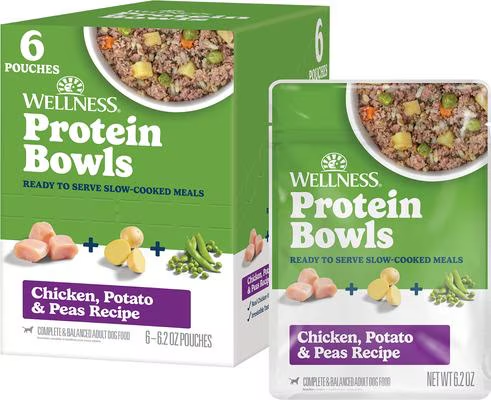
High-quality shelf-stable formulations are built on whole-food ingredients, named animal proteins, whole grains like brown rice and quinoa, and vegetables, with gentler thermal processing than retort canning.
What makes a food “shelf-stable fresh” from a veterinary standpoint?
“Shelf-stable fresh” describes foods that are slow-cooked with recognizable whole-food ingredients, real meat, vegetables, grains, then sealed in a multi-layer pouch and heat-treated enough to destroy pathogens and stabilize the product against spoilage at room temperature. Unlike traditional canned food, which is retort-processed at very high temperatures that tend to break down visible ingredient structure, shelf-stable fresh formulations use lower, gentler thermal profiles that preserve the look and texture of the raw ingredients.
Clinically, the format answers two long-standing pet-parent pain points with fresh food: refrigeration logistics and subscription cost. If a dog does well on fresh food but the household can’t manage freezer-based subscription meals, a shelf-stable fresh formulation is often the practical bridge.
Is shelf-stable fresh dog food nutritionally complete?
Nutritional completeness is not an inherent property of the format, it’s a property of the formulation. The standard veterinarians look for is the AAFCO complete-and-balanced statement nutritional adequacy statement on the label: either “formulated to meet the nutrient profiles established by AAFCO” or, better, “animal feeding tests using AAFCO procedures substantiate that this food provides complete and balanced nutrition.” The second is the gold standard because it confirms the formulation performed well in feeding trials on real dogs. Foods that carry either statement for an adult-maintenance, growth, or all-life-stages profile can be fed as a complete daily diet for dogs in that stage.
Wellness Protein Bowls, as one current example in this category, are formulated as complete and balanced for adult dogs and meet AAFCO nutrient profiles, a useful reference point when comparing shelf-stable fresh options. For a deeper look at how the AAFCO designation works and how to decode a label, see our guide to complete-and-balanced dog food.
Is shelf-stable dog food safe at room temperature? The food-safety science
Food safety is a legitimate clinical concern any time a meat-based product sits on a pantry shelf. Shelf-stable fresh foods rely on thermal processing (a lower-temperature, longer-duration cook than traditional canning) combined with oxygen-barrier pouch materials to control the three conditions microbes need: moisture, oxygen, and favorable temperature. When the pouch is intact and stored per the manufacturer’s instructions, the probability of pathogen growth is effectively zero.
Once opened, the math changes. The pouch is now permeable to air and ambient microbes, and the food behaves exactly like any fresh cooked meal. Standard veterinary guidance is simple: reseal or transfer to an airtight container, refrigerate, and use within 3-5 days. Discard any portion that’s been left at room temperature for longer than two hours.
Vet tip on opened pouches
Once opened, treat a shelf-stable fresh pouch like any fresh meal. Refrigerate the unused portion in a sealed container and use within 3-5 days. If you notice an off smell, slimy texture, or color change, discard the food, do not feed it.
Shelf-stable fresh vs other formats, a clinical comparison
From a nutritional and practical standpoint, the format question is less important than three underlying variables: whether the food is AAFCO complete and balanced for the dog’s life stage, whether the ingredients are high-quality named animal proteins, and whether the dog actually eats it consistently. Within those constraints, format becomes a logistics choice.
Shelf-stable fresh vs common alternatives at a glance
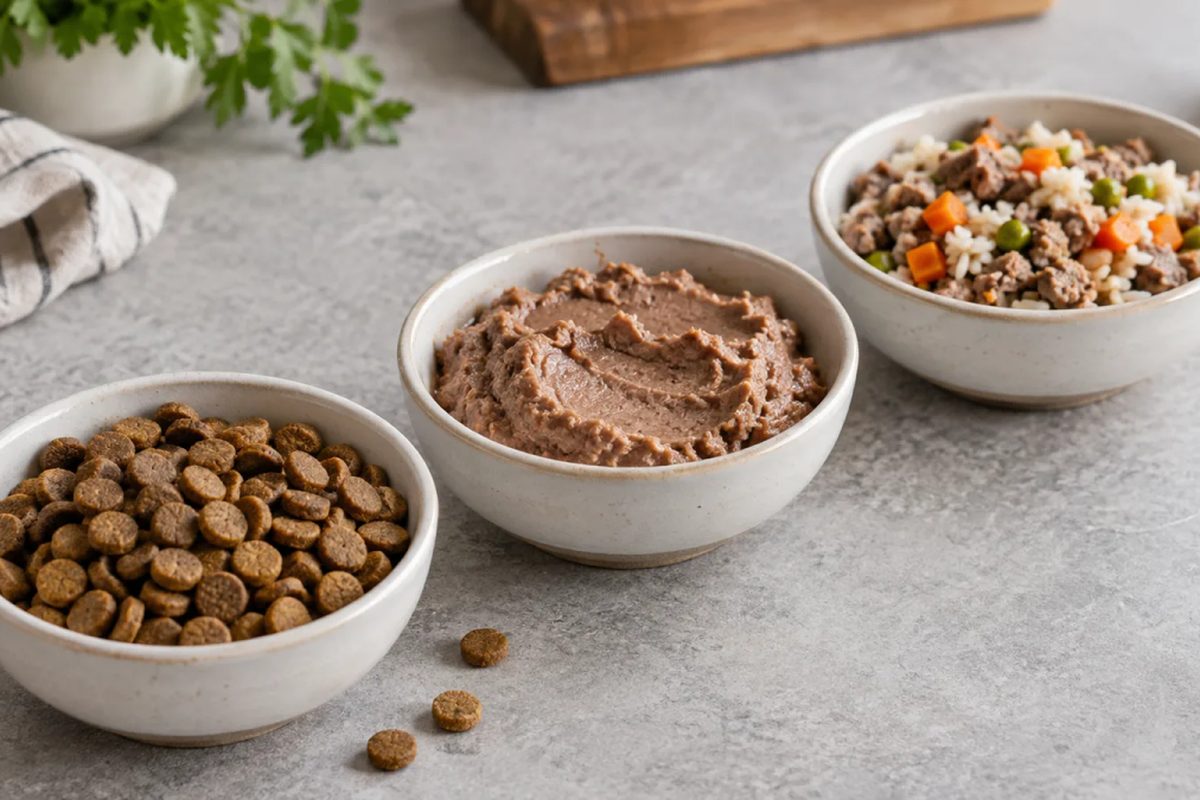
| Format | Storage (Unopened) | Processing Intensity | Typical Use Case |
|---|---|---|---|
| Shelf-stable fresh (pouch) | Pantry, 12+ months | Low to medium, visible ingredients | Fresh-food benefits without the fridge |
| Refrigerated fresh (subscription) | Refrigerator / freezer | Low, gently cooked | Households committed to a fresh-food subscription |
| Traditional canned wet | Pantry, 2+ years | High-temperature retort | Seniors, dental issues, budget wet food |
| Extruded dry kibble | Pantry, 12+ months after open | High, extruded | Everyday maintenance, ease, dental-support diets |
| Freeze-dried raw | Pantry (sealed) | Minimal, freeze-dried | Active dogs, minimally-processed feeding approach |
Which dogs is shelf-stable fresh food appropriate for?
Healthy adult dogs
Healthy adult dogs with no active medical conditions are candidates for any nutritionally complete diet, shelf-stable fresh included. Dogs that tend to do particularly well on this format include picky eaters who respond to visible real-food ingredients and softer texture, dogs in households with limited refrigerator space (campers, RVers, and travelers), seniors with mild dental wear who prefer softer food but don’t need a prescription diet, and dogs transitioning off subscription fresh food where the cost or logistics no longer fit.
Picky eaters and dogs with reduced appetite
For dogs with reduced appetite or a pattern of turning down kibble, the aroma and visible ingredients of a slow-cooked shelf-stable food can be a meaningful palatability upgrade. See our companion article on dogs that stop eating their food for the full clinical workup.
Which dogs should NOT be switched without a vet’s input?
Check with your veterinarian first if your dog has any of these:
- A prescription or therapeutic diet already in place (kidney, liver, GI, urinary, or allergy diet)
- Chronic kidney disease, hepatic disease, pancreatitis, or diabetes mellitus
- A history of food allergies or diagnosed food sensitivities
- Puppies under 12 months: confirm the product is labeled for growth or all-life-stages, and that it meets large-breed growth guidelines if applicable
- Pregnant or nursing dogs: check the label for gestation/lactation coverage
Switching a dog off a therapeutic diet without medical guidance can undo months of clinical stability.
Clinical best practices for transitioning to shelf-stable fresh food
Any time you change your dog’s diet, transition gradually over 7 to 10 days to minimize GI upset. A standard clinical transition looks like:
The 7 to 10 day transition schedule
- Days 1 to 3: 25% new food, 75% current food
- Days 4 to 6: 50% new, 50% current
- Days 7 to 9: 75% new, 25% current
- Day 10+: 100% new food
If your dog has a sensitive stomach
If your dog has a sensitive stomach or a history of GI flare-ups, stretch the transition to 14 days. Watch for loose stool, vomiting, decreased appetite, or skin changes during and after the switch, any of these warrant slowing the transition or calling your vet.
Frequently asked questions
Yes, as long as the pouch is intact and stored per the manufacturer’s instructions. The thermal processing and oxygen-barrier packaging create conditions that prevent pathogen growth at room temperature. Once opened, refrigerate immediately and use within 3-5 days.
Yes, if the label carries an AAFCO nutritional adequacy statement for your dog’s life stage (adult maintenance, growth, or all life stages). That statement is what distinguishes a complete meal from a topper, supplement, or treat. Wellness Protein Bowls, for example, carry the AAFCO complete-and-balanced statement for adult dogs and can serve as a sole daily diet.
Nutritionally, they can be equivalent. Both categories typically use whole-food ingredients and gentler cooking than canned or extruded kibble. The practical difference is storage logistics, not nutrition.
Only if the product is specifically labeled for growth or all life stages, and meets the large-breed growth profile if your puppy is a large breed. Many shelf-stable fresh foods are formulated for adult maintenance only, check the label.
Monitor stool consistency, appetite, weight, and coat quality. A normal transition may include slightly softer stool for a few days. If GI signs persist past 7-10 days, slow the transition or return to the previous diet and consult your veterinarian.
Not necessarily. ‘Human-grade’ is a specific AAFCO/FDA claim that requires the food to be made from ingredients fit for human consumption in a facility that meets human-food manufacturing standards. Shelf-stable fresh formulation is about processing and storage, not ingredient grade, a food can be one, both, or neither.
The veterinary bottom line
A well-formulated shelf-stable fresh dog food is a legitimate daily nutrition option for healthy adult dogs. The format solves real logistics pain points around fresh feeding and can support palatability in dogs that have turned away from kibble. As with any diet decision, the right question is not about the category, it’s about whether the specific product carries an AAFCO complete-and-balanced statement for the right life stage, whether the ingredients are high quality, and whether your individual dog does well on it.
If you’re considering a switch for a dog with any chronic medical condition, on medication, or on a therapeutic diet, loop in your primary-care veterinarian before changing formats. For healthy dogs on a standard maintenance diet, shelf-stable fresh options like Wellness Protein Bowls are a reasonable and increasingly well-supported choice.
The information in this article is educational and not a substitute for an in-person veterinary examination. If your dog has specific health concerns, consult your veterinarian.