Bland Food for Dog Diarrhea: Vet-Reviewed Recipe, Timeline, and When to See a Vet
Published on June 05, 2026
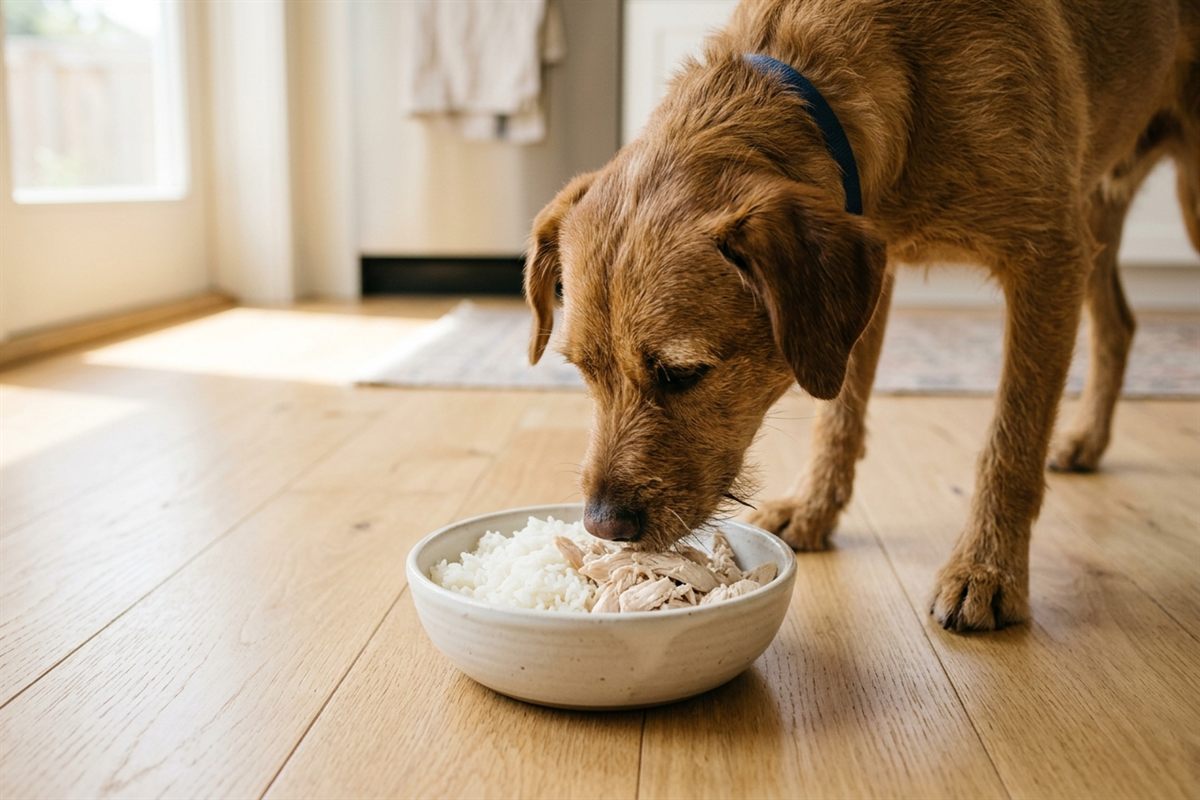
Bland food for dog diarrhea is typically boiled chicken and rice, commonly used in veterinary client-education materials for short-term canine GI upset. Full chicken-and-rice recipe, feeding protocol, and warning signs that warrant urgent veterinary care.
All featured products are chosen at the discretion of the author. However, Vetstreet may make a small affiliate commission if you click through and make a purchase.
Key Takeaways
- The standard bland food for dog diarrhea is boiled skinless chicken breast and white rice. A 1:2 ratio (1 part protein to 2 parts rice) is commonly used in veterinary client-education materials; specific ratio and duration vary by source, and your veterinarian can confirm what is appropriate for your dog.
- Feed small portions every 6 to 8 hours for 3 to 5 days. Roughly 25 percent of normal daily intake as a temporary starting point for mild cases, split across 4 to 6 small meals; adjust based on your dog’s size, age, and the severity of symptoms, and consult your veterinarian for guidance.
- Boil everything in plain water with no seasonings, oils, or broths. High-fat foods can worsen diarrhea or trigger pancreatitis in susceptible dogs, especially during digestive recovery.
- See a veterinarian immediately if diarrhea persists beyond 48 hours, contains blood, or is accompanied by vomiting, lethargy, or refusal to eat.
- Bland diet is recovery food, not maintenance. Transition back to regular food over 5 to 7 days once stool firms up.
A bland food for dog diarrhea is a low-fat, easily digestible meal that rests the gut and lets your dog recover from gastrointestinal upset. The chicken-and-rice bland diet is widely described in veterinary client-education materials, including the Cornell University College of Veterinary Medicine; a 1:2 ratio of boiled skinless chicken breast to white rice is a common starting point but specific guidance varies by source. Feed small portions every 6 to 8 hours for 3 to 5 days, then gradually return to regular food. PetMD and VCA Animal Hospitals both note that the traditional home-cooked bland diet is not nutritionally complete for long-term feeding. If symptoms persist beyond 48 hours, the diarrhea contains blood, or your dog is also vomiting or lethargic, see a veterinarian immediately.
What Is a Bland Diet for Dogs?
A bland diet is a low-fat, low-fiber, high-carbohydrate meal designed to be gentle on an inflamed digestive tract. The combination of easily-digestible protein and simple carbohydrate provides energy and protein for tissue repair without stressing the gut. A chicken-and-rice bland diet (lean protein paired with a digestible carbohydrate) is described in veterinary client-education materials from sources including Cornell and PetMD; the exact ratio and duration vary by clinical context and should be set with your veterinarian for any persistent or severe case.
How Do You Make Bland Food for Dog Diarrhea?
Standard Recipe (Chicken and Rice)
Ingredients
- 1 pound boneless, skinless chicken breast (no fat, no skin)
- 2 cups white rice (basmati or jasmine, not brown)
- Plain water for boiling (no salt, no seasonings, no broth, no oil)
Preparation
- Boil the chicken breast in plain water until fully cooked, roughly 15 to 20 minutes. Drain and discard the cooking water (which holds rendered fat).
- Shred or chop the cooked chicken into small pieces.
- Cook the white rice in plain water per package instructions until soft.
- Mix 1 part chicken to 2 parts cooked rice. Serve at room temperature (never hot, never cold from the refrigerator).
Alternative Proteins
If your dog is allergic or intolerant to chicken, lean alternatives that work in the same recipe:
- Boiled extra-lean ground turkey (drain fat)
- Boiled extra-lean ground beef, 90 percent or higher (drain fat)
- Cooked scrambled eggs without oil or butter
- Low-fat plain cottage cheese (small amounts only)
Alternative Carbohydrates
If white rice is unavailable or your dog dislikes it:
- Boiled peeled white potatoes
- Boiled pasta (no sauce or seasoning)
- Cooked plain oatmeal
- Plain pumpkin puree (100 percent pumpkin, not pie filling)
Warning — what never to add: Never include onions, garlic, butter, oil, salt, broth, gravy, raw bread dough, grapes, raisins, chocolate, xylitol, or seasoned cooking water. Each of these can either worsen diarrhea, cause toxicity, or trigger pancreatitis in a recovering dog.
How Much Bland Food Should You Feed and How Often?
During recovery, feed roughly 25 percent of your dog’s normal daily caloric intake, split across 4 to 6 small meals every 6 to 8 hours. Small, frequent meals are easier for the inflamed gut to process than larger ones. A 30-pound dog who normally eats 2 cups of food per day would get about 1/2 cup of the bland mix total, divided into roughly 1/8 cup portions.
Per the Arlington Animal Hospital protocol, store unused portions in the refrigerator for up to 48 to 72 hours, or freeze in single-meal portions for longer keeping. Serve room-temperature; cold food can trigger nausea, and hot food can damage the inflamed gut lining.
How Do You Transition Back to Regular Food?
Once diarrhea stops and stool returns to normal, transition gradually over 5 to 7 days to avoid triggering a relapse. The Queen Creek Veterinary Clinic protocol is the veterinary standard.
- Days 1 to 2: 75 percent bland diet, 25 percent regular food
- Days 3 to 4: 50 percent bland diet, 50 percent regular food
- Days 5 to 6: 25 percent bland diet, 75 percent regular food
- Day 7: Full return to regular diet
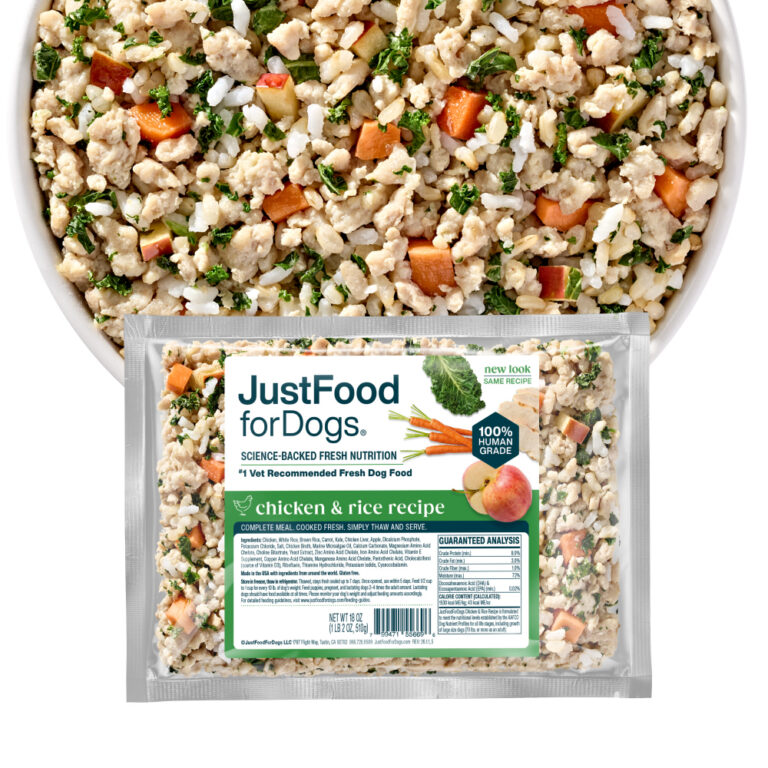
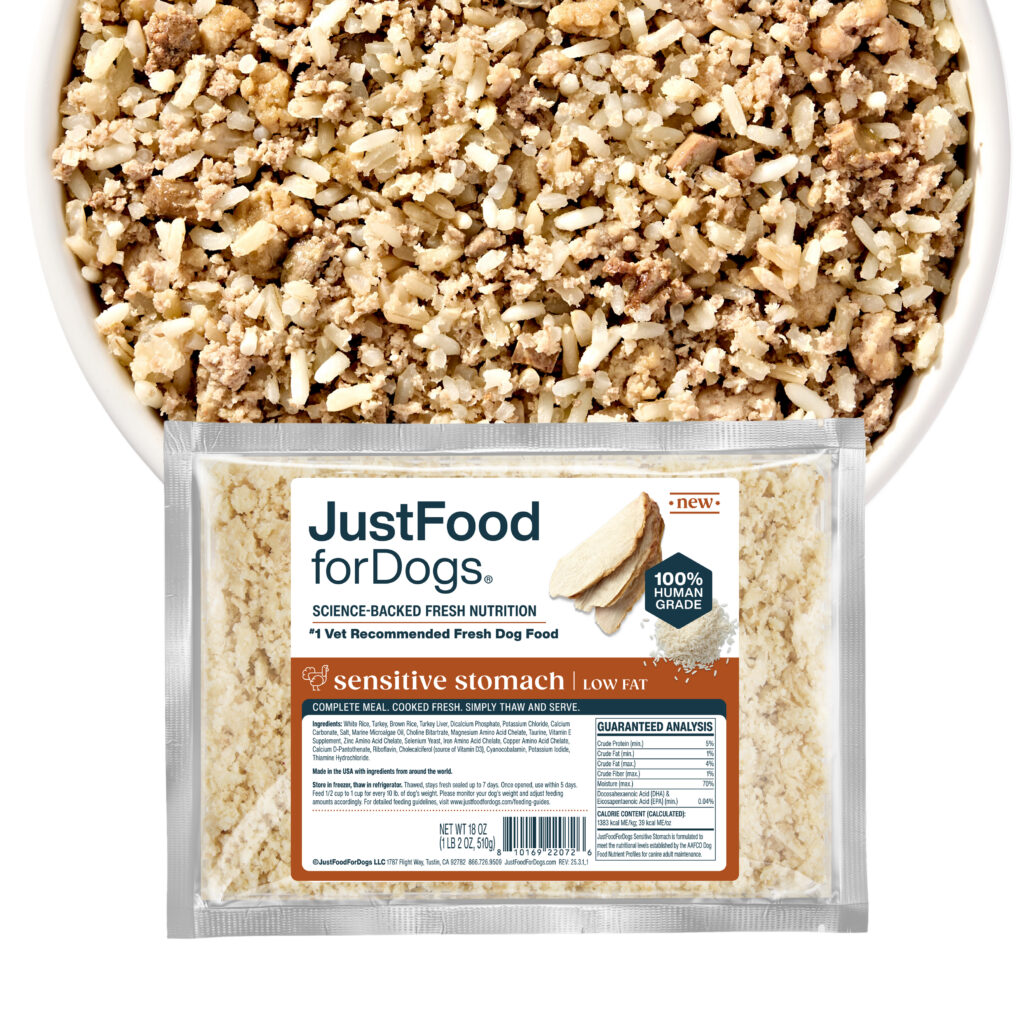
A Commercial Bland Diet Alternative: Just Food For Dogs JustFresh
Just Food For Dogs JustFresh Chicken is a shelf-stable, USDA-inspected, complete-and-balanced chicken-and-rice-style commercial food. It uses a chicken-and-rice formulation but adds the calcium, vitamins, and minerals missing from home-cooked recipes, making it AAFCO-balanced for adult maintenance. Useful for owners who do not want to spend time boiling and shredding, or for owners who want a convenient complete-and-balanced chicken-and-rice-style option after veterinary guidance. For diagnosed chronic GI disease, ask your veterinarian about a prescription therapeutic diet rather than relying on an OTC bland-diet alternative. Daily cost for a 30-pound dog: $4 to $5.
Pros & Cons
Pros
- Chicken-and-rice-style formulation with limited additional ingredients
- Human-grade ingredients (USDA-inspected at the ingredient level)
- AAFCO-balanced for adult maintenance (unlike home-cooked bland diet)
- Shelf-stable until opened, no cooking, refrigeration, or prep
- No artificial preservatives, colors, or flavor enhancers
Cons
- $4 to $5 per day for a 30-pound dog (higher than home-cooked)
- Not designed for severe or veterinarian-diagnosed conditions (use a prescription GI diet)
- Limited flavor options compared with named JFFD limited-ingredient recipes (Sensitive Stomach, Fish & Sweet Potato)
When Should You See a Veterinarian?
See a veterinarian immediately if any of the following apply:
- Diarrhea persists more than 48 hours on the bland diet
- Blood in the stool (bright red, dark, or tarry/black)
- Vomiting alongside diarrhea (risk of dehydration)
- Lethargy or refusal to eat (especially after 24 hours)
- Severely young (under 6 months) or older dogs (dehydration risk is higher)
- Pre-existing health conditions like pancreatitis, IBD, or kidney disease
What If Diarrhea Persists But Your Dog Acts Fine?
A dog who has diarrhea but otherwise acts normal (eating, drinking, alert, no fever) is the most common presentation, and the bland-diet protocol still applies. However, Cornell University College of Veterinary Medicine notes that persistent diarrhea beyond 48 hours warrants veterinary evaluation even when the dog appears fine, because chronic mild diarrhea can mask underlying parasitic infection (Giardia, hookworms), early-stage inflammatory bowel disease, or food intolerance. The action threshold is duration plus consistency: any episode lasting more than 5 days, any episode with mucus or blood, or any pattern of intermittent loose stool returning every 2 to 3 weeks merits a vet visit even if behavior is normal. The bland diet is a recovery tool, not a long-term solution. If symptoms recur despite three or more successful bland-diet cycles, the underlying cause needs investigation.
Should You Add Probiotics During Bland-Diet Recovery?
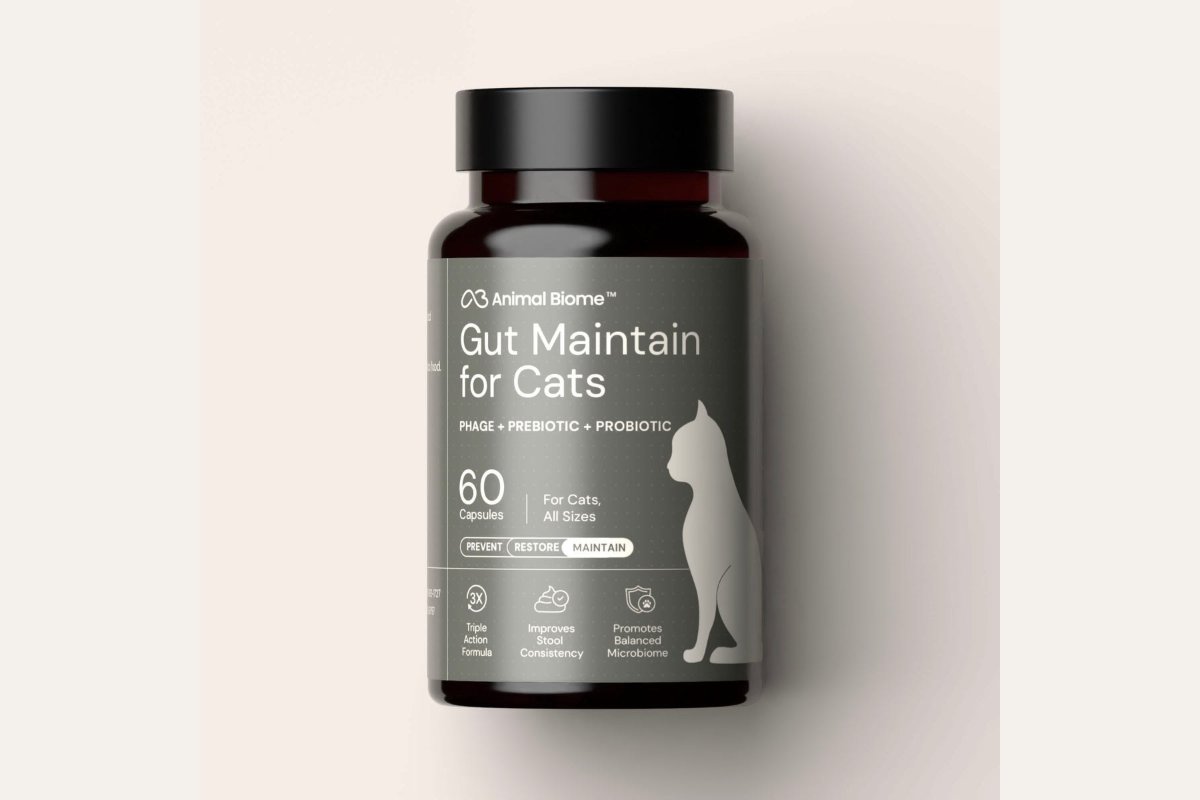
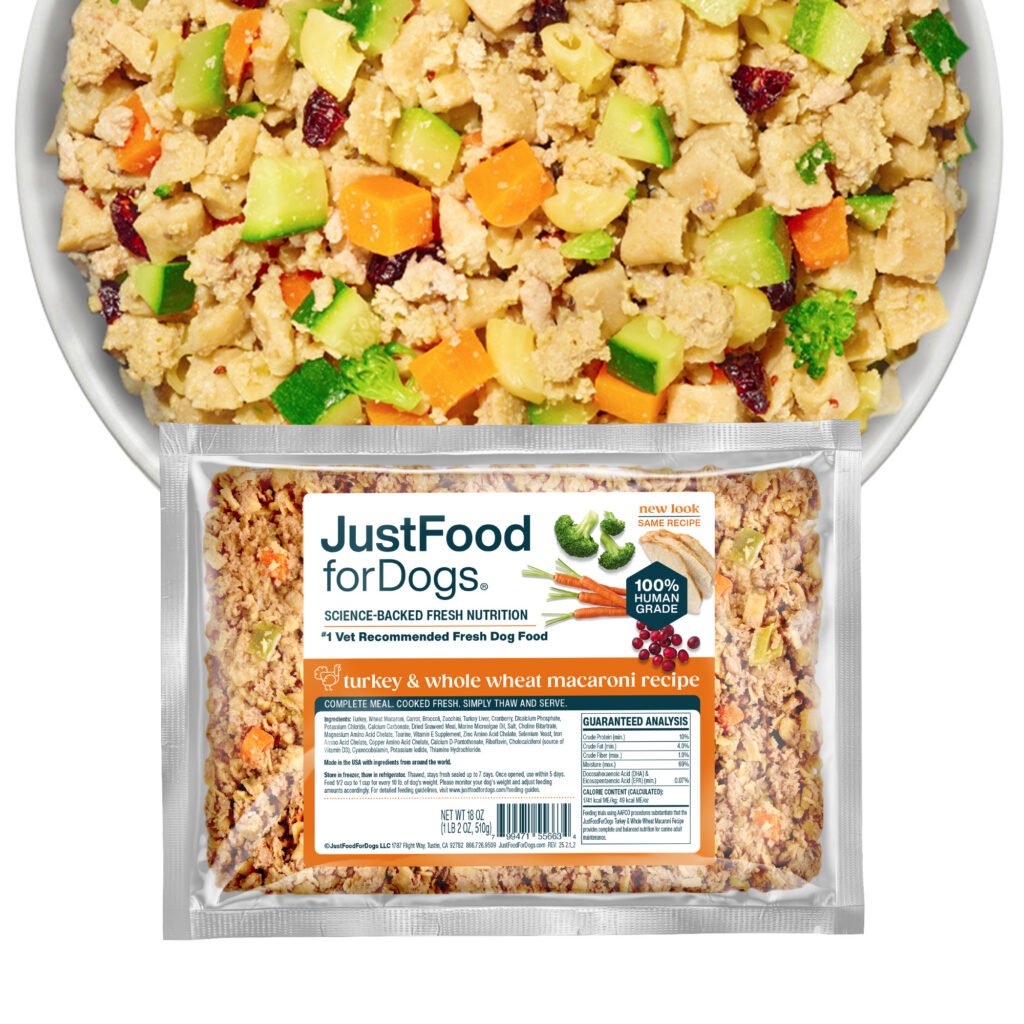
Veterinary-formulated probiotics with brand-published strain identifiers are commonly used in mild diarrhea cases under veterinary direction. Examples include Purina FortiFlora (which the brand identifies as containing Enterococcus faecium), Hill’s Prescription Diet Gastrointestinal Biome, and Nutramax Proviable-DC. Over-the-counter human probiotics are not equivalent because the bacterial strains and dosages are not validated for canine gut flora. Plain unsweetened yogurt with live cultures is tolerated by some dogs without dairy sensitivity and is sometimes used at small volumes mixed into the bland food, though dose and suitability vary by dog. Whether a probiotic (and which one and at what dose) is appropriate for your dog’s specific case should be set with your veterinarian. Just Food For Dogs JustFresh Chicken is one commercial bland-style alternative for short-term recovery; ask your veterinarian whether an additional probiotic is appropriate for your dog’s specific situation.
Frequently Asked Questions
Boiled skinless chicken breast mixed with white rice is the most commonly described bland-diet template in veterinary client-education materials (Cornell University College of Veterinary Medicine, PetMD, VCA Animal Hospitals). The 1:2 ratio (1 part chicken to 2 parts rice) is a common starting point; ratio and duration vary by source, so confirm what is appropriate for your dog with your veterinarian. Feed small portions every 6 to 8 hours for 3 to 5 days.
Plain scrambled eggs cooked without oil, butter, or seasonings are tolerated by many dogs as a bland-diet protein. Eggs are more calorie-dense than chicken breast, so use small amounts. Some dogs are sensitive to egg whites, so introduce slowly and confirm with your veterinarian if your dog is recovering from an acute episode.
Roughly 25 percent of your dog’s normal daily caloric intake, split across 4 to 6 small meals every 6 to 8 hours. A 30-pound dog who normally eats 2 cups daily would get about 1/2 cup of the bland mix per day, divided into roughly 1/8 cup portions.
3 to 5 days is the standard duration. Then transition back to regular food gradually over 5 to 7 more days. The traditional home-cooked bland diet is not nutritionally balanced for long-term feeding; if your dog needs a bland-style diet longer, switch to a commercial option like Just Food For Dogs JustFresh Chicken or a prescription gastrointestinal diet.
Plain pumpkin puree (commonly added at small amounts, around 1 to 2 tablespoons per meal for a 30-pound dog as a starting point; confirm with your veterinarian for your dog’s size and case), boiled white rice, plain boiled chicken, and probiotic supplements can all help firm stool. Avoid any high-fat foods, dairy products (other than small amounts of plain cottage cheese), and high-fiber treats during recovery.
Take your dog to the vet immediately if diarrhea persists beyond 48 hours, contains blood (bright red or tarry black), is accompanied by vomiting, or if your dog is lethargic, refusing to eat, or showing signs of dehydration. Puppies under 6 months, senior dogs, and dogs with pre-existing conditions should see a vet sooner, within 24 hours of symptom onset.
Related Guides
- Dog Food for Sensitive Stomachs — long-term commercial options for dogs with chronic digestive sensitivity
- Food Intolerance in Dogs — distinguishing food intolerance from a true food allergy
- Fresh Dog Food — fresh and gently-cooked alternatives that suit sensitive digestion