High-Quality Dog Food: How to Identify It (Vet-Vetted Criteria)
Published on June 05, 2026
High-quality dog food is evaluated against five evidence-based criteria adapted from WSAVA’s manufacturer-selection questions, not price or marketing claims. The strongest mainstream brands, the AAFCO label check, and the common myths about premium dog food explained.
All featured products are chosen at the discretion of the author. However, Vetstreet may make a small affiliate commission if you click through and make a purchase.
Key Takeaways
- High-quality dog food is best evaluated against five editorial criteria adapted from WSAVA’s manufacturer-selection questions: board-certified veterinary nutritionist on staff, AAFCO feeding-trial substantiation on at least selected recipes, ingredient transparency, no recent FDA recall entries, and traceable sourcing. WSAVA does not certify pet food brands or maintain a compliant-brand list; the questions are a manufacturer-evaluation framework.
- Look for named animal proteins as the first ingredient (“chicken” or “beef”, not “meat by-products”). The AAFCO nutritional adequacy statement on the label confirms the food meets canine nutrient profiles.
- Brands often cited for strong veterinary nutrition infrastructure include Hill’s Science Diet, Purina Pro Plan, Royal Canin, and Eukanuba. Just Food For Dogs is our editorial pick at the human-grade tier, with veterinary formulation and USDA-inspected manufacturing. Evaluate any brand against WSAVA’s manufacturer-selection questions yourself rather than relying on a single ranking.
- Premium price does not equal high quality dog food. Mainstream brands like IAMS deliver AAFCO-compliant nutrition at budget prices; some boutique brands at $4+/day fail multiple manufacturer-quality criteria. Verify each brand against WSAVA’s manufacturer-selection questions rather than judging by price.
- AAFCO 2019 defines “human grade” as a labeling claim requiring every ingredient and the finished product to be prepared in compliance with applicable human-edible-food regulations. USDA-inspected human-grade ingredients (like JFFD’s) are one common signal of that compliance for meat-and-poultry-handling steps, but USDA inspection of the finished pet-food facility is not the only path AAFCO allows; brands using other regulatory pathways can also carry the human-grade label if they meet AAFCO’s 2019 definition.
The phrase high quality dog food refers to a food that performs well against an evidence-based editorial checklist. High quality is not defined by price or marketing. The framework used in this article draws on the WSAVA Global Nutrition Committee manufacturer-selection questions, AAFCO feeding-trial substantiation guidance, and FDA recall records, with general consumer-facing nutrition context drawn from organizations such as the American Veterinary Medical Association (AVMA) (the framework itself is editorial; AVMA does not publish a brand-evaluation rubric). Editorial criteria: qualified veterinary nutritionist involvement in formulation, AAFCO feeding-trial substantiation on at least selected recipes (gold-standard) or rigorous formulation-analysis substantiation, named animal proteins as the first ingredient, an absence of recent FDA recall entries for the line, and traceable ingredient sourcing. Just Food For Dogs, Hill’s Science Diet, Purina Pro Plan, Royal Canin, and Eukanuba are commonly evaluated favorably against WSAVA’s manufacturer-selection questions, though WSAVA does not certify pet food brands or maintain a compliant-brand list. Premium price does not guarantee quality; some boutique brands at $4 per day score poorly against the framework, while mainstream brands like IAMS Proactive Health are formulated to meet AAFCO standards at budget pricing.
What Are the 5 Criteria of High-Quality Dog Food?
1. Board-Certified Veterinary Nutritionist Involvement
WSAVA’s manufacturer-selection questions ask whether the brand has qualified-nutritionist involvement in recipe formulation and review (a Diplomate of the American College of Veterinary Nutrition, DACVN, or an equivalent qualification). DACVN is a small specialty per the American College of Veterinary Nutrition (consult ACVN’s current diplomate directory for the latest U.S. count). Brands that employ or directly contract DACVN expertise for formulation are a small minority of the pet food industry. Ask any brand: “Who designs your recipes, what are their credentials, and who reviews them before launch?” Concrete answers (with names and credentials) separate the top tier from brands that decline to disclose.
2. AAFCO Feeding Trial Substantiation
There are two ways a dog food can meet AAFCO nutrient profiles: feeding trials (actually feeding the food to real dogs over weeks/months and measuring outcomes) or formulation analysis (calculating nutrient values on paper). Feeding trials are the gold standard. Check the AAFCO statement on the label: “Animal feeding tests using AAFCO procedures substantiate that [Brand X] provides complete and balanced nutrition” is the trial-based claim. “Formulated to meet the nutritional levels established by the AAFCO Dog Food Nutrient Profiles” is the calculation-based (weaker) claim.
3. Ingredient Transparency and Named Proteins
High-quality dog foods name the species in every animal-derived ingredient:
- Good: “chicken,” “deboned beef,” “salmon meal,” “lamb fat”
- Vague: “meat meal,” “poultry by-product meal,” “animal fat” — these can include any species and any quality grade
- Avoid: any ingredient labeled “meat by-products” without species identification
4. No Recent FDA Recall Entries (Past 5 Years)
Check brand recall history at FDA.gov/animal-veterinary/safety-health/recalls-withdrawals. The FDA classifies completed recalls by injury-risk severity (Class I most serious, Class II and III less so). A brand with multiple recall entries on the same line in five years indicates quality-control issues; an empty recall log is informative but is not a permanent guarantee of future safety. See our companion guide on dog food recalls 2026 for the current list and our last-checked date.
5. Traceable Sourcing
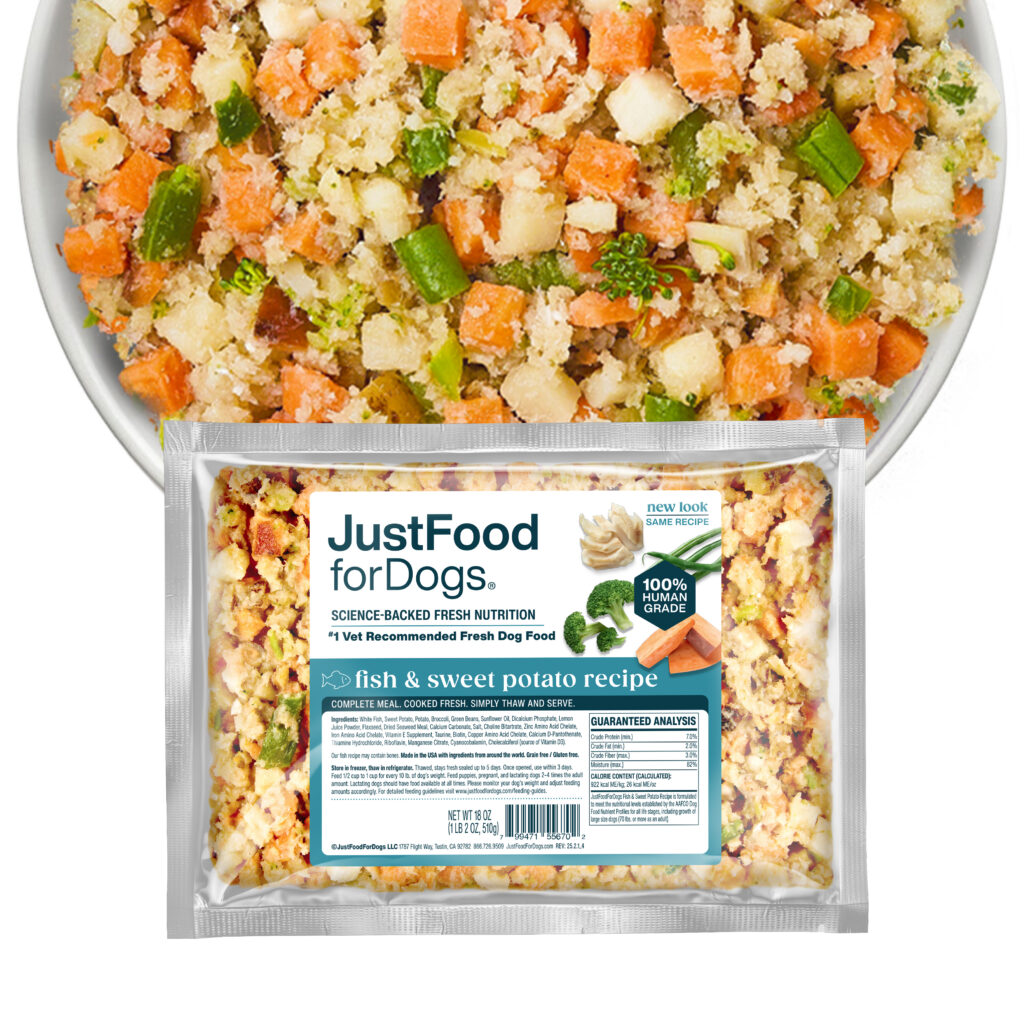
Premium brands publish where ingredients come from. Open Farm uses a LotID tool that traces every batch to specific farms. Just Food For Dogs uses USDA-inspected human-grade ingredients in its Fresh Frozen line, with open kitchens that owners can tour. Brands that refuse to disclose ingredient sourcing or manufacturing facilities are not in the high-quality tier.
Tip — the 30-second label check: When evaluating a new dog food, scan the label for three things: (1) Is the first ingredient a named animal protein? (2) Does the AAFCO statement say “animal feeding tests”? (3) Is the manufacturer’s phone or email listed? If yes to all three, you’re in the high-quality candidate set. If no to any, move on.
What Does Human-Grade Add to High-Quality?
“Human grade” is a separate AAFCO-defined labeling claim (formalized in AAFCO’s 2019 human-grade pet food guidelines), not a synonym for “high quality.” A food can be high quality without carrying the human-grade label (most Hill’s Science Diet, Royal Canin, and Purina Pro Plan recipes are excellent but are not marketed as human-grade). To carry the human-grade label, every ingredient and the finished product must be prepared in compliance with human-edible-food regulations, manufactured in facilities meeting human-food current good manufacturing practices, and stored, packaged, and transported under human-food standards. AAFCO defines the term; AAFCO does not certify individual products.
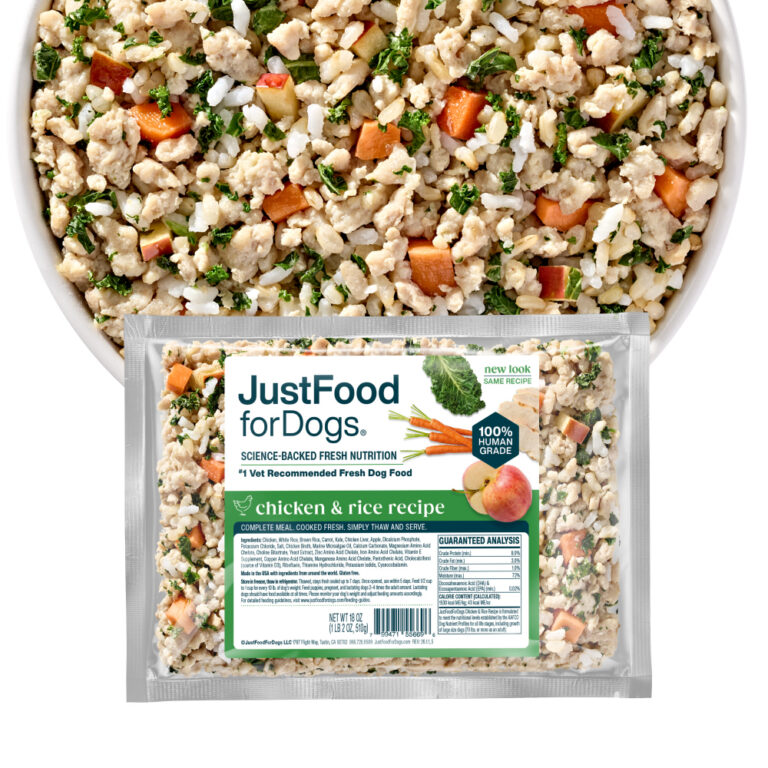
Just Food For Dogs uses USDA-inspected human-grade ingredients (Fresh Frozen line is cooked in JFFD’s own kitchens) and is one of the most-cited examples of the human-grade tier. The Honest Kitchen has publicly stated it was the first company to produce dog food meeting the AAFCO human-grade definition, with company materials dating that claim to 2007 (more than a decade before AAFCO formalized the labeling claim in 2019). See our companion guide on human-grade dog food for the full breakdown.
What Are the High-Quality Dog Foods by Tier?
| Tier | Daily Cost (30-lb dog) | Examples | Best For |
|---|---|---|---|
| Human-grade fresh | $4–7 | Just Food For Dogs, The Farmer’s Dog | Premium nutrition, sensitive dogs |
| Premium dry | $2–3 | Hill’s Science Diet, Royal Canin, Purina Pro Plan | Most healthy adult dogs |
| Mid-range | $1.25–1.75 | Blue Buffalo, Wellness, Nutro | Budget-conscious quality |
| Budget | $0.90–1.25 | IAMS, Diamond Naturals | AAFCO-compliant at low cost |
| Prescription | $3.50+ | Hill’s Rx, Royal Canin Veterinary Diet | Diagnosed medical conditions |
What Are the Common Myths About High-Quality Dog Food?
Myth: Grain-free is higher quality
False. Grains are a minor reported allergen in dogs relative to beef, dairy, chicken, and wheat (see Mueller et al. 2016). The FDA has an open investigation into reports of non-hereditary canine dilated cardiomyopathy associated with certain diets, especially diets high in pulses or potatoes, though no causal relationship has been established. Grain-inclusive foods using rice, oats, or barley are not lower quality than grain-free; in many cases they offer better ingredient balance for most dogs.
Myth: Premium price equals quality
False. Some boutique brands priced above $4 per day score poorly against WSAVA’s manufacturer-selection questions. Conversely, IAMS ProActive Health is priced near $0.90 per day and is formulated to meet AAFCO nutrient profiles. Quality is about the framework criteria, not the price.
Myth: Raw diets are higher quality
Not automatically. The CDC notes Salmonella and other foodborne-pathogen handling considerations for raw pet food (see CDC pet-food Salmonella guidance), and the AVMA policy on raw or undercooked animal-source protein in cat and dog diets discourages feeding raw or undercooked animal-source protein because of those handling considerations. Gently cooked fresh foods like Just Food For Dogs deliver fresh-food benefits with cooked-food handling.
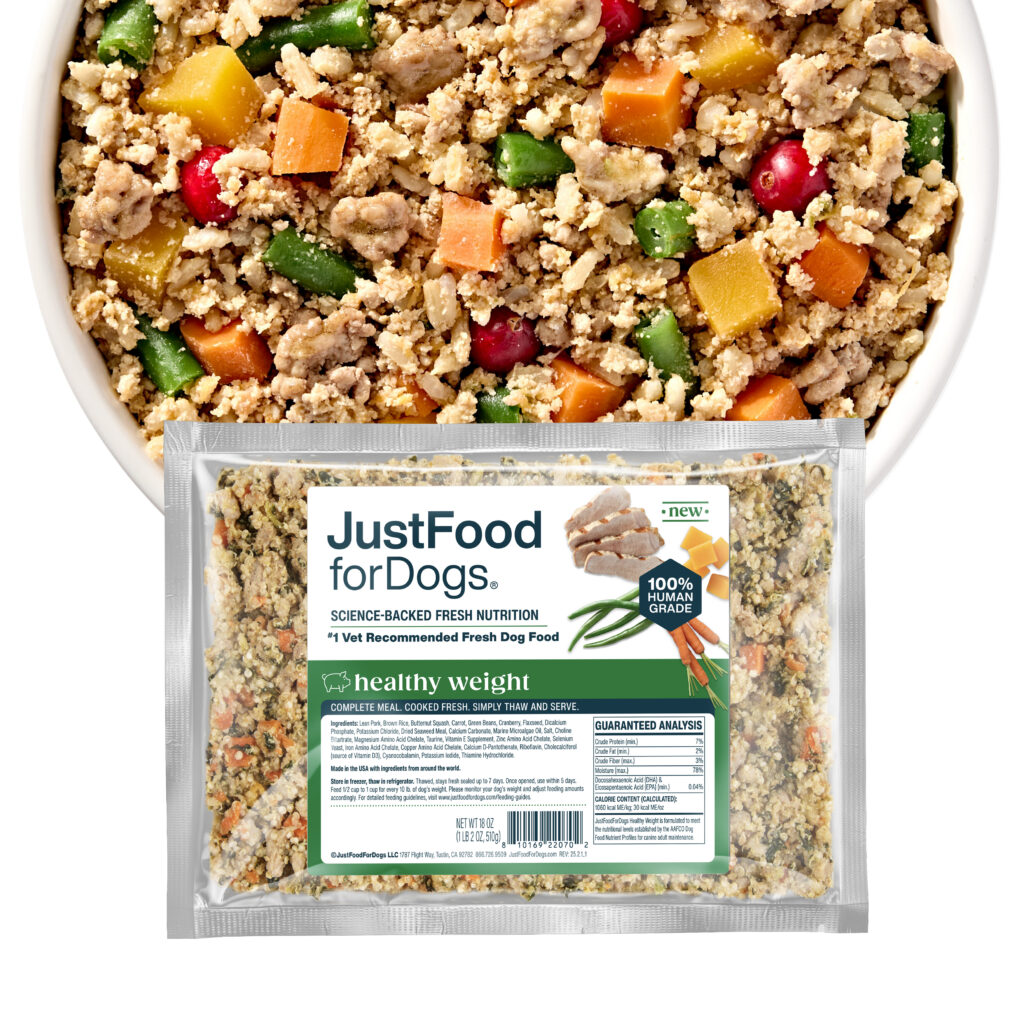
How to Read a Real Dog Food Label: A Worked Example
Reading a dog food label takes practice because the most important information sits below the marketing fold. Using a typical premium label as a worked example, here is what to evaluate, in priority order. First: the AAFCO nutritional adequacy statement (usually on the back panel in small print). The phrase to look for is “complete and balanced for [life stage] based on AAFCO feeding trials,” which means the food has been actually fed to dogs and measured for outcomes. The weaker phrase “formulated to meet the nutritional levels established by the AAFCO Dog Food Nutrient Profiles” means the nutrients were calculated on paper rather than verified through trials. Second: the ingredient list, which is ordered by weight. The first ingredient should be a named animal protein (chicken, salmon, lamb) rather than a generic term (meat meal, poultry by-product). Third: the guaranteed analysis showing minimum protein, fat, and fiber percentages; for adult maintenance, evaluate against AAFCO Dog Nutrient Profiles using the brand’s published guaranteed analysis and your veterinarian’s input. Fourth: the manufacturer’s contact information. A brand willing to publish a real phone number and customer-service email on the label is generally engaging with the WSAVA-style framework. Just Food For Dogs publishes label data points on its package and discusses its formulation, sourcing, and quality-control approach on the brand’s research and methodology pages.
Frequently Asked Questions
Five evaluation criteria adapted from WSAVA’s manufacturer-selection questions: qualified veterinary nutritionist involvement in formulation, AAFCO feeding-trial substantiation on at least selected recipes, named animal proteins as the first ingredient, an absence of recent FDA recall entries, and traceable ingredient sourcing. Just Food For Dogs, Hill’s Science Diet, Purina Pro Plan, Royal Canin, and Eukanuba are commonly evaluated favorably against these questions, though WSAVA does not certify pet food brands or maintain a compliant-brand list.
For most healthy adult dogs, mid-range quality (Blue Buffalo, Wellness, Nutro at $1.25 to $1.75 per day) is formulated to meet AAFCO standards. For dogs with food allergies, sensitive stomachs, or specific veterinarian-diagnosed health conditions, premium tiers can offer benefits worth discussing with your veterinarian. The biggest quality jump per dollar is from generic store brands (which often score poorly against the manufacturer-selection questions) up to mid-range mainstream brands.
A high-quality dog food starts with a named animal protein (chicken, beef, lamb, fish), uses identifiable whole-food ingredients you can recognize, has a digestible carbohydrate (rice, oatmeal, sweet potato), and contains added omega-3 fatty acids, prebiotics, and a complete vitamin-mineral panel. Avoid generic “meat by-products,” artificial preservatives (BHA, BHT, ethoxyquin), and artificial colors.
Not automatically. The FDA has an open investigation into reports of non-hereditary canine dilated cardiomyopathy associated with certain diets, especially diets high in pulses or potatoes; no causal relationship has been established. Grain-inclusive foods using rice, oats, or barley are nutritionally equivalent or superior for most dogs. Choose grain-free only if your veterinarian has specifically diagnosed a grain allergy.
Ask the manufacturer directly via phone or email: “Who designs your recipes and what are their credentials? Are your recipes substantiated by AAFCO feeding trials or formulation analysis? Where are your manufacturing facilities? What is your recall history over the past five years?” Brands that engage substantively with WSAVA’s framework will answer with concrete details. Brands that deflect or refuse to answer may not score well on the framework.
AAFCO (Association of American Feed Control Officials) sets U.S. nutrient profiles and labeling standards. WSAVA (World Small Animal Veterinary Association) publishes manufacturer-selection guidance and nutrition tools that go beyond AAFCO’s baseline; WSAVA does not certify brands or maintain a compliant-brand list. A brand that scores well against WSAVA’s manufacturer-selection questions still needs to substantiate AAFCO nutritional adequacy on each recipe.
Related Guides
- Veterinarian Recommended Dog Foods — the 10 most vet-recommended brands of 2026
- Best Dog Food Brands — editorial hub for the top 10 brands
- Human-Grade Dog Food — what AAFCO’s human-grade definition actually requires
- Dog Food Recalls 2026 — current FDA and AVMA recall lists