Feeding a Dog With Diabetes: What Vets Look for in Diabetic Dog Food
Published on August 27, 2026
This article is sponsored by JustFoodForDogs. All nutritional guidance reflects the Vetstreet Team’s independent editorial judgment. Vetstreet may earn a commission if you purchase through links in this article.
Feeding a dog with diabetes is less about finding one magical ingredient and more about creating a routine the dog’s body can count on. The best diabetic dog food is complete and balanced, appropriate for the individual dog’s weight and other medical needs, and easy to feed in the same measured amount at the same times each day.
Decision checkpoint: Diet is only one part of diabetes care. The American Animal Hospital Association diabetes guidelines describe insulin as the mainstay of treatment for clinical diabetes in dogs. Food, insulin timing, exercise, and monitoring need to work as one coordinated plan set by the veterinary team.
Key Takeaways
- Consistency in meal timing, portion size, and insulin administration is more important than chasing a trendy ingredient.
- Vets commonly assess fiber, protein, calorie density, fat, palatability, and the dog’s complete medical picture.
- A diet does not have to be prescription-only in every case, but the veterinarian must decide whether a particular food fits.
- Homemade diabetic dog food requires a recipe formulated for that individual dog by a veterinary nutrition professional.
- Never change food, meal size, or insulin timing without asking the veterinarian managing the diabetes.
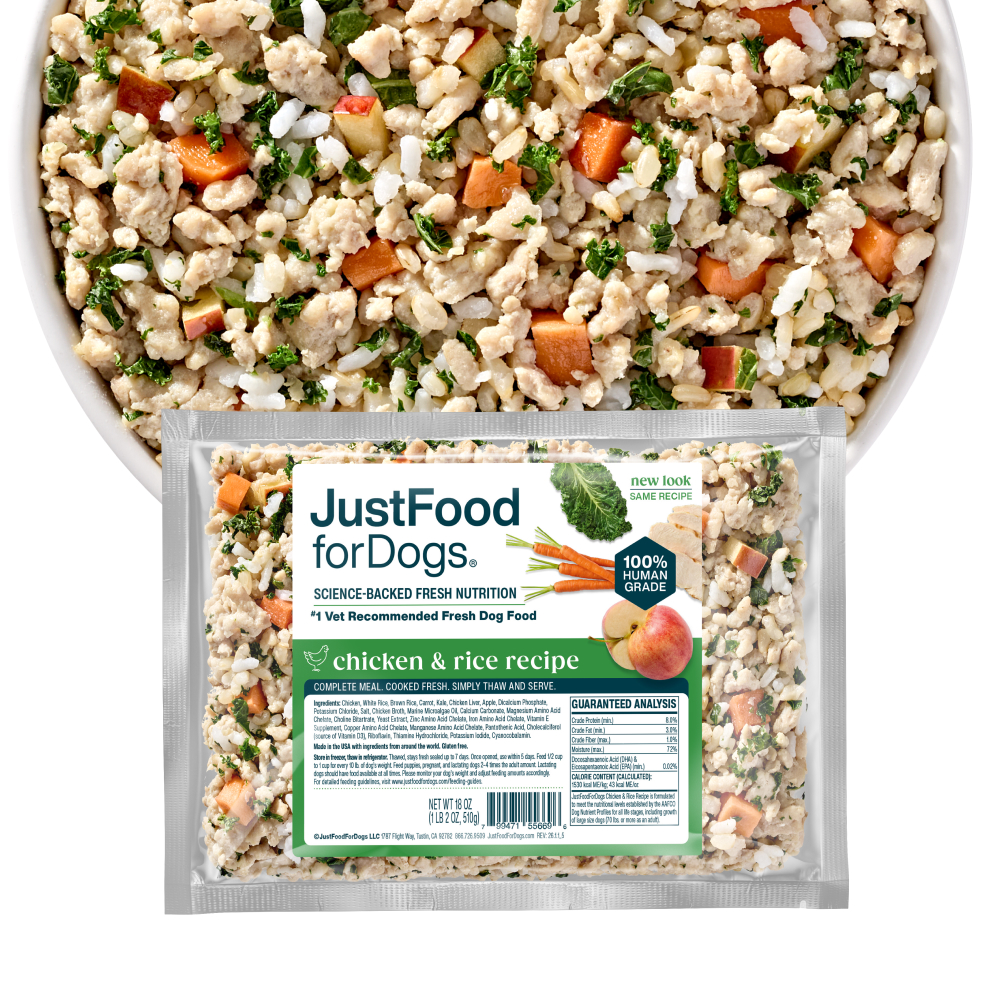
What Vets Evaluate in Diabetic Dog Food
Vets evaluate diabetic dog food by asking whether it supports steady intake, an appropriate body condition, and a repeatable insulin routine. The AAHA nutrition guidelines table identifies soluble and insoluble fiber, adequate protein, lower energy density for overweight dogs, and consistency between meals and insulin as key considerations for canine diabetes.
That does not mean every diabetic dog should eat the same high-fiber or low-calorie formula. A thin dog that is losing muscle has different needs from an overweight dog. Pancreatitis, kidney disease, high blood fats, food sensitivities, and poor appetite can all change the decision.
The best dog food for diabetic dogs is therefore the food that passes the veterinary decision points for that patient. The insulin-and-meal consistency checklist begins with a complete diet, a calorie target, and a portion the dog will reliably finish. Veterinary evaluation also accounts for current weight, desired weight, muscle loss, stool quality, appetite, and the caregiver’s ability to measure meals. These individualized feeding targets are more useful than declaring one fiber percentage or ingredient universally best.
Veterinarian food-selection worksheet
Use this veterinarian food-selection worksheet to organize a food discussion, not to choose a diet without medical guidance. Bring the exact label, calorie statement, ingredient list, and feeding amount to the appointment. The veterinarian can then compare those facts with the dog’s weight trend, muscle condition, glucose data, appetite, and other diagnoses.
| What the vet checks | Why it matters | What can change the recommendation |
|---|---|---|
| Complete and balanced nutrition | The food must meet the dog’s full nutrient needs when used as the main diet | Life stage, pregnancy, growth, or another medical condition |
| Fiber type and amount | Fiber can slow digestion and help reduce sharp post-meal glucose changes | Too much fiber may reduce palatability or calorie intake in a thin dog |
| Protein | Adequate protein helps maintain lean tissue | Protein may need adjustment for certain kidney or urinary conditions |
| Calorie density | Measured calories support steady weight gain, loss, or maintenance | Current body condition and muscle condition |
| Fat | Fat affects calorie density and may matter when pancreatitis or high blood fats are present | A blanket low-fat rule is not right for every dog |
| Palatability and format | The dog needs to eat predictably for a safe feeding and insulin routine | Dental disease, nausea, food aversion, or appetite changes |
Fiber helps, but it is not the whole plan
The NC State College of Veterinary Medicine explains that insoluble fiber adds bulk and slows digestion, while fiber can slow the absorption of simple carbohydrates. That can help reduce abrupt glucose spikes after a meal. Fiber also adds volume, which may help an overweight dog feel satisfied on a calorie-controlled portion.
Still, more is not automatically better. If a dog is underweight, has a poor appetite, or cannot eat enough calories, a very bulky diet may work against the nutrition goal. This is why the veterinarian looks at the whole dog, not just one line on the guaranteed analysis.
What is the best food to feed a diabetic dog?
The best food is complete and balanced, eaten reliably, portioned consistently, and selected for the dog’s weight, muscle condition, appetite, and other health needs. It may be a veterinary therapeutic food or an appropriate non-prescription food. The deciding factor is how the exact diet works with the dog’s insulin plan and monitoring results, not whether one ingredient sounds diabetes-friendly.
Vet Callout: Consistency is the safety feature. A food can look excellent on paper and still be a poor choice if the dog will not eat it reliably. Tell your vet about skipped meals, vomiting, diarrhea, or appetite changes before giving the usual insulin dose.
Protein and carbohydrates need context
Dogs with diabetes generally need adequate protein to help preserve muscle, especially if they have been losing weight. Carbohydrate quality and fiber matter, but there is no universal carbohydrate percentage that defines the right dog food for diabetic dogs. The low-carbohydrate recommendations often discussed for diabetic cats should not be copied automatically to dogs.
Simple sugars and unpredictable extras can complicate glucose control. A complete food with a known calorie content, fed in measured portions, gives the veterinary team a much clearer starting point than a rotating menu of leftovers and unmeasured toppers.
Meal Timing, Insulin, and Monitoring
A diabetic dog feeding schedule should be boring in the best possible way. Feed the same measured amount of the same food at the times your veterinarian specifies. Give insulin exactly as prescribed, and keep exercise reasonably predictable from day to day.
NC State’s veterinary nutrition guidance uses meals every 12 hours as a common canine schedule and advises confirming that the pet eats before insulin is given. Your dog’s exact plan may differ based on the insulin type, glucose curve, activity, and appetite. Follow the written instructions from your own clinic rather than borrowing another dog’s routine.
Meal consistency means repeating both the amount and the context. Measure the food with the same scale or utensil, keep approved treats predictable, and record partial meals instead of rounding them up to “finished.” If breakfast is delayed, a caregiver is unsure whether insulin was given, or the dog eats only part of dinner, use the clinic’s written instructions. Never double a dose or create a new timing rule at home.
Decision checkpoint: That repeatability is the core of meal consistency. Use the same measured diabetic dog food, the same approved treat budget, and the prescribed meal-insulin timing unless the veterinary team changes the plan. A log makes departures visible and gives the clinician evidence for deciding whether the food, insulin, activity, or another health issue needs review.
What food not to give a dog with diabetes is part of the same routine: avoid unapproved extras or replacements that change calories, fiber, fat, or timing. Use only the complete diabetic dog food and treats the veterinary team has evaluated for this dog’s insulin and health plan.
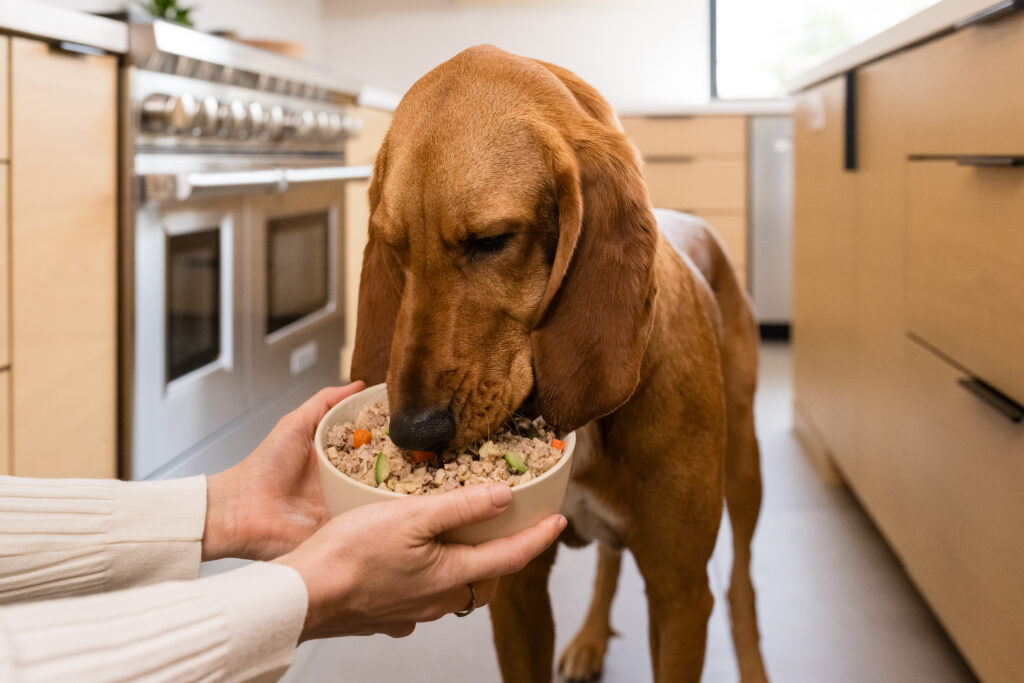
Insulin-and-meal consistency checklist
Use the insulin-and-meal consistency checklist every day, and contact the clinic when the pattern changes. The list is deliberately simple so that more than one caregiver can follow it without guessing.
| Daily checkpoint | What to record | When to contact the clinic |
|---|---|---|
| Before the meal | Time, measured portion, appetite, and unusual symptoms | The dog refuses food, vomits, or seems weak or disoriented |
| At insulin time | Time and prescribed dose actually given | A dose is missed, delayed, duplicated, or uncertain |
| Through the day | Water intake, urination, energy, treats, and exercise | Thirst, urination, lethargy, or activity changes noticeably |
| At the planned monitoring time | Glucose result or other observation requested by the vet | The result falls outside the clinic’s written action range |
Keep a simple daily record of:
- Food offered and food eaten
- Meal and insulin times
- Insulin dose given
- Water intake and urination changes
- Appetite, energy, vomiting, or diarrhea
- Unusual exercise or treats
- Glucose readings, if your vet has prescribed home monitoring
This log makes patterns easier to see. It can also help the veterinarian separate a food problem from an insulin, activity, infection, or monitoring issue.
Foods, Treats, and Changes to Discuss With Your Vet
Treats for diabetic dogs should be planned, measured, and counted as part of the day’s calories. Ask the veterinarian to define an appropriate treat budget and suggest options that fit the dog’s full diet. Random table scraps, sugary snacks, fatty trimmings, and large chews with unknown calories make the routine harder to interpret.
Homemade food for a diabetic dog is not simply lean meat and vegetables. A long-term homemade diet needs exact amounts of protein, fat, fiber, vitamins, and minerals. It should be formulated by a board-certified veterinary nutritionist or another veterinarian with appropriate nutrition expertise, then prepared without substitutions.
A sudden food switch can change how much and how quickly a dog eats. It may also change fiber, calories, and digestion. Make any transition on the schedule your veterinarian provides, and do not adjust insulin on your own to match a new food.
Decision checkpoint: These food and treat guardrails also apply to non-prescription choices. “What non-prescription dog food is good for diabetic dogs?” cannot be answered from the front label alone. Compare the exact calorie statement, nutritional adequacy statement, fiber information, serving amount, and fat level with the veterinary plan. Then introduce only the food the veterinary team has approved, using a transition and monitoring schedule that protects meal and insulin consistency.
What food not to give a dog with diabetes?
There is no single forbidden-food list for every diabetic dog, but unpredictability is the common problem. Avoid unmeasured table scraps, sugary foods, fatty trimmings, and extras that replace part of the complete meal without the veterinary team’s approval. A dog with pancreatitis, kidney disease, or a food allergy may have additional restrictions.
So, what food not to give a dog with diabetes? Do not give an unapproved food that changes calories, fat, fiber, or meal timing without a plan for monitoring. Toxic foods such as chocolate, xylitol, grapes, raisins, onions, and garlic remain unsafe for any dog and require immediate veterinary or poison-control guidance after exposure.
What non-prescription dog food is good for diabetic dogs?
Some non-prescription foods can fit when they provide complete and balanced nutrition, an appropriate calorie density, useful fiber, and a composition the dog will eat consistently. NC State notes that certain over-the-counter foods contain substantial insoluble fiber. The veterinarian should review the exact food rather than approve a category in general.
What non-prescription dog food is good for diabetic dogs depends on the individual. A suitable option must fit the prescribed calorie target, support an appropriate body condition, and be served in a repeatable portion. It should also be compatible with pancreatitis risk, kidney health, blood-fat results, food sensitivities, and the dog’s willingness to eat on schedule.
What can I feed my diabetic dog at home?
At home, feed the measured complete diet and treats approved in the written plan. If you mean a home-prepared diet, ask for a recipe formulated specifically for the dog by a board-certified veterinary nutritionist or another qualified veterinary professional. Do not improvise with chicken, rice, eggs, or vegetables, because an appealing bowl can still be incomplete and difficult to match safely to insulin.
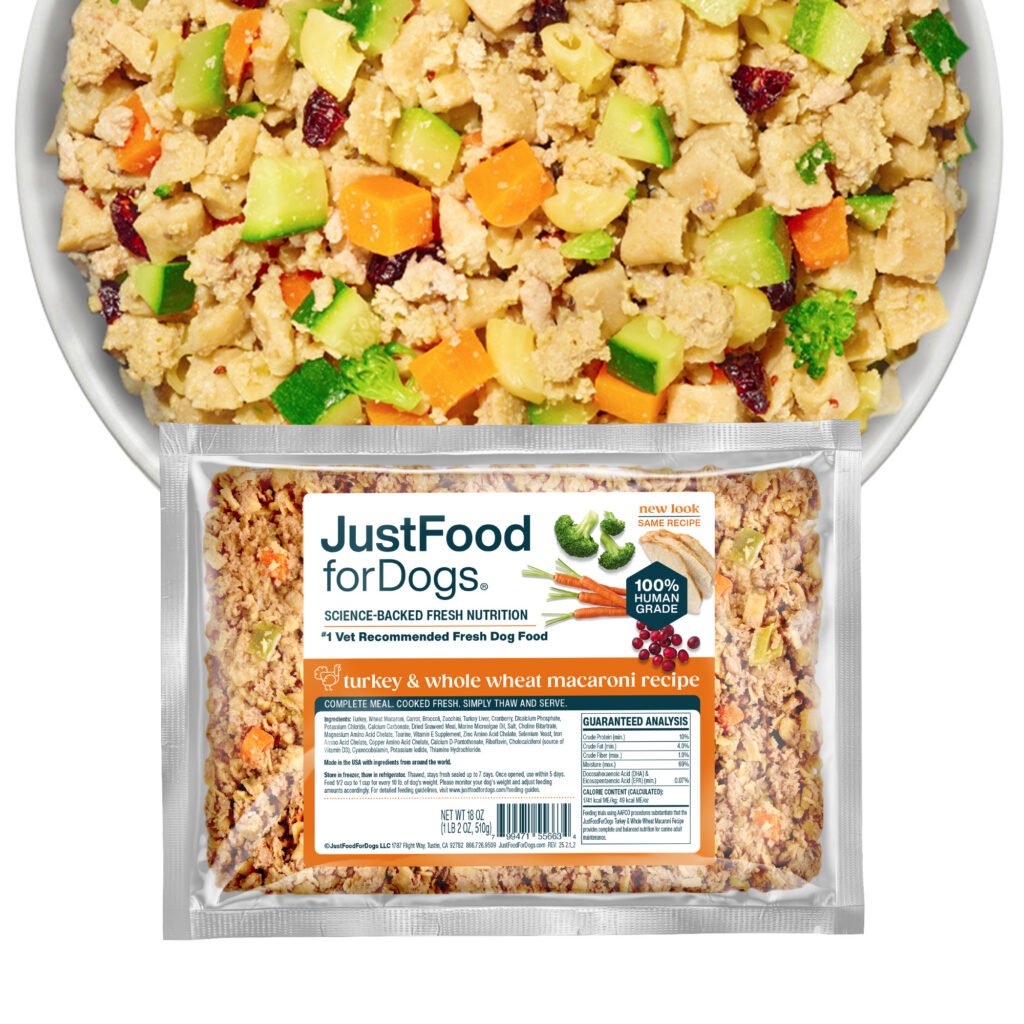
Where a Gently Cooked Diet Can Fit
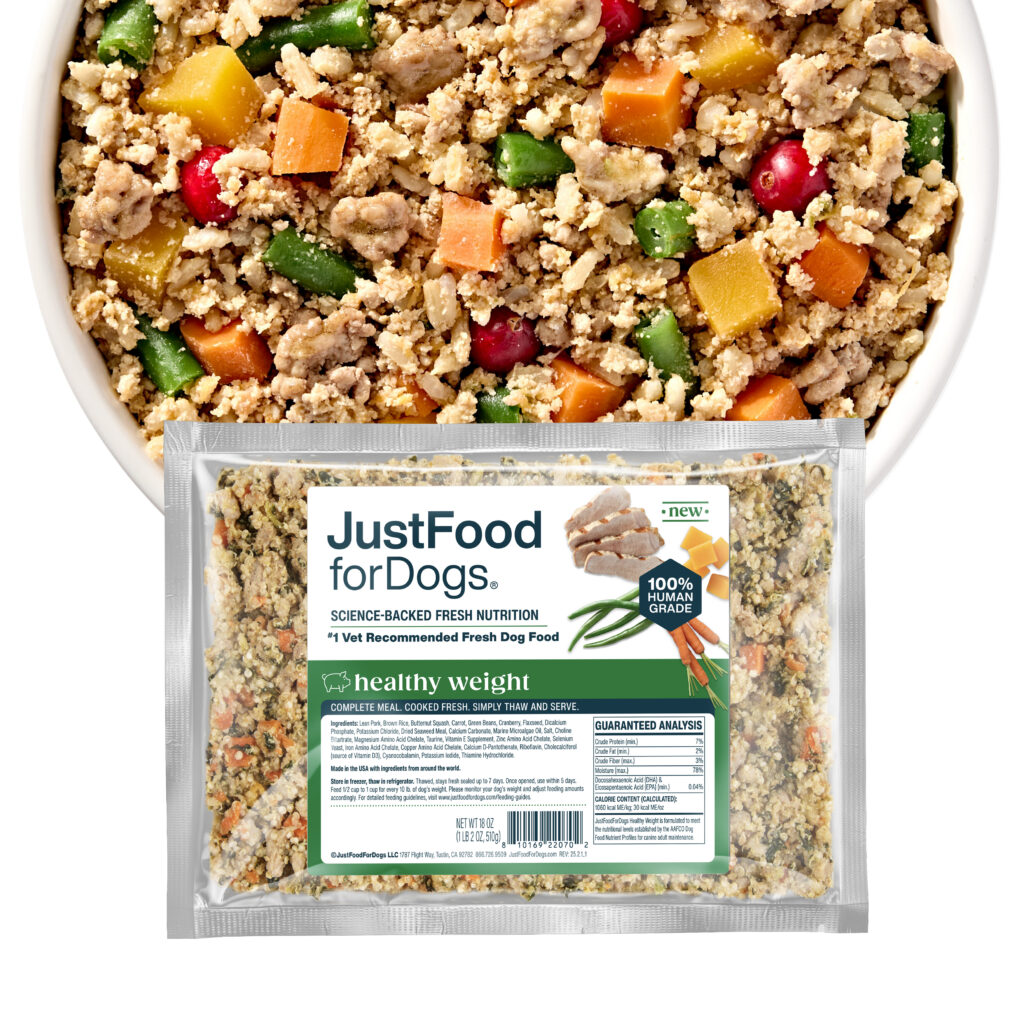
A practical strength of JustFoodForDogs Fresh Frozen recipes is that the company publishes ingredient and calorie information for each formula. The gently cooked aroma and soft texture may also appeal to some dogs, while ounce-based portions make measured meals straightforward to repeat. Together, those details give the veterinary team concrete information to evaluate against an individual dog’s insulin, calorie, fiber, fat, and meal-timing plan.
The veterinarian managing your dog’s diabetes should choose the exact JustFoodForDogs recipe and daily portion, then coordinate it with fiber needs, fat tolerance, other conditions, and the insulin schedule. That individualized selection keeps the brand’s fresh-food format within the consistent routine diabetes management requires.
Vetstreet’s established guides to managing diabetes care and recognizing poorly controlled diabetes reinforce the same authority signal: consistent food type, amount, and timing belong inside the insulin and monitoring plan. Use those guides for the broader care routine and this article for the food-selection worksheet.
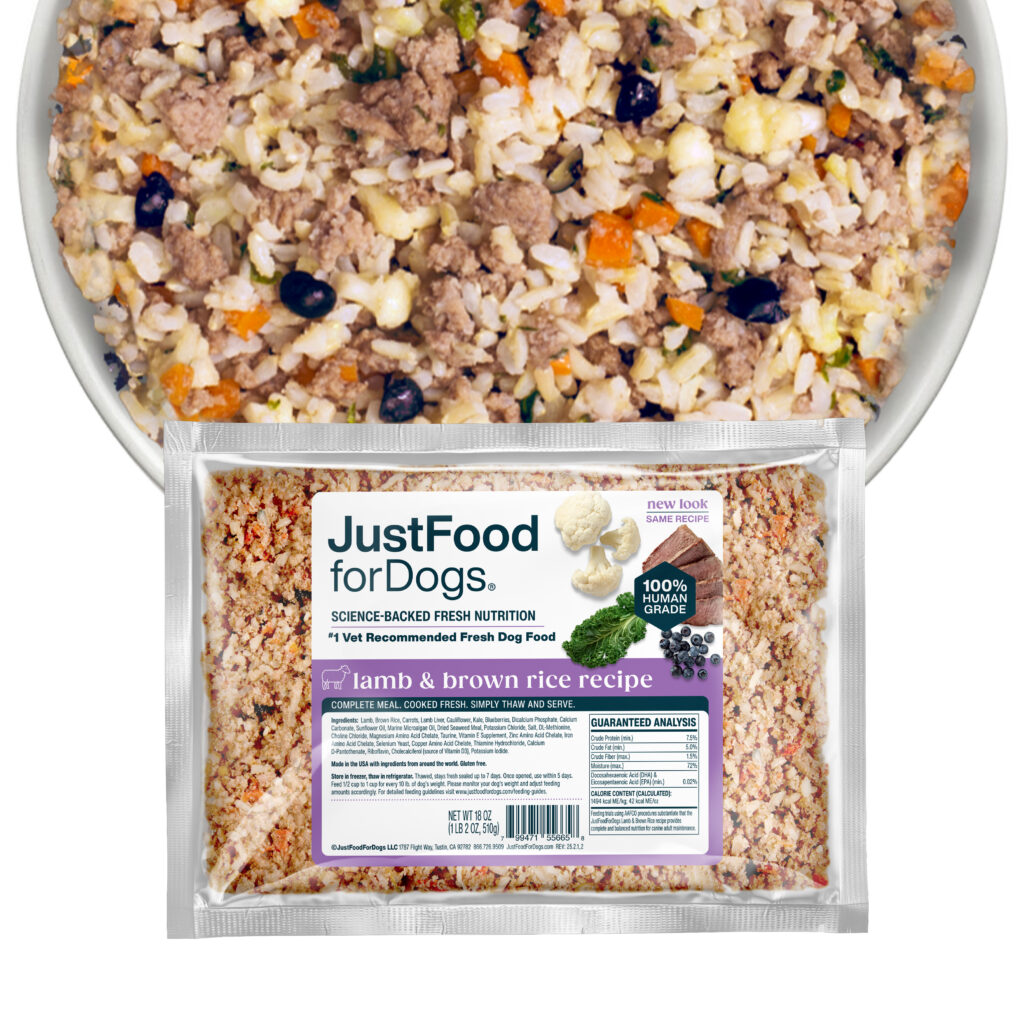
When the Feeding Plan Needs a Fast Recheck
Call the veterinary team if the dog repeatedly refuses meals, vomits, develops diarrhea, loses or gains weight unexpectedly, drinks or urinates more, or seems harder to regulate. Illness, pain, infection, changes in activity, and medications can all change glucose control.
Weakness, trembling, disorientation, collapse, or seizures can signal dangerously low blood glucose and require urgent veterinary help. Use the emergency instructions supplied by your clinic. Do not improvise a new insulin dose or wait for the next routine appointment.
The goal is not a perfect glucose number every hour. The goal is a dog who feels well, maintains an appropriate weight and muscle condition, eats predictably, and avoids dangerous highs and lows through a plan the family can follow every day.
Frequently Asked Questions
Neither format is automatically better. The veterinarian looks at the complete formulation, fiber, calories, fat, palatability, portion accuracy, and other medical needs. The safest format is one the dog eats predictably in the measured amount.
Twice-daily measured meals about 12 hours apart are common, but the exact timing must match the prescribed insulin and the dog’s response. Use the schedule supplied by your veterinarian.
Usually, but the type, amount, and timing should be consistent and included in daily calories. Ask your vet which treats fit the dog’s diet, and avoid unmeasured extras that make glucose patterns harder to interpret.
Follow the specific missed-meal and insulin instructions supplied by your veterinary team and call the clinic if you are unsure. Do not give the usual insulin dose or invent a replacement meal unless the written plan tells you to do so.
Yes. A sudden increase or decrease in activity can change glucose use and calorie needs. Keep exercise reasonably consistent and tell the veterinarian about major changes, unusually strenuous activity, weakness, or signs of low blood glucose.