Dog Food for Joint Health: What Nutrients Matter for Dogs With Arthritis?
Published on August 27, 2026
This article is sponsored by JustFoodForDogs. All nutritional guidance reflects the Vetstreet Team’s independent editorial judgment. Vetstreet may earn a commission if you purchase through links in this article.
Dog food for joint health can support an arthritis care plan, but it cannot replace pain control, appropriate exercise, or veterinary treatment. Vets look beyond a joint-support claim on the bag. They assess calorie density, the dog’s body and muscle condition, omega-3 fatty acids, added joint nutrients, palatability, and whether the complete diet fits every other medical need.
Decision checkpoint: For many dogs, the most powerful nutrition goal is also the least flashy: maintain a lean body condition. Carrying excess weight increases the mechanical load on sore joints and can contribute to inflammatory signaling throughout the body.
Key Takeaways
- A joint support dog food should be complete and balanced first, with joint-focused nutrients as part of the full formulation.
- EPA and DHA are the omega-3 fatty acids with the strongest nutrition evidence for dogs with osteoarthritis.
- Glucosamine may be included in a diet, but the evidence for nutraceuticals is not equally strong across products.
- Keeping a dog lean is a central part of reducing strain on arthritic joints.
- JustFoodForDogs Joint & Skin Support is formulated with glucosamine and omega-3s to help support joint health, but it does not treat arthritis.
What Nutrition Can and Cannot Do for Arthritis
Nutrition can help support joint health by maintaining an appropriate weight, providing adequate protein for muscle, and supplying nutrients such as EPA, DHA, and glucosamine within a complete diet. It cannot rebuild a severely damaged joint or serve as the only treatment for a painful dog.
The 2022 AAHA Pain Management Guidelines call weight optimization and dietary modulation important parts of chronic pain care. The same guidelines note that medication is often necessary and that rehabilitation, movement plans, and home modifications may also belong in a comprehensive program.
That distinction helps families set realistic expectations. The best dog food for arthritis is not the food with the longest supplement list. It is the food that supports the veterinarian’s goals, fits the dog’s calorie needs, gets eaten reliably, and works alongside the rest of the care plan.
Decision checkpoint: The joint-nutrient evidence matrix below organizes the main veterinary decision points: complete nutrition, calorie control, muscle support, EPA and DHA, glucosamine, and palatability. Veterinary evaluation sets individualized feeding targets from the dog’s body condition, mobility, other diseases, medications, and current diet. Food is one lever inside the arthritis plan, not a substitute for pain assessment or treatment.
Joint-nutrient evidence matrix
Use this joint-nutrient evidence matrix to compare the complete food, not just its front-label promise. Bring the exact nutrient information and the dog’s daily portion to the veterinarian so the amounts can be evaluated in context.
| Nutrition factor | What vets look for | Important limit |
|---|---|---|
| Calorie density and portions | Enough food to maintain a lean, stable body condition | A healthy-weight plan must protect muscle as well as reduce fat |
| EPA and DHA | A meaningful amount in the complete diet or a vet-directed supplement plan | Very high omega-3 intake can cause digestive upset and other adverse effects |
| Glucosamine and chondroitin | Added amounts that can be identified on the product information | More is not automatically better, and evidence varies by ingredient and product |
| Protein | Adequate, digestible protein to help preserve muscle | Another disease may change the ideal amount or source |
| Palatability and texture | A food the dog will eat consistently | Poor appetite, dental pain, or nausea needs investigation |
| Complete formulation | Appropriate vitamins, minerals, essential fats, and calories | Toppers and supplements should not unbalance the main diet |
Vet Callout: Pain changes are medical information. If a dog becomes reluctant to rise, stops using a limb, cries out, pants at rest, or suddenly avoids food or walks, contact the veterinarian. Do not assume the diet needs more time to work.
EPA and DHA for Dogs With Arthritis
EPA and DHA are long-chain omega-3 fatty acids that are used in joint-supportive diets. AAHA’s pain guidelines report that the evidence supporting nutraceuticals for canine osteoarthritis is generally limited, with omega-3 fatty acids standing out as the exception with stronger support.
The AAHA nutrients-of-concern table lists high EPA and DHA among the dietary considerations for osteoarthritis. It also notes that added glucosamine, chondroitin, antioxidants, and lower energy density may be considered, particularly when a dog is overweight or obese.
This does not mean any food containing fish oil is automatically a therapeutic joint diet. Ask how much EPA and DHA the dog receives per day from the full food portion and any supplements. The veterinarian may need to calculate the combined intake, especially if the dog has digestive disease, a bleeding disorder, or medications that affect clotting.
Decision checkpoint: Omega-3 sources also vary. Marine oils and microalgae oils can supply long-chain fatty acids directly, while plant sources such as flaxseed provide alpha-linolenic acid, which dogs convert to EPA and DHA only to a limited degree. Product-specific EPA and DHA values are more informative than a general omega-3 claim.
What is the best dog food for dogs with bad joints? Vets first look for complete-and-balanced nutrition and a calorie amount that helps the dog stay lean. EPA and DHA may add useful omega-3 evidence, but the food must still fit the dog’s digestion, medications, and other medical needs. A prominent fish-oil claim does not establish the daily EPA and DHA dose or prove the whole diet is appropriate.
Glucosamine, Calories, and Lean Body Condition
Glucosamine is a building block used in cartilage and is commonly included in joint support dog food and supplements. It may be one useful part of a diet, but it should not be presented as a stand-alone arthritis treatment. AAHA’s pain guidelines caution that the strength of evidence is low for many nutraceuticals other than omega-3 fatty acids in dogs.
Calorie control has a more direct role. AAHA cites veterinary evidence supporting lifelong maintenance of a lean body condition to reduce the rate of osteoarthritis progression. A dog who needs to lose weight should do so through a measured plan that supplies adequate protein and micronutrients while calories come down.
Use body condition and muscle condition together. A visible waist and ribs that are easy to feel under a light fat covering generally indicate a leaner condition, but a dog can still lose important muscle over the spine, skull, or hips. The veterinary team can set a target and monitor both measures.
Decision checkpoint: The best dog food for joint disease should make calorie control practical without sacrificing adequate protein and micronutrients. Glucosamine can be one formulation feature, but weight, lean muscle, and a measured portion often have a clearer day-to-day role. Compare the calories the dog actually eats, including treats, with body-condition and mobility trends over several weeks.
Body-condition and mobility tracking worksheet
This body-condition and mobility tracking worksheet gives the veterinary team a consistent view of change. Record the dog’s weight, body condition score if the clinic has assigned one, ease of rising, stair use, walk duration, slipping, and interest in play once a week. Use the same scale and similar walking surface when possible.
Helpful home habits include:
- Measure every meal rather than estimating by eye.
- Count treats, chews, and toppers in the daily calorie total.
- Reserve part of the measured meal for training rewards when practical.
- Weigh the dog regularly on the same scale.
- Ask for a safe walking or rehabilitation plan rather than relying on food alone.

A Closer Look at Joint & Skin Support
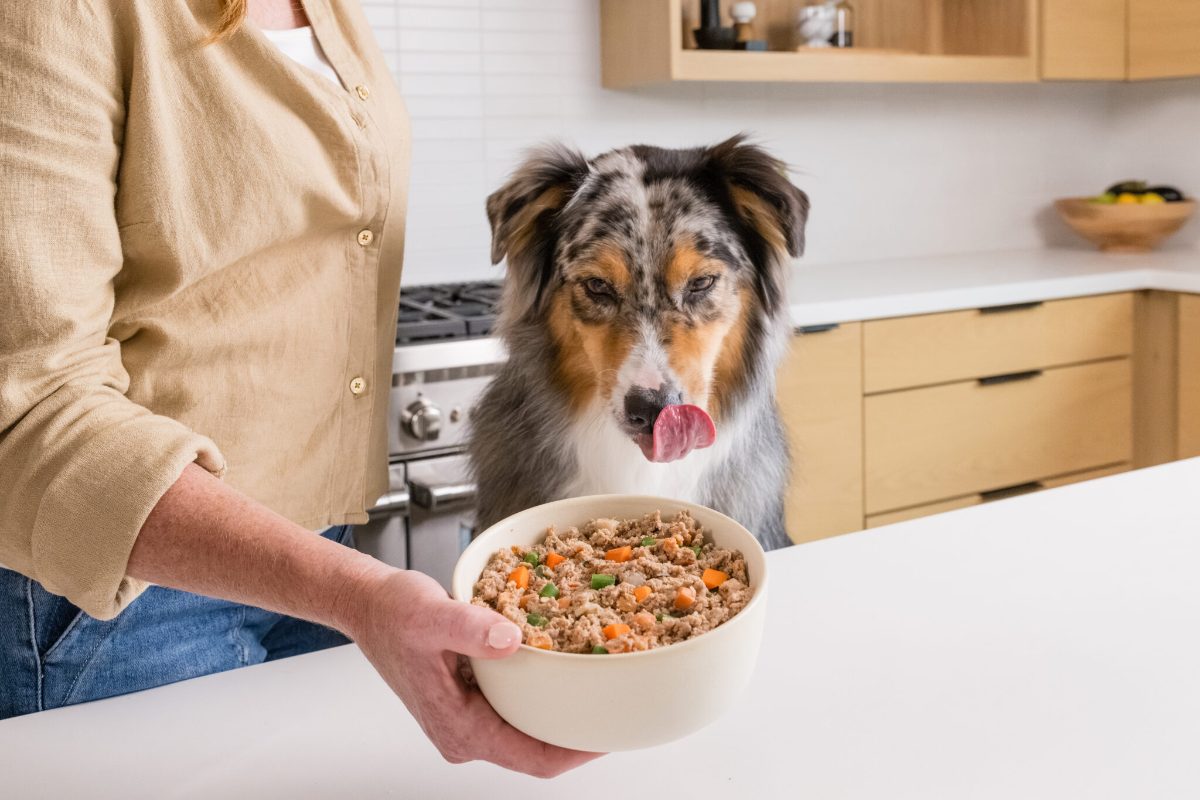
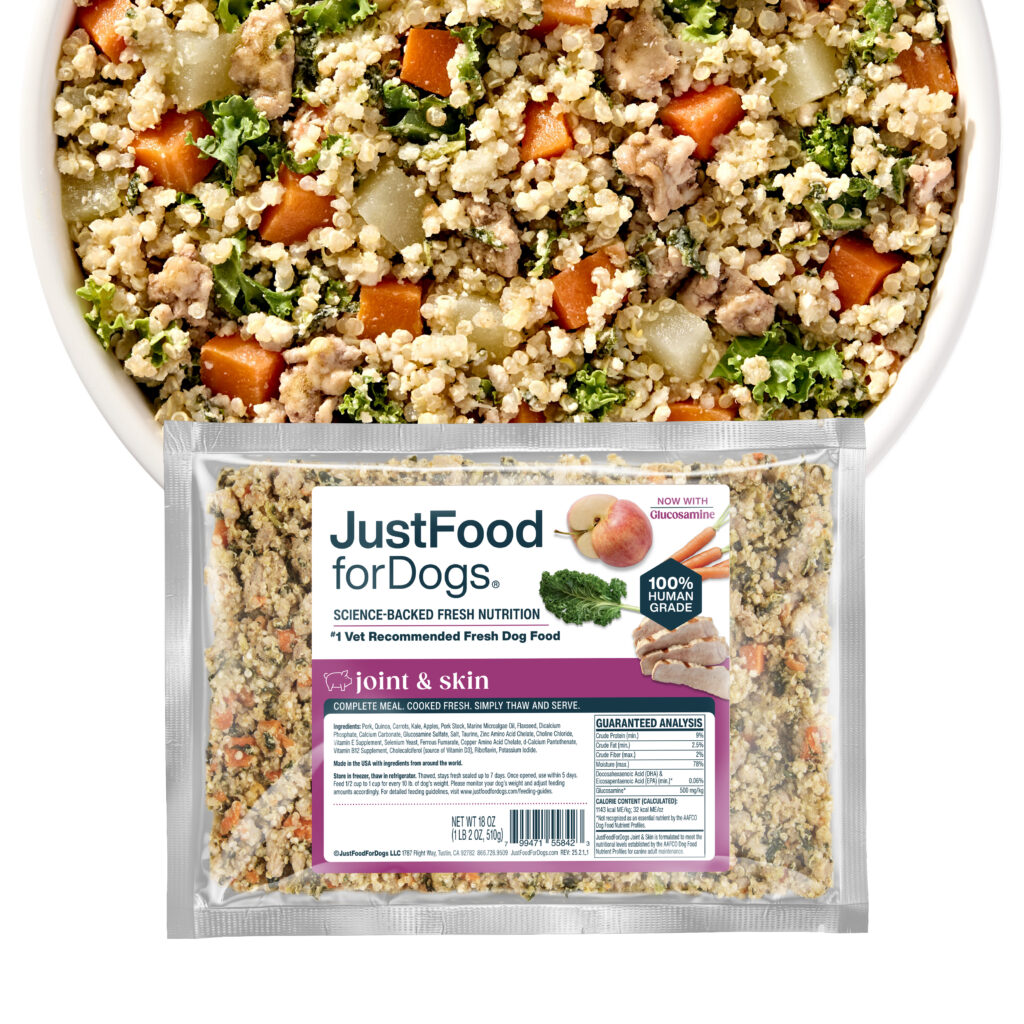
JustFoodForDogs Joint & Skin Support, SKU FBS10040211, is a Fresh Frozen recipe built around ground pork, quinoa, kale, carrots, and Fuji apples. It brings glucosamine and omega-3s into a gently cooked recipe formulated to help support joint health, giving families a fresh-food option to discuss as one part of a complete arthritis-care plan.
The nutrient blend supplies glucosamine sulfate at 500 mg/kg. EPA and DHA are listed at a combined minimum of 0.06%, with omega marine microalgae oil and flaxseed included as fatty-acid sources. Those fatty acids can also help support skin and coat health.
These are formulation facts, not a promise to treat arthritis or relieve pain in every dog. The veterinarian should decide whether the recipe’s calories, protein source, fat, and full nutrient profile fit the individual patient. If the dog already receives a joint supplement or fish oil, ask the vet to review the combined amounts before doubling up.
Building a Complete Joint-Care Plan
Food works best as the daily foundation of a broader plan. Arthritis care may include prescription pain medication, a weight goal, controlled exercise, rehabilitation therapy, non-slip flooring, ramps, supportive bedding, and regular reassessment.
Vetstreet’s established guides to inflammation and arthritis in dogs and canine arthritis care provide the wider treatment context. This nutrition guide focuses on how EPA and DHA, glucosamine, calorie control, complete-and-balanced status, and monitored response fit inside that multimodal plan.
What not to feed a dog with arthritis depends partly on the dog’s other health needs, but avoid unmeasured calorie extras that undermine a lean-body-condition plan and do not add human pain medicines or joint supplements without veterinary approval. Toxic foods remain unsafe, and prescribed arthritis medication should never be stopped because a food contains joint-support ingredients.
Transition to a Joint-Support Food Safely
A food designed to support joint health still needs a gradual transition unless the veterinarian gives different instructions. Changing too quickly can cause vomiting, diarrhea, or food refusal, making it harder to evaluate whether the formula is a practical long-term fit.
A common transition is 25% new food for days 1 to 3, 50% for days 4 to 6, 75% for days 7 to 9, and 100% around day 10. A dog with sensitive digestion may need more time. Keep treats, table food, and new supplements stable during the transition so several changes are not confused with one another.
Record the exact food, measured portion, appetite, stool, body weight, body condition, and mobility observations. Contact the veterinarian for repeated vomiting or diarrhea, refusal to eat, abdominal pain, marked lethargy, or a rapid weight change.
Decision checkpoint: Do not stop prescribed arthritis medication because the food contains joint-support ingredients. Nutrition may support mobility over time, but it does not provide rapid pain relief or replace diagnosis, medication, rehabilitation, or other care.
A four-week transition and response record
| Week | Food and portion | Body weight and condition | Mobility observations | Veterinary follow-up |
|---|---|---|---|---|
| Transition | Record the old-to-new ratio and stool | Establish baseline | Note rising, stairs, walks, and play | Call for intolerance or pain change |
| Week 2 | Confirm full measured portion | Recheck trend | Use the same activities and surfaces | Review adherence questions |
| Week 3 | Count treats and supplements | Watch for weight gain or loss | Note good and difficult days | Do not change medication independently |
| Week 4 | Bring the exact label and log | Assess body and muscle condition | Compare with baseline, not memory | Ask whether the plan should continue or change |
Track what the dog can do, not only whether the dog limps. Note how long it takes to stand, willingness to use stairs, comfort on walks, slipping, play behavior, sleep, and interest in family activities. A short weekly video of the dog rising and walking on the same surface can help the veterinarian see gradual changes.
Avoid sudden, intense weekend activity after a quiet week. Consistent movement at the level the veterinarian recommends is usually easier on joints than alternating inactivity with long hikes or hard play. Stop and call the clinic if mobility worsens sharply or the dog appears painful.

Frequently Asked Questions
The best food is complete and balanced, keeps the dog lean, provides adequate protein for muscle, and fits any other medical needs. A veterinarian may also look for meaningful EPA and DHA and identifiable joint-support nutrients.
EPA and DHA have stronger evidence than many other nutraceuticals used for canine osteoarthritis. The useful amount depends on the dog’s weight, diet, health conditions, and other supplements, so ask the veterinarian to calculate the total intake.
Not necessarily. Compare the amount supplied by the daily food portion with the veterinarian’s intended dose. Do not automatically add another product, because the combined intake and other ingredients may be unnecessary or inappropriate.
Yes. Maintaining a lean body condition reduces mechanical load and is a central part of osteoarthritis care. Weight loss should be gradual and should protect muscle through adequate nutrition and suitable activity.
There is no single timeline, and food should not be used to delay pain treatment. Ask the veterinarian when to reassess weight, mobility, and comfort. Contact the clinic sooner if pain or function worsens.