JustFoodForDogs Low Fat: Vet Recommended Diet for Dogs with Pancreatitis
Published on June 28, 2026
After a pancreatitis scare, fat content suddenly matters. A walk through the JustFoodForDogs low fat lineup, the verified crude fat numbers, and how vets decide which recipe fits your dog’s recovery plan.
If your dog has just come home from the clinic after a bout of pancreatitis, you are likely doing what most owners do: standing in front of the fridge, wondering what is safe to put in the bowl. Increasingly, owners arrive at that first follow-up appointment having already searched for JustFoodForDogs low fat options, because the brand keeps coming up wherever fresh, gently cooked meals are discussed.
This guide covers why fat matters so much after a pancreatic episode, what veterinarians actually mean by “low fat,” and then walks recipe by recipe through the JustFoodForDogs lineup, with crude fat numbers verified from the company’s own product pages, flagging which recipes require your veterinarian’s sign-off.
One thing before we begin: nothing here replaces your own vet’s advice. Pancreatitis feeding decisions are always made with, and directed by, the veterinarian who knows your dog’s case.
All featured products are chosen at the discretion of the author. However, Vetstreet may make a small affiliate commission if you click through and make a purchase.
Key Takeaways
- Dietary fat is the strongest trigger for pancreatic enzyme release, which is why veterinarians reach for fat-restricted diets when a dog is recovering from a pancreatic episode.
- JustFoodForDogs offers several genuinely low fat recipes: Sensitive Stomach (1 to 4 percent crude fat), and Hepatic Support Low Fat (1 to 3 percent), all as-fed values verified from product pages in June 2026.
- Hepatic Support Low Fat and Metabolic Support are veterinary support recipes: the company requires your veterinarian’s information before shipping them.
- Fresh diets list fat on an as-fed basis, which reads far lower than kibble labels; your vet can convert to a dry matter or per-calorie basis for a fair comparison.
- Every feeding decision during and after pancreatitis recovery is made under veterinary guidance, including how quickly food is reintroduced and in what portions.
Why Fat Matters for Dogs With Pancreatitis
The pancreas has two jobs: producing insulin, and producing the digestive enzymes that break down food. Pancreatitis is inflammation of that organ, and when it strikes, those enzymes can begin damaging the pancreas itself. It is painful, serious, and in severe cases life-threatening.
Here is where diet enters the story. Of all the nutrients in a meal, fat is the most potent stimulus for the pancreas to secrete its enzymes. A rich, fatty meal asks the pancreas to work at full tilt: fine for a healthy dog, exactly the workload we want to avoid in a dog whose pancreas is inflamed or freshly recovered. That is the entire logic behind fat restriction: a lower fat meal asks less of the pancreas while it recovers.
This is standard veterinary guidance, not a single source’s opinion. The Merck Veterinary Manual notes that dietary indiscretion, such as getting into the trash or being fed fatty table scraps, is a recognized risk factor in dogs. Separately, vets often continue fat restriction long term in dogs that have had repeated episodes.
So what counts as “low fat” to a veterinarian? There is no single legal definition. Vets tend to think in dry matter fat (the percentage once you mathematically remove the water) or grams of fat per 1,000 kilocalories. Fresh cooked diets are often around 70 percent moisture or more, so a fresh recipe listing 3 percent crude fat as fed is not directly comparable to a kibble listing 8 percent. Your veterinary team can convert both to a common basis in a minute. The as-fed numbers below are accurate from the product labels, and within the fresh food category they let you compare recipes fairly against each other.
One point deserves extra emphasis: recovery feeding is vet-directed, full stop. How soon your dog eats again, how small and frequent the meals are, and which recipe is appropriate all depend on the severity of the episode and your dog’s bloodwork. A low fat recipe is a tool your vet may reach for. It is not a treatment on its own.
The JustFoodForDogs Low Fat Lineup
JustFoodForDogs cooks its meals from whole food ingredients, and several recipes are genuinely low in fat. All fat figures below are crude fat from the guaranteed analysis on each product page, expressed as fed, and all figures and prices are current as of June 2026 (standard, non-discounted price for the smallest size). Two of these recipes are veterinary support diets, which means JustFoodForDogs requires your veterinarian’s information before the order ships.
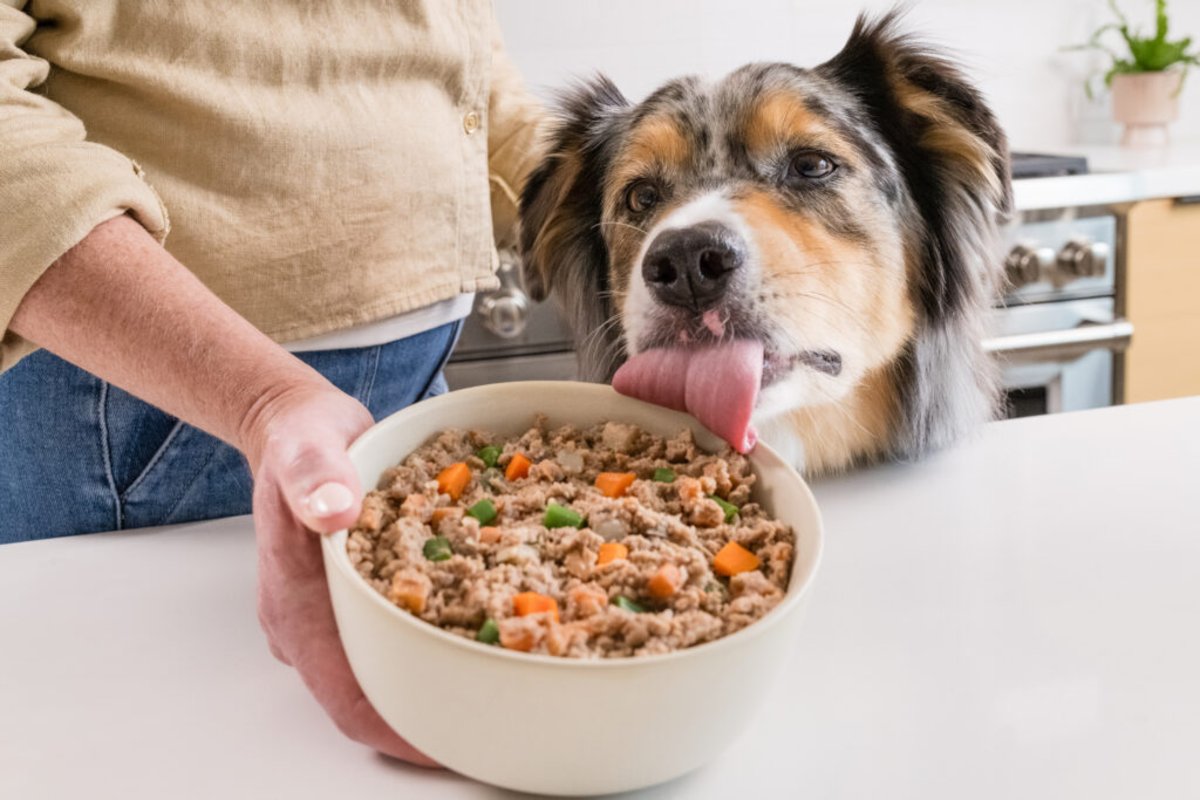

Sensitive Stomach pairs lean ground turkey with white and brown rice, with crude fat between 1 and 4 percent as fed.
Sensitive Stomach
Sensitive Stomach is the natural first stop for most owners, because it combines a low fat profile with a deliberately short ingredient list: ground turkey, long-grain white rice, and long-grain brown rice, with turkey liver, a nutrient blend, and natural prebiotic fiber for gut support.
The guaranteed analysis lists crude fat at a minimum of 1 percent and a maximum of 4 percent as fed, at 39 kcal per ounce. That capped maximum matters: it tells you the fat level is controlled at both ends, not just promised as a minimum. The recipe is fresh frozen and gently cooked, and the small box (7.8 pounds) runs $97.99. No veterinary authorization is required, which makes it the most accessible entry point here. It is formulated to help support dogs recovering from digestive upsets, under veterinary guidance, and low fat recipes like this one can help support dogs that struggle with rich meals.
Hepatic Support Low Fat
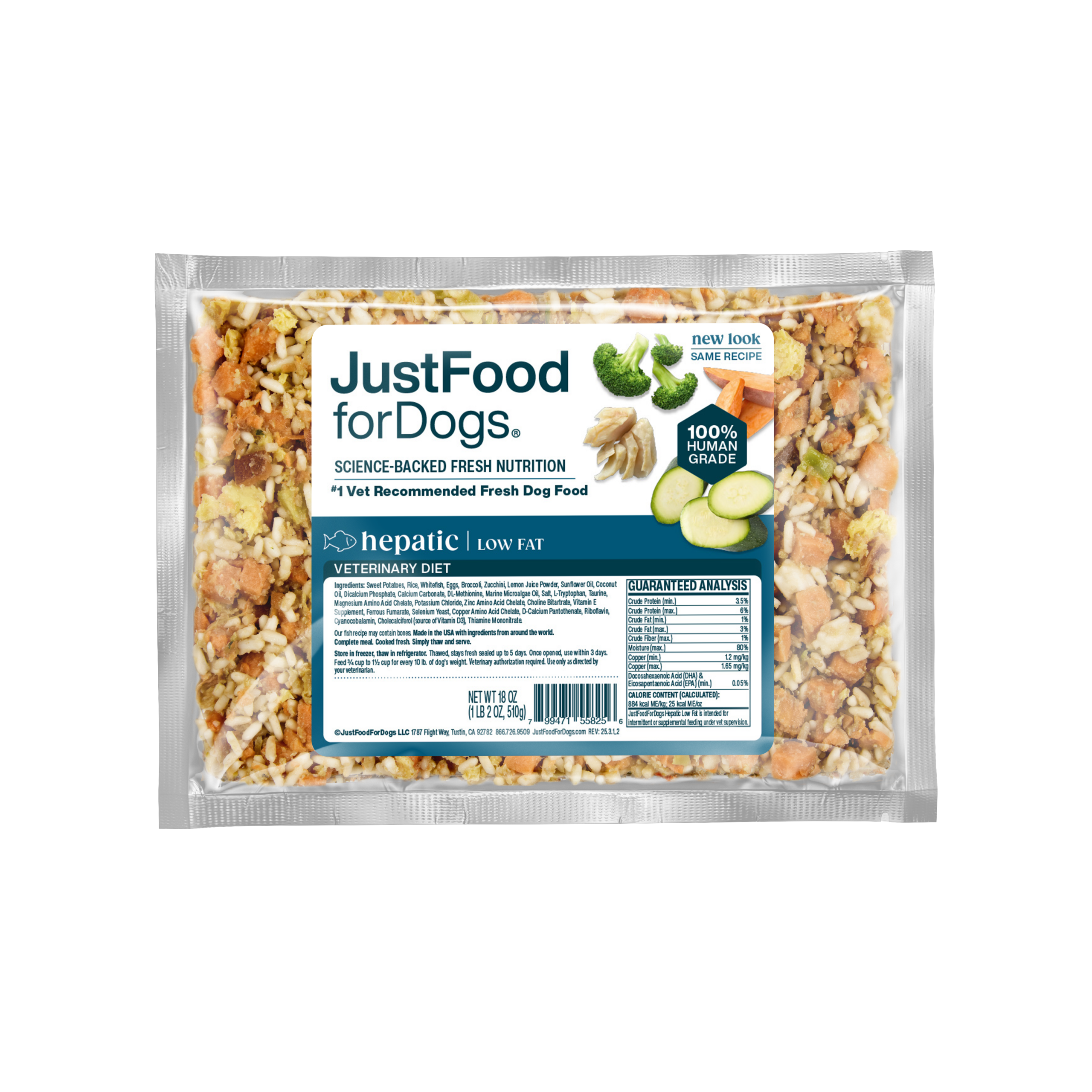
Now for the recipe that literally carries “low fat” in its name. Hepatic Support Low Fat is a veterinary support diet, and it is worth being precise about what it is for, because the name causes understandable confusion. “Hepatic” means liver: this recipe is formulated to support healthy liver function, with controlled protein, calories, phosphorus, and copper levels. It was not designed as a pancreatic recovery diet. It simply happens to also be the lowest fat recipe the company makes.
The numbers: crude fat between 1 and 3 percent as fed, at a light 25 kcal per ounce, built on sweet potatoes, long-grain white rice, eggs, and white fish, with broccoli and zucchini alongside. It is fresh frozen, and the small box (7.8 pounds) is $83.99.
Because it is a veterinary support diet, JustFoodForDogs requires your veterinarian’s information before shipping. That requirement exists for good reason: a liver support formulation involves trade-offs (such as moderated protein) that suit some patients and not others. If your vet decides this recipe fits your dog’s situation, the authorization step is straightforward.
Metabolic Support
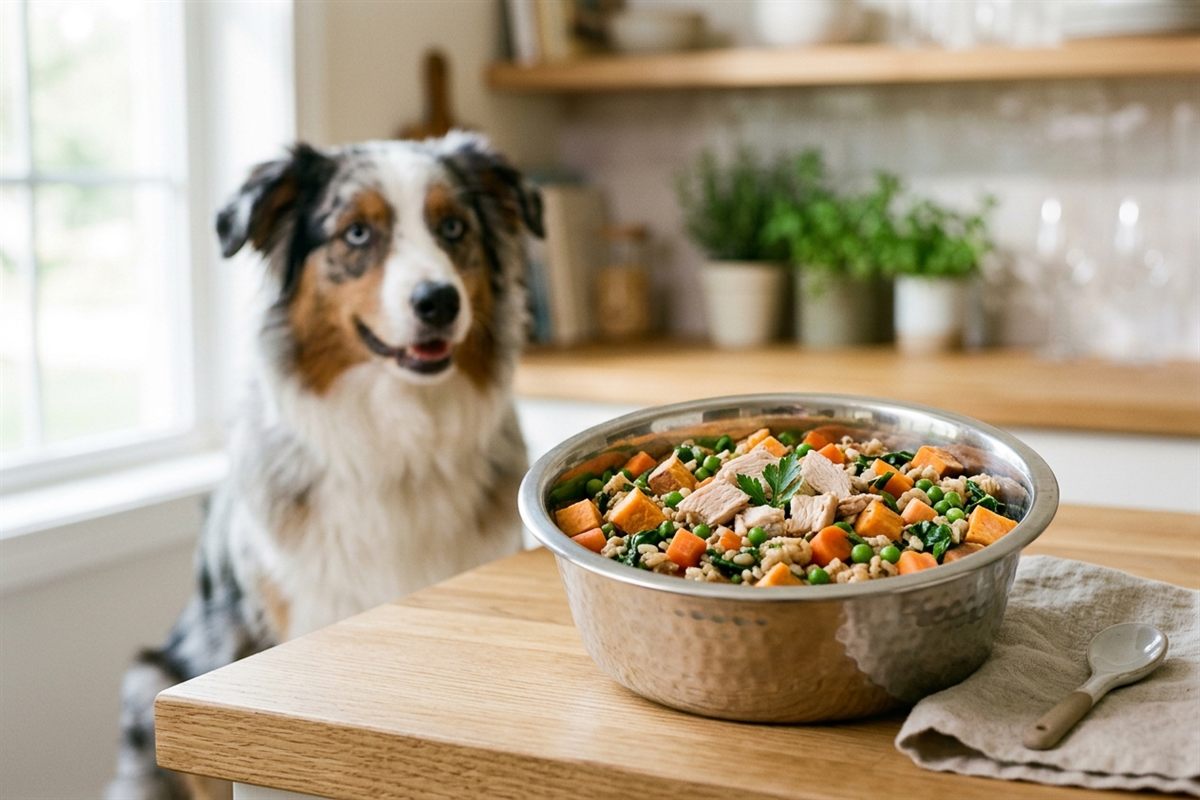

Metabolic Support is the company’s weight management veterinary recipe, built around ground turkey, oats, butternut squash, beef liver, and whole psyllium husk. The formula features controlled fat, increased fiber, and complex carbohydrates to help dogs feel satisfied between meals.
Its crude fat sits between 5.5 and 7 percent as fed, moderate rather than ultra low, at 52 kcal per ounce. It earns a place here because weight and pancreatic health travel together: carrying excess body fat is associated with more severe pancreatitis in dogs, so for an overweight dog with a pancreatitis history, your vet may prioritize safe, structured weight loss. The small box is $111.99, and like Hepatic Support Low Fat, it requires your veterinarian’s information before it ships.
JustFoodForDogs Low Fat Options Compared
| Recipe | Crude Fat (as fed) | Primary Purpose | Format | Vet Direction Needed? |
|---|---|---|---|---|
| Sensitive Stomach | 1% min, 4% max | Limited ingredient recipe for digestive sensitivity | Fresh frozen | No |
| Hepatic Support Low Fat | 1% min, 3% max | Liver support with controlled protein, copper, and phosphorus; also the lowest fat recipe | Fresh frozen | Yes |
| Metabolic Support | 5.5% min, 7% max | Weight management with higher fiber for satiety | Fresh frozen | Yes |
Fat values are from each product’s guaranteed analysis, verified June 2026.
What to Feed During and After Recovery
The honest answer to “what do I feed during recovery” is: exactly what your veterinarian tells you, in exactly the portions they tell you. But it helps to understand the general shape of the plan.
In the early phase, most vets now favor getting food back into the gut sooner rather than later, once vomiting is controlled, using small, frequent meals of a highly digestible, fat-restricted recipe. Four to six modest servings spread through the day ask less of the pancreas per sitting than two large ones.
From there, the transition is gradual: blending increasing proportions of the longer-term recipe over a week or more, watching appetite, stool quality, and comfort at every step. Any backslide (vomiting, a hunched posture, food refusal) is a signal to stop and call the clinic, not to push through.
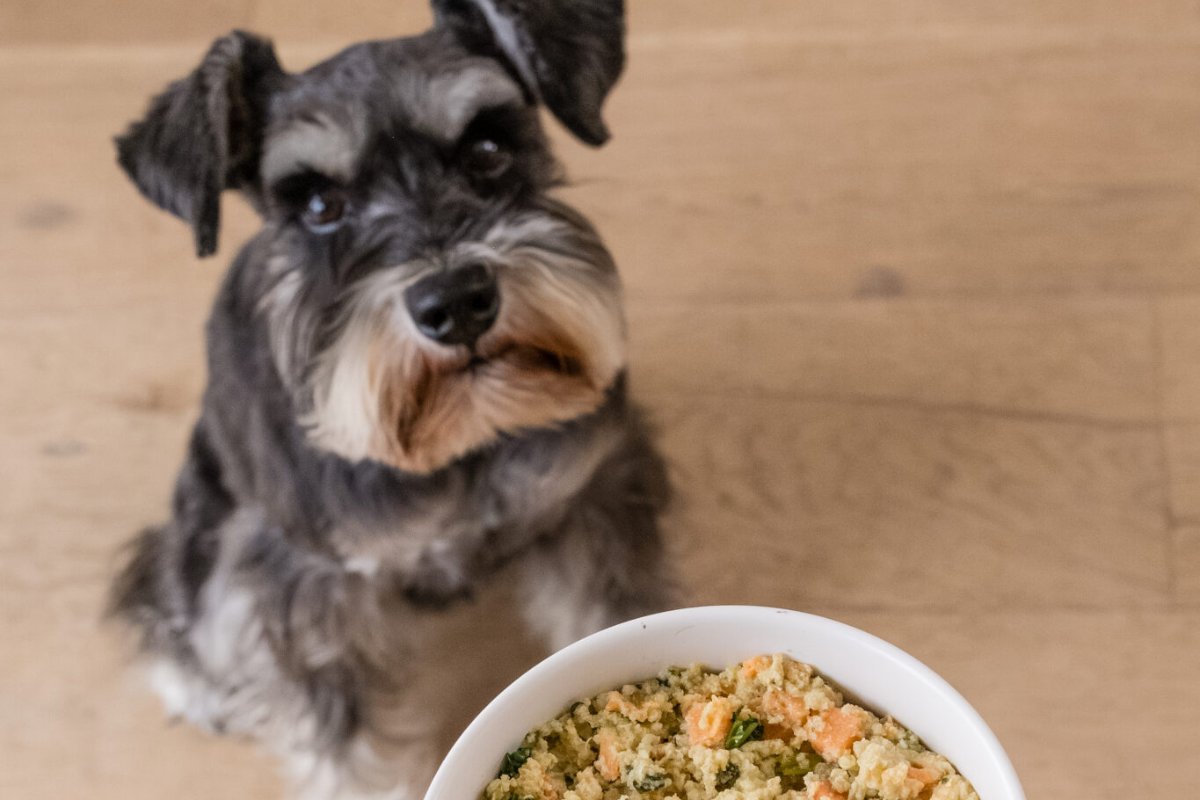
How long the fat restriction lasts is also your vet’s call. Some dogs return to a normal adult diet once fully recovered. Dogs with repeated episodes, and certain predisposed breeds such as Miniature Schnauzers, often stay on a fat-restricted recipe for life.
Pancreatitis Is a Vet-Managed Condition
No food choice, however careful, replaces veterinary care for pancreatitis. Diagnosis, pain relief, fluid support, and the feeding plan itself all belong to your veterinary team. If your dog shows vomiting, abdominal pain, a hunched back, lethargy, or refusal to eat, contact your vet promptly.
Beyond Fat: What Else Helps
Fat gets the headlines, but three quieter factors do a great deal of work in dogs with a sensitive pancreatic history.
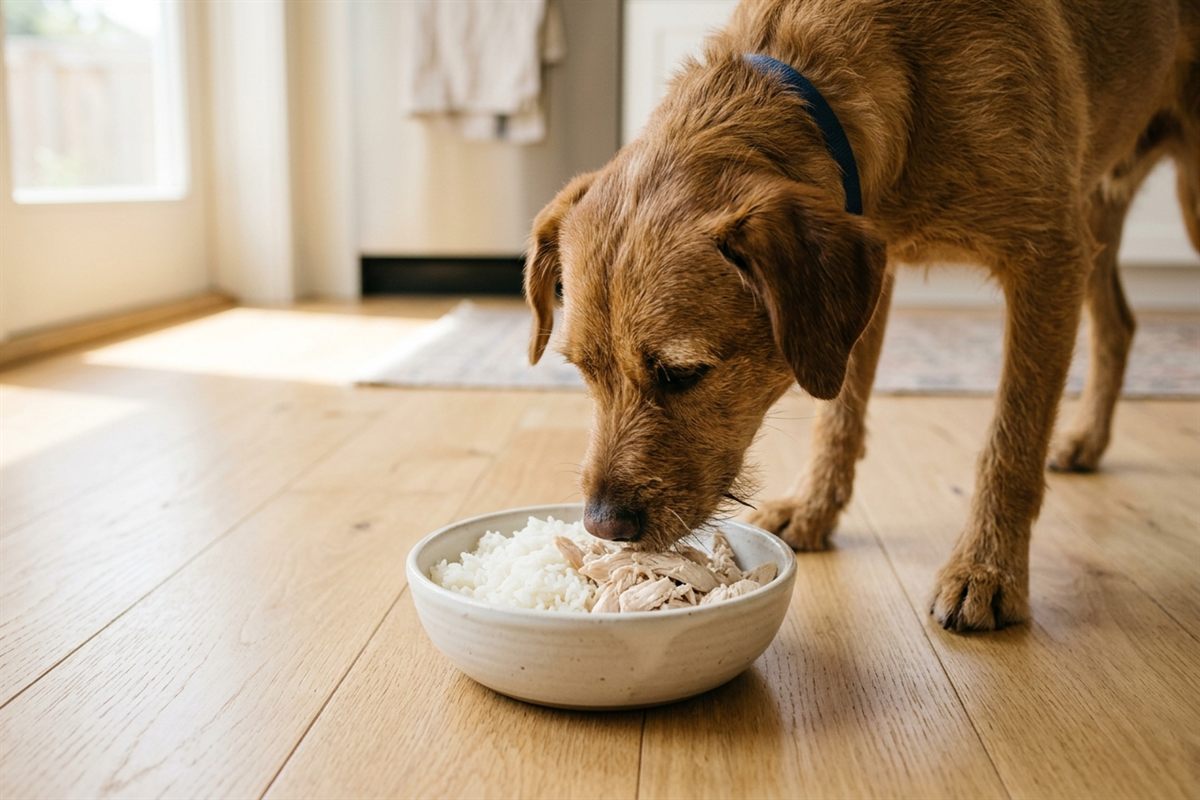
Digestibility is the first. A highly digestible meal is absorbed efficiently in the small intestine, leaving less work for the digestive organs. This is why recipes lean on easily processed ingredients such as white rice and lean turkey, and gently cooked fresh diets have a head start, since cooking improves starch digestibility.
Consistency is the second. A pancreas with a history of trouble does best on a boring schedule: the same recipe, the same portions, the same mealtimes. If you need to change recipes, do it gradually over a week or more. Your dog truly does not mind eating the same dinner every night.
The third is the hardest for loving families: no table scraps. The Merck Veterinary Manual specifically flags fatty table scraps and trash raids as classic risk factors in dogs. One pan of bacon grease, one buttery holiday plate, one unattended bin bag can be all it takes. Everyone in the household needs to be on the same page.
Make the Whole Household Part of the Plan
Post your dog’s feeding plan on the fridge: recipe, portion, meal times, and a clear “no scraps, no exceptions” line. Swap high-fat treats for a few pieces of the dog’s own low fat recipe reserved from the daily ration. Most flare-ups veterinarians see in practice trace back to a well-meaning extra, not the regular diet.
For a deeper grounding in how fresh diets work in general, Petful’s fresh dog food guide is a sensible companion read.
Frequently Asked Questions
There is no single best option, because the right choice depends on your dog’s case. Veterinarians look for restricted fat (a guaranteed analysis with a capped maximum, not just a minimum), high digestibility, a short consistent ingredient list, and complete-and-balanced nutrition for long-term feeding. Your vet weighs those attributes against your dog’s bloodwork, weight, and other conditions, then directs the choice and the transition.
JustFoodForDogs makes several recipes with restricted fat rather than one “low fat diet.” Hepatic Support Low Fat (1 to 3 percent crude fat as fed) is the named low fat veterinary recipe, formulated for liver support and requiring vet authorization. Sensitive Stomach (1 to 4 percent as fed) is the limited ingredient, low fat option available without authorization.
Within the JustFoodForDogs range, Hepatic Support Low Fat is lowest at 1 to 3 percent crude fat as fed. Comparing across brands and formats is trickier: fresh foods are roughly 70 percent moisture, so their as-fed numbers read far lower than kibble’s. A fair comparison converts everything to a dry matter or grams-per-1,000-kcal basis, which your veterinary team can calculate for any two labels.
No, not as a range. Several recipes are deliberately low in fat: Hepatic Support Low Fat (1 to 3 percent as fed), plus Sensitive Stomach (1 to 4 percent as fed). Standard daily recipes vary by protein source, so check the guaranteed analysis on the specific recipe and ask your vet to put the number in context.
High-fat foods are the classic culprits: bacon and bacon grease, fatty meat trimmings, butter-heavy leftovers, fried foods, rich gravies, and raided trash. The Merck Veterinary Manual identifies dietary indiscretion such as fatty table scraps and garbage raids as a recognized risk factor in dogs. Abrupt diet changes and rich novel treats can also upset a sensitive dog, so clear all extras with your vet.
Yes. Sensitive Stomach lists crude fat at a minimum of 1 percent and a maximum of 4 percent as fed, one of the lowest fat profiles in the lineup, paired with a limited ingredient list of ground turkey, white rice, and brown rice. It is available without veterinary authorization.
The Bottom Line
A pancreatitis episode is frightening, but it is also a turning point: from this day forward, you know what your dog’s digestive system needs, and you can build the bowl around it. The JustFoodForDogs low fat recipes give you genuinely useful options across fresh frozen and shelf-stable formats, with transparent guaranteed analyses you can hand straight to your vet.
So take this article to your next appointment, ask which recipe fits your dog’s case, and let your veterinary team direct the transition. A carefully chosen low fat recipe, small consistent meals, a scrap-free household, and a vet who knows your dog: that is as solid a foundation as any worried owner could ask for.