JustFoodForDogs Sensitive Stomach: Vet Recommended Diet for Upset Stomach & Diarrhea
Published on June 28, 2026
What to feed a dog recovering from an upset stomach or diarrhea: why vets suggest bland, limited-ingredient meals, where the JustFoodForDogs Sensitive Stomach recipe fits, and when to skip the bowl and call the clinic.
It is 2am, you are on your knees with a roll of paper towels, and your dog is watching you with the particular look of apology dogs reserve for carpet disasters. Every owner meets this night eventually, and the question that follows is always the same: what do I feed him tomorrow?
The veterinary answer has barely changed in decades: once serious causes are ruled out, many vets suggest bland, limited-ingredient meals while a dog’s digestion settles, under veterinary guidance. This JustFoodForDogs Sensitive Stomach guide covers the acute side of the story: when diarrhea needs a vet rather than a diet change, why bland food earns its keep, a close look at the JustFoodForDogs Sensitive Stomach recipe, a limited-ingredient diet built for dogs with delicate digestion, and how it fits both the recovery window and everyday feeding once the storm has passed.
Vetstreet may earn a commission when you click through to JustFoodForDogs, at no extra cost to you.
All featured products are chosen at the discretion of the author. However, Vetstreet may make a small affiliate commission if you click through and make a purchase.
Key Takeaways
- Diarrhea with blood, lethargy, repeated vomiting, or no improvement within 24 to 48 hours is a veterinary problem, not a food problem. Puppies and seniors should see a vet sooner.
- For uncomplicated upsets, vets commonly suggest small, frequent meals of a highly digestible, low fat, limited-ingredient diet while the gut settles.
- The JustFoodForDogs Sensitive Stomach recipe is a single-protein turkey and rice diet formulated to be gentle on sensitive stomachs, and unlike home-cooked chicken and rice it is complete and balanced.
- For dogs whose stomachs stay touchy, the fresh frozen Sensitive Stomach recipe works as an everyday diet, reached via a 7 to 10 day transition.
First Things First: When Diarrhea Means a Vet Visit
Before we talk about any bowl, we need to talk about triage. Most bouts of canine diarrhea are short-lived and follow something mundane: a raided bin, a too-rich treat, an abrupt food change. But diarrhea can also be the opening act of conditions that need professional care, from parasites and pancreatitis to foreign bodies. Food is not the answer to those, and delaying an exam to “try a new diet” can cost precious time.
Red Flags
Call your veterinarian promptly, rather than reaching for any food, if your dog shows any of the following:
- Blood in the stool, or black, tarry stools
- Repeated vomiting, or vomiting alongside the diarrhea
- Lethargy, weakness, or collapse
- Refusing water, or signs of dehydration such as tacky gums
- A painful, tense, or bloated belly
- Diarrhea lasting more than 24 to 48 hours despite home care
- Any significant diarrhea in a puppy, a senior, or a dog with an existing medical condition; they dehydrate dangerously fast
- Known or suspected ingestion of a toxin, medication, or foreign object
If none of those apply and your adult dog is bright, drinking, and simply producing regrettable stools, you are usually in home-care territory, and diet becomes the most useful lever you have.
Why Vets Suggest Bland, Simple Meals for Upset Stomachs
When the gut is irritated, digestion and absorption are temporarily compromised and the intestinal lining needs a quiet stretch to repair itself. The dietary logic that follows sits behind every bland-diet recommendation you have ever heard from a vet:
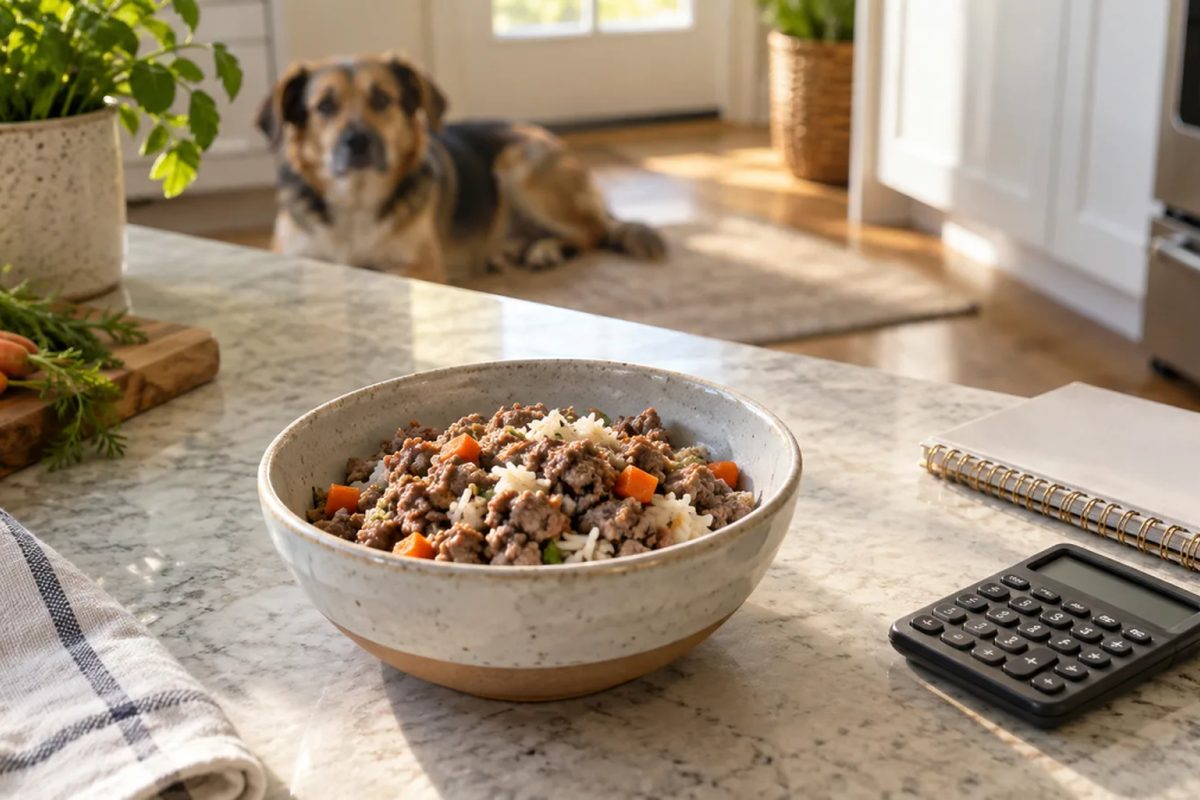
Highly digestible protein and carbohydrate. Lean poultry and white rice are broken down and absorbed high in the digestive tract, leaving less undigested material to ferment downstream and feed the diarrhea cycle. This is why turkey or chicken with rice, not beef stew, is the classic recovery meal.
Low fat. Fat is the slowest nutrient to digest and the most demanding on a recovering system. It slows stomach emptying and can worsen loose stools, which is why low fat content is a defining feature of recovery diets.
Small, frequent meals. Four to six mini-meals a day ask less of the gut at any one time than two large ones. The Merck Veterinary Manual describes exactly this approach to dietary management of digestive upsets in dogs: highly digestible, low fat food offered in small amounts, with veterinary attention when signs persist or worsen.
Vetstreet may earn a commission when you click through to JustFoodForDogs, at no extra cost to you.
Few ingredients. Every extra ingredient is one more variable for an unsettled gut. A limited-ingredient meal keeps the workload, and the guesswork, to a minimum.
Now for the limitation nobody mentions at 2am. Home-cooked chicken and rice is a fine stopgap, but it is not a complete diet: it is short on essential fatty acids, vitamins, and minerals, which is why vets only suggest it for a few days. If a dog needs a gentle diet for longer, or you would rather not cook at midnight, you need the same bland-diet logic in a complete and balanced package. That is the niche the Sensitive Stomach recipe fills.
Sensitive Stomach: A Limited-Ingredient Recipe for Delicate Digestion
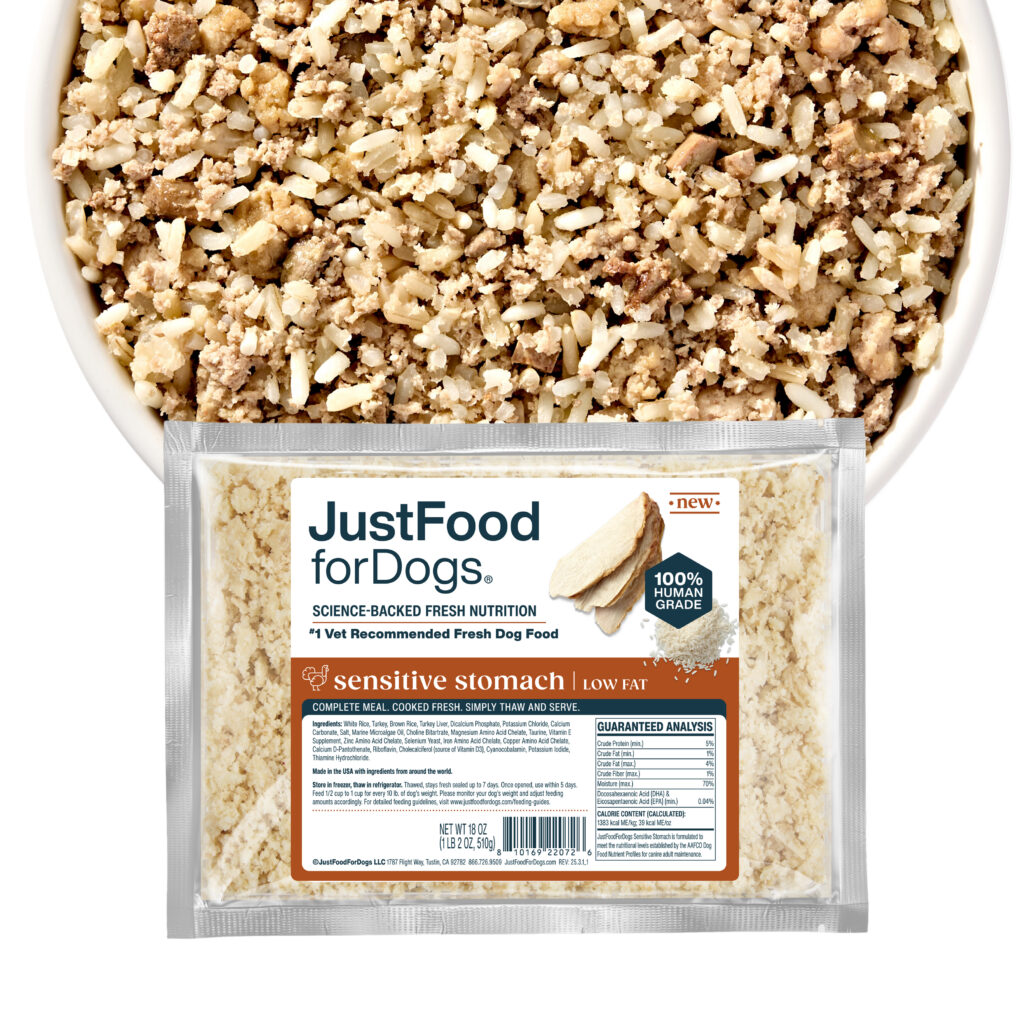
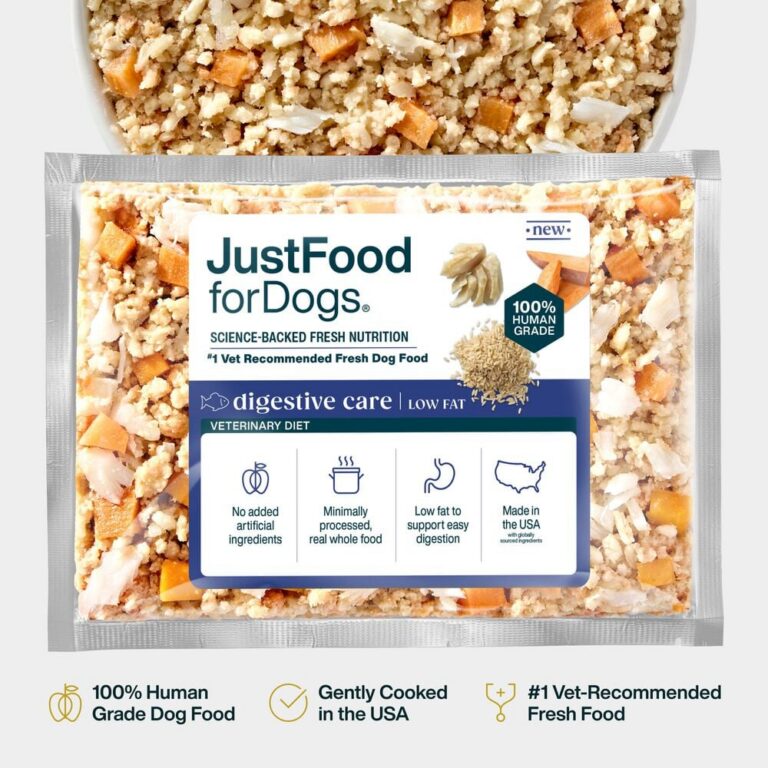
The Sensitive Stomach recipe is the JustFoodForDogs answer to the chicken-and-rice problem: the classic gentle formula, a single lean poultry protein plus rice, turned into a complete meal a vet can stand behind for more than a long weekend.
To keep expectations honest: The Sensitive Stomach recipe is a food, not a medicine. It does not treat anything, and no food does. It is formulated to be gentle on recovering stomachs while your dog’s own digestion does the repair work, and it is meant for vet-guided, short-term feeding with a gradual return to the regular diet.
Vetstreet may earn a commission when you click through to JustFoodForDogs, at no extra cost to you.
After Recovery: The Sensitive Stomach Recipe for Everyday Feeding
Some dogs bounce back from an upset and return to their usual food without a backward glance. Others make it clear their digestion remains touchy. For that second group, JustFoodForDogs makes a purpose-built everyday option: the fresh frozen Sensitive Stomach recipe, a recent addition to the lineup.
The fresh frozen Sensitive Stomach recipe brings single-protein turkey and rice logic into an everyday, long-term meal.
Sensitive Stomach is a single-protein, limited-ingredient recipe of ground turkey, long-grain white and brown rice, and turkey liver, with omega marine microalgae oil supplying DHA and EPA. The fat profile sits in a gentle band, 1.0 to 4.0 percent crude fat as fed, at about 39 kcal per ounce. It is formulated by veterinarians as a complete daily diet for dogs who do best on simple, highly digestible meals year round, and it works equally well as a gentle recovery meal under veterinary guidance. It ships frozen in 18 oz packs, with a 7-pack starter box listing at $97.99 as of June 2026.
Moving onto it should be boring by design: once stools have been solid for a few days, blend the new recipe in gradually over 7 to 10 days. Because it is built on turkey and rice, the transition is about as smooth as a diet change gets. For a wider look at how fresh diets are made and fed, see our fresh dog food guide.
Vetstreet may earn a commission when you click through to JustFoodForDogs, at no extra cost to you.
The Sensitive Stomach Recipe at a Glance
| Recipe | Built for | Key traits | Format | Typical use window |
|---|---|---|---|---|
| Sensitive Stomach | Everyday feeding for dogs whose digestion stays touchy long after recovery | Single protein (turkey + turkey liver), white and brown rice, 1 to 4% crude fat, DHA and EPA from marine microalgae | Fresh frozen 18 oz packs, thaw before serving | Ongoing daily diet, reached via a 7 to 10 day transition |
How to Reintroduce Food After an Upset
Assuming your vet has cleared you for home care, here is the reintroduction ladder many vets walk owners through:
- Water first. Offer small amounts of fresh water frequently rather than letting a thirsty dog tank up at once. Hydration matters more than food in the first hours.
- Start small. Offer a few tablespoons of the bland recovery meal, the Sensitive Stomach recipe or a vet-suggested equivalent, and wait an hour or two. If it stays down, continue.
- Feed little and often. Split the day’s calories into 4 to 6 mini-meals. Your vet sets the daily total, and small measured portions make the arithmetic easy.
- Hold steady past the finish line. Once stools are formed, stay on the recovery diet another 2 to 3 days. Switching back the morning after the first solid stool is the most common way owners restart the whole cycle.
- Transition gradually. Reintroduce the regular diet, or move to Sensitive Stomach, over 7 to 10 days: roughly quarter steps every 2 to 3 days, slowing down if stools soften.
- Report back. If diarrhea returns, vomiting resumes, or energy dips at any rung, stop climbing and call your vet.
Keep a Recovery Plan Ready
The best time to plan a recovery diet is when your dog is well. Keep a few packs of the Sensitive Stomach recipe in the freezer, or ask your vet about a complete and balanced recovery option to have on hand. The night you need it, there is no midnight shop run and no cooking chicken at 2am.
Frequently Asked Questions
The Sensitive Stomach recipe is a limited-ingredient, single-protein turkey and rice recipe from JustFoodForDogs. It is formulated to be gentle on sensitive stomachs, with 1 to 4 percent crude fat as fed, and unlike home-cooked chicken and rice it is complete and balanced. It suits both vet-guided recovery feeding and everyday meals for dogs with delicate digestion.
No food is a treatment for diarrhea, so the first step is always ruling out medical causes with your veterinarian. Once a dog is cleared for home care, many vets suggest bland, limited-ingredient, low fat meals while digestion settles, and the JustFoodForDogs Sensitive Stomach recipe was formulated for exactly that role: highly digestible turkey and rice, low fat, and complete and balanced for recovery windows and everyday feeding alike.
First, an exam if any red flags are present: blood in the stool, vomiting, lethargy, refusal of water, a painful belly, signs lasting beyond 24 to 48 hours, or any significant signs in a puppy or senior. For uncomplicated cases, vets commonly suggest small, frequent meals of a highly digestible, low fat, limited-ingredient diet for a few days, an approach described in the Merck Veterinary Manual, then a gradual return to the regular diet.
For a typical uncomplicated upset, most vets suggest a bland diet for roughly 2 to 5 days, holding it for 2 to 3 days after stools firm up, then transitioning back over about a week. Home-cooked chicken and rice is not nutritionally complete, so it should not stretch much past a few days; a complete and balanced option like the Sensitive Stomach recipe gives your vet more flexibility if recovery runs longer. Your veterinarian should always set the timeline.
JustFoodForDogs recipes are formulated by veterinarians, and the company describes itself as the number one vet-recommended fresh dog food brand. Plenty of practicing vets like the approach: whole ingredients, gentle cooking, published nutrient profiles, and recipes such as the Sensitive Stomach recipe that mirror what vets already suggest for recovering dogs. Whether it suits your individual dog is a conversation for your own veterinarian.
The Bottom Line
Diarrhea has two phases, and they need different things from you. In the first, your job is triage: watch for the red flags and let your vet rule out anything food cannot touch. In the second, your job is patience: small, frequent, bland meals, a steady hand past the first solid stool, and a slow transition home. JustFoodForDogs built the Sensitive Stomach recipe for exactly this: a gentle, limited-ingredient diet for the recovery window and for dogs whose everyday meals need to stay simple. Keep your vet on speed dial, keep a recovery plan ready, and the next 2am cleanup at least comes with a plan for breakfast.