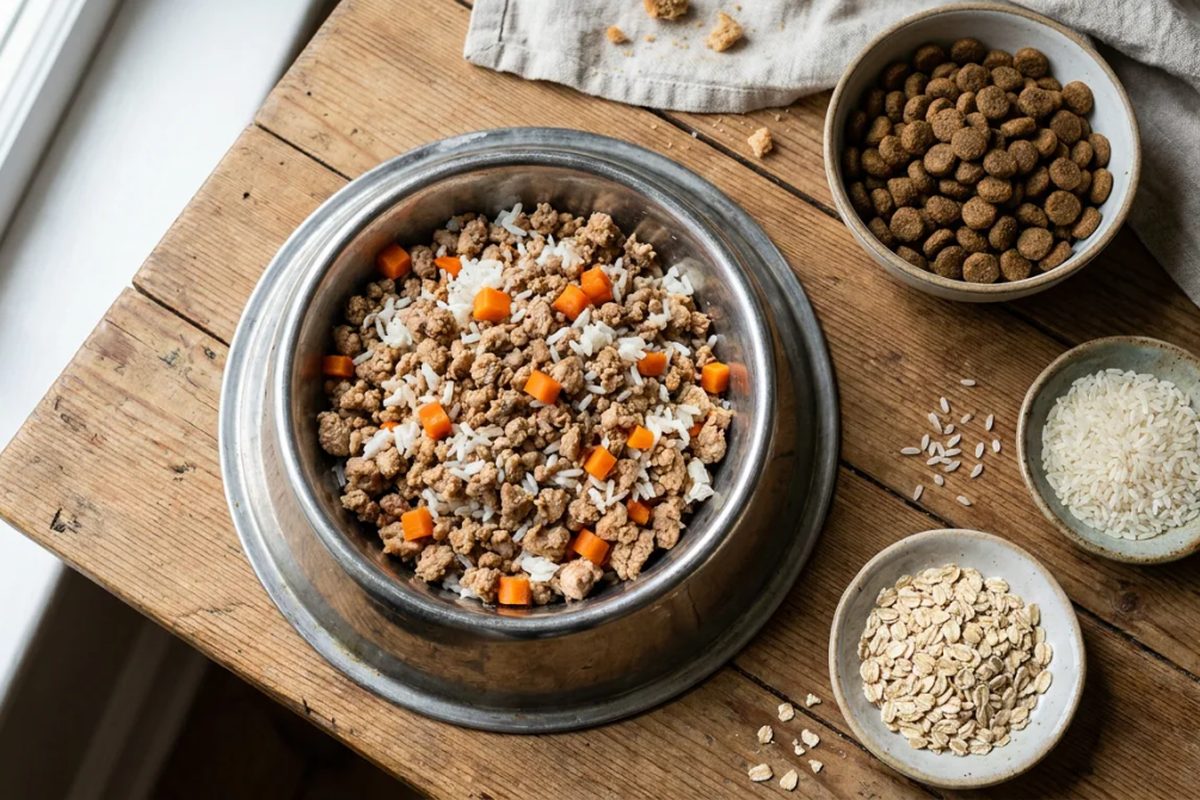
JustFoodForDogs Renal Support: Vet Diet Guide for Kidney Disease
Published on June 28, 2026

A kidney disease diagnosis changes what goes in your dog’s bowl. A close look at JustFoodForDogs Renal Support: how renal diets work, what’s in the recipe, and how to transition safely with your vet’s guidance.
Few words from a veterinarian land harder than “your dog’s kidneys aren’t working the way they should.” Many families hear those words in the exam room, and the worry that follows is real. Take a breath: you have more levers to pull than you think, and one of the most important sits in the food bowl. This guide looks at JustFoodForDogs Renal Support, a fresh, veterinary-directed diet formulated to help support kidney health in dogs with diagnosed kidney disease. We’ll cover why nutrition matters so much for kidney patients, exactly what is in this recipe, how it compares to traditional prescription kidney diets, and how to handle the transition safely with your veterinarian’s input.
All featured products are chosen at the discretion of the author. However, Vetstreet may make a small affiliate commission if you click through and make a purchase.
Key Takeaways
- JustFoodForDogs Renal Support Low Protein is a fresh, whole-food recipe formulated to help support kidney health in dogs with diagnosed kidney disease, fed under veterinary guidance.
- The recipe restricts phosphorus and moderates high-quality protein, two cornerstones of veterinary renal nutrition, and adds omega-3 fatty acids from marine microalgae oil.
- It requires veterinary authorization to purchase: JustFoodForDogs collects your veterinarian’s information before shipping, or you can email an existing Rx.
- It comes in two formats: Fresh Frozen (lightly cooked, freezer-stored) and shelf-stable Pantry Fresh cartons.
- Veterinarians stage kidney disease using the IRIS system, and diet recommendations depend on your dog’s stage, so no diet change should happen without your vet’s sign-off.
Vetstreet may earn a commission when you click through to JustFoodForDogs, at no extra cost to you.
Why Diet Matters So Much for Dogs With Kidney Disease
Healthy kidneys are quiet workhorses. They filter waste products from the blood, balance hydration and electrolytes, and help regulate blood pressure. When kidney function declines, waste products build up, and the body struggles to keep that delicate chemistry in balance. Medicine has tools to help, but nutrition is one of the few things a pet parent influences three times a day, every day.
It helps to understand that veterinarians do not approach kidney disease as one single condition. They stage it. The International Renal Interest Society (IRIS) provides the staging system most veterinarians use, grading chronic kidney disease from stage 1 (early) through stage 4 (advanced) based on bloodwork values such as creatinine and SDMA, along with blood pressure and urine protein levels. Dietary recommendations are tailored to the stage, which is one reason a renal diet should always be introduced on a veterinarian’s advice rather than as a do-it-yourself decision.
So what makes a renal diet different from everyday food? Three pillars come up again and again in veterinary nutrition.
Restricted phosphorus
Compromised kidneys have a harder time clearing phosphorus from the bloodstream. As blood phosphorus creeps up, it can disturb calcium balance and hormone signaling, and veterinary researchers have consistently linked dietary phosphorus restriction to better quality of life in dogs with chronic kidney disease. That is why phosphorus is the first number a veterinary nutritionist checks on a renal recipe, and why therapeutic kidney diets keep it deliberately low. The Merck Veterinary Manual notes that diets formulated for dogs with kidney dysfunction are typically reduced in phosphorus, protein, and sodium compared with standard adult maintenance food.
Moderated, high-quality protein
When the body digests protein, it produces nitrogen waste that the kidneys must filter out. Renal diets moderate the total amount of protein to reduce that waste load, but the protein that remains must be highly digestible and rich in essential amino acids so the dog can maintain muscle. This is a balancing act: too much protein creates waste the kidneys struggle to clear, while too little risks muscle loss. It is the reason “low protein” on a renal diet label means carefully calculated protein, not simply less meat.
Added omega-3 fatty acids
Long-chain omega-3 fatty acids (EPA and DHA), typically sourced from fish oil or marine algae, are a standard inclusion in veterinary kidney diets. Veterinary nutritionists include them as part of the overall nutritional strategy for kidney patients, and they contribute energy-dense calories from fat, useful for dogs eating smaller volumes.
There is a fourth, less glamorous pillar: water. Dogs with kidney disease lose the ability to concentrate urine efficiently, so they urinate more and are prone to dehydration. Moisture-rich food can help support hydration in a way dry kibble cannot. More on that below.
What Is JustFoodForDogs Renal Support?
JustFoodForDogs Renal Support Low Protein is the kidney-focused recipe in the company’s vet support line, a range of diets developed with a nutrition team that includes board-certified specialists in nutrition, toxicology, and dermatology. Unlike the brand’s everyday recipes, the vet support diets are designed for dogs with diagnosed health conditions and are fed under veterinary guidance.
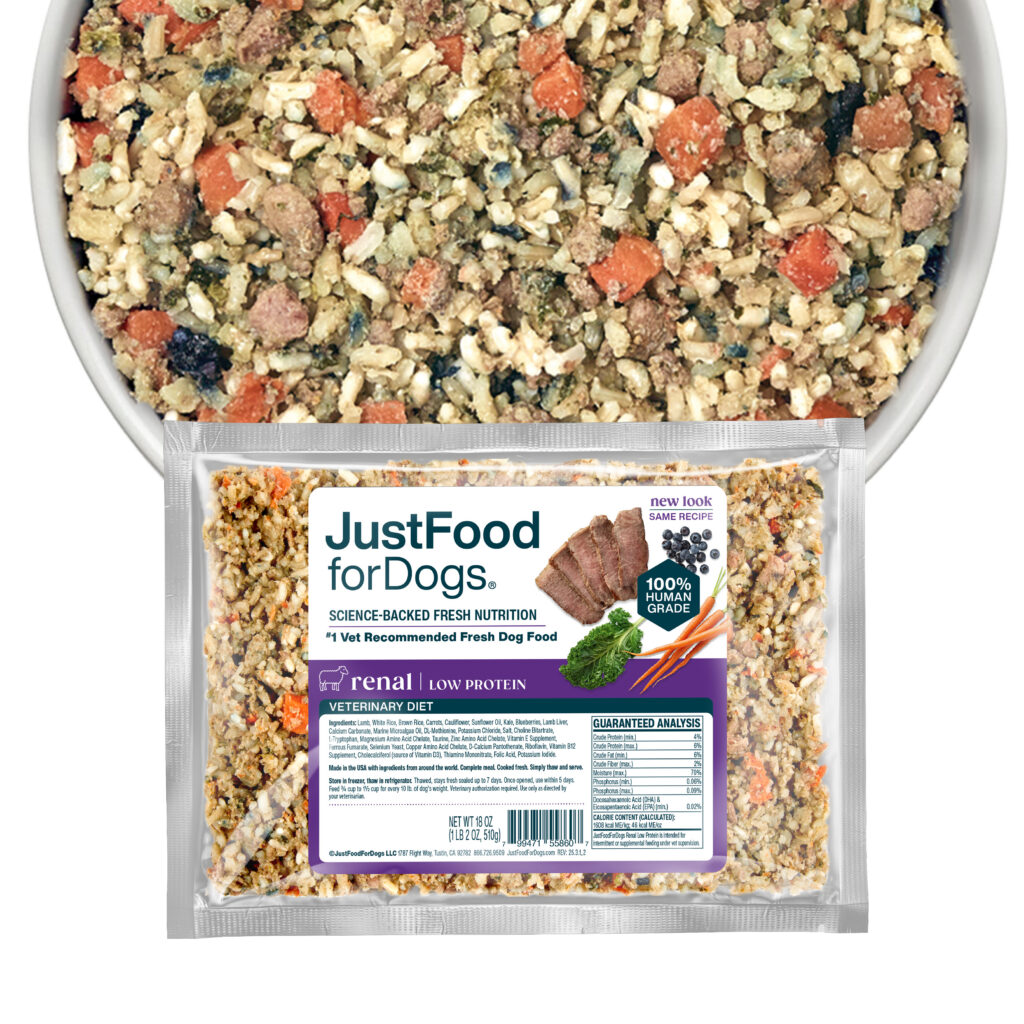
The Fresh Frozen version of Renal Support Low Protein is built around a short list of recognizable whole-food ingredients: ground lamb, sushi rice, cauliflower, carrots, long-grain brown rice, lamb liver, spinach, and blueberries, finished with sunflower oil, omega marine microalgae oil, and the company’s nutrient blend of vitamins and minerals. Every ingredient is there for a reason. White sushi rice provides energy with very little phosphorus. Lamb supplies high-quality, digestible protein in a deliberately moderated amount. The marine microalgae oil delivers those long-chain omega-3 fatty acids without leaning on fish. One label note worth knowing: like JustFoodForDogs’ other vet support diets, Renal Support is labeled for intermittent or supplemental feeding under veterinary supervision, so your veterinarian directs how it fits into a long-term plan rather than it being a grab-it-off-the-shelf choice.
The numbers tell the renal story. On an as-fed basis, the Fresh Frozen recipe runs 4.0 to 6.0 percent crude protein, a minimum of 6.0 percent fat, and just 0.06 to 0.09 percent phosphorus, with moisture up to 70 percent. At 46 kcal per ounce, it is energy-dense enough to support healthy body condition in dogs with diminished appetite, which is a daily battle for many kidney patients.
Vetstreet may earn a commission when you click through to JustFoodForDogs, at no extra cost to you.
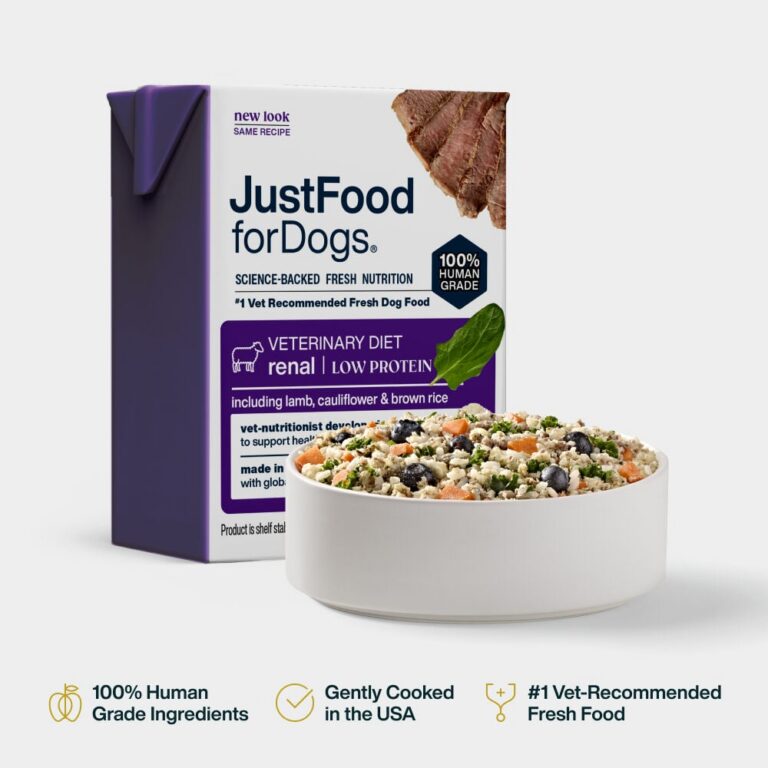
The Pantry Fresh version of Renal Support is shelf-stable for up to two years unopened, handy for travel or backup meals.
The recipe comes in two formats. Fresh Frozen arrives in vacuum-sealed packs that live in your freezer; a large box holds seven 72-ounce packages (31.5 pounds) and costs $321.99 as of June 2026, with autoship discounts available. Pantry Fresh Renal Support uses the same lamb-and-rice recipe concept in shelf-stable Tetra Pak cartons that keep unopened for up to two years; a 12-pack of 12.5-ounce cartons runs $107.99 as of June 2026. The Pantry Fresh nutrition profile is closely matched, with 4.0 to 6.0 percent protein and 0.08 to 0.1 percent phosphorus as fed.
Here is the part that surprises many pet parents: you cannot simply add this food to your cart and check out. Because it is a therapeutic diet intended for dogs with diagnosed kidney disease, JustFoodForDogs requires your veterinarian’s information before the order ships. If you already have a written Rx from your vet, you can email it to [email protected]. That gate exists for a good reason. A protein-and-phosphorus-restricted diet is the wrong choice for a healthy adult dog or a growing puppy, so the company verifies that a veterinarian is involved in the decision.
Vetstreet may earn a commission when you click through to JustFoodForDogs, at no extra cost to you.
JustFoodForDogs Renal Support at a Glance
| Attribute | Detail |
|---|---|
| Protein approach | Moderated, high-quality lamb and lamb liver; 4.0 to 6.0% crude protein (as fed) |
| Phosphorus | Restricted: 0.06 to 0.09% as fed (Fresh Frozen); 0.08 to 0.1% (Pantry Fresh) |
| Omega-3 source | Omega marine microalgae oil (Fresh Frozen); cod liver oil (Pantry Fresh) |
| Moisture | Up to 70% (Fresh Frozen); up to 68% (Pantry Fresh) |
| Formats | Fresh Frozen packs (freezer) and shelf-stable Pantry Fresh cartons |
| Veterinary requirement | Yes; vet authorization collected at checkout or Rx emailed to [email protected] |
| Price ballpark (June 2026) | $321.99 for a 31.5 lb Fresh Frozen large box; $107.99 for a 12-pack of 12.5 oz Pantry Fresh cartons; autoship discounts available |
How It Compares to Traditional Prescription Kidney Diets
If your dog has kidney disease, your veterinarian has probably mentioned the established names: Hill’s Prescription Diet k/d, Royal Canin Renal Support, and Purina Pro Plan Veterinary Diets NF. These diets have been the backbone of veterinary kidney nutrition for decades, are backed by extensive research and feeding history, and come in both dry and canned forms at a range of price points. They remain respected, vet-recommended options, and JustFoodForDogs Renal Support brings that same proven renal-nutrition science into a fresh, whole-food format that many dogs find easier to eat, which is exactly where it pulls ahead when a kidney patient’s appetite is fragile.
So where does a fresh diet fit in? The honest answer is that JustFoodForDogs Renal Support follows the same core nutritional playbook (restricted phosphorus, moderated high-quality protein, added omega-3s) while taking a different path on format. The food is lightly cooked from whole ingredients you can identify by sight, stored frozen or in cartons rather than extruded into kibble, and naturally high in moisture.
That last point deserves emphasis for one practical reason: appetite. Ask any veterinarian what the hardest part of feeding a kidney patient is: it is not choosing the diet, it is getting the dog to eat it, day after day, as appetite fades. A renal diet only counts if it actually gets eaten. For some dogs, the aroma and texture of gently cooked fresh food is simply more enticing than dry kibble, and that palatability edge can be the difference between a full bowl and a skipped meal. Traditional canned and dry renal diets remain a valid, vet-directed choice, but if your dog has been turning up its nose at prescription kibble, a fresh option like JustFoodForDogs Renal Support is one many picky or inappetent dogs may take to more readily. What matters most is that your dog reliably eats it, and for a lot of kidney patients, that is where a fresh diet wins.
Cost and logistics differ too. Fresh food generally costs more per calorie than dry prescription diets and requires freezer space, while the Pantry Fresh cartons trade some of that storage burden for shelf stability. Your veterinarian can help you weigh budget, storage, and your dog’s preferences. If you want a primer on how fresh diets work in general, see this fresh dog food guide.
Vetstreet may earn a commission when you click through to JustFoodForDogs, at no extra cost to you.
Transitioning a Dog With Kidney Disease to a New Diet
With a healthy dog, switching foods is a one-week project. With a kidney patient, it deserves more patience and more planning, because food aversion is a real risk. A dog who feels nauseated while sampling a new diet can learn to associate that food with feeling unwell and refuse it permanently.
Work With Your Vet
Never change the diet of a dog with kidney disease without veterinary input. Your veterinarian will time the switch around your dog’s stage, appetite, and any nausea medication, and will recheck bloodwork to see how your dog is doing on the new food. If your dog refuses a renal diet or vomits during the transition, call your vet rather than pushing harder.
A few principles veterinarians commonly share with their clients:
- Go slowly. Mix a small amount of the new food into the old over 7 to 10 days, increasing gradually. For kidney patients, some veterinarians stretch this to two or three weeks.
- Pick a good week. Introduce the new diet when your dog is feeling well, not during a nausea flare or right after a hospital stay.
- Warm it slightly. Gently warming fresh food releases aroma, which often matters more to a dog with a flagging appetite than flavor does.
- Track the bowl. Keep a simple daily note of how much your dog actually eats, along with weight checks. Falling intake is information your veterinary team needs early.
- Resist the topper trap. Unsanctioned extras like cheese or deli meat can undo the phosphorus and sodium math of the diet. Ask your vet for renal-appropriate treat ideas instead.
What About Hydration?
Water is the unsung nutrient in kidney care. Because dogs with kidney disease produce dilute urine in larger volumes, they live closer to the edge of dehydration than healthy dogs, and dehydration makes them feel worse and eat less.
This is where fresh food has a structural advantage that has nothing to do with marketing. JustFoodForDogs Renal Support carries up to 70 percent moisture, similar to canned diets and far above the roughly 10 percent in dry kibble. Every meal can help support hydration simply by being mostly water, the way a dog’s ancestral prey-based diet was. That does not replace fresh water bowls (keep several around the house, refreshed daily) or any fluid plan your veterinarian prescribes, but it quietly works in your dog’s favor at every feeding.
Moisture-rich fresh meals can help support hydration, a daily priority for dogs with kidney disease.
Frequently Asked Questions
JustFoodForDogs Renal Support Low Protein is formulated to help support kidney health in dogs with diagnosed kidney disease, with restricted phosphorus, moderated high-quality protein, and added omega-3 fatty acids. It is designed to be fed under veterinary guidance, and the company requires your veterinarian’s information before shipping. Whether it is the right fit for your dog depends on your dog’s IRIS stage, bloodwork, and appetite, so the decision belongs in a conversation with your vet.
There is no single best option for every dog. Veterinarians recommend therapeutic renal diets matched to the individual dog’s stage of kidney disease, bloodwork, and preferences. Established prescription diets from Hill’s, Royal Canin, and Purina and fresh veterinary-directed options like JustFoodForDogs Renal Support all follow the same core principles of restricted phosphorus and moderated high-quality protein. The best diet is the vet-recommended one your dog will reliably eat.
Many do. JustFoodForDogs recipes are developed with a nutrition team that includes board-certified veterinary specialists, and the company’s vet support diets, including Renal Support, can only be purchased with veterinary authorization, which keeps your own vet in the loop by design. As with any diet, individual veterinarians make recommendations case by case, so ask yours whether it suits your dog.
Veterinarians generally recommend diets with restricted phosphorus, moderated amounts of highly digestible protein, added omega-3 fatty acids, controlled sodium, and plenty of moisture. In practice that means a properly formulated therapeutic renal diet rather than regular adult food. Home-cooked meals are an option only when formulated by a board-certified veterinary nutritionist, because balancing phosphorus and protein by guesswork is genuinely difficult.
Avoid high-phosphorus extras such as cheese, jerky treats, organ meats, raw bones, and dairy, along with salty table scraps and processed human snacks. High-protein supplements and unapproved toppers can also work against a renal diet’s careful formulation. Always clear treats and extras with your veterinarian; many vets will suggest renal-appropriate options.
Acute kidney injury in dogs is most often caused by toxins and is frequently preventable: antifreeze (ethylene glycol), grapes and raisins, and human medications such as ibuprofen and other NSAIDs are leading culprits, along with infections like leptospirosis. Chronic kidney disease, by contrast, usually develops gradually with age, and untreated dental disease and high blood pressure can add to the kidneys’ burden over time. Keep toxins locked away and keep up with routine senior bloodwork.
Yes, in practical terms. JustFoodForDogs requires veterinary authorization before shipping any vet support diet. At checkout, the company collects your veterinarian’s information so it can verify the diet is appropriate, or you can email an existing written Rx to [email protected]. This applies to both the Fresh Frozen and Pantry Fresh versions of Renal Support.
You, Your Vet, and the Food Bowl
A kidney disease diagnosis is the beginning of a partnership, not a countdown. Your veterinarian brings the staging, the bloodwork, and the medical plan. You bring the daily observations no clinic can capture: how eagerly the bowl empties, how the water intake looks, how your dog seems on a Tuesday evening. Nutrition sits at the center of that partnership, and a diet like JustFoodForDogs Renal Support, formulated to help support kidney health and fed under veterinary guidance, gives you a well-designed tool for your side of the work. Bring it up at your next appointment and ask whether it fits your dog’s stage. The love you feed it with, no one needs to prescribe.