Is Fresh Dog Food Easier to Digest?
by Carol Bryant
Published on March 17, 2026
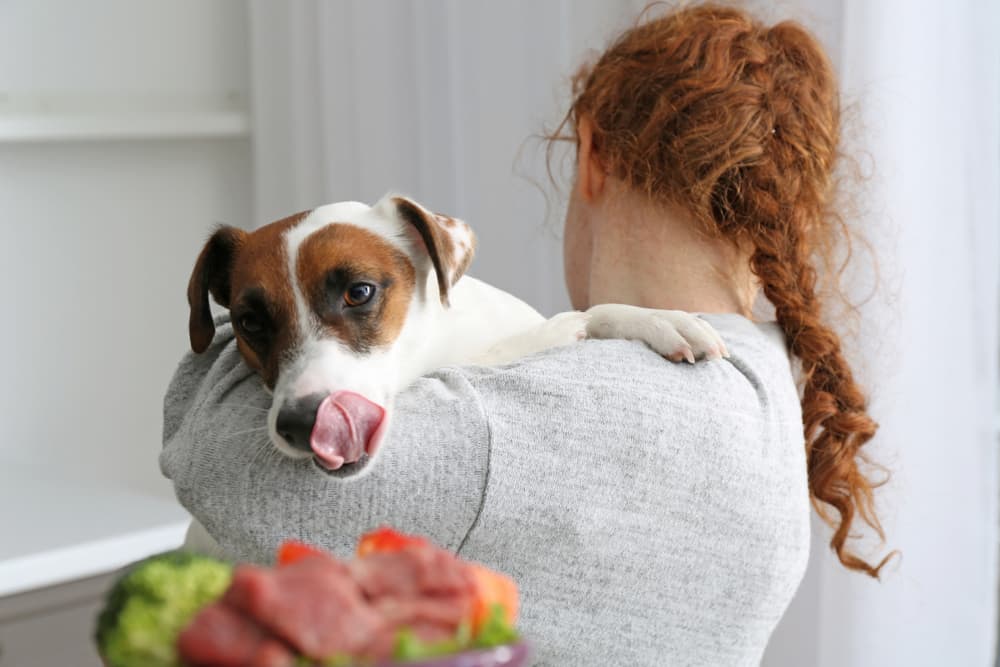
Fresh dog food is something millions of pet parents feed their pups every day. Whether fresh dog food is easy to digest is also something pet parents wonder. It’s a fair question, especially if you have a picky eater, a dog with a sensitive tummy, or simply want to understand what you’re feeding.
There’s no right or wrong answer about fresh dog food digestibility, but there are facts, looking at how fresh food is processed, what ingredients are included in recipes, and your individual dog’s dietary needs and requirements.
Fresh dog food tends to be gently cooked and contains significantly more moisture than kibble, which may support easier digestion for some dogs. However, it’s important to understand that fresh food is simply processed differently, and that difference can matter for certain pups while making little difference for others. Here’s everything you need to know about fresh dog food and whether it’s best for your dog’s digestive system.
All featured products are chosen at the discretion of the Vetstreet editorial team and do not reflect a direct endorsement by the author. However, Vetstreet may make a small affiliate commission if you click through and make a purchase.
What “Digestibility” Really Means for Dogs
Before taking a closer look at fresh food for dogs, it helps to understand what digestibility means. Just like people, digestibility in dogs refers to the amount of nutrients in your dog’s food that can be both absorbed and used by their body. If a food has higher digestible content, this means less waste comes out, and more functional nutrition stays in your dog’s system.
Many factors affect how well a dog digests food. Dog food processing plays a role, but so do fiber levels, dog food moisture, ingredient quality, age, health, and a dog’s unique microbiome. A young, energetic Labrador Retriever may digest kibble with no trouble, while a senior Chihuahua with dental issues may find the same food harder to chew. There is no single food that works perfectly for every dog, which is why digestibility should be assessed on a case-by-case basis.
How Fresh Dog Food Is Made
Understanding how fresh dog food is made is helpful when discussing dog food digestibility. Fresh dog food is typically prepared using gentle cooking methods rather than the high heat used in most dry dog food (kibble) production.
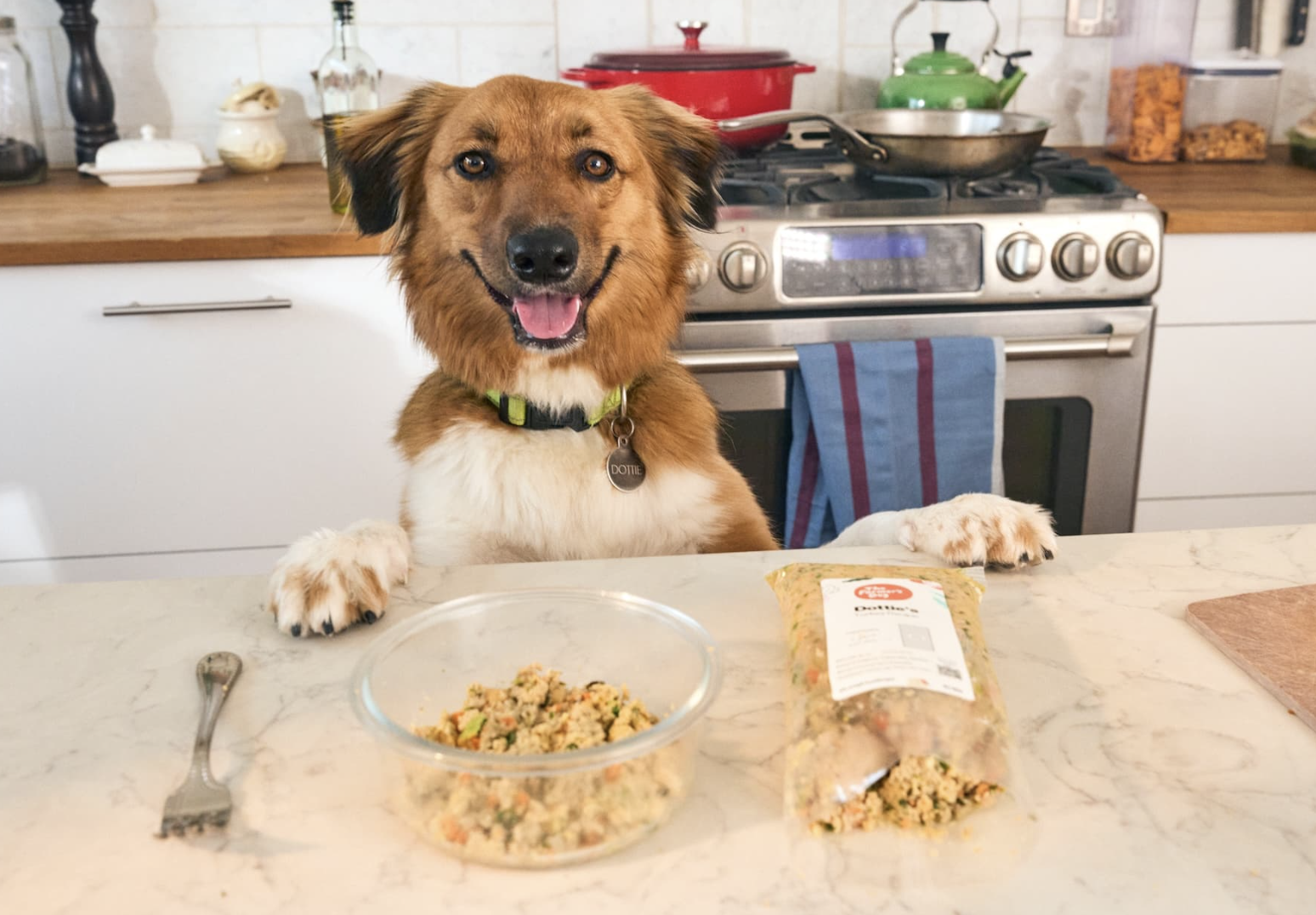
Fresh dog food is cooked at lower temperatures for shorter periods, similar to cooking a pot of food on your stovetop. Companies such as The Farmer’s Dog follow this approach by cooking ingredients just enough to ensure safety while keeping their natural textures, colors, and nutrients intact. Because the cooking temperatures are lower, fresh dog food holds much more moisture. Many gently cooked recipes contain about 60 to 70 percent water, while kibble often contains 10 percent or less.
This moisture helps the food stay soft and aromatic, and you can usually see the individual ingredients, including the proteins and vegetables. Since fresh dog food is not dried to be shelf-stable at room temperature, it must be kept in the refrigerator or freezer. This extra step is part of the trade-off of choosing a minimally processed, moisture-rich dog food.
How Kibble Is Made: Understanding Extrusion
All pet foods have their own unique processing methods, and kibble uses extrusion to produce what goes in your dog’s bowl. During extrusion, ingredients are ground, mixed into a dough, and then forced through a machine that uses high heat and pressure. This step breaks down starches so the kibble retains its shape and remains shelf-stable for extended periods.
Extrusion has important benefits. It helps make kibble safe by eliminating harmful bacteria and keeps the food affordable and convenient to store. The trade-off is that high heat removes most of the moisture and alters the food’s texture. Many quality kibble manufacturers add vitamin and mineral premixes after cooking to meet AAFCO nutrient standards and replace nutrients that may be reduced during processing.
Why Moisture Matters for Digestion
One of the most significant differences between fresh and dry dog food is moisture content, and this difference can genuinely impact dog food digestion. Fresh dog food contains between 60% and 70% moisture, while kibble typically contains around 10%. That extra water doesn’t just make the food softer; it can also support the entire digestive process.
Higher dog food moisture can help soften food in your dog’s stomach, potentially making it easier for digestive enzymes to break down proteins, fats, and carbohydrates. Moisture may also support nutrient absorption in dogs by facilitating their passage through the digestive tract. This can be particularly helpful for older dogs, those with dental issues who struggle to chew thoroughly, or picky eaters who are more attracted to aromatic, more appealing, softer foods.
That said, many dogs digest dry food perfectly well. Some pups drink plenty of water with their meals, and their bodies handle kibble without any issues. Every dog’s digestive system is different, which is why moisture content matters more for some dogs than others.
How Processing Influences Nutrient Absorption
The way dog food is processed affects more than texture. It also plays a role in how easily a dog’s body can access and absorb nutrients. Gently cooked dog food may retain more heat-sensitive nutrients that can be reduced during high-heat extrusion, and the softer consistency of fresh meals may be easier for some pups to break down.
It is also important to recognize that kibble manufacturers understand how extrusion affects nutrient content. High-quality dry foods are formulated with supplements added after cooking to ensure the final product is complete and balanced. Both fresh and extruded diets can meet AAFCO standards, but they do so through different processing methods.
The real question is not which approach is better overall, but which one works best for your individual dog. Some pups digest fresh food more comfortably, while others do very well on a high-quality kibble.
Scientific Insights on Digestibility Differences
The proof is in the pudding, or in this case, in the food bowl, when it comes to the digestibility of dog food. Peer-reviewed research suggests that fresh, lightly cooked foods have greater nutrient digestibility compared to extruded diets.
The Farmer’s Dog has conducted AAFCO feeding trials and long-term feeding studies, including work with Cornell University’s veterinary college, which support that their fresh food is complete, balanced, and well-tolerated.
At the same time, results vary widely across brands and formulations. A food that looks highly digestible in a controlled study may not work the same way for every pup at home. Real-world digestion is influenced by many factors, including your dog’s age, health, activity level, and unique microbiome.
The science offers helpful clues, but it also shows that digestibility is individual. One dog may thrive on a gently cooked meal, while another does best on a high-quality kibble. What matters most is how your own dog feels and functions on their chosen diet.
Benefits and Limitations of Fresh Dog Food for Digestion
Fresh dog food can offer digestive benefits for some pups because of the way it is cooked, how much moisture it contains, and how naturally it retains aroma and texture. At the same time, it is not the right fit for every dog or every household. Here is a balanced look at the benefits and limitations of fresh dog food for digestion.
Potential Benefits
- High moisture: Fresh meals typically contain much more water than kibble, which can support hydration and help food move more comfortably through the digestive tract.
- Soft texture: The gentle cooking process creates a softer consistency that may be easier for some dogs to chew and digest, especially seniors or pups with dental issues.
- Stronger aroma: Fresh food often smells more like real food, which can encourage appetite in picky eaters or dogs with reduced interest in meals.
- Potential for higher nutrient absorption: The simpler structure and gentle cooking process may help some dogs access and absorb nutrients more easily.
- Gentler for sensitive pups: Dogs with mild digestive sensitivities sometimes respond well to moisture-rich, minimally processed meals.
Limitations to Consider
- More expensive: Fresh dog food generally costs more than kibble, especially for large dogs or multi-dog homes.
- Requires refrigerator or freezer storage: Because it is not shelf-stable at room temperature, it must be kept cold and used within a specific timeframe.
- Not ideal for every medical condition: Some dogs need therapeutic or prescription diets that may not be available in fresh formats.
- Not automatically the best choice: Many dogs digest kibble perfectly well. Fresh food can be helpful for some pups, but it is not necessary or superior for all dogs.
How to Tell If Your Dog Might Digest Fresh Food Better
If only we had a crystal ball and could know if our dogs would thrive and digest fresh food better than kibble. Fortunately, there are a few signs that may help you decide if fresh food is the best option.
Improved stool quality is one of the most common indicators. Smaller, firmer, and less stinky stools often suggest that a dog is absorbing more nutrients and digesting food more comfortably. A stronger appetite, especially in dogs who were previously picky, can also show that the softer texture and natural aroma of fresh food are easier to eat and digest. Some pups experience fewer tummy upsets, such as occasional vomiting or loose stools, and others may have less gas or bloating.
These changes are highly individual. Some dogs show noticeable improvements when switched to gently cooked, moisture-rich meals, while others show little or no difference. A few dogs may seem better at first, only to develop issues later, which is why close observation is always important.
If you decide to try fresh food, such as The Farmer’s Dog, start by mixing a small amount of the new food with their current food and gradually increase the proportion over time. For example, begin with about 25 percent fresh food and 75 percent old food, then gradually increase the fresh food while decreasing the old food until your dog is eating 100 percent fresh meals. A gradual shift like this gives your dog’s digestive system time to adapt to the new diet and can reduce the risk of digestive upset during the transition.
FAQs
Not always. Fresh dog food is high in moisture and gently cooked, which may make digestion easier for some pups, but many dogs digest kibble without any problems. Digestibility depends on the individual dog’s age, health, and digestive system.
Fresh food is cooked without drying or extrusion, so it retains much of the water that naturally occurs in its ingredients. This extra moisture can help soften food in the stomach and may support smoother digestion for some dogs.
Gentle cooking uses lower temperatures, which can help preserve some heat-sensitive nutrients and create a softer structure that may be easier to break down. Still, both fresh food and high-quality kibble can meet AAFCO nutrient standards through different formulation methods.
Some dogs with mild digestive sensitivities may feel better on soft, high-moisture meals prepared simply. Dogs with ongoing or chronic gastrointestinal issues should always be evaluated by a veterinarian to rule out underlying conditions.
It depends on what works best for your pup. Look at appetite, stool quality, digestion, age, and overall comfort, along with what fits your lifestyle and budget. Any switch should be gradual, and dogs with medical needs may require guidance from a veterinarian or veterinary nutritionist.
Fresh Dog Food Digestibility Final Thoughts
Fresh dog food may be easier for some pups to digest because of its high moisture content, soft texture, and gentle cooking process, all of which can make nutrients easier for the body to access. These qualities can help dogs who struggle with traditional dry food. At the same time, many dogs digest high-quality kibble just fine, and plenty of pups live long, healthy lives eating it without any issues. Digestibility is individual and shaped by factors such as age, health, activity level, breed, and each dog’s unique digestive system.
The most important thing is choosing a diet that works well for your dog. Monitor stool quality, appetite, energy levels, coat condition, and overall comfort. Select the food that fits your dog’s needs as well as your lifestyle, budget, and preferences. Whether that is fresh food from a service such as The Farmer’s Dog, a thoughtfully formulated kibble, or a combination of both, the right choice is the one that keeps your dog happy, healthy, and thriving.