Understanding Dog Food Labels: Ingredients vs. Nutrition
Published on March 30, 2026

Reading dog food labels can feel like reading a foreign language, and you are not alone in that thought. Many pet parents feel overwhelmed when trying to interpret what the dog food labels actually mean in plain language.
Dog food labelling is a mix of regulatory compliance, nutritional analysis, ingredients, and marketing strategies to draw your attention to particular elements of the diet, whilst overlooking others. You need to learn how to look through the adverts and see the facts. By developing skills to understand the difference between the ingredients and nutritional analysis, you will choose the most appropriate diet for your dog.
Don’t forget – there is no single diet that will be perfect for all dogs, as each dog is different in their needs. Developing the skills to read dog food labels will help you choose the best diet for your dog’s individual circumstances.
All featured products are chosen at the discretion of the Vetstreet editorial team and do not reflect a direct endorsement by the author. However, Vetstreet may make a small affiliate commission if you click through and make a purchase.
Dog Food Label Basics: What Every Package Must Include
To ensure pet health and safety, dog food labelling is regulated by the FDA, which has legal authority to hold dog food manufacturers accountable for the safety and nutritional composition of their products. Most states use AAFCO (Association of American Feed Control Officials) standards as the minimum requirements in pet food regulations.
Dog food labels must contain:
- The species the food is made for (e.g., dog/canine)
- The weight of the bag in Kg
- The brand and product name
- Manufacturer or distributor information – their address and name
- A list of ingredients, starting with the heaviest
- Guaranteed analysis
- Calorie content statement
- Nutritional adequacy statement
- Feeding directions
These are present on dog food labels so that we can understand exactly what is in our dog’s food, down to the smallest added ingredient. This adds a level of safety, particularly if your dog has allergies or sensitivities, and consistency. We know that every bag of this brand’s dog food will meet the same nutritional standards and be of the same composition as the last bag.
By adhering to AAFCO standards, the dog food labels can help you to ensure the diet meets your dog’s nutritional needs. This information is in the ‘nutritional adequacy statement’. If it says ‘complete and balanced for…’ it confirms that the diet meets the minimum standards required to avoid malnutrition in a growing dog, an adult dog, or all life stages, depending on the statement. This is very important, given that malnutrition can have lifelong consequences for your dog.
Ingredients vs. Nutrition: What’s the Real Difference?
An ingredient list shows what’s in the recipe, in order of heaviest to lightest (before cooking). A long ingredient list doesn’t indicate whether the diet is good or bad, and the position of major ingredients can vary depending on their composition. For example, ‘chicken meal’ is dehydrated chicken – it’s going to be lighter than fresh chicken, so it might appear further down the ingredient list than you’d expect while still providing high-quality protein.
The ingredient list doesn’t give a full picture because the ingredients are just the vehicle we use to deliver nutrition. That’s why the guaranteed analysis is also an important part of the dog food label.
Understanding the Guaranteed Analysis
The guaranteed analysis lists key nutrients in a dog’s food, including protein, fat, moisture, and more. By labeling law, these values are shown as either minimums or maximums. For example, protein is listed as a minimum (the least amount you can expect), while moisture is listed as a maximum. This allows for some variation in recipes while still meeting Association of American Feed Control Officials (AAFCO) standards. Many commercial diets go beyond these minimum requirements.
Protein typically ranges from about 18% to 30% in adult dog foods. This number reflects the total nitrogen content, not the quality or digestibility of the protein itself.
Crude fat measures the total fat (lipid) content of the diet, with adult dog foods requiring a minimum of around 5.5%. Like protein, this value does not indicate fat quality or the types of fats included.
Moisture (water content) is listed as a maximum. Higher-moisture foods—such as fresh or wet diets—don’t have lower nutrient availability. Instead, nutrients are more diluted per gram due to the water content. When compared on a dry matter basis, nutrient levels can be very similar across different types of food.
Ash represents the total mineral content left after the food is burned, including minerals like calcium and phosphorus. It does not specifically measure bone content or determine overall diet quality but can give a general idea of total mineral levels.
The AAFCO Statement: What It Really Means
The AAFCO statement should tell you if the diet is suitable to be fed as a main source of food (‘complete and balanced’) or as a treat (‘supplemental’). The AAFCO statement will provide the intended lifestage, such as puppy or adult.
AAFCO does not test, regulate, or inspect – it provides optional standards that most states adhere to. The FDA (Food and Drug Administration) is responsible for enforcing food safety standards.
Dog Food Marketing Terms: What’s Regulated and What Isn’t
Pet food manufacturers want you to choose their product, so packaging and labels are designed to be as appealing as possible. When reading dog food labels, some terms are defined by regulations, while others are used more loosely in marketing.
Terms like “natural,” “grain-free,” and “human grade” do have definitions or guidance associated with them, but they can still be interpreted differently or used in ways that may not fully reflect ingredient quality or overall nutrition. This is why it is important not to rely solely on these terms, especially when choosing a diet for a dog with specific health needs.
What is strictly regulated is how ingredients appear in product names. For example, if “chicken” appears as the main product name, it must make up at least 95% of the formula, excluding water. If the label says “chicken dinner” or similar wording, the requirement drops to 25%. If it reads “dog food with chicken,” that “with” only requires about 3% chicken in the recipe.
Understanding Nutrition Beyond the Label
The label is the starting point in the journey of choosing dog food. There will be other words on the bag that provide further clues about the suitability of the diet for your dog.
Digestibility is a big consideration- the diet may be packed with calories and nutrients, but if your dog cannot break these calories down easily or readily, they pass through partially or completely undigested. If that’s the case, you’re paying a lot of money for most of the food to go unutilized by your dog. So, what affects digestibility?
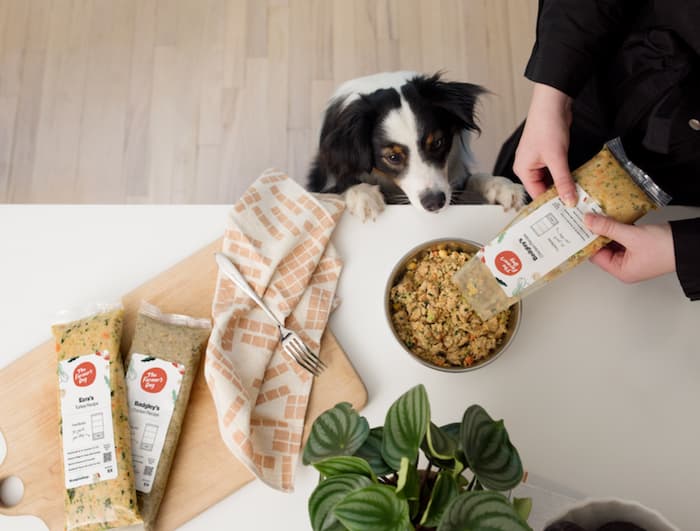
- How the diet is processed matters. Gently cooked foods, such as fresh diets like The Farmer’s Dog, tend to be easier for many dogs to digest and may offer higher nutrient availability compared to raw or heavily processed options.
- Both too little and too much fiber cause lower digestibility.
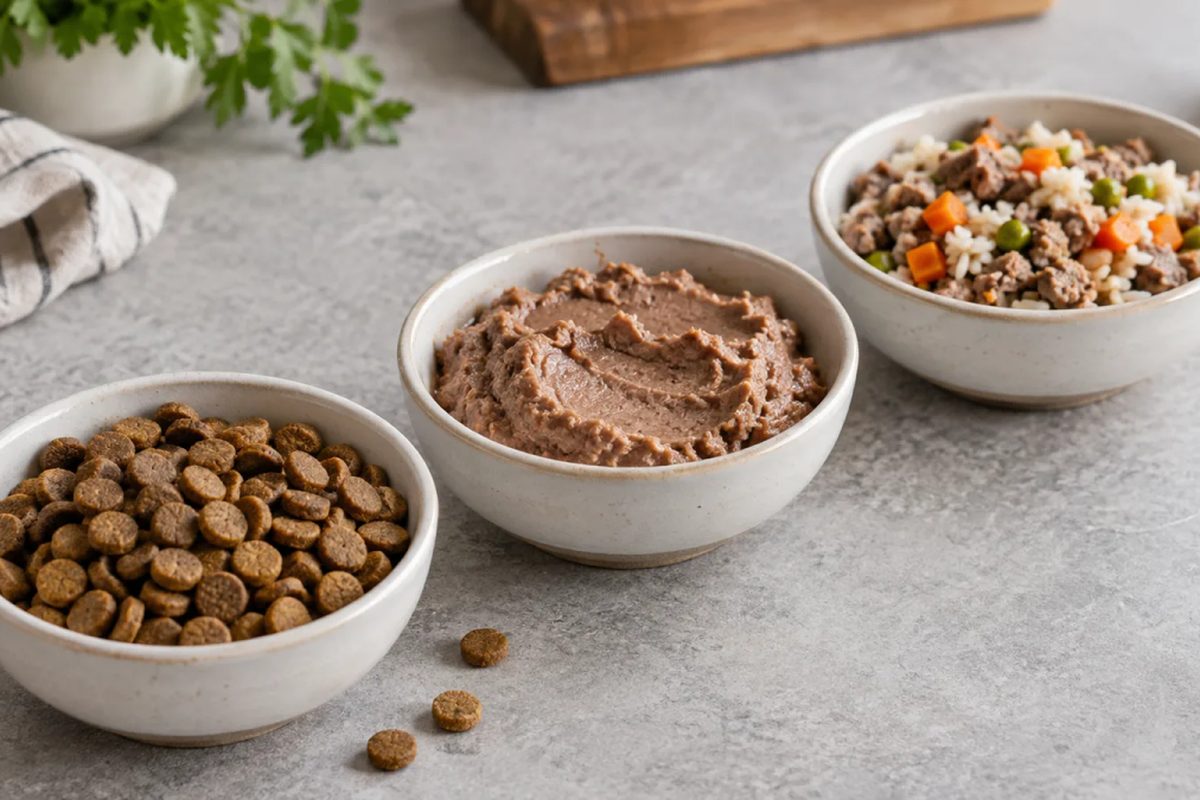
- The way the food is manufactured also affects digestibility. Kibble is a combination of ground-down and glued together ingredients, coated with flavourings. This can affect how much of the food’s nutrition remains after processing. This particular aspect is something you would never appreciate from reading the dog food label. By having an understanding of how your dog’s pet food is made, you can more readily choose the perfect diet for your dog.
Consider other factors such as a dog’s preferences (flavors, textures) or any health conditions they may have. Some dogs also prefer the aroma and texture of fresh, lightly cooked diets such as The Farmer’s Dog, which can make mealtime more appealing for picky eaters.”
You need to combine your knowledge of your dog’s criteria with the pet food labels to find the right food.
How to Compare Dog Foods Using the Label Alone
Look for the AAFCO statement. It will include one of two phrases. ‘Intermittent or supplemental’ means this food is not nutritionally balanced to sustain life and is made as a treat, snack, or meal topper, for example. If you feed products meant for intermittent or supplemental use, you will not meet your dog’s minimum needs for good health.
If the AAFCO statement reads ‘complete and balanced,’ it means that the diet is suitable for long-term feeding as the main source of energy. The diet will indicate whether the analysis was conducted by animal testing to AAFCO standards or based on laboratory analysis, which may affect your decision to purchase.
Then look at the levels of protein, fat, and moisture to see which is best to feed your dog, and whether it’s suitable for your dog’s life stage; for example, high fat content will not benefit senior dogs who are less active than younger dogs.
If the nutritional makeup is adequate, check the ingredients to see if there are any byproducts or ingredients that are hard to digest and utilize, such as collagen (found in animal cartilage)
Fresh food companies like The Farmer’s Dog make it easy to view ingredient sourcing, cooking methods, and nutrient testing directly on their website, which can help pet parents compare options more clearly.
Check who makes the diet, whether you can contact them easily, and whether they have a qualified nutritionist. These can give you confidence that the company is committed to helping pet owners find the right diet for their pet.
FAQs
The dog food label should provide all the information you need to understand the nutritional information, ingredient composition, and regulatory details of the dog food. It’s a summary of what is in the bag, and if it meets the AAFCO dog food statement we mentioned previously.
Because there are lots of ingredients in most dog diets! The ingredient list is by weight, starting with the heaviest, and is the pre-cooked weight. Some of these ingredients are vitamins or fiber sources, which your dog needs for their overall health.
This is the confirmation that the diet contains the levels of protein, fat, fiber, and moisture written on the bag. It’s useful to compare diets using the guaranteed analysis based on dry matter to see which one best suits your dog’s needs.
Complete and balanced is a phrase used by the AAFCO standards to ensure that the diet meets your pet’s minimum nutritional needs and avoids malnutrition. The complete and balanced diet will be designed for a specific life stage, such as puppies or senior dogs.
Look for the words ‘complete and balanced’ on the AAFCO statement. Then check the nutrient profile and ingredients to see if it fits your dog’s dietary requirements. Finally, look for the quality of the ingredients to choose the best diet for your dog.
Yes. Fresh, gently cooked dog foods such as The Farmer’s Dog must still meet the same FDA and AAFCO labeling and nutritional standards as kibble and canned foods. The difference is primarily in the cooking method and moisture content, not the regulatory oversight.

Final Thoughts on a Dog Food Label
After reading this article, you have all the skills needed to choose the right diet for your dog. It can feel overwhelming, but breaking your thought process into a few simple steps makes it more manageable.
Whilst dog food labels are a great starting point, they focus on the minimum requirements; look at the wider picture as well, such as the type or source of ingredients. The thought of feeding bone meal to your dog may make your stomach turn, so considering the quality of the ingredients and the digestibility of the diet is another important step in the decision-making process.
Choosing your dog’s diet will involve decisions about lifestyle, taste preferences, medical conditions, and cost. There will be a diet available that meets all of your dog’s needs; it may just take time to find it.