How to Prepare The Honest Kitchen Dog Food: A Step-by-Step Guide
Published on September 16, 2026
This article is sponsored by The Honest Kitchen. Vetstreet maintains editorial control and uses current product information plus independent pet-nutrition and veterinary sources. Vetstreet may earn a commission if you purchase through links in this article.
If you are learning how to prepare The Honest Kitchen dog food, the essential routine is simple: identify the exact product, measure its label-directed amount, add the label-directed amount of warm water, stir, wait three minutes, check the serving temperature, and feed. What changes across the lineup is the ratio and nutritional role. A complete Wholemade recipe, a base mix, a topper, and a broth are not interchangeable, so there is no responsible universal food-to-water ratio for every The Honest Kitchen product.
The label is your working recipe. Use its feeding chart for your dog’s weight and life stage, its water directions, and its storage instructions. This guide explains how to turn those product-specific numbers into a repeatable routine without guessing.
Key Takeaways
- Check whether your product is a complete recipe, base mix, topper, or supplement before measuring it.
- Copy the dry-food and water amounts from that product’s current package. Do not reuse a ratio from a different THK recipe.
- The shared method for Wholemade dehydrated foods is measure, add warm water, stir, wait three minutes, check, and serve.
- Transition gradually over 7 to 10 days and monitor appetite, stool, and comfort.
- Refrigerate prepared food promptly and use it within the current THK guidance of 3 to 4 days.
- When using THK as a topper or in mixed feeding, adjust the rest of the meal so daily calories remain appropriate.
Before You Start: Identify Your Product and Gather What You Need
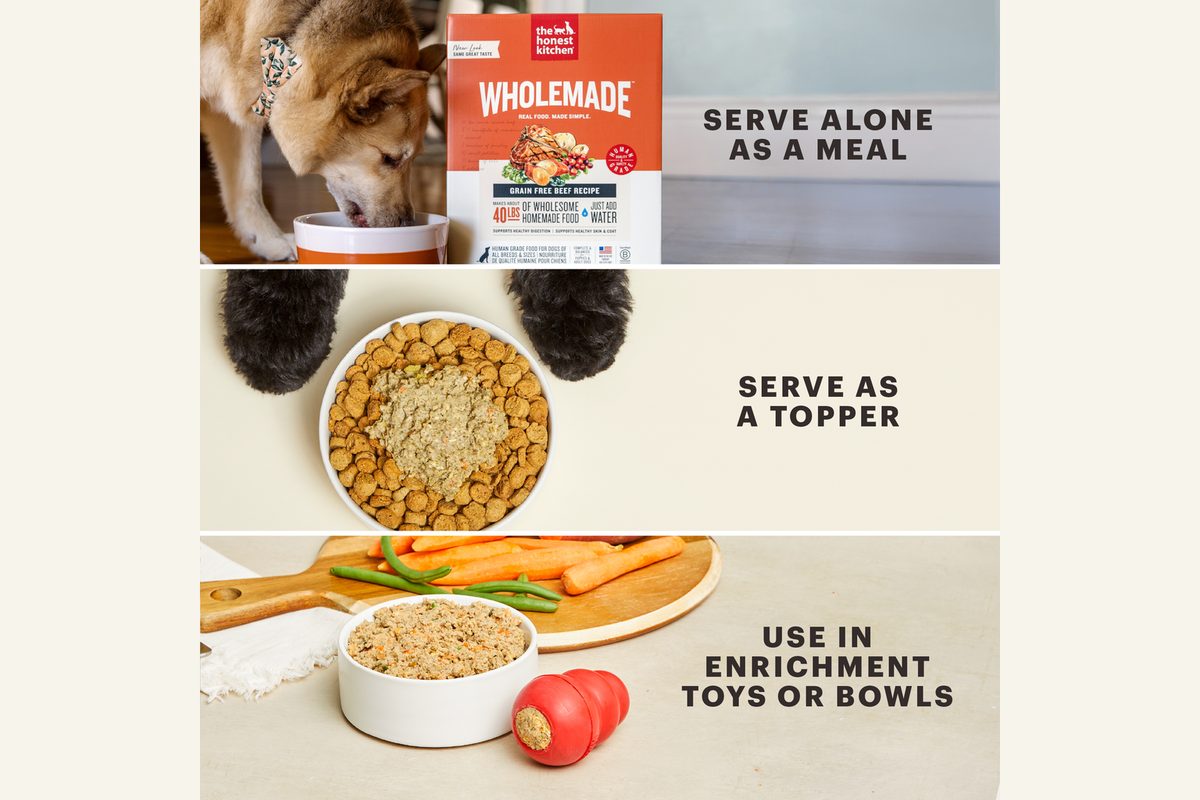
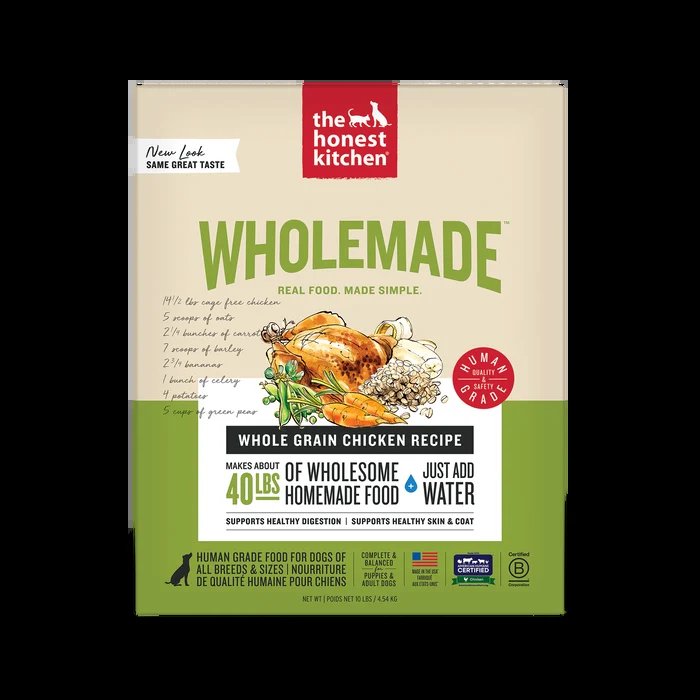
Start with the front and back of the package, not a ratio remembered from another bag, an old review, or a social post. The Honest Kitchen sells several food formats with different jobs. A complete recipe is designed to provide daily nutrition when its current nutritional adequacy statement fits the dog. A base mix requires the additions specified on its label. A topper or broth supplements another food. These distinctions determine what you measure and whether the product can be the whole meal.
The The Honest Kitchen dehydrated dog food guide gives the shared Wholemade preparation sequence, while individual product pages and packages provide recipe-specific feeding amounts. For example, Wholemade Whole Grain Chicken and Wholemade Grain Free Turkey are separate recipes. Even when the method looks alike, owners should verify each package rather than assuming the numbers match.
| Product role | What to confirm on the label | How it fits the bowl | Main preparation risk to avoid |
|---|---|---|---|
| Complete dehydrated recipe | Nutritional adequacy, life stage, feeding chart, food-to-water ratio | May serve as the full meal when appropriate for the dog | Using another recipe’s ratio or ignoring calorie needs |
| Base mix | Required fresh-protein or other additions, amounts, adequacy instructions | Becomes a meal only when prepared exactly as directed | Serving the dry base alone as though it were complete |
| Topper | Serving limit, calories, storage, supplemental statement | Adds flavor, texture, or variety to a complete base food | Adding it without reducing other calories when needed |
| Broth or supplement | Mixing directions, body-weight guidance, supplemental statement | Adds moisture or aroma in a limited amount | Substituting it for food or applying the ratio to dehydrated meals |
Gather these items before you open the package:
- The current THK package and its measuring scoop, if supplied
- A clean, dry measuring cup or scoop that matches the label units
- A separate liquid measure
- A clean bowl large enough for stirring and expansion
- Warm water
- A spoon or food-safe utensil
- A timer
- A refrigerator-safe covered container if preparing extra portions
- Your dog’s current daily feeding plan and any veterinary instructions
Wash your hands and use clean equipment. Keep the dry package away from splashes so moisture does not enter the stored food. If multiple dogs eat different recipes, prepare and label one bowl at a time to prevent mix-ups.
A quick product-role decision tree
Ask the questions in this order:
- Does the package say the product is complete and balanced for my dog’s life stage? If yes, use that formula’s full-meal chart when feeding it as the diet.
- Does it call itself a base mix and tell me to add meat or other ingredients? If yes, follow every addition and quantity on that label.
- Does it say topper, broth, supplement, or intermittent or supplemental feeding? If yes, keep a complete-and-balanced food as the nutritional base.
- Has my veterinarian prescribed a calorie target or therapeutic food? If yes, confirm how the THK product fits before changing the plan.
The FDA’s guide to complete and balanced pet food explains why the nutritional adequacy statement matters. Ingredient quality, brand familiarity, and a wholesome appearance do not replace that statement.
Step 1: Measure the Dry Food
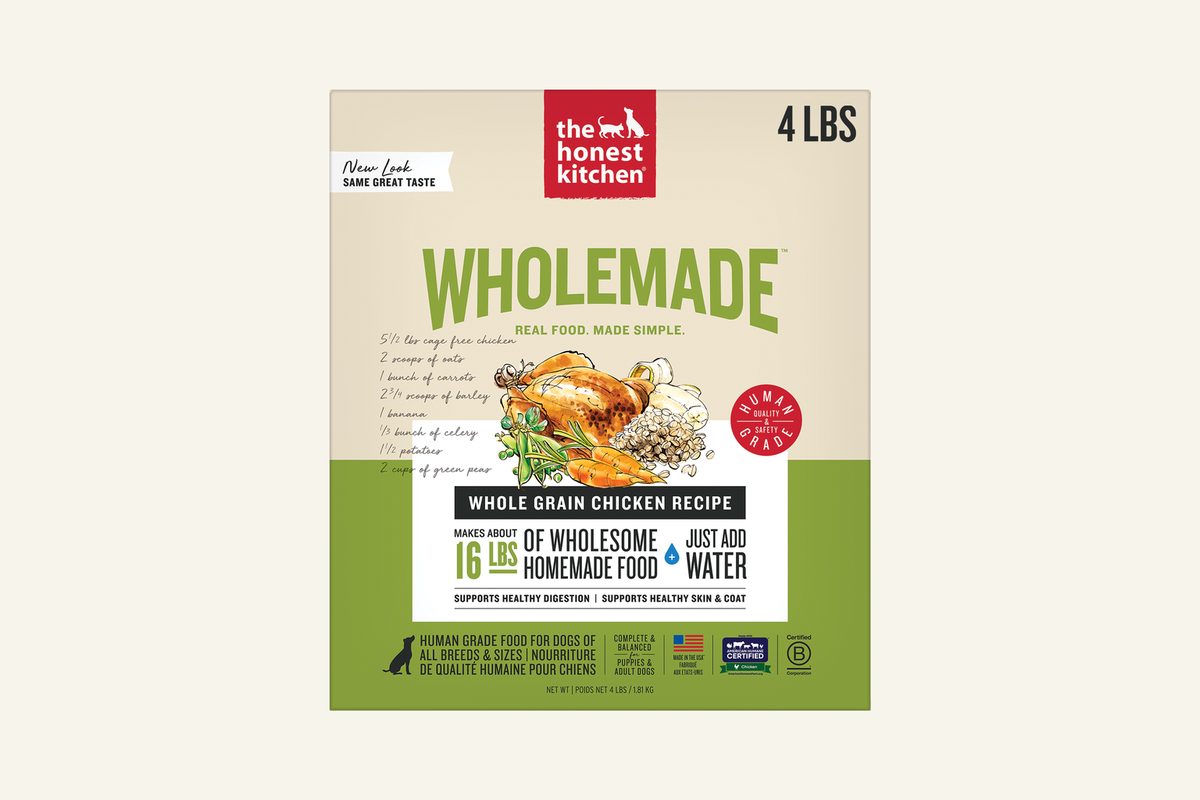
Read the feeding chart for your dog’s current weight and the way you plan to use the product. A full-meal amount is not the same as a topper portion. Puppies, adults, seniors, active dogs, less active dogs, and dogs that need weight adjustment may require different amounts, so the chart is a starting point rather than permission to ignore body condition.
Place the bowl on a stable surface. Level the dry measuring cup instead of packing it tightly or leaving a tall mound. If the package includes a scoop, confirm what volume that scoop represents. “One scoop” is not meaningful if the scoop came from another product or is filled inconsistently.
Write down the package numbers: Record “dry food: ___” and “warm water: ___” for the exact recipe before pouring. This two-line check prevents the most common preparation mistake, which is using a remembered ratio from a different product.
Make the measurement repeatable
Use the same dry measure at each meal and decide what “level” looks like. If several family members feed the dog, post the current dry amount and water amount near the food bin with the product name and date. Replace that note when a new formula or revised package enters the house.
Do not prepare from a detached online feeding chart when the current package provides different directions. Packaging controls because formulas, density, and serving guidance can change. If the package is damaged or the directions are unreadable, check the current official product page and contact The Honest Kitchen before guessing.
Calorie needs can change over time. Weigh the dog periodically and assess body condition with the veterinary team. If weight trends up or down, do not change water while leaving the dry calories unexamined. Water changes texture and volume but does not reduce the calories already measured into the bowl.
A printable preparation record
Copy this information from the current package:
- Product name: __________
- Product role: complete recipe / base mix / topper / supplement
- Dog’s weight and life stage: __________
- Dry amount per meal: __________
- Warm-water amount per meal: __________
- Wait time: three minutes unless the current label says otherwise
- Meals per day: __________
- Transition day and percentage: __________
- Date directions were checked: __________
That short record is more useful than a universal ratio because it remains tied to the actual formula being fed.
Step 2: Add the Label-Directed Amount of Warm Water
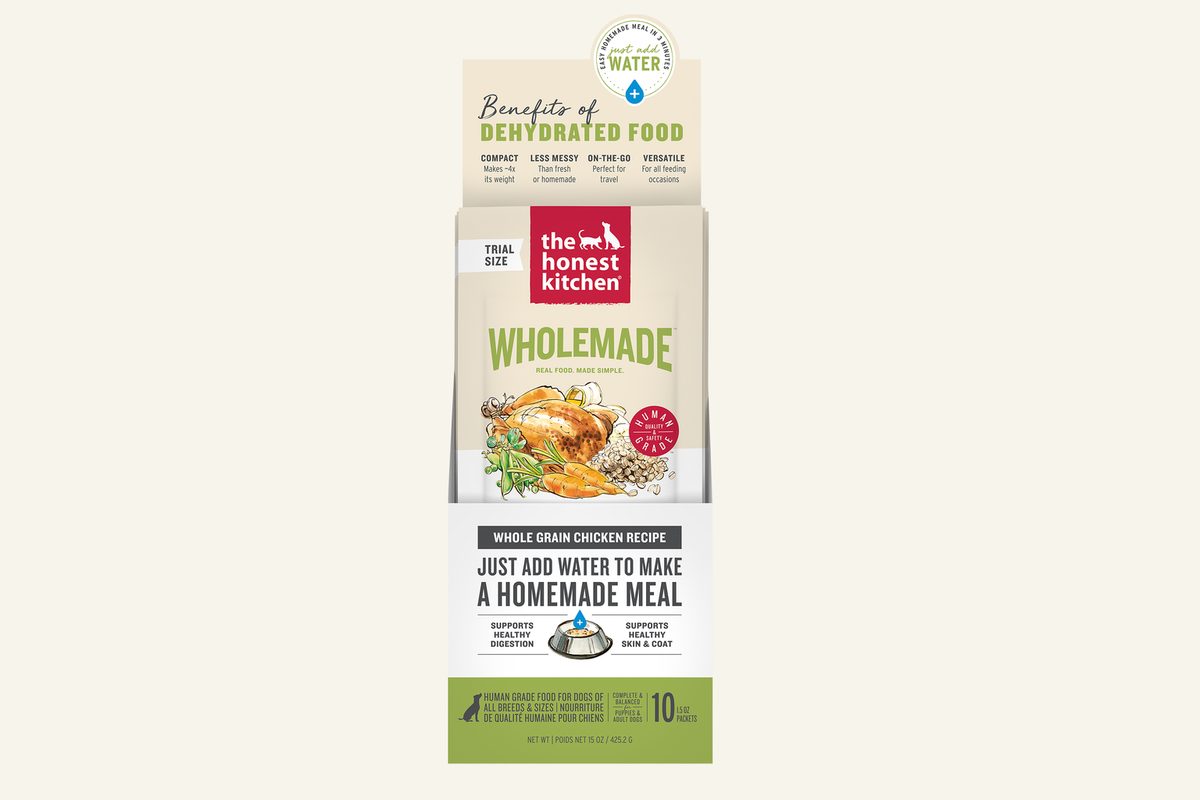
Measure water separately rather than holding the bowl under a faucet and estimating. Add the amount printed for the exact recipe and dry-food quantity. The goal is consistent preparation, not a particular appearance borrowed from a photograph.
Use warm water, not boiling water. Warm water helps the dry pieces hydrate and creates an inviting serving temperature after the wait. Very hot water can create burn risk and makes it harder to judge when the food is ready. Cold water may be less effective for the intended quick preparation and can leave the meal cool or unevenly hydrated. Follow the package if it gives more specific temperature direction.
| Situation | Correct response | What not to do |
|---|---|---|
| Starting a new bag of the same recipe | Recheck the package chart and ratio | Assume the directions never change |
| Switching to another Wholemade recipe | Copy the new recipe’s own food and water amounts | Reuse the prior bag’s ratio from memory |
| Feeding as a topper | Use the label’s topper direction and account for calories | Prepare a full-meal portion and add it on top |
| Preparing a base mix | Add every required ingredient in the stated amount | Treat the dry base as a complete diet by itself |
| Meal looks thicker than expected | Confirm both measurements, stir, wait, then use label-supported adjustment | Pour in a large unmeasured amount of water immediately |
| Dog needs a veterinary fluid or calorie plan | Ask the veterinarian how this recipe fits | Change concentration or meal size without guidance |
Why one ratio cannot cover the lineup
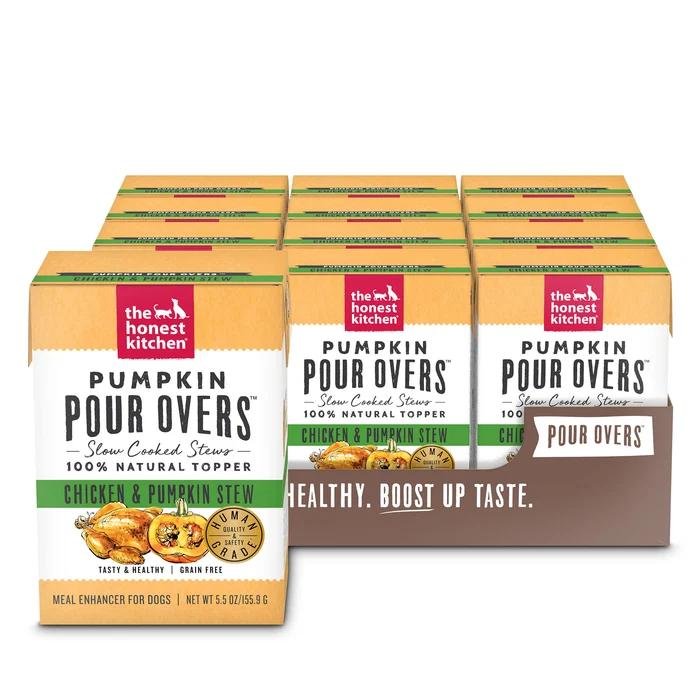
Dehydrated products differ in ingredients, particle size, density, intended role, and feeding instructions. A ratio suitable for a complete chicken recipe may not apply to a grain-free turkey recipe, base mix, Pour Over, or instant broth. Repeating one number across every THK product would sound convenient but could produce the wrong texture, calories, or nutritional result.
The reliable method is therefore label specific and process consistent. The numbers come from the product. The process stays: measure, add warm water, stir, wait, check, and serve.
Transition table for 7 to 10 days
The Honest Kitchen recommends a gradual transition over 7 to 10 days. The exact pace can vary with the individual dog, so use this as an observation framework rather than a rigid medical schedule:
| Early days | Mostly former food with a small, properly prepared THK portion | Appetite, stool consistency, gas, vomiting, comfort |
| Middle days | Gradually increase THK while decreasing the former food | Whether digestion remains stable as the share changes |
| Later days | Move toward the intended THK share if the dog is doing well | Body weight, meal enthusiasm, bowel pattern, total calories |
| Any day with a concern | Pause the increase and contact the veterinarian when appropriate | Persistent diarrhea, repeated vomiting, pain, marked lethargy, refusal to eat |
Keep the total meal appropriate while changing proportions. Adding the new food on top of the full old amount can overfeed the dog and makes the transition percentages meaningless.
Step 3: Stir and Wait Three Minutes

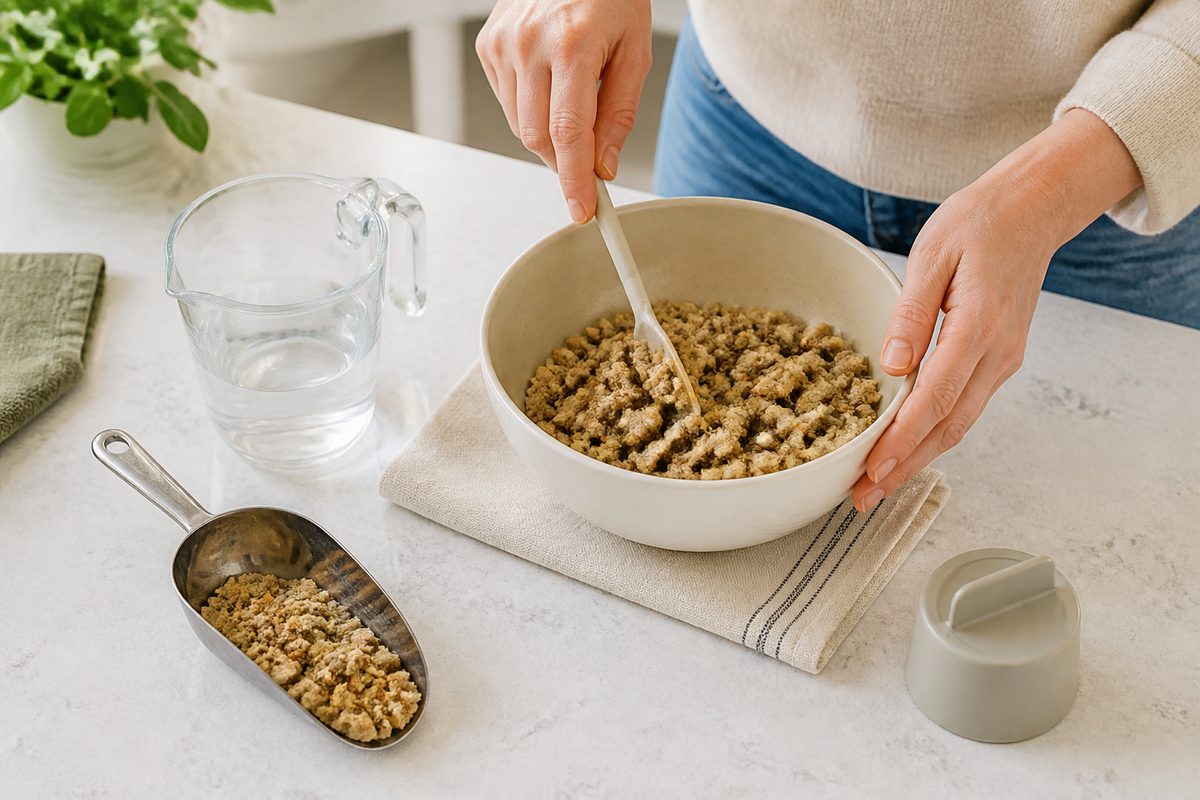
Stir thoroughly so water reaches the food evenly. Scrape the sides and bottom of the bowl, breaking up dry pockets. Then set a timer for three minutes, following THK’s general dehydrated-food direction. The wait allows the dry ingredients to absorb water and settle into the intended soft texture.
Use the waiting time to put the dry food away, seal the package, and clean the measuring tools. Do not let the dog crowd the bowl, especially if the water was warmer than expected. Keep prepared food away from children and other pets that may receive a different diet.
After three minutes, stir again. Look for dry clumps. The meal may be thicker or looser depending on the exact formula and measurements. A dog’s texture preference can sometimes be accommodated within the product’s directions, but first verify that the starting quantities were accurate.
Troubleshooting texture without losing control
| Too thick | Were both measures level and correct for this recipe? | Stir fully and consult the current label for permitted adjustment |
| Too thin | Was too much water poured or too little dry food measured? | Allow the full wait; do not add unmeasured dry food that changes calories |
| Dry pockets | Was the bowl large enough and stirred from the bottom? | Stir more thoroughly and break up clumps |
| Too hot | Was the water hotter than warm? | Wait until the meal is comfortably safe; never serve to save time |
| Dog refuses the texture | Is the transition moving too fast or the texture unfamiliar? | Slow the transition and ask the veterinarian about persistent refusal |
| Digestive upset | Was the portion or transition increased abruptly? | Pause further increases and seek veterinary guidance for persistent or severe signs |
| Extra prepared food | Can it be chilled promptly in a covered container? | Refrigerate and label it; discard mishandled or spoiled food |
Do not add broth, treats, oils, meat, or toppers automatically when the dog hesitates. Each extra changes calories and may mask whether the dog dislikes the new texture or is experiencing an appetite problem. A sudden refusal of food, especially with vomiting, lethargy, pain, or weight loss, warrants veterinary attention rather than increasingly elaborate toppings.
Step 4: Check Texture and Temperature, Then Serve
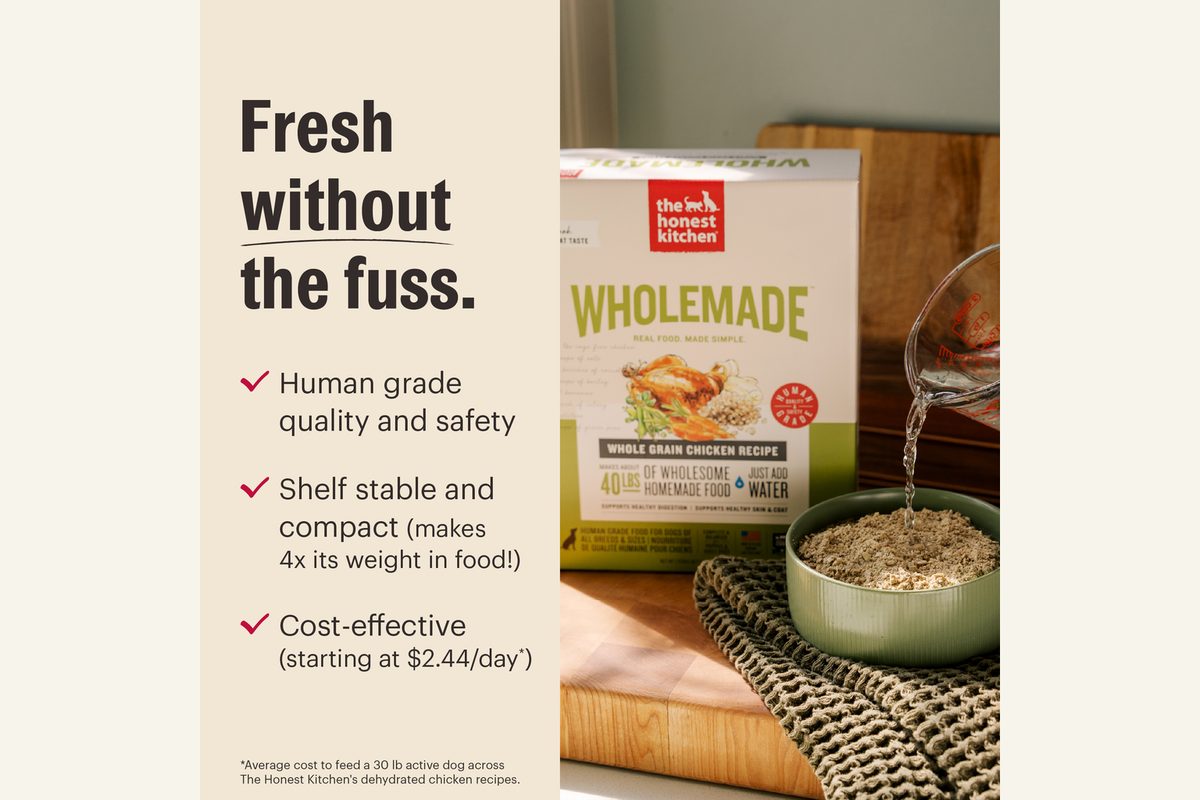
Stir once more and test the temperature before setting down the bowl. The food should be comfortable to eat, with no hot spots. Use a clean utensil or an appropriate touch test rather than assuming the center matches the surface.
Serve the measured portion in the dog’s normal clean bowl. Observe the first few meals instead of walking away immediately. You are looking for comfortable eating, no gulping problem created by a changed texture, and normal behavior afterward. Pick up uneaten prepared food rather than leaving a moist meal at room temperature for an extended period.
If the dog does not finish, note how much remained. Regularly measuring food and leftovers gives better information than repeatedly topping off the bowl. It can reveal whether the planned amount is too large, the transition is too fast, or appetite has changed.
Mixed feeding and topper math
When THK is added to another food, the added portion brings calories. The practical rule is replacement, not automatic addition. Decide how much of the existing food the THK portion replaces, using calorie information and veterinary guidance where needed.
For example, if a dog already receives its full daily calories from kibble, adding a prepared THK portion every day without reducing kibble can create gradual overfeeding. Water makes the THK serving look larger, but the dry measure determines most of its calories. Track the dry amount, not just the final bowl volume.
The WSAVA guide to selecting pet food encourages owners to consider nutritional adequacy, feeding directions, calorie content, quality-control information, and the individual animal rather than judging a diet on marketing language alone.
Keep the calorie center visible: If prepared THK is a topper, record the dry THK amount and the amount of the former food removed. The water adds volume and moisture, but it does not erase the topper’s calories.
How to Transition Over 7 to 10 Days
A gradual transition gives the digestive system time to adapt and lets the owner see how the dog responds. Start with a small share of properly prepared THK and a larger share of the current food. Across 7 to 10 days, increase THK while decreasing the former food if stool, appetite, and comfort remain normal.
The pace does not need to be identical for every dog. Dogs with sensitive digestion, a history of food reactions, or a veterinary condition may need a customized plan. A dog that develops repeated vomiting, persistent diarrhea, abdominal pain, marked lethargy, or refusal to eat should be assessed rather than pushed through the schedule.
Keep other variables steady during the transition. Avoid introducing several new treats and supplements at the same time. If a sign appears, fewer simultaneous changes make it easier for the veterinary team to interpret.
Do not use transition percentages as a substitute for correct preparation. Every THK portion in the mixture should still be measured, hydrated, and waited according to its package.
Build a routine that works on ordinary days
A preparation method is only useful if the household can repeat it on a rushed weekday. Keep the current bag, dry measure, liquid measure, and written ratio together. Choose one safe place for the three-minute wait so the bowl is not confused with another pet’s meal. Set a phone timer rather than estimating while doing something else.
For multi-person households, assign each part of the routine a visible cue. A card can list the product name, dry amount, water amount, and meals per day. A second line can state whether the portion is a full meal or a topper. When one person feeds the dog, that person marks the meal as given. This helps prevent doubled meals and prevents a topper portion from quietly growing when several people add “just a little.”
Travel requires the same discipline. Premeasure the dry food into clearly labeled, sealed meal portions while preserving access to the original package information. Bring an accurate liquid measure rather than guessing from a hotel cup. Confirm that warm, potable water and refrigeration for leftovers will be available. If those conditions are not practical, contact The Honest Kitchen before travel for product-specific guidance instead of altering the ratio.
Batch preparation can save time, but it also creates a larger food-safety responsibility. Calculate the total from the package one meal at a time, prepare with clean equipment, divide promptly into covered meal-size containers, and mark the preparation date. Do not keep adding newly prepared food to a container holding an older batch. When in doubt about cooling, refrigerator temperature, or handling, prepare one meal at a time.
Adjust the plan when the dog changes
The package chart cannot see the individual dog. Revisit the amount when body weight, activity, reproductive status, health, or the proportion of mixed feeding changes. A measured routine makes those adjustments easier because the veterinary team can work from real quantities rather than “about a scoop.” Bring the package name, feeding chart, dry amount, meal frequency, treats, toppers, and recent weight trend to the discussion.
A puppy should not simply receive an adult plan scaled down by appearance. Growth has specific nutritional requirements, and the current adequacy statement must support the puppy’s life stage and anticipated adult size. Similarly, a senior label or senior marketing language does not automatically make a recipe appropriate for every older dog. Health status, body condition, dental comfort, kidney function, and other needs may influence the veterinary recommendation.
Dogs with food sensitivities need ingredient control as well as preparation control. Use separate clean utensils, avoid unplanned toppers, and retain the full package so ingredient questions can be checked. If the dog is undergoing a veterinary elimination diet trial, adding another THK recipe or broth can compromise the trial even if it seems simple.
For dogs that eat too quickly, hydration changes meal texture but is not a complete behavior plan. Ask the veterinarian about an appropriate bowl, portion pattern, or feeding strategy. Do not make the food extremely thin or thick without confirming that the change fits the product directions and the dog’s swallowing needs.
Verify the routine once a month
Compare the household’s current scoop, water amount, and meal frequency with the package. Portions can creep upward, and a familiar ratio can survive after a formula changes. Relevel the measure, rewrite the feeding card, and check body weight and condition.
Inventory toppers, treats, chews, and supplements at the same time. A properly prepared complete meal can still become calorie heavy when daily extras go uncounted. If the dog regularly leaves food, measure leftovers before changing the recipe or adding another topper.
Retain the original package and lot information. If a bag has an unexpected odor, appearance, or texture, pause and contact The Honest Kitchen rather than hiding the change with additions. For vomiting, persistent diarrhea, pain, lethargy, or refusal to eat, contact the veterinarian.
Make changes one field at a time
When the dog needs a different portion, change the dry amount using calorie and veterinary guidance, then recalculate the label-directed water for that serving. Do not alter dry food, water, meal frequency, and toppers simultaneously. One controlled change makes the result easier to interpret.
If a new bag has updated directions, treat the package as a new instruction set. Replace the feeding card, tell every caregiver, and supervise the first prepared meal. The familiar brand name is not permission to use old numbers.
For mixed feeding, record both foods in actual units. “Half and half” can refer to bowl volume, calories, or dry measures and produce different meals. Write the amount of each product and the THK water separately.
How to Use THK as a Topper or in Mixed Feeding
First identify whether the product’s label supports topper use. Then use the topper serving rather than the full-meal chart. Mix it consistently through the base food if the goal is aroma and texture, or serve it in the way the package directs.
Maintain nutritional balance by keeping supplemental products to a limited share of intake. The base should remain a complete-and-balanced food unless a veterinarian has formulated another plan. A base mix is a special case because it may become complete only after the specified additions are made.
For weight management, ask the veterinary team for a daily calorie target and allocate the THK portion within it. For a dog that is underweight, highly active, pregnant, nursing, growing, or medically complex, do not apply an average adult portion without professional guidance.
Mixed feeding can be practical for households that want the moisture and soft texture of a hydrated food while keeping part of an existing routine. Its success depends on measured portions. “A little extra” at every meal can become a meaningful weekly calorie increase.
Storage, Leftovers, and Troubleshooting
Store the dry product sealed in a cool, dry place according to the package. Keep it in its original packaging when possible so the lot code, best-by date, ingredient list, feeding chart, and product identity stay together. If you use a secondary bin, place the intact bag inside rather than pouring food loose into a container that may retain old residue.
The FDA’s pet food storage guidance recommends clean, dry handling and retaining product information. Wash and dry scoops and containers before refilling. Keep the food away from moisture and pests.
THK’s current general guidance says prepared dehydrated food can be refrigerated for 3 to 4 days. Move extra food into a covered refrigerator container promptly and label the date. Use clean utensils to remove portions. Discard food that has been left out too long, smells off, shows mold, or has an unexpected change in appearance.
Common preparation questions at a glance
- The food is too thick: Verify the recipe, dry amount, and water amount. Stir fully and follow label-supported adjustments.
- The food is too thin: Wait the full three minutes. Next time, measure rather than pouring from the tap.
- The dog will not eat it: Check temperature, transition pace, and overall health. Do not cover a sudden appetite problem with unlimited extras.
- Stool became loose: Pause further transition increases, review portions, and contact the veterinarian if signs persist or are severe.
- You prepared too much: Refrigerate promptly within the label window or discard if mishandled.
- You changed formulas: Treat the new recipe as new instructions. Recheck both the ratio and transition needs.
- The feeding chart seems inconsistent with veterinary advice: Follow the individualized veterinary plan and ask how to adapt the product safely.
Frequently Asked Questions
Use the amount printed for the exact product and dry-food serving you are preparing. THK recipes, base mixes, toppers, and broths do not share one universal ratio. Copy the current package numbers before each formula change.
The Honest Kitchen’s general dehydrated-food method says to stir and wait three minutes. Recheck the package in hand in case that product gives different directions, then confirm the meal is evenly hydrated and safe in temperature.
Warm water is the brand’s general direction. Boiling or very hot water can create burn risk, while cold water may not produce the intended quick hydration and serving temperature. Follow any more specific instruction on the package.
Current THK general guidance says 3 to 4 days when the prepared food is refrigerated promptly and handled cleanly. The package controls. Discard food with spoilage signs or food that was left out unsafely.
Prepare dehydrated food according to its current label rather than assuming dry feeding is appropriate. Rehydration is part of the standard Wholemade method. If you need a dry-serving option for travel or another reason, ask The Honest Kitchen or your veterinarian about the exact product.
Gradually increase properly prepared THK while decreasing the former food over 7 to 10 days, provided the dog remains comfortable. Slow down and seek veterinary advice if persistent digestive or appetite concerns appear.
The Bottom Line
Preparing The Honest Kitchen dog food is easy once the product-specific numbers are separated from the shared routine. The package tells you what the product is, how much dry food to use, and how much water belongs with that serving. The repeatable method is to measure, add warm water, stir, wait three minutes, check, and serve.
That label-first habit also protects the bigger feeding plan. It keeps complete recipes distinct from base mixes and supplements, supports a gradual transition, makes mixed-feeding calories visible, and helps prepared food stay safe in storage. When a dog’s medical needs or appetite complicate the process, the veterinarian should guide the adjustment rather than a guessed ratio.