Best Dog Food for Picky Eaters: What Actually Works
Published on September 16, 2026
This article is sponsored by The Honest Kitchen. Vetstreet maintains editorial control and uses current product information plus independent pet-nutrition and veterinary sources. Vetstreet may earn a commission if you purchase through links in this article.
The best dog food for picky eaters is a complete-and-balanced food the dog will eat consistently, in a texture and routine that fit the household. For a dog with a long history of preferences but normal weight, energy, and veterinary exams, gentle warming, added moisture, scheduled meals, and a controlled topper can make food more appealing. For a dog that suddenly refuses food, seems painful, has trouble chewing, vomits, has diarrhea, loses weight, or acts lethargic, the first step is veterinary care, not a more tempting recipe.
The Honest Kitchen offers several useful tools within that framework. A current Wholemade recipe can be the complete-meal anchor. Bone Broth Pour Overs can add moisture and aroma. Meal Booster 99% Beef offers a simple protein topper, while Pumpkin Pour Overs provide another supplemental texture. The key is to give each product the job its label supports and keep toppers limited enough that they do not displace balanced nutrition.
Key Takeaways
- Separate established preference from a sudden appetite change before shopping for another food.
- Use a complete-and-balanced food as the nutritional center of the plan.
- Warmth, moisture, aroma, texture, a quiet feeding area, and a predictable schedule can support interest.
- Keep treats, toppers, and table food to about 10% or less of daily calories unless a veterinarian directs otherwise.
- THK Wholemade can anchor the meal, while Pour Overs and Meal Booster products add controlled moisture, aroma, or protein variety.
- No food can be promised to “fix” picky eating, and persistent or concerning refusal needs veterinary evaluation.
First: Is Your Dog Picky or Is Something Wrong?
“Picky” describes behavior, not a diagnosis. Some healthy dogs have stable texture or flavor preferences and maintain weight while declining less-favored meals. A new decrease in intake can reflect dental pain, difficulty chewing or swallowing, nausea, gastrointestinal disease, medication effects, stress, pain elsewhere in the body, or systemic illness.
The VCA guide to anorexia in dogs distinguishes true loss of appetite from situations in which a dog wants food but has difficulty picking it up, chewing, or swallowing. That distinction changes the response. A dog who approaches the bowl and backs away may not be expressing a flavor opinion.
| Pattern | What it may look like | Appropriate first response | Do not assume |
|---|---|---|---|
| Long-standing preference | Normal energy and weight; eats favored complete foods | Review routine, calories, texture, and veterinary history | The dog needs endless new foods |
| Sudden refusal | Previously ate normally, now skips meals | Contact the veterinarian based on timing and other signs | A topper will solve it |
| Mouth or chewing problem | Approaches food, drops it, chews one-sided, drools | Prompt oral and veterinary evaluation | The dog dislikes the flavor |
| Nausea or GI concern | Lip licking, swallowing, vomiting, diarrhea, grass eating | Veterinary guidance, especially if persistent | Hunger will make the dog eat |
| Pain or systemic illness | Lethargy, hiding, altered posture, weight loss, feverish behavior | Veterinary examination | The issue is behavioral |
| Stress or environment | Eats elsewhere, appears vigilant, avoids noisy area | Reduce stress while monitoring intake | All appetite changes are harmless |
Review the timeline
Ask when the pattern began. A dog that has preferred soft food for years but remains healthy presents a different problem from one that refused breakfast today after eating normally yesterday. Note recent dental work, medication changes, boarding, travel, household changes, heat, pain, vomiting, stool changes, toxin exposure, and access to garbage or foreign objects.
Observe what happens at the bowl
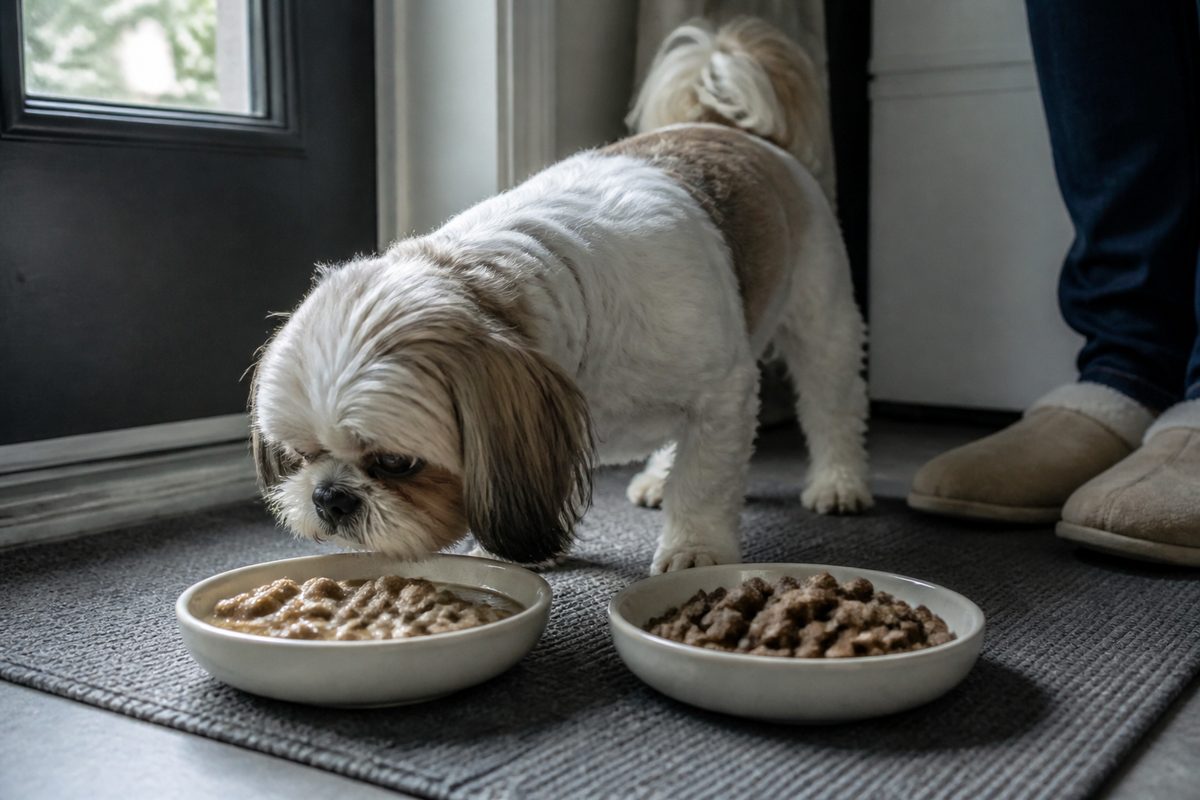
Watch without pressuring the dog. Does the dog approach eagerly, sniff, lick, and walk away? Pick up food and drop it? Chew on one side? Swallow repeatedly? Seem interested in treats but not meals? Refuse even favorite foods? These patterns are more informative than the label “fussy.”
Check actual intake and weight
Owners may report that a dog “barely eats” while treats, chews, table food, and another pet’s bowl supply many calories. Measure all intake for several days. Conversely, a full-looking bowl does not prove the dog ate enough. Weigh leftovers and monitor body weight when possible.
Red flags that move this out of the food-selection lane
Seek veterinary advice promptly for sudden refusal, lethargy, repeated vomiting, persistent diarrhea, pain, trouble chewing or swallowing, abdominal swelling, weight loss, or an appetite change lasting more than a day. The AAHA overview of common pain signs notes changes in appetite, posture, movement, and behavior as possible indicators.
Puppies, toy breeds vulnerable to low blood sugar, pregnant or nursing dogs, seniors, and dogs with diabetes or other illness may need help sooner. If toxin exposure, a swallowed object, bloat, or severe illness is possible, seek urgent care.
Preference can still deserve investigation
A long-standing pattern is not automatically harmless. Dental disease, chronic nausea, overfeeding, anxiety, or learned meal negotiation can persist. Bring the full feeding history to wellness visits: exact food, daily amount, treats, supplements, table scraps, meal timing, leftovers, and weight trend.
What Makes a Food More Appealing to Picky Dogs?
Dogs evaluate food through aroma, temperature, texture, familiarity, and the context in which it appears. Changing one of those factors can increase interest without launching a cycle of constant recipe switching.
Aroma
Warm food releases more aroma than refrigerator-cold food. Rehydrated foods and broths can distribute scent through the bowl. Use warm rather than hot food and test temperature before serving. Stronger aroma can invite a healthy hesitant dog, but it cannot distinguish preference from nausea.
Moisture
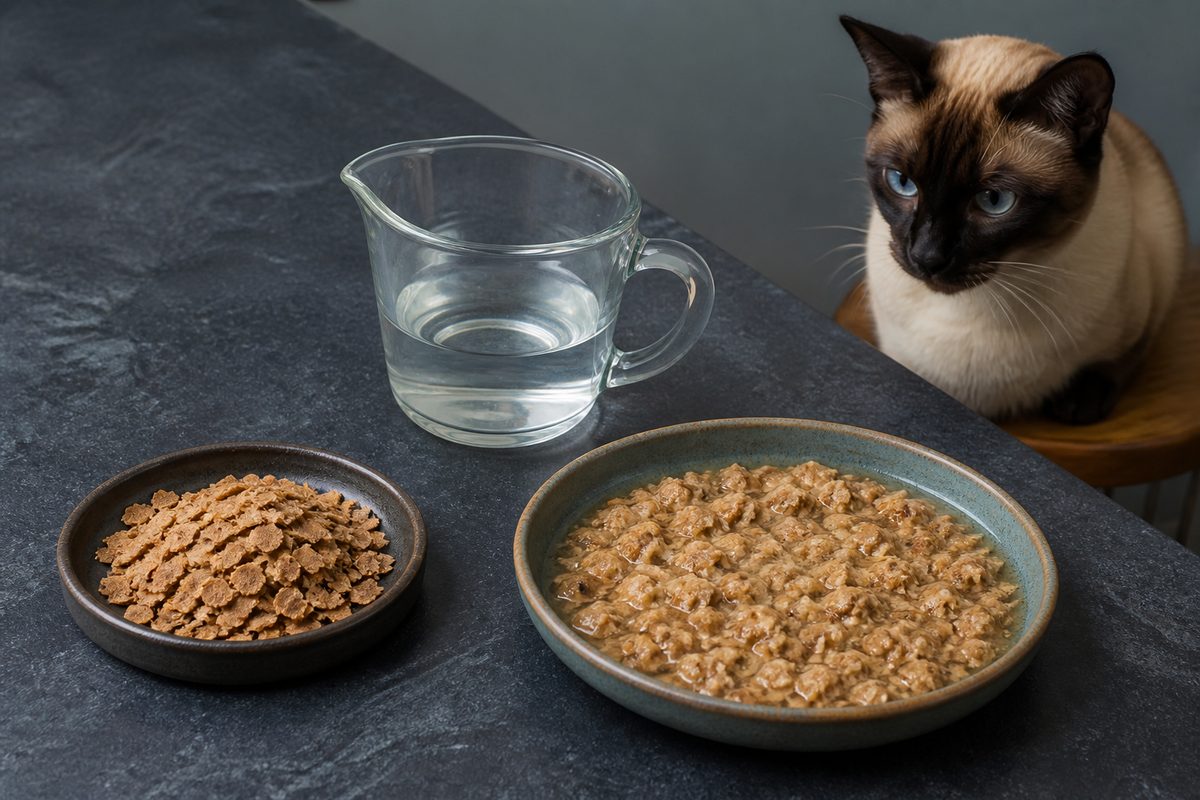
Moisture changes mouthfeel and can carry aroma. A measured Pour Over or properly rehydrated complete food can soften a meal. Water or dog-safe broth should be added in a controlled way so calories and nutritional role stay clear.
Texture
Some dogs prefer a soft mash, others like small pieces, and some seek crunch. Dental comfort and swallowing ability influence texture. If preference changes suddenly or chewing looks abnormal, investigate the mouth rather than repeatedly blending food.
Temperature
Food near a comfortable body-like warmth may smell more noticeable. Avoid microwaved hot spots. Stir thoroughly and test. If reheating refrigerated prepared food, follow safe handling and discard windows.
Routine and environment
A quiet location, clean bowl, predictable mealtime, and enough separation from other pets can help. Some dogs are distracted or intimidated near a noisy appliance, busy doorway, or faster housemate. Move the bowl before changing the food.
Hunger and calorie accounting
A dog receiving substantial treats may not be hungry at mealtime. Total calories matter more than the owner’s impression of meal size. Reducing unplanned extras can restore a normal appetite without changing the complete food.
Protect the nutritional center: Make one controlled appeal change at a time while keeping a complete-and-balanced food at the center. If every refusal triggers a richer extra, the dog learns to wait and the diet becomes harder to balance.
A food-appeal matrix
| Lever | Low-risk test | What to monitor | Main boundary |
|---|---|---|---|
| Aroma | Warm the meal gently or add a measured dog-specific topper | Approach and actual intake | Do not mask sudden appetite loss |
| Moisture | Rehydrate as directed or add a measured Pour Over | Stool, calories, acceptance | Supplemental product is not a meal |
| Texture | Offer a small soft portion beside familiar food | Chewing, swallowing, preference | Investigate pain or dysphagia |
| Environment | Quiet room, clean bowl, pet separation | Stress and completion | Keep medical monitoring active |
| Schedule | Offer measured meals at consistent times | Hunger pattern and leftovers | Do not starve a sick dog into eating |
| Variety | Rotate only among appropriate foods in a planned way | Whether novelty effect lasts | Constant switching can worsen selectivity |
Change one variable at a time
If you warm the meal, add a topper, change the bowl, and switch locations simultaneously, you cannot tell what helped. Use a three-day observation window for a medically stable dog unless the veterinarian advises otherwise. Record the variable, portion, and result.
Keep a preference map
List accepted and rejected characteristics without turning them into rigid rules:
- Warm versus room temperature
- Dry versus soft
- Smooth versus chunky
- Strong versus mild aroma
- Deep bowl versus flat plate
- Quiet room versus shared area
- Morning versus evening appetite
This map helps choose a format without rotating through ingredients unnecessarily. It can also reveal a medical clue, such as a new preference for soft food when chewing hurts.
Best Complete-Meal Option: The Honest Kitchen Wholemade

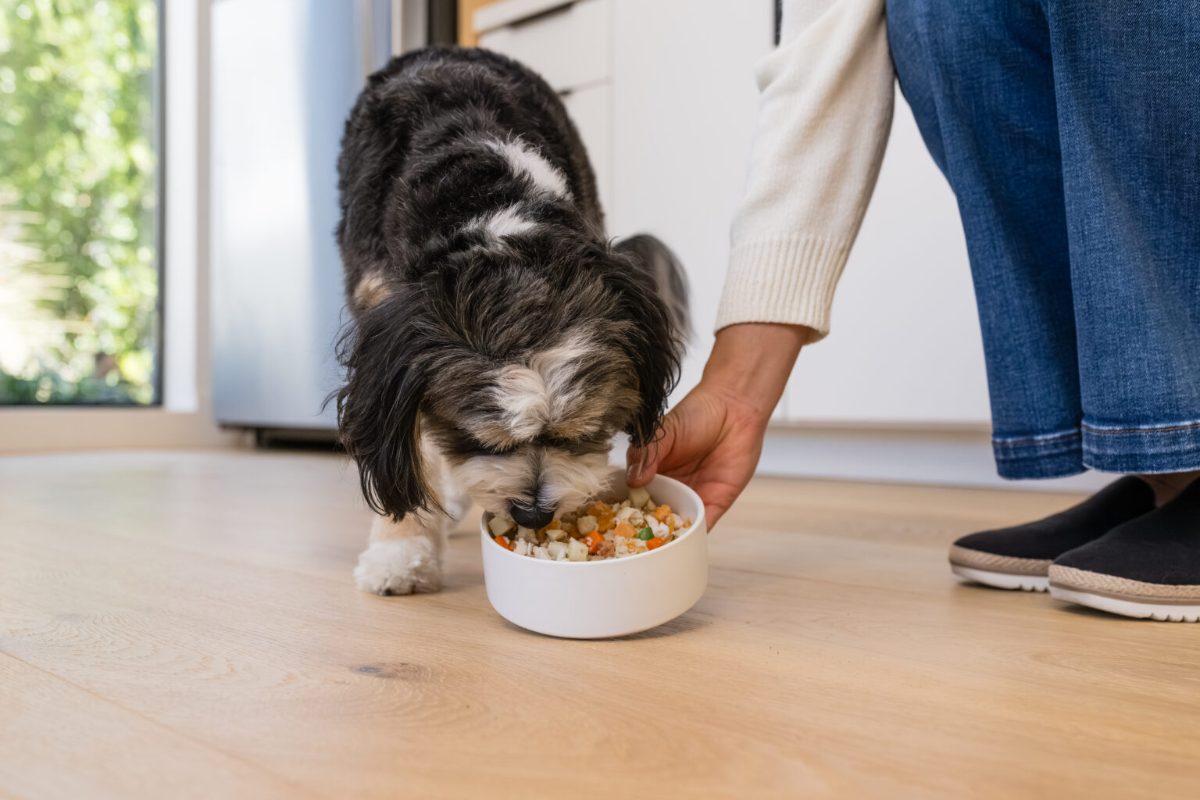
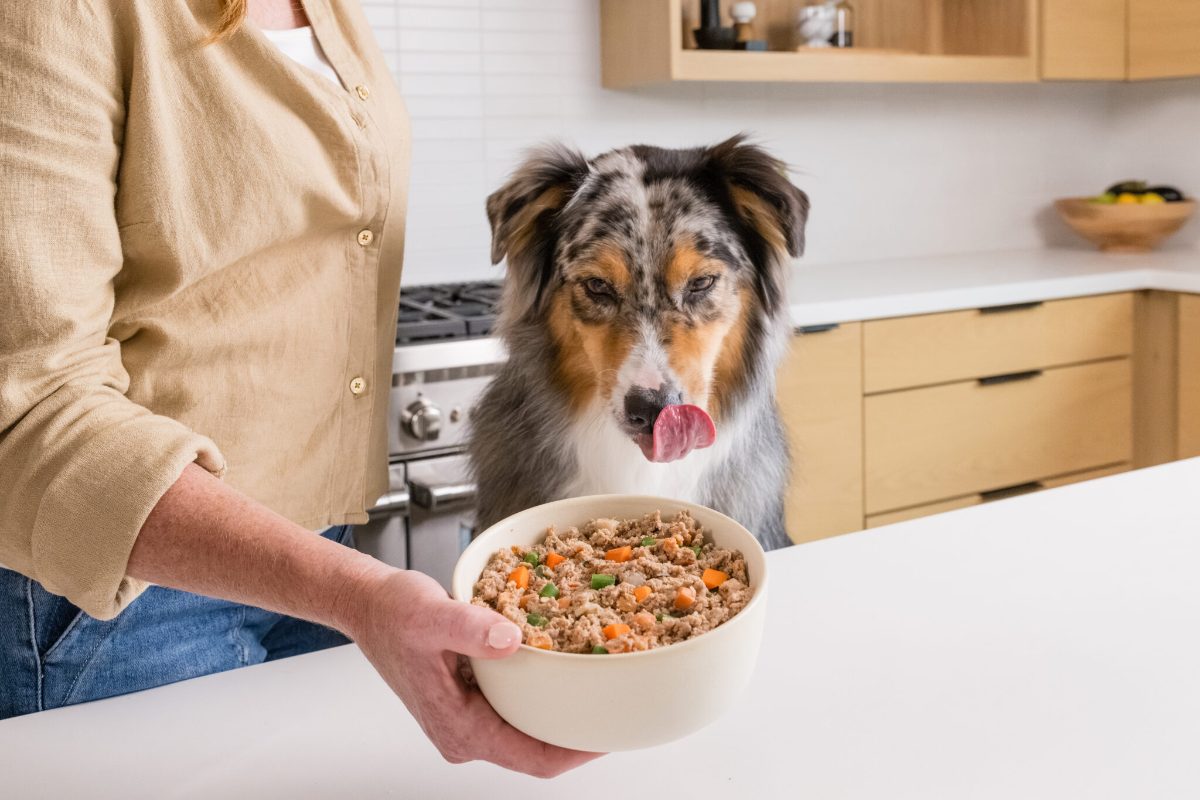
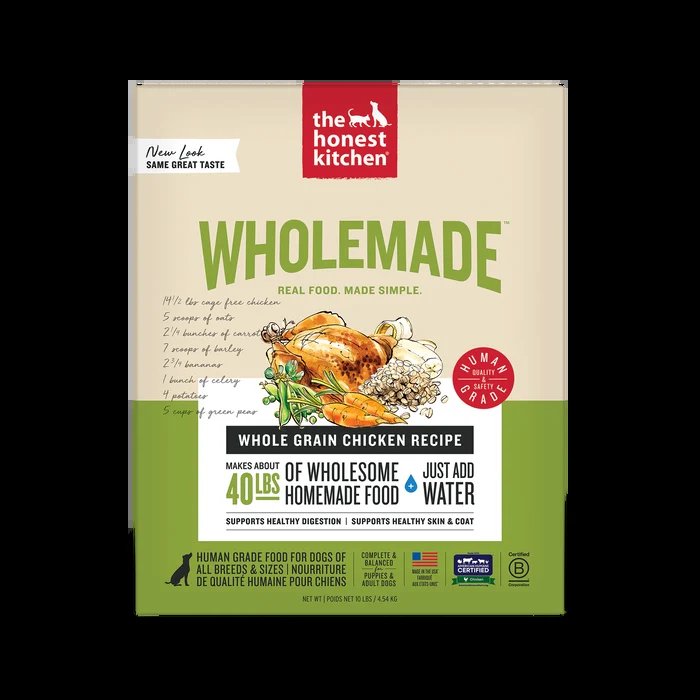
A picky-eater plan works best when the main food carries the nutritional load. The Honest Kitchen Wholemade Whole Grain Chicken is a useful anchor because it is prepared with warm water into a soft, aromatic meal and can serve as a complete recipe when its current adequacy statement and life stage fit the dog.
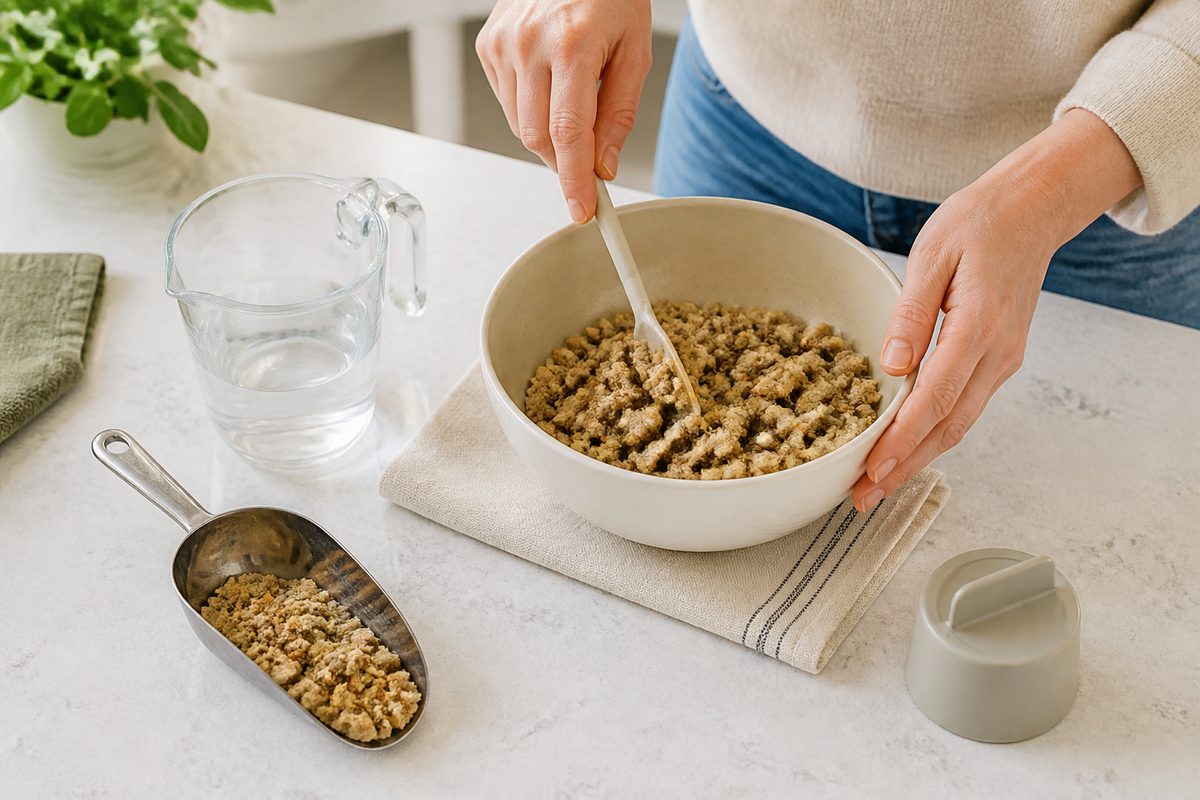
THK’s general method is to measure the recipe-specific dry amount, add the recipe-specific warm-water amount, stir, wait three minutes, and serve. The brand recommends transitioning over 7 to 10 days. Warm-water preparation changes aroma and texture without requiring an owner to build the diet from toppers.
| Decision factor | Why Wholemade may help | Check before feeding |
|---|---|---|
| Nutritional center | Current complete recipe can anchor the meal | Exact adequacy statement and life stage |
| Aroma | Warm-water preparation releases scent | Sudden appetite loss still needs evaluation |
| Texture | Soft rehydrated consistency differs from kibble | Dog must chew and swallow comfortably |
| Moisture | Water is added to the meal | Fresh water remains necessary |
| Routine | Measure, stir, wait three minutes, serve | Every caregiver must use the same ratio |
| Flexibility | Label may support meal or topper use | Portion must match the chosen role |
| Calories | Dry measure makes intake trackable | Adjust to weight and body-condition goal |
Why complete food comes before toppers
Toppers are useful because they are concentrated in aroma, moisture, or protein. Those same strengths can displace the main food if used freely. Beginning with a complete meal lets the owner ask whether preparation temperature, texture, schedule, or transition solves the problem before layering extras.
Introduce Wholemade without creating another aversion
Prepare a small portion accurately. Offer it beside or mixed with familiar food according to the dog’s response. Increase gradually. Do not place a large unfamiliar bowl in front of a hesitant dog and remove all alternatives for a prolonged period.
If the dog eats the familiar food but avoids every trace of the new food, slow down. If the dog refuses both or develops concerning signs, restore safe intake and consult the veterinarian. A successful transition prioritizes adequate nutrition over speed.
Who may benefit from this format
- Healthy dogs with stable but strong texture preferences
- Dogs that prefer warm, soft meals
- Owners who want a complete food rather than a topper-built diet
- Households able to measure and refrigerate prepared portions
- Mixed-feeding households that can calculate replacement calories
Who needs another plan first
- Dogs with sudden appetite change
- Dogs with mouth pain, swallowing trouble, vomiting, diarrhea, or weight loss
- Dogs on therapeutic diets
- Dogs avoiding chicken or another listed ingredient
- Puppies or medically complex seniors without adequacy review
- Households that cannot consistently prepare or store moist food
Portion and value
The hydrated bowl looks larger than the dry measure because water adds volume. Use dry-food calories to guide the portion. Calculate cost by days per package at the dog’s actual amount, not by comparing the dry package weight with wet or kibble formats.
What a successful fit looks like
Success means the dog consumes an appropriate amount without escalating extras, maintains a healthy weight, has acceptable stool, and fits the household routine. It does not require dramatic claims about energy, coat, digestion, or health. Those outcomes have many influences and should not be attributed casually to one food.
Best Moisture and Aroma Boost: The Honest Kitchen Pour Overs
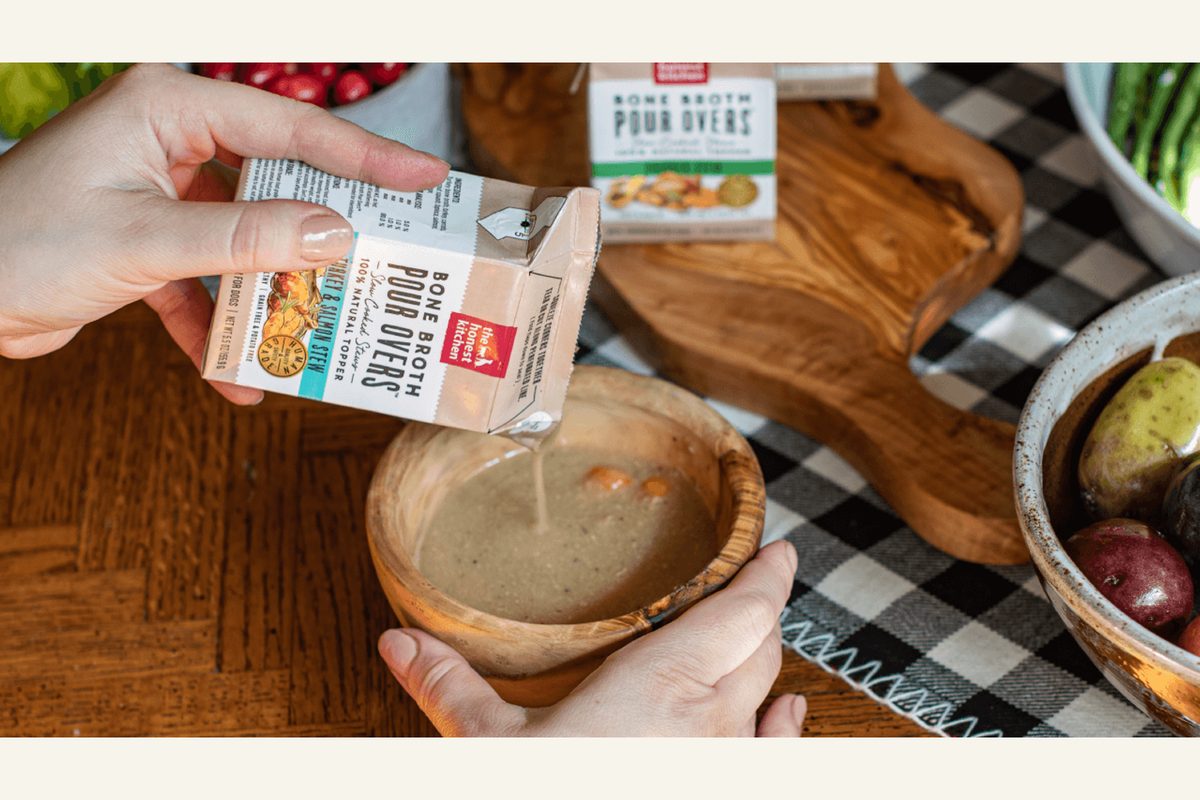
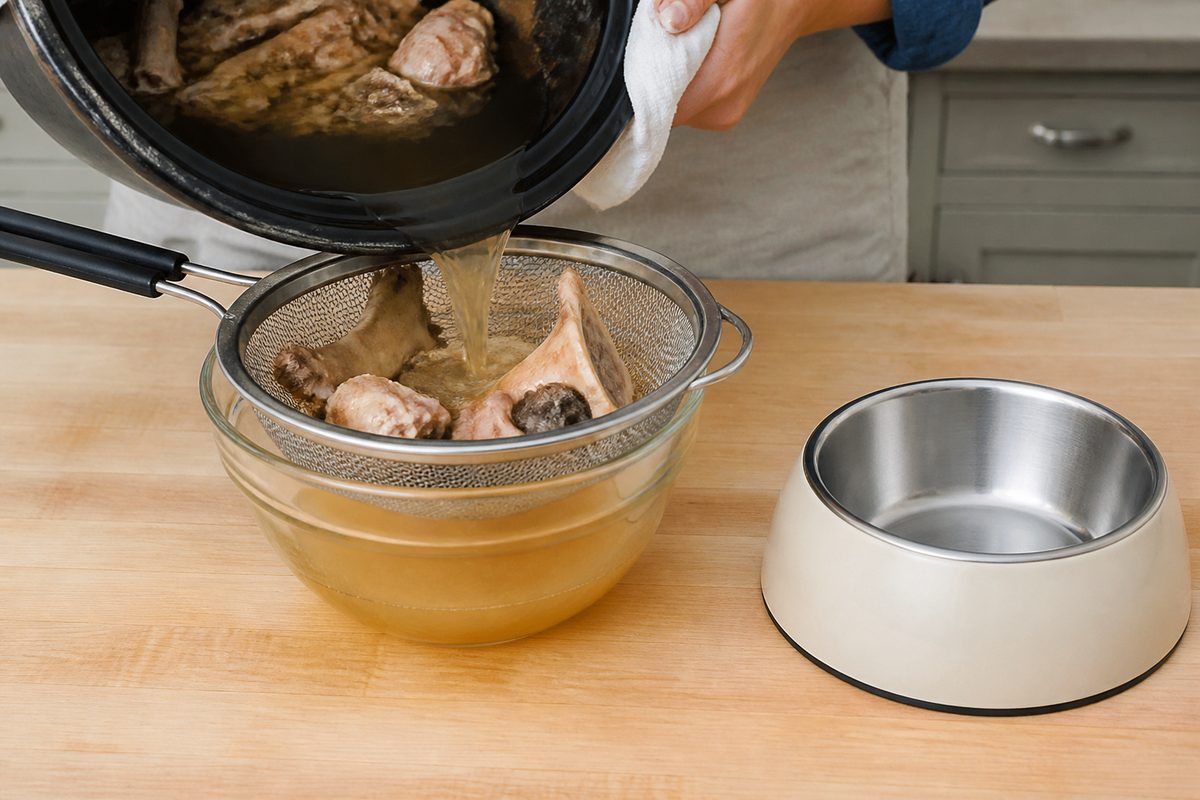
The Honest Kitchen Bone Broth Pour Overs with Chicken is a ready-to-pour supplemental topper. The current page lists 90% moisture. That makes its practical role clear: it can add liquid, aroma, and a softer coating to a complete meal without requiring a homemade broth process.
A Pour Over is not the whole meal: Treat it as a measured topper or snack. Keep the base food complete and balanced, reduce other calories when needed, and follow the current package storage directions.
When a Pour Over is useful
- A healthy dog eats better when the meal is moist and aromatic.
- The owner wants a ready-to-use product instead of homemade broth.
- A small measured amount can be mixed through the whole bowl.
- The household can refrigerate and track opened portions.
- The ingredients fit the dog.
How to use it without topper escalation
Measure the planned amount before pouring. Mix it through the complete food rather than placing a rich pool on one edge that encourages the dog to lick around the meal. Offer the same controlled amount for several meals before deciding it failed.
If the dog begins refusing the meal unless more is added, do not keep increasing. Review total treats, meal timing, health, and whether the base food itself fits. Escalation trains the negotiation and can shift calories away from balanced food.
Pumpkin Pour Overs as another texture option
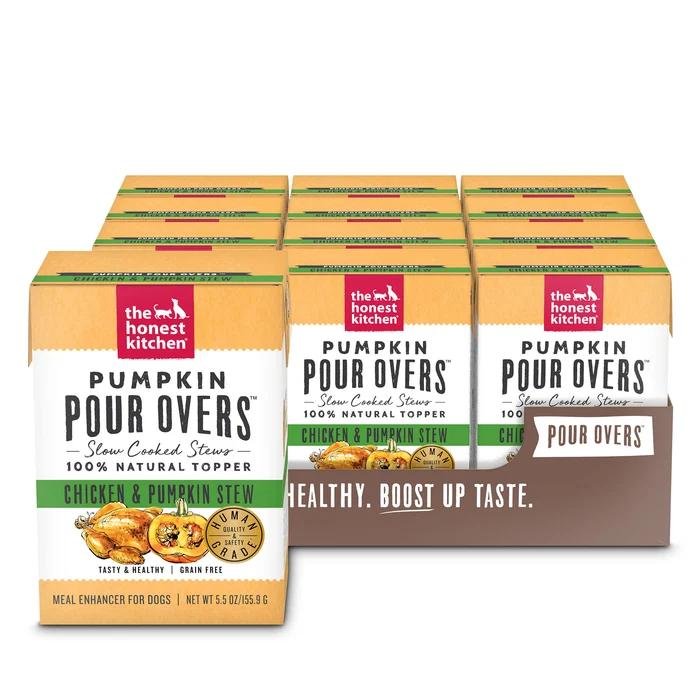
The Honest Kitchen Pumpkin Pour Overs with Chicken offers another supplemental flavor and texture. It can provide planned variety, but it should not be promoted as a digestive treatment. Pumpkin-containing products can still contribute calories and may not fit every dog.
Pour Over handling
Check the current package for serving and refrigeration. Do not leave an opened moist topper unrefrigerated beyond label guidance. Use clean utensils and avoid dipping a licked spoon back into the package.
When not to use it
Do not use a topper to delay evaluation of refusal, vomiting, diarrhea, pain, or chewing problems. Do not add it to a veterinary elimination or therapeutic diet without approval. Avoid it when any ingredient conflicts with the dog’s known needs.
Best Simple Protein Boost: The Honest Kitchen Meal Booster
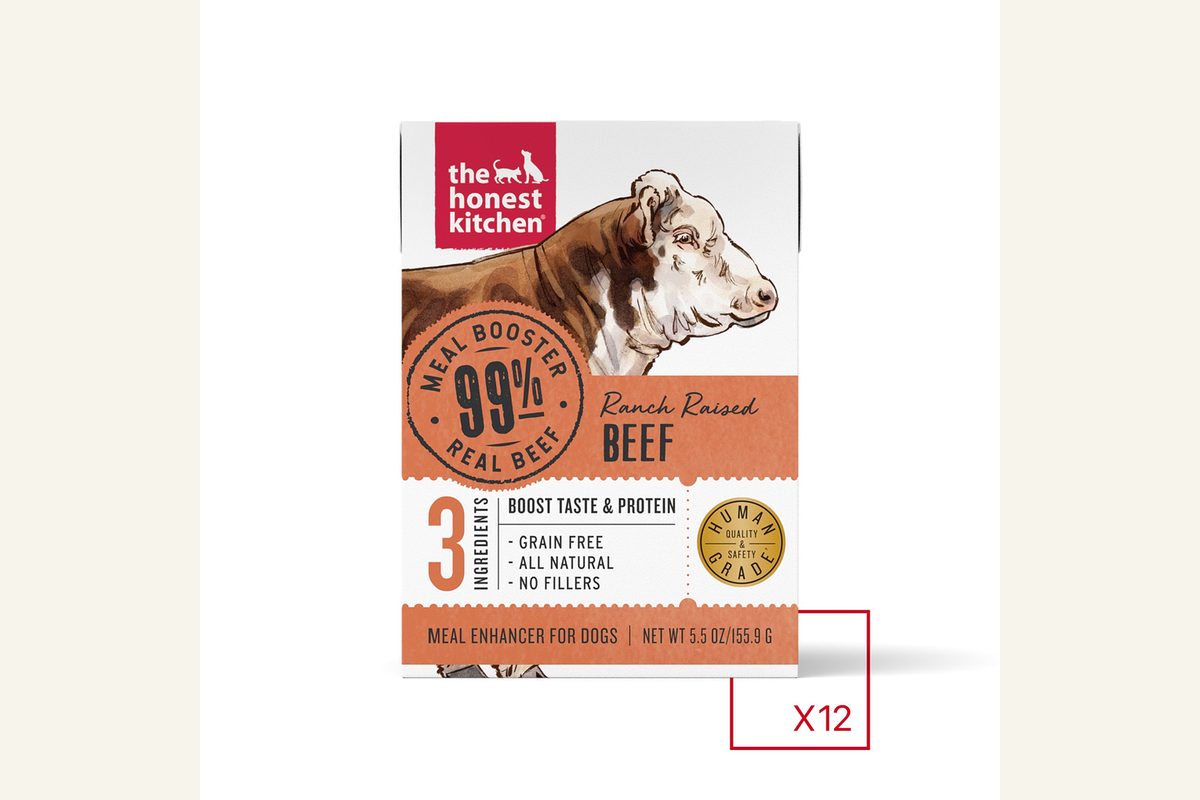
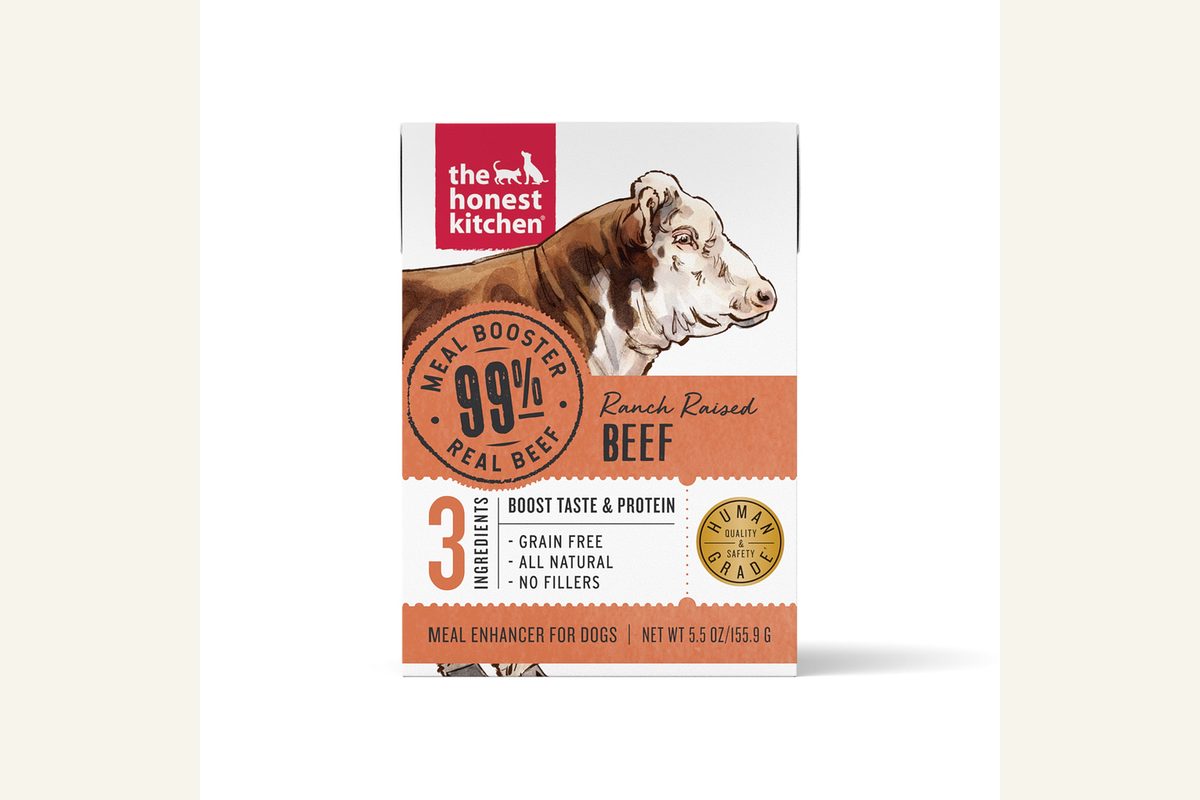
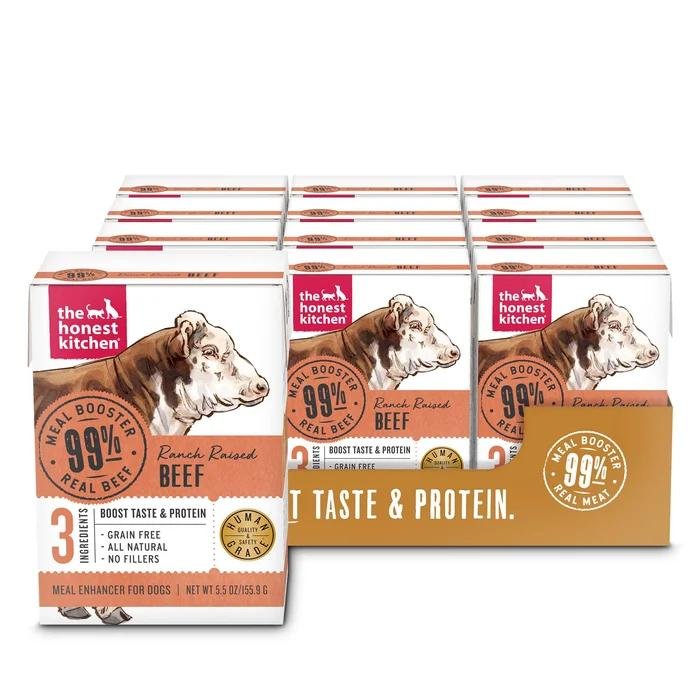
The Honest Kitchen Meal Booster 99% Beef is a supplemental topper designed to go over a complete-and-balanced food. Its simple beef-forward identity can appeal to owners who want a clearly defined protein addition rather than a multi-ingredient table-food mix.
The brand says topper intake should not exceed 10% of the diet. That aligns with the wider nutrition principle that extras should remain a small portion of daily calories unless a veterinarian formulates otherwise.
| What is it for? | Add measured beef aroma and protein variety to a complete food | It is not the complete diet |
| How much? | Follow the current label and keep total topper intake limited | Do not exceed the diet share the brand directs |
| Where does it go? | Mix through or place over the complete base food | Do not let the dog eat only the topper |
| What calories change? | Topper calories add to the day | Reduce other extras or base food as needed |
| Which dogs need caution? | Dogs with beef restrictions or veterinary diets | Ingredient simplicity does not make it universally safe |
| How do I judge it? | Track complete-meal intake and weight | Excitement alone is not nutritional success |
Why a simple topper can be easier to control
When owners add cheese, deli meat, gravy, and table scraps in response to refusal, calories and ingredients become opaque. A labeled topper provides a known product and serving framework. That transparency is useful even though it does not guarantee acceptance.
Keep beef in context
A 99% beef product can still be inappropriate for a dog avoiding beef, completing an elimination trial, or eating a therapeutic diet. “Single protein” does not mean hypoallergenic, and familiar meat does not replace complete formulation.
Use a topper budget
List every extra calorie source: training treats, dental chews, pill pockets, table food, Pour Overs, Meal Booster, and flavored supplements. Allocate the topper within the total extra-food budget rather than giving each category its own 10% allowance.
Test whether the topper supports meal completion
The useful outcome is not how fast the dog eats the beef pieces. It is whether the dog consumes the planned complete meal. Mix a small measured amount through the food and record leftovers. If the dog sorts out the topper and abandons the base, another strategy is needed.
Prevent learned refusal
Offer the planned meal for a reasonable period in a calm setting, then remove it according to the veterinarian’s feeding advice. Do not respond to every pause by adding a second and third topper. Dogs quickly learn that waiting changes the menu.
A Practical Mealtime Plan for Picky Eaters
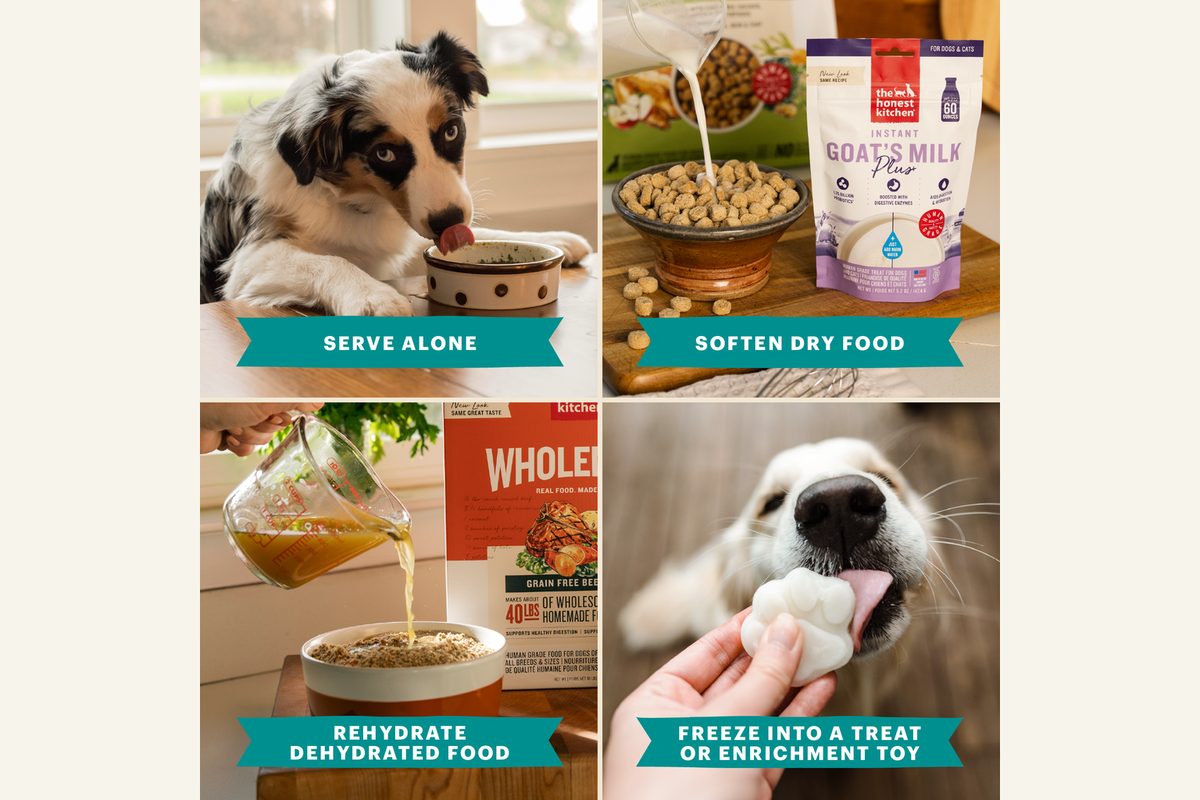
This plan is for a medically stable dog whose veterinary team has no concern about current intake. It creates consistency while testing one appeal lever at a time.
Step 1: Measure the full day
Set out the complete food allowance and all planned extras. This reveals whether treats are replacing hunger. Store the day’s allotment where every caregiver can see what remains.
Step 2: Choose a quiet location
Use a clean bowl away from noisy appliances, foot traffic, and competing pets. Feed separately if another dog guards, rushes, or steals food.
Step 3: Prepare consistently
For Wholemade, use the formula-specific dry and warm-water amounts, stir, and wait three minutes. Test temperature. If using a topper, measure it before it reaches the bowl.
Step 4: Offer on a schedule
Offer meals at predictable times. Follow veterinary guidance on how long to leave food down. Pick up leftovers, measure what remains, and refrigerate prepared food safely.
Step 5: Limit between-meal calories
Use part of the measured daily food for training when practical. Count necessary medication foods and chews. Ask every family member to stop untracked feeding.
Step 6: Record the response
Track food offered, food eaten, topper used, stool, vomiting, behavior, and weight. A simple log prevents memory from turning one skipped meal into “never eats” or one eager meal into “problem solved.”
Step 7: Review after several days
If intake is adequate and stable, keep the successful routine. If the dog needs escalating extras, loses weight, or develops signs, involve the veterinarian.
Seven-day consistency plan
| 1 | Quiet feeding location | Food, amount, time | Did distraction decrease? |
| 2 | Clean flat plate versus usual bowl | Food and amount | Is bowl shape affecting approach? |
| 3 | Comfortable warming | Amount and location | Did aroma increase interest? |
| 4 | Correct rehydrated texture | Calories and schedule | Does soft texture fit? |
| 5 | Small measured Pour Over | Complete base and routine | Did meal completion improve? |
| 6 | Small measured Meal Booster | Same daily topper budget | Does protein aroma help without sorting? |
| 7 | Best prior setup repeated | No new changes | Was the result repeatable? |
Do not run this sequence if the dog is eating inadequately or has medical warning signs. A healthy preference test never outranks necessary care.
Household rules that reduce negotiation
- One written meal plan
- One person records each feeding
- No untracked table food
- No second menu after refusal
- Toppers measured before serving
- Leftovers measured and stored safely
- Weekly weight checks when the veterinarian recommends them
- Veterinary call threshold agreed in advance
Exercise and appetite
Normal appropriate activity can support routine and appetite, but exercise is not a treatment for refusal. Do not exercise a sick, painful, overheated, or weak dog to make it hungry. Large deep-chested dogs also need individualized advice about meal timing and vigorous activity because of bloat risk.
How to Use Toppers Without Unbalancing the Diet
The WSAVA pet-food selection guide supports keeping treats and extras limited so a complete diet remains nutritionally central. A practical ceiling is about 10% of daily calories from all extras combined unless the veterinarian directs otherwise.
Calculate one total extra budget
If a dog needs 600 calories per day, a 10% extra-food ceiling would be 60 calories across treats, chews, toppers, and table food combined, not 60 calories for each category. The veterinarian should provide the dog’s actual target.
Reduce, do not simply add
When a topper becomes a daily routine, reduce another calorie source as needed. For a small measured topper, that may mean slightly reducing base food or other treats. Do not make a large adjustment without calorie information.
Protect nutrient density
Complete food is formulated to deliver required nutrients at its intended calorie intake. If a substantial share of calories comes from supplemental foods, the dog may consume fewer vitamins, minerals, essential fatty acids, and amino acids than planned.
Count functional extras too
Dental chews, pill pockets, training rewards, stuffed toys, and flavored supplements all count. “It is for health” does not make a chew calorie free.
Avoid human-food hazards
Do not use onion- or garlic-containing gravy, very salty broth, chocolate, grapes or raisins, xylitol-containing products, or fatty scraps. A dog-specific labeled topper is easier to control than leftovers from a seasoned meal.
Toppers and veterinary diets
Urinary, kidney, gastrointestinal, allergy, weight-loss, and other therapeutic diets work through controlled nutrition. An unapproved topper can undermine that control. Ask before adding even a simple beef product or broth.
A topper audit
Once a week, list product, calories, amount, frequency, and purpose. Remove extras with no clear job. If several products all exist to “make food interesting,” choose one measured option rather than stacking them.
When to Call Your Veterinarian
Call when the appetite pattern is new, persistent, or accompanied by another sign. Waiting becomes especially risky when the dog has an existing illness, takes medication, is very young or old, or could have swallowed a foreign object or toxin.
Same-day or prompt guidance
- New refusal lasting more than a day
- Repeated vomiting or persistent diarrhea
- Lethargy, hiding, weakness, or behavior change
- Mouth pain, drooling, dropped food, or trouble swallowing
- Unplanned weight loss
- Pain, limping, tense abdomen, or unusual posture
- Increased thirst or urination
- Medication started near the appetite change
Emergency evaluation
Seek urgent care for repeated unproductive retching, a swollen abdomen, collapse, severe weakness, breathing difficulty, suspected toxin exposure, severe pain, bloody vomit or stool, or known foreign-object ingestion.
What to bring
Bring the food packages, feeding log, medication list, recent weights, videos of unusual eating, and details of vomiting or stool. Record the last normal meal and all treats or possible exposures.
Why “still eats treats” is not reassuring enough
Some dogs with dental pain or nausea will accept a high-value soft treat while refusing their normal food. Treat acceptance proves the dog can take that item, not that health and intake are adequate.
Veterinary treatment and appetite support
The appropriate response depends on cause. Dental care, nausea control, pain management, medication adjustment, diagnostic testing, texture modification, or a therapeutic diet may be needed. Appetite stimulants are medical tools, not substitutes for diagnosis.
Prepare a useful appetite history before the visit
Veterinarians can work faster when “not eating” arrives with dates and quantities. Write down the last completely normal meal, the first reduced meal, and every food accepted or rejected since then. Include water intake, vomiting, stool, urination, energy, pain signs, coughing, swallowing, and possible access to garbage, toys, bones, medication, or toxins.
Bring the exact food and topper labels. Record dry portions before water is added because the hydrated bowl volume can be misleading. Include treats, dental chews, pill pockets, supplements, and table food. If another family member feeds the dog, reconcile both accounts rather than assuming the meal was skipped.
Take a short video if the dog approaches food strangely, drops pieces, chews on one side, stretches the neck, coughs, or regurgitates. Do not delay care to capture footage, but a natural eating attempt can help distinguish reluctance from difficulty.
Know the medication timeline. Antibiotics, pain medicines, chemotherapy, and other drugs can affect appetite or nausea, while missed medication can also matter. Never stop a prescribed medicine without veterinary direction. Ask whether it should be given with food and what to do when the dog refuses.
How veterinarians separate possible causes
The examination may include the mouth, teeth, throat, abdomen, hydration, temperature, weight, and pain assessment. Depending on history and findings, the veterinarian may recommend bloodwork, urine testing, imaging, dental evaluation, or other diagnostics. This is why changing flavor alone is an incomplete response: many causes look similar at the bowl.
The term “anorexia” in veterinary medicine means reduced or absent appetite, not a behavioral diagnosis. “Pseudo-anorexia” can describe a dog that wants to eat but cannot do so normally because of pain, oral disease, swallowing trouble, or another physical barrier. Owners can help by reporting whether interest and ability appear separate.
Appetite after illness or surgery
Follow discharge instructions rather than a generic picky-eater plan. The veterinarian may specify food type, portion size, meal frequency, medication timing, activity, and a threshold for calling. Do not add a rich topper to a prescribed post-operative or gastrointestinal diet unless the clinic approves it.
A dog recovering from anesthesia may be offered a smaller meal under the clinic’s instructions, but persistent refusal, repeated vomiting, marked sedation, pain, or wound concerns warrant contact. “They are just picky” should not become the explanation for a post-procedure change.
Dental and oral clues
A dog with dental pain may prefer soft food, chew more slowly, drop kibble, avoid hard treats, paw at the face, drool, or develop bad breath. Rehydrated Wholemade may be easier to manipulate than hard pieces, but softer food does not treat periodontal disease, a fractured tooth, oral mass, or jaw problem. Use texture support only as part of the veterinary plan.
Medication and supplement effects
Tell the veterinarian about every prescription, over-the-counter product, flea or tick medicine, dewormer, supplement, and recent dose change. A product marketed for wellness can still affect the gastrointestinal tract or interact with the broader plan. Do not add several appetite-support supplements at once.
How to Choose a Food for a Medically Stable Picky Eater
Once illness, pain, and inadequate intake have been reasonably addressed, choose food with a fixed decision order. This prevents the search from becoming a tour of whatever smells strongest.
1. Confirm nutritional adequacy
Read the current label for a complete-and-balanced statement and intended life stage. Puppies need growth-appropriate nutrition. Adult maintenance may not fit growth or reproduction. A senior marketing label does not substitute for individual health assessment.
2. Set a calorie target
Use veterinary guidance and monitor body condition. A small dog can receive a large share of daily calories from a few treats. A dog that is overweight may appear picky because the household offers more food than needed. A thin or losing dog needs prompt evaluation and a plan that protects intake.
3. Match the preferred sensory profile
Use the preference map. If the dog reliably likes warm soft meals, a rehydrated complete food is a logical format. If the dog prefers chunks, another complete texture may fit better. Do not choose only by protein flavor when texture appears to drive the behavior.
4. Review ingredients in context
Avoid known triggers and follow veterinary restrictions. Do not eliminate chicken, beef, grains, or other categories based only on internet anecdotes. Unnecessary restriction can complicate selection and may lead to nutritionally incomplete home experimentation.
5. Evaluate preparation and storage
The most appealing food is not useful if caregivers cannot prepare it. For Wholemade, verify the dry amount, water ratio, wait, refrigeration, and travel routine. For wet food, plan opened-container storage. For toppers, set the amount before purchase.
6. Estimate monthly cost at the real portion
Calculate days per package for this dog. Include routine topper cost. A small sample may create enthusiasm that becomes financially difficult at a full daily amount. Sustainable feeding prevents another abrupt switch.
7. Choose one transition plan
Change gradually over 7 to 10 days when using THK’s general guidance, unless the veterinarian directs otherwise. Avoid introducing new chews, table food, and several topper flavors during the same period.
8. Define success before starting
Success might mean eating at least the planned complete-food amount, maintaining weight, producing acceptable stool, and needing no escalation in extras. “Seems excited” is a useful observation but not enough by itself.
Food-selection worksheet
| Nutritional role | Complete meal or supplemental | Complete food anchors the diet |
| Life stage | Label statement | Matches the dog |
| Calories | Per measure and planned day | Fits target and body condition |
| Texture | Soft, smooth, chunky, crunchy | Matches observed preference and ability |
| Main aroma/protein | Current recipe | Fits known needs |
| Preparation | Steps and time | Household can repeat accurately |
| Storage | Dry and opened/prepared | Safe equipment and space available |
| Extras | Planned topper amount | Combined extras remain limited |
| Cost | Actual dog-days per package | Sustainable monthly amount |
| Stop signs | Written in advance | Care is not delayed |
Format comparison for picky eaters
| Rehydrated dehydrated food | Warm aroma and soft texture | Dry pantry storage, measured preparation | Requires water, wait, refrigeration |
| Wet pâté or mousse | Strong aroma and uniform softness | Ready texture | Opened storage and package waste |
| Minced or chunky wet food | Distinct pieces and gravy | Texture variety | Dog may sort components |
| Kibble | Crunch and familiarity | Fast portioning and travel | Lower meal moisture and less aroma |
| Mixed feeding | Multiple textures | Can bridge a transition | Calorie accounting is essential |
| Supplemental topper | Concentrated aroma or moisture | Small targeted change | Can displace balanced food or train refusal |
No format wins every row. The best format is one that supports complete nutrition, safe intake, and a repeatable household routine.
Picky-Eater Plans for Common Scenarios
These scenarios assume the dog is medically stable or already under veterinary guidance. They illustrate how to choose the smallest useful intervention.
The dog eats treats but ignores meals
Audit calories first. Put every day’s treats, chews, table food, and pill foods in one container. Once it is empty, no more extras are given. Reduce discretionary items so normal hunger can align with meals. Continue to watch for dental pain or nausea because high-value treat acceptance does not rule them out.
Choose one complete meal and one consistent preparation. If using Wholemade, measure and rehydrate it correctly. Do not respond to a missed meal by opening a new protein, adding cheese, and hand-feeding from the table. If intake remains inadequate, call the veterinarian.
The dog will eat only when hand-fed
Hand-feeding can begin during illness, anxiety, or training and become the required context. First confirm no pain or swallowing issue. Then transfer the same complete food from hand to bowl gradually: several pieces by hand, several placed into the bowl while the dog watches, then increasing bowl-fed amounts.
Keep the setting calm and avoid turning the meal into a long performance. For a soft food, use a spoon to place a small amount in the bowl rather than feeding near the mouth. Never force food into an unwilling dog’s mouth because aspiration and aversion are risks.
The dog wants a new flavor every few days
Novelty can be reinforcing. Establish a rotation only if each food is complete, appropriate, tolerated, and transitioned in a way the dog handles. Planned rotation is different from opening another product after every hesitation.
A safer variety strategy may keep one complete anchor and alternate a very small measured THK topper within the total extra budget. If changing toppers causes sorting or refusal, return to one consistent option.
The dog prefers soft food
Check dental comfort and swallowing. If medically cleared, a rehydrated complete food is a coherent choice because softness is built into preparation rather than created by adding unbalanced gravy. Measure the dry calories, follow the recipe-specific ratio, and check temperature.
The dog eats breakfast but skips dinner
Review total daily calories, treat timing, exercise, heat, and schedule. The breakfast portion or afternoon extras may satisfy daily needs. Do not assume two identical meals are mandatory if the veterinary plan allows another distribution, but persistent pattern changes deserve review.
The dog refuses food when another pet is nearby
Feed in separate rooms with doors closed. Give each dog enough time without hovering. Pick up bowls before reunion. Competition can increase eating for some dogs but cause anxiety or food guarding in others. Do not use pressure from another animal as an appetite technique.
The dog is picky during travel
Keep the usual food, measure, bowl, and schedule as consistent as possible. Bring safe water and refrigeration capacity for prepared food. Avoid introducing a new rich topper at the same time as motion stress or an unfamiliar environment. If travel refusal is severe or predictable, discuss nausea or anxiety management with the veterinarian before the trip.
The senior dog has become selective
Age is not a diagnosis. Evaluate teeth, pain, kidney and endocrine health, medication, smell, cognition, and body condition. Warming and soft texture may support intake, but a veterinary workup should guide food selection. Seniors can lose muscle even when body weight looks stable.
The puppy seems bored with food
Puppies need growth-appropriate complete nutrition and cannot safely rely on toppers. Check whether training treats consume a large calorie share. Use measured complete food for training where practical. Consult the veterinarian promptly when a puppy’s appetite falls because young dogs can become unwell quickly.
The dog needs medication with food
Ask whether the medicine must be given with a full meal or can be hidden in a small amount. Use the smallest reliable carrier and count it in the extra budget. If medication seems linked to nausea or refusal, contact the prescribing clinic rather than disguising increasing doses in richer foods.
The dog is on a weight-loss plan
Picky behavior can intensify when owners respond with high-calorie extras. Use the prescribed calorie target, divide food into satisfying scheduled meals, and reserve part of the daily allotment for rewards. A measured low-calorie topper may fit, but the veterinarian should approve it.
The dog is underweight
Do not simply add unlimited fat or toppers. Underweight status can reflect inadequate calories, disease, malabsorption, dental pain, competition, or inaccurate portions. The veterinarian should determine the calorie and diagnostic plan. Appetite appeal helps only after the reason for weight loss is addressed.
Mealtime Behavior Without Blame or Pressure
Dogs learn from consequences. If waiting at the bowl reliably produces chicken, cheese, or a new can, waiting becomes effective behavior. That does not mean the dog is manipulative or that every refusal is behavioral. It means the household response can maintain a pattern after medical causes are excluded.
Use predictable choices
Offer one nutritionally appropriate meal prepared the same way. If the veterinarian approves scheduled feeding, leave it available for the recommended period and remove it calmly. Do not scold, coax continuously, or replace it immediately with a richer menu.
Reward approach without forcing intake
Quiet praise can support a nervous dog, but avoid crowding the bowl. Place it down and give space. For dogs with environmental anxiety, gradual desensitization to the feeding area may be useful with a qualified trainer or veterinary behavior professional.
Avoid aversion-building tactics
Do not push the dog’s face toward food, smear food on the muzzle, pry open the mouth, or use prolonged fasting without veterinary supervision. Force and nausea can create lasting aversion and aspiration risk.
Keep family responses consistent
A written rule such as “one measured Pour Over portion, no table food, call if two meals are refused” prevents mixed signals. Children and guests should know not to add food. Consistency is kinder than alternating coaxing, punishment, and surprise treats.
Consider the bowl and feeding posture
Wash bowls thoroughly. Some dogs dislike a deep bowl touching whiskers or tags striking metal. A flat plate may help a dog with a broad face, while a nonslip bowl helps a dog that chases the dish. Feeding height should be individualized, not changed based on universal claims.
When anxiety is part of appetite
Noise sensitivity, separation, boarding, new pets, construction, or conflict can reduce intake. Improve the environment while monitoring health. If anxiety is severe or persistent, veterinary behavior support is more appropriate than escalating food value indefinitely.
How to Monitor Whether the Plan Is Working
A meal plan should be evaluated with more than an empty bowl. Track complete-food intake, topper amount, body weight, body condition, stool, vomiting, energy, and how much prompting the dog needs.
Daily log
Record:
- Complete food offered and eaten
- Dry amount before rehydration
- Topper product and measured amount
- Treats and chews
- Meal start and finish
- Vomiting, stool, and water changes
- Energy and pain signs
- Medication timing
Weekly review
Ask whether intake is becoming more consistent or whether the dog requires increasing novelty. Weigh the dog when recommended. Review whether family members followed the same plan. Calculate the real topper share of calories.
Meaningful success measures
- Maintains or reaches veterinary weight goal
- Eats enough complete food reliably
- Needs no topper escalation
- Tolerates food without persistent digestive signs
- Household can sustain cost and preparation
- Mealtimes are calm and reasonably brief
Signs the plan is failing
- Weight loss or muscle loss
- Repeated skipped meals
- Sorting toppers from the base food
- Increasing topper amounts
- Vomiting, persistent diarrhea, or pain
- Refusal spreading to previously accepted foods
- Household unable to measure or store food safely
Failure is not a reason to blame the dog. It means the current format, product, routine, or medical understanding is incomplete.
A four-week review framework
Week 1: Establish safety, transition, and measured intake. Week 2: Repeat the best sensory setup without adding novelty. Week 3: Review body weight, stool, and topper calories. Week 4: Decide with the veterinarian whether the food and routine are sustainable.
Do not continue for four weeks through inadequate intake or concerning signs. The framework applies only while the dog remains well.
Common Picky-Eater Myths
Myth: A healthy dog will always eat before anything bad happens. Some dogs can go too long without adequate intake, and an appetite change may be illness. Use veterinary thresholds, not a contest of will.
Myth: If the dog eats treats, nothing is wrong. Soft, aromatic treats may be accepted despite dental pain, nausea, or reduced appetite. Meal refusal still deserves context.
Myth: Grain-free food is more appealing or healthier. Preference and nutritional suitability do not follow grain status. Choose by the full formula and the dog.
Myth: More protein topper is always better. Supplemental protein still brings calories and can displace balanced nutrition. More is not a guaranteed appetite solution.
Myth: Bone broth treats the cause of poor appetite. Broth can add aroma and moisture. It does not diagnose dental pain, nausea, obstruction, infection, or systemic illness.
Myth: Hand-feeding proves the food tastes bad. Context, attention, posture, anxiety, or learned behavior may change acceptance. Medical causes must still be considered.
Myth: Dogs need constant flavor rotation. Some dogs enjoy variety, but frequent rescue menus can teach waiting and complicate tolerance tracking.
Myth: A full bowl means enough food was offered. Portion accuracy and calories matter. More than the dog needs can make normal appetite look picky.
Myth: Warm food is always safe. Microwaves can create hot spots. Stir and test every warmed meal.
Myth: Limited-ingredient toppers cannot cause problems. Any ingredient can conflict with an individual diet plan, and supplemental foods can unbalance intake when overused.
How the THK Products Fit Together
The useful way to compare the featured products is by role, not by declaring one universal winner.
| Wholemade Whole Grain Chicken | Complete-food anchor when label fits | Warm aroma, soft texture, meal moisture | Properly measured and rehydrated meal | Confirm life stage and calories |
| Bone Broth Pour Overs Chicken | Supplemental topper | Moisture and aroma | Measured amount mixed through base food | Not a complete meal |
| Meal Booster 99% Beef | Supplemental protein topper | Beef aroma and simple protein identity | Limited amount over complete food | Total toppers remain limited |
| Pumpkin Pour Overs Chicken | Supplemental topper or snack | Moist texture and planned variety | Occasional measured alternative | No digestive treatment claim |
Begin with the smallest intervention
If the dog simply prefers warm food, prepare the complete Wholemade meal correctly before adding anything. If moisture and aroma remain useful, add a small measured Pour Over. If a simple beef accent fits better, test Meal Booster within the same topper budget. Do not stack all products at the first meal.
Keep roles visible in storage
Label pantry bins or a feeding card “complete meal” and “topper.” This prevents a helpful guest from serving a supplemental package as dinner. Retain original labels for calories, ingredients, serving, refrigeration, lot code, and best-by information.
Recheck current pages and packages
Product names, formulas, directions, and availability can change. The current package is the final authority. If an online page and package differ, contact The Honest Kitchen before assuming which is newer.
No product replaces diagnosis
Positive product fit remains a food decision. THK products can offer useful textures and clearly labeled roles, but they cannot establish why a dog is not eating. Keep the health boundary visible even when the bowl strategy works.
Building a Long-Term Routine That Does Not Depend on Novelty
Once a dog reliably eats an appropriate complete food, preserve the working conditions before adding variety. Write down the formula, dry amount, water amount, topper amount, meal times, and feeding location. A routine is easier to maintain when success is defined as adequate complete-food intake rather than visible excitement at every bowl.
Reassess portions as needs change
Appetite reflects calorie need as well as preference. A dog may leave food after activity decreases, neutering changes energy needs, training treats increase, or weather reduces exercise. Weigh the dog and review body condition. Reduce or increase food with veterinary guidance rather than assuming every unfinished bowl needs a more desirable topping.
Growing puppies need frequent portion review. Senior dogs may need monitoring of muscle condition, teeth, pain, and disease. Working dogs can need seasonal adjustments. In every case, the feeding chart is a starting point and the dog’s condition is the feedback.
Preserve appetite for meals
Use part of the measured complete food as training rewards when the format allows. Schedule discretionary treats after, not immediately before, meals. Coordinate among caregivers. A dog receiving breakfast from one person, training treats from another, and table food from a third may be appropriately full by dinner.
Do not make hunger extreme. The goal is a normal meal rhythm, not prolonged food withholding. Follow the veterinarian’s advice for meal frequency, especially for puppies, small dogs, medical conditions, or medication schedules.
Use variety deliberately
Variety can be planned without teaching refusal. One approach is to keep the complete meal stable and rotate a small approved topper on a schedule unrelated to whether the dog hesitates. Another is to rotate between complete foods only after each has been introduced and tolerated. Sudden rescue menus should not drive the rotation.
If variety causes sorting, softer stool, or escalating expectations, simplify. A consistent Wholemade base with one measured Pour Over may work better than several open products. The best range is the smallest one that supports reliable intake.
Keep food fresh and bowls inviting
Seal dry food against humidity and pests, keep it in its original package, and retain the lot code. Refrigerate prepared or opened moist products promptly. Wash bowls after every moist meal and rinse away detergent residue. Replace damaged porous bowls that are difficult to clean.
An old, oxidized, or contaminated food may smell different to a dog before the owner notices. If a new package has an unexpected odor, appearance, or texture, do not hide it with topper. Compare the current label and contact the manufacturer with package details.
Plan for boarding and pet sitters
Provide premeasured complete-food portions, written preparation directions, a liquid measure, topper limits, storage rules, and the veterinary call threshold. State explicitly that refusal should not trigger unapproved table food. Give the sitter an acceptable backup plan approved in advance.
For Wholemade, write the exact product-specific water ratio rather than “add some water.” Mark the three-minute wait and refrigerator window. For Pour Overs or Meal Booster, premeasure or state the exact amount so a well-meaning caregiver does not empty the package onto one meal.
Review every three months
Ask whether the dog still maintains weight, eats enough complete food, tolerates the recipe, and needs the same topper amount. Check whether treat creep has returned. Recalculate package duration and cost. Recheck the product label for changes.
At veterinary visits, report the exact complete food and all extras. “The Honest Kitchen plus toppers” is not enough detail because product roles differ. Bring package photos or labels and state the dry daily amount.
Questions to Ask Before Changing the Bowl Again
When a plan stalls, questions are more useful than another impulse purchase.
Questions for the veterinarian
- Could dental pain, nausea, swallowing trouble, medication, pain, or disease explain this pattern?
- Is the dog’s body condition consistent with the amount being offered?
- What is the minimum intake and time threshold for calling?
- Does the complete THK recipe fit the dog’s life stage and medical history?
- Are Pour Overs or Meal Booster compatible with a therapeutic diet?
- What daily calorie target and topper budget should the household use?
- Would a different texture be medically helpful, or should chewing be examined?
- Which diagnostic signs should be recorded at home?
Questions for The Honest Kitchen
- Is this exact product complete and balanced or supplemental?
- Which life stages does the current adequacy statement cover?
- What are the current calories, dry amount, water ratio, and wait time?
- How should an opened or prepared product be refrigerated?
- Have the formula or directions changed recently?
- Which package information should be saved for a quality concern?
- Can the company clarify an ingredient for a dog with a veterinary restriction?
Questions for the household
- Who feeds each meal, and how is it recorded?
- How many untracked treats are given?
- Does the dog eat differently around another pet or person?
- Are portions leveled or heaped?
- Is the food warmed safely and consistently?
- Is the topper mixed through or sorted out?
- Is the dog maintaining weight?
- Are we solving preference, or postponing a health question?
Questions to ask about every new product
Do not let “for picky eaters” replace label review. Confirm complete status, life stage, calories, ingredient fit, preparation, storage, cost per dog-day, and whether the texture matches what you observed. A product earns a trial by fitting those fields, not by promising irresistible taste.
Nutrition Boundaries That Keep an Appealing Diet Complete
Palatability and adequacy solve different problems. A food can be highly appealing but supplemental. A complete food can be nutritionally appropriate but rejected because of texture, illness, or excess treats. The plan must solve both without allowing one to erase the other.
Read the adequacy statement, not the front label
The FDA’s explanation of complete and balanced pet food describes the importance of the nutritional adequacy statement. Look for the life stage and whether the product is intended for intermittent or supplemental feeding. “Meal booster,” “broth,” and “topper” are useful role clues, but the formal statement controls.
Do not construct a diet from extras
A bowl made from broth, beef topper, pumpkin topper, cheese, and treats may be exciting but lacks the verified nutrient structure of a complete recipe. Use Wholemade or another appropriate complete food as the anchor. Toppers should change sensory appeal, not become the bulk of calories.
Keep the 10% idea honest
About 10% is an upper boundary for all extras combined, not a daily target. Many dogs need less. A small dog can reach the limit with one chew and a few training treats before a Pour Over is opened. Use calorie labels and the veterinary target.
Avoid nutrient duplication and medical conflicts
Supplements, therapeutic foods, and toppers can overlap. A dog receiving a prescribed gastrointestinal or kidney diet may need strict control of ingredients and nutrients. A dog taking medication may need food-timing instructions. “Natural” or “simple” does not guarantee compatibility.
Watch body condition, not begging
Begging can persist after energy needs are met, while a quiet dog can be underfed. Use weight, body and muscle condition, activity, and veterinary assessment. Do not let food-seeking behavior alone determine portions.
Recognize when home feeding has become too complex
If the daily bowl requires several powders, rotating toppers, hand feeding, separate rescue meals, and constant negotiation, pause. Complexity can hide inadequate intake and makes adverse reactions difficult to interpret. Return to the simplest safe complete plan the dog will eat and ask the veterinarian for help.
A final decision hierarchy
- Protect health and adequate intake.
- Use a complete food appropriate for life stage.
- Match texture and preparation to the dog.
- Add one measured appeal tool if needed.
- Keep all extras within the calorie budget.
- Monitor weight, stool, appetite, and behavior.
- Escalate to veterinary care, not richer food, when the plan fails.
The final 48-hour reset for a stable dog
When a medically stable dog has accumulated several toppers and inconsistent routines, a short household reset can clarify the pattern. Confirm with the veterinarian that scheduled feeding is appropriate. Choose one complete food and one approved measured topper at most. Remove untracked extras, use the same quiet location, and record every offering and leftover.
The reset is not fasting. The dog is offered adequate food on the approved schedule, and the call threshold remains active. If intake is inadequate, the response is veterinary guidance, not extending the experiment. If the dog eats once the competing extras disappear, keep the simpler routine rather than immediately restoring all treats.
Review the result with three questions: Did the dog eat enough complete food? Did the dog remain comfortable and medically well? Could the household follow the plan without negotiation? A “yes” to all three supports continuation. Any “no” identifies the next professional or feeding question.
Positive THK use without overpromising
Wholemade is well positioned when a warm, rehydrated complete meal matches the dog’s needs. Pour Overs are well positioned when a small moisture and aroma addition improves meal completion. Meal Booster is well positioned when a measured beef accent fits the diet. These are useful, specific roles.
The positive case does not require a promise of universal palatability. Dogs differ, formulas change, and appetite is influenced by health and environment. Accurate expectations protect the client relationship as well as the dog: owners can select a THK tool for a clear job and know when the job belongs to a veterinarian instead.
Keep that job written on the feeding card. Wholemade supplies the complete-food foundation when its label fits. A Pour Over supplies a measured moisture and aroma change. Meal Booster supplies a measured protein accent. If a caregiver cannot state which job a product performs, pause before adding it. Clear roles make the bowl easier to balance, make changes easier to evaluate, and keep a positive product experience tied to accurate use rather than an escalating promise.
Frequently Asked Questions
Sudden refusal can reflect dental pain, difficulty chewing or swallowing, nausea, gastrointestinal disease, medication effects, stress, pain, or systemic illness. Contact the veterinarian based on duration and other signs rather than assuming the dog became picky overnight.
Gentle warming can increase aroma and may help a medically stable dog. Avoid hot spots, test temperature, and refrigerate leftovers safely. Warming should not delay evaluation of a new appetite change.
You can use an appropriate dog-specific topper regularly when it fits the dog’s health and calorie plan, but it remains supplemental. Measure it, include it in the total extra-food budget, and keep the base diet complete and balanced.
Keep all treats and toppers combined to about 10% or less of daily calories unless a veterinarian directs otherwise. Use the dog’s actual calorie target and current product calorie information.
There is no one safe waiting period for every dog. A new appetite change lasting more than a day warrants veterinary attention, and puppies, small dogs, seniors, or dogs with illness may need care sooner. Urgent signs require immediate help.
Yes, a medically stable dog may prefer warm, soft, moist, smooth, chunky, or crunchy food. Introduce texture gradually and monitor actual intake. A sudden texture preference can also signal mouth pain or swallowing difficulty.
The Bottom Line
What actually works for picky eaters is not an endless search for a magical flavor. It is a safety-first distinction between preference and illness, a complete food that fits the dog, a predictable meal routine, and one measured appeal tool at a time.
The Honest Kitchen Wholemade can provide the complete warm, soft meal at the center. Bone Broth or Pumpkin Pour Overs can add measured moisture and aroma. Meal Booster 99% Beef can add a simple protein accent. Used in their proper supplemental roles, these THK options give owners flexibility without sacrificing the core plan.
If the dog needs richer additions at every meal, loses weight, or shows another sign, stop treating the problem as pickiness. The best food decision is the one made after the dog’s health, complete nutrition, and actual intake are understood.
Sources
- The Honest Kitchen Picky Eater Collection
- The Honest Kitchen Wholemade Whole Grain Chicken
- The Honest Kitchen Bone Broth Pour Overs with Chicken
- The Honest Kitchen Meal Booster 99% Beef
- The Honest Kitchen Pumpkin Pour Overs with Chicken
- VCA: Anorexia in Dogs
- AAHA: Common Pet Pain Signs
- WSAVA: Selecting a Pet Food for Your Pet
- FDA: Complete and Balanced Pet Food