How Much Protein Does a Dog Need for Healthy Aging and Muscle Support?
Published on June 02, 2026

The updated veterinary evidence on protein for aging dogs: why the old “seniors need less protein” rule is wrong for healthy dogs, practical target ranges, and who still needs restriction.
This article was medically reviewed by a licensed veterinarian.
All featured products are chosen at the discretion of the author. However, Vetstreet may make a small affiliate commission if you click through and make a purchase.
When it comes to senior dog food, one of the most common questions veterinarians get is how much protein an aging dog actually needs. The conventional wisdom about protein and aging dogs has shifted materially over the last decade. The old rule, “lower protein for seniors to protect the kidneys,” turned out to be wrong for healthy aging dogs. Current veterinary nutrition evidence tells a different story: healthy senior dogs actually need more dietary protein than their younger counterparts to maintain lean muscle and preserve function as they age.
Here’s what current clinical nutrition tells us about protein requirements, how to translate AAFCO complete-and-balanced statement minimums into practical daily feeding decisions, and which senior dogs are the exception to the higher-protein rule.
Throughout this guide we reference brands like Wellness Pet Food when discussing higher-protein, shelf-stable fresh formats that fit the healthy-aging clinical target.
Key Takeaways
- AAFCO minimums for adult-maintenance dogs are 18% crude protein on a dry-matter basis: a floor, not an optimum.
- Current veterinary evidence supports 28 to 35% crude protein (dry matter) for healthy senior and active dogs to offset age-related muscle loss.
- Protein quality, digestibility, and amino acid profile matter as much as quantity. Named animal proteins as the top ingredients are the clinical marker.
- The “high protein damages kidneys” concern applies to dogs with already-diagnosed chronic kidney disease, not to healthy aging dogs.
- Puppies, pregnant/nursing dogs, and dogs with diagnosed kidney, liver, or urate-stone disease have different protein targets. Check with your vet before switching.
What to look for in a senior dog food
A well-formulated senior dog food supports the full picture of healthy aging: muscle preservation through adequate protein, joint health through glucosamine and chondroitin, cognitive function through omega-3 fatty acids (especially DHA), immune support through antioxidant nutrients, and overall nutrient density calibrated to a less-active metabolism. Protein is the single most important lever, but it isn’t the only one.
Look for named animal proteins as the top ingredients, added glucosamine and chondroitin for hip and joint support, fish-oil-sourced omega-3 and omega-6 fatty acids for coat and cognitive health, and antioxidants (vitamin E, vitamin C, selenium) to support immune function as the dog ages.
Senior dog food formulas veterinarians commonly recommend
Senior dog food isn’t a single product. It spans traditional senior kibbles, shelf-stable fresh pouches, and mobility-focused therapeutic diets. The formulas below are the ones veterinarians most commonly suggest to pet parents asking what to feed an aging dog. All are formulated to meet AAFCO adult-maintenance standards; most carry joint support (glucosamine and chondroitin) and fish-oil-sourced omega-3s. Match the pick to your dog’s age, chewing ability, appetite, budget, and any diagnosed conditions.
Senior dog food formulas commonly recommended by veterinarians
| Formula | Format | Protein (Dry Matter) | Joint + Omega Support | Notes |
|---|---|---|---|---|
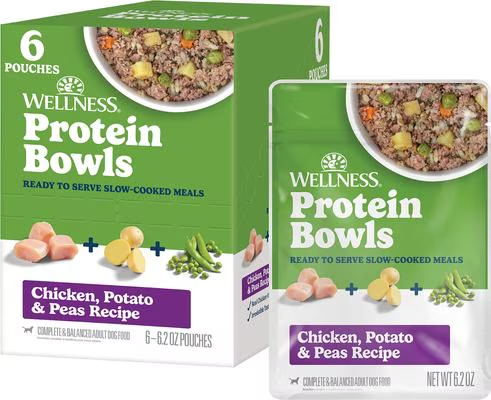
| Wellness Protein Bowls | Shelf-stable fresh pouch | ~35-45% DMB | Named animal protein first; omega-3 from fish oil | Fresh-style palatability without refrigeration. Useful for seniors with softer appetites or dental wear. |
| Wellness Complete Health Senior | Dry kibble | ~22% DMB | Glucosamine + chondroitin + flaxseed and fish oil | Real deboned chicken first ingredient; natural formulation at a moderate price point |
| Hill’s Science Diet Adult 7+ Senior Vitality | Dry kibble + wet options | ~28% DMB | Glucosamine + chondroitin + omega-6 fatty acids | Long veterinary-practice track record; widely stocked at vet clinics |
| Purina Pro Plan Bright Mind Adult 7+ | Dry kibble | ~29% DMB | Fish oil (EPA) plus MCT oil for cognitive support | Designed for older dogs showing early cognitive decline |
| Royal Canin Aging 12+ | Dry kibble + wet options | ~29% DMB | Glucosamine + chondroitin + fish oil | Built for very senior small-breed dogs (12+); smaller kibble size is easier to chew |
| Blue Buffalo Life Protection Senior | Dry kibble | ~20% DMB | Glucosamine + chondroitin + flaxseed and fish oil | Natural-ingredient formulation; widely available at mass retail |
Keep in mind that AAFCO complete-and-balanced status is the baseline, not the ceiling. For dogs with diagnosed chronic conditions, such as kidney disease, advanced liver disease, or a history of urate or calcium oxalate stones, the right answer is typically a prescription therapeutic diet prescribed by your veterinarian, not a retail senior formula. For everyone else, the formulas above are a reasonable starting point. Read on for the full framework on protein targets, AAFCO interpretation, and the kidney-protein myth that shapes these picks.
The AAFCO minimums: why they’re a floor, not a target
The AAFCO complete-and-balanced statement Dog Food Nutrient Profile sets a minimum crude protein of 18% on a dry-matter basis (DMB) for adult maintenance and 22.5% DMB for growth and reproduction. Those numbers are designed to prevent frank protein deficiency in a healthy dog eating the food as a sole diet. They’re not a performance or longevity target. Clinical research in canine nutrition over the past 10-15 years has consistently shown that moderate-to-high protein intake supports lean body mass, preserves muscle as dogs age, and produces better outcomes in active dogs.
If you’re reading a label, dry-matter basis is the number that matters for comparisons. Foods vary wildly in moisture content: a canned food at 8% as-fed protein is not automatically weaker than a kibble at 26% as-fed protein. Once you strip out the water, a typical canned food may actually run 35-45% crude protein on a dry-matter basis.
Age-related muscle loss (sarcopenia) is real in dogs
Sarcopenia, the gradual age-related loss of lean muscle mass, is well-documented in humans and increasingly well-documented in dogs. Large-breed dogs begin losing lean mass as early as 7 years old; medium and small breeds typically begin in the 8 to 10 year range. The functional consequences are measurable: reduced stamina, slower stair negotiation, increased fall risk, slower recovery from illness or surgery, and in later stages, reduced immune function.
The clinical lever that best offsets canine sarcopenia is protein intake combined with appropriate activity. Dogs on higher-protein diets consistently show better preservation of lean body mass across the senior years, and that translates into better mobility and quality of life.
Petful’s practical guide to how much protein a dog needs by life stage gives the baseline numbers this section builds on.
Practical protein math for a senior dog
Clinical target ranges for healthy adult and senior dogs typically look like this:
Practical protein targets by life stage and activity level
| Dog Profile | Crude Protein % (Dry Matter) | Clinical Notes |
|---|---|---|
| Healthy adult (maintenance) | 22 to 28% | AAFCO minimum is 18%; most commercial adult foods run 22 to 30% |
| Healthy senior (7+ years) | 28 to 32% | Supports muscle preservation without overloading otherwise-healthy kidneys |
| Active or working adult | 30 to 38% | Supports muscle repair and recovery |
| Senior recovering from illness/surgery | 32 to 38% | Higher during the recovery window; reassess at 8 to 12 weeks |
| Pregnant/lactating | 25 to 30%+ | AAFCO growth/reproduction profile applies |
| Diagnosed CKD (late-stage) | Lower, highly variable | Prescription diet under vet management; quality > quantity |
Protein quality: what matters at least as much as the percentage
A 35% crude protein label on paper can be propped up with plant proteins, connective tissue, or lower-quality animal sources. Three clinical markers indicate a higher-quality protein source:
What to look for on the label
- Named animal proteins in the top ingredients. “Chicken,” “chicken meal,” “salmon,” “beef”: species-specific, not “meat” or “animal by-product.”
- Multiple complementary protein sources. A mix of muscle meat, organs, and fish (where appropriate) produces a better amino-acid profile than a single source.
- Digestibility data when available. Premium brands often publish digestibility or feeding-trial data. Look for >80% crude protein digestibility when the manufacturer reports it.
Why processing format affects digestibility
Slow-cooked, visible-ingredient formats tend to support high digestibility because the protein structure is less denatured than in high-temperature extrusion. Wellness Protein Bowls, as one current example, build each recipe around a single named animal protein as the first ingredient and run 8 to 10% crude protein as-fed (roughly 35 to 45% on a dry-matter basis), a typical profile for the higher-protein shelf-stable fresh category. For the full framework on reading dog food labels, see our complete-and-balanced dog food guide.
The ‘high-protein damages kidneys’ concern: what the evidence actually says
The current veterinary nutrition consensus
Healthy adult and senior dogs with normal kidney function do not benefit from protein restriction. Multiple peer-reviewed studies have found no causal relationship between higher dietary protein and the development of chronic kidney disease (CKD) in healthy dogs. The clinical rationale for lower-protein diets is specific to dogs already diagnosed with moderate-to-late-stage CKD, where reducing the nitrogenous waste load of the kidneys is part of the therapeutic plan. Those dogs should be on a veterinary therapeutic diet, not a standard senior formula.
If you’ve heard the older “senior dogs need less protein” advice from a well-meaning source, it predates the current evidence. Unless your dog has been diagnosed with kidney or liver disease, higher protein is generally the right direction for aging.
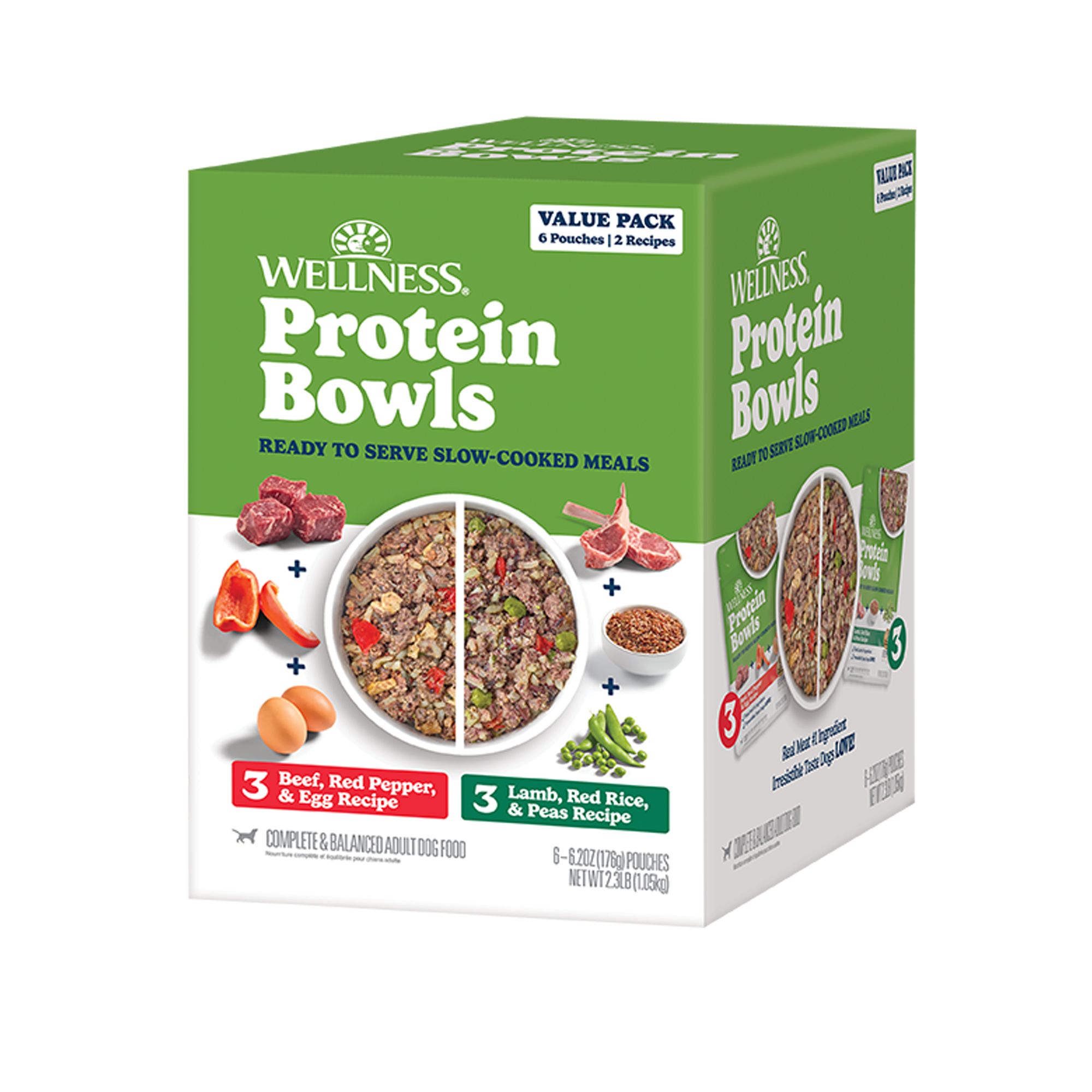
For a concrete example of a higher-moisture, higher-protein option, Petful’s review of whether Wellness Protein Bowls are worth it looks at one shelf-stable fresh line that senior dog owners often ask about.
Which senior dogs should have lower protein?
Dogs that may need protein restriction (check with your vet):
- Diagnosed chronic kidney disease (CKD), typically IRIS stages 2 to 4
- Advanced liver disease with hepatic encephalopathy
- History of urate bladder stones (often from liver shunt or Dalmatian predisposition)
- Some cases of calcium oxalate stones
For these dogs, protein quality and digestibility become more important than raw percentage, and the target is typically a prescription diet, not a generic “senior” formula.
How to switch a senior dog to a higher-protein diet safely
For healthy seniors, the transition protocol is the standard 7 to 10 day gradual switch:
The 7 to 10 day transition schedule
- Days 1 to 3: 25% new food, 75% current food
- Days 4 to 6: 50% new, 50% current
- Days 7 to 9: 75% new, 25% current
- Day 10+: 100% new food
If your senior has a sensitive stomach
Stretch to 14 days for a dog with a sensitive stomach. Monitor weight, stool, and energy. If possible, have your vet run baseline bloodwork before and again 6 to 8 weeks after the switch, particularly for seniors. It both confirms kidneys are healthy going in and establishes a new baseline on the new diet.
Related guides from our sister sites: How Much Protein Does a Dog Need? (Petful), Are Wellness Protein Bowls Worth It? (Petful), Best High-Protein Food for Senior and Active Dogs (WebVet), What Makes Dog Food Complete and Balanced (WebVet).
Frequently asked questions
For a healthy senior, 28-32% crude protein on a dry-matter basis is a reasonable target, well above AAFCO’s 18% minimum for adult maintenance. The goal is to preserve lean muscle mass as the dog ages, not just meet a floor.
Not in a healthy dog. Peer-reviewed research consistently finds no causal relationship between higher dietary protein and the development of kidney disease in dogs with normal kidney function. The lower-protein recommendation applies to dogs with diagnosed chronic kidney disease, and those dogs should be on a prescription therapeutic diet.
There’s no official definition. Practically, crude protein above 30% on a dry-matter basis is generally considered high. Check both the dry-matter number (important) and the ingredient quality (more important).
For most dogs, yes. Animal proteins offer a more complete amino acid profile and higher digestibility than most plant proteins. Dogs can use plant protein, but the leading ingredients on a quality senior formula should be named animal sources.
Generally no, not if the base diet is already appropriately high-protein and complete-and-balanced. Protein powders and extras can throw off the calcium-phosphorus ratio and overall nutrient balance. Upgrade the base diet instead of adding supplements.
Annual bloodwork is standard for dogs 7+, and every 6 months is appropriate for dogs 10+ or any senior with a chronic condition. Bloodwork before any major diet change, and again 6-8 weeks after, is a useful check for seniors.
In clinical practice, veterinarians most commonly suggest Hill’s Science Diet Adult 7+ Senior Vitality, Purina Pro Plan Bright Mind Adult 7+ (for cognitive support), Royal Canin Aging 12+ (for very senior small-breed dogs), and Wellness Complete Health Senior. All are AAFCO complete and balanced for adult maintenance, built around named animal proteins, and include glucosamine and chondroitin for joint support. For seniors with softer appetites, shelf-stable fresh options like Wellness Protein Bowls deliver higher dry-matter protein with fresh-style palatability. The right pick depends on your dog’s age, chewing ability, appetite, budget, and any diagnosed conditions.
The transition age depends on breed size. Large-breed dogs (70+ pounds) typically benefit from senior formulas by age 7. Medium-breed dogs (25-70 pounds) transition around age 8-9. Small-breed dogs (under 25 pounds) often stay on adult formulas longer, sometimes until age 10 or 11, because they age more slowly. The decision is less about age and more about body condition. If your dog is showing reduced activity, muscle loss, or softer appetite, it’s worth a senior-formula trial. Ask your vet to score body condition at annual exams as a guide, and re-check senior-diet fit every 12 months.
Not mandatory for every senior, but helpful for most. Healthy senior dogs on a high-quality adult-maintenance formula with adequate protein (25%+ DMB), joint support, and omega-3s can do well without switching. The case for switching is strongest when you notice muscle loss or reduced activity (senior formulas preserve lean mass), your dog has early joint stiffness (senior formulas add glucosamine and chondroitin), or appetite is softening (senior formulas tend to be more palatable and calorie-controlled). Dogs with diagnosed chronic conditions need a prescription therapeutic diet, not a retail senior formula.
The veterinary bottom line
For the healthy aging dog, higher-quality, higher-protein nutrition is the right direction. AAFCO minimums prevent deficiency; clinical targets preserve muscle, function, and quality of life. Look for named animal proteins at the top of the ingredient list, crude protein around 28 to 32% on a dry-matter basis, and an AAFCO complete-and-balanced statement for your dog’s life stage. For seniors with diagnosed chronic disease, defer to your veterinarian’s therapeutic-diet plan. For everyone else, the old “seniors need less protein” rule has been retired. For a deeper companion piece on high-protein feeding for senior and active dogs, see our high-protein food guide.
The information in this article is educational and not a substitute for an in-person veterinary examination. If your dog has a chronic health condition or is on a prescription diet, consult your veterinarian before changing diets.