
Is JustFoodForDogs Actually Good? Real Reviews & Verdict
Published on June 28, 2026
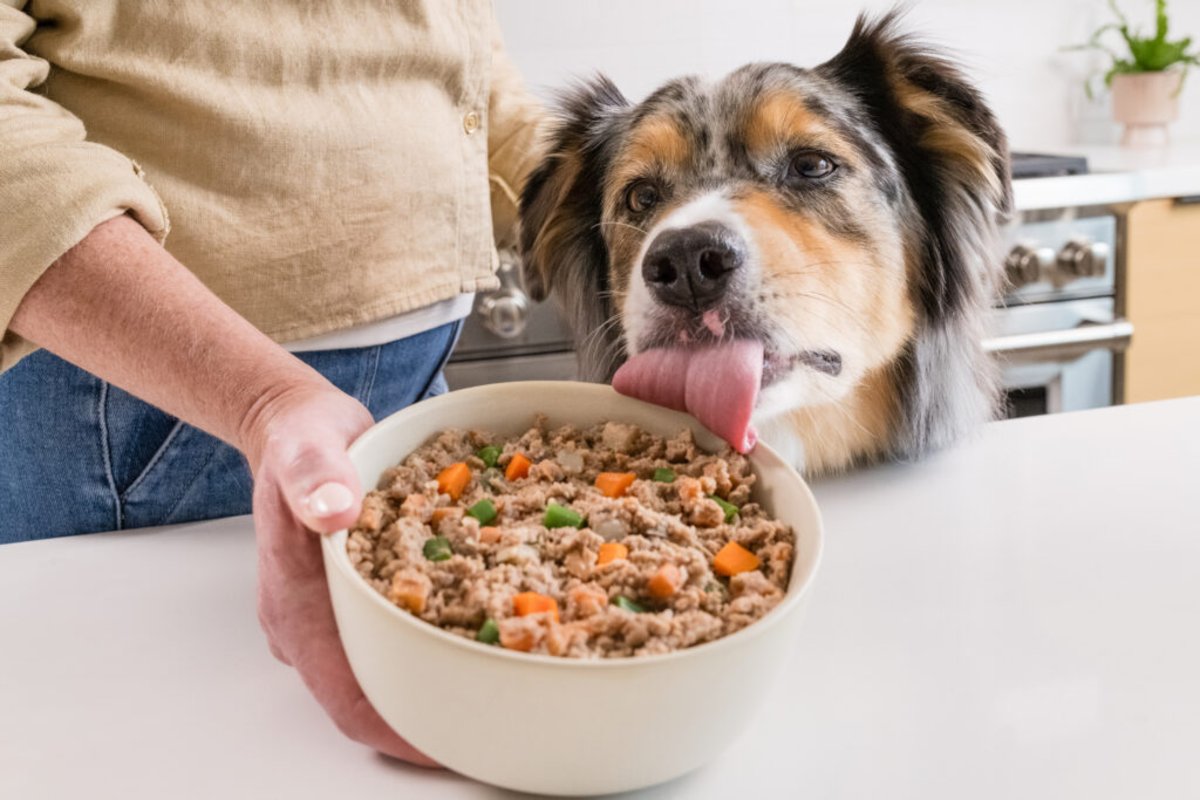
Is JustFoodForDogs actually good? We weighed the company’s credentials, feeding trials, published research and consistent owner feedback to deliver a clear, evidence-based verdict on this fresh diet.
If you’re typing “is JustFoodForDogs actually good” into a search bar, you’ve probably already noticed the noise around this brand: glowing testimonials on one side, skeptical forum threads on the other, and a lot of marketing in between. So instead of walking you through yet another recipe rundown, we did something different. We looked at the evidence itself: what the company’s credentials actually are, what owners consistently report, what the honest fit considerations look like, and what the public record says about recalls and certifications. Then we organized the whole thing around a verdict you can act on.
Here is what the evidence and real feedback say, theme by theme.
All featured products are chosen at the discretion of the author. However, Vetstreet may make a small affiliate commission if you click through and make a purchase.
Is JustFoodForDogs Actually Good? The Verdict Up Front
Yes, JustFoodForDogs is a genuinely good dog food, and that conclusion rests on evidence rather than vibes. Among fresh diets, it has an unusually deep paper trail: veterinarian-developed recipes, feeding trials substantiated using AAFCO procedures, published digestibility research, and a level of ingredient transparency (open kitchens, posted feeding trial certificates) that most of the category simply does not match.
That does not make it the right choice for every household. It is a premium-priced fresh diet that asks more of your budget, your freezer and your planning than a bag of kibble does. But whether the food itself is well made and nutritionally substantiated is the part the evidence can answer, and the evidence answers it favorably.
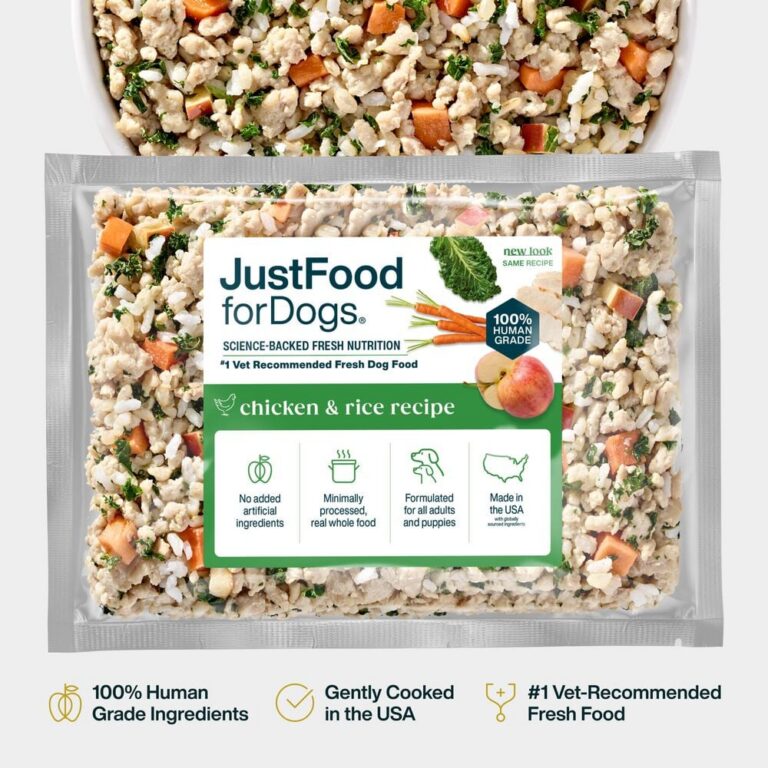
Vetstreet may earn a commission when you click through to JustFoodForDogs, at no extra cost to you.
The Evidence at a Glance
| Claim | What backs it |
|---|---|
| Recipes are developed by qualified experts | The company states it employs board-certified and board-eligible veterinary nutritionists, with recipes created by veterinarians |
| Nutrition is substantiated, not just formulated | Several daily diets (including Beef & Russet Potato, Turkey & Whole Wheat Macaroni, Lamb & Brown Rice) are substantiated by AAFCO feeding trials for maintenance; certificates are published on the company site |
| Testing went beyond industry minimums | A year-long university feeding trial followed 30 adult dogs for 12 months with repeated blood and organ-chemistry panels, exceeding the standard AAFCO protocol |
| The food is highly digestible | Company-commissioned, university-led digestibility research, published in peer-reviewed journals, found its recipes up to 40% more digestible than kibble |
| The science is published, not just claimed | Five peer-reviewed studies plus one published abstract, on digestion, skin and coat health, and immune function health |
| Ingredients are what they appear to be | Meats are USDA-inspected and approved for human consumption; fresh frozen recipes are cooked in open-to-the-public kitchens |
| Recall history is limited and transparently handled | One voluntary recall in 2018, after possible Listeria contamination involving green beans from an outside distributor; no confirmed listeriosis or human illness, though some dogs reportedly had short-term digestive upset |
What the Company’s Credentials Actually Are
Most “is this brand legit” questions come down to three things: who formulates the food, whether anyone tested it on actual dogs, and whether any of the results were published where other scientists could pick them apart. JustFoodForDogs has a concrete answer to all three.
The people. JustFoodForDogs states that it employs board-certified and board-eligible veterinary nutritionists on staff, and that its recipes were created by veterinarians. Board certification in veterinary nutrition (the DACVN credential) is a years-long residency-and-examination process; only a small number of these specialists exist in the United States, and most pet food companies do not have one on payroll. The company has also balanced its recipes to National Research Council (NRC) standards since its founding, per its own FAQ page.
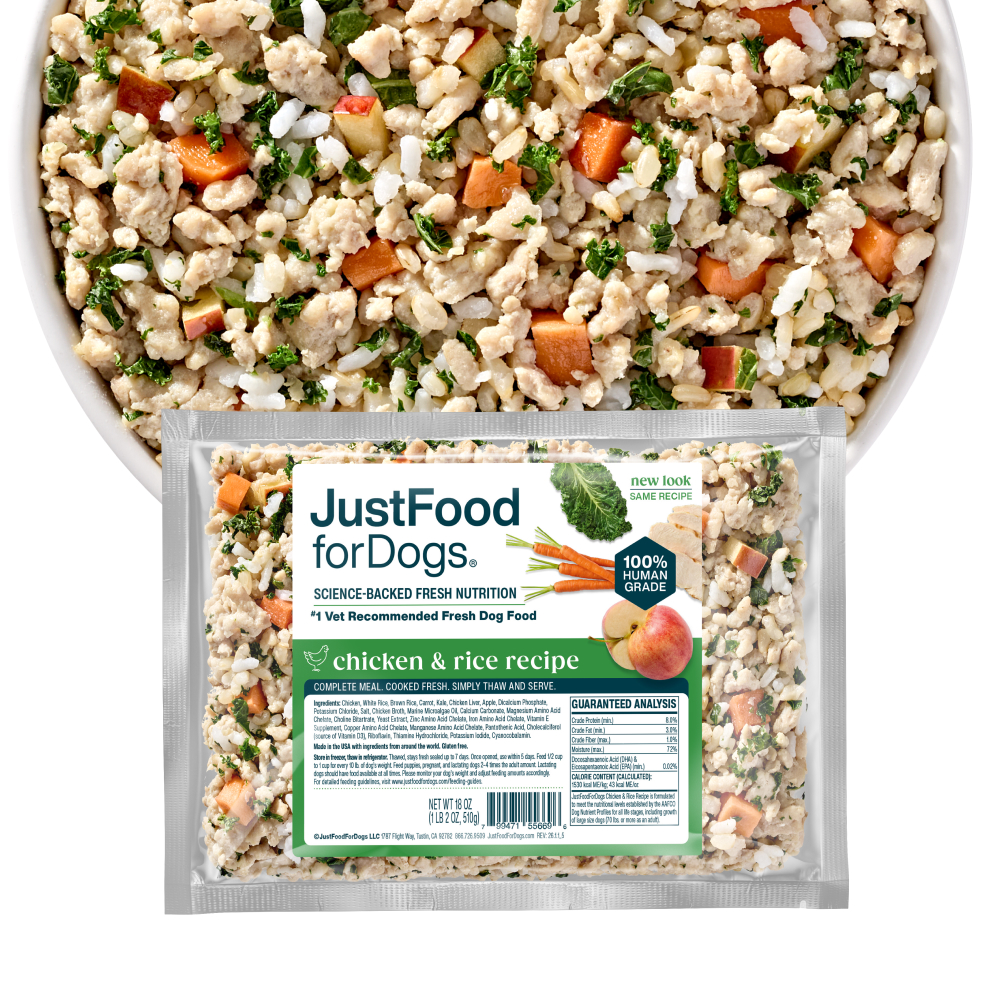
The feeding trials. This is the credential that separates JustFoodForDogs from most of its direct competitors. Several of the company’s daily diets carry the strongest AAFCO substantiation available: “feeding trials using AAFCO procedures substantiate that the recipe provides complete and balanced nutrition for maintenance.” That is the wording you’ll find on product pages like Beef & Russet Potato, and the company publishes its feeding trial certificates for anyone to inspect. The brand’s two all-life-stages recipes, Chicken & Rice and Fish & Sweet Potato, instead meet the AAFCO nutrient profiles by formulation rather than by feeding trial.
More notably, the trial work conducted with Cal Poly went well past the standard protocol. The university’s Animal Care and Use Committee considered the baseline AAFCO feeding trial too rudimentary, so the study followed 30 adult dogs for a full 12 months, with repeated complete blood counts and full internal organ-chemistry panels along the way. The standard AAFCO maintenance protocol requires fewer dogs over 26 weeks with a narrower set of measurements. More dogs, more time and more bloodwork is the detail that matters more than any tagline.
The published research. Per the company’s About Us page, JustFoodForDogs has five published peer-reviewed studies, plus one published abstract, behind it, covering healthy digestion, skin and coat health, and immune function health, plus university-led digestibility research finding its food up to 40% more digestible than kibble. The company describes itself as the only fresh whole-food brand to have commissioned digestibility studies at a major university and published the results in peer-reviewed journals. Peer review is not a guarantee of perfection, but it does mean independent scientists examined the methods and data before publication, which is a meaningfully higher bar than the testimonial pages most brands lean on.
The kitchens. The fresh frozen recipes are cooked in open-to-the-public kitchens (the first opened in Newport Beach, California, after the company’s founding in 2010, billed as the first kitchen of its kind dedicated to fresh, human-grade dog food), along with company-run facilities in Irvine, California, and New Castle, Delaware. Meats are inspected and approved by the USDA for human consumption. You can stand at a counter and watch your dog’s food being made, which is about as far from an opaque supply chain as pet food gets.
The Beef & Russet Potato daily diet carries AAFCO feeding-trial substantiation, the strongest claim level AAFCO procedures allow.

Vetstreet may earn a commission when you click through to JustFoodForDogs, at no extra cost to you.
What Owners Consistently Praise
Credentials tell you a company is serious. Owner feedback tells you whether the food delivers day to day. Across years of customer reviews, independent hands-on tests and the company’s own survey data, the same three themes come up again and again.
Picky eaters actually eat it. Palatability is the single most consistent piece of positive feedback this brand gets. Owners of selective, senior or convalescing dogs frequently describe JustFoodForDogs as the food that finally got eaten with enthusiasm. Independent long-form reviewers who fed the recipes to their own dogs report the same pattern: bowls cleaned, fast.
Visible coat and energy changes. The second recurring theme is owners noticing physical changes within weeks: shinier coats, less flaking, steadier energy. Owner-reported outcomes are not clinical data, and it is fair to hold them loosely, but in this case they line up with the published research themes (skin and coat health, digestion) and with what high-digestibility, omega-3-containing fresh diets can plausibly help support. Recipes such as Beef & Russet Potato include omega marine microalgae oil with guaranteed minimums for DHA and EPA, the omega-3 fatty acids most associated with skin and coat support.
Transparency you can verify. The third theme is trust. Owners repeatedly cite the open kitchens, the full ingredient lists that read like a grocery receipt (ground beef, russet potatoes, carrots, green beans, apples), the published feeding trial certificates, and the ability to walk into a kitchen location and ask questions. In a category where “human-grade” is often a vibe rather than a standard, JustFoodForDogs lets you check its work, and customers notice.
A practical note on transitions
Whatever fresh diet you choose, transition gradually over 7 to 10 days, mixing increasing amounts of the new food into the old. Fresh diets are richer than most kibble, and a slow ramp gives your dog’s digestion time to adjust. Your veterinarian can tailor the pace for sensitive dogs.
Vetstreet may earn a commission when you click through to JustFoodForDogs, at no extra cost to you.
The Fit Considerations: What to Weigh Before You Commit
No honest verdict skips this part. The recurring hesitations owners voice about JustFoodForDogs are real, but they are fit considerations rather than quality problems, and each one has a workaround worth knowing about.
Price. Fresh, human-grade, feeding-trial-substantiated food costs more to make than extruded kibble, and it costs more to buy. For large dogs fed fresh food exclusively, the monthly spend is a genuine budget line. Two things soften this. First, the company openly supports hybrid feeding: using fresh food as a 25% or 50% portion of the diet alongside kibble, which captures much of the palatability and ingredient-quality benefit at a fraction of the cost. Second, formats are priced differently: the shelf-stable Pantry Fresh line and the JustFresh line offer lower-commitment entry points than a full Fresh Frozen subscription.
Freezer space. Fresh Frozen food lives in your freezer, and a multi-week supply for a 70-pound dog is a real storage commitment. If freezer space is your constraint, the shelf-stable Pantry Fresh option stores in a cupboard at room temperature until opened, which removes the problem entirely for travel, small kitchens or backup meals.
Subscription and delivery logistics. Autoship schedules, thaw planning and delivery windows are an adjustment if you’re used to grabbing a bag at the store. Here JustFoodForDogs has an advantage most direct-to-consumer fresh brands lack: it is not subscription-only. The food is sold through its own kitchen locations, in pantry sections at major pet retailers, and online, so you can buy it the way you prefer rather than the way a billing model prefers. If you do subscribe, treat the first month as a calibration period for portion sizes and delivery cadence.
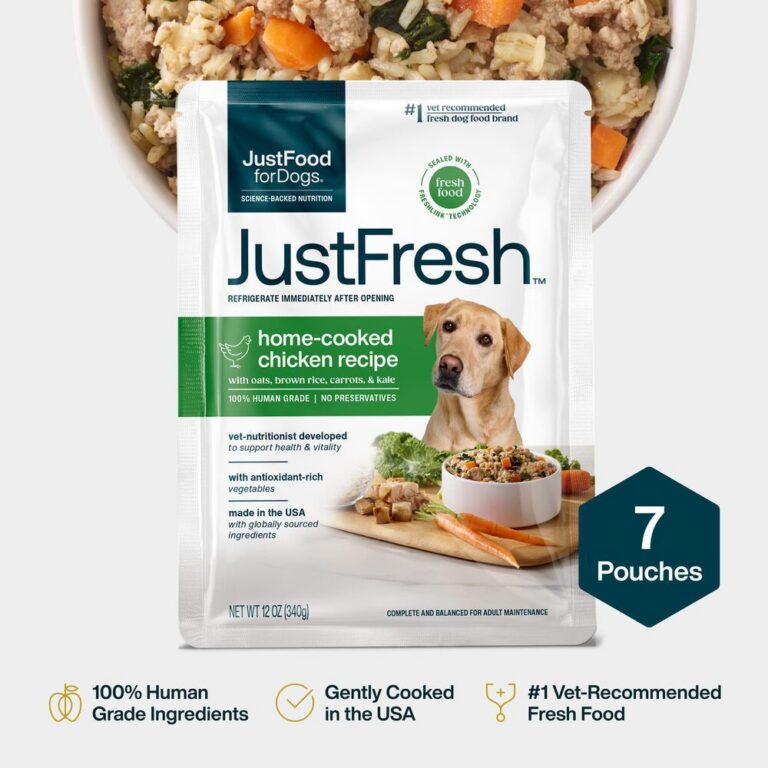
The JustFresh line is sold through retail channels, a lower-commitment way to trial the brand without a freezer full of food.
Vetstreet may earn a commission when you click through to JustFoodForDogs, at no extra cost to you.
The Trust Questions People Actually Google
Type this brand’s name into a search engine and the autocomplete tells you what people really want to know: recall history, WSAVA, AAFCO. These deserve precise answers, because this is where the most misinformation circulates.
Has JustFoodForDogs been recalled?
Once, and the details matter. In early 2018, JustFoodForDogs voluntarily recalled three of its daily diets after possible Listeria monocytogenes contamination involving green beans from an outside distributor. The recall covered products made between November 1, 2017 and January 14, 2018. According to the FDA’s recall notice, no confirmed listeriosis was reported in dogs and there were no reports of human illness.
Read carefully, the company’s handling reflects reasonably well on it. The implicated ingredient came into the kitchen from an outside distributor, the company recalled voluntarily out of an abundance of caution. One voluntary recall in a decade and a half, with no confirmed listeriosis and no human illness reported, is a strong food-safety record for any food company, human or pet.
Is JustFoodForDogs WSAVA approved? Is it AAFCO approved?
Neither, because neither organization approves anything, and any brand telling you otherwise is misleading you.
The World Small Animal Veterinary Association (WSAVA) publishes Global Nutrition Guidelines that include questions veterinarians and owners should ask of any food manufacturer: Do you employ qualified nutritionists? Do you run feeding trials? Do you publish peer-reviewed research? Do you maintain rigorous quality control? WSAVA does not certify, endorse or approve brands. The accurate question is whether a brand can answer those questions well, and JustFoodForDogs answers all four with specifics, as it documents publicly: veterinary nutritionists on staff, AAFCO feeding trials that exceeded the baseline protocol, five peer-reviewed publications, and quality-control measures adapted from the human food industry.
AAFCO (the Association of American Feed Control Officials) works similarly. It sets model nutrient profiles and feeding-trial protocols that state regulators adopt, but AAFCO itself does not test, approve or certify any pet food. What a brand can legitimately claim is that its food meets AAFCO nutrient profiles by formulation, or, the stronger claim, that feeding trials using AAFCO procedures substantiate the food. JustFoodForDogs uses both: several of its daily diets carry the feeding-trial substantiation, the highest level the AAFCO framework offers, while its all-life-stages recipes meet the nutrient profiles by formulation.
How to read ‘approved’ claims anywhere
No pet food is “WSAVA approved” or “AAFCO approved,” because neither body approves products. When you see those phrases in marketing or forum posts, treat them as a signal to check the brand’s actual answers: who formulates the food, whether feeding trials were run, and whether research was published. Those are the checkable facts.
What about the skeptical threads you’ll find online?
You will find criticism of every premium pet brand online, and JustFoodForDogs is no exception. Notice what the criticism is about: overwhelmingly price, subscription mechanics and shipping, the fit considerations covered above, rather than food safety, formulation quality or ingredient honesty. On the dimensions that determine whether a food is good, the verifiable record (feeding trials, published studies, USDA-inspected ingredients, one voluntary recall handled transparently) consistently points the same direction.
Who JustFoodForDogs Is a Fit For (and Who It Isn’t)
A strong fit if you:
- Have a picky, senior or recently recovered dog who has gone off kibble, where palatability is the immediate problem to solve
- Want evidence over marketing: feeding trials, published research and inspectable kitchens matter to you
- Are dealing with a dog whose veterinarian has suggested a fresh, highly digestible diet, including dogs whose vets recommend the company’s separate line of veterinary-support recipes, formulated to help support dogs with specific health needs under professional guidance
- Can absorb a premium food budget, or are open to hybrid feeding to capture most of the benefit at part of the cost
- Prefer a fresh brand you can buy in person at retail rather than committing to subscription-only delivery
A weaker fit if you:
- Are feeding multiple large dogs on a tight budget, where even hybrid fresh feeding strains the math
- Have minimal freezer space and no interest in the shelf-stable formats
- Have a healthy, unfussy dog thriving on a quality kibble, where the practical upside of switching is smaller
- Want zero meal-planning overhead: thawing and portioning fresh food is a routine, not a scoop
The middle path deserves emphasis because it is the one most owners overlook: this is not an all-or-nothing decision. A fresh topper or a 25% fresh portion is a legitimate, company-supported way to use JustFoodForDogs, and it is the entry point we would suggest for most kibble-fed dogs whose owners are curious.
Final Verdict
Strip away the marketing on both sides, the brand’s own superlatives and the internet’s reflexive skepticism, and the evidence base for JustFoodForDogs is among the strongest in fresh pet food. The claims that matter most are the ones you can verify: board-certified veterinary nutrition expertise behind the recipes, AAFCO feeding-trial substantiation on several daily diets with the certificates posted publicly, a year-long university trial that exceeded the standard protocol, five peer-reviewed studies, USDA-inspected human-grade ingredients, with the fresh frozen recipes cooked in kitchens you can walk into, and a single voluntary recall handled transparently, with no confirmed listeriosis or human illness reported.
So, is JustFoodForDogs actually good? Yes. It is a credible, rigorously substantiated fresh diet with consistently strong owner feedback on the things owners can observe: appetite, coat and energy. The deciding factors are practical, not qualitative: budget, freezer space and your tolerance for meal logistics. If those work for your household, even partially through hybrid feeding, this brand earns its reputation. Talk with your veterinarian about whether a fresh diet makes sense for your individual dog, and if the answer is yes, JustFoodForDogs belongs on your shortlist.
Frequently Asked Questions
Yes. JustFoodForDogs is a well-substantiated fresh diet: its recipes were developed with board-certified veterinary nutritionists, several of its daily diets are substantiated through feeding trials using AAFCO procedures, and the company has five published peer-reviewed studies behind its food. The main trade-offs are price, freezer space and delivery logistics, which are fit considerations rather than quality concerns.
The evidence supports it. The food is balanced to National Research Council standards, with several daily diets substantiated through AAFCO feeding trials, and made from USDA-inspected, human-grade ingredients. University-led digestibility research published in peer-reviewed journals found the recipes up to 40% more digestible than kibble, and the company’s published studies cover healthy digestion, skin and coat health, and immune function health. As with any diet change, confirm fit with your veterinarian.
By the standards veterinary nutritionists care about, yes. It checks the boxes the WSAVA Global Nutrition Guidelines tell owners to ask about: qualified nutrition experts on staff, feeding trials, published research and documented quality control. Few fresh-food brands can answer all four with specifics; JustFoodForDogs can.
Many do, particularly for picky eaters and dogs that do better on highly digestible fresh diets. The company markets itself as the number one vet-recommended fresh dog food, and more concretely, it works directly with the veterinary community and offers a separate line of veterinary-support recipes available through a veterinarian. Individual recommendations always depend on your dog, so ask your own vet whether a fresh diet fits your dog’s needs.
There is no single healthiest dog food, because the right answer depends on your dog’s age, size, health status and your veterinarian’s guidance. Instead of hunting for a number one, look for the markers that predict quality: complete and balanced nutrition substantiated by AAFCO feeding trials or nutrient profiles, qualified veterinary nutritionists behind the recipes, published research, transparent sourcing and a clean recall record. JustFoodForDogs performs well on all of those markers.