Probiotics for Kittens: Safe Digestive Support for a New Cat
Published on July 23, 2026
Probiotics for kittens may support digestion during selected diet transitions or mild digestive upsets, but young cats deserve extra caution. Parasites, infection, abrupt food changes, stress, and dietary intolerance are common, and kittens can become dehydrated or lose energy quickly.
This article is sponsored by Animal Biome. All veterinary information has been reviewed by the Vetstreet editorial team for accuracy. Vetstreet receives compensation from Animal Biome for this content; opinions and clinical guidance are our own.
All featured products are chosen at the discretion of the author. However, Vetstreet may make a small affiliate commission if you click through and make a purchase.
Key Takeaway: A kitten with diarrhea needs a cause and hydration check before a supplement experiment. Call the veterinarian early if the kitten is very young, unvaccinated, weak, vomiting, or not eating.
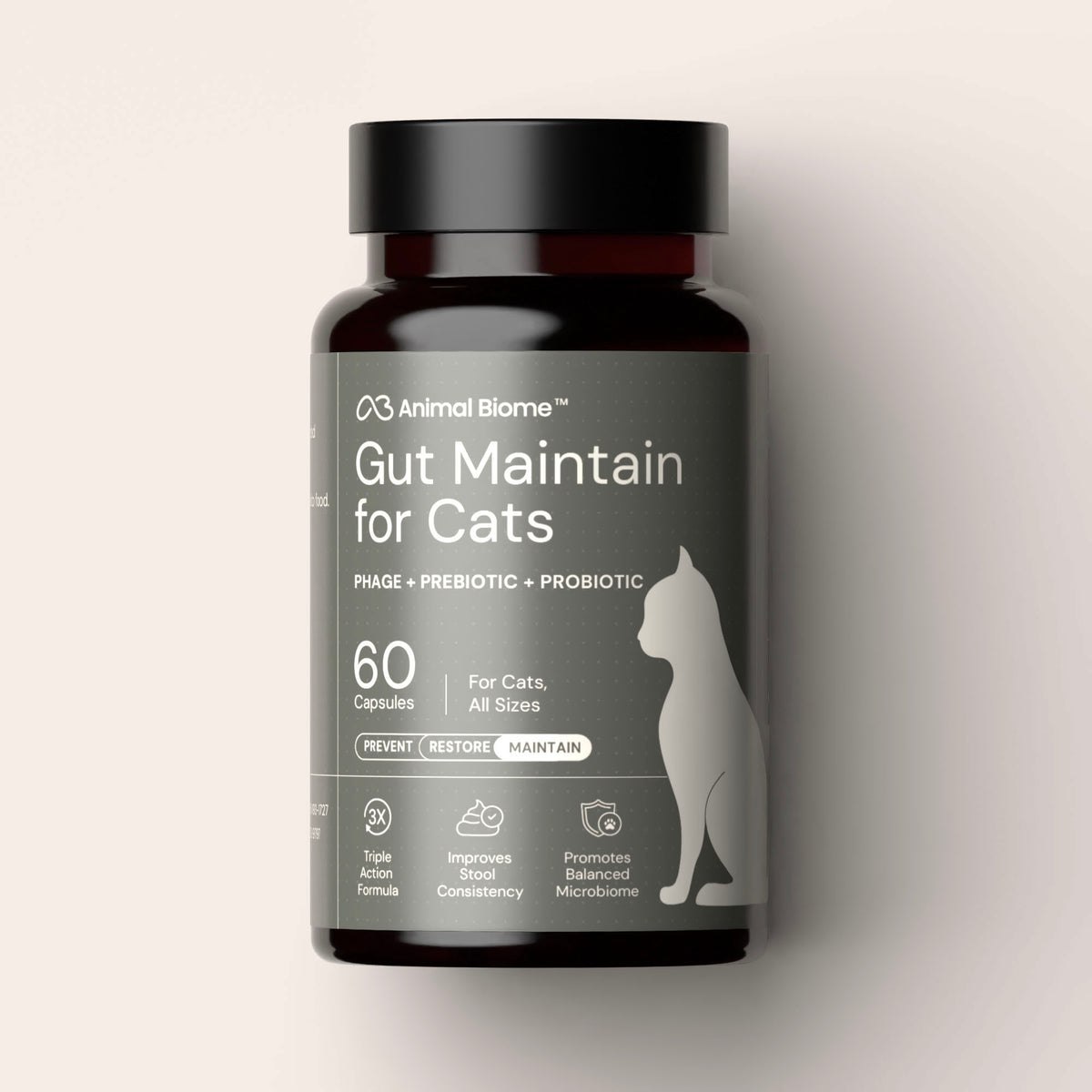
Gut Maintain is a daily maintenance formula intended for cats, including digestive support for a stable routine.
Animal Biome positions Gut Maintain for Cats as a cat-specific option for daily digestive maintenance and occasional soft stool. For a kitten, product choice should still follow the label and the veterinarian’s advice about age, size, symptoms, and the reason for use.
Why kittens get digestive upset
Moving to a new home, changing food, deworming, vaccination-day stress, scavenging, and infection can all affect stool. Roundworms, hookworms, coccidia, and Giardia are important possibilities. A probiotic does not remove parasites or replace a fecal test.
Call the veterinarian for repeated watery diarrhea, blood, black stool, vomiting, a swollen or painful abdomen, weakness, dehydration, poor appetite, or weight loss. Bring a fresh stool sample if the clinic requests one.
Age and life stage change the risk
A kitten’s age matters because the digestive system, immune defenses, feeding pattern, and exposure history are changing at the same time. A bottle-fed neonate, a recently weaned kitten, and a six-month-old adolescent do not have the same nutritional needs or margin for fluid loss. Very young kittens may weaken quickly when they are not taking in enough calories or fluid.
Weaning is a common transition point. Moving from milk or formula to solid food changes both the nutrients reaching the intestine and the kitten’s daily routine. A gradual, consistent transition is easier to interpret than several foods, toppers, and supplements introduced together. Newly adopted kittens may also face transport stress, a different water source, new treats, and exposure to other cats.
Infectious and parasitic causes deserve particular attention in young cats. Cornell’s feline health guidance notes that coccidia can cause significant intestinal disease in kittens and that Giardia may spread through fecal contamination. A probiotic may be part of supportive care, but it cannot clear either organism. Fecal testing, prescribed treatment, sanitation, and follow-up are what address the cause.
A practical urgency check
Use the whole kitten, not stool appearance alone, to judge urgency:
- Call promptly: diarrhea continues, appetite drops, the kitten loses weight, or soft stool keeps returning.
- Seek same-day guidance: repeated watery stool, vomiting, visible blood, marked lethargy, dehydration, or a painful or swollen abdomen.
- Treat as urgent: a very young or unvaccinated kitten becomes weak, cannot keep food or water down, has pale gums, feels cold, or is difficult to wake.
Do not give an over-the-counter human antidiarrheal unless a veterinarian specifically directs it. Some human products are unsafe for cats.
What the veterinarian may check
A microbiome profile is different from fecal parasite testing and should not delay immediate care for a sick kitten.
The workup is guided by age, vaccination and deworming history, duration, severity, diet, medication, and exposure to other animals. The veterinarian may assess hydration, temperature, body weight, abdominal comfort, and growth. A fresh fecal sample may be examined for parasites or sent for additional testing. Blood work or imaging may be appropriate when the kitten is systemically ill, losing weight, or not responding as expected.
Bring a short timeline that includes:
- When the stool changed and how many bowel movements occur each day
- Every food, treat, formula, supplement, and medication given
- Vomiting, appetite, water intake, energy, and weight trend
- Adoption, travel, boarding, vaccination, deworming, and contact with other cats
- What has already been tried and whether the response lasted
That record helps the veterinarian separate a brief transition problem from parasites, infection, food intolerance, or another condition that requires targeted care.
When a probiotic may help
A veterinarian may suggest a kitten-appropriate probiotic during a gradual food transition, after selected medication, or as part of care for a mild digestive upset. The goal should be specific, such as improving stool consistency while the kitten remains bright and hydrated.
Feline probiotic research is growing but still limited. A 2024 review of probiotics and cat health found promising results while emphasizing the need for more feline-specific studies. Avoid assuming that evidence in adult dogs or humans applies directly to kittens.
The evidence is also product-specific. Probiotic is a category, not a single treatment. Different products contain different bacteria or yeasts, amounts, inactive ingredients, and storage requirements. A study of one identified organism does not prove that a vague multi-ingredient blend will produce the same result.
A reasonable trial starts with a stable kitten whose urgent causes have been considered. The goal might be more consistently formed stool during a food transition or after a veterinarian-approved treatment plan. It should not be to mask worsening diarrhea or avoid a fecal test. Our general guide to probiotics for cats covers label reading and goal setting that also applies as a kitten grows.
Probiotics, prebiotics, and beneficial yeast are different
These terms are often grouped together, but they describe different approaches:
- Probiotics are live microorganisms intended to provide a benefit when given in an adequate amount.
- Prebiotics are substrates used by selected gut microbes. They are not live bacteria.
- Synbiotics combine microorganisms with substrates intended to support them.
- Beneficial yeasts, such as Saccharomyces boulardii, are biologically different from bacterial probiotics.
- Broader microbiome products provide a more diverse microbial community and should not be treated as interchangeable with a conventional probiotic.
For kittens, the finished product matters more than the category name. Ask why the chosen ingredients fit the kitten’s problem, how the product should be stored, and what change would show that it is helping.
How to choose safely
Look for a product formulated for cats with identified organisms, a viable amount, expiration date, storage instructions, and a clear intended use. Avoid vague proprietary blends and products that promise to cure infection or diarrhea.
Do not use yogurt as a precise probiotic dose. Some kittens tolerate small amounts of dairy poorly, and flavored products may contain excess sugar or unsafe ingredients. Human supplements can also have unsuitable flavorings or amounts.
Quick reference
| Check | Why it matters |
|---|---|
| Cat-specific formulation | Reduces guesswork about organism, amount, and inactive ingredients |
| Clear storage and expiration | Live microorganisms must remain viable |
| One defined goal | Makes the response measurable |
| Stable diet during the trial | Prevents several changes from obscuring the result |
Also read the inactive ingredients. Flavorings can affect food-allergy or diet trials, and a powder that a kitten refuses may reduce food intake. If the kitten is on a prescribed elimination diet, confirm that the supplement does not introduce an unapproved animal protein or flavor.
Quality questions are practical. Does the label name the organism, state an amount, provide an expiration date, explain storage, and list a manufacturer contact? Does it promise support for a defined purpose, or does it claim to cure infection, allergy, and chronic disease at once? Transparent limits are a positive sign.
How to give a probiotic without disrupting meals
Palatability matters because a growing kitten needs reliable calorie intake. If the label permits opening a capsule or mixing powder with food, use only a small portion of a familiar meal first so the full serving is consumed. Do not hide a strongly flavored product in the kitten’s entire daily food supply and risk creating food aversion.
Keep the rest of the routine steady during the trial. Avoid changing food, adding pumpkin, introducing several treats, and starting multiple supplements on the same day. One controlled change makes both improvement and intolerance easier to recognize.
Track a small set of outcomes:
- Stool consistency and frequency
- Appetite and whether meals are finished
- Water intake and signs of dehydration
- Energy, play, grooming, and social behavior
- Body weight and expected growth
Set a recheck point with the veterinarian. Stop and call sooner if stool becomes more watery, vomiting develops, appetite drops, or the kitten becomes quiet or weak.
How Animal Biome’s Gut Maintain for Cats may fit
Animal Biome’s Gut Maintain for Cats currently combines S. boulardii, an MOS prebiotic, and a bacteriophage blend. Animal Biome positions it for daily digestive maintenance and occasional soft stool.
A steady diet, hydration, parasite control, and predictable routine support a kitten’s developing digestive system.
Ask the veterinarian whether the formula is appropriate for the kitten’s age, size, health, and current medication. Follow the current label or veterinary directions. Do not combine it with several other digestive products at the same time unless the veterinarian has designed the plan.
Animal Biome describes the formula as a three-part maintenance approach. S. boulardii is the probiotic yeast component, MOS is a prebiotic, and the PreforPro bacteriophage blend is intended to act on selected bacteria. That ingredient description explains how Gut Maintain differs from a single-strain bacterial probiotic, but it does not prove that every kitten with diarrhea needs the finished product.
The most appropriate candidate is a stable kitten with a defined maintenance or occasional-soft-stool goal after urgent causes have been considered. A kitten with repeated vomiting, weight loss, significant dehydration, parasites, suspected infection, or a possible foreign object needs diagnosis and treatment first.
Before starting, ask four questions:
- Is this product appropriate for this kitten’s age and medical history?
- Does it fit the current diet, medication, and parasite-treatment plan?
- Which outcome should improve, and by what recheck date?
- Which changes mean the product should be stopped and the kitten examined?
Animal Biome’s current manufacturer page says the capsules may be given whole or opened and mixed with food, and it advises veterinary consultation for pets with health conditions. For a kitten, follow the veterinarian’s individualized direction rather than extrapolating from an adult cat or a customer review.
Support a growing gut without a supplement overload
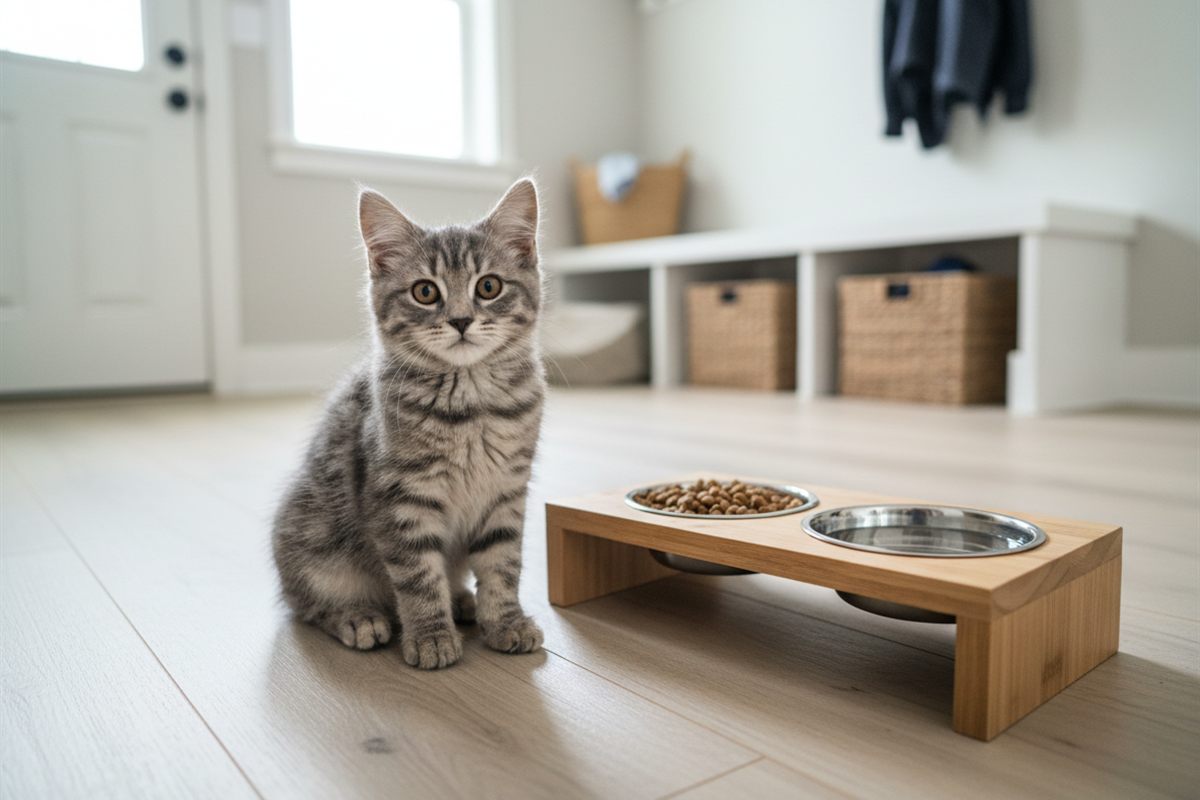
Feed a complete and balanced kitten diet, transition food gradually, keep fresh water available, and follow parasite-control recommendations. Limit rich treats and prevent access to trash, string, plants, and human medication.
Track stool, appetite, water intake, weight, and energy. A supplement trial is successful only if the kitten remains well and a defined measure improves. If progress stalls, reassess the cause instead of simply adding another product. Persistent diarrhea in a growing kitten may also warrant the cause-based approach in our guide to probiotics for cats with diarrhea.
Build a seven-day digestive record
A simple daily record can make the next veterinary conversation much more useful. Note meals and treats, medication, stool frequency and consistency, vomiting, appetite, water intake, energy, and weight when available. Photos of abnormal stool can help show changes that are difficult to describe.
Look for trends rather than one perfect bowel movement. A kitten may have a temporary soft stool during a transition and then return to normal. Repeated deterioration, poor growth, or a cycle of brief improvement and relapse suggests that the underlying cause needs another look.
The foundation remains positive and straightforward: a complete kitten diet, clean water, routine preventive care, prompt treatment of parasites or infection, safe food transitions, and a calm environment. A well-chosen probiotic can complement those measures when it answers a clear question.
Frequently asked questions
Some cat-specific products may be appropriate, but safety depends on the kitten and the finished product. Ask the veterinarian, especially for very young, ill, immunocompromised, or underweight kittens.
They may support stool quality in some cases, but they do not treat every cause. Parasites, infection, dehydration, and dietary problems require specific care.
Use daily products only for a defined goal and according to the label or veterinary instructions. Healthy kittens do not automatically need several daily supplements.
Set the duration with the veterinarian and record a measurable outcome. Call sooner if diarrhea worsens or the kitten becomes quiet, vomits, or stops eating.
Do not assume a human product is suitable. The organisms, amount, flavoring, capsule size, and inactive ingredients may not fit a kitten. A cat-specific product chosen with veterinary guidance reduces that uncertainty.
Stop adding other new products and contact the veterinarian. Worsening stool may reflect intolerance, progression of the original illness, or a separate cause. Seek urgent care if the kitten is weak, dehydrated, vomiting, not eating, or passing blood.
The bottom line
Probiotics for kittens can be useful support, but safety begins with triage, a complete kitten diet, hydration, parasite control, and a stable routine. Animal Biome’s Gut Maintain for Cats gives owners a clearly labeled, cat-specific maintenance option to discuss with the veterinarian when that goal fits the kitten.
Sources
- Cornell Feline Health Center: Gastrointestinal Parasites of Cats
- Probiotics and Cat Health review
- Animal Biome Gut Maintain for Cats
This article is educational and is not a substitute for individualized veterinary advice, diagnosis, or treatment.