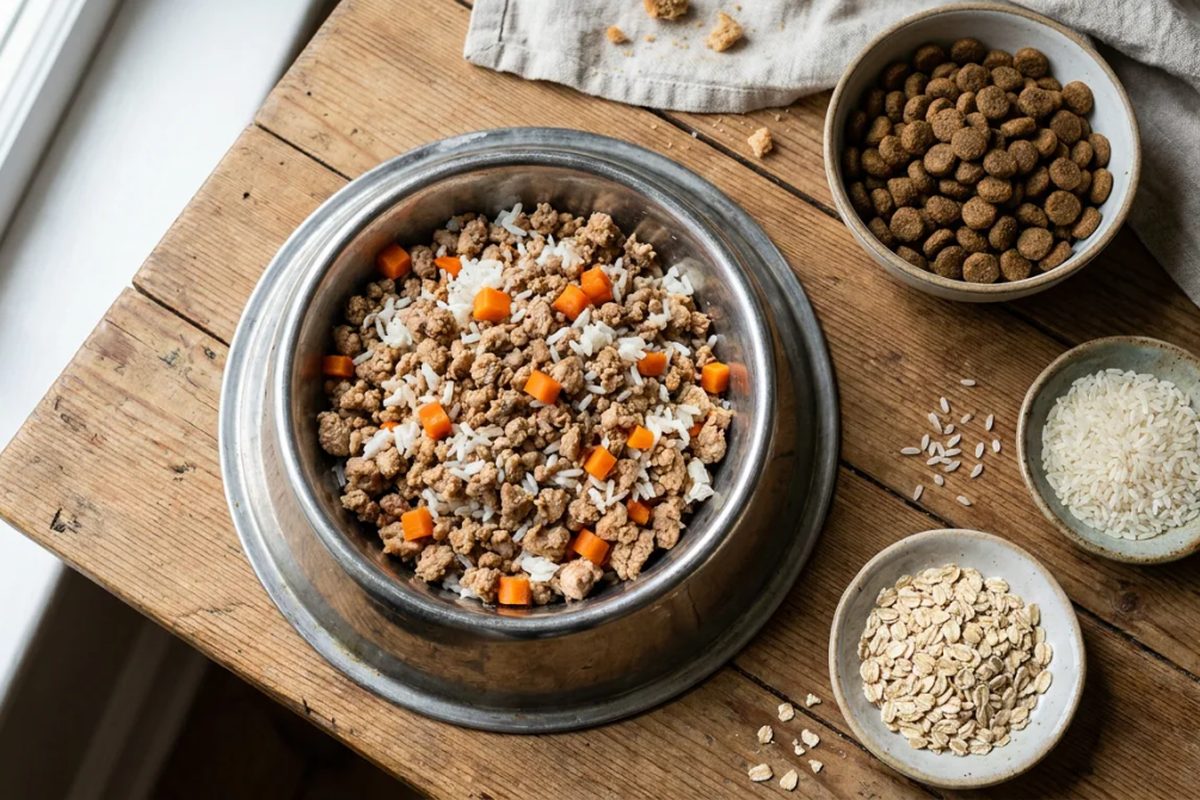
Probiotics for Cats with Diarrhea: What Actually Works and When to Use Them
Published on July 23, 2026
Probiotics for cats with diarrhea may support stool quality in some situations, but the result depends on the cause of diarrhea and the specific product. Parasites, infection, diet, medication, pancreatitis, inflammatory disease, thyroid disease, and cancer can produce similar signs. A supplement cannot safely stand in for diagnosis.
This article is sponsored by Animal Biome. All veterinary information has been reviewed by the Vetstreet editorial team for accuracy. Vetstreet receives compensation from Animal Biome for this content; opinions and clinical guidance are our own.
All featured products are chosen at the discretion of the author. However, Vetstreet may make a small affiliate commission if you click through and make a purchase.
Key Takeaway: Treat diarrhea as a symptom first. Choose a probiotic only after deciding whether the cat needs urgent care, diagnostic testing, or targeted digestive support.
S. boulardii is a beneficial yeast used in some digestive-support plans.
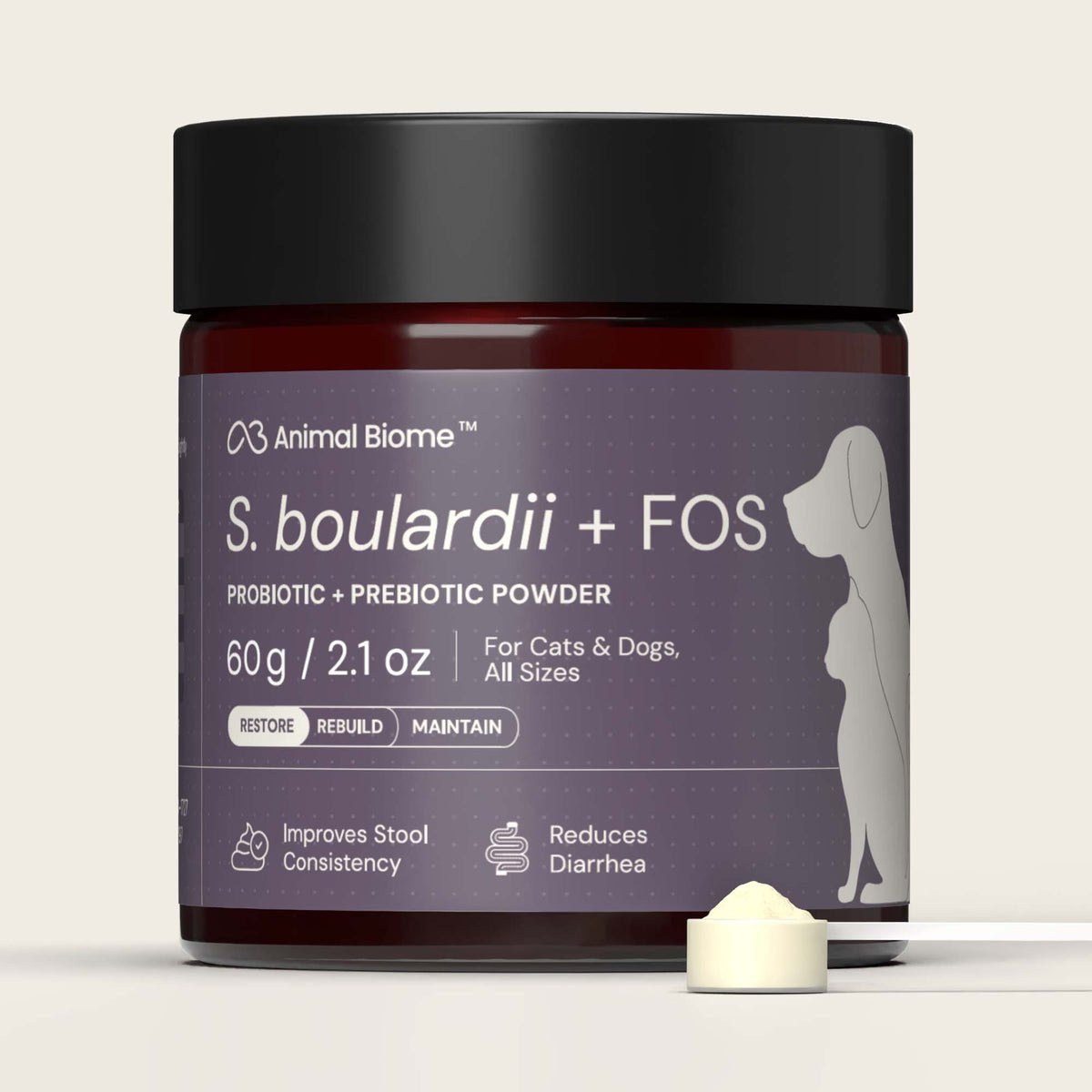
Animal Biome offers two different tools for two different digestive-support questions. Its S. boulardii + FOS Powder provides targeted yeast and prebiotic support, while Gut Restore for Cats supplies a broader community of screened cat-specific microbes for more substantial microbiome restoration.
First decide how urgent the diarrhea is
Call the veterinarian promptly for repeated watery diarrhea, vomiting, blood, black stool, pain, weakness, dehydration, appetite loss, or weight loss. Kittens, seniors, and cats with another medical condition need earlier guidance.
For a mild, brief change in an otherwise bright cat, record stool consistency, frequency, diet, treats, medication, and stress. If the sign persists or returns, schedule an examination and bring a fresh stool sample if requested.
Acute versus chronic diarrhea changes the plan
Acute diarrhea starts suddenly and has been present for a short time. Chronic diarrhea persists or repeatedly returns. The distinction matters because a mild acute episode in an otherwise well adult may resolve with a simple veterinary plan, while chronic or recurrent diarrhea is more likely to need diagnostic testing, a controlled diet trial, and structured follow-up.
Also note whether the pattern looks more like small- or large-intestinal diarrhea. Small-intestinal disease can produce a larger volume of loose stool, weight loss, or dark digested blood. Large-intestinal disease may cause frequent small stools, urgency, mucus, straining, or fresh red blood. These clues help the veterinarian, but they cannot identify the cause by themselves.
Do not fast a cat or make a major diet change without veterinary direction. Cats need adequate nutrition, and prolonged food refusal can create additional risk. Call promptly if the cat eats much less, refuses food, or cannot keep food or water down.
What the veterinary workup may include
Repeated diarrhea, vomiting, appetite loss, or weight change deserves a cause-focused veterinary workup.
The veterinarian will combine the cat’s history with a physical examination and hydration assessment. Bring a complete list of foods, treats, supplements, and medication, including anything started shortly before the diarrhea. A photo and a fresh stool sample can help when the clinic requests them.
Fecal testing may look for parasite eggs, Giardia, or other infectious concerns, but no single test detects every cause on every occasion. Cornell’s guidance on feline gastrointestinal parasites notes that parasites can cause diarrhea, vomiting, appetite loss, anemia, and dehydration. A probiotic does not eliminate a parasite.
Persistent, recurring, or severe diarrhea may lead to blood and urine tests, cobalamin and folate assessment, pancreatic testing, imaging, a controlled diet trial, or other diagnostics. The exact sequence depends on age, weight trend, examination findings, and concurrent vomiting or illness. Biopsy may be discussed when chronic intestinal disease or inflammatory bowel disease remains a concern.
The workup creates a safer supplement decision. It can reveal when targeted treatment is needed, when a product might complement the plan, and which outcome should be tracked.
What owners should and should not do at home
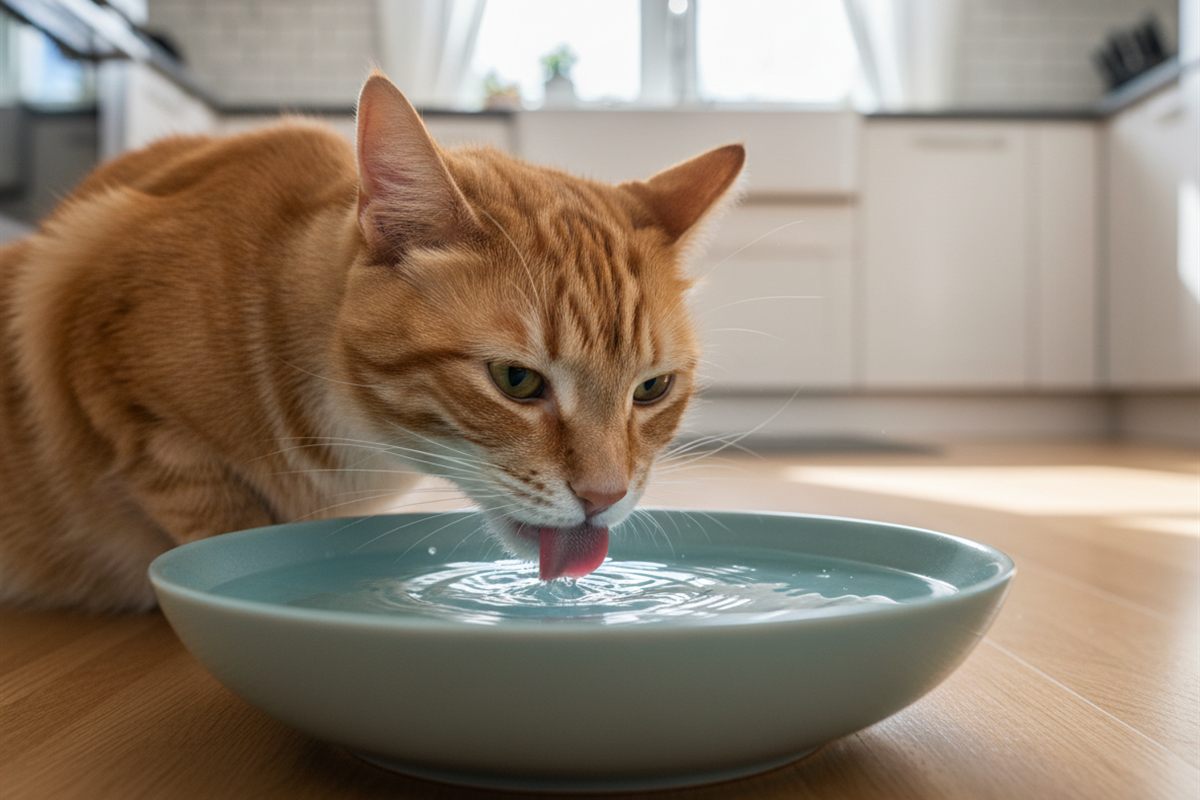
For a mild stool change in a bright adult cat, follow the clinic’s advice, keep the environment calm, and make observations easy to interpret. Maintain access to fresh water and the approved food. Scoop the litter box often enough to count bowel movements and notice mucus or blood. In a multi-cat household, ask the veterinarian whether temporary separation is useful and safe for identifying the affected cat.
Do not give human antidiarrheal medicine unless the veterinarian specifically directs it. Drugs that change intestinal movement or contain added ingredients can be inappropriate for cats and may hide a worsening condition. Do not use leftover antibiotics, dewormers, or medication prescribed for another pet. Similar-looking diarrhea can have very different causes.
Avoid a rapid sequence of remedies. Pumpkin, fiber, a probiotic, a prebiotic, a new food, and a bland diet started together create an unplanned combination rather than a meaningful trial. More ingredients can also make palatability and stool worse. If the veterinarian recommends more than one change, ask which starts first and what interval makes the response interpretable.
Food refusal deserves special attention. Cats should not be fasted at home to “rest the gut” without veterinary instructions. If diarrhea is accompanied by poor appetite, call the clinic and explain how much the cat has eaten and for how long. A cat that is overweight, ill, or already eating poorly can face additional risk when intake drops.
Use infection precautions when the cause is unknown. Wash hands after handling stool, clean contaminated surfaces with the product recommended by the veterinarian, and prevent other pets from sharing soiled litter areas when possible. Some parasites and infections can spread between animals, and some feline intestinal parasites have implications for people. The clinic can advise whether other pets need testing or treatment.
What the evidence says
A systematic review of biotics in cats found that several probiotic trials reported improved fecal consistency, but the authors rated the overall evidence as limited and called for better studies. That means probiotics are reasonable to discuss, but no product should promise to stop every case of diarrhea.
Effects are strain- and product-specific. A study of one bacterial strain does not prove the same result for another organism, a human supplement, or an unlabeled blend. Finished-product quality, storage, expiration, and the cat’s condition matter.
The review included probiotics, prebiotics, synbiotics, and postbiotics, which should not be treated as one intervention. Studies used different organisms, amounts, diets, populations, and outcome measures. An improvement in average stool score across a study group does not guarantee that every cat will respond, and a negative result for one product does not invalidate every other product.
For an owner, the most meaningful evidence has three layers:
- The organism or ingredient has evidence relevant to the intended goal.
- The finished product identifies what it contains and how viability is maintained.
- The individual cat shows a repeatable improvement without new problems.
S. boulardii is a yeast rather than a bacterial probiotic. That biological difference can matter when a veterinarian is coordinating it with antibiotics or a broader microbial product, but it does not make the yeast automatically appropriate for every case. Feline evidence is still less extensive than human evidence, so human diarrhea studies should not be used as a direct promise for cats.
Prebiotics such as fructooligosaccharides provide substrates that selected microorganisms can use. They may be paired with a live microorganism, but rapid or excessive fiber changes can also worsen gas or stool quality in some cats. Follow the product label and veterinary advice rather than combining separate products to recreate a formula.
Evidence-by-goal framework
| Goal | Track | Boundary |
|---|---|---|
| Firmer stool | Score and frequency | Cause remains unknown |
| Medication support | Stool and appetite | Prescription stays unchanged |
| Broader restoration | Recurring pattern | Diagnosis still matters |
| Measurement | Bacterial baseline | Not a diagnosis |
Bacterial probiotics, S. boulardii, and prebiotics
Quick reference
| Option | What it provides | Useful question |
|---|---|---|
| Bacterial probiotic | One or more live bacterial strains | Is there evidence for this strain and goal? |
| S. boulardii | A beneficial yeast | Is it appropriate for this cat and medication plan? |
| Prebiotic | A substrate used by gut microbes | Could the amount worsen gas or loose stool? |
| Broad restoration | A community of screened microorganisms | Does the cat need restoration rather than simple maintenance? |
Animal Biome’s S. boulardii + FOS Powder combines the beneficial yeast S. boulardii with a prebiotic. Current product information lists 6.6 billion CFU of S. boulardii and 225 mg of GOFOS per scoop. Follow the product label and veterinary advice rather than adapting a human dose.
Match the Animal Biome tool to the goal
Animal Biome’s S. boulardii + FOS Powder and Gut Restore for Cats are not interchangeable. The powder is a targeted combination of a beneficial yeast and a fructooligosaccharide prebiotic. Animal Biome’s current label lists no inactive ingredients and positions the product for cats and dogs, including occasional or daily digestive support. Those are manufacturer statements, not a guarantee that it will stop diarrhea from every cause.
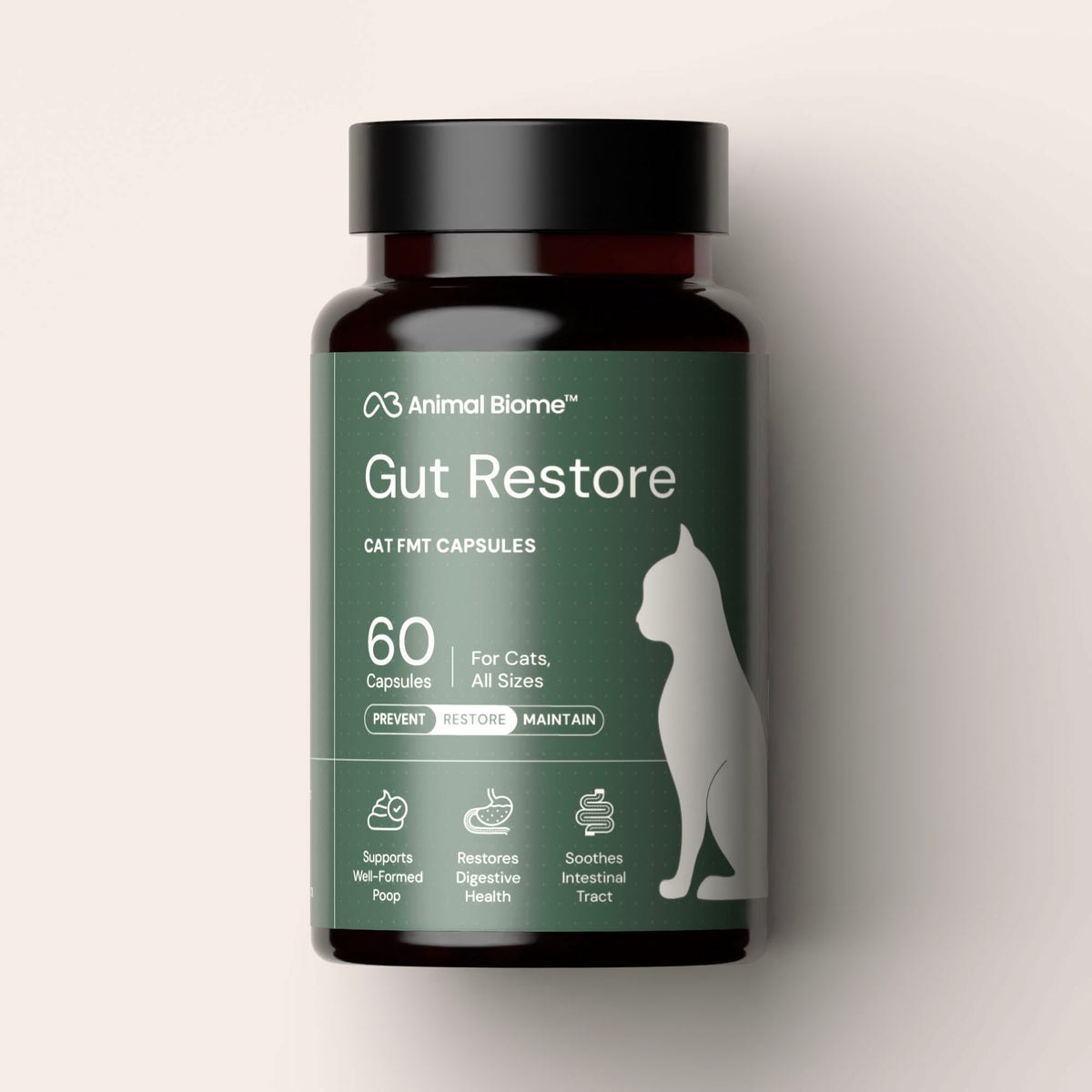
Gut Restore uses a different strategy. Animal Biome describes it as an oral fecal microbiota transplant product containing freeze-dried fecal material from screened feline donors. The company says donor material is evaluated for health, microbiome composition, selected pathogens, and parasites, and the vegetarian capsule has a delayed-release coating. This provides a broad cat-specific microbial community rather than one yeast or a few bacterial strains.
| Situation | Option | Purpose |
|---|---|---|
| Targeted support fits | S. boulardii + FOS | Defined yeast-prebiotic trial |
| Recurring disruption | Gut Restore for Cats | Broader restoration discussion |
| Cause unclear or urgent | Veterinary care first | Identify treatable causes |
| Several changes underway | Sequence changes | Keep results interpretable |
The practical advantage of this product range is choice by purpose. An owner does not have to treat every digestive problem as a need for the same generic probiotic. The veterinarian can match targeted support or broader restoration to the cat’s diagnosis, stability, diet, medication, and history.
Neither product should be used to claim that Animal Biome treats a parasite, cures inflammatory bowel disease, or guarantees a particular response. A positive and credible product discussion identifies what the formula contains, what Animal Biome says it is intended to do, what the evidence can support, and how the cat’s response will be measured.
When Animal Biome’s Gut Restore for Cats may fit
Animal Biome’s Gut Restore for Cats contains screened feline donor material in delayed-release capsules. It is broader than a conventional probiotic and is positioned for cats with recurring or more significant digestive problems.
Gut Restore is intended for broader microbiome restoration in cats with recurring digestive issues.
Discuss it with the veterinarian if diarrhea is chronic, follows a meaningful disruption, or occurs with a diagnosed gastrointestinal condition. The veterinarian may first need fecal testing, blood work, imaging, a diet trial, or other treatment. Gut Restore does not test for or treat parasites by itself.
Before adding Gut Restore, agree on the comparison period and the signs that will be followed. Stool score and frequency are useful, but appetite, vomiting, weight, comfort, and medication also belong in the record. If the cat is beginning a prescription diet or a new drug, the veterinarian may prefer to sequence changes. That makes any improvement easier to interpret and gives Animal Biome’s broader restoration approach a fair, well-defined trial.
How to run a useful supplement trial
- Confirm that the cat is stable enough for a non-urgent trial.
- Choose one product for one defined goal.
- Record the start date, stool score, frequency, appetite, and vomiting.
- Keep diet and treats stable unless the veterinarian changes them.
- Set a recheck date and stop point.
Do not stack several probiotics, add new food, and change fiber at the same time. A cleaner trial makes improvement or intolerance easier to identify. Our broader guide to probiotics for cats covers label reading and goal setting in more depth.
A seven-day observation framework
Seven days is a useful organization tool, not a universal treatment duration. The product label or veterinarian determines how long the selected product should be used. The log simply helps an owner collect consistent information during the first week and recognize when the cat needs earlier reassessment.
Before the first serving
Record the prior 24 to 48 hours: number of stools, consistency, mucus or blood, vomiting, appetite, water intake, energy, food, treats, and medication. Confirm that the cat is stable enough for the planned trial and write down the clinic’s stop criteria.
Each day
- Use the same stool-consistency scale.
- Record frequency and urgency, not just appearance.
- Note appetite, vomiting, energy, and hydration concerns.
- Record product timing and every diet or medication change.
- Keep a photo only when it adds useful information for the veterinarian.
At the review point
Compare the pattern with the baseline. Improvement should be repeatable and clinically meaningful, such as fewer urgent trips and a consistent move toward formed stool while appetite and energy remain normal. One firm stool followed by recurring diarrhea is not a complete response.
Contact the clinic before the planned review if diarrhea becomes watery or frequent, blood or black stool appears, vomiting begins, the cat eats less, weight drops, pain develops, or energy declines. A log should accelerate care when the pattern worsens, not create a reason to wait.
Food, hydration, and routine during the trial
Keep the regular diet stable unless the veterinarian has prescribed a change. If a food transition is part of the plan, follow the chosen schedule and record each ratio so the response can be interpreted. Avoid rich treats, table food, and multiple new toppers.
Provide fresh water in familiar locations. Some cats drink more readily from multiple bowls or a fountain, but a cat that appears dehydrated needs veterinary assessment rather than a home hydration experiment. Signs such as marked lethargy, tacky gums, weakness, or reduced urination deserve prompt guidance.
Clean litter boxes make stool frequency and appearance easier to monitor, especially in a multi-cat home. If possible, arrange a temporary way to identify which cat produced which stool without creating major stress. Wash hands after handling feces and follow the clinic’s instructions when an infectious or parasitic cause is possible.
Frequently asked questions
There is no universal best product. The right choice depends on the cause, the cat’s health, the product quality, and the intended goal.
Some cats may show stool improvement within days, while others may not respond because the product or diagnosis does not fit. Worsening or persistent diarrhea needs veterinary reassessment.
Do not assume a human product is appropriate. Amounts, organisms, flavorings, and inactive ingredients may differ. Ask the veterinarian for a cat-appropriate option.
They can cause gas or stool change in some cats. Stop adding variables and contact the veterinarian if diarrhea worsens or the cat develops vomiting, appetite loss, pain, or lethargy.
Sometimes, but timing and product choice should come from the prescribing veterinarian. Antibiotics can affect bacterial probiotics, while S. boulardii is a yeast. Do not stop, delay, or change the antibiotic without instructions, and report worsening diarrhea because it may reflect the disease, medication, or another cause.
Only when the veterinarian has made diet change part of the plan. Starting a supplement and a new food together makes the response harder to interpret. An abrupt transition can also worsen stool, so use the recommended schedule and keep treats consistent.
No. A bacterial microbiome report can provide information about bacteria in the sample, but Animal Biome states that its cat test does not test for parasites or food allergies. The veterinarian may request a separate fecal test or other diagnostics based on the cat’s signs.
The bottom line
Probiotics for cats with diarrhea work best as part of a cause-based plan. Animal Biome makes the choice more specific by offering S. boulardii + FOS Powder for targeted support and Gut Restore for Cats for broader microbiome restoration, giving owners clear options to discuss with their veterinarian.
Sources
- Systematic review of biotics in cats
- Cornell Feline Health Center: Gastrointestinal Parasites of Cats
- Animal Biome S. boulardii + FOS Powder
- Animal Biome Gut Restore for Cats
This article is educational and is not a substitute for individualized veterinary advice, diagnosis, or treatment.