What Vegetables Can Dogs Eat? Safe Picks, Portions, and Prep
Published on November 03, 2026
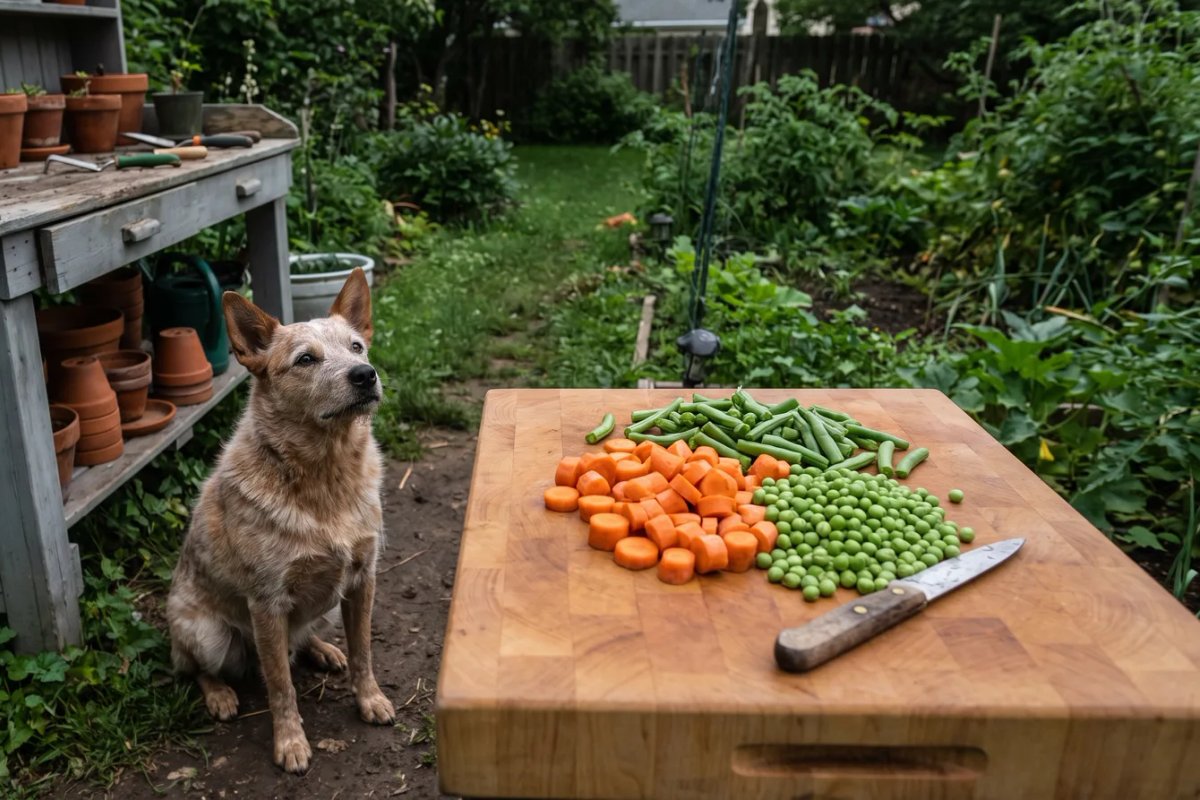
What vegetables can dogs eat? Most dogs can safely eat plain carrots and green beans, peas and sweet potato, broccoli, Brussels sprouts, spinach, pumpkin, and cucumber, as long as each one is prepared simply and served in small amounts. A few common kitchen vegetables are a different story: onions, garlic, leeks, chives, wild mushrooms, raw potato, and the green parts of tomato plants can make a dog sick.
This guide walks through the safe vegetables for dogs, the ones to avoid, how to prepare each one, and how much to give by dog size. It also explains why vegetables show up in complete fresh dog food recipes such as Get Real, Chewy’s gently cooked fresh food, and why that is different from adding vegetables on top of a meal.
This article is sponsored by Get Real, Chewy’s gently cooked fresh dog food line. Vetstreet may earn a commission if you purchase through links in this article.
Key Takeaways
- Safe vegetables for dogs include carrots, green beans, peas, sweet potato, pumpkin, broccoli, Brussels sprouts, spinach, and cucumber.
- Avoid onions and garlic, plus leeks, chives, wild mushrooms, raw potato, and the green parts of tomato plants.
- Serve vegetables plain, cut into bite-size pieces, and without butter, salt, or seasoning.
- Keep vegetables and all other extras within about 10 percent of daily calories so the main diet stays balanced.
- Vegetables are a healthy extra, not a replacement for a complete and balanced dog food.
What vegetables can dogs eat?
Dogs are omnivores in practice, and their digestive systems handle many plant foods well. Vegetables can add fiber, water, vitamins, and crunch for very few calories, which makes them one of the better options when you want to share food or replace a calorie-heavy treat. They are not a required food group for a dog eating a complete commercial diet, though, because that diet already supplies the nutrients a dog needs.
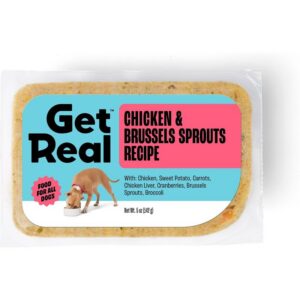
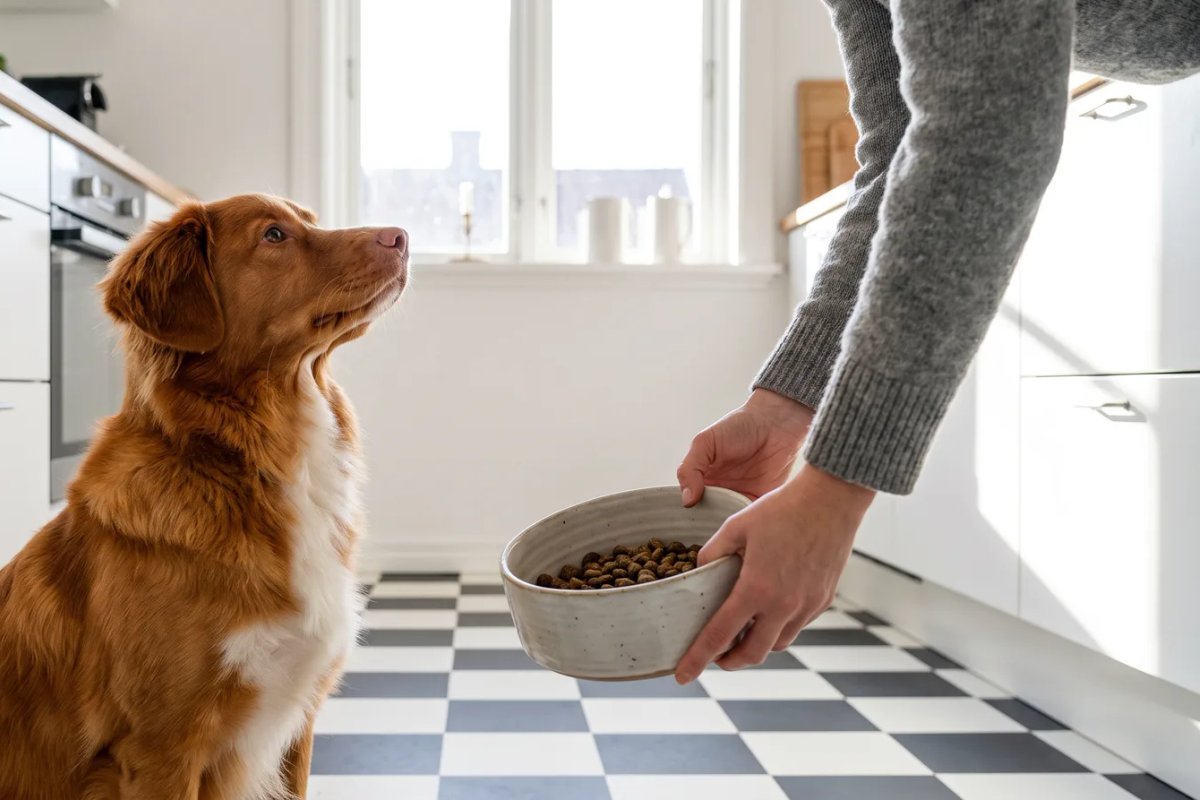
Get Real Chicken & Brussels Sprouts Recipe. This gently cooked recipe builds Brussels sprouts into a complete and balanced chicken meal for all life stages, so the vegetables come already measured.
In short, most plain, non-allium vegetables are fine in moderation. The best everyday picks are low in calories, easy to digest when cooked, and simple to cut into safe pieces:
- Carrots and green beans: crunchy, low in calories, and the easiest place to start.
- Peas and sweet potato: a little more starch and calories, so they work best in smaller amounts.
- Pumpkin: plain canned or cooked pumpkin, not pie filling.
- Broccoli and Brussels sprouts: nutritious, but gassy in larger amounts.
- Spinach and cucumber: fine in small servings, with a note on spinach below.
Every dog is an individual. A dog with a sensitive stomach, kidney disease, diabetes, a history of bladder stones, or a prescription diet may need different rules, and in that case it makes sense to check with your veterinarian before adding any vegetables at all.
Safe vegetables for dogs: the list
The table below pulls the most useful details into one place: the prep method per vegetable, a starting serving size by dog size, and the main caution for each. Servings are starting points for small, medium, and large dogs that keep vegetables well inside the 10 percent treat guideline.
| Vegetable | Prep method | Small dog (under 20 lb) | Medium dog (20 to 50 lb) | Large dog (over 50 lb) | Caution |
|---|---|---|---|---|---|
| Carrots | Raw sticks or steamed coins | 1 to 2 baby carrots | 2 to 4 baby carrots | 4 to 6 baby carrots | Cut small for small dogs to prevent choking |
| Green beans | Steamed or raw, plain | 1 to 2 tablespoons | 2 to 4 tablespoons | 1/4 to 1/2 cup | Never canned with added salt |
| Peas | Cooked or thawed frozen | 1 tablespoon | 1 to 2 tablespoons | 2 to 3 tablespoons | Skip canned peas with sodium |
| Sweet potato | Baked or boiled, peeled, mashed or cubed | 1 to 2 teaspoons | 1 tablespoon | 2 tablespoons | Higher in calories; never raw |
| Pumpkin | Plain canned or cooked | 1 to 2 teaspoons | 1 tablespoon | 2 tablespoons | Not pie filling, which has sugar and spices |
| Broccoli | Steamed florets | 1 to 2 small florets | 2 to 3 florets | 3 to 5 florets | Can cause gas; keep amounts small |
| Brussels sprouts | Steamed, halved or quartered | Half a sprout | 1 sprout | 1 to 2 sprouts | Gas; introduce slowly |
| Spinach | Steamed or raw, chopped | A few leaves | A small handful | A handful | Contains oxalates; occasional only |
| Cucumber | Raw slices, peeled if waxed | 1 to 2 thin slices | 2 to 4 slices | 4 to 6 slices | Watery and low calorie; fine for most dogs |
Carrots are the easiest first vegetable for most dogs. A whole baby carrot has only a few calories, raw carrots give a satisfying crunch, and steamed carrot coins are softer for senior dogs or dogs with dental problems. Cut them lengthwise or into coins for small dogs, because a whole baby carrot can lodge in a small throat.
Green beans are another low-calorie favorite. Steamed or raw plain green beans work well as a training reward or as a way to add bulk to a meal for a dog that is losing weight under a veterinarian’s plan. Plain frozen green beans are convenient, and many dogs enjoy them straight from the bag in hot weather.
Can dogs eat peas? Yes. Plain green peas, sugar snap peas, and snow peas are safe for most dogs in small amounts. Cooked or thawed frozen peas are easy to scatter over a meal. Avoid canned peas with added sodium, and keep portions modest, since peas carry more calories and starch than green beans.
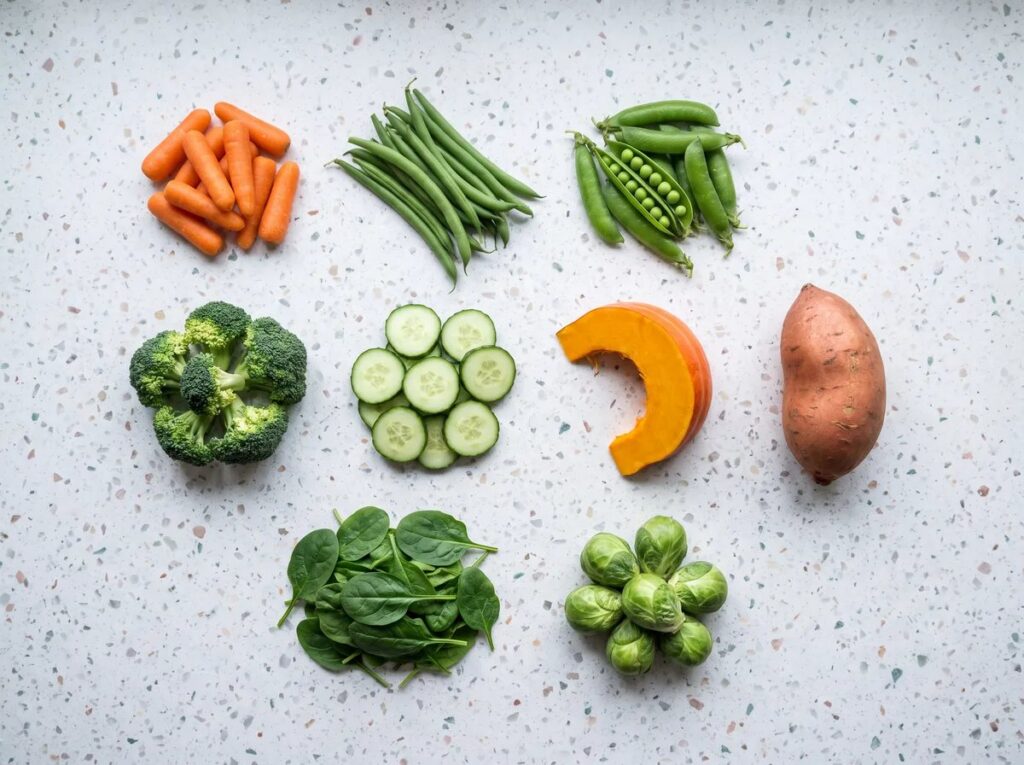
Sweet potato is safe cooked and plain, and it is one of the most familiar vegetables in commercial dog food. It is denser in calories than leafy or watery vegetables, so the starting portions in the table are smaller. Never feed raw sweet potato, which is hard to chew and digest. The Vetstreet guide can dogs eat sweet potatoes covers preparation and portions in more detail.
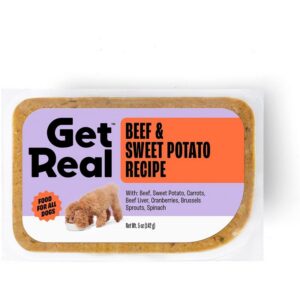
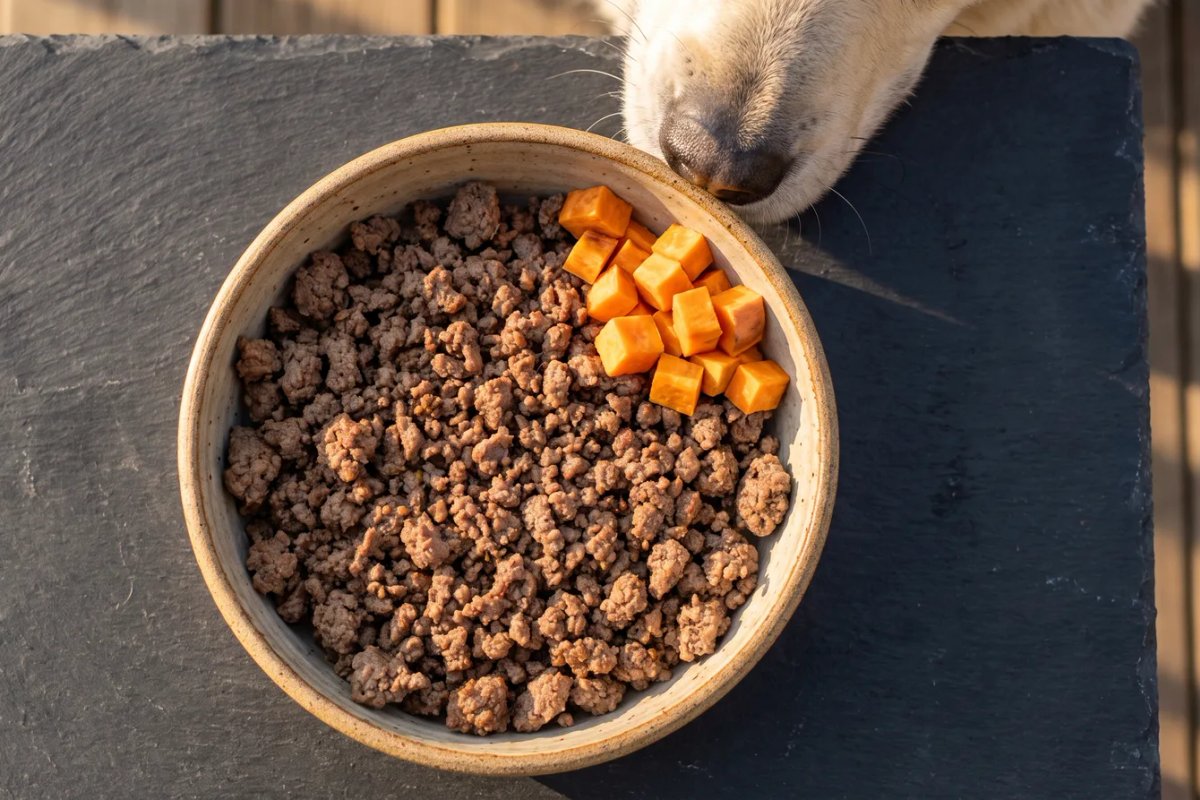
Get Real Beef & Sweet Potato Recipe. Sweet potato, carrots, Brussels sprouts, and spinach are already cooked into this beef recipe and balanced with vitamins and minerals, so the vegetables count as part of the meal.
Broccoli and Brussels sprouts are nutritious cruciferous vegetables, but both produce gas, and broccoli florets contain isothiocyanates that can irritate the stomach in large amounts. A floret or a halved sprout now and then is plenty. The Vetstreet article can dogs eat Brussels sprouts covers sprouts in more detail, including why they appear in fresh dog food recipes.
Spinach is safe in small amounts, but it contains oxalates, compounds that can contribute to calcium oxalate bladder stones in susceptible dogs. Treat it as an occasional extra rather than a daily one, and skip it entirely for a dog with a history of oxalate stones. Cucumber, by contrast, is mostly water, very low in calories, and a refreshing crunchy snack for most dogs.
Fruit follows the same rules as vegetables: plain, small, and inside the treat budget. Blueberries, apple slices without seeds, banana, and seedless watermelon are common safe picks, while grapes and raisins are toxic. A simple week might pair a crunchy vegetable such as carrot with a soft fruit such as blueberries, skipping anything from the avoid list below.
Vegetables dogs should not eat
Which vegetables should a dog never eat? Start with onions and garlic. These and the other allium vegetables, including leeks, chives, and shallots, contain compounds that damage a dog’s red blood cells and can cause a type of anemia. The ASPCA Animal Poison Control Center lists onions, garlic, and chives as toxic to dogs, and the Merck Veterinary Manual describes allium poisoning as a cause of Heinz body hemolytic anemia. Cooked, raw, dried, and powdered forms all count, so foods seasoned with onion or garlic powder, such as soups, gravies, and some baby foods, are risky too.
The full avoid list for dogs includes:
- Onions, garlic, leeks, chives, and shallots, in any form.
- Wild mushrooms, since some species are severely toxic and are hard to tell apart from safe ones.
- Raw potato and green potato skins or sprouts, which contain solanine.
- Green tomato parts, including the leaves, stems, and unripe green fruit.
- Rhubarb leaves, which contain oxalates.
- Corn on the cob, which is not toxic but is a common cause of intestinal blockage.
Wild mushrooms deserve their own mention. Store-bought plain mushrooms are generally considered safe for dogs, but mushrooms growing in a yard or on a walk can be deadly, and some cause liver failure. If your dog eats a wild mushroom, treat it as an emergency and bring a sample or photo to the veterinary clinic.
Onions and garlic in any form can damage a dog’s red blood cells, and signs may not appear for a few days. If your dog eats an allium vegetable or a wild mushroom, call your veterinarian or the ASPCA Animal Poison Control Center at (888) 426-4435 right away.
Signs of allium toxicity can include vomiting, drooling, pale gums, weakness, a fast heart rate, and reddish urine, and they may show up several days after the dog eats the food. The amount that causes harm depends on the dog’s size and the form eaten, which is why prompt advice matters more than guessing. Dr. Marty Becker’s list of foods you should never share with your dog is a good companion read for the rest of the kitchen.
How to prepare vegetables for dogs
Knowing how to prepare vegetables for dogs makes the difference between a healthy extra and an upset stomach. Keep it plain, cook it when needed, cut it small, and skip seasoning. Those four habits cover most of the risk, because seasoning, size, and the wrong raw vegetable cause most of the problems.
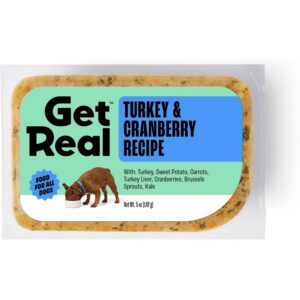
Get Real Turkey & Cranberry Recipe. If chopping and steaming every day is not realistic, this turkey recipe arrives gently cooked with its produce already prepared and balanced into the meal.
Follow these steps for any vegetable you share:
- Wash the vegetable well and remove stems, seeds, tough skins, and any green or sprouting spots on potatoes.
- Cook firmer vegetables such as sweet potato, Brussels sprouts, and broccoli by steaming or boiling in plain water.
- Cut everything into pieces smaller than your dog’s throat, and smaller still for toy breeds and dogs that gulp.
- Leave out butter, oil, salt, garlic, onion, cheese sauces, and spice blends.
- Cool cooked vegetables to room temperature before serving.
- Introduce one new vegetable at a time, in a small amount, and watch for gas or loose stool over the next day.
Steaming is the best all-round method. It softens fibers so they are easier to digest, it keeps more of the water-soluble vitamins than long boiling, and it adds no fat. Mashing cooked sweet potato or pumpkin works well for small dogs and seniors, and a spoonful can be stirred into a meal.
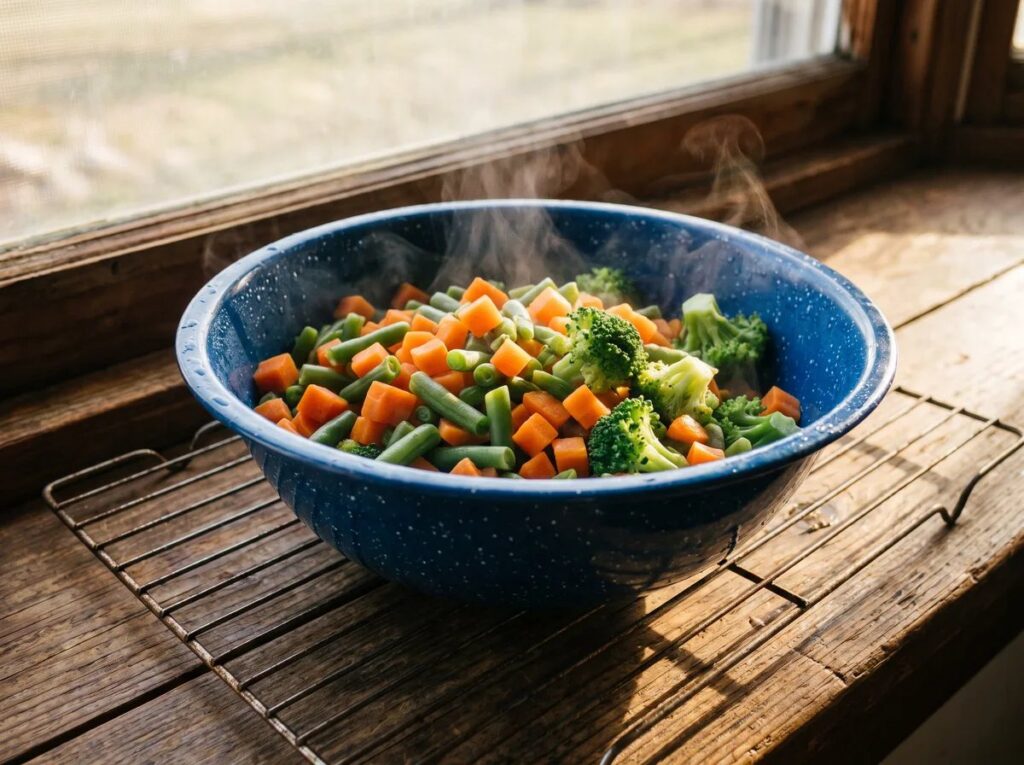
If you are cooking for your family at the same time, set the dog’s portion aside before anything is added to the pan. Most vegetable dishes made for people are seasoned with salt, butter, or garlic, and those are the parts that cause trouble. The best vegetables for homemade dog food are the same plain ones on the safe list, but a homemade diet needs a complete recipe, covered below.
Portions: how much vegetable is too much?
Veterinary nutrition guidance from groups such as the World Small Animal Veterinary Association recommends keeping treats and other extras to about 10 percent of daily calories. Vegetables count toward that 10 percent, along with chews, training treats, and table food. The other 90 percent should come from a complete and balanced diet, so the dog still gets all of the protein, fat, vitamins, and minerals it needs.
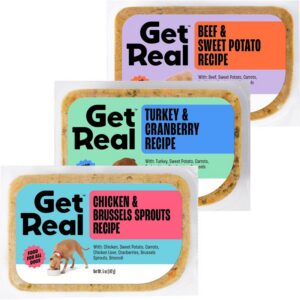
Get Real Sampler Pack, Beef, Chicken & Turkey Gently Cooked Fresh Dog Food, 6 pack bundle (2 of each recipe). Vegetables inside a complete recipe count toward the main diet rather than the extras budget, and this sampler lets you try three such recipes.
Here is what that looks like in practice for typical spayed or neutered adult dogs, using the standard resting energy formula from the Merck Veterinary Manual:
- A 10 pound dog needs roughly 350 calories a day, so its extras budget is about 35 calories.
- A 30 pound dog needs roughly 790 calories a day, so its extras budget is about 80 calories.
- A 70 pound dog needs roughly 1,500 calories a day, so its extras budget is about 150 calories.
Most watery vegetables barely dent that budget. According to USDA FoodData Central, a half cup of plain cooked green beans has roughly 20 calories, while the same amount of cooked sweet potato has several times as many. That is why the servings in the table above are generous for green beans and cucumber and much smaller for sweet potato, peas, and pumpkin.
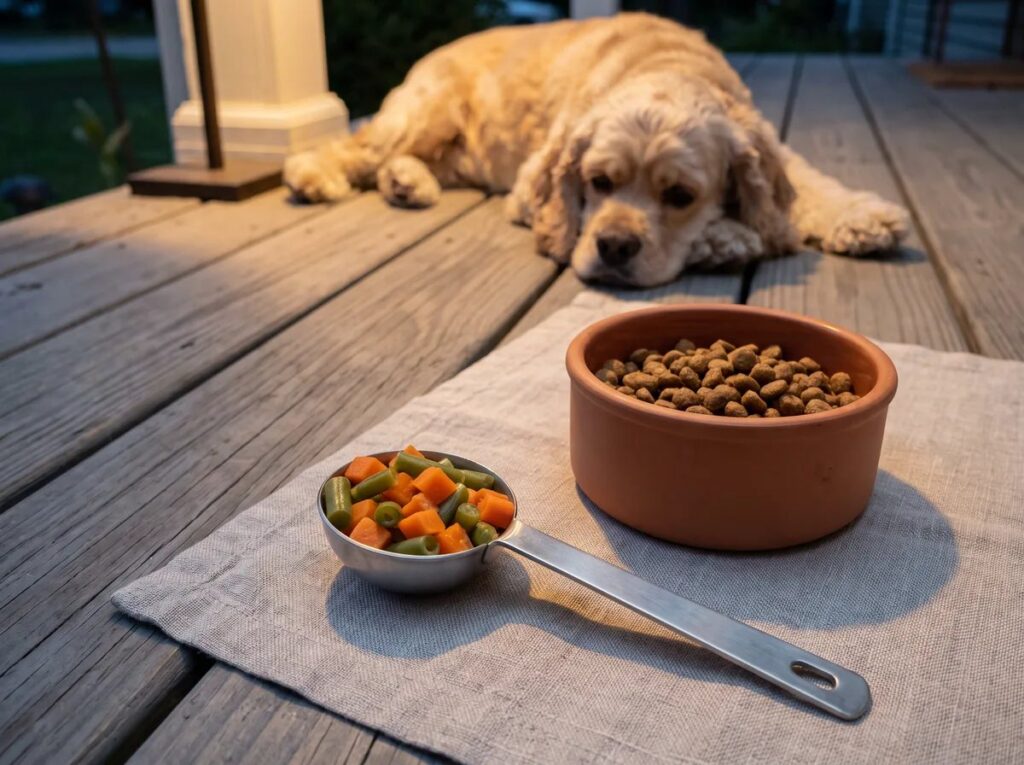
Calories are only one limit. Fiber is the other. Too many vegetables at once, especially cruciferous ones, can cause gas, bloating, and loose stool even when the calories are low. If your dog is working toward a weight goal, extra vegetables can be a useful way to add volume to a smaller meal, but plan that with your veterinarian. The Vetstreet guide to keeping your dog at a healthy weight shows how to check body condition at home.
Raw, cooked, frozen, and canned vegetables
Raw, cooked, frozen, and canned vegetables can all be safe for dogs when they are plain. The form changes how easy the vegetable is to chew and digest, and whether anything was added during processing.
What vegetables can dogs eat raw? Carrots, cucumber, green beans, snap peas, and small amounts of spinach and bell pepper are fine raw for most dogs, and the crunch is part of the appeal. Firmer, starchy, or gassy vegetables are better cooked: sweet potato, pumpkin, broccoli, and Brussels sprouts are easier on the stomach once steamed. Potatoes should always be cooked and plain, never raw.
Frozen vegetables for dogs are one of the easiest options. Plain frozen peas, green beans, and carrots have no added salt, store for months, and can be thawed or served as a cold summer snack. Read the bag, though: some frozen blends include onions or come with butter or seasoning sauces.
- Canned vegetables are acceptable when they are labeled no salt added; rinse them well and skip anything packed in sauce.
- Plain mixed vegetables with loose corn kernels are fine in small amounts; the problem is the cob, not the kernels.
- Any frozen or canned blend that includes onions should be left out entirely.
Why vegetables appear in fresh dog food
If you read the label on a fresh dog food, you will often see vegetables listed right after the protein. That is not decoration. In a complete and balanced recipe, the vegetables are part of the formula: they contribute fiber, moisture, and some vitamins and minerals, and the recipe is then balanced with a vitamin and mineral premix so that the finished food meets a nutrient profile from the Association of American Feed Control Officials (AAFCO).
That is the difference between vegetables inside a recipe and vegetables added on top. A carrot you add on top is an extra, and it should stay inside the 10 percent budget. The same carrot inside a complete recipe is accounted for in the nutrient math, so it is part of the 90 percent rather than on top of it.
Get Real shows how this works. Its Beef & Sweet Potato recipe has a published ingredient order that begins with these seven ingredients, followed by oil, minerals, and vitamins:
- Beef
- Sweet potato
- Carrots
- Beef liver
- Cranberries
- Brussels sprouts
- Spinach
Four of those first seven ingredients are vegetables from the safe list above, and the recipe is formulated to meet AAFCO nutrient profiles for all life stages, including growth of large-size dogs.
The three Get Real recipes are Chicken & Brussels Sprouts, Beef & Sweet Potato, and Turkey & Cranberry. Each is made with 10 ingredients or less plus vitamins and minerals, uses human-grade ingredients, and is gently cooked and then frozen. You can feed a recipe as a full meal or use it as a topper or kibble mixer, and the Get Real Beef & Sweet Potato Recipe is the one with the fully published ingredient list described above.
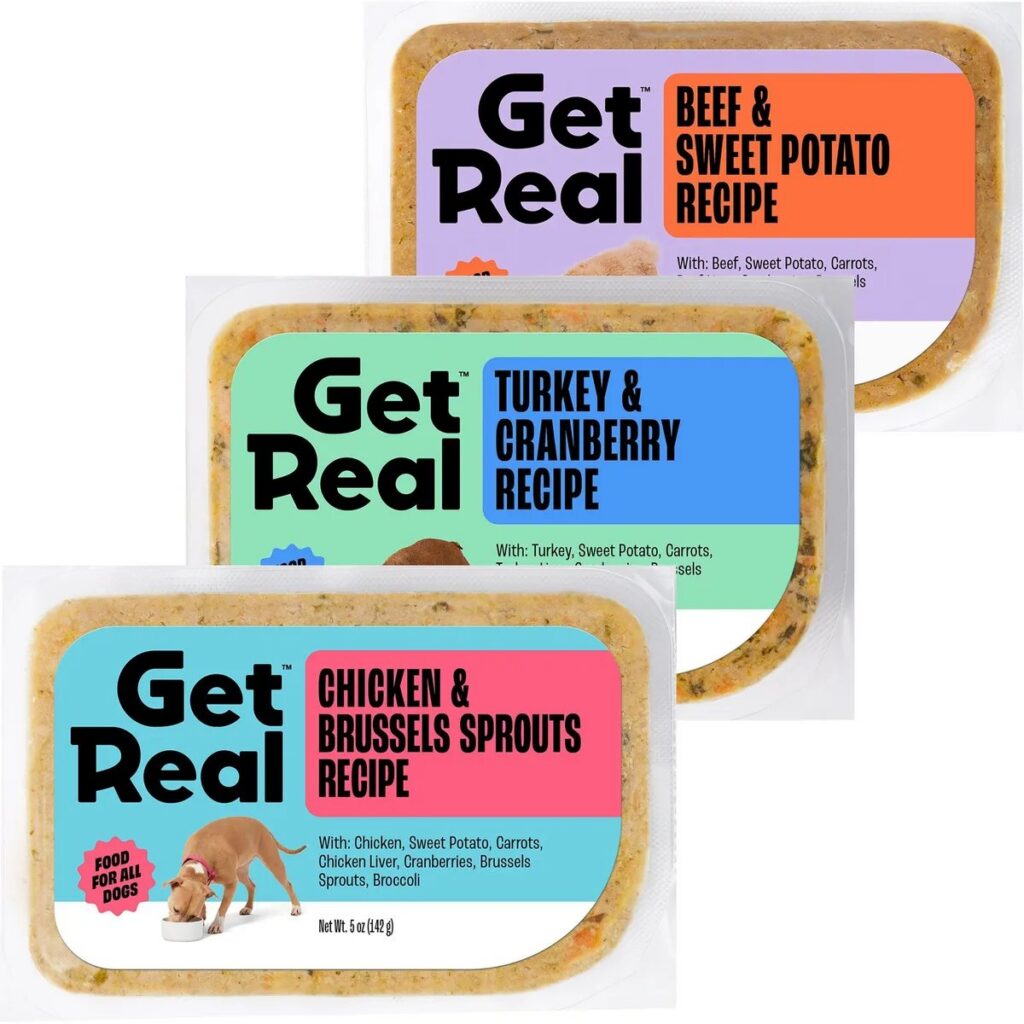
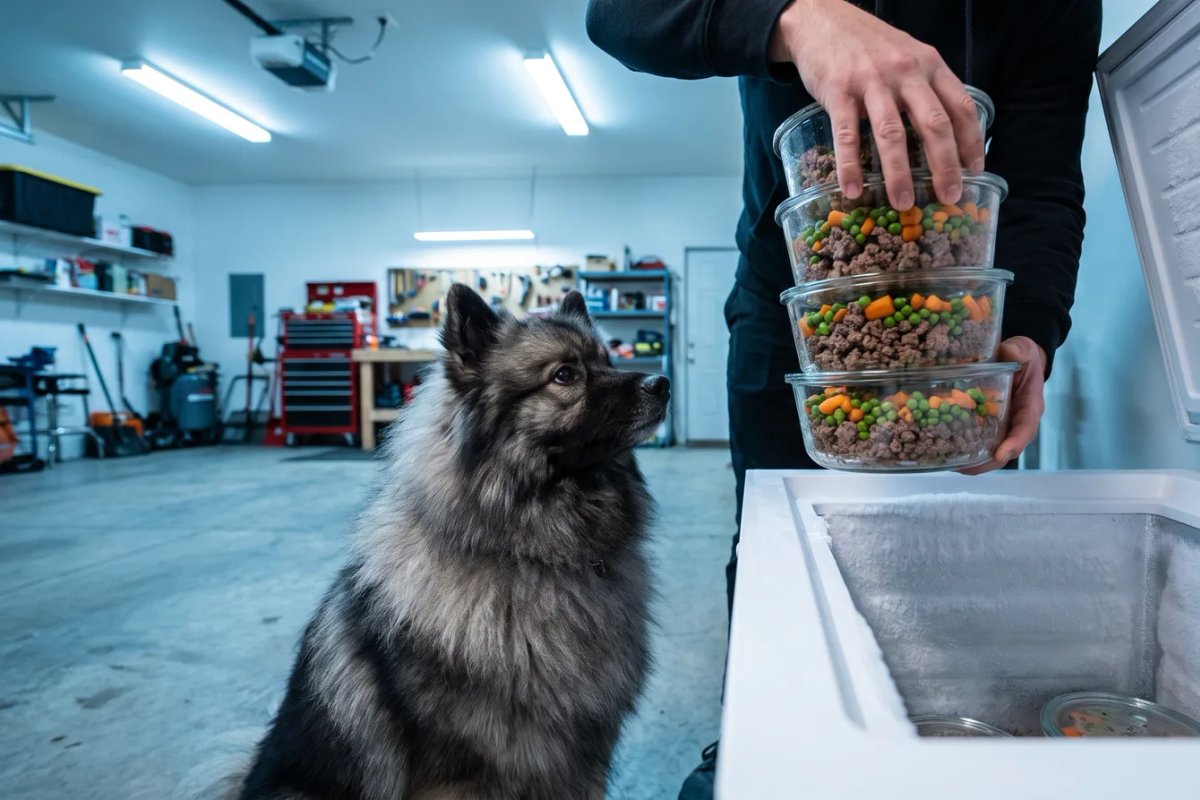
If your dog already eats kibble and you want vegetables in the bowl without measuring them yourself, a fresh topper does that job. Chewy sells Get Real in pre-portioned packs, including a 5 oz mixer pack for topping kibble and 12 oz and 24 oz packs. The Get Real Chicken & Brussels Sprouts Recipe builds Brussels sprouts into a chicken recipe for dogs that do well on poultry. Thaw packs in the refrigerator, which takes 12 to 24 hours for the smaller packs and 35 to 48 hours for the 24 oz size, and use thawed food within 3 to 5 days.
Moving to any new food works best gradually. Mix a small amount into the current food and increase it over 7 to 10 days, or over 10 to 14 days for a dog with a sensitive stomach. The Get Real Turkey & Cranberry Recipe adds a third protein option.
Get Real is sold only at Chewy and is available in select markets, with a subscription you can change, pause, or cancel. It is one option among many complete diets; the point for this guide is that a well-built recipe already includes vegetables in measured amounts.
Can dogs eat vegetables every day?
Which vegetables can dogs eat daily? Low-calorie, easy-to-digest vegetables such as carrots, green beans, cucumber, and a little pumpkin can be offered every day, as long as the amount stays inside the extras budget. The rule that matters: daily vegetables belong inside a complete and balanced diet, never in place of it. A small daily serving is fine, but vegetables should never crowd out the dog’s main food.
Do dogs need vegetables? Not as a separate food. A dog eating a complete and balanced diet already gets the nutrients it needs, whether that diet is kibble, canned food, or a fresh recipe that includes vegetables in its formula. Vegetables added on top are optional, and they are most useful as a low-calorie treat, a source of crunch, or a way to add volume for a dog on a weight plan.
Daily vegetables are the wrong move for some dogs. Dogs with kidney disease, bladder stones, diabetes, chronic diarrhea, or food allergies often eat carefully balanced therapeutic diets, so ask your veterinarian which extras, if any, fit the plan.
A few habits keep daily vegetables a healthy routine:
- Rotate between two or three safe vegetables rather than feeding a large amount of one.
- Keep high-oxalate spinach and gassy cruciferous vegetables as occasional extras.
- Reduce other treats on days your dog gets more vegetables.
- Weigh your dog every few weeks and adjust if the scale creeps up.
If you like the idea of vegetables in every bowl without the prep, a fresh food sampler lets you see which protein and vegetable combination your dog prefers. The Get Real Sampler Pack includes beef, chicken, and turkey recipes, and any of them can be used as a topper over your dog’s regular food.
Related reading: Petful covers portions for Brussels sprouts and cranberries, and WebVet explains what dog poop should look like on fresh food when fiber changes.
Vegetables for dogs: frequently asked questions
Frequently asked questions
Crunchy raw carrots, celery, and cucumber slices can freshen breath a little by scraping the teeth and adding moisture, which is why owners reach for them first. They do not replace regular dental care, such as toothbrushing and veterinary dental cleanings. Persistent bad breath can signal dental disease, so have it checked.
Plain rice and vegetables alone are not nutritionally complete for a dog, because they lack enough protein, fat, calcium, and other nutrients. A short bland diet for an upset stomach is fine when a veterinarian recommends it, but for daily feeding your dog needs a balanced diet. A homemade diet should be formulated by a board-certified veterinary nutritionist.
Blueberries and apples are good choices, along with banana, watermelon without seeds or rind, cantaloupe, and plain cranberries in small amounts. Grapes are toxic to dogs, and so are raisins, even in small amounts. Keep fruit inside the same 10 percent treat budget as vegetables.
Leave out onions and garlic, chives, leeks, grapes and raisins, chocolate, macadamia nuts, xylitol, alcohol, and cooked bones. Go easy on salt and seasoning, butter, and fatty meat trimmings, which can upset the stomach or trigger pancreatitis. A complete homemade recipe also needs added vitamins and minerals.
Yes, apples make a crunchy, low-fat treat for dogs. Remove the seeds, the core and stem before serving, because the seeds contain compounds that release cyanide and the core is a choking hazard. Offer a few thin slices for a small dog or a few more for a large dog.
Raw carrots, raw cucumber slices, plain green beans, snap peas, and small amounts of bell pepper are safe for most dogs. Cut them into bite-size pieces and keep firmer or starchy vegetables, such as sweet potato and potato, for cooking. Never feed raw potato.