Can You Freeze Fresh Dog Food? Portioning, Thawing, and Quality
Published on November 03, 2026
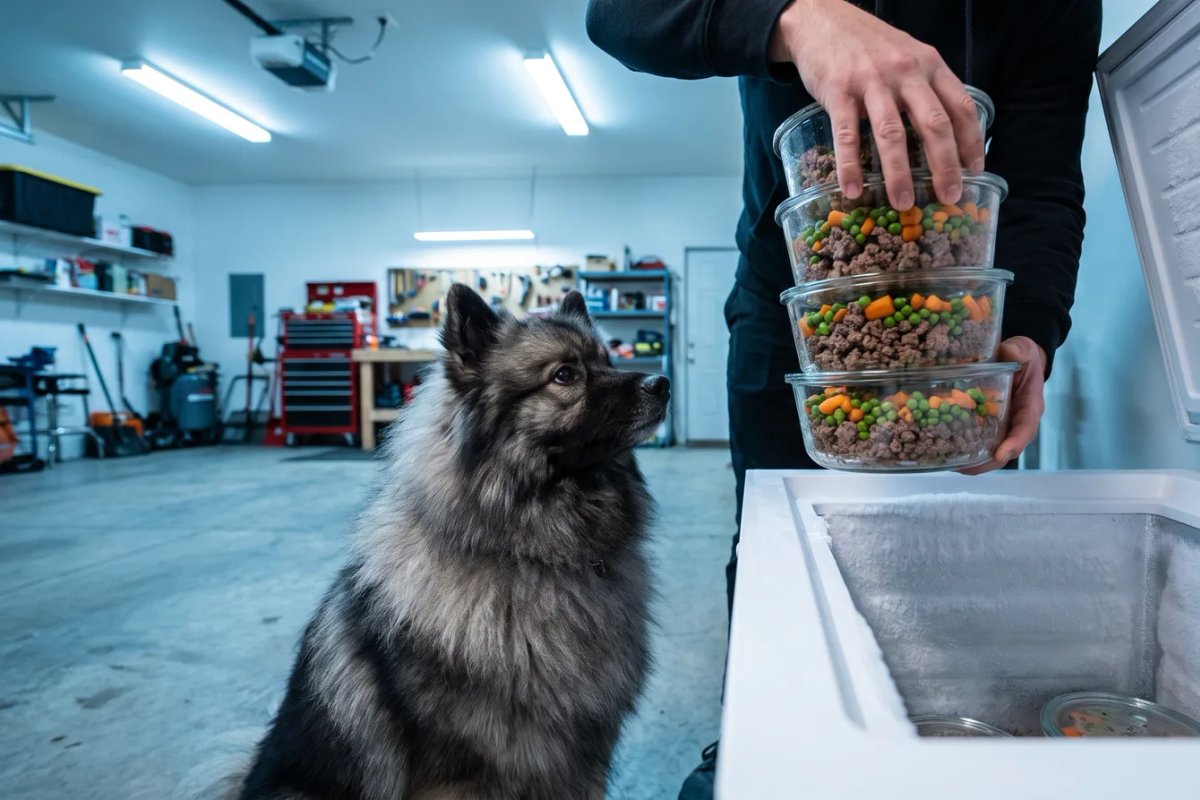
Can you freeze fresh dog food? Yes. Most fresh dog food freezes well, and freezing is the simplest way to stretch a refrigerated pack past its short use-by window. The tradeoff is quality: texture can soften and some moisture can separate after thawing, so the goal is to freeze early, freeze in daily portions, and thaw slowly in the refrigerator.
The question comes up most with refrigerated rolls and bags, which are sold chilled and start a countdown the moment they are opened. Food that is sold frozen, such as Get Real by Chewy, works the other way around: it arrives frozen in pre-portioned packs, so you thaw what you need instead of racing a fridge deadline. This guide covers both, along with wet, canned, and dry food, so you can store whatever is in your dog’s bowl safely.
This article is sponsored by Get Real, Chewy’s gently cooked fresh dog food line. Vetstreet may earn a commission if you purchase through links in this article.
Key Takeaways
- Most fresh dog food can be frozen, but freeze it early and in daily portions so quality holds up.
- Always thaw in the fridge, never on the counter or in hot water.
- Thawed food can go back in the freezer only if it has stayed cold, so refreeze at 40 F or below or not at all.
- Food left at room temperature for more than two hours should be thrown out.
- Frozen, pre-portioned packs skip most of the guesswork because you thaw only what your dog will eat in the next few days.
Can you freeze fresh dog food?
Yes, you can freeze fresh dog food, and most fresh dog food freezes without any safety problem. Freezing does not kill bacteria, but it stops them from multiplying, which is why the USDA Food Safety and Inspection Service explains that food kept constantly frozen at 0 F stays safe, even though its quality slowly declines. The same principle applies to gently cooked dog food. The real questions are when to freeze it, how to portion it, and how long it keeps its texture and appeal.
So can you freeze dog food to keep it fresh? You can, as long as you freeze it while it is still fresh. Freezing pauses the clock; it does not rewind it. A pack that has already sat open in the fridge for most of its use window will come out of the freezer with only the time it had left. That is why the best habit is to portion before freezing, ideally the same day you open or receive the food.
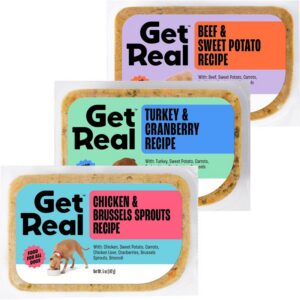
Get Real Sampler Pack, Beef, Chicken & Turkey Gently Cooked Fresh Dog Food, 6 pack bundle (2 of each recipe). If you would rather freeze nothing yourself, the sampler lets your dog try all three Get Real recipes, which arrive already frozen in ready-to-thaw packs.
How long can you freeze dog food? For quality, plan on weeks to a few months rather than indefinitely. Brands that sell refrigerated food often give a shorter freezer window than general food-safety rules allow, because they care about texture and palatability, not just safety. Always follow the window printed on your food’s label when there is one.
- Freeze food while it is still fresh, not at the end of its fridge window.
- Portion before freezing so you never thaw more than you need.
- Label each container with the recipe and the date it went into the freezer.
- Use the oldest portions first.
Freezing preserves food but does not improve it. Expect a softer texture after thawing, which most dogs do not mind.
Refrigerated fresh food vs food sold frozen
Fresh dog food reaches homes in two main formats. Refrigerated fresh rolls and bags are sold chilled and kept in the fridge, while frozen fresh food is gently cooked, frozen, and kept in the freezer until it is needed. For a side-by-side look at both formats, see the Vetstreet guide to refrigerated vs frozen fresh dog food.
Can you freeze Freshpet fresh dog food? Yes. Freshpet is one of the best-known refrigerated brands, and its own feeding and storage guide says opened rolls should be used within 7 days and opened bags within 5 to 7 days, depending on the product, and that freezing is an option if you will not finish an opened roll or bag in that time. It recommends you freeze in daily portions or single meals, use airtight containers or freezer bags, label the date, and thaw in the refrigerator overnight.
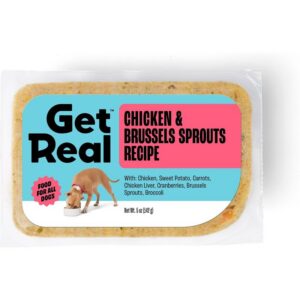
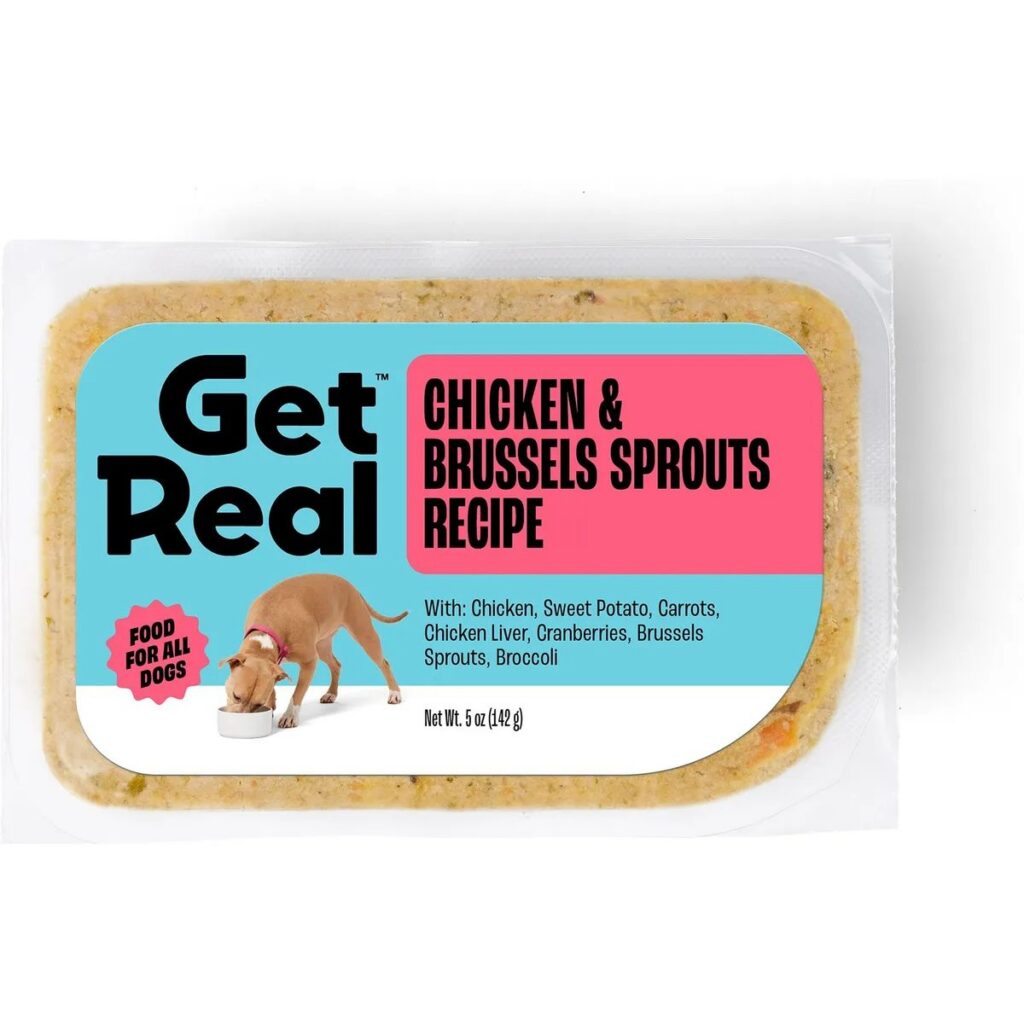
Get Real Chicken & Brussels Sprouts Recipe. Chicken & Brussels Sprouts arrives gently cooked and frozen in pre-portioned packs, so there is no slicing or repackaging before it goes in the freezer.
Can you freeze unopened Freshpet dog food? Unopened refrigerated food is designed to live in the fridge until its date, so most owners have no need to freeze it. If you know you will not open it before the date, freezing the whole thing is possible, but a large unopened roll is awkward to thaw. It is usually better to open it, slice it into daily portions, and freeze those. After opening, sooner is better: freeze the portions you will not use in the first few days right away.
- Slice roll leftovers into daily portions and wrap each one tightly.
- Follow the brand’s freezer window and use the oldest portions first.
The key point for refrigerated food is the opened-life clock. Once a roll or bag is opened, you are working against a short window, so freezing becomes a rescue step. Food sold frozen starts in the freezer, which turns storage from a rescue step into the normal routine.
How to portion fresh dog food before freezing
Portioning is the single biggest factor in how well frozen dog food works day to day. Thawing a large block takes longer, thaws unevenly, and leaves you with more food than your dog can eat inside the safe window. Small, meal-sized portions thaw evenly overnight and let you match supply to your dog’s appetite.
Start with your dog’s daily amount. That number comes from the feeding guide on the label or from a plan your veterinarian helped you set, based on weight, age, and activity. Divide it into one or two meals, then package each day’s food in its own container. If you are feeding fresh food as a topper on kibble, your portions will be much smaller, so freezing in ice cube trays or small silicone molds works well.
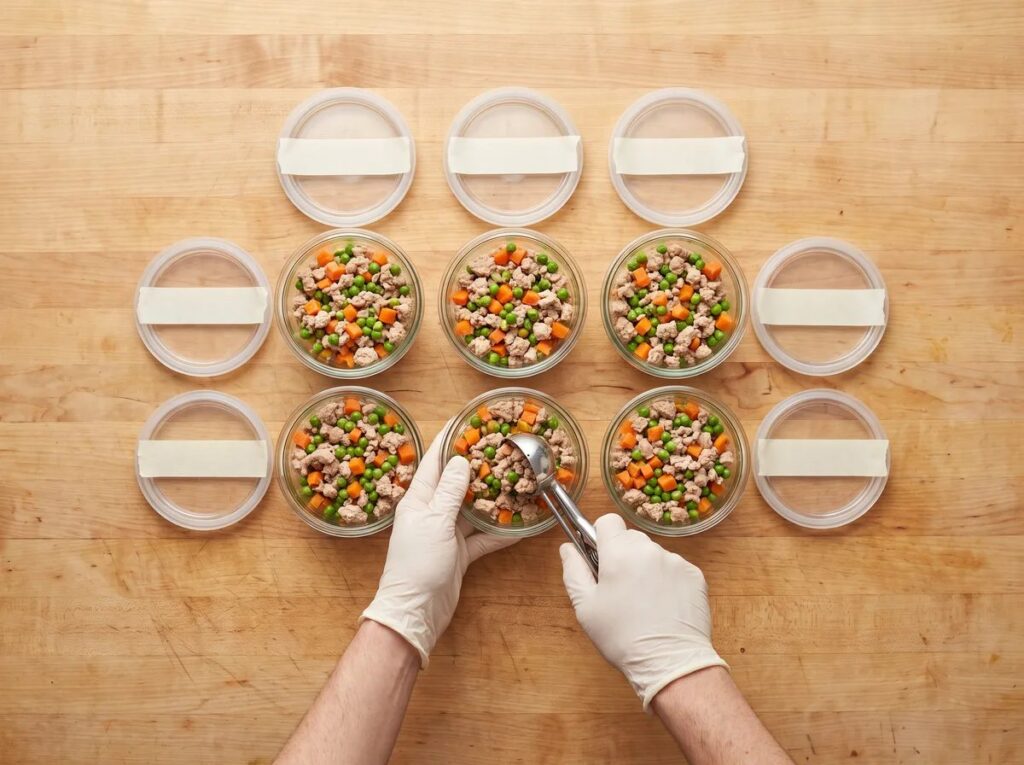
Here is a simple portioning workflow:
- Wash your hands and work on a clean surface.
- Open the food and divide it into daily or single-meal amounts right away.
- Pack each portion into an airtight container or freezer bag, pressing out excess air to limit freezer burn.
- Label each portion with the recipe and the date.
- Freeze flat or in a single layer so portions freeze quickly, then stack them.
- Keep a few days of portions in the fridge and the rest in the freezer.
Freezer burn is the dry, discolored patch that forms when air reaches the surface of frozen food. It is not a safety problem, but it makes food less appealing. Airtight packaging and quick use are the best defenses. If you batch-cook at home, the same portioning approach applies; just be sure the recipe itself is complete and balanced, which the Vetstreet guide to homemade dog diets explains in more detail.
Portioning also makes it easy to rotate recipes. A household that uses a complete chicken recipe on some days and a beef recipe on others can label portions by protein and pull the right one each evening. The Get Real Chicken & Brussels Sprouts Recipe is one example of a complete fresh recipe that already comes divided into packs, so the portioning work is done before the food reaches your freezer.
How long fresh dog food lasts in the freezer and fridge
How long dog food lasts depends on its format and whether it has been opened. Fresh food has the shortest fridge life, canned food is shelf stable until opened, and dry food lasts longest but still goes stale once the bag is open. The table below pulls the storage windows together so you can plan how much to buy and freeze.
| Food type | Before opening | After opening or thawing | Freezer storage window |
|---|---|---|---|
| Refrigerated fresh roll or bag | Fridge until the printed date | About 5 to 7 days in the fridge, per the label | Freeze in portions; follow the brand’s guidance |
| Frozen fresh pack (Get Real) | Keep frozen | Use within three to five days of thawing | Keep frozen until you move packs to the fridge |
| Canned or pouched wet food | Shelf stable until the best-by date | Refrigerate promptly, covered; use within a few days | Freeze opened food in portions, not in the can |
| Dry kibble | Until the best-by date on the bag | Keep sealed in the original bag in a cool, dry place | Optional for long-term storage in airtight portions |
The most important line is the after-opening window. Thawed Get Real food should be used within three to five days, which is the same type of window most fresh food carries once it is ready to serve. The freezer storage window is about quality, not safety, so older portions are safe if kept frozen but may be drier or less appealing.
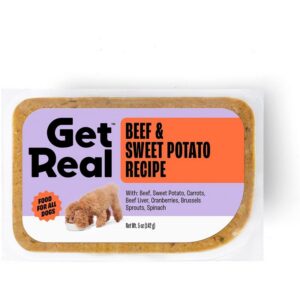
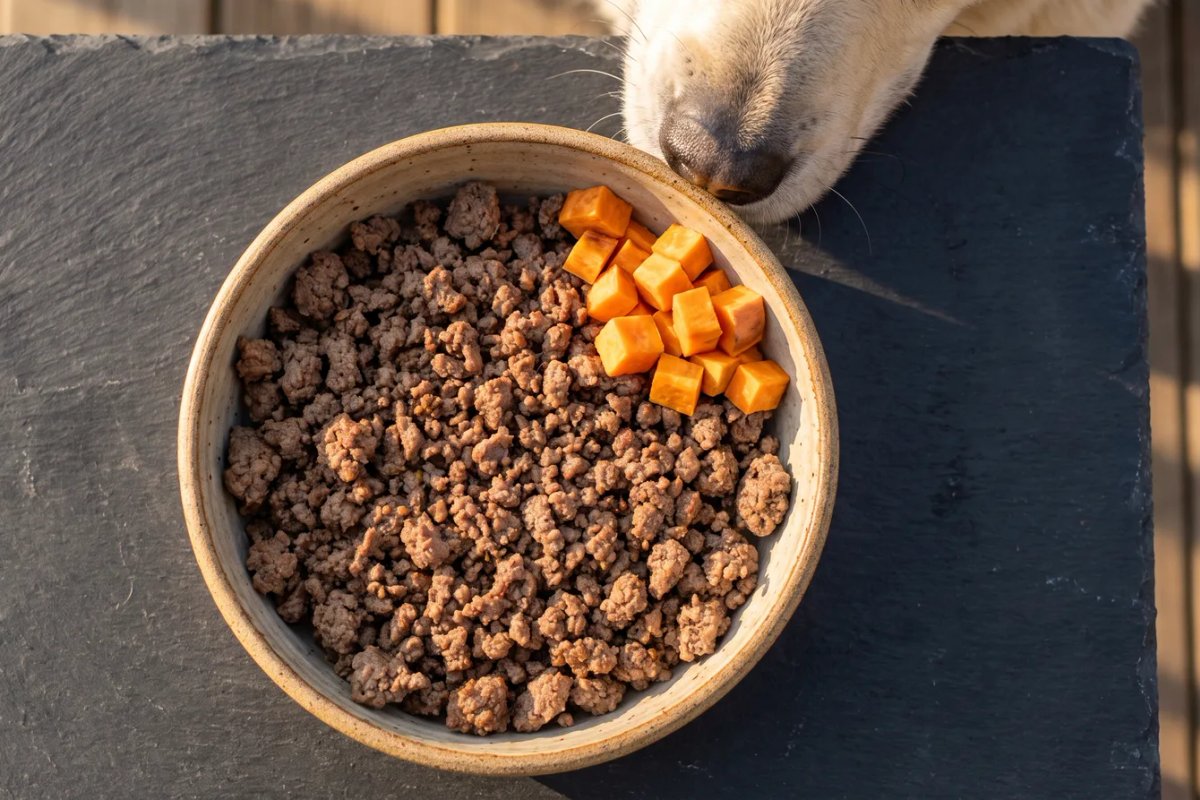
Get Real Beef & Sweet Potato Recipe. Beef & Sweet Potato comes in 12 oz and 24 oz packs, and thawed food keeps for three to five days in the fridge, which makes storage planning simple.
Unopened food is the easiest to plan around. It lasts until the best-by date printed on the package, as long as it has been stored as the label directs, and unopened cans are shelf stable until that date. Treat the date as the end of guaranteed quality and nutrition and do not feed past it. Once opened, canned dog food needs to be refrigerated. The FDA advises refrigerating or discarding unused canned and pouched pet food promptly, covering it tightly, and keeping the fridge at 40 F or below.
Dry food raises its own questions. Kibble does go bad slowly after opening: it goes stale, as fats slowly oxidize and the food loses aroma. The FDA recommends keeping dry food in its original bag with the top folded down, in a cool, dry place below 80 F; if you use an airtight container, put the whole bag inside it. A bowl of kibble left out for a day will not spoil the way wet food does, but it goes stale and attracts pests, so offer measured meals.
- Dry food: roll the bag shut and keep it inside a sealed bin in a cool, dry spot, so the lot number and date stay with the food.
- Wet food: cover the can or transfer it to a sealed container, refrigerate it, and use it within the window on the label.
To see how long a package will last, divide its weight by your dog’s daily portion. If a package holds more days of food than its opened window allows, plan to freeze the extra in daily portions as soon as you open it.
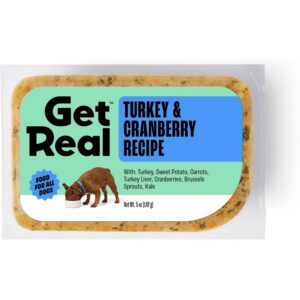
Get Real Turkey & Cranberry Recipe. Turkey & Cranberry ships frozen in pre-portioned packs, so the planning math is done for you: thaw one pack at a time and keep the rest frozen.
How to thaw frozen dog food safely
Thawing is where most mistakes happen. The safe method is slow: move frozen food from the freezer to the refrigerator and let it thaw there. Food thawed in the fridge stays at a safe temperature the whole time, which is why both general food-safety guidance and pet food brands recommend it.
Should you give frozen food to dogs? Serve it thawed rather than frozen solid. A frozen block is hard on teeth, harder for some dogs to eat, and can be gulped in chunks. Frozen food is perfectly good for dogs once it has thawed in the fridge; the freezing step only preserves it. The exception is a deliberate frozen enrichment treat, covered in the FAQ below.
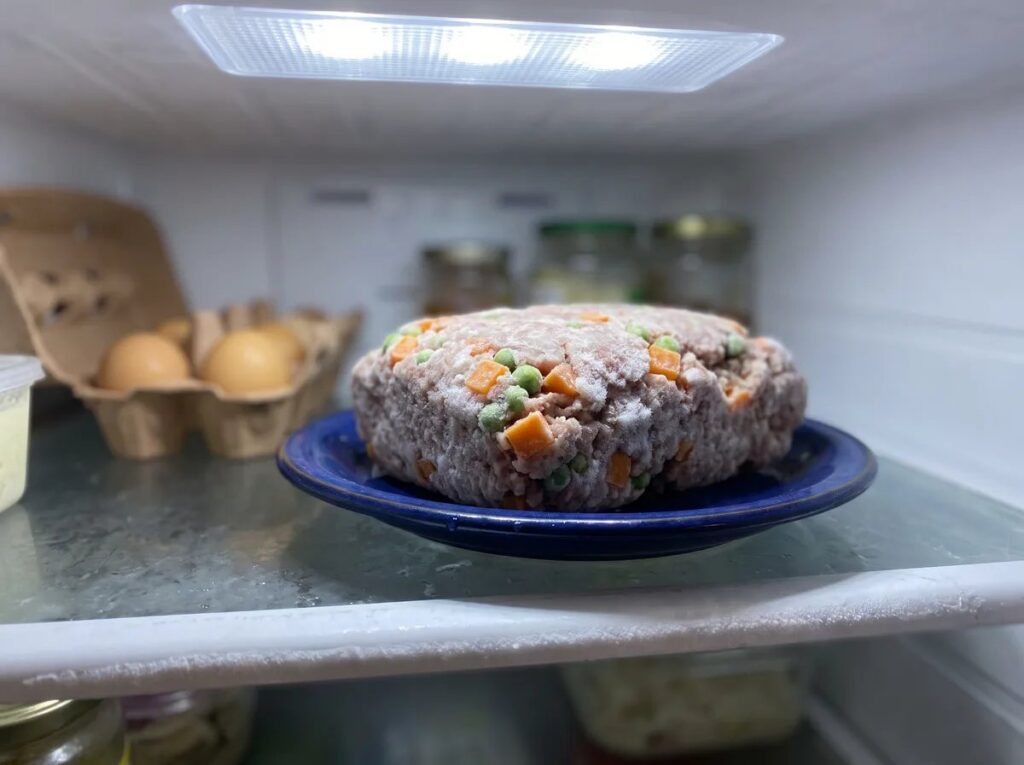
Never thaw on the counter, in hot water, or in the microwave. Food that has sat for more than two hours at room temperature should be thrown out, not refrozen.
For Get Real, Chewy publishes specific thaw times by pack size. That makes it possible to build a thaw schedule by pack size so the next day’s food is always ready:
| Pack size | Fridge thaw time | When to move packs to the fridge | Use thawed food within |
|---|---|---|---|
| 5 oz mixer pack | 12 to 24 hours | The morning or evening before you serve it | 3 to 5 days |
| 12 oz pack | 12 to 24 hours | The morning or evening before you serve it | 3 to 5 days |
| 24 oz pack | 35 to 48 hours | Two days before you serve it | 3 to 5 days |
In practice, the routine is simple. Each evening, move packs to the fridge for the day after tomorrow if you use 24 oz packs, or for tomorrow if you use 5 oz or 12 oz packs. Keep one thawed pack in use at a time, and keep the next one thawing behind it. Because thawed food is good for three to five days, a missed day does not mean waste.
- Day 1 evening: move the first 24 oz pack from the freezer to a plate on a fridge shelf.
- Day 3: open and serve the first pack, then move the next pack to the fridge.
- Day 5: open the second pack; the first should be finished or close to it.
- Keep rotating so no thawed pack sits past its use window.
A pack of the Get Real Beef & Sweet Potato Recipe follows the same rhythm as the other recipes, so a mixed freezer of proteins can run on one thaw schedule. Set the pack on a plate or in a shallow dish while it thaws in case of condensation, and keep it on a lower shelf away from ready-to-eat human food.
Can you refreeze thawed dog food?
Sometimes. The rule turns on temperature, not time. Thawed food that is still at 40 F or below, which means it thawed in the fridge and never sat out, may go back in the freezer or stay refrigerated. That matches Chewy’s published guidance for Get Real: thawed food still at 40 F or below may be refrozen or refrigerated. USDA guidance for people says the same about food thawed in the refrigerator.
Refreezing does have a cost. Each freeze and thaw cycle softens texture and draws out more moisture, so a refrozen portion is safe but less appealing. That is one more reason to thaw only what your dog will eat in the next few days.
Food that was thawed on the counter, sat out for two hours at room temperature or longer, or smells off should never be refrozen. Throw it out. Bacteria multiply quickly between 40 degrees F and 140 degrees F, and freezing will not undo that growth.
- Refreeze: thawed in the fridge, still cold, within its use window.
- Do not refreeze: thawed on the counter, left out two hours at room temperature, or smells or looks wrong.
- When in doubt, throw it out.
Freezing other dog foods: wet, canned, and kibble
Can you freeze wet dog food? Yes. Leftover wet food freezes well in small portions. Can I freeze canned dog food? Not in the can: transfer the leftovers to an airtight container or ice cube tray first, because the can is not designed for freezing. Unopened cans do not need freezing at all; they are shelf stable until their date.
Should I refrigerate wet dog food after opening? Yes, always. Cover it tightly and refrigerate it promptly, as the FDA advises, then use it within the window on the label. If you will not finish it in time, freeze the remainder in portions. Can you freeze wet dog food for treats? Yes, and many owners spoon it into molds to make cold treats on hot days. Just count those treats as part of daily calories.
Freezing dog food for enrichment is a popular use: a stuffed, frozen toy becomes a long-lasting puzzle that slows fast eaters. Wash the toy thoroughly after each use.
- Kibble can be frozen in airtight, portioned bags, which helps if you bought more than you can finish before it goes stale.
- Use frozen kibble within a few months for best aroma, and let it come to room temperature in a sealed bag so condensation does not form on the kibble.
- Some owners freeze kibble to kill storage mites, but freezing is not a reliable fix. Prevention works better: a sealed original bag, a clean bin, and a bag size you finish within several weeks.
Is it okay to freeze my dog’s kibble? Yes, it is okay to freeze kibble, but most dogs do not need it. Freezing is useful mainly for bulk purchases or very small dogs who take months to finish a bag. For everyday use, a sealed bag in a cool, dry place is enough.
Why frozen, pre-portioned packs skip the problem
Most of this guide is about managing a deadline: open a refrigerated pack, then portion, freeze, and thaw before quality slips. Food that is sold frozen removes that deadline. It stays frozen until you need it, and each pack is already sized, so there is no slicing, repackaging, or labeling.
Get Real is Chewy’s own fresh dog food, sold only at Chewy in select markets. Each recipe is made with human-grade ingredients, gently cooked, and then frozen. Recipes use 10 ingredients or less plus vitamins and minerals, and all three are formulated to meet AAFCO nutrient profiles for all life stages, including growth of large-size dogs. Packs come in 5 oz, 12 oz, and 24 oz sizes; the 5 oz pack is a mixer pack for adding to another food, while the larger packs suit full meals.
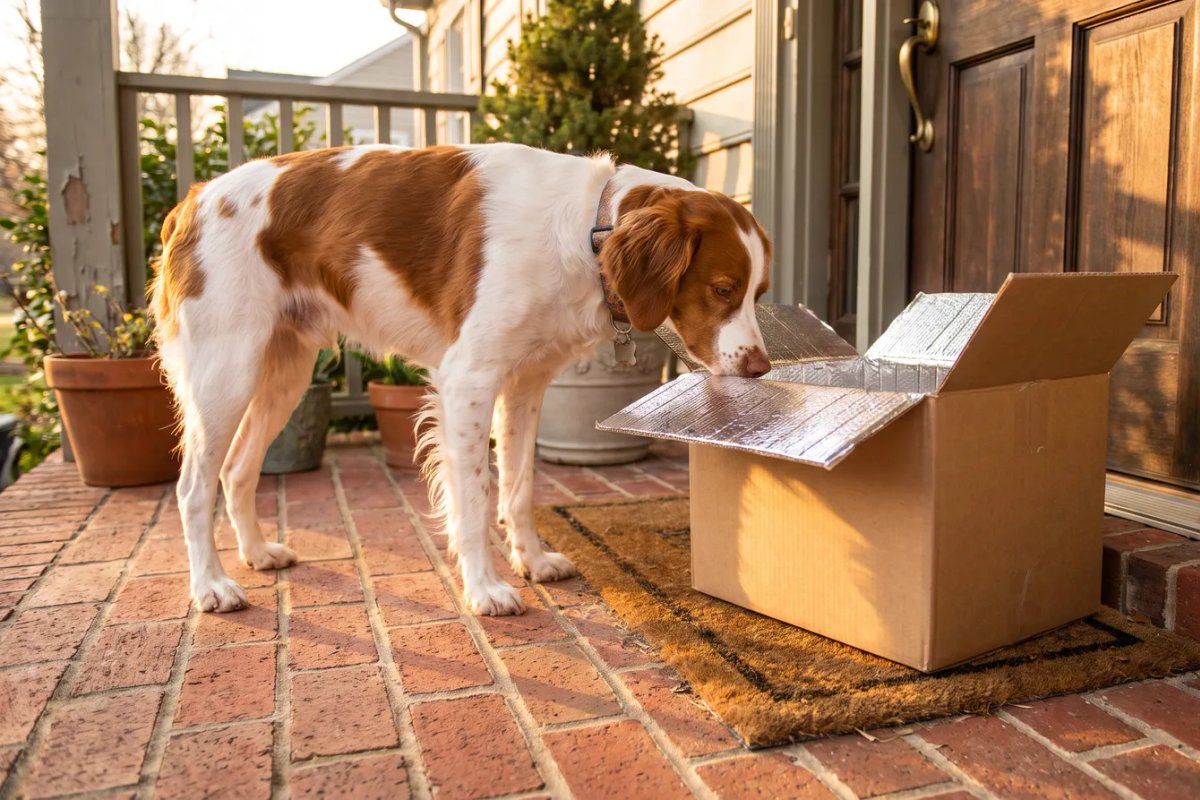
Because the food arrives frozen, the storage routine is short. Chewy says to put packs in the freezer as soon as they arrive. Orders ship in insulated packaging with dry ice and stay cold for up to 8 hours after delivery, depending on the weather. From there, move packs to the fridge on the thaw schedule above and use thawed food within 3 to 5 days.
- Pre-portioned packs: no slicing or repackaging before freezing.
- Thaw only what you need: a 12 oz pack thaws in 12 to 24 hours.
- Flexible feeding: use it as a full meal, a topper, or a kibble mixer.
- A subscription you can change, pause, skip, or cancel anytime.
A 12 oz pack is a practical middle size for many households: it thaws overnight, and a medium dog will usually finish it well inside the use window. Larger households can use 24 oz packs and plan two days ahead. For dogs who like poultry, the Get Real Turkey & Cranberry Recipe uses the same frozen, pre-portioned format, so it fits the same freezer routine.
If you are switching to fresh food, mix it in gradually over 7 to 10 days, or 10 to 14 days for sensitive dogs. The Vetstreet primer on choosing the right food for your dog covers what to look for in any complete diet.
Related reading: Petful covers how long fresh dog food lasts in the fridge, and WebVet walks through how to thaw frozen dog food safely.
Freezing fresh dog food: frequently asked questions
Frequently asked questions
Thawed raw dog food is typically good for only a few days in the refrigerator, so follow the window on the package. Raw dog food carries a higher bacterial load than cooked food, which makes the refrigerator storage window more important: keep it at 40 F or below, on a low shelf, and wash hands and bowls after handling.
Many veterinarians are cautious about raw diets because raw meat can carry Salmonella and Listeria, which can sicken dogs and the people who handle the food. The FDA notes that raw pet food is more likely to contain harmful bacteria. Gently cooked food, frozen after cooking, avoids that raw-meat risk while still offering a fresh format.
Food kept constantly frozen stays safe, but quality declines over time, so most owners aim to use frozen portions within a few months. Use the freezer storage window on the label when there is one, and rotate the oldest portions first.
Yes. Pack the Kong with wet or fresh food and freeze it overnight to make a puzzle that keeps a dog busy. Count it in daily calories by reducing the next meal slightly.
Divide the food in the bag by your dog’s daily portion size; the daily portion depends on the calories per day your dog needs for its weight and activity. If that number is longer than the food’s opened window, freeze the extra in daily portions.