How a Cambridge-Trained Veterinarian Is Rethinking the Way We Care for Anxious Dogs
Published on November 16, 2026
Sponsored by PawOrigins. Dr. Kathryn Dench is a veterinary advisor to PawOrigins.
—
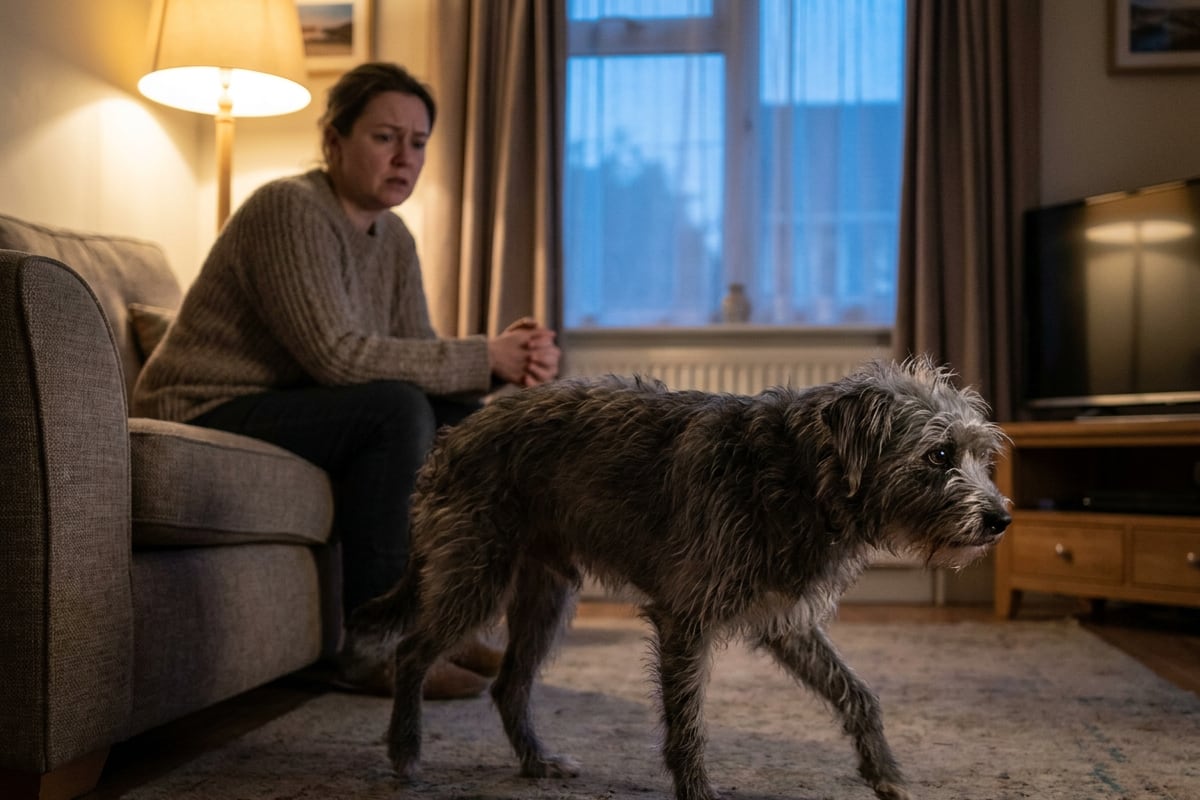
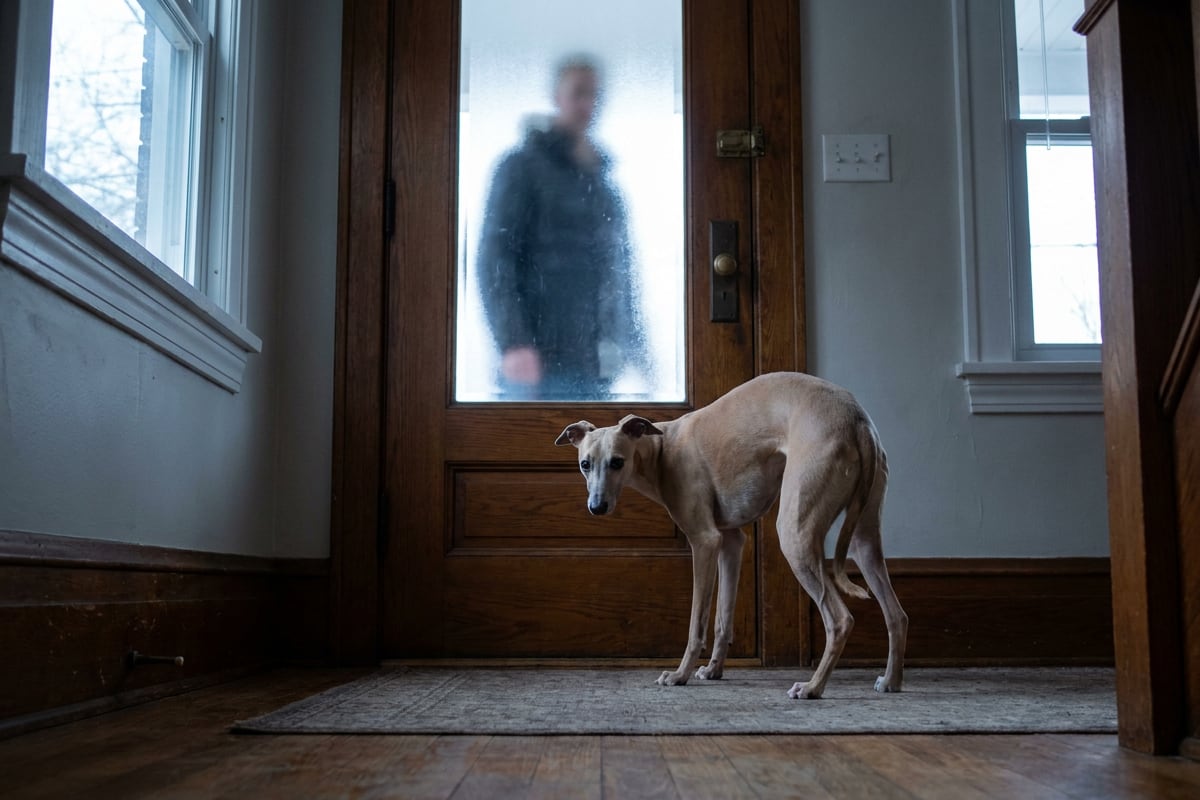
The visitor has barely reached the door when the barking starts. Later, when the house is quiet again, the dog is still pacing. For families living with anxious dogs, a brief encounter can seem to take over an entire evening. You rearrange visits, apologize to friends, and wonder why the dog who rests so happily beside you struggles with something so ordinary.
It is easy for the conversation to become about manners. The dog is difficult. The dog needs firmer rules. You must be doing something wrong. Those explanations can leave both ends of the leash stuck: the owner feels judged, while the reason behind the behavior remains unclear.
Dr. Kathryn Dench, MA VetMB, MRCVS, brings a different emphasis to her work with PawOrigins: consider the dog’s wider wellbeing before reducing the problem to an unwanted action. Her background and the whole-dog perspective described in the brand’s educational work offer a useful starting point for a more compassionate conversation.
All featured products are chosen at the discretion of the author. However, Vetstreet may make a small affiliate commission if you click through and make a purchase.
The veterinarian behind the perspective
Dench is a Cambridge-trained veterinarian whose work has included small-animal practice and veterinary advisory roles. Her published biography also describes work involving animal welfare and wildlife conservation. In her association with PawOrigins, she contributes a veterinary perspective to the brand’s education and wellness approach.
That relationship matters to readers. PawOrigins sponsors this profile, and Dench serves as a veterinary advisor to the company. Her perspective offers a starting point for conversations with the veterinary team who knows your dog and their individual circumstances.
The most useful part of the perspective is one owners can bring to their own veterinary team: consider health, behavior, surroundings, daily routine, and appropriate support together. A barking episode becomes a starting point for investigation, rather than the whole explanation.
A change in the first question
Imagine replacing “How do I stop this noise?” with “What happened just before it, and what does my dog need now?” You have not abandoned household boundaries. You have made the question more specific.
That shift can change what you notice:
- A dog who retreats as the visitor approaches may need more space.
- A dog who cannot settle after several busy events may need a quieter setting.
- A new reaction alongside changes in movement or touch tolerance warrants a veterinary conversation.
These are possibilities to explore, not diagnoses. The point is to make room for information that a label such as stubborn can hide. It is also a kinder position for the owner: you can investigate the next step without first deciding who deserves the blame.
PawOrigins Mobility-Max Advanced Hip & Joint Support Chews

What anxious dogs can be telling us
Anxious dogs do not all look the same. Some bark and pull toward an event; others become still, move away, or hide. A dog’s outward behavior describes what you can see, but it does not establish the underlying cause. Fear, frustration, pain, and other factors may require different responses.
For anxious dogs, signs and symptoms need to be interpreted in the context of everyday life. A change in your own dog is a useful place to start. Compare the dog’s posture, activity, and ability to settle with what is usual for them in that setting.
Vetstreet’s guide to recognizing anxiety and stress explains why context matters. A familiar gesture can mean different things in different situations. Looking at the full pattern is more useful than treating one yawn, lip lick, or tucked tail as a definitive answer.

Read the moment without testing the dog
Notice the sequence while keeping the situation manageable:
- Before: What changed in the environment? Who approached, what sounded, or what routine began?
- During: Did the dog move toward the event, retreat, freeze, vocalize, or seek company?
- After: What happened when there was more space or the event ended?
Do not recreate an upsetting encounter to prove your theory. A safely obtained observation is enough to bring to a professional. For more detail on combinations of facial expression and posture, see Vetstreet’s explanation of dog body language.
The humane reframe is not that every difficult action is anxiety. It is that the action deserves interpretation before it becomes a judgment about the dog’s character. That distinction protects against both extremes: dismissing distress as disobedience and assuming every behavior has the same medical explanation.
The alarm and thermostat metaphor, with its limits
The PawOrigins educational approach uses an alarm and thermostat image to make stress recovery easier to picture. An alarm draws attention to a possible threat. A regulating system helps the body respond and return toward a more settled state. For an owner, the useful question is what happens after the immediate event passes.
Perhaps the doorbell stops, but the dog keeps watching the hallway. Perhaps one difficult encounter is followed quickly by another. It can feel as though the alarm remains turned up. The metaphor gives a family a shared way to describe that experience without blaming the dog for it.
Recovery is observable; a mechanism is not
What an owner can record is recovery time: how long it takes for the dog to return to familiar resting, exploring, eating, or social behavior. That observation does not measure a hormone level, reveal a particular brain circuit, or prove that a regulatory system is deficient.
The endocannabinoid system, often shortened to ECS, is one of the body’s signaling networks. Researchers study it in relation to a range of functions, including stress-related processes. It is part of a much bigger biological picture, rather than a single switch an owner can test by watching a dog bark.
Keep the metaphor useful by separating three things:
- What happened: The dog paced after a visitor left.
- What might help the immediate situation: Less activity and an accessible resting place.
- What needs professional interpretation: Why this pattern occurs and which care options fit.
That separation leaves space for a whole-dog plan. It also avoids promising that one intervention will restore every part of stress regulation. A memorable explanation should make veterinary questions clearer, not replace the assessment needed to answer them.
PawOrigins Primal-Vitality 6-in-1 Bone Broth Powder

Why training anxious dogs starts with the setting
Training anxious dogs is not simply a matter of repeating a cue until the dog responds. The environment affects the task. A skill practiced in a quiet kitchen may be much harder near a noisy doorway, an unfamiliar person, or a dog approaching on a narrow path.
Good training for anxious dogs therefore includes decisions about distance, intensity, timing, and the dog’s response. If the setting keeps becoming overwhelming, the starting point may need to become easier. That is a change to the conditions for learning, rather than a verdict that learning has failed.
The American Veterinary Society of Animal Behavior’s humane training position supports reward-based methods and advises against aversive methods. Clear boundaries and humane training can coexist: an owner can prevent a close encounter, use a barrier, or change direction without adding punishment to a frightening moment.

Match the exercise to the dog in front of you
Consider a hypothetical visitor routine. Instead of requiring the dog to sit beside the front door while the visitor enters, a professional might help the family plan more distance, a separate comfortable area, and gradual practice under easier conditions. The specific arrangement depends on the dog and the safety picture.
What changes is the order of the work. First make the situation manageable; then practice an achievable response. AAHA’s behavior guidance describes gradual exposure beginning below the intensity that produces a fearful response. It is not a recommendation to hold a worried dog near a trigger until they stop protesting.
Useful questions for the person guiding the plan include:
- What tells us this starting point is appropriate?
- What should we change if the dog becomes more distressed?
- How do we handle an unexpected encounter?
- What progress should we record before making the task harder?
Those questions move the conversation beyond training harder. They help an owner understand how the plan is supposed to work and when it needs adjustment.
Quiet behavior is only part of the picture
The household naturally notices barking, pacing, and damage. When those actions stop, it can feel like the problem has been solved. Quiet behavior is useful information, but comfort requires a broader look: does the dog appear less tense, have freedom to move away, and return to normal activities?
A whole-dog perspective should not turn that distinction into a dismissal of medication. Appropriate veterinary treatment can be an important part of helping a dog with substantial fear or anxiety. Sleepiness and relief are not interchangeable observations, and the prescribing veterinarian can help interpret the response to treatment.
Bring the wider pattern to an appointment
Ask about medical causes when behavior is new, worsening, or accompanied by other changes. Your observations can make the conversation more concrete, but they cannot rule out pain or illness at home.
Bring a short list of relevant context:
- When the behavior began and whether it is changing.
- Any differences in sleep, movement, appetite, or tolerance of handling.
- Current medicines and supplements.
- What the family has tried and how the dog responded.
If the visit itself is difficult, tell the clinic in advance. Vetstreet’s article on behavior at the veterinary clinic explains how fear can affect an examination. Preparing the team is a practical act of advocacy, not an admission that your dog is impossible to handle.
PawOrigins Clear-Allergies Dog Allergy Chews

How do you help a dog with anxiety?
Help begins with safety, a veterinary assessment when needed, and a plan suited to the individual dog. Offer a safe space the dog can choose, reduce avoidable pressure, and work with qualified support on gradual, reward-based behavior changes. Frequent or severe distress deserves professional attention rather than a succession of improvised calming experiments.
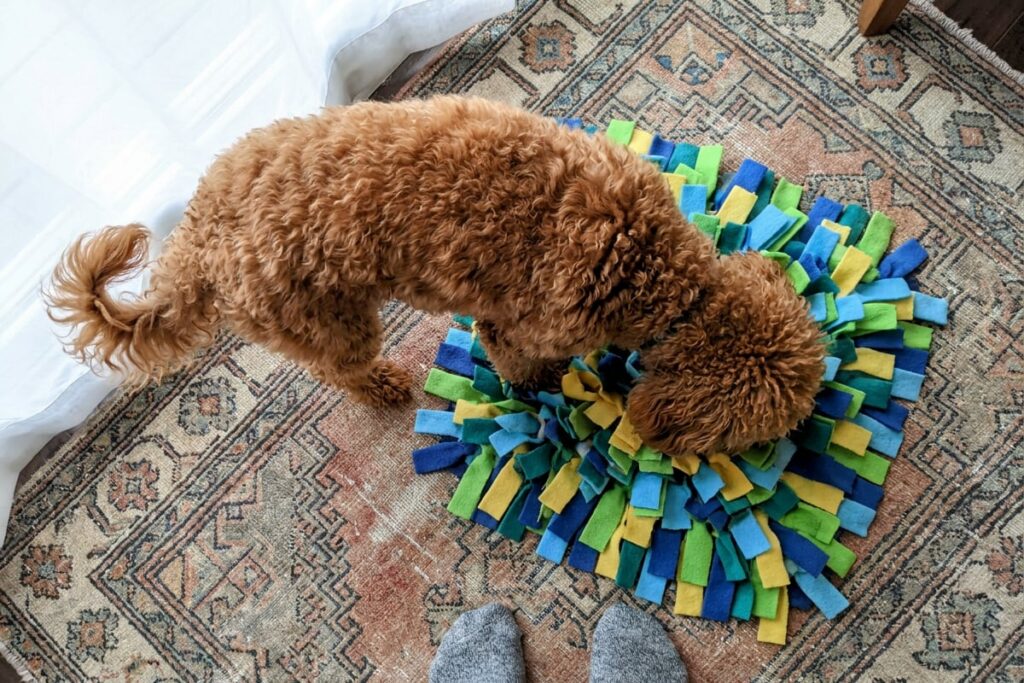
For immediate comfort, consider what your dog already finds familiar. Some dogs seek quiet company; others prefer more distance. Avoid insisting on touch, greetings, or confinement because those things seem reassuring to you. The useful response is the one that fits the dog’s behavior and circumstances.
Make ordinary days more predictable
Tufts’ veterinary behavior guidance emphasizes routine, appropriate activity, attention to body language, and regular medical care. It also makes an important point for worried owners: comforting a fearful dog does not teach them to be afraid. Comfort can help in the moment while longer-term support is arranged.
That does not require an elaborate new lifestyle. Choose a few changes the household can maintain, such as an easier walking time, a resting place away from busy foot traffic, or clear instructions for visitors. Check whether each change makes the situation more manageable instead of adding new steps simply because they sound calming.
A workable plan also needs room for real life. Deliveries arrive unexpectedly; schedules change. Agree on a simple response for those moments so the person at home is not forced to invent a solution while the dog is distressed.
A more useful record than a label
The observation record is where this perspective becomes practical. Instead of marking a day good or bad, write a few facts that another person could understand. Keep it brief enough to repeat and specific enough to compare similar situations.
Try this after an ordinary encounter: Record the trigger, the setting, the dog’s first response, what you changed, and the recovery time. Include an uneventful encounter too. Do not provoke a reaction or delay helping your dog in order to collect notes.
For example, “barked at visitor” contains less usable detail than “visitor entered quickly, dog backed away and barked; settled in the other room after the visitor stopped approaching.” This is an illustrative example, not a report of Dench’s patient or a prescribed visitor-training method.
Choose a goal that matters at home
The goal does not have to be a dog who welcomes every stranger. It may be a dog who can rest comfortably while a visitor is present, or a family who can manage necessary routines without repeated distress. Discuss what is realistic with the professionals who know the case.
Questions for the next review might include:
- Are similar situations becoming easier to manage?
- Is the dog returning to usual activity more readily?
- Can the household follow the plan consistently?
- Has anything changed that calls for another medical check?
The record gives you something to discuss besides whether you tried hard enough. It also gives the veterinary team a clearer view of the dog’s everyday life, where much of the care plan has to happen.
Keep comparisons fair
A quiet afternoon and a crowded holiday gathering are different challenges. Note those differences before concluding that the dog has improved or that earlier progress has disappeared. If several people share care, agree on plain descriptions they can all use. “Moved to the bedroom when the door opened” is easier to compare than “seemed dramatic.” The record is there to support a conversation, not to score your dog’s personality or demand a perfect day.
PawOrigins Happy-Furever Full-Spectrum CBD Oil

Where PawOrigins fits into the wider picture
PawOrigins’ educational approach places wellbeing, practical owner support, and veterinary context together. For a family interested in CBD for anxious dogs, that wider picture is the place to begin: what are you hoping to change, what care is already in place, and what does your veterinarian need to know?
Happy-Furever Oil is PawOrigins’ full-spectrum CBD oil for dogs and cats. The company provides formulation information and a laboratory report that owners can review when discussing supplements for anxious dogs. Those details help make a product conversation specific, rather than asking a bottle to stand in for a complete plan.
Dench’s advisory relationship with PawOrigins connects this product conversation to the brand’s broader educational approach. The next step is to consider the available information alongside your own dog’s needs and existing care.
A considered next step
Canine CBD research is developing, and results with one preparation do not establish how another product will affect an individual dog. Cornell’s overview of CBD use and efficacy recommends veterinary discussion, including possible medication interactions and effects on liver enzymes. Bring the actual product information and a list of everything your dog takes so the conversation is grounded in the specific situation.
Interested owners can learn more about Happy-Furever Oil as one topic within that discussion. Keep the useful parts of the broader approach in place: understand the context, make daily life manageable, support appropriate learning, and pay attention to recovery.
The next time the doorbell rings, the first question can be more useful than whether your dog is being good. You can notice what changed, give the dog room to respond, and bring that information back to a care plan built around the individual animal. That is a meaningful place for a more compassionate conversation to begin.