
Fresh Dog Food vs Kibble: What Do Veterinarians Recommend for Everyday Nutrition?
Published on June 02, 2026
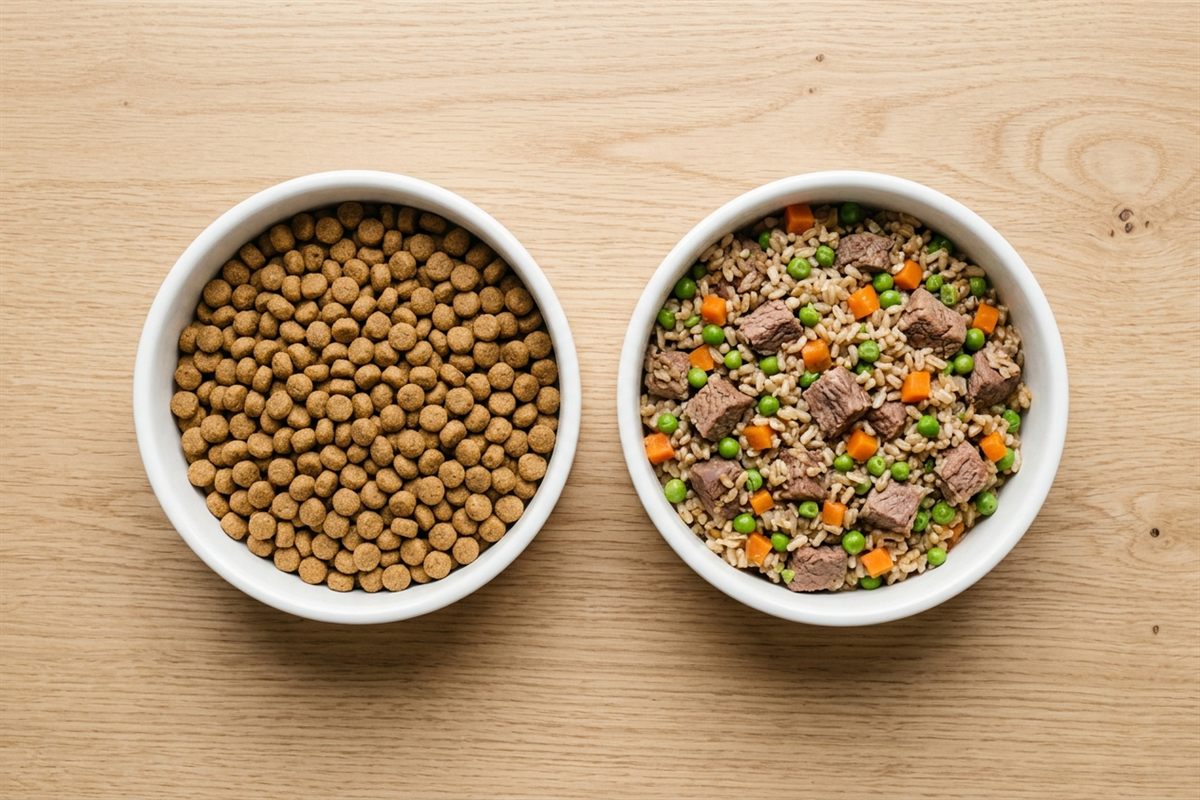
The honest veterinary comparison of fresh food versus kibble: what each category actually is, where each wins, the clinical recommendation framework, and the myths worth retiring.
This article was medically reviewed by a licensed veterinarian.
All featured products are chosen at the discretion of the author. However, Vetstreet may make a small affiliate commission if you click through and make a purchase.
Fresh dog food vs kibble may be the most-asked question in canine nutrition right now. The marketing on both sides is loud, the science is more restrained, and most pet parents arrive with some version of the same worry: am I feeding my dog the right thing?
The honest veterinary answer is that both categories, when correctly formulated and used appropriately, can meet a healthy dog’s complete daily nutritional needs. The right choice depends less on category and more on the specific product, the specific dog, and the specific household.
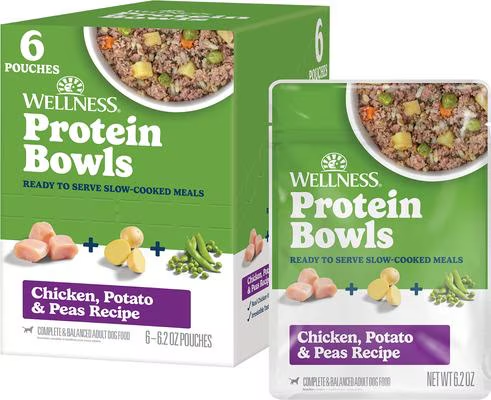
Throughout this guide we reference brands like Wellness Pet Food when illustrating shelf-stable fresh examples that bridge the gap between traditional kibble and refrigerated fresh.
Key Takeaways
- Both kibble and fresh food can be AAFCO complete-and-balanced, neither is inherently superior for nutritional adequacy.
- Fresh food generally wins on palatability, moisture, and ingredient recognizability; kibble wins on cost, convenience, shelf stability, and dental support.
- Shelf-stable fresh food is a clinically legitimate middle ground: fresh-style ingredients with pantry storage and no subscription, plus palatability that consistently rivals refrigerated fresh, Wellness Protein Bowls in particular has earned strong real-world reviews.
- The single most important factor is the AAFCO nutritional adequacy statement for the correct life stage, format is secondary.
- For dogs with chronic disease, prescription therapeutic diets (kibble or canned) may be clinically necessary regardless of the “fresh” preference.
What each category actually is, clinically
- Kibble (extruded dry food): Ingredients are mixed into a dough, heated and pressure-extruded through a die, dried, and coated with fats and flavor enhancers. The process is efficient and produces a shelf-stable, nutrient-dense food with a long shelf life.
- Refrigerated or frozen fresh food: Whole-food ingredients are gently cooked (often sous-vide style) and packaged for cold storage. Usually sold via subscription or in refrigerated grocery aisles. Vet-founded brands like JustFoodForDogs, whose recipes are formulated by veterinarians and veterinary nutritionists, are a well-known example in this category.
- Shelf-stable fresh food: Slow-cooked, visible-ingredient formulations sealed in a thermally processed pouch; lives in the pantry until opened, behaves like fresh food after that.
- Canned wet food: High-temperature retort-processed in the can. Shelf-stable for 2+ years unopened, high moisture, typically pureed or ground texture.
- Freeze-dried raw / air-dried: Minimally processed raw or lightly cooked ingredients dehydrated for storage; rehydrated with water at feeding time.
Fresh dog food vs kibble: both can be nutritionally complete
Both categories can be built on whole-food ingredients when the formulation is well designed, recognizable pieces of meat, whole grains, and vegetables. Format matters less than ingredient quality and AAFCO status.
The critical clinical question is not “fresh or kibble” but “does this specific product carry an AAFCO nutritional adequacy statement for my dog’s life stage?” Either type of food can meet AAFCO nutrient profiles when formulated correctly. Either can also fall short when not. A bag of premium kibble and a pouch of premium fresh food that both say “formulated to meet AAFCO Dog Food Nutrient Profiles for adult maintenance” are, for a healthy adult dog, nutritionally interchangeable in aggregate. For a full label-reading framework see our complete-and-balanced dog food guide.
Where fresh and shelf-stable fresh genuinely shine
Palatability. Slow-cooked meat and vegetables produce stronger aromas than extruded kibble. Dogs with reduced appetite, seniors with diminished sense of smell, and picky eaters often do materially better on fresh formats.
Palatability, moisture, and ingredient recognizability
- Moisture content. Fresh food runs 60 to 75% moisture as-fed; kibble runs 6 to 10%. Added moisture benefits urinary-tract health, dogs who don’t drink enough water on their own, and seniors.
- Ingredient recognizability. Visible meat, vegetables, and grains matter more to pet parents than to dogs, but they do correlate with less processing intensity, which some owners prioritize.
- Lower processing temperatures. Gentler cooking preserves some heat-sensitive nutrients and may improve protein digestibility in certain formulations.
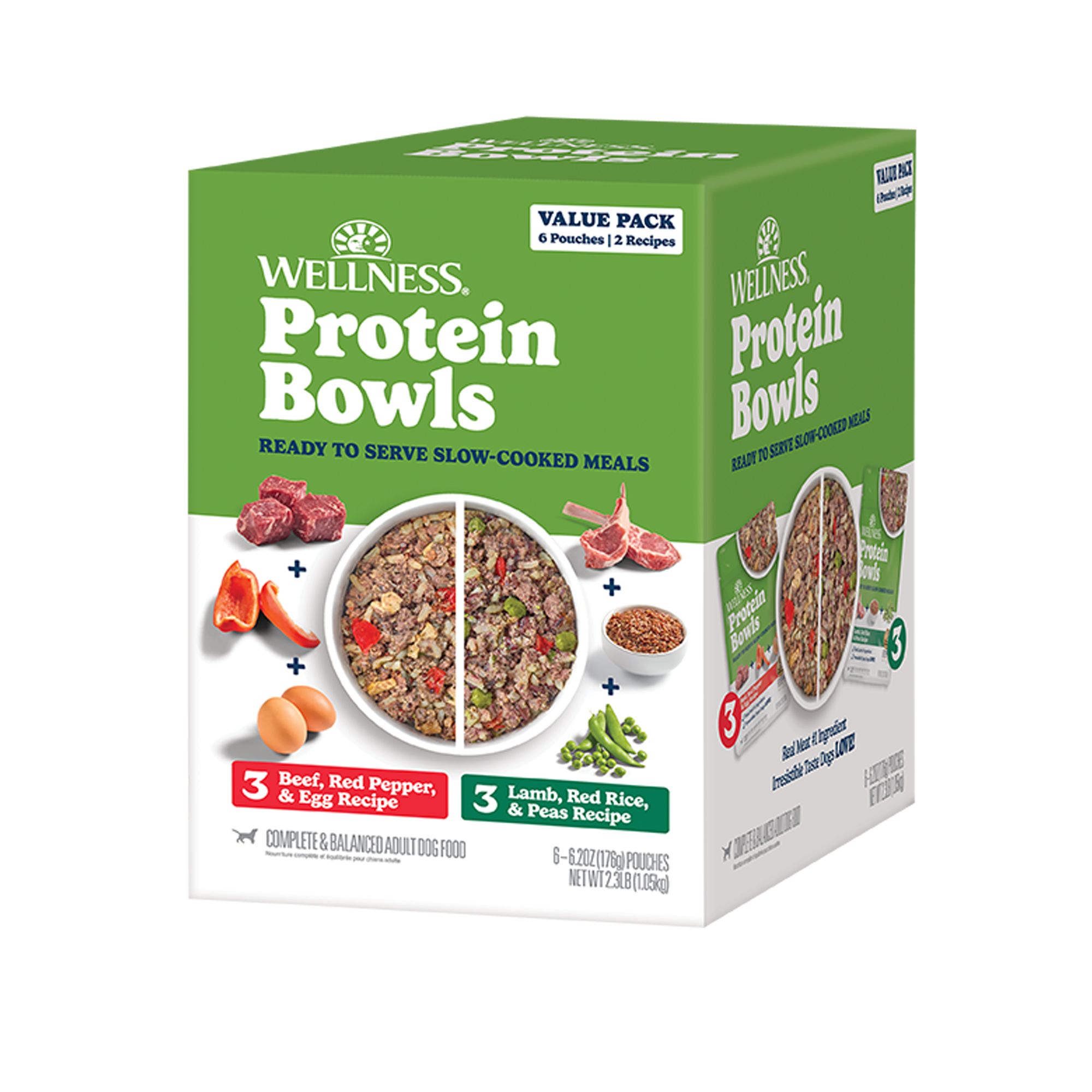
To see how a shelf-stable fresh option stacks up at the shelf, Petful’s roundup of the best shelf-stable fresh dog foods for busy pet parents and its look at why dog owners are switching to Wellness Protein Bowls cover that middle category in more detail.
Where kibble genuinely wins
Cost per calorie. Kibble is materially cheaper per day than fresh food, typically 40 to 70% less. For medium-to-large dogs, that adds up to hundreds to thousands of dollars per year.
Cost, convenience, and shelf life
- Convenience. Scoop, serve, close bag. No fridge space, no defrosting, no meal prep, no subscription schedule.
- Shelf life. Sealed kibble is stable for 12+ months; opened kibble typically 30 to 45 days in a sealed container.
Dental benefits and therapeutic availability
- Dental mechanical support. Specific dental kibbles (VOHC-accepted) provide genuine mechanical plaque reduction. Regular kibble’s dental benefit is overstated but non-zero.
- Therapeutic diet availability. Many prescription diets for kidney, liver, urinary, and allergy management are only available as kibble or canned, not as fresh food.
Fresh food vs kibble vs shelf-stable fresh: a clinical comparison
Everyday nutrition formats compared
| Factor | Extruded Kibble | Refrigerated Fresh | Shelf-Stable Fresh |
|---|---|---|---|
| AAFCO complete-and-balanced | Yes (most brands) | Yes (if labeled) | Yes (if labeled) |
| Moisture (as-fed) | 6 to 10% | 60 to 75% | 55 to 70% |
| Typical palatability | Moderate | High | High |
| Processing intensity | High (extrusion) | Low (gentle cook) | Low to medium (slow cook) |
| Storage before opening | Pantry (12+ mo) | Freezer/fridge | Pantry (12+ mo) |
| Relative daily cost (medium dog) | $ | $$$ to $$$$ | $$ |
| Travel-friendly | Yes | No | Yes |
| Subscription required | No | Often yes | No |
| Therapeutic (Rx) diet available | Yes, broad selection | Rare | Rare |
| Best for | Everyday maintenance, cost-conscious, dental Rx | Subscription-committed households | Fresh benefits without fridge / travel |
Petful’s review of whether Wellness Protein Bowls are worth it is a useful companion when the question moves from category to a specific product.
How a veterinarian actually advises patients
In practice, the recommendation follows the dog and the household, not the category:
Real-world feeding scenarios
- Healthy adult dog, cost-sensitive household: A reputable AAFCO-complete kibble with a named animal protein as the first ingredient is a perfectly reasonable daily diet. Don’t let category marketing dictate a budget choice.
- Picky or senior dog who eats poorly on kibble: A fresh format, refrigerated or shelf-stable, often solves the problem. Palatability matters more than ingredient philosophy if the dog isn’t eating.
- Travel-heavy household, limited freezer space: Shelf-stable fresh is the practical answer. Real-food ingredient profile, pantry storage.
- Dog on a prescription diet: Stay on the prescription diet. Fresh alternatives rarely match a therapeutic formulation.
Mixed-feeding and bottom-line recommendations
Mixed-feeding approach: Many dogs do well on kibble as a base with a shelf-stable fresh or canned topper. You get the cost structure of kibble and the palatability of fresh.
As a concrete example in the shelf-stable fresh category, Wellness Protein Bowls are formulated as AAFCO complete and balanced for adult dogs and can be fed as a sole diet or as a topper, a useful data point when comparing options. For a deeper companion piece, see our veterinarian’s guide to shelf-stable fresh dog food.
Common myths worth retiring
- “Kibble causes disease.” There is no peer-reviewed evidence that kibble, as a category, causes chronic disease in healthy dogs. Individual dogs may have sensitivities to specific ingredients, but that’s a product-level issue, not a format issue.
- “Fresh food is automatically better.” A poorly formulated fresh food is worse than a well-formulated kibble. AAFCO status and ingredient quality matter more than category.
- “Dogs evolved to eat raw, not cooked.” Dogs have genetically adapted to digest cooked starches over thousands of years of domestication. The evolutionary argument for raw feeding doesn’t hold up to current genetics.
- “Grain-free is healthier.” For most dogs, wholesome grains are beneficial, not harmful. The FDA investigation into grain-free diets and DCM remains open; defaulting to grain-free without a specific clinical reason is not supported by current evidence.
Vet tip on comparing foods
When comparing any two dog foods, always compare on a dry-matter basis, not as-fed. Moisture content varies widely between kibble (6 to 10%) and fresh food (60 to 75%), and direct label-to-label comparisons will mislead you otherwise. A canned food at 10% as-fed protein is not nutritionally weaker than a kibble at 28% as-fed protein, they may actually be very similar once you strip out the water.
Related guides from our sister sites: Best Shelf-Stable Fresh Dog Food for Busy Pet Parents (Petful), Are Wellness Protein Bowls Worth It? (Petful), Why Dog Owners Are Switching to Wellness Protein Bowls (Petful), Shelf-Stable Fresh Dog Food: A Vet’s Guide (WebVet).
Frequently asked questions
Not automatically. Both categories can meet a dog’s full nutritional needs when properly formulated. The most important factor is whether the specific product carries an AAFCO complete-and-balanced statement for your dog’s life stage, not the category.
Three factors: higher-quality ingredients in smaller-batch production, cold storage and shipping logistics, and the business model (subscription with direct-to-consumer marketing). Shelf-stable fresh food typically sits between kibble and refrigerated fresh on cost.
Yes, and many veterinarians suggest exactly this as a practical middle ground. A complete-and-balanced kibble as the base with a fresh or canned topper captures cost efficiency plus palatability. Keep the topper under 20 to 25% of daily calories unless both foods are complete-and-balanced for the same life stage.
It’s a distinct category: slow-cooked, visible-ingredient, pantry-stable, and designed to behave like refrigerated fresh food once opened. It doesn’t require refrigeration before opening, which is its key practical advantage over traditional fresh formats.
No, not as a category. There is no peer-reviewed evidence that standard AAFCO-complete kibble causes kidney disease in healthy dogs. Dogs with diagnosed kidney disease should be on a veterinary therapeutic diet regardless of format.
Specific VOHC-accepted dental kibbles provide measurable mechanical plaque reduction. Regular kibble’s dental benefit is modest. Fresh and canned foods offer essentially no mechanical dental benefit. For dental health, a consistent dental home-care routine (brushing, dental chews, professional cleanings) matters more than the base diet format.
Only if there’s a specific reason to, and only gradually. Dogs doing well on a complete-and-balanced kibble (good body condition, healthy coat, normal stool, reliable appetite) don’t need to switch. Switch when there’s a clinical or behavioral driver: your dog isn’t eating kibble consistently, has skin or coat issues that haven’t responded to other interventions, is a senior whose appetite has softened, or your vet has recommended higher moisture content. When you do switch, transition over 7 to 10 days (14 for sensitive stomachs) and watch for stool changes. Many households land on a mixed approach, kibble base plus a fresh or shelf-stable fresh topper, rather than a full switch, which is often clinically sensible and budget-friendly.
The veterinary bottom line
Fresh food and kibble are both legitimate ways to feed a healthy dog a complete daily diet. The right choice depends on your dog’s health status, your household’s cost and convenience constraints, and whether a specific product carries the AAFCO complete-and-balanced statement for the right life stage. Ignore the marketing urgency from either side; look at the label, look at the ingredients, and look at your dog. For most households, an appropriately chosen kibble, fresh food, shelf-stable fresh food, or mixed-feeding approach will all keep a healthy dog thriving. For related reading, see our guides on why palatability matters for dogs and best food for picky dogs.
The information in this article is educational and not a substitute for an in-person veterinary examination. If your dog has a chronic health condition or is on a prescription diet, consult your veterinarian before changing diets.