How Long Should Dogs Be On Probiotics For?
Published on October 05, 2026

This article is sponsored by PetLabCo.® and contains affiliate links. If you purchase through these links, we may earn a commission.
Written by Athena Gaffud, DVM
How long should dogs be on probiotics? There is no single course length for every dog or every product. A veterinarian may recommend a particular formulation for short-term support around a specific situation. A daily supplement can also be part of ongoing gut-health maintenance for a suitable dog. Those two uses need different plans for deciding when to continue, reassess or stop.
The useful starting point is the reason you are giving the supplement. “Until the tub is empty” is convenient, but it does not explain what the routine is supposed to accomplish. Nor does a dog accepting a soft chew prove that the supplement remains appropriate indefinitely. A clear purpose, the correct serving and periodic review make long-term use more deliberate.
Key Takeaways
- Short-term support and long-term daily maintenance are different reasons to use probiotics. There is no universal fixed course for both.
- A suitable dog may use a label-directed daily supplement as an ongoing routine, with veterinary guidance and reassessment when circumstances change.
- A study lasting a month does not establish a one-month treatment course, a deadline for visible improvement or lifelong safety.
- Product identity matters. Follow the directions for the exact formula and do not double a missed serving.
- Persistent or worsening signs require veterinary attention, not simply a longer supplement trial.
Short-term support and long-term daily maintenance
The question “How long can dogs take probiotics?” is best answered after separating the reason for starting from the decision about continued use. A dog receiving veterinarian-directed support during a particular digestive episode may need a defined review point. An otherwise well dog using a daily supplement for general maintenance may have an ongoing routine, provided the formulation remains suitable.
Neither situation gives every probiotic the same role. Different products contain different microorganisms and other ingredients, and studies do not establish one course length for the entire category. Your veterinarian can explain whether the goal is tied to a particular event, a broader nutritional plan or an ongoing condition requiring clinical care.
When support has a specific starting point
Travel, a food transition or a recent medication course can prompt a conversation about digestive support. The important question is not simply whether probiotics are associated with that situation. Ask whether a particular product is appropriate for your dog, when to begin it and what should determine the end of the plan.
For example, a planned trip gives you a known change in routine. That makes it possible to discuss the dog’s previous travel response with your veterinarian before departure, rather than introducing several new foods and supplements after a problem starts. The resulting plan might include feeding and routine changes alongside a selected supplement, depending on the dog’s needs.
If your dog is already unwell, the immediate priority is understanding the illness. Probiotics are not a substitute for examining repeated diarrhea, vomiting or other concerning signs. A recommendation for supportive use should sit within that assessment, with clear instructions about when to call back if the dog does not improve.
When the goal is continuing daily support
Long-term probiotics for dogs are usually discussed as a maintenance choice rather than a treatment course with a compulsory finish date. A label-directed daily supplement can fit that role for an appropriate dog. Continue to assess whether the formula, additional ingredients and serving still suit the animal’s current diet, medications and health.
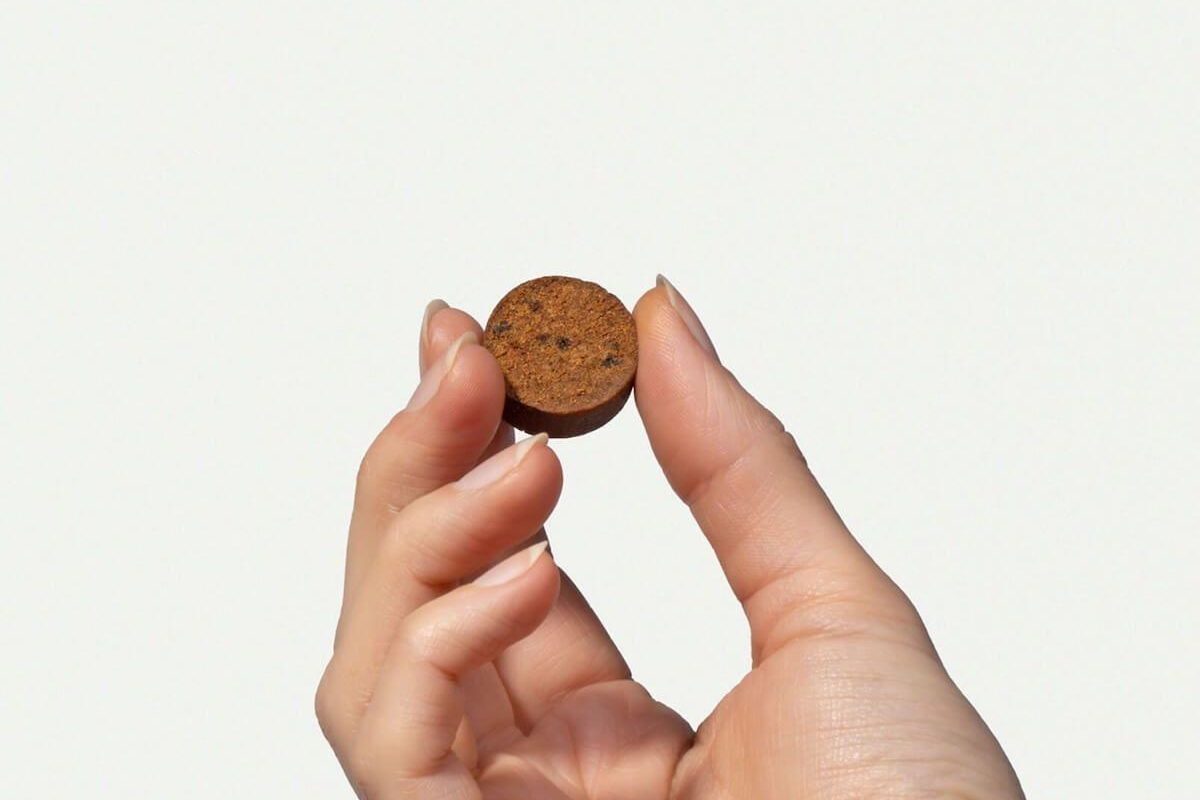
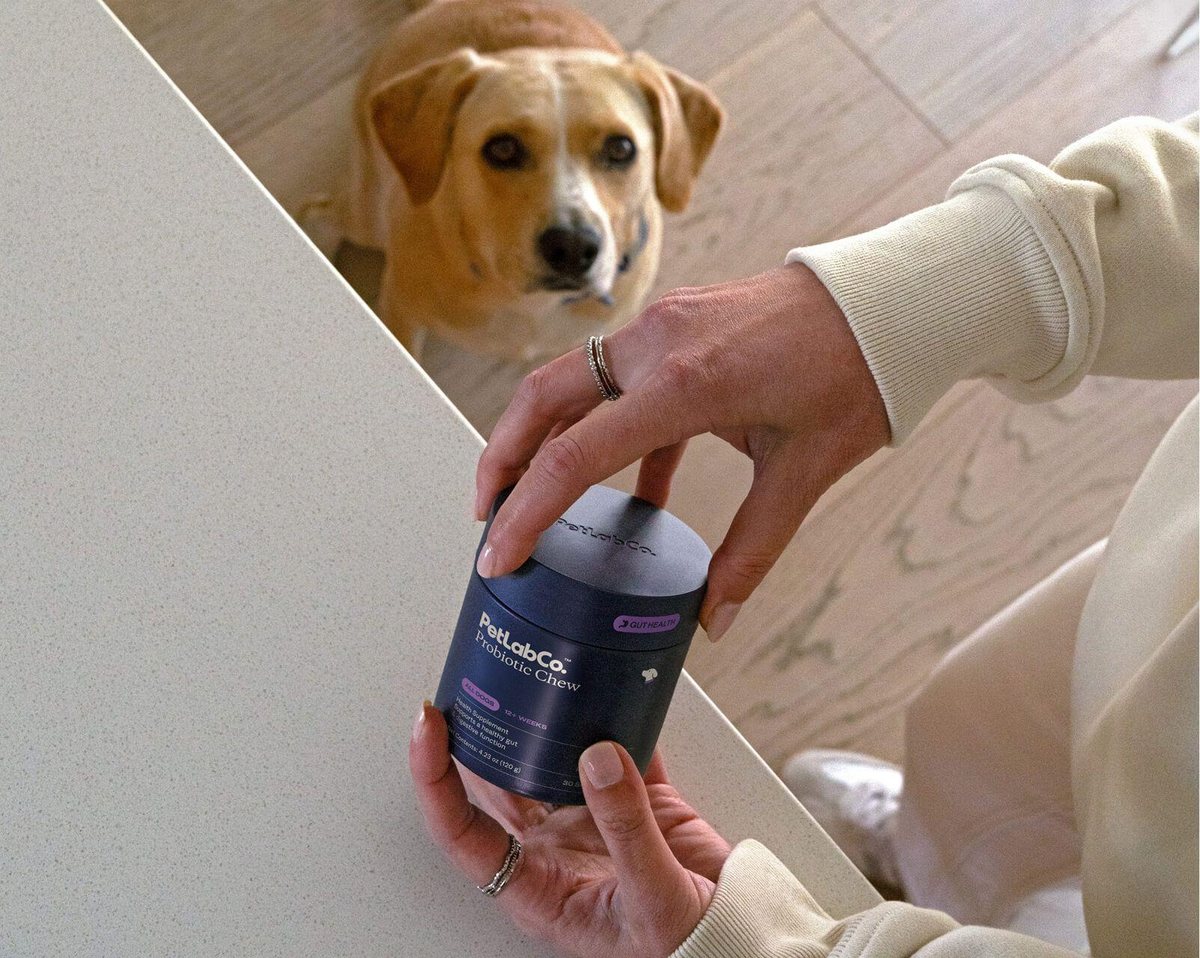
Probiotic Chews are one option designed for daily administration. They may suit a household that finds a soft chew easy to give consistently and a dog whose age and dietary needs match the label. A daily direction explains how the product is intended to be used; it does not mean every dog needs it or that reassessment is unnecessary.
- For an event-related plan, identify the event and agree on a review point.
- For continuing maintenance, identify the purpose and review it when the dog’s circumstances change.
- For new signs of a health concern, such as occasional loose stools or inconsistent bowel movements, contact the clinic rather than extending use on your own.
The brand’s guide to how long dogs should take probiotics also discusses short-term and daily use. Use that general distinction to prepare questions for your veterinarian; the individual product and dog still determine the practical plan.

Is it okay to give my dog probiotics every day?
Many canine supplements have daily-use directions, and daily administration can be appropriate when the product fits the dog and the intended purpose. The key is following the exact formulation’s label and the plan agreed with your veterinarian. “Daily” describes frequency. It does not establish that a larger serving is better or that all probiotic products can be combined.
For PetLabCo.® Probiotic Chews, the directions are one soft chew daily for dogs under 25 lb, two for dogs weighing 25–75 lb and three for dogs over 75 lb. Each soft chew weighs 4 g and provides 3 billion CFU, or colony-forming units. These are standard-formula directions, distinct from those on the separate Tailored range.

Make daily use easy to follow
Choose a consistent point in the day and a single place to record whether the serving has been given. This is particularly helpful in a household where more than one person feeds the dog. A supplement can resemble a treat, so a caregiver may accidentally repeat it unless the serving is clearly communicated.
A simple routine can include checking the tub before serving, offering the correct amount and confirming that the dog consumed it. If you switch to a powder, also notice whether the entire supplemented portion of food is eaten. The amount placed in a bowl and the amount a dog actually consumes are not always the same.
- Keep the product in its labeled container so instructions remain available.
- Record the current weight band and update it after a meaningful weight change.
- Follow storage directions and reseal the tub after use.
- Keep supplements out of reach to prevent an unsupervised extra serving.
What if you miss a day?
Do not double a missed serving to “catch up.” Follow any missed-serving instructions supplied by the manufacturer or ask your veterinarian how to resume. Giving extra creates a different amount from the planned daily routine and does not recover the missed day in a predictable way.
One missed serving also does not automatically mean a dog must restart a fixed course, because many daily maintenance routines are not fixed courses at all. If missed servings happen often, reconsider the format or who is responsible for giving it. A manageable plan is more useful than one that repeatedly becomes confusing or difficult to carry out.
Questions about how often dogs should take probiotics therefore need two answers: the product’s intended frequency and whether your particular dog should use that product. Keep those decisions connected. The label supplies serving instructions, while your veterinarian helps assess suitability and the reason for continued use.
How long do probiotics take to work in dogs?
There is no dependable countdown that applies to every probiotic, every dog and every outcome. Some studies assess stool characteristics; others examine the microorganisms in fecal samples or laboratory markers. Those measurements are not interchangeable, and a change measured in a study may not translate into something an owner can see immediately at home.
Before asking when the supplement will “work,” define the intended outcome with your veterinarian. A dog using routine maintenance support may have no health concerns to resolve. A dog with digestive discomfort needs a plan that addresses their cause, and improvement may reflect changes in food, other care, the passage of time or several factors together.
A study length is not a treatment deadline
PetLabCo.® describes a 31-day randomized, placebo-controlled study involving 24 healthy adult Beagles. Its published summary reports changes in microbiome measures and fecal calprotectin. The brand funded the study, and the summary does not link a peer-reviewed publication of that exact product trial.
The study offers product-specific context, but 31 days should not be converted into “all dogs improve in 31 days” or “stop after 31 days.” The dogs were healthy adults, and the endpoints did not establish a resolution schedule for sick dogs. The same evidence cannot establish puppy treatment, permanent changes after stopping or safety over an entire lifetime.
Why different products cannot share one timeline
A microorganism’s species name is only part of its identity. Research may apply to a particular strain, amount and formulation. A 2025 controlled study of Bacillus coagulans GBI-30, 6086 examined healthy adult dogs and reported changes in some stool and microbiota measures. That finding does not set an onset time for a different blend whose public label does not identify the same strain.
Broader reviews also find that canine probiotic studies vary in quality and results. A 2019 systematic review described limited, heterogeneous evidence, while a later review of acute-diarrhea studies did not find clinically significant shortening with the assessed nutraceuticals. These findings argue against a blanket promise that any probiotic will stop diarrhea within a fixed number of days.
What you can usefully observe
Keep observations focused on the reason for the plan, rather than trying to infer the state of the entire microbiome from one bowel movement. A short note can help your veterinarian interpret a pattern and understand what else changed at the same time. It should not become a reason to wait through worsening symptoms.
- Record the start date, exact product and actual serving given.
- Note whether the dog ate normally and consumed the intended supplement.
- Describe stool or other changes in plain, consistent terms.
- Record new foods, treats, medicines, stressful events or missed servings.
If you are unsure what should count as progress, ask before continuing simply because a calendar target has not been reached. “We will reassess if this happens” is more useful than assuming a visible benefit must arrive by day seven, fourteen or thirty. The right review point depends on the dog’s situation, not a category-wide promise.
Two common duration questions have their own guides on our sister sites: WebVet’s guide to probiotics for dogs after antibiotics walks through timing around a prescription, and WebVet’s guide to when to give a dog probiotics covers meals, travel and food transitions.
How medicines and side effects change the plan
Medication use can change both product selection and the timing of a daily routine. Tell your veterinarian about all supplements, including chews that the household thinks of as treats. Bring a current label, because the exact organisms and additional ingredients matter more than a general description such as “a gut supplement.”
PetLabCo.® labels note that absorption of simultaneously administered drugs may be delayed. That caution is a reason to ask about timing with your dog’s actual medicines. It is not evidence that every medication has the same interaction or that one standard spacing interval works for all combinations.
Probiotics for dogs after antibiotics
An antibiotic prescription and a probiotic routine have separate purposes. Follow the antibiotic instructions exactly, and ask the prescribing veterinarian whether a probiotic is appropriate, which formulation to use and whether it should be separated from the medication. Do not shorten the antibiotic course because the dog seems better or because you have added a supplement.
Likewise, the last antibiotic dose does not automatically determine when a probiotic should stop. A veterinarian may tie its duration to the dog’s condition, response and broader plan. The presence of an antibiotic on the calendar alone cannot tell you whether a particular daily soft chew is needed before, during or after that course.
For a dog taking several medicines, write down the plan rather than relying on memory. Include who gives each product and whether it belongs with a meal. If a new drug is prescribed later, revisit the supplement list at that appointment. A previously workable schedule may need review when the rest of the care plan changes.
What are the side effects of probiotics in dogs?
Some dogs may develop gas or a change in stool after a supplement is introduced. That does not prove the probiotic is responsible, because diet, other ingredients and the dog’s underlying condition may also matter. It also does not justify dismissing every new sign as a harmless “adjustment.” Describe the change to your veterinarian and follow the product’s cautions.
The PetLabCo.® study summary reports mild, temporary digestive upset in both the supplement and placebo groups, with no serious adverse events reported during the short study. Those findings are reassuring within that study’s limits; they do not rule out problems in a different dog or during longer use. The labels advise stopping and consulting a veterinarian if the condition worsens or does not improve.
When a change should prompt earlier contact
Repeated vomiting, blood in the stool, pronounced lethargy, abdominal pain or poor intake need veterinary advice rather than a longer trial. Young puppies and dogs with existing illness may need especially prompt assessment. If the dog ate an excessive amount of supplement, contact your veterinarian with the product name, estimated amount and time of ingestion.
- Do not add a second probiotic to counteract a suspected problem with the first.
- Do not increase the serving because progress seems slow.
- Do not change prescription treatment without the prescribing veterinarian.
- Keep the packaging available so the clinic can assess the full ingredient list.
What are the signs a dog needs probiotics?
No visible sign reliably proves that a dog needs a probiotic. Gas, loose stool, reduced appetite or changes in bowel habits may prompt a discussion about digestive health, but they can have many causes. A supplement should not be used to label all of those changes as a shortage of “good bacteria.” Related reading: WebVet’s guide to dog constipation and probiotics.
Start by describing what changed and when. Your veterinarian may ask about the dog’s diet, recent food transitions, medications, possible scavenging, exposure to other animals and general behavior. That history helps determine whether the next step is observation, a diet adjustment, diagnostic testing or another part of a care plan.
Separate a well dog’s routine from a sick dog’s needs
An otherwise well dog may use a suitable daily product as part of a considered maintenance routine. In that setting, the question is whether the supplement fits the dog and remains worthwhile for the intended purpose. A new sign changes the question, because the dog now needs an assessment of what is happening.
For example, a dog who has been comfortable on the same routine for months and suddenly begins vomiting should not simply be given more of the familiar supplement. The new problem deserves attention on its own terms. Having used probiotics consistently does not rule out illness, dietary problems or another cause of digestive upset.
Take a useful history to the appointment
Bring a concise record rather than a guess about the microbiome. Useful details include the current food, treat and supplement names, the amounts given, any recent changes and the timing of signs. Photos of labels can prevent confusion between similarly named products and help the clinician review overlapping ingredients.
Ask what finding would change the plan and what should trigger a call before the next scheduled review. This turns “does my dog need probiotics?” into an actionable discussion. It also helps distinguish a product that is reasonable for daily support from one that is being used in hopes of solving an unexplained sign.
If loose stools are the reason you are considering a probiotic, WebVet’s guide to probiotics for dogs with diarrhea and WebVet’s guide to puppy diarrhea explain which situations call for an exam before any supplement trial.
Choose gut-focused or broader daily support
Duration and product purpose belong together. A daily gut-focused chew may suit an owner who wants a simple digestive-support routine. A multifunctional powder may suit a different plan that includes broader support alongside probiotic ingredients. Neither format establishes how long every dog should use it, and combining them automatically is not the answer.
The American Kennel Club’s probiotic guidance describes several forms, including powders, capsules and chews. The practical choice depends partly on how reliably the intended serving can be given. The formulation and its suitability remain important regardless of the shape it comes in.
A gut-focused chew routine
PetLabCo.® Probiotic Chews combine a three-species Bacillus blend with FOS and GOS prebiotics and a postbiotic yeast blend. They are pork flavored, contain pork liver and are labeled for dogs 12 weeks and older. Those details make the ingredient and age check part of the decision, even for a product intended for daily use.
If this format fits your dog, a daily probiotic chew can make servings easy to see and record. Check the current weight-based directions, supervise administration and keep all caregivers on the same schedule. When assessing the routine later, distinguish acceptance of the soft chew from evidence that a particular health outcome occurred. Related reading: Petful’s PetLabCo. Probiotic Chews review.
A multifunctional powder routine
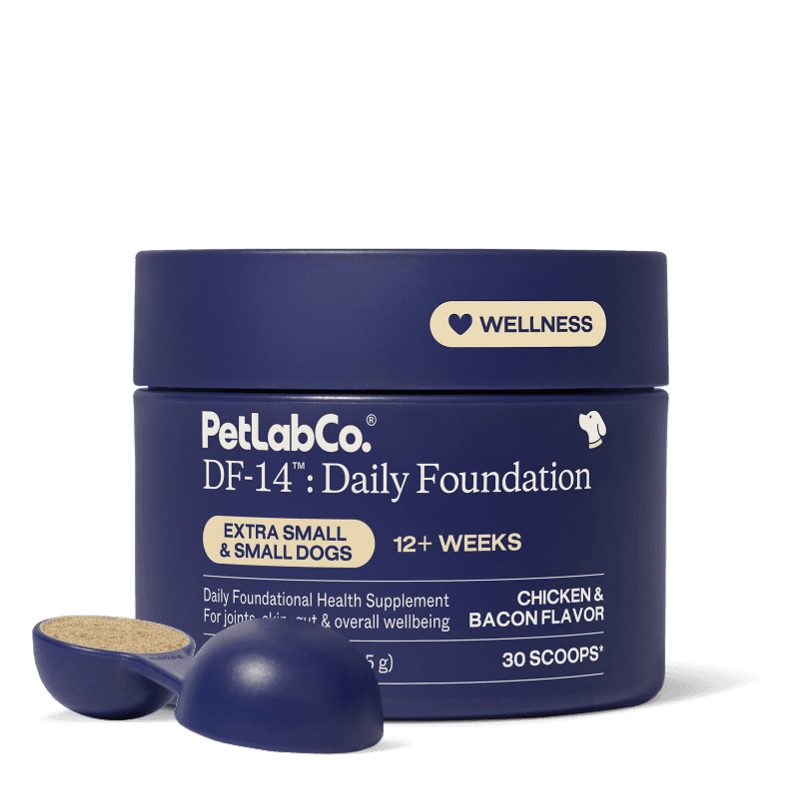
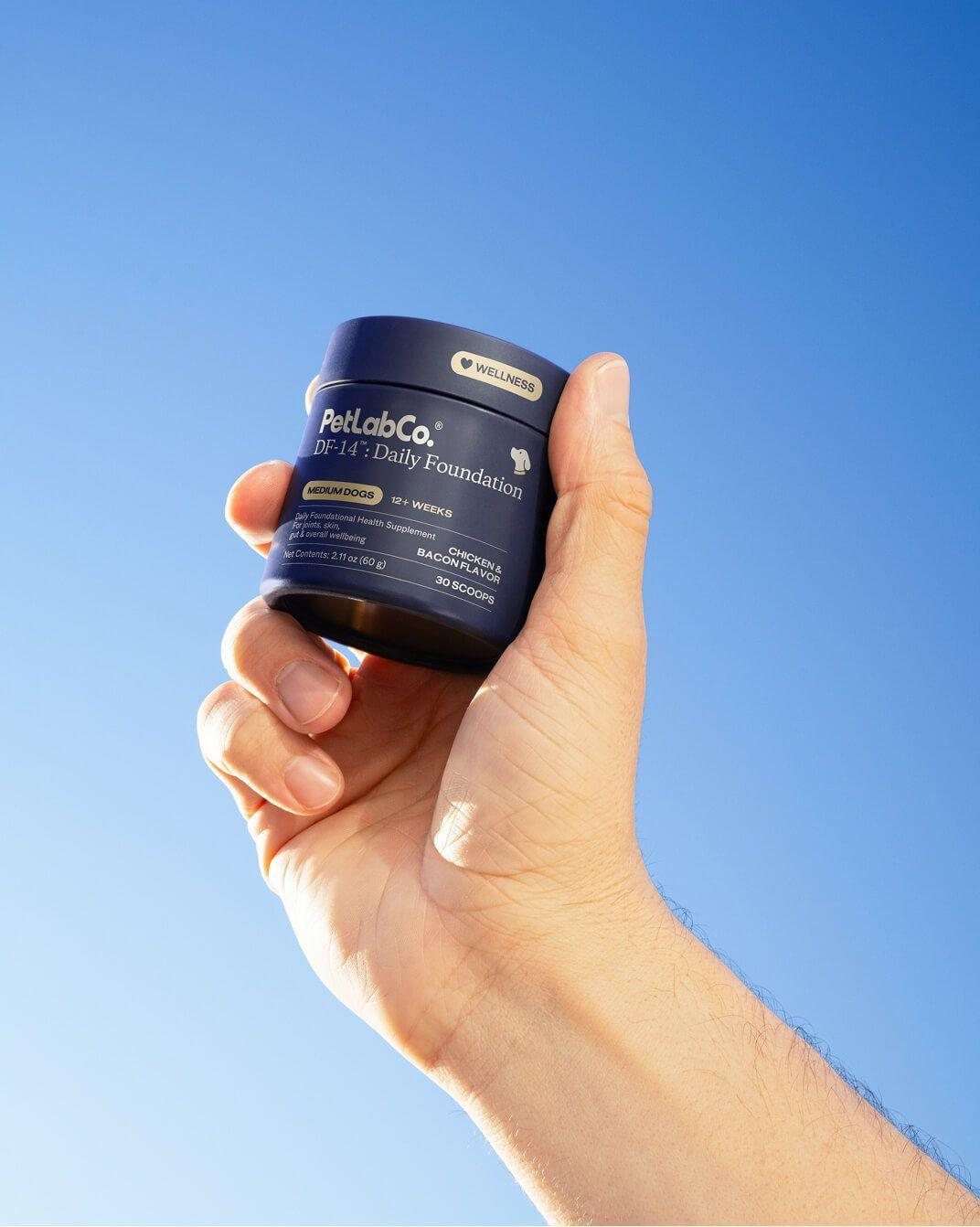
DF-14 Daily Foundation is a multifunctional powder designed for broader daily support. Its formula includes probiotics alongside ingredients with other nutritional roles. It should be considered as a complete supplement formula, rather than described as an isolated probiotic powder or a direct serving-for-serving equivalent to the soft chews.
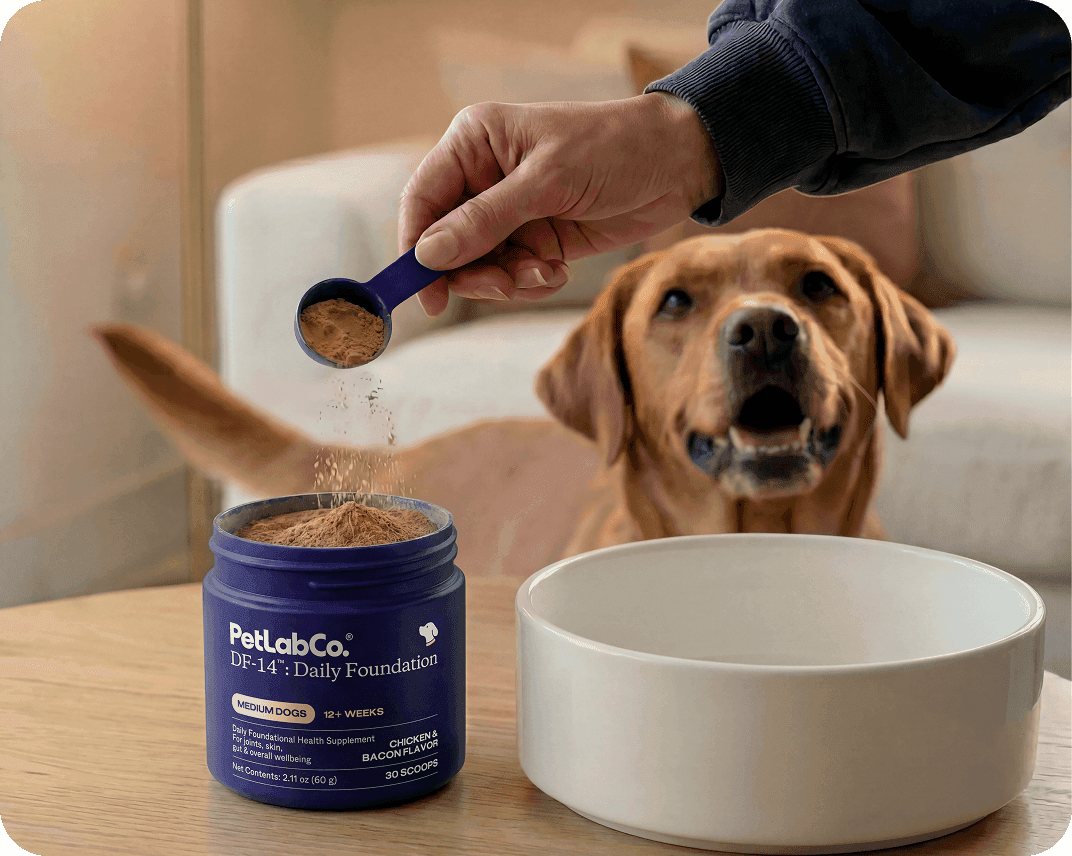
The product’s directions call for once-daily use at mealtime, mixed into wet food or slightly moistened kibble. Weight-specific tubs and scoops determine the serving. Dogs under 4 lb use the little scoop from the Small tub; the other weight bands use their labeled scoop and tub combination. A household teaspoon is not a substitute for those directions.
| Decision | Gut-focused chew | Multifunctional powder |
|---|---|---|
| Main purpose | A focused gut-support routine | Broader support with probiotics among the ingredients |
| Administration | Count the correct number of chews | Measure the correct scoop and mix with food |
| Completion check | Confirm each soft chew was eaten | Confirm the supplemented food was eaten |
| Review point | Formula, chew count and continued purpose | Formula, scoop, food intake and overlap with other supplements |
Because DF-14 contains several types of ingredients, review the entire formula when the dog takes other supplements or follows a restricted diet. It includes animal-derived ingredients such as krill, crawfish-derived glucosamine and hydrolyzed chicken liver flavor. A plan that works for a dog without dietary restrictions may need adjustment for another dog.
Choose one coherent plan
More products do not automatically produce better support. If you want to change from a soft chew to a powder, ask your veterinarian how to make the transition and whether the broader ingredients fit the dog’s needs. Bring both labels so the comparison is specific. Avoid treating two products with different formulations as interchangeable simply because both list probiotics.
For background on the brand’s range, see our PetLabCo.® product guide. PetLabCo.® offers multiple daily supplements, so the useful choice is the one that matches your agreed purpose, administration routine and the dog’s current circumstances.
Make a simple reassessment plan
A good continuation decision starts with a written reason for starting and a clear reassessment trigger. You do not need an elaborate tracker. A few consistent notes can show what was actually given, what changed and whether the original purpose still applies. This is more useful than extending use automatically because the dog finished one tub without difficulty.
Agree on the plan with your veterinarian, especially if the dog is showing signs of a potential health concern, has an existing condition, or is currently taking prescription medicines. For routine maintenance, review can be linked to normal health appointments and meaningful changes in the dog’s circumstances. For a current digestive concern, the clinician may want an earlier contact point based on the problem being assessed.
| Record | Example of a useful note | How it helps |
|---|---|---|
| Reason for starting | Daily support discussed at a health visit | Keeps the original purpose clear |
| Product and serving | Exact formula, weight band and amount | Makes the routine reproducible |
| Observations | Appetite, stool pattern and actual intake | Gives the vet concrete information |
| Other changes | New food, medicine, trip or missed servings | Helps avoid attributing everything to one product |
| Reassessment trigger | New symptoms or a change in diet or medication | Identifies when the plan needs review |
Decide what continuing would mean
Before buying a replacement tub, consider whether the dog still fits the product’s directions, whether the daily routine is reliable and whether the purpose remains relevant. If the reason for starting was a temporary event, ask whether that event has passed and whether the supplement still has a role. If the goal was maintenance, assess whether the dog’s overall plan has changed.
Your notes can also reveal practical problems. A powder regularly left in the bowl may not be giving the intended amount. A soft chew repeatedly missed because two caregivers assume the other gave it may need a clearer responsibility. These are administration issues to solve, not evidence that a formula needs a larger serving.
Ask before extending a supplement trial
If the original concern has not improved, a new tub should not become an automatic extension of the experiment. Share the observations with your veterinarian and ask whether the diagnosis, diet or treatment plan needs review. A supplement’s presence in the routine should not obscure the fact that the reason for starting is still unresolved.
Likewise, improvement does not prove which part of a combined plan caused it. If food, medication and supplementation all changed together, ask how the clinician wants to assess the ongoing role of each. Do not stop prescribed care or conclude that the supplement alone corrected the problem.
Plan for stopping or changing products
There is no universal evidence-based rule that all canine probiotics must be cycled, tapered or continued forever. Follow any directions for the specific formulation and ask your veterinarian how to change the agreed plan. A label-directed maintenance product and a clinician-selected adjunct for a medical problem may need different decisions.
Avoid assuming that a probiotic permanently “resets” or colonizes the gut. A study showing changes during supplementation does not establish that those changes persist indefinitely after stopping. If you and your veterinarian decide to discontinue a product, continue normal observation of the dog and revisit any signs appropriately rather than treating their return as a reason to restart blindly.
Keep the routine proportionate to the goal
An ongoing supplement should be manageable alongside food, exercise, preventive care and any needed treatment. It should not become the center of every decision about the dog’s health. A brief, regular review of its purpose helps keep the routine useful without making promises about benefits that cannot be measured or verified at home.
When the exact product remains appropriate and the agreed purpose continues, daily use may remain part of the plan. When the purpose, health status or practical fit changes, reassess. That approach answers the duration question more reliably than applying one number of days to every dog.
Three everyday decisions about duration
The following examples show how the reason for using a supplement changes the continuation question. They are ways to organize a discussion with your veterinarian, not fixed schedules for treating a condition. In each situation, keep the exact product and the dog’s current circumstances in view rather than borrowing another dog’s plan.
A well dog with a stable daily routine
Imagine a dog whose veterinarian has agreed that a particular daily supplement fits their diet and health. The owner gives the labeled serving consistently, the dog accepts it and no new concerns have arisen. Finishing a tub is a useful moment to check the plan, but it does not create a medical requirement to stop or restart a course.
Before reordering, the owner can confirm that the product is still the same formulation, the weight-based serving remains appropriate and no medicines or other supplements have been added. At the next routine health review, they can discuss whether the original maintenance purpose still makes sense. The decision to continue rests on suitability and purpose, rather than a claim that an uneventful month proves lifelong safety.
A supplement considered around travel
An owner whose dog has had digestive changes during previous trips might ask about support before another journey. Useful information includes what happened on those trips, whether food or feeding times changed and whether the dog was examined. This helps the veterinarian decide whether a supplement has a role and what else deserves attention.
The travel dates provide context, but they do not automatically prescribe a number of probiotic days before and after the trip. Ask how the plan should be reviewed when the normal routine resumes. If the dog develops signs during travel, follow the agreed contact instructions rather than assuming they are simply expected and can be managed by continuing the supplement longer.
A new prescription in an established routine
Now consider a dog already receiving a daily soft chew when a veterinarian prescribes a new medicine. The supplement has not necessarily become unsuitable, but the overall plan has changed. Showing the current label allows the clinician to consider the full formula and any timing questions alongside the new prescription.
Ask whether the supplement should continue, whether the administration schedule should change and whether any new observation is needed. Write the answer where every caregiver can see it. The prescription’s end date may be relevant to a follow-up conversation, but it does not by itself determine the supplement’s duration. Keeping the two instructions distinct helps avoid stopping prescribed care early or extending a supplement without a clear reason.
Use the answer to make the next step clear
At the end of any duration discussion, you should know what to give, how much, why it remains in the routine and what should prompt another conversation. If one of those details is unclear, ask the clinic to clarify it. A specific plan is easier to follow than an open-ended instruction to keep giving “something for the gut.”
Related probiotic guides from our sister sites: Probiotics for Dogs: A Vet’s Guide (WebVet), PetLabCo.® DF-14 Daily Foundation review (Petful), PetLabCo.® brand review (Petful), and Can Dogs Take Human Probiotics? (WebVet).
Frequently Asked Questions
Giving more than the labeled serving or combining several products can create an unintended amount of probiotics and other ingredients. A larger amount is not automatically more effective. If your dog gets into a tub or receives an extra serving, contact your veterinarian with the exact product, amount and time. Keep the package available; the full formula matters when assessing what the dog consumed.
Follow the specific product’s instructions and choose a time that fits the dog’s routine. DF-14 is directed for mealtime use, while other formulations may have different directions. There is no universal morning or evening rule for all products. If the dog takes medication, agree on timing with your veterinarian rather than applying a general spacing rule from another supplement.
Do not start a product that is unsuitable for the dog’s age, ingredients or medical circumstances without veterinary guidance. That includes a dog undergoing a restricted-food trial or one for whom the clinician has advised avoiding the formula. PetLabCo.® labels also state that safe use during pregnancy or breeding has not been proven. An unwell dog’s need for examination should take priority over starting a supplement.
The appropriate alternative depends on what you hope to accomplish. A well dog eating a suitable complete diet may not need an added supplement. A dog with digestive discomfort may need a diet review, testing or a treatment plan. Discuss the goal with your veterinarian before substituting a food, fiber product or another supplement, because those options do not all serve the same function.
Fermented foods are often described as natural probiotic sources, but their organisms, amounts and additional ingredients vary. A household food is not automatically equivalent to a canine supplement studied or selected for a particular purpose. Ask your veterinarian before adding one, especially if your dog has a dietary restriction. “Natural” does not establish a suitable serving, effectiveness or freedom from ingredients your dog should avoid.
PetLabCo.® products are not intended to diagnose, treat, cure, or prevent any disease; consult your veterinarian before starting any new supplement regimen.