Is Fresh Dog Food Worth It? Cost Compared to Kibble, Raw, and Freeze-Dried
Published on September 21, 2026
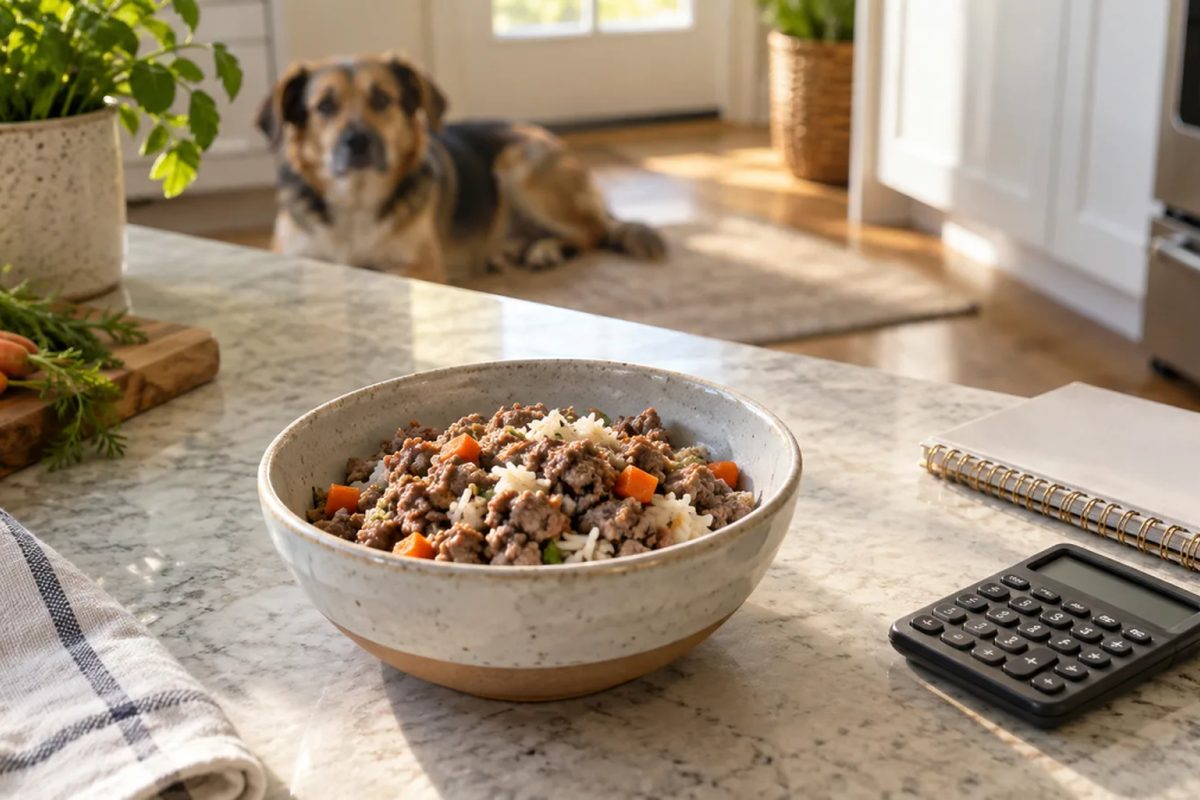
Compare fresh food, kibble, raw, and freeze-dried feeding costs using the same calorie target, then weigh mixed feeding, storage, and everyday convenience.
This article is sponsored by JustFoodForDogs. Vetstreet maintains editorial control and may earn a commission from qualifying purchases, at no extra cost to you.
Is fresh dog food worth it? It can be, if a complete cooked recipe suits your dog and its everyday benefits fit your budget. The useful comparison is the cost of feeding the same number of calories, followed by an honest look at storage, leftovers, convenience, and what your dog actually needs.
Fresh food often costs more than dry kibble. That does not make the decision all or nothing: a measured combination of two appropriate complete diets may give you some of the features you want at a lower daily cost. Here is how to compare the options without mistaking a first-order discount, a small package, or an attractive ingredient list for the whole answer.
Is fresh dog food worth it for your household?
Key Takeaways
- Choose a complete and balanced recipe for your dog’s life stage before comparing price.
- Calculate recurring cost using calories, not equal scoops or package weights.
- Include storage, delivery, leftovers, and the option of partial fresh feeding in the decision.
Fresh cooked meals can be appealing because they are moist, soft, and prepared for you. For an owner who wants a cooked meal without shopping for individual ingredients and following a formulated home-cooking recipe, that preparation has practical value. A dog that readily eats an appropriate meal also makes the feeding routine easier.
Those benefits are different from promises that a format will prevent illness or extend life. Higher price does not establish better health for every dog, and a digestibility result does not tell you what you will save on veterinary bills. Keep the value question focused on benefits you can identify and afford.
Start with the food’s job
Before choosing between fresh, kibble, raw, and freeze-dried food, check whether the exact product is a main diet or an extra. A topper may look inexpensive because it is intended to supply only a small part of the day’s food. Comparing that topper’s daily price with a full feeding plan produces a misleading result.
The FDA’s explanation of complete and balanced pet food describes the role of the nutritional adequacy statement. Match that statement to your dog’s life stage, including the appropriate growth qualification for a puppy. Medical needs can narrow the choice further, regardless of format.
For a starting point within cooked meals, explore JustFoodForDogs fresh food options, then check the individual recipe’s label. The most useful short list contains foods your dog can appropriately eat and your household can consistently provide.
Define what a better purchase would mean
The best fresh dog food for your budget should solve an identifiable feeding need while remaining nutritionally suitable. Decide whether you are paying for a preferred texture, prepared portions, or a routine you can sustain. A higher daily price alone does not establish a better health outcome. Compare that specific benefit with the ongoing cost.
Compare cost per day on the same calorie target
A fresh dog food cost comparison needs the same calorie target for every food. Fresh meals contain substantial water, while dry and freeze-dried foods contain much less. Equal ounces therefore do not necessarily deliver equal energy. Calorie density is the missing link between the package price and the feeding budget.
For the examples below, we use 500 calories per day solely as a comparison unit. It is not a feeding recommendation for your dog. Your veterinarian can help establish an appropriate daily amount, which may change with growth, activity, body condition, and health.
The three-step calculation
- Find the package’s total calories, using its labeled energy density and net quantity.
- Divide the recurring package price by those total calories.
- Multiply by the daily calories you plan to feed from that food.
To estimate fresh dog food cost per month, multiply the daily result by the number of days in your budgeting period. A 30-day estimate is convenient, but remember that delivery charges and the timing of whole-box purchases can make the checkout amount different from the amount consumed that month.
Compare the next order, too
The recurring price deserves its own line in your calculation. A first-box discount can make trying a food less expensive, but it does not represent the cost of feeding it for the rest of the year. Check whether an advertised saving applies once, continues with a subscription, or requires a particular order size.
If you are searching for the most affordable fresh dog food, start with the appropriate recipes and compare the full recurring feeding cost within that group. The lowest advertised daily price may assume a smaller dog, a partial plan, or an introductory offer. None of those assumptions necessarily matches your household.
Searching for the best fresh dog food without subscription adds another practical question: what does a one-time order cost, including delivery? Compare that order with the recurring plan using the same food quantity. The ability to buy once may be valuable when you are testing freezer capacity or have an unpredictable travel schedule, even if the unit price differs.
Adjust for a bigger appetite
Affordable fresh dog food for large dogs is especially dependent on the daily energy requirement. If the same recipe supplies twice as many calories each day, the food-only cost is approximately twice as high. A large dog also uses packages faster, which can reduce some leftover problems while increasing freezer and delivery demands.
Use a JustFoodForDogs portion estimate as a planning aid, then confirm the amount against your dog’s needs. An online estimate is a starting point; changes in weight or body condition are reasons to reassess the serving.
Fresh, kibble, raw, and freeze-dried cost inputs
The examples here show how the calculation works using selected package prices and published calorie information reviewed in September 2026. They are not category averages or a ranking of the cheapest available foods. Different brands, recipes, bag sizes, retailers, promotions, taxes, and shipping charges can change the result.
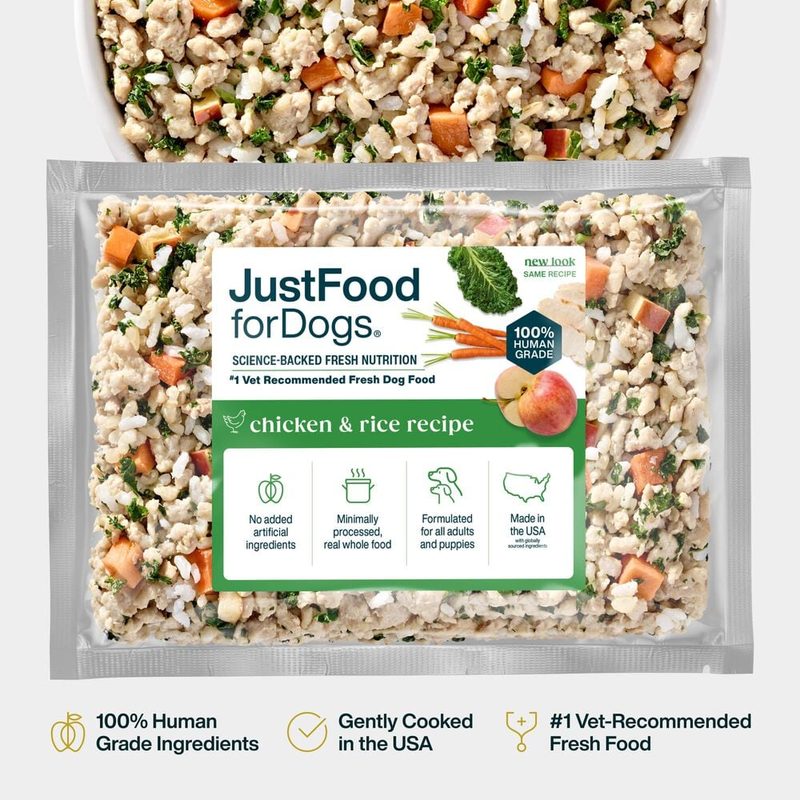
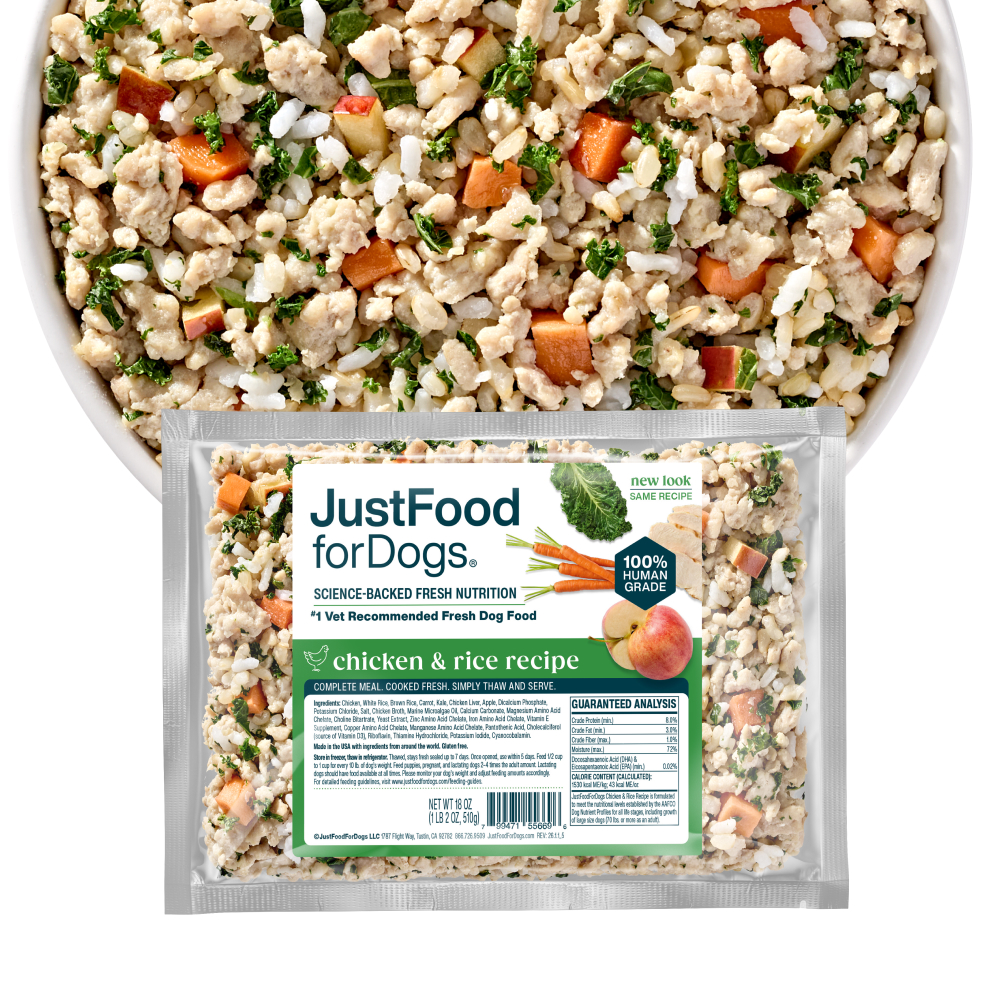
For fresh food, the JustFoodForDogs Chicken & Rice recipe listed a regular price of $76.99 for seven 18-ounce packages, with 774 calories per package. That is 5,418 calories per order, or approximately $7.11 for 500 calories. The regular price makes a more useful ongoing budget input than the introductory discount.
Example food-only costs at 500 calories per day
| Food and package | Price and calorie inputs | Approximate daily cost | Approximate 30-day cost |
|---|---|---|---|
| JustFoodForDogs Chicken & Rice, seven 18-ounce packages | $76.99; 5,418 calories | $7.11 | $213 |
| Purina Pro Plan Complete Essentials Shredded Chicken & Rice dry food, 5-pound bag | $16.58; approximately 8,596 calories | $0.96 | $29 |
| Primal Chicken raw frozen nuggets, 3-pound bag | $26.99; approximately 2,112 calories | $6.39 | $192 |
| Primal Chicken freeze-dried nuggets, 14-ounce bag | $39.99; approximately 1,848 to 2,464 calories | $8.11 to $10.82 | $243 to $325 |
Where the comparison inputs come from
The dry-food example uses the Purina shop’s 5-pound package listing and the product family’s published 3,790 calories per kilogram. Converting five pounds to kilograms gives approximately 8,596 calories. Confirm the current package label when buying, because formulations and package listings can change.
The raw frozen example combines Pickering Valley Feed’s 3-pound package price with Primal’s Chicken raw frozen calorie information. The manufacturer lists 44 calories per nugget and approximately one ounce per nugget, so the estimated package energy is approximate rather than a laboratory measurement of that bag.
For the freeze-dried example, Primal’s Chicken product page lists a $39.99 14-ounce package, 44 calories per nugget, and approximately three to four nuggets per ounce. Those rounded serving inputs produce a range. Showing that range is more honest than presenting a precise single daily price that the published inputs do not support.
What these examples tell you
In these selected packages, the dry food supplies calories at the lowest cost. The cooked fresh example costs more than that kibble and falls below the calculated freeze-dried range. The frozen raw example falls between the dry and cooked fresh examples. These relationships describe these inputs; another recipe or package size may change them.
The cost table does not settle the safety decision. Raw food is uncooked, and freeze-dried food may also be raw. The CDC’s pet-food safety guidance explains why raw pet food presents concerns for dogs and people. A lower price is not a reason to overlook the household’s food-safety needs.
Use the table as a model for your own calculation. Photograph the label, save the checkout price, and record the package size together. This prevents a common error: combining the price of a small bag with the calories in a larger one, or pairing an old formula’s feeding instructions with a new product.
What mixing fresh food with kibble changes
Mixing appropriate complete foods can make fresh feeding more affordable. The key is to replace some of the kibble’s calories, rather than adding fresh food on top of an unchanged daily ration. A generous-looking scoop of fresh food and a small scoop of kibble may contain very different amounts of energy.
Using the table’s selected dry and fresh examples, a day with 25% of its 500 calories from the fresh recipe and 75% from the kibble would cost about $2.50 in food. That is approximately $75 over 30 days. A 50/50 calorie split would be about $4.03 per day, or $121 over 30 days, before delivery and other charges.
Build the mixed portion in calories
- Establish the dog’s overall daily calorie target.
- Choose the share that will come from each appropriate complete food.
- Divide each calorie share by that food’s calories per ounce, gram, or labeled serving unit.
- Measure both foods and include treats or other extras in the overall plan.

The percentage in this example describes calories, not bowl volume or food weight. It also assumes both foods are appropriate complete diets for that dog. A complementary topper, treat, or unbalanced homemade mixture cannot automatically take the place of half a complete ration.
If your dog eats a therapeutic diet, has a suspected food allergy, or needs a tightly controlled growth diet, ask the veterinarian before combining foods. The nutritional purpose of the original diet may depend on feeding it as directed. Cost savings should preserve that purpose.
Introduce the change gradually
Once you have an appropriate plan, introduce the new food gradually and follow any specific advice for your dog. Observe appetite, stool, weight, and how reliably you can measure and store the food. A feeding notebook can be more useful than judging success from a single enthusiastic meal.
If the plan proves too complicated to repeat on a busy morning, simplify it. A clear daily amount divided between meals is easier to sustain than several changing toppers and estimates. The best practical value comes from a routine that remains accurate after the novelty wears off.
The costs that a bag price leaves out
Food-only math is a starting point. The true household cost also includes how the food arrives, where it stays, and how much of it gets eaten before it needs to be discarded. A bulk order can reduce the price per calorie while still being a poor fit for a freezer that is already full.
For frozen fresh meals, map out both frozen storage and thawed use. Check the current package directions for thawing, refrigeration, and how long an opened portion can be kept. Use those limits to choose a practical package size; do not stretch a storage window to make the budget work.
Add these items to your comparison
- Delivery charges and any minimum order that changes them.
- The amount paid after the introductory promotion ends.
- Freezer or cupboard space required between deliveries.
- Food left over after the opened-package storage limit.
- The time needed for portioning, thawing, and cleaning bowls.
- Boarding, travel, or pet-sitter arrangements that change the routine.

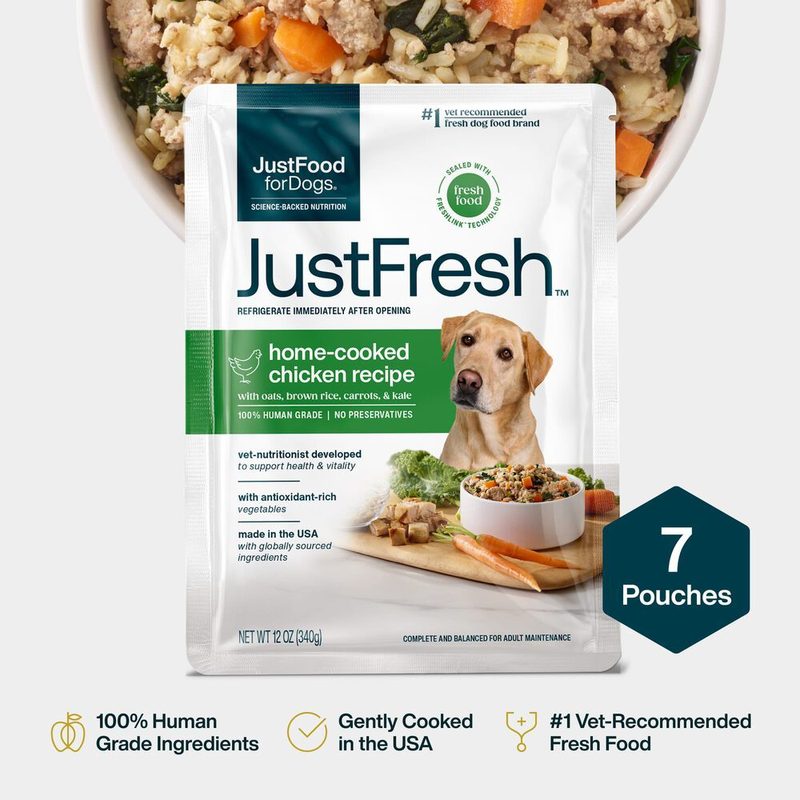
A shelf-stable format can solve a different problem from frozen food. If unopened freezer storage is the obstacle, compare options such as JustFresh Chicken using that exact product’s price, calories, adequacy statement, and storage directions. Do not carry the frozen Chicken & Rice cost estimate over to a different recipe or package.
Shelf-stable before opening does not mean unrestricted storage afterward. Read the opened-package instructions and consider whether a sitter can follow them. Convenience is part of value only when the handling routine is workable in the household where the food will be used.
Count waste without overbuying
If a small dog cannot finish a thawed package within its labeled window, use the manufacturer’s permitted portioning and storage method or choose a more suitable package. Buying extra food solely to reach a discount threshold can erase the saving if part of the order is wasted.
The same principle applies to dry food. A larger bag may lower the purchase price per calorie, but it still needs suitable storage and timely use. Compare the amount your dog will consume with the package and label directions, rather than assuming the biggest available bag is automatically the best purchase.
A practical value check before switching
Fresh dog food is worth considering when you want the texture, moisture, and convenience of a prepared cooked meal and can fit a suitable recipe into a stable budget. It is also reasonable to keep a dog on appropriate kibble when that diet works well and meets the dog’s needs. The feeding decision should be specific to the dog and household.
For help organizing a short list, use our guide to veterinarian-recommended dog foods alongside the exact labels you are considering. A conversation about a named recipe, daily calories, and recurring cost is more useful than asking whether every fresh food is better than every dry food.
Decide with a small, repeatable plan
- Confirm nutritional adequacy and suitability for your dog.
- Calculate a full fresh plan and, if appropriate, a mixed plan.
- Check the second order’s price and the storage requirements.
- Choose a manageable initial quantity rather than overstocking.
- Reassess portions and household fit after the transition.
Do not put predicted veterinary savings into the budget unless there is a specific, evidence-based reason relevant to your dog’s care. The dependable value is the food and service you are actually buying: an appropriate recipe, preparation, packaging, delivery, and a feeding routine you can maintain.
You can revisit the JustFoodForDogs food calculator when planning quantities, while using your veterinarian’s advice for individual adjustments. Once the calorie amount and recurring price are clear, the fresh-food decision becomes a practical choice instead of a contest between package sizes.
Compare a month of use with a month of purchases
Suppose a delivery contains more than thirty days of food. The first checkout amount can be higher than the thirty-day consumption estimate because some of the food remains for the following month. Conversely, a month with no delivery may still involve consuming food you paid for earlier. Use consumption cost for comparing recipes, and delivery timing for planning cash flow.
This distinction becomes more important with two dogs or a mixed-feeding plan. Calculate the amount each dog needs from the exact food, add those quantities, and compare the result with the order size. Do not use one dog’s advertised plan price as the household estimate. Different dogs can have different calorie requirements even when they eat the same recipe.
Use a small price worksheet
- Record the exact product, package size, and normal checkout price.
- Note whether the price includes a recurring discount or a first-order offer.
- Copy the calorie information from the matching recipe label.
- Calculate daily consumption cost using the dog’s planned calorie share.
- Add delivery charges and estimate any unavoidable leftovers.
- Check how often another order will be needed.
Keep the source of each number so the comparison can be updated when a price or recipe changes. A screenshot of the package and the checkout page is often enough for your own records. An old headline price without its package size is much less useful. Recalculate when you change a recipe, order quantity, or the dog’s daily amount.
Decide which benefits you would actually pay for
An owner who values prepared cooked meals may reasonably pay more to avoid following a formulated home-cooking recipe. Another may value a small, easy-to-use package or a food texture that fits the dog’s feeding routine. These are identifiable benefits. Write down which ones matter to you so the choice is tied to your household rather than to a general assumption that higher spending means better care.
Finally, keep the nutrition check separate from the price worksheet. The AAFCO label guide helps explain the intended-use information on pet foods. A low cost per calorie does not make an incomplete product equivalent to a complete daily diet. Compare foods that can do the same nutritional job before deciding whether the additional features of fresh feeding are worth the price.
Frequently Asked Questions
Vets may recommend an appropriate cooked fresh dog food after checking the exact recipe, the individual dog’s requirements, and the household budget. That is different from endorsing every food labeled fresh. Bring the label, planned calorie amount, and any other foods your dog eats so the discussion produces a specific feeding plan.
There is no single food established here as healthiest for every dog. Start with nutritional adequacy for the dog’s life stage, then consider recipe-specific evidence, quality control, and individual needs. Price and format alone do not establish suitability. A product that works well for one dog may be inappropriate for another with different growth or medical requirements.
It may be better for a particular household to feed dogs suitable fresh food when the texture, moisture, and preparation improve its feeding routine. An appropriate dry recipe can also meet a dog’s needs. Compare the individual products and the practical plan rather than treating freshness as a substitute for nutritional evidence.
Digestibility research does not establish that dogs live longer with fresh food. A study showing differences in nutrient digestion or stool output answers those questions within its design; it does not demonstrate that every fresh-fed dog will live longer. Do not justify a feeding budget with an assumed lifespan increase or guaranteed reduction in future veterinary bills.
It can when the fresh food replaces a measured calorie share of an appropriate complete kibble. Calculate each food’s recurring price per calorie, then weight the cost by the share it supplies. Adding fresh food without reducing the original ration can increase both spending and total calories. Check suitability before mixing therapeutic or growth diets.
It depends on the dog’s daily calorie requirement, the chosen recipe, freezer space, and your recurring budget. Larger calorie needs increase the amount you must buy, so calculate the full feeding cost before committing. A veterinarian-approved mixed plan may be a practical option when a fully fresh plan exceeds the household budget.