Catalyst Pet Natural Cat Litter Review: A Veterinarian’s Honest Take
Published on March 16, 2026
Cats have a reputation for being finicky creatures. Buy them an expensive toy, and they prefer to play with the cardboard box it came in. Open the door to let them out on the patio, and they want to come right back inside the house… then out, then in. Finally, find a cat food they’ll eat, and they randomly turn up their nose at it one day. So when it comes to choosing a cat litter for your selective feline, the many options on the market can be daunting for pet parents.
Traditional clay clumping litter or a natural option? Crystal or wood? Paper or corn? Scented or unscented? Activated carbon or baking soda? The decision can be overwhelming, especially if you wonder what’s best for your cat’s health and whether your cat will actually use the litter you purchase.
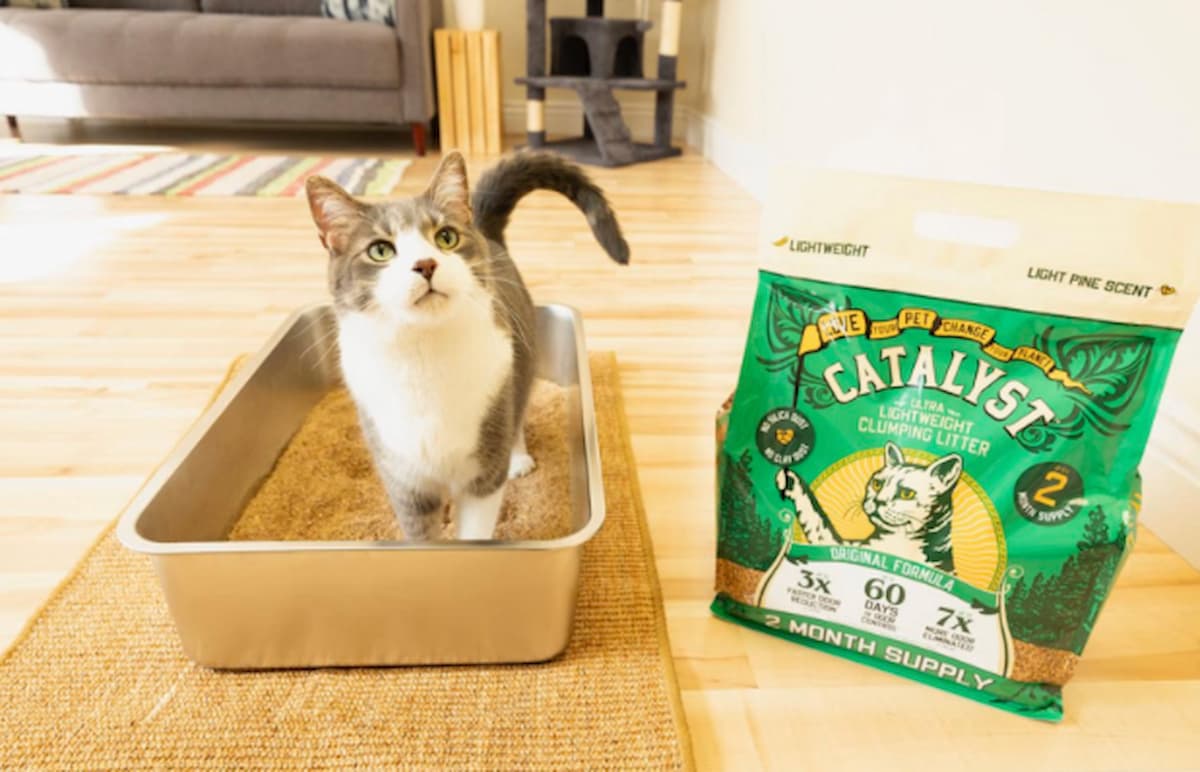
If you’re interested in a natural option, Catalyst Pet natural cat litter is a soft wood-based, sustainable alternative to traditional clay litter. It is marketed as an eco-friendly clumping litter with low dust and strong odor control. As a veterinarian who shares her home with two cats of my own (including one with feline asthma), I was excited to evaluate the ultra-lightweight, unscented, clumping version of Catalyst Pet to see whether my cats and any of my patients might benefit from switching to this natural litter.
Over two weeks of use, I was able to assess its odor control, dust level, clumping, tracking, and acceptance by my cats. And was I surprised!
All featured products are chosen at the discretion of the Vetstreet editorial team and do not reflect a direct endorsement by the author. However, Vetstreet may make a small affiliate commission if you click through and make a purchase.
What Is Catalyst Pet Natural Cat Litter?
Traditional clay cat litters permeate the pet product market and have been a staple for cat owners for decades. But just because they’re the most common, does that make them the best? Not necessarily, and here’s why.
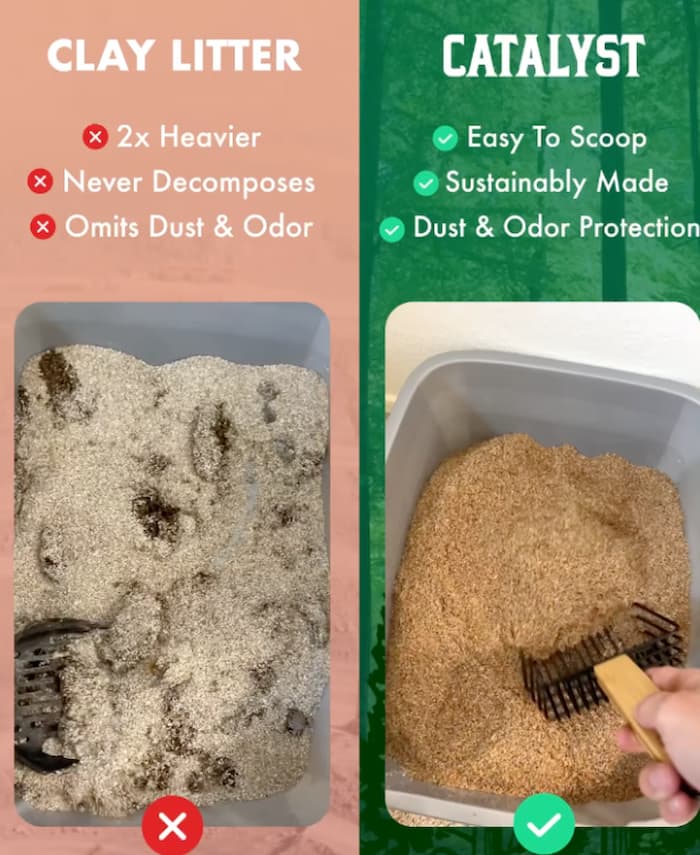
Traditional clay litters are not environmentally sound. They are produced via strip mining, which causes ecosystem devastation through habitat destruction, topsoil removal, erosion, and silt runoff into waterways. Extraction requires substantial energy and emits large amounts of carbon, and transportation is costly. After use, clay litter waste does not biodegrade, taking up lots of space in landfills. Second, traditional clay litters are heavy. Finally, many contain crystalline silica, which can be harmful to both cats and humans if inhaled, particularly to those with respiratory conditions such as asthma. For these reasons, natural cat litter is a stellar alternative.
Catalyst Pet is made from upcycled soft wood fiber, a byproduct of U.S. sawmills, which has been compressed and coated with plant-based clumping agent (guar gum) to form a scoopable clump when it absorbs urine.
Catalyst Pet’s odor-blocking properties arise from natural absorbent wood rather than added chemicals. It is four times more absorbent than clay litter and only half as dense, making it a lightweight alternative: one pound of Catalyst litter does the work of four pounds of clay litter. On average, one pound of Catalyst litter per cat per month is adequate for most households. And because it is natural, it is biodegradable at no additional cost to the environment.
According to the Catalyst Pet website, it reduces landfill waste by up to 70% and greenhouse gas emissions by up to 60% compared to traditional clay litter. Though Catalyst Pet litter is biodegradable, it is not suitable for flushing and should be binned in regular trash cans. It is technically compostable but only for non-edible gardens, depending on the laws of your locality.
Not only does this natural cat litter appeal to pet owners for its environmental sustainability, but it can also be easier to use. It is lightweight and produces much less dust, which means less debris settles on your nice, clean floors outside the litter box, and fewer irritants for your kitty to inhale, making it ideal for cats with asthma or nose-sensitive owners. Its soft texture is gentle on feline paws, too.
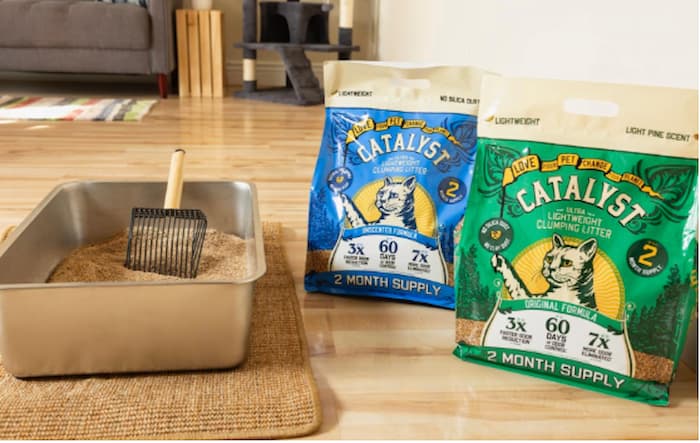
Several formulas of Catalyst Pet litter are available:
- Original (Multi Cat): This soft-wood-based formula (found at Wal-Mart) is a great option for single or multi-cat cat households. It features a light pine scent, great odor control and strong clumping power.
- Unscented: Also widely available at retailers, including Walmart, this version skips added fragrance for households that prefer a more neutral option. I trialed this version in my home because both my cat, who has asthma, and I are sensitive to scents.
Additional formulas are available when purchasing directly from Catalyst or through other retailers:
- Healthy: This formula is designed for homes with multiple cats, offering stronger clumping and enhanced odor control.
- Wood Pellets: This non-clumping version works well for busy households since urine-soaked pellets break down into sawdust over time and don’t require scooping liquid waste. It also tends to track less outside the litter box.
If you’ve been sold on the amazing features of natural wood litters, remember that not all wood litters work the same. Be sure to use wood fibers or pellets specifically formulated for use by cats, as some versions, especially those that have been chemically treated or contain pine phenols, can be toxic to cats. Catalyst Pet natural cat litters do not contain phenols and are non-toxic for use by cats.
Catalyst Cat Litter 101: Functionality & Experience
Ingredients & Intended Benefits
This biodegradable wood litter smells amazing without any added fragrances (I used the unscented formula), and I’m so pleased it won’t be sitting in a landfill for centuries. The soft, upcycled wood fiber naturally absorbs moisture upon contact, ensuring urine is quickly pulled into tight clumps and odor-causing ammonia is trapped within the wood. And because it does four times the work that clay litter does, the bag is extremely lightweight and easy to handle.
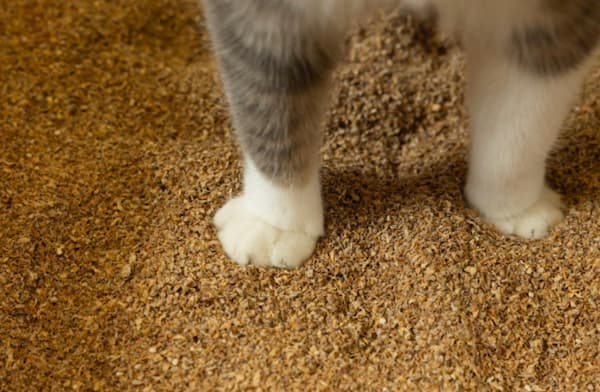
The low-dust formulation ensures I don’t have to hold my breath when pouring or scooping, and the larger wood chip granules mean much less messy tracking outside the litter box.
Ease of Use & Daily Routine
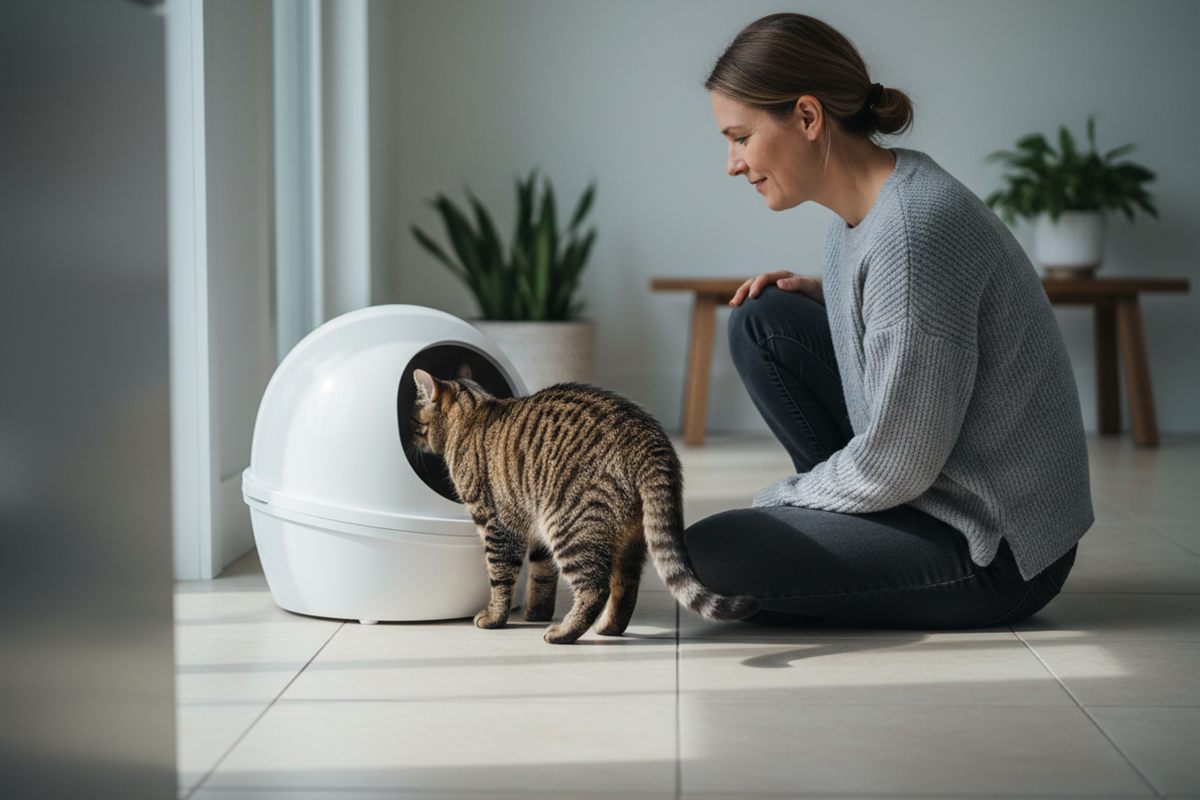
Catalyst Pet’s lightweight formula made it easy to carry and pour into a traditional litter box — a noticeable contrast to the bulkier, heavier clay alternatives. Out of curiosity, I also tested it in my Litter-Robot EVO automatic litter box. While Catalyst does not officially recommend its litter for automatic litter boxes, many pet parents report that they use it successfully in these systems.
Because the wood-based litter needs a few minutes to fully absorb moisture and form solid clumps, automatic litter boxes that cycle quickly may sometimes sift the litter before clumps have fully formed. In my test, this occasionally led to partially formed clumps breaking apart during the sifting cycle, resulting in a small amount of clean litter being discarded.
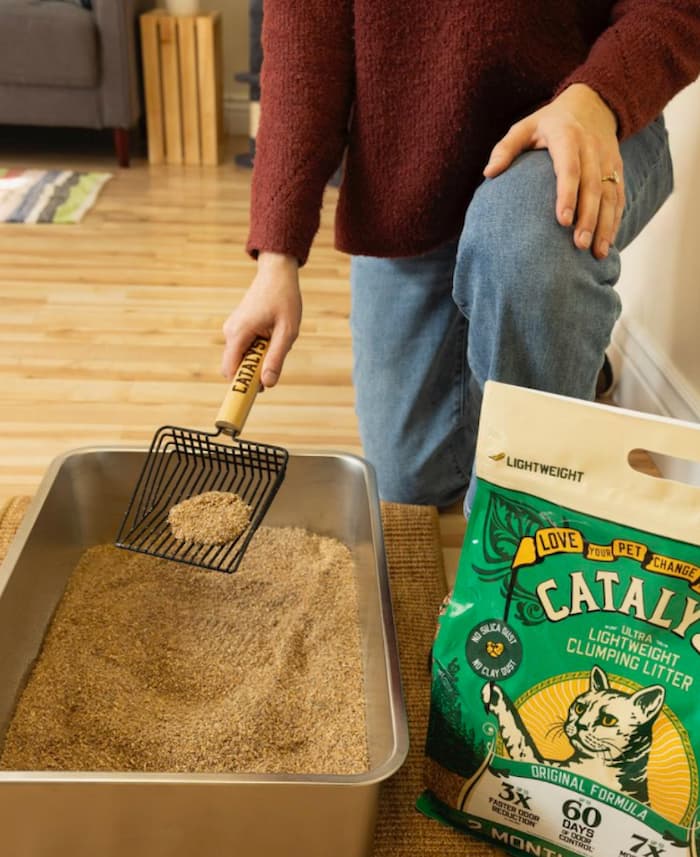
Dust produced during pouring was minimal, which helped keep the surrounding area noticeably cleaner. Scooping in a traditional litter box takes slightly more effort than with dense, clay litters, since some wood-chip clumps can break apart, but overall, the clumping performed reasonably well. Using a wide-slatted scoop like those recommended by Catalyst Pet helps, and scooping twice daily remains ideal for maintaining litter box hygiene. During my two-week trial, my traditional litter box did not require refills, saving time.
As with any litter, maintaining a depth of about 2–3 inches helps support proper clumping and odor control.
How My Cats Responded
Fortunately, both my cats took well to Catalyst Pet right away, with no hesitation about the texture and natural wood scent; they used it willingly throughout my two-week trial period, with no difference in behavior compared to their old clay litter. However, a gradual transition period of at least 2 weeks is recommended for most cats to prevent avoidance of the new litter, which can lead to urinating or defecating outside the box.
What’s the best way to transition? Start by opening the bag of new litter and placing it beside the litter box so your cat can get used to the wood scent. Then, mix 10% of new litter with 90% of old litter, gradually increasing the ratio of new litter to old litter with each scooping session.
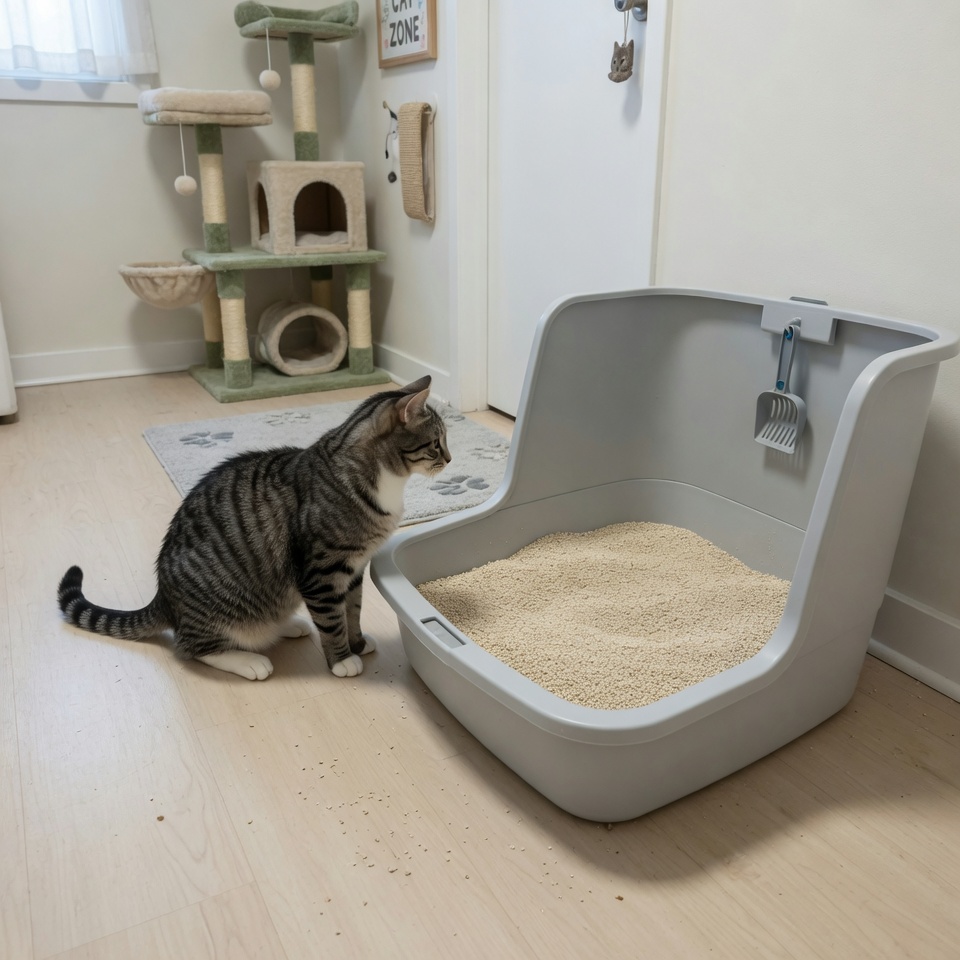
When it comes to tracking, neither of my cats has tracked wood litter around on their paws. Because Catalyst’s wood fibers are larger than traditional clay granules, barely any debris fell through the scoop when transferring waste to the trash. Some owners have reported tracking, and an enclosed or high-sided box with a mat at the opening will significantly cut down on it — also helpful for cats that dig and bury excessively.
Odor Control, Clumping, & Dust
I have mentioned the excellent odor control before, and I’ll mention it again and again to reiterate how amazed I was by the Catalyst Pet Unscented litter’s excellent odor-elimination performance. I never encountered a whiff of cat waste odor during my entire trial period with Catalyst Pet, and I wasn’t met with the familiar nose hair-singing scent of ammonia when I emptied the waste bin beside my litter box for the week.
The Unscented formula worked great for my multi-cat household, and the multi-cat formula is touted as being even more effective at blocking odors and clumping strength.
The clumping action of Catalyst Pet litter was adequate. It didn’t form clumps as firm as traditional clay litter, and bits of the clumps broke off during scooping, which was a bit frustrating. However, the wider scoop provided by Catalyst Pet helped. Overall, scooping was ultimately successful even if it required a few attempts.
The dust produced by Catalyst Pet natural wood litter is nearly nonexistent. My asthmatic cat and I could both breathe a sigh of relief that the air quality has improved significantly around the litter box.
Tracking & Cleanliness
As stated, my litter box area remained much cleaner than when I used clay litter. The fine dust that settles out from traditional clay litter is no longer an issue, and I discovered that my cats tracked much less litter from their boxes when using the natural wood litter. Catalyst Pet suggests that their pellet formula can further help with tracking issues. Litter mats aid even further.
Safety & Veterinary Considerations
Catalyst Pet natural cat litter is suitable for most cats. Cats with respiratory disorders, such as feline asthma, will especially benefit from the minimal dust output from wood litter. However, certain kitties who are very particular in their litter texture may refuse to use the soft granular feel even after a proper transition period.
Wood litter may also not be the best fit for homes with automatic litter boxes. And as with any litter, kittens and very curious cats should always be monitored closely to ensure they do not attempt to eat their new litter, which can cause severe gastrointestinal issues and potential obstruction.
Where to Buy & Pricing
Catalyst Pet natural cat litter is available at major retailers, including Walmart, where a 15-pound bag typically sells for $18.24, bringing the cost to under $10 per month for one cat with regular scooping. The litter is also available directly through the Catalyst Pet website and from retailers such as Chewy, PetSmart, and Amazon. Pricing may vary by retailer and bag size (such as 10- or 20-pound bags), but generally ranges from about $13 to $24 per bag, depending on the retailer and product size.
At first glance, Catalyst Pet litters seem significantly pricier up front than traditional clay clumping litters. However, wood litter lasts twice as long as these traditional litters because it is four times more effective and absorbent. So, by dividing the cost per pound of Catalyst wood litter by 4, the ultimate price comes out to be less than most traditional clumping litters. Catalyst Pet litters save cat owners an average of $9-11 per month per cat in comparison to many common traditional clay litter brands.
Compared to other premium natural litters, Catalyst Pet also boasts significant savings. Owners of one cat can save up to $14 per month by using Catalyst Pet litter instead of competitors such as World’s Best, ökocat, and Sustainably Yours. And the savings just keep growing in multi-cat households.
Catalyst Pet subscription services significantly cut the cost for pet owners and reduce environmental impact by requiring fewer packaging materials and lower transportation emissions. Pet parents can save an average of at least 18% per month with a subscription and can order between 10 and 80 lb at a time (at about $1.23/lb). Catalyst Pet states that customers of their 40 lb+ eco-hero plan can save on average 43% per month vs. clay, 50% per month vs. other natural litters, and 54% per month vs. crystal litter. Plus, litter is conveniently delivered right to your front door.
Final Verdict: Is Catalyst Pet Worth It?
As a cat parent, I am so impressed by the odor control offered by Catalyst Pet – far superior to traditional clay and other natural litters I have used previously. The bags are lightweight and easy to use, and the minimal dust means a healthier breathing environment for my asthmatic cat and a reduction in debris around my litter boxes. It definitely passes the white glove test.
The clumping wasn’t quite on par with traditional clumping clay litters, but waste still clumped adequately. Overall, the positives of Catalyst Pet litter far make it an ideal litter choice for a variety of reasons, including its eco-friendly nature.
Finding a sustainable, biodegradable cat litter with reduced deleterious environmental impact that actually works can be tricky, but eco-conscious pet owners can find just that combo in Catalyst Pet. The fantastic odor control is ideal for a multi-cat household, and the low dust makes this option a good choice for cats with respiratory issues. Furthermore, pet parents with respiratory irritation and those who cannot manage heavy clay litter bags will benefit from Catalyst litter.
As a veterinarian, I recognize that most households can likely benefit from Catalyst Pet natural cat litter, particularly those with cats who suffer from asthma. Cats with anxiety around litter box changes may require a longer transition time, and pet owners should always monitor their cats’ behavior when making their ultimate decision on what litter is right for their cats.
Overall, I recommend Catalyst Pet natural cat litter for most cats, especially those in multi-cat households who may benefit from better odor control. This litter can offer peace of mind to the conscientious cat parent seeking a lightweight, low-dust option that’s safe for the environment and cats.
FAQs
Yes, natural cat litter can be better for both cats and humans with respiratory disorders, such as asthma. Irritating inhalants, such as clay dust and crystalline silica found in some clay litters, can cause respiratory tract inflammation and worsen feline asthma signs. Natural cat litters, such as those that come in soft wood and pellet forms, do not contain crystalline silica and are much lower in other forms of dust, leading to minimal exposure to respiratory irritants.
Pricing depends on where you purchase it and how often you clean the box. At the time of writing, a 15-pound bag of Catalyst typically costs $18.24 at Walmart, which works out to under $10 per month for one cat with regular scooping. If you purchase directly through the Catalyst website and select the Eco-Hero subscription option, the price is about $12.35 per cat per month. In either case, the cost is lower than many clumping and/or premium litters, especially given that the formula is lightweight and designed to last longer between full-litter changes.
Some cats are creatures of habit and can be opposed to anything new, especially concerning their litter boxes. Start by placing an open bag of wood litter next to your cat’s litter box for a few days to help them get used to the wood smell.
To give your cat the best chance of accepting wood litter, transition slowly over at least 2 weeks by gradually mixing increasing amounts of Catalyst litter with decreasing amounts of your old clay litter. While maintaining at least 2-3 inches of litter in the box, Catalyst recommends starting with 90% old litter and 10% new litter, and gradually adding more Catalyst litter each time you scoop. Using this gradual technique, most cats will get used to Catalyst Pet, but occasionally, some cats may refuse wood litter, leading to behavioral or medical changes that require veterinary consultation.
While Catalyst Pet natural cat litter is biodegradable, its clumping nature can still cause clogs if flushed. Therefore, flushing down the toilet or sink is not advised.
No, neither soft wood nor pellet-based Catalyst Pet natural cat litter is recommended for use in automatic, self-cleaning litter boxes. Because Catalyst litter is so lightweight and does not clump quite the same as traditional premium clumping clay litters, it may not sift properly when the automatic box cycles.
During my two-week trial, I used Catalyst litter in both a traditional litter box and my Litter-Robot EVO. I did experience moderate sifting issues with my Litter-Robot, but no damage occurred to my machine.
According to the Catalyst Pet website, certain automatic litter boxes may work better with their soft wood or pellet litter, such as the PetSafe SmartSpin Litter Box, Meowant MW-SC01, Tawom Self-Cleaning Litter Boxes, Instachew, and Bcharya. However, cat owners should exercise discretion when using.
Why I Recommend Catalyst Pet as a Veterinarian and Cat Owner
I was pleasantly surprised with my experience with the ultra-lightweight, unscented version of Catalyst Pet natural clumping cat litter. I have never used litter (traditional clay or natural, scented or unscented) with such superb odor control. For that alone, Catalyst earned huge brownie points for my family.
I was thrilled that my cats used it so quickly, especially my finicky asthmatic cat. I appreciated the minimal dust output to protect both his respiratory health and my own; plus, minimal dust and tracking meant a cleaner area around my litter boxes. While the clumping and sifting of urine weren’t quite as seamless as with traditional clay clumping litter, the health benefits, odor control, neatness, and, especially, the litter’s eco-friendly, biodegradable nature led it to rank highly on my list of top cat litters.
While every cat has individual preferences regarding cat litter, pet parents interested in a natural, sustainable, and effective litter should consider Catalyst Pet. To improve your cat’s chances of using Catalyst, transition to the new litter gradually and continue to track your cat’s litter box habits over time. Always talk with your veterinarian ASAP if your cat suddenly stops using their litter box or is straining to go.