CBD for Dogs: A Veterinarian-Informed Guide to Safety, Dosage & What to Look For
Published on September 25, 2026
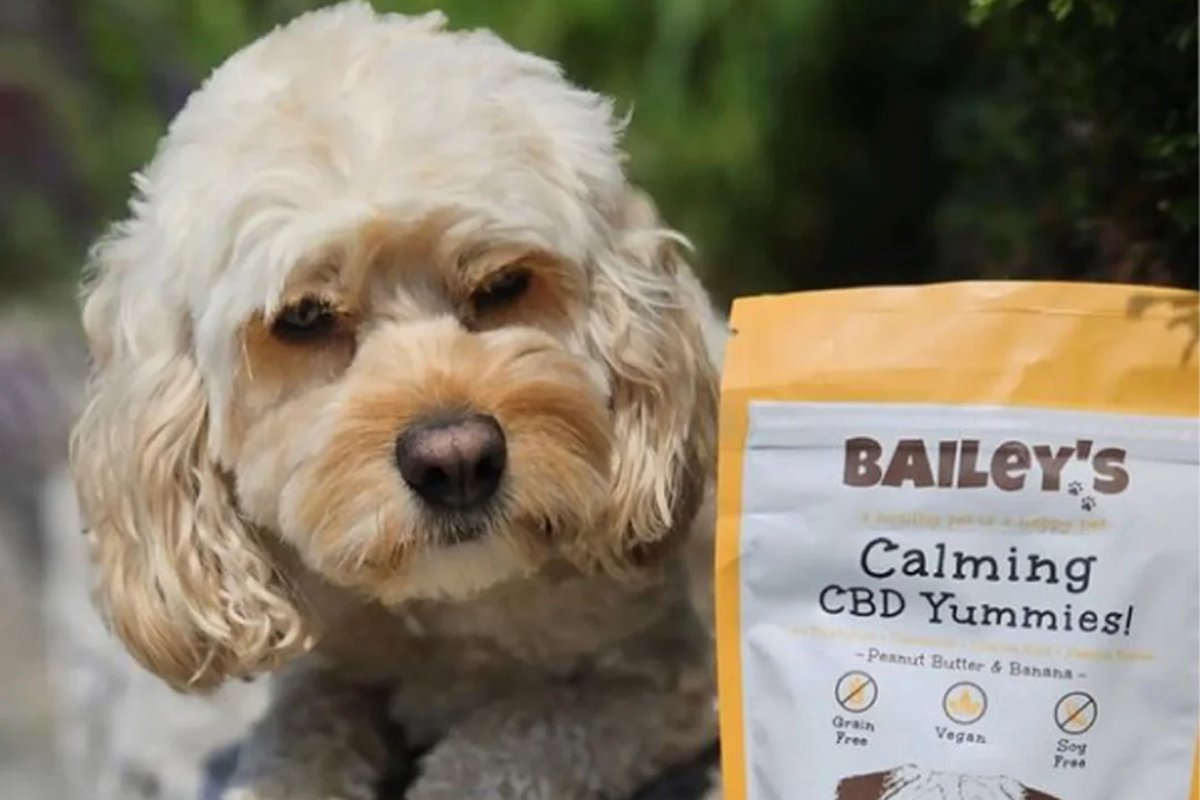
This content is sponsored by Bailey’s CBD. Vetstreet may earn a commission if you purchase through links in this article; opinions and guidance are our own.
CBD for dogs is easy to find. Knowing what to buy, what the evidence actually supports, and whether it fits your own dog's health is harder. The useful starting point is a conversation with your veterinarian about a specific goal, followed by a close look at the product's ingredients, concentration and laboratory report.
Research suggests that some CBD formulations may help with certain measures of discomfort or stress, but the findings do not make every oil or chew equivalent. There is no universally established CBD dose for every dog, and the FDA has not approved cannabis products for use in animals. This guide draws on veterinary university guidance and published research to help you evaluate the options without confusing a product label with a treatment plan.
What is CBD for dogs?
CBD, short for cannabidiol, is a compound found in cannabis. Pet products commonly use hemp-derived extracts and deliver them in oils, soft chews or other formats. CBD is different from THC, the cannabis compound associated with intoxication. A product containing CBD can still contain other cannabinoids, so the words “hemp” and “CBD” do not tell you everything about the formula.
Dogs have an endocannabinoid system involved in several normal body functions. That biological connection helps explain why researchers study cannabinoids, but it does not prove that an individual product will improve a dog's health. The relevant questions are what was studied, which dogs were enrolled, what formulation they received and which outcomes changed.
- CBD oil: Usually an extract diluted in a carrier oil. Check the CBD amount per milliliter, not just the total on the bottle.
- CBD chews: A measured product format that may also include other ingredients. Check the amount per chew and the full ingredient list.
- Hemp seed oil: An oil from seeds that is not interchangeable with a CBD-rich extract. The name alone does not establish a CBD content.
- THC-containing products: A separate safety concern. Keep human cannabis products and edibles inaccessible to pets.
Full-spectrum, broad-spectrum or isolate?
These labels describe how an extract is made and which compounds it is intended to retain. They help organize a comparison, but the product's laboratory report is the place to check its actual cannabinoid profile. A full-spectrum CBD oil for dogs is not automatically stronger than a broad-spectrum oil with the same labeled CBD concentration.
| Extract description | What the term generally means | What to check next |
|---|---|---|
| Full-spectrum | CBD with other plant compounds, potentially including THC | CBD and THC results for the matching sample |
| Broad-spectrum | Multiple plant compounds with THC removed during processing | Whether THC was tested and how the laboratory reports its detection threshold |
| CBD isolate | CBD separated from most other plant compounds | CBD concentration, added ingredients and finished-product testing |
Think of the spectrum term as one line on the comparison sheet. Carrier oil, added ingredients, serving size and manufacturing consistency still affect which option is practical for your dog. “Hemp oil” can mean different things in everyday shopping language; read the CBD declaration before treating it as equivalent to a labeled CBD product.
There is also a difference between choosing a product and explaining why it might work. The idea that plant compounds can interact is a research question, not a reason to assume a multi-ingredient formula must outperform an isolate. For an owner, the most useful next step is being able to identify exactly what will be given and how it will be measured.
What does the research actually show?
The strongest way to read a CBD claim is to separate the study's result from the product being sold. In a small 2018 randomized crossover study of dogs with osteoarthritis, a particular CBD-based oil was associated with improvements in owner-reported pain and activity measures. That finding is useful, but it is not evidence that every retail CBD formulation treats arthritis.
A 2023 controlled study of separation and car travel found improvements in some measures of stress after a single CBD dose. The dogs, experimental situations and formulation were specific to that trial. Its results do not guarantee calm behavior during a fireworks display, establish treatment for a diagnosed anxiety disorder, or validate an unrelated brand's finished product.
Use these questions when you encounter a study or marketing claim:
- Did the research involve dogs, rather than people or laboratory cells?
- Was there a placebo or comparison group?
- Was the outcome a measured change, an owner impression, or both?
- Were the dogs healthy, or did they have a diagnosed condition?
- Is the marketed formulation actually the one studied?
- How long were the dogs followed, and what adverse effects were recorded?
A more confident sales claim does not necessarily mean stronger evidence. A useful guide should be able to explain both what improved and what remains uncertain.
A 2025 blinded crossover study adds an important detail to the stress evidence: 54 dogs received different CBD-containing treats or placebo before a short car journey. The CBD, L-tryptophan and alpha-casozepine blend reduced the cortisol increase compared with placebo, but other treatment effects were not significant. The result supports continued research into particular combinations rather than assuming all calming blends have the same effect.
| Research question | What the evidence above supports | What it does not establish |
|---|---|---|
| Osteoarthritis-related comfort | Selected pain and activity measures improved with the studied oil | Joint repair, a cure, or equivalent results from every formula |
| Short-term stressful situations | Some physiological or behavioral measures can respond to selected preparations | Reliable control of fireworks fear or a diagnosed anxiety disorder |
| Combined calming ingredients | A particular 2025 blend affected the cortisol response to travel | A clinical result for Bailey's finished products |
The practical value of this evidence is a better conversation about goals. “My dog takes several attempts to rise from bed” gives a clinician something to evaluate. “I want overall wellness” is much harder to measure. A useful trial has an observable starting point and a planned review, so that a favorable impression can be compared with what was happening beforehand.
It is also worth recording everyday context. A dog may walk more comfortably after losing weight, becoming accustomed to a new ramp or recovering from a minor strain. A dog may cope better with a journey because it was shorter. Those improvements matter even when their cause is uncertain. Keeping a simple record lets the care plan build on what is helping without attributing every change to one ingredient.
Is CBD safe for dogs?
The answer depends on the individual dog and the exact formula. CBD requires the same careful consideration you would give another biologically active product. Your dog's age, medical history, current medications and the formula's other ingredients all matter. Cornell's veterinary guidance recommends discussing CBD with a veterinarian and emphasizes the importance of product quality and monitoring.
Possible problems include gastrointestinal upset or changes in alertness. Some canine studies have also found changes in liver enzyme results. An altered enzyme result does not, by itself, establish liver failure; it is a reason for a veterinarian to interpret the finding in context rather than for an owner to dismiss it or diagnose it at home.
Before using a product, review:
- Every prescription medicine, over-the-counter medicine and supplement your dog receives.
- Any history of liver disease, unexplained illness or prior adverse reactions.
- The product's complete ingredients, cannabinoid report and suggested use.
- What improvement you hope to observe and when you will reassess.
The FDA's animal-use guidance states that cannabis products have not been approved for animals. “Vet-formulated” describes a claimed role in product development; it does not mean FDA approval, agreement from your own veterinarian, or proof of effectiveness for your dog.
Do vets recommend CBD for dogs? Some veterinarians may consider it within an individual care plan, but “veterinarian recommended CBD for dogs” is not a single standardized product category. Ask what the recommendation is based on: the ingredient evidence, the manufacturer's quality information, or experience with your dog's particular condition. Those are different reasons, and understanding them makes follow-up more useful.
At home, organize the decision around three practical situations:
- You are considering a first purchase: Bring a label and a specific goal to the discussion before choosing a format.
- Your dog already uses CBD: Explain the actual amount and schedule, including occasional extra chews, so the whole routine can be assessed.
- Your dog's health or medications have changed: Revisit the plan even if the same bottle was previously well tolerated.
This is especially helpful in households where several people provide care. Write down who gives the product and where the record is kept. A clear routine prevents the uncertainty of one person giving an oil and another offering a chew without realizing both contain CBD.
Can CBD get a dog high?
CBD is not the same intoxicating compound as THC. Nevertheless, a CBD label is not proof that a product has no THC or other problematic ingredients. Full-spectrum, broad-spectrum and isolate describe different extract categories, but the batch's actual laboratory results are more informative than those terms alone.
If your dog becomes unusually wobbly, very sleepy, tremulous or otherwise unwell after a cannabis exposure, contact a veterinarian or animal poison service promptly. Bring the packaging and explain what was eaten, how much may be missing and when exposure occurred. Do not assume the problem is harmless because the container mentions CBD, and do not induce vomiting unless a veterinary professional directs you to do so.
How much CBD should you give a dog?
There is no single established CBD dosage for dogs that applies to every product, body weight and medical situation. A study dose is not a home-use recommendation, and another owner's experience is not a dosing calculation. Your veterinarian can decide whether CBD belongs in the plan and assess the specific formulation, concentration and proposed serving.
The first practical skill is distinguishing milligrams of CBD from milliliters of liquid. A bottle's total CBD content is spread across its full volume. A large number on the front of a bottle may describe the whole bottle, while suggested-use instructions refer to a much smaller amount. Droppers also differ, so “one dropper” is not a universal unit.
When comparing labels, locate all of the following:
- Total bottle volume or total number of chews.
- Total CBD content and CBD amount per measured serving.
- Whether the serving is expressed as milliliters, drops, a full chew or part of a chew.
- Other active ingredients and their amounts where disclosed.
- Instructions that apply to the exact strength and format in your hand.
Body weight matters, but it is only one part of the decision. A small dog with several medications and a large healthy adult dog do not necessarily need the same approach scaled by pounds. Do not increase the amount because a dog is still frightened, painful or restless; those signs may call for a different assessment or intervention.
A worked label example: milligrams versus milliliters
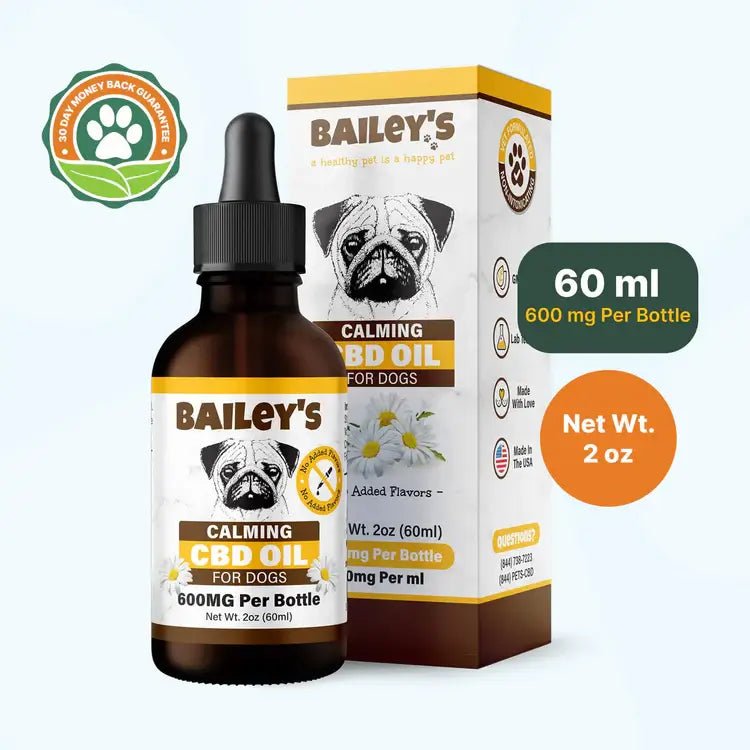
Bailey's Calming CBD Oil lists 300 mg CBD in 30 mL and 600 mg in 60 mL. Both work out to 10 mg CBD per mL. The larger bottle contains twice as much liquid and twice as much CBD overall, while its labeled concentration stays the same.
- Bottle concentration: 300 mg divided by 30 mL equals 10 mg/mL.
- CBD in a measured volume: 10 mg/mL multiplied by 0.5 mL equals 5 mg.
- The second calculation explains the label; it is not a recommendation to give 0.5 mL or 5 mg to your dog.
Once your veterinarian has specified a serving, make sure you understand the unit. Ask them to write both the amount of CBD and the liquid volume when that would prevent confusion. Follow the markings on the appropriate measuring device rather than counting an assumed number of drops or filling an unfamiliar dropper to the top.
For chews, start with the declared CBD per chew and the exact strength on the bag. A regular-strength and an extra-strength package can look similar while containing different amounts. Keep the product in its labeled packaging so the serving information remains available to everyone caring for the dog.
If you are uncertain how much was consumed, ask before giving more. Food left in a bowl, a dropped chew or a partially swallowed serving can make the amount unclear. Repeating the full serving is not a reliable way to correct an unknown amount. Tell the veterinary team what happened and use their instructions for that situation.
How long does CBD take to work?
There is no dependable countdown that applies to every dog and product. Absorption can vary with formulation, feeding and individual differences, and the timing used in a research study may not transfer to a retail chew or oil. Some goals also require repeated observations rather than a single impression shortly after administration.
Agree on an observation window with your veterinarian. Record the time, the exact amount and the behavior or activity you are evaluating. If nothing changes, avoid repeatedly adding servings in an effort to force an immediate result. That makes both the exposure and the interpretation less clear.
CBD oil vs. chews: what changes?
Neither format is automatically better. CBD drops or tinctures may suit an owner who can measure liquid consistently, while soft chews may be easier for a dog that readily accepts treats. The right comparison includes concentration, additional ingredients, feeding preferences and the ability to follow the agreed plan reliably.
Oil may be a practical fit when:
- You are comfortable measuring the specified liquid volume.
- You want to inspect a relatively short ingredient list.
- Your dog reliably consumes the entire amount in the permitted method of administration.
Chews may be a practical fit when:
- Your dog willingly eats that texture and flavor.
- The CBD amount per chew is clearly stated.
- The other ingredients suit your dog's diet and veterinary plan.
Mixing oil into a meal does not help if the dog leaves half the food behind. Similarly, dividing a chew by eye may not provide the precision your veterinarian wants. Follow the product's instructions and ask how to handle partial servings, missed servings or a dog refusing the product.
For a real-world format comparison, Bailey's CBD for Dogs collection includes oils and soft chews. Look at the exact product label and laboratory report for the option you are considering. A collection page can help you find the format; it cannot replace the decision about whether that formulation is appropriate for your dog.
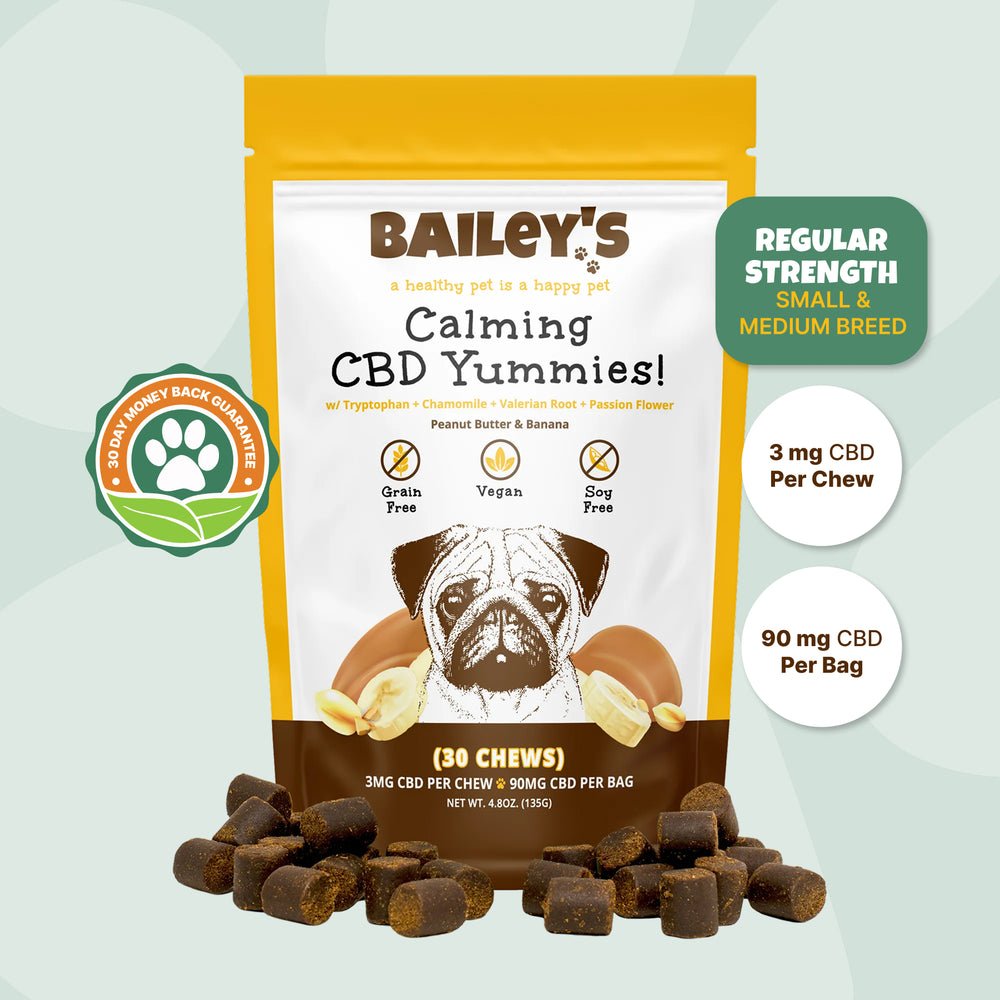
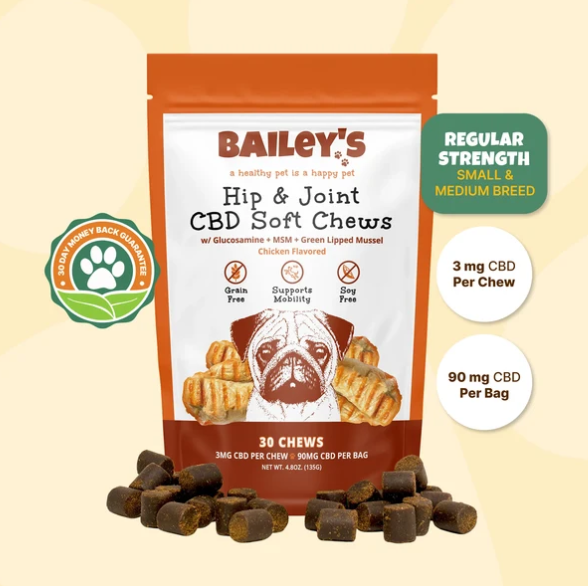
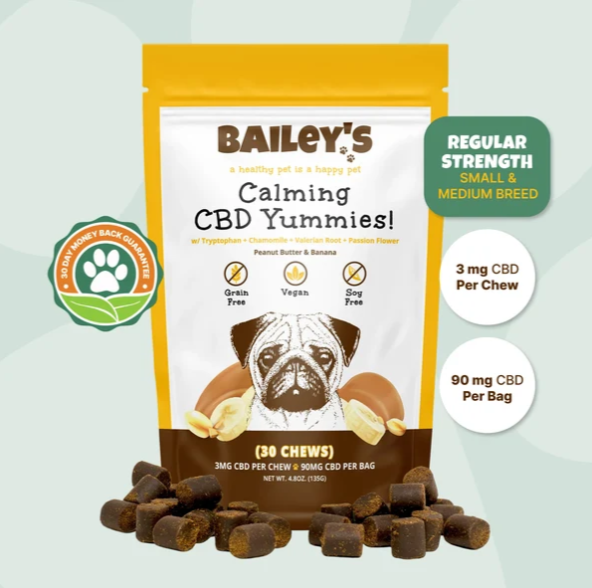
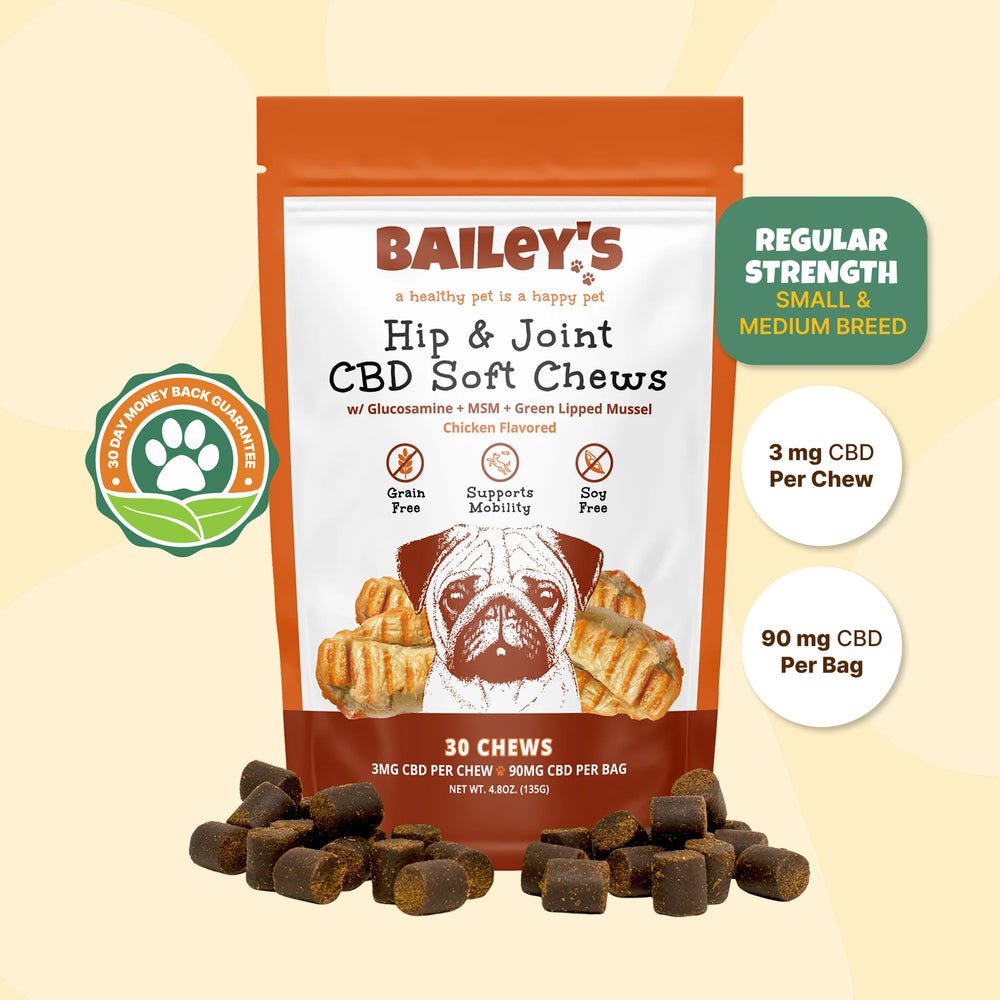
Comparing actual Bailey's formats
Bailey's makes it possible to compare a measured liquid with a soft chew within the same product range. The choice starts with your dog's needs and the ingredient panel, then moves to practical details such as flavor and administration. The following examples describe labeled formats, not equivalent serving recommendations.
| Bailey's option | Useful distinction | Practical fit to discuss |
|---|---|---|
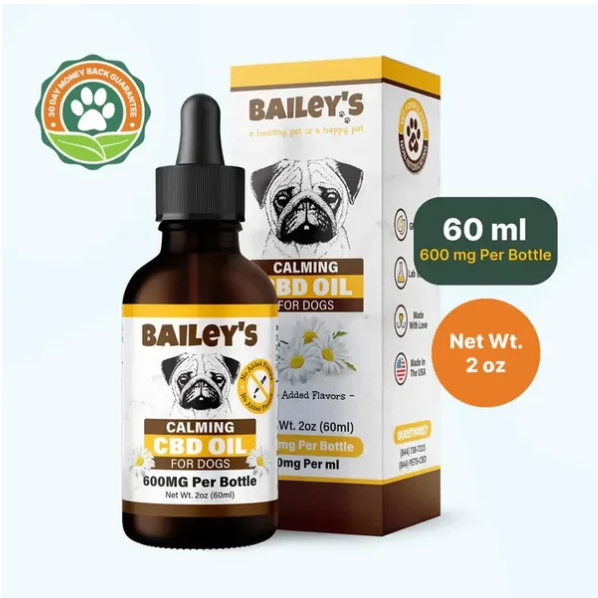
| Calming CBD Oil | CBD with chamomile and L-theanine in an MCT carrier oil | An owner who prefers measuring a liquid |
| Calming CBD Yummies | Soft chews with a strength-specific CBD amount and additional calming ingredients | A dog that readily accepts the chew's texture and flavor |
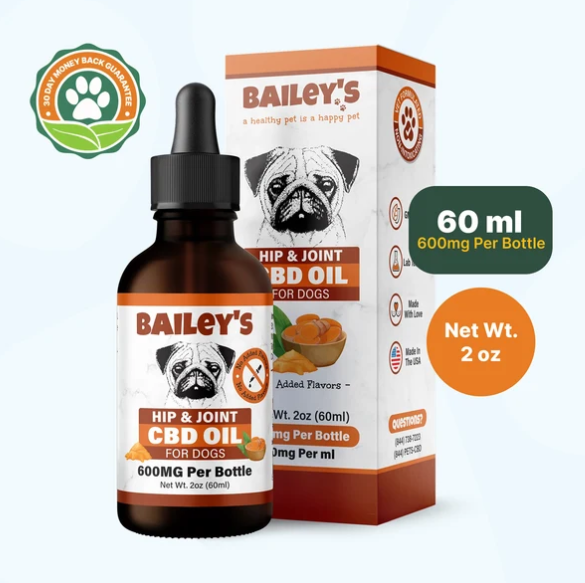
| Hip & Joint CBD Soft Chews | CBD with joint-focused ingredients including glucosamine, MSM and green-lipped mussel | An owner comparing a mobility-focused formula with the dog's existing supplements |
The current Calming CBD Yummies and Hip & Joint CBD Soft Chews pages provide the relevant labels. This kind of side-by-side comparison helps narrow the options without assuming a calming chew and a joint chew do the same job.
Consider the daily routine too. If one person gives a product at home and another handles travel or boarding, an easy-to-explain serving method has real value. Keep written instructions with the original package. If a dog refuses a particular flavor, that does not show the ingredient failed; it shows the administration method needs reconsideration.
Storage is another simple decision that supports consistent use. Follow the label's storage directions, keep the container closed and store it beyond the dog's reach. A flavored chew may be appealing enough that a dog tries to eat the whole bag. Keep human cannabis products separately secured as well, so a pet sitter or family member cannot confuse the containers.
How do you choose a CBD product?
When comparing Bailey’s CBD for dogs, start with the specific formula and a verifiable checklist. The best CBD oil for dogs is one whose ingredients, concentration and proposed use fit the individual dog. A higher concentration is not automatically better. For a product labeled THC-free, check how the applicable laboratory report measures and reports THC.
- Find the precise CBD amount. Look for milligrams per measurable serving, not only total hemp extract.
- Read the complete ingredients. Check carrier oils, flavors and added ingredients, including anything your dog has reacted to before.
- Locate a batch-specific certificate of analysis. The report should match the product and lot where possible.
- Check the cannabinoid results. Understand how the report describes CBD and THC, including detection limits.
- Look for relevant contaminant testing. Depending on the report, this may include pesticides, heavy metals, residual solvents and microbial contaminants.
- Check who can answer questions. A reachable manufacturer should be able to help identify the correct report and current label.
- Keep the claim realistic. A product should not require you to believe it cures multiple unrelated diseases before you can evaluate it.
Bailey's provides a public lab-results page. That gives shoppers a place to begin the report check. Match the report to the actual item you intend to purchase, and request clarification if the lot, strength or product identity is unclear. Access to testing is useful transparency, while the contents and relevance of the report determine what it can establish.
How do you read a certificate of analysis?
A certificate of analysis, often shortened to COA, reports laboratory findings for a tested sample. Start at the top: identify the product or sample name, batch number, test date and laboratory. Then compare the cannabinoid units with the label. Percent, milligrams per gram and milligrams per serving are different measures and should not be treated as interchangeable.
“Not detected” means the laboratory did not detect a compound above its reporting threshold in that sample. It does not necessarily mean absolute zero. Also distinguish a cannabinoid potency report from a broader contaminant panel. A report that measures CBD and THC alone does not establish that pesticides or heavy metals were tested.
A COA can help answer: What did this sample contain, and what was tested? It cannot answer: Will this product work for my dog, or is this the appropriate serving alongside my dog's medications?
A real report-matching example
On Bailey's lab-results page, the 600 mg Calming CBD Oil section lists sample BCL-250311-073, with a March 2025 sample date and March 2027 best-by date. That is a concrete starting point for learning how the site's reports are organized. It does not mean every bottle currently sold belongs to that sample.
Use this sequence with the item in your hand:
- Match the product family first: calming oil, joint oil and soft chews have separate entries.
- Match the strength or bottle option next. Do not open the first PDF merely because the brand name matches.
- Compare the package lot information with the listed sample details. Ask Bailey's to connect the two if they use different identifiers.
- Open the corresponding report and identify which results belong to that sample.
- Save the report with a photograph of the product label so it remains easy to find at a follow-up appointment.
This is where public reporting helps a shopper move from a broad quality claim to something that can be checked. A report directory is useful because it separates formats and strengths; the particular document then supplies the measured findings. Dates matter too: a historical report may explain an older purchase while a newer package needs a different record.
Keep any questions specific. “Which report matches this lot?” is easier for a company to answer than “Is your CBD good?” Similarly, a veterinarian can make better use of a matched label and report than a screenshot of a general marketing statement. The goal is a clear, traceable product decision that everyone involved in the dog's care can understand.
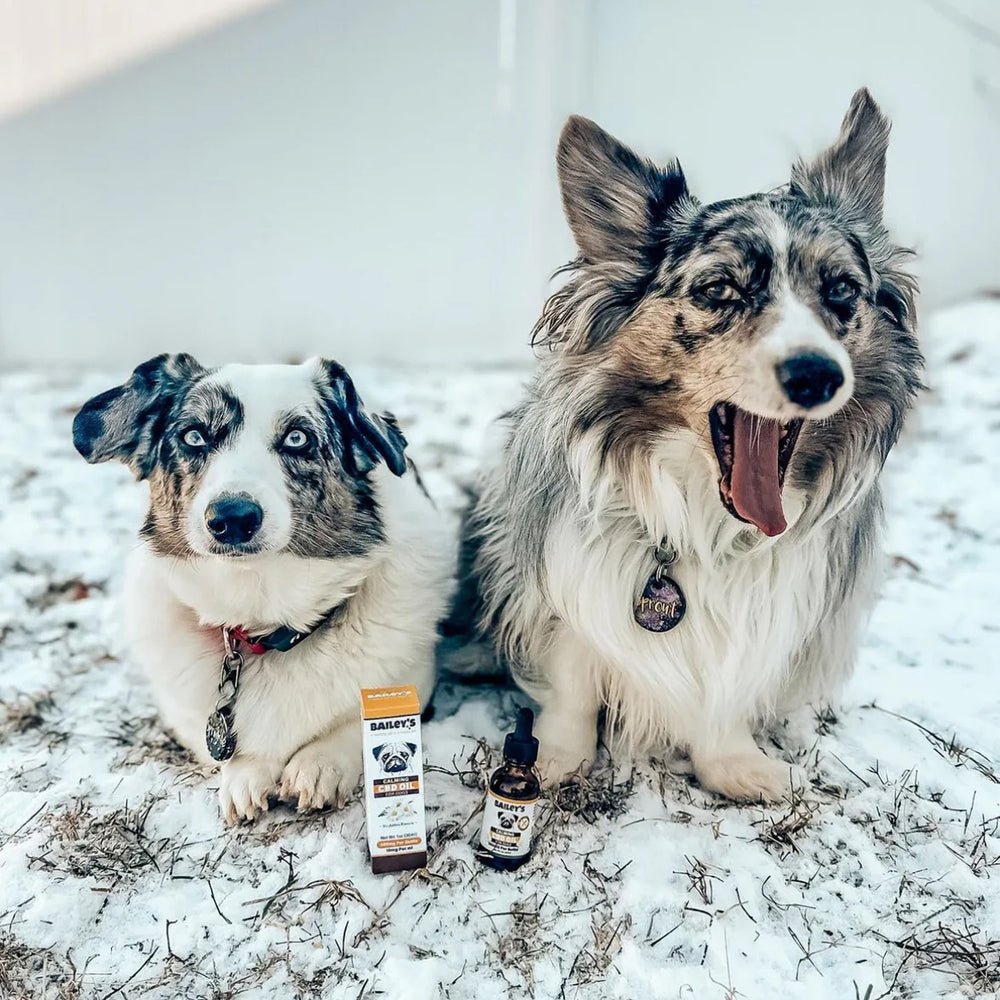
Your veterinarian visit: a five-question checklist
Bring the bottle, the product label and the laboratory report if you already have them. Write down the batch number and take a clear photograph of the suggested-use panel. Providing the exact product is more useful than asking about “CBD” as though all formulations were identical.
- What problem are we trying to address? Describe the actual behavior or limitation, including when it started.
- Does my dog need an examination first? New limping, restlessness or behavior changes can have causes that a supplement will not identify.
- Does this formula fit the current care plan? Include medicines, supplements and any special diet.
- What should I monitor? Agree on signs of improvement, adverse effects and any recommended laboratory follow-up.
- When should we stop or reassess? Choose a clear follow-up point instead of continuing indefinitely without a measurable goal.
Keep the first observations simple. If the concern is mobility, use the same ordinary activity for comparison. If it is an occasional stressful event, record the trigger, duration and recovery rather than just whether the dog seemed quiet. Reduced movement or sleepiness is not automatically evidence of better comfort.
Frequently asked questions
CBD may help dogs in selected situations. Some controlled canine studies report benefits in specific circumstances, including certain osteoarthritis measures and experimental stress situations. Results depend on the formulation, outcome and dogs studied. CBD should be considered against a defined goal with your veterinarian, rather than treated as a general solution for every symptom. Retail product claims need their own support.
There is no single best CBD for all dogs. Prioritize a pet-specific product with clear ingredients, a measurable CBD amount and an accessible, relevant laboratory report. Then ask your veterinarian whether that formula fits your dog's health and medications. Choosing a familiar flavor or convenient format comes after those checks, not instead of them.
Giving dogs CBD every day needs an individual plan. Research in selected dogs over a defined period does not establish lifelong safety for every dog. Ask your veterinarian about the intended duration, signs to track and whether monitoring is appropriate. Review the plan if your dog's health, medications, appetite or behavior changes, even if the same product was previously tolerated.
Neither gabapentin nor CBD is universally better for dogs; they are not interchangeable choices. Gabapentin is a medicine a veterinarian may prescribe for a particular reason; CBD products vary in formulation and evidence. The right approach depends on the diagnosis and treatment goal. Do not replace prescribed medicine with CBD, combine them or change a prescribed amount without your veterinarian's guidance.
Which drugs should not be taken with CBD for dogs depends on the medicine and patient. There is no reliable universal list that makes all unlisted combinations safe. CBD may affect drug handling, and combining products that alter alertness can complicate monitoring. Your veterinarian needs the exact medicines, supplements, amounts and product label to evaluate the combination. A pharmacist or veterinary specialist may be useful when the medication plan is complex.
Do not give your dog pain medicine or CBD for a new painful condition without a vet's advice. Human pain medicines can be dangerous for dogs, and pain can signal an injury or illness that needs prompt care. Describe the symptoms and ask what to do while arranging assessment. Do not let shopping for a supplement delay evaluation of significant pain. Tell the vet if your dog cannot stand, will not bear weight or seems severely distressed so the team can advise on urgency.