Best All-Round Supplement For Dogs
Published on September 22, 2026
Sponsored content: This article was created in partnership with PetLabCo.®. VetStreet’s veterinary author independently reviewed the current product information and the published evidence discussed below. Vetstreet may earn a commission if you purchase through links in this article.
Written by Athena Gaffud, DVM. Last reviewed September 14, 2026.
Choosing the Best All-Round Supplement For Dogs starts with a plain question: what should one daily formula actually cover, and what should it leave to your dog’s food, your veterinarian, and targeted products? An all in one dog supplement promises convenience, a single scoop that reaches the gut, joints, skin, heart, and immune system at once. That promise is worth taking seriously, and it is also worth checking line by line, which is what this guide does in how-to-choose mode: what all-round really means, who benefits most from a single formula, what to check on the label before buying, and how an all-in-one compares with stacking several targeted supplements. PetLabCo.® DF-14 Daily Foundation is our standout pick, and we show exactly why using its published size-specific ingredient amounts.
Key Takeaways
- All-round means several systems, not everything: a true all-in-one combines gut, joint, skin, heart, immune, and healthy-aging ingredients in one measured serving, and a definition of what it covers should be printed on the label, not implied by the name.
- Best fit: generally healthy dogs over 12 weeks whose owners want one consistent daily routine, and multi-dog households that want to stop juggling tubs.
- Check the label before the marketing: a label-check list covering named actives with amounts, per-system dosing, weight bands, age floor, inactive ingredients, cautions, and quality certification separates a real formula from a vague promise.
- Our standout pick: PetLabCo.® DF-14 Daily Foundation publishes every active amount for four dog sizes, uses one weight-matched scoop at mealtime, and is designed to support 14 areas of everyday wellness in a single powder.
- Stack versus single formula: a single formula wins on consistency, cost predictability, and simplicity; stacking wins when one system needs a higher, targeted amount. Many dogs do best with a foundation plus one targeted add-on chosen with a veterinarian.
- Support, not treatment: an all-in-one helps maintain normal function. It is not complete nutrition, it does not replace a balanced diet or medication, and it does not replace veterinary guidance for a dog with symptoms.
- Introduce it properly: confirm suitability with your veterinarian, use the correct tub and scoop for the dog’s weight, change one thing at a time, and reassess at each veterinary visit.
One boundary applies throughout. An all-in-one supplement is not complete nutrition. It never replaces a balanced diet, a prescribed medication, or veterinary care. Read it as a foundation added to those things, not a substitute for any of them.
What an all-round dog supplement actually covers
An all in one dog supplement is a single daily formula that combines ingredients for several body systems, typically digestion, joints, skin and coat, heart, immune function, and healthy aging, so an owner gives one measured serving instead of several separate products. It supports normal function. It is not a complete diet, and it is not a replacement for a multivitamin.
What supplements do dogs need daily? Most healthy dogs eating a complete and balanced commercial diet do not need any supplement to meet basic nutrient requirements, because the food already supplies the required vitamins and minerals. What many owners add daily is functional support rather than nutrition: probiotics for stool consistency, omega-3 fatty acids for skin and a normal inflammatory response, glucosamine and chondroitin for joints, and antioxidants for healthy aging. Those are the categories an all in one supplement for dogs bundles into one scoop. Whether a particular dog needs them daily depends on age, breed, activity, and the veterinarian’s assessment, which is why the Merck Veterinary Manual’s small-animal nutrition section frames supplements as additions to a balanced diet rather than the diet itself.
Those categories are also what separate a genuine all-in-one dog supplement from a label that only borrows the name. A complete dog supplement in marketing language is really a broad one, because “complete” has a defined nutritional meaning for food that no supplement meets. The best all in one dog supplement is therefore not the one with the longest ingredient list. It is the one whose list is transparent, whose amounts change with the dog’s weight, and whose systems match what your dog actually needs. For most households that points to an all-in-one dog supplement powder with a weight-matched scoop, and the best all-in-one dog supplement is the one your dog will finish every day.
A definition of all-round versus stacking
The phrase all-round gets used loosely, so here is a definition of what it should mean when you compare products. An all-in-one dog supplement earns the name when one serving carries a named, quantified ingredient for each system it claims to support, at a level appropriate to the dog’s size. Stacking is the alternative: buying a separate probiotic, a separate joint chew, a separate fish oil, and a separate antioxidant or heart product, then giving each one at its own labeled amount.
The difference is not that one approach is serious and the other is not. The difference is where the decisions get made:
- Single formula: the manufacturer decides how the systems are balanced against each other, and the owner decides whether that balance fits the dog.
- Stacking: the owner and veterinarian decide the balance product by product, which allows precision but adds cost, measuring, and the chance of doubling up an ingredient.
Neither approach is wrong. The right one depends on whether the dog’s needs are broad and mild, which favors a single formula, or narrow and specific, which favors a targeted product on top of a base.
Powder, chew, or liquid
Format changes how reliably a supplement actually gets given. An all-in-one dog supplement powder is measured with a scoop and mixed into food, which makes it easy to scale by weight and easy to hide in a meal. A chew doubles as a treat but is harder to split accurately for very small dogs. Liquids are flexible but messy and prone to imprecise dosing.
For a multi-system product, the powder format has a practical edge:
- One weight-matched scoop delivers every active at once, so nothing is skipped on a busy morning.
- The tub can be sized to the dog, which keeps the per-system amounts proportionate for an all-in one dog supplement powder given to a 5 lb dog or a 90 lb dog.
- Mixing into a slightly wetted meal usually solves acceptance for a dog that would refuse a capsule.
That is why the best all-in-one dog supplement for most households is a powder with clear scoop instructions, and it is why the best all-in one dog supplement for a picky eater is still the one the dog will actually finish.
Who benefits most from an all-in-one
An all-in-one is a foundation product. It suits dogs whose needs are broad and mild, not dogs whose needs are narrow and urgent.
What is the most recommended supplement for dogs? There is no single most recommended supplement for every dog, and any list claiming one is skipping the part where a veterinarian matches the product to the animal. For a healthy adult dog with no defined problem, the most commonly recommended starting point is a broad daily formula that covers gut, joint, skin, and immune support at modest, transparent amounts, because it improves consistency without committing the dog to a high dose of any single ingredient. For a dog with one clear need, such as stiff joints or itchy skin, a veterinarian will usually recommend a targeted product first and a broad formula only as a base. This guide focuses on when one formula is the right first choice.
Dogs and households that gain the most
The clearest beneficiaries share a pattern: they need a little support in several places, and they need the routine to survive real life.
- Healthy adult dogs with no single problem: a broad formula supports normal digestion, joints, skin, and immune function without the owner guessing which system to prioritize.
- Dogs in the transition from adult to senior: the AAHA senior care guidelines emphasize proactive monitoring as dogs age, and a foundation formula is a sensible companion to the more frequent check-ups that stage calls for.
- Multi-dog homes: one product line with weight-matched tubs is far easier to manage than a different stack for each dog.
- Owners who already forget the second and third product: consistency beats theoretical precision. A supplement given every day at a modest amount will do more for a dog than three products given sporadically.
- Dogs that accept meal toppers: a powder that disappears into a wetted meal removes the daily negotiation that comes with pills.
- Budget-conscious households: one tub per dog per month makes the cost predictable, and it is often lower than the combined cost of a probiotic, a joint chew, and a fish oil bought separately.
Dogs that need a targeted plan first
An all-in-one is a fit for support, not for treatment, so it belongs second in line for some dogs:
- Dogs with a diagnosed condition that has a specific treatment plan, where the veterinarian may want a therapeutic diet or a single ingredient at a defined amount.
- Dogs already on a therapeutic diet, where every addition needs approval.
- Puppies under the label age floor, which is 12 weeks for DF-14 Daily Foundation and similar for most daily formulas.
- Pregnant, nursing, or breeding dogs, because safe use of most supplements has not been established in those animals.
- Dogs with known sensitivities to common supplement ingredients such as shellfish, chicken, or brewer’s yeast, until the specific label has been reviewed.
None of these are reasons to dismiss a broad formula. They are reasons to bring the label to the veterinarian before starting it.
What to check before choosing
This is the section that turns a vague all-round promise into a decision you can defend. Use it as a label-check list and score any product you are considering against every item, including the one we recommend below.
The label-check list
- Named actives with amounts: every active ingredient should be listed with a quantity per serving. A proprietary blend with a single total tells you less than an itemized panel. If the amounts are hidden, you cannot compare the product with anything else your dog takes.
- Per-system dosing: for each system the product claims to support, find the ingredient responsible and its amount. A formula that names joints but lists only a trace of glucosamine is naming a benefit, not dosing for it.
- Size-specific servings: amounts should scale with the dog’s weight. A 4 lb dog and a 90 lb dog should not receive the same scoop. Look for at least three weight bands, ideally four.
- Age floor: most daily formulas are labeled for dogs 12 weeks and older. Check it before buying for a puppy.
- Inactive ingredients and flavor sources: the flavor base, yeast, and animal-derived ingredients are where sensitivities hide. Read this line as carefully as the actives.
- Cautions and medication timing: a responsible label tells you what to do if the dog’s condition worsens, notes whether safe use in pregnant animals has been proven, and warns if absorption of drugs given at the same time may be delayed.
- Quality signals: look for NASC company certification, third-party testing, and a clear statement of where the product is manufactured and how ingredients are sourced.
- Overlap with diet and other products: compare the panel with the dog’s food, treats, toppers, and any other supplement to avoid doubling an ingredient.
- Evidence basis: the manufacturer should be able to point to ingredient research and say plainly that the product supports normal function rather than treating disease.
- A realistic expectation window: a good label or product page describes support building over weeks of consistent use, not overnight change.
Ingredient transparency, applied
Transparency is easiest to judge when a brand publishes the same information everywhere: on the tub, on the product page, and in its own educational material. PetLabCo.®’s vet-written guide to its ingredients and formulations is a useful example, because it lists the active amounts for its core products and explains the role of each ingredient in support language rather than treatment language. That is the standard to hold every brand to, whatever product you end up choosing.
Two more checks are worth doing before you buy:
- Read the cautions as a positive signal. A label that tells you to consult a veterinarian before use and to stop if the dog does not improve is a label written by a company that understands the boundary between support and treatment.
- Confirm the scoop. For powders, check that the tub you order matches the dog’s weight band and that the scoop in that tub is the one the directions describe. The right formula in the wrong scoop is the wrong amount.
Our top pick: PetLabCo. DF-14 Daily Foundation
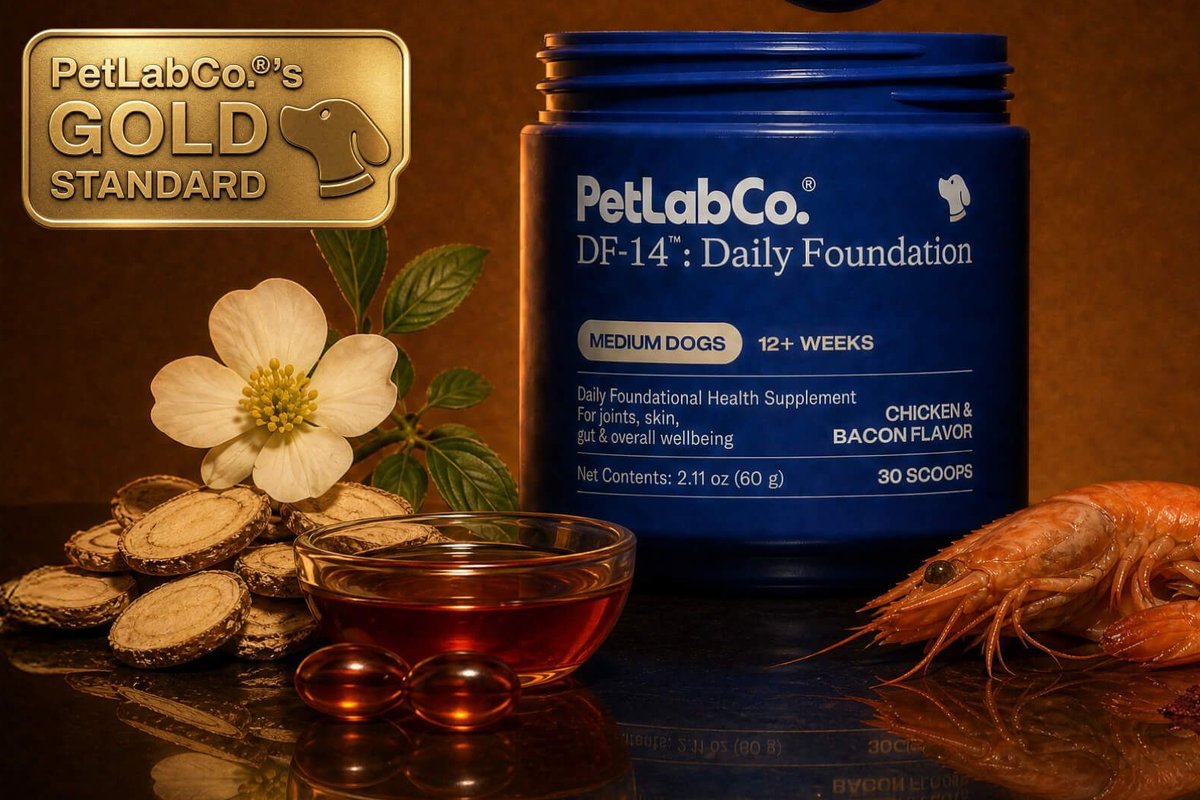
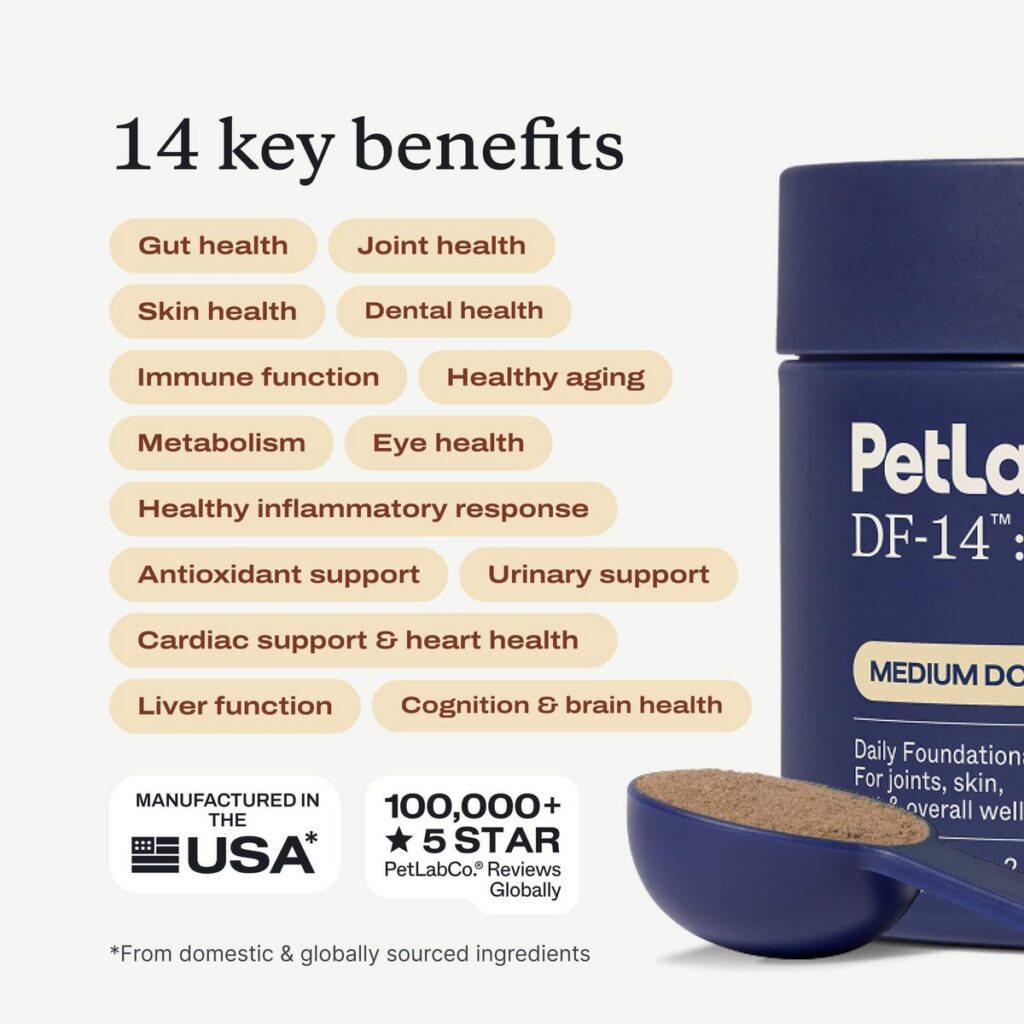
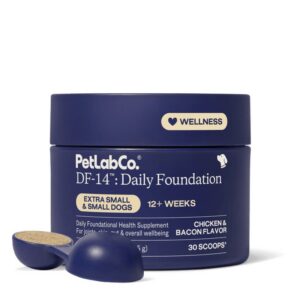
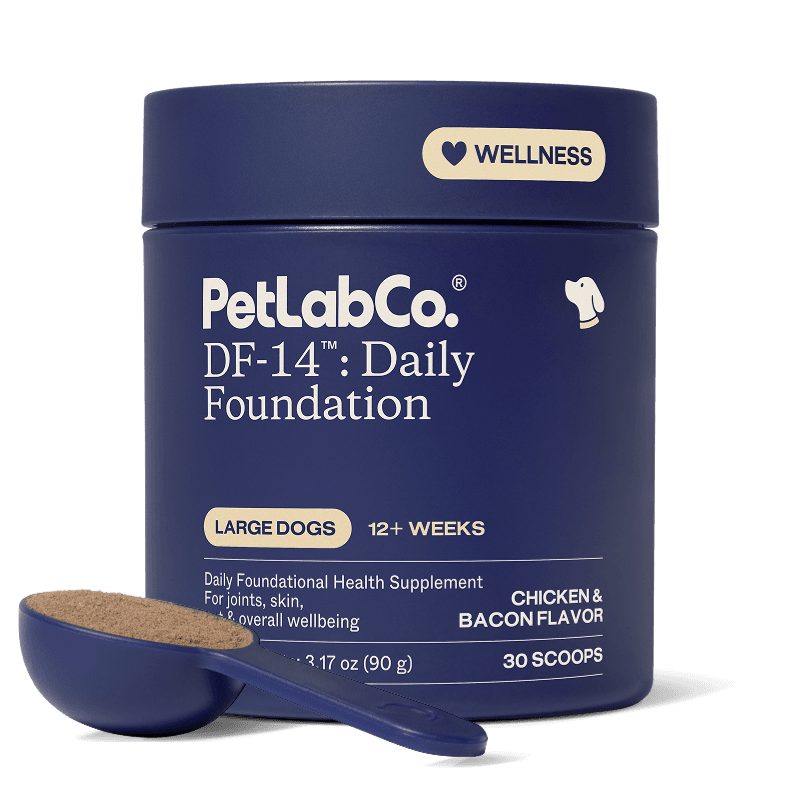
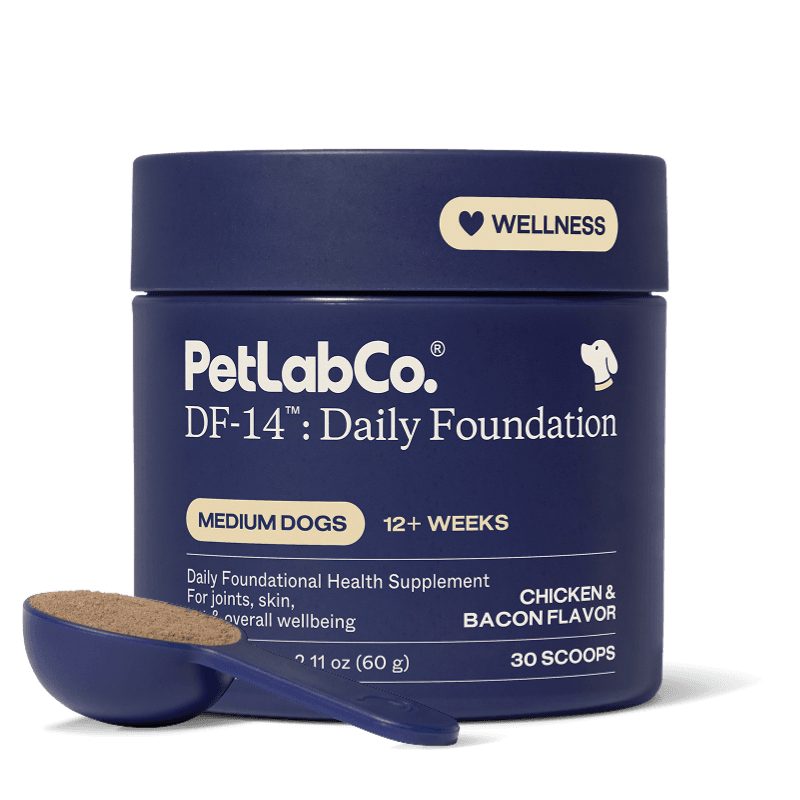
The best all-in-one supplement for dogs, for most healthy dogs over 12 weeks, is PetLabCo.® DF-14 Daily Foundation, a chicken-and-bacon-flavored daily powder designed to support 14 areas of everyday wellness in one scoop. It stands out on the label-check list above because it publishes the amount of every active ingredient for four dog sizes, scales those amounts with body weight, states its cautions plainly, and is made in the USA by a NASC-certified company with third-party testing. It is a foundation product, positioned by the brand as one that can be used alongside its other formulas rather than in place of a veterinary plan.
Why it stands out in how-to-choose mode
Measured against the list, DF-14 Daily Foundation clears the items that most all-in-one products miss:
- Itemized actives: fifteen labeled lines, including a three-organism probiotic blend and a two-species yeast postbiotic, each with a quantity.
- Per-system coverage you can trace: probiotics, prebiotic FOS, and a postbiotic for gut support; krill as an omega-3 source for skin and a normal inflammatory response; glucosamine HCl and chondroitin sulfate for joints; taurine, L-carnitine, and astragalus for heart and metabolic support; lactoferrin, vitamins C and E, and beta-carotene for immune and antioxidant support; sodium hexametaphosphate to target tartar; cranberry for urinary support.
- Four weight bands: extra small, small, medium, and large, each with its own tub and scoop.
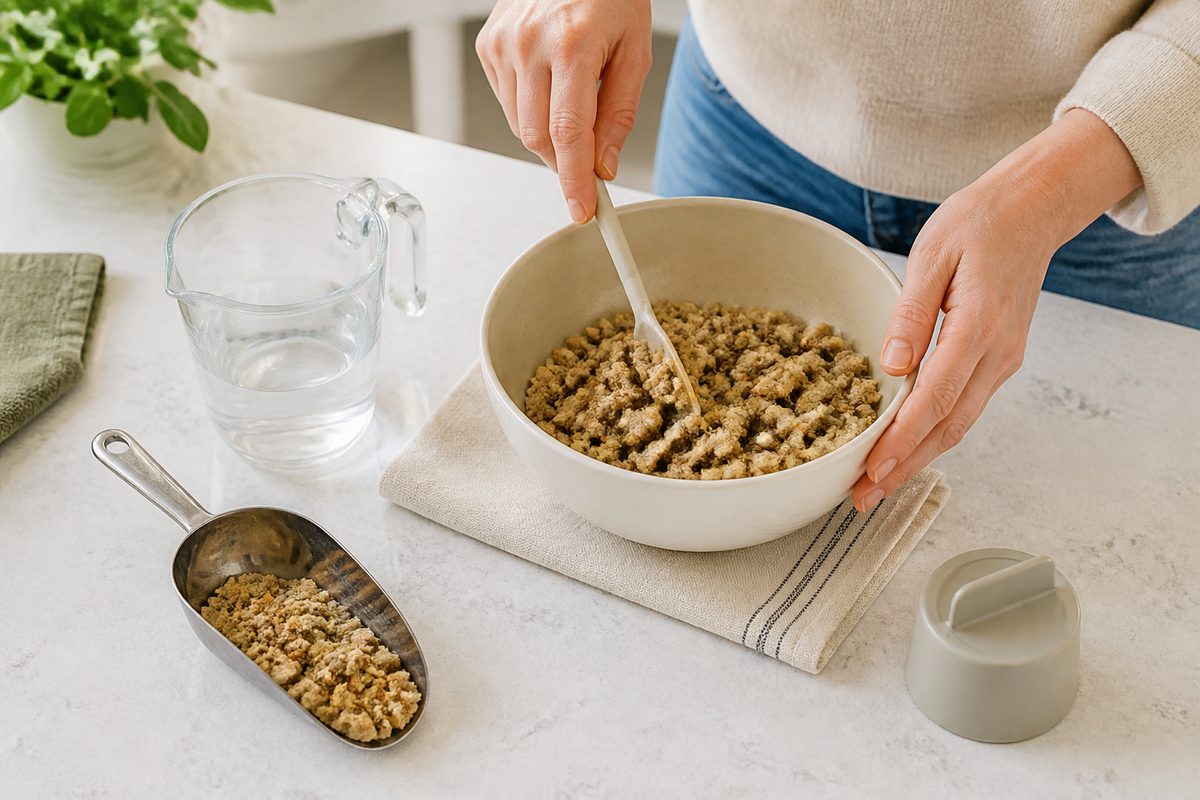
- Clear directions: one scoop at mealtime once daily, wet or dry, with a tip to wet kibble slightly and mix thoroughly.
- Age floor stated: suitable for dogs over 12 weeks old.
- Honest expectations: the brand describes support building over the first three months of consistent daily use.
Size-specific active ingredients per daily scoop
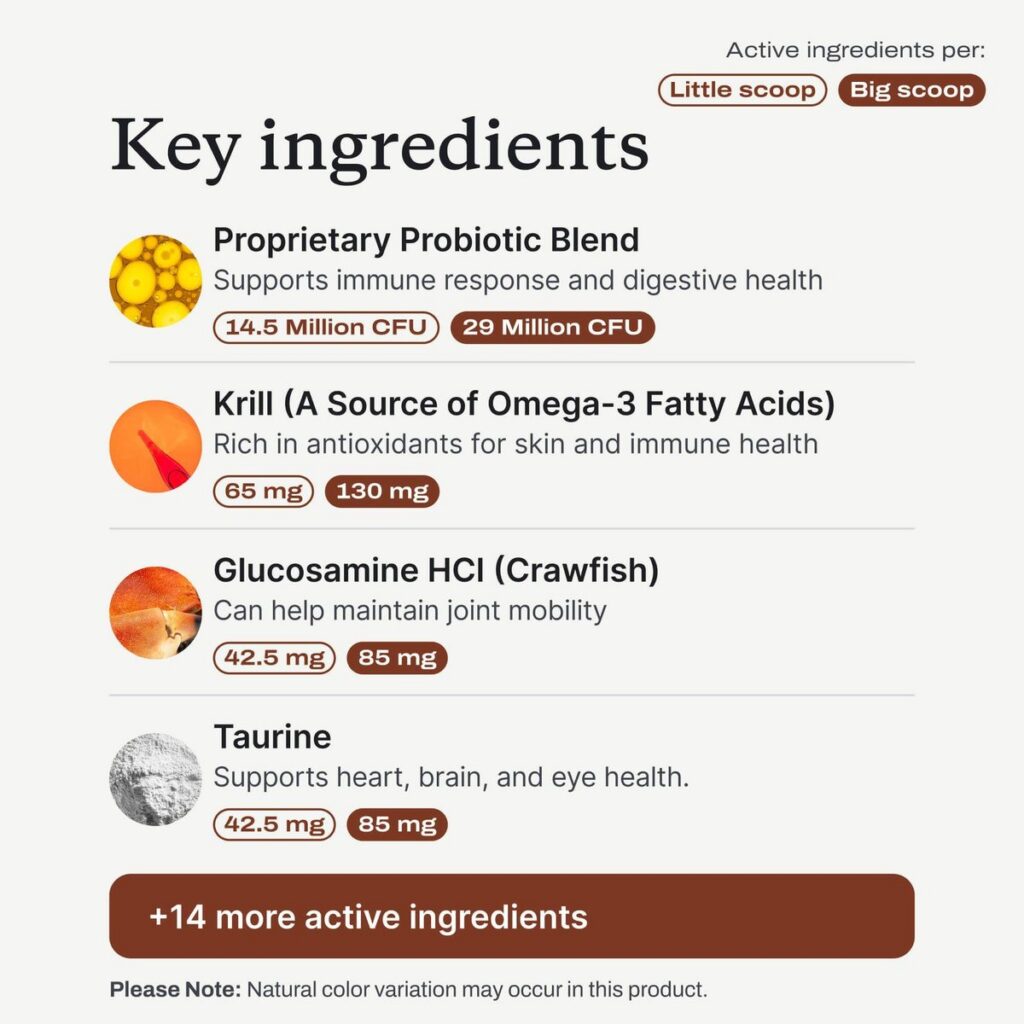
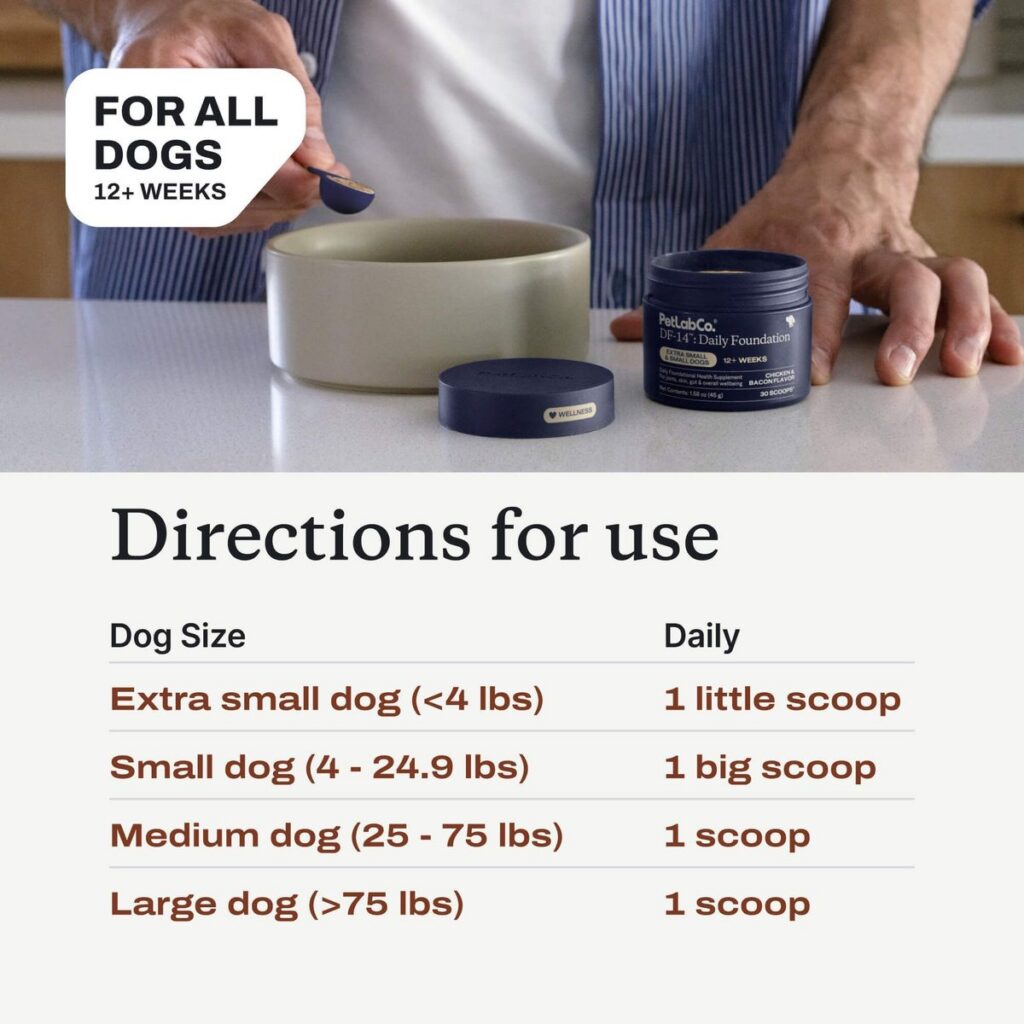
The table below is a size-specific active-ingredient specification drawn from the current label. Amounts are per daily serving for each tub size: extra small (0.75 g little scoop, dogs under 4 lbs), small (1.5 g big scoop, 4 to 24.9 lbs), medium (2 g scoop, 25 to 75 lbs), and large (3 g scoop, over 75 lbs).
| Active ingredient | Extra small, 0.75 g | Small, 1.5 g | Medium, 2 g | Large, 3 g |
|---|---|---|---|---|
| Probiotic blend (Bacillus subtilis, Bifidobacterium animalis subsp. lactis, Saccharomyces boulardii) | 14.5 million CFU | 29 million CFU | 66 million CFU | 100 million CFU |
| Krill (a source of omega-3 fatty acids) | 65 mg | 130 mg | 380 mg | 480 mg |
| Glucosamine HCl (crawfish) | 42.5 mg | 85 mg | 200 mg | 325 mg |
| Taurine | 42.5 mg | 85 mg | 200 mg | 315 mg |
| Sodium hexametaphosphate | 20 mg | 40 mg | 70 mg | 125 mg |
| Postbiotic yeast blend (Saccharomyces cerevisiae, Cyberlindnera jadinii) | 18 mg | 36 mg | 80 mg | 127 mg |
| Chondroitin sulfate (bovine) | 15 mg | 30 mg | 70 mg | 111 mg |
| Astragalus extract | 10 mg | 20 mg | 45 mg | 75 mg |
| L-carnitine | 10 mg | 20 mg | 45 mg | 75 mg |
| Prebiotic fructooligosaccharides (FOS) | 10 mg | 20 mg | 45 mg | 75 mg |
| Cranberry extract | 6.5 mg | 13 mg | 30 mg | 45 mg |
| Vitamin C | 4.25 mg | 8.5 mg | 18 mg | 30 mg |
| Vitamin E (d-a-tocopheryl succinate) | 2.0 mg | 4.0 mg | 8.0 mg | 14 mg |
| Beta-carotene | 1.65 mg | 3.3 mg | 6.5 mg | 12 mg |
| Lactoferrin | 1.0 mg | 2.0 mg | 4.0 mg | 7.0 mg |
Inactive ingredients are apple pectin, bacon flavor, dried brewer’s yeast, and hydrolyzed chicken liver flavor. Dogs with a known chicken, yeast, shellfish, or bovine sensitivity should have the panel reviewed by a veterinarian first.
Current label directions and cautions
The current DF-14 Daily Foundation directions are simple, and following the label directions exactly matters more than any other part of the decision:
- Extra small dogs, under 4 lbs: 1 little scoop daily from the small tub.
- Small dogs, 4 to 24.9 lbs: 1 big scoop daily from the small tub.
- Medium dogs, 25 to 75 lbs: 1 scoop daily from the medium tub.
- Large dogs, over 75 lbs: 1 scoop daily from the large tub.
- How to give it: one scoop at mealtime once daily, mixed into wet or dry food; for kibble, wet it slightly and mix the powder in thoroughly.
- Storage: keep in a cool, dry place away from direct sunlight and reseal the tub after each use. The scoop may have settled to the bottom of the tub.
The label carries these cautions, and each one is a reason to involve your veterinarian rather than a reason to avoid the product:
- If the animal’s condition worsens or does not improve, stop administration and consult your veterinarian.
- Safe use in pregnant animals or animals intended for breeding has not been proven.
- An examination from a veterinarian is recommended prior to using this product.
- Absorption of drugs taken simultaneously may be delayed.
- Not for human consumption; keep out of reach of children and animals; in case of accidental overdose, contact a health professional immediately.
Price checked September 14, 2026: the official product page displayed $37.44 for a single tub and $29.95 on a subscription. Prices, promotions, and tub selections can change, so confirm the total at checkout. For a line-by-line, ingredient-by-ingredient look at this product on its own, Petful’s full DF-14 review covers the evidence behind each active in more depth than a buyer’s guide needs to.
All-in-one versus stacking targeted supplements
The stack versus single formula decision is the one most owners actually face, and it is rarely all or nothing. The table below compares the two approaches on the factors that change the outcome for a real dog in a real household.
| Decision factor | Single all-in-one formula | Stacking targeted supplements |
|---|---|---|
| Number of products to buy and give | One tub, one scoop, one routine | Two to five products, each with its own schedule |
| Amount per system | Moderate, pre-balanced by the manufacturer | Adjustable, can be set high for one system |
| Precision for a defined need | Lower; the balance is fixed | Higher; each ingredient is chosen for a reason |
| Consistency in daily life | High; hard to forget one scoop | Lower; the second and third product are the ones that get skipped |
| Risk of doubling an ingredient | Low if it is the only supplement | Higher; overlap between products is common |
| Cost predictability | One tub per dog per month | Varies with each product and its refill cadence |
| Troubleshooting a reaction | Simpler if it is the only change | Harder; more products to rule in or out |
| Best suited to | Healthy dogs needing broad, mild support | Dogs with one or two defined, veterinarian-identified needs |
When a single formula is the right call
Choose a single formula when the dog is generally healthy, the goal is everyday support across several systems, and the household values a routine that will actually be kept. This is also the better choice when the dog is new to supplements, because a single change is easier to evaluate for tolerance than several changes at once.
When stacking earns its complexity
Choose stacking when a veterinarian has identified one system that needs a higher, targeted amount than a foundation formula carries. A large senior dog with a mobility plan, for example, may need a dedicated joint product on top of a base formula, and a dog with a specific dental plan may need a dedicated oral-care powder. PetLabCo.® designs DF-14 Daily Foundation to work alongside its other products, and its full supplement range is organized by system so that a targeted add-on can be matched to the gap. VetStreet’s broader look at PetLabCo. products for dogs walks through those targeted formulas one by one.
The foundation-plus-one approach
For many dogs the best answer is both: one all-in-one as the base, plus a single targeted product for the one system that needs more. That keeps the routine simple, keeps the cost predictable, and still allows precision where it matters. Bring both labels to the veterinarian so the combined intake of shared ingredients such as glucosamine, omega-3s, or probiotics can be checked before you start.
Ingredients that earn a place in a daily formula
Are there any dog supplements that actually work? Yes, though the honest answer is ingredient by ingredient rather than product by product. Omega-3 fatty acids have the strongest broader evidence of any supplement category in canine joint care; the 2022 AAHA guidelines rated evidence low for every nutraceutical evaluated for osteoarthritis signs except omega-3s. Probiotics have real but strain-specific evidence for digestive support. Glucosamine and chondroitin have mixed results but a long record of use for joint structure support. Antioxidants, taurine, and L-carnitine have clear physiological roles. What works, in practice, is a formula that combines the categories with evidence at transparent amounts and is given consistently.
Searches for vet recommended supplements for dogs, the best dog supplements, the best dog vitamin and mineral supplement, or a top 10 multivitamin for dogs all circle the same underlying question: which ingredients have earned a place in a daily scoop, and at what amount. Veterinarians tend to recommend by category rather than by brand, which is why the label-check list matters more than any ranking. One shortcut is worth ruling out early: a dog is not a candidate for a human multivitamin, because human products are dosed for people and some carry sweeteners or nutrient levels that are inappropriate for a dog. Give dogs products formulated and labeled for dogs, in the amount labeled for their weight, and judge those products by the categories below.
The categories worth looking for
When evaluating the best dog supplements in the all-in-one space, these are the ingredient groups that justify their place in a daily scoop:
- Probiotics, prebiotics, and postbiotics: named organisms with a stated CFU count, a prebiotic fiber such as FOS to feed them, and a postbiotic yeast blend to help maintain gut balance and support normal stool consistency.
- Omega-3 fatty acids: krill or fish oil as a source of EPA and DHA, supporting skin, coat, a normal inflammatory response, and cognitive function.
- Glucosamine HCl and chondroitin sulfate: the familiar pairing for helping maintain cartilage structure, synovial fluid, and comfortable everyday movement.
- Taurine and L-carnitine: amino-acid-related nutrients that support healthy cardiac function and normal metabolic processes.
- Antioxidants: vitamin C, vitamin E, beta-carotene, and botanicals such as astragalus, supporting cells against oxidative stress and supporting healthy aging.
- Lactoferrin: a bioactive protein included for immune support.
- Sodium hexametaphosphate: a mineral compound that helps target tartar accumulation between brushings.
- Cranberry extract: included for urinary tract support.
Every one of those categories appears in DF-14 Daily Foundation, which is a large part of why it leads this guide.
Vet recommended supplements for dogs versus a multivitamin
Owners searching for vet recommended supplements for dogs often land on lists of the top 10 multivitamin for dogs and assume an all-in-one is the same thing. It is not, and the distinction matters when you choose:
- A multivitamin is nutritional supplementation. It adds essential vitamins and minerals, and the best dog vitamin and mineral supplement is one a veterinarian selects when a specific diet or condition calls for it.
- An all-in-one is functional support. It delivers targeted ingredients for gut health, mobility, skin, immune function, and healthy aging rather than a full vitamin and mineral profile.
- Because their intended uses differ, PetLabCo.® notes that DF-14 Daily Foundation and a multivitamin can be used together as part of a daily wellness routine, with veterinary approval.
A related question is whether a dog is human multivitamin-safe, and the answer stays no. The Merck Veterinary Manual is the reference to start from when a veterinarian suspects a true nutrient gap, and the fix will be a canine product at a canine dose, not a product from the family medicine cabinet.
What an all-in-one cannot do
The best all-round supplement is still a supplement. Being clear about its limits is what keeps the decision honest and the dog safe.
The boundary, in one place. An all-in-one supports normal function. It does not replace veterinary care, and it is not a substitute for a balanced diet, a therapeutic diet, or any medication your veterinarian has prescribed. If a dog has symptoms, the first step is an examination, not a scoop.
Framed as fit and limitations rather than faults, here is what a broad daily formula is not designed to do:
- It is not complete nutrition. A supplement adds to a complete and balanced food; it never replaces it. The FDA’s animal food regulatory program and state feed officials define what a complete food must contain, and no supplement meets that standard.
- It is not a complete multivitamin. Selected vitamins and antioxidants do not add up to a full vitamin and mineral profile.
- It does not diagnose. Signs of a potential health concern need checking by a veterinarian, and a supplement should never be used as an at-home test of whether a problem is serious.
- It does not replace targeted care. A dog with a defined condition may need a higher amount of one ingredient, a therapeutic diet, or medication that a foundation formula was never meant to provide.
- It has an evidence limit. Ingredient research supports the categories in a broad formula; it does not prove that any finished blend delivers every listed benefit in every dog. Results vary, and a good product page says so.
Signs that call for a veterinary visit, not a supplement change
The DF-14 Daily Foundation label directs owners to stop the product and consult a veterinarian if the animal’s condition worsens or does not improve. As general veterinary guidance, contact your veterinarian promptly, and do not adjust or add supplements on your own, if you see:
- Persistent vomiting or diarrhea, or blood in the stool
- Limping, reluctance to rise, or a sudden change in mobility
- Ongoing itching, hair loss, or skin sores
- Appetite loss, unexplained weight change, or lethargy
- Increased thirst or urination
- Any sign that worsens or does not improve after starting a new product
Every one of those is a reason a label tells you to stop and consult a veterinarian. Treat that instruction as part of the product, not fine print.
How to introduce a daily supplement
A good product introduced badly produces confusing results. These steps apply to any all-in-one, and they map directly onto the DF-14 Daily Foundation label.
- Confirm suitability with your veterinarian. Bring the full active and inactive panel, the dog’s diet, and every other supplement or medication. Ask specifically about spacing the supplement from medication, because absorption of drugs taken at the same time may be delayed.
- Match the tub and scoop to the dog’s weight. Weigh the dog rather than guessing, then order the size band the label specifies. Do not borrow a scoop from another tub size.
- Give it at mealtime, once daily. Mix the powder into wet food, or wet kibble slightly and mix thoroughly so the full scoop is eaten.
- Change one thing at a time. Do not start a new food, a new treat, and a new supplement in the same week. If the dog’s stool, appetite, or skin changes, you want to know which change caused it.
- Keep a short log. Note the start date, the daily amount, stool quality, appetite, energy, and any reason you started. Two lines a day give the veterinarian more useful information than memory.
- Allow a realistic window. Support builds over weeks of consistent use. Do not increase the amount because a change is not obvious, and do not double up after a missed day.
- Store it correctly. Cool, dry, out of direct sunlight, resealed after each use, and out of reach of children and pets.
- Reassess at each veterinary visit. Needs change with age, weight, and health. A supplement that fits a three-year-old dog may need a targeted add-on, or a different plan, at nine.
If any sign worsens or does not improve, stop the product and consult your veterinarian. That instruction sits on the label for a reason, and it is the safest way to use any supplement long term.
Frequently Asked Questions
An all-in-one supplement cannot replace a multivitamin, and it is not designed to. An all-in-one covers several systems in one scoop with functional ingredients such as probiotics, omega-3s, glucosamine, and antioxidants, but it is not a complete vitamin and mineral profile. A multivitamin exists for nutritional supplementation when a veterinarian identifies a need. The two serve different purposes and, with veterinary approval, can be used together as part of the same daily routine.
Dogs can take an all-in-one supplement every day long term when it is a foundation formula such as DF-14 Daily Foundation, which is designed for daily use as part of an ongoing routine; consistency is what makes it useful. Long term does not mean unattended, though. Reassess at each veterinary visit, because weight, age, diet, and medications change what a dog needs, and stop and consult your veterinarian if any condition worsens or does not improve.
An all-in-one supplement is often enough for a senior dog as a starting foundation, but rarely as the whole plan. A broad formula supports gut, joint, skin, immune, and healthy-aging needs at moderate amounts, which suits many older dogs. For a senior with reduced mobility, targeted joint support may still be needed on top of the base, along with the more frequent examinations that senior care guidelines recommend. Let the veterinarian decide what to add.
Whether you can give an all-in-one supplement with medication depends on the medication, so ask the prescribing veterinarian before combining them. Labels such as the one on DF-14 Daily Foundation warn that absorption of drugs taken at the same time may be delayed, so your veterinarian may tell you to space it from medication by a set interval. The right gap depends on the specific drug, so do not build a timing schedule by guesswork.
All-in-one supplements can work for puppies once the puppy meets the label’s age floor. Check the label age floor before buying; DF-14 Daily Foundation is intended for dogs over 12 weeks. Remember that puppy growth diets come first: a complete and balanced growth formula supplies the nutrition a puppy needs, and a supplement only adds support on top of it. Ask your veterinarian before starting any product in a growing dog.
Sources
- Merck Veterinary Manual. Nutritional Requirements and Related Diseases of Small Animals. Accessed September 14, 2026.
- American Animal Hospital Association. 2023 AAHA Senior Care Guidelines for Dogs and Cats. Accessed September 14, 2026.
- American Animal Hospital Association. 2022 AAHA Pain Management Guidelines for Dogs and Cats. Accessed September 14, 2026.
- U.S. Food and Drug Administration. Animal Food and Feed Regulatory Program Standards. Accessed September 14, 2026.
- PetLabCo.® DF-14 Daily Foundation: current product facts, directions, cautions, and price. Accessed September 14, 2026.
PetLabCo.® products are not intended to diagnose, treat, cure, or prevent any disease. Consult your veterinarian before starting supplements, especially if your dog has a health condition, takes medication, is pregnant or nursing, or has persistent symptoms.