Fresh Dog Food for Large Breed Puppies: Growth, Calcium, and Portion Rules
Published on November 03, 2026
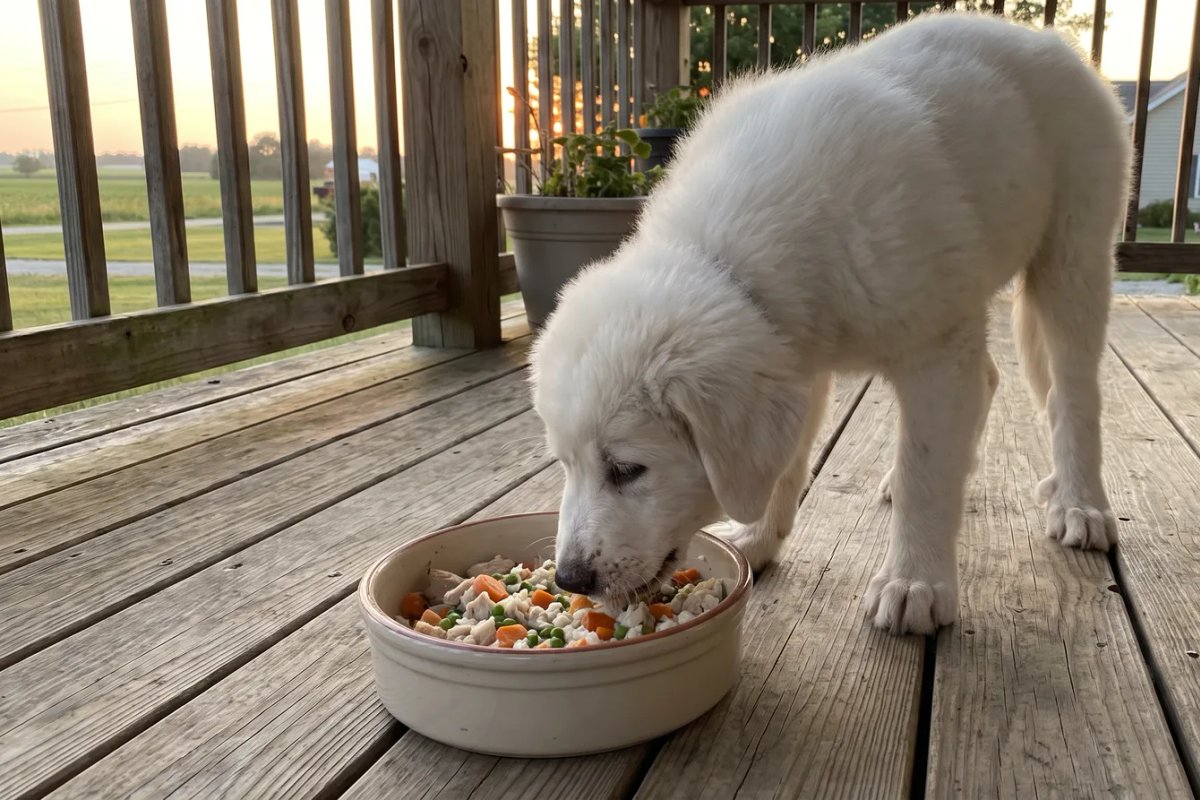
Fresh dog food for large breed puppies can be a sound choice, but only when the recipe is formulated for the way big puppies grow. A future 80-pound Labrador, Shepherd, or Great Dane mix is building a large skeleton quickly, and the wrong balance of calcium or too many calories during that window can affect joints for life. The format of the food, fresh, canned, or dry, matters far less than the numbers behind it.
This guide walks through what makes large breed puppies different, which nutrients to check, how to read an all-life-stages label that covers large breed growth, how to portion a fresh diet without overfeeding, and when to move to adult food. We also show where gently cooked fresh recipes fit, using the published label details for Get Real, Chewy’s fresh dog food line.
This article is sponsored by Get Real, Chewy’s gently cooked fresh dog food line. Vetstreet may earn a commission if you purchase through links in this article.
Key Takeaways
- Fresh food is fine for a large breed puppy only if the label says it meets AAFCO requirements for growth of large size dogs (70 lb or more as an adult) or for all life stages including that growth.
- Calcium matters more than protein: too much calcium, including supplements added to a complete diet, raises the risk of developmental orthopedic disease.
- Portion control is the second rule: feed to a lean body condition, weigh your puppy often, and adjust rather than following a fixed chart.
- Most large breed puppies move to adult food at 12 to 24 months, depending on expected size; your veterinarian can confirm the timing.
- Switch foods gradually over 7 to 10 days, or 10 to 14 days for a puppy with a sensitive stomach.
Fresh dog food for large breed puppies: what matters most
Yes, a large breed puppy can eat fresh dog food, as long as the recipe is complete and balanced for growth of large size dogs and you keep portions controlled. Those two conditions, the right nutrient profile and controlled growth, decide whether any food is a good fit, whether it arrives as kibble, a can, or a gently cooked pack from the freezer.
Large breed puppy food exists as a category because the rules for big puppies are narrower than for small ones. It is formulated with tighter limits on calcium and a more moderate calorie density, so a puppy grows at a steady pace instead of as fast as possible. Most major brands sell one, but only the label statement tells you whether a food was actually formulated for large breed growth.
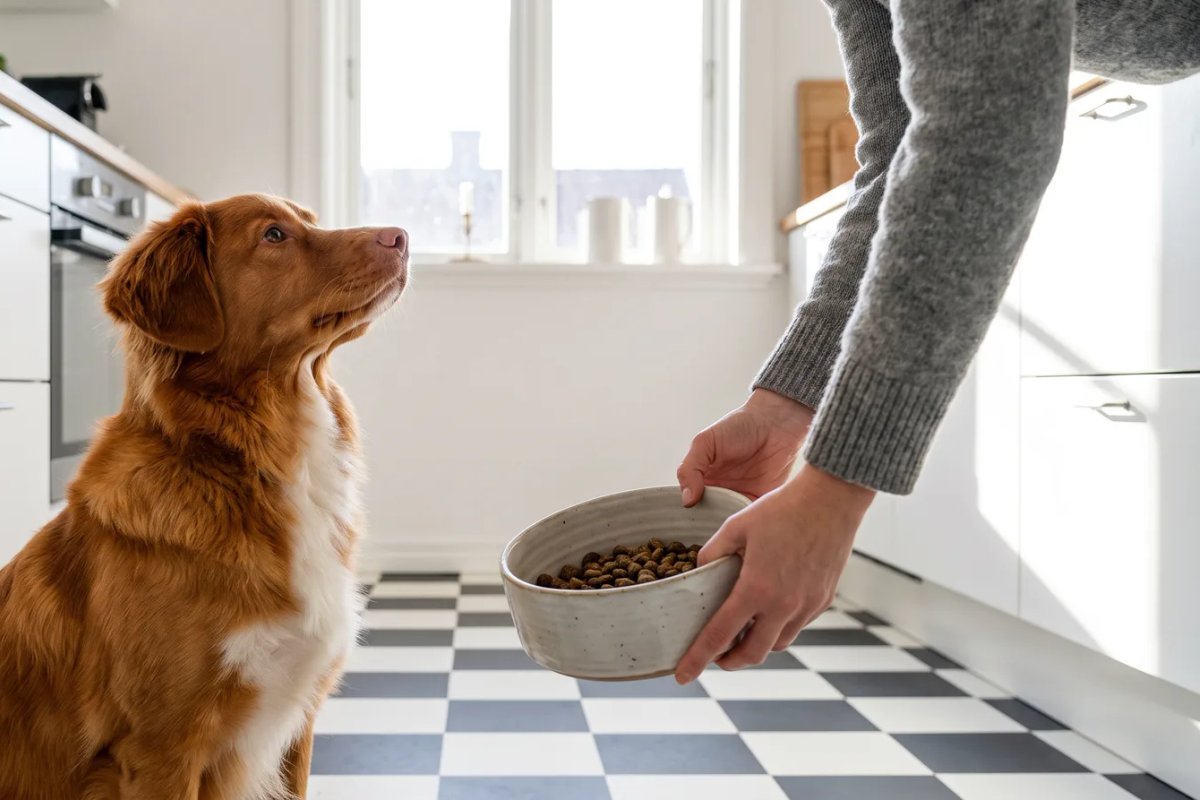
Fresh food brings a few practical advantages for this age group. It is high in moisture, which many puppies find appealing, and pre-portioned packs make it easier to feed the same measured amount every day. Portion control is the habit that protects a growing large breed dog, so a format that encourages measuring is useful. If you want to see how your puppy takes to gently cooked food before committing to a plan, the Get Real Sampler Pack includes the chicken, beef, and turkey recipes.
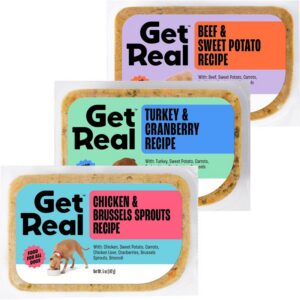
Get Real Sampler Pack, Beef, Chicken & Turkey Gently Cooked Fresh Dog Food, 6 pack bundle (2 of each recipe). Let your growing puppy try all three gently cooked recipes before you settle on one for the long stretch of large breed growth.
What you should check is the same for every format:
- A nutritional adequacy statement that covers growth of large size dogs, or all life stages including that growth.
- Calcium and phosphorus within the AAFCO range for large breed growth, with no supplements added on top.
- A calorie density you can portion accurately against your puppy’s body condition.
- A plan for moving to adult food at the right age for your puppy’s expected size.
Why large breed puppies need different growth rules
In feeding terms, a large breed puppy is one expected to weigh about 70 pounds or more as an adult, the threshold AAFCO uses for its growth of large size dogs category. Adult weight matters more than breed name. Labrador and Golden Retrievers, German Shepherds, Bernese Mountain Dogs, Great Danes, Mastiffs, and many large mixed breeds fall into it. If you are unsure, ask your veterinarian to estimate your puppy’s adult size from parents, breed mix, and growth so far.
The real difference is how fast the skeleton is allowed to grow. A Great Dane may multiply its birth weight many times over within its first year, and its long bones grow at growth plates that stay open longer than in small dogs. When a large breed puppy eats too much energy or too much calcium during that period, bone and cartilage can develop abnormally. Veterinarians group these problems as developmental orthopedic disease, which includes conditions such as osteochondrosis and contributes to hip dysplasia and elbow dysplasia in predisposed breeds. Genetics still matter most for hip dysplasia, but diet is one of the few factors owners control.
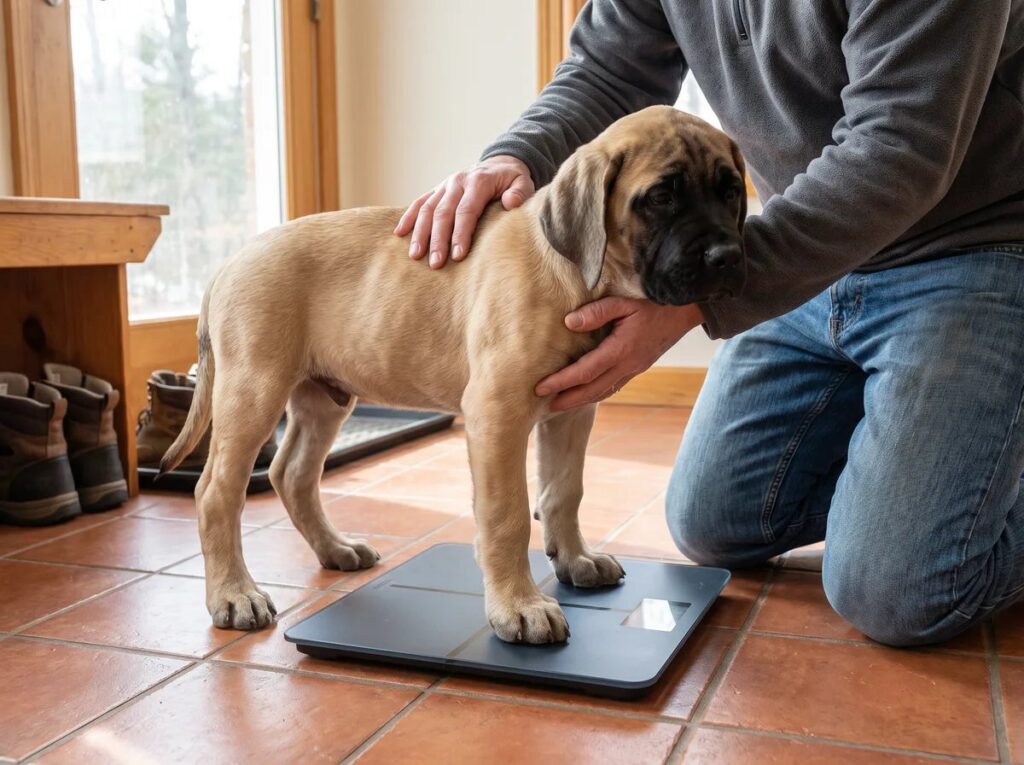
- Calories: excess energy speeds growth and adds weight on soft, developing joints.
- Calcium: large breed puppies absorb a large share of the calcium they eat, so excess is hard for their bodies to regulate.
- Body weight: a lean puppy places less load on growing hips and elbows.
- Exercise: forced, repetitive exercise adds stress during the same window.
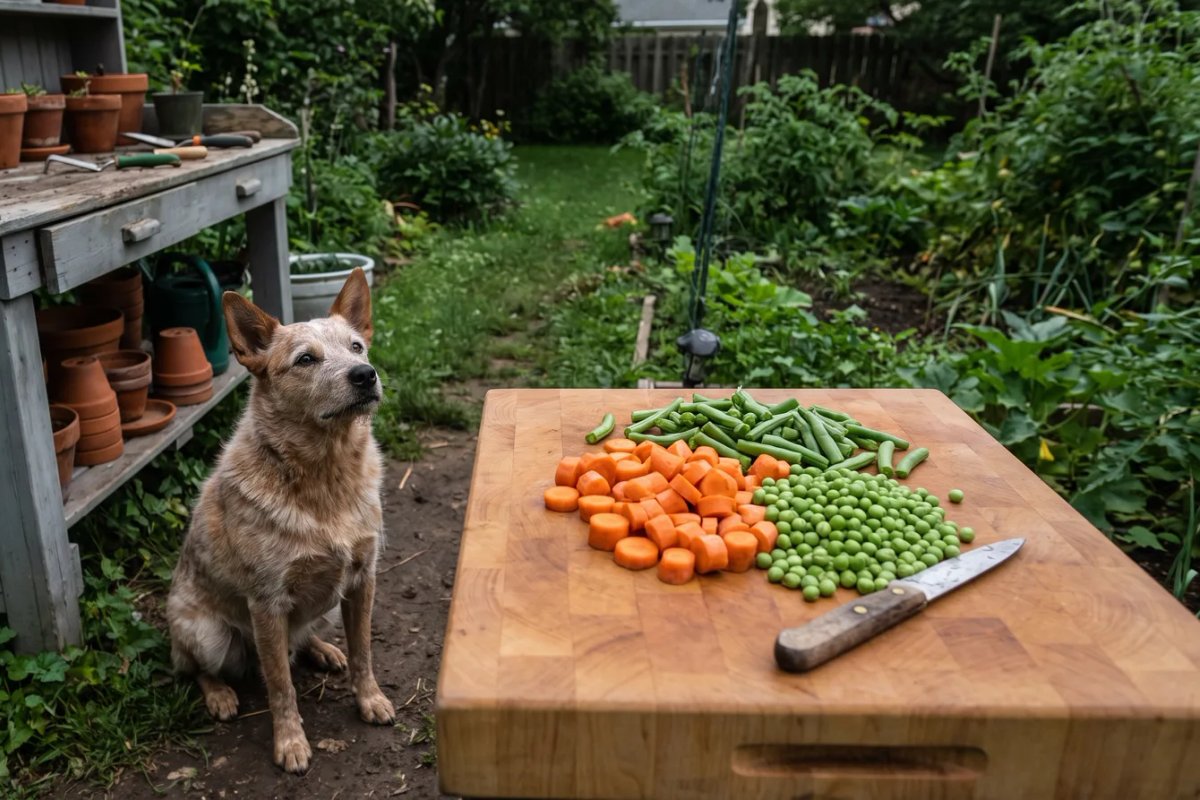
The difference between large breed and regular puppy food is not marketing language. Regular puppy food is formulated to support fast growth in dogs that will finish small or medium. A food formulated for large breed growth sets a lower ceiling on calcium and is portioned to keep the puppy lean. Calorie density helps here: the Get Real Chicken & Brussels Sprouts Recipe lists the fewest calories per pack of the three recipes in the line (428 kcal per 12 oz pack), so portions stay generous in volume while your puppy stays lean.
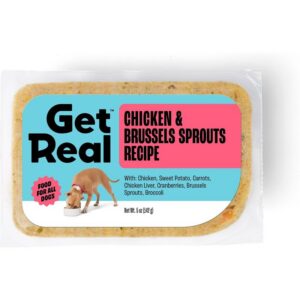
Get Real Chicken & Brussels Sprouts Recipe. The fewest calories per pack in the line, a practical match for a big puppy who needs to stay lean while growing.
Exercise is part of the same picture. Free play on soft ground is healthy, while long runs and repetitive jumping are better saved for later, as VetStreet explains in its guide on how much exercise is too much for a puppy. For the wider set of everyday issues that come with giant breeds, see big dog basics.
A long-term Labrador Retriever study published in the Journal of the American Veterinary Medical Association followed littermates fed either freely or 25 percent less from puppyhood. The leaner dogs lived a median of about two years longer and developed signs of hip osteoarthritis later. That is a strong reason to treat portion control as a health measure, not a cosmetic one.
Calcium, phosphorus, and calories: the numbers to check
Calcium is the single most important nutrient to get right for a large breed puppy. AAFCO’s dog food nutrient profiles set a calcium minimum of 1.2 percent of dry matter for growth and a maximum of 1.8 percent for foods intended for growth of large size dogs, compared with 2.5 percent for other growth foods. Phosphorus has a 1.0 percent minimum, and the calcium to phosphorus ratio should sit between 1:1 and 2:1. The AAFCO site explains how these profiles underpin a label’s nutritional adequacy statement.
You will rarely see calcium on the front of a bag, and many fresh food brands do not print it at all. That is why the adequacy statement carries so much weight: a recipe that is labeled for growth of large size dogs has been formulated to keep calcium and phosphorus inside that narrower range. If you want the actual numbers, ask the company for a typical nutrient analysis on a dry matter basis.
Do not add calcium supplements, bone meal, or calcium-rich extras to a complete and balanced puppy food. Excess calcium is a recognized risk factor for developmental orthopedic disease in large breed puppies.
The most common way owners push calcium too high is with good intentions. Calcium supplements, dairy treats, and chews added to a complete food all add up, and a large breed puppy cannot simply excrete the excess. If your puppy eats a complete and balanced recipe formulated for large breed growth, it already contains the calcium it needs. Talk with your veterinarian before adding any supplement, including joint products.
Calories are the other number to watch. Fresh foods are roughly three quarters water, so their calories by weight look low next to kibble. That is not a problem; it simply means a fresh portion weighs more than a dry one for the same energy. What matters is comparing recipes within the same format. As listed on each pack and Chewy’s product pages, the three Get Real recipes provide 428 (Chicken), 451 (Beef), and 474 (Turkey) kcal per 12 oz pack.
| Recipe | Crude protein (min) | Crude fat (min) | Calories per 12 oz pack |
|---|---|---|---|
| Chicken & Brussels Sprouts | 10% | 8.5% | 428 |
| Beef & Sweet Potato | 9% | 7% | 451 |
| Turkey & Cranberry | 8% | 10% | 474 |
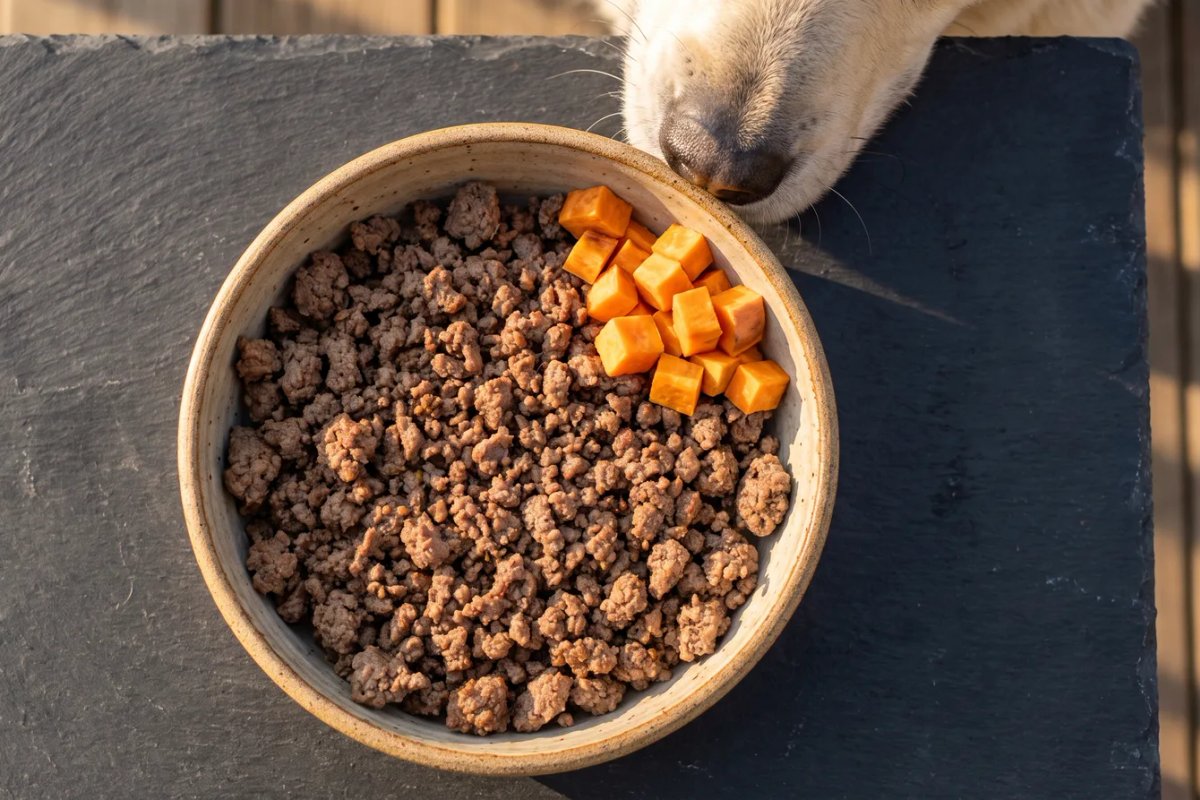
That spread matters for a growing large breed dog. A 12 oz pack of the turkey recipe lists 46 more kcal than a 12 oz pack of the chicken recipe. Switching recipes at the same number of packs can change your puppy’s daily energy by about 10 percent, so recheck portions whenever you change recipes. The guaranteed analysis on each label lists minimum protein and fat and maximum fiber and moisture, but those are guarantees, not actual nutrient levels, so use the calories per pack to compare energy. The Get Real Beef & Sweet Potato Recipe sits in the middle at 451 kcal per 12 oz pack, a steady default while you learn your puppy’s portions.
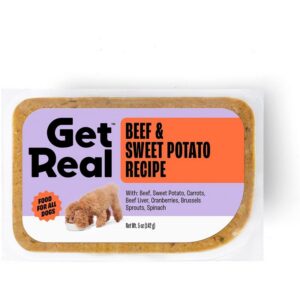
Get Real Beef & Sweet Potato Recipe. Middle-of-the-range calories per pack and a fully published ingredient list make this a steady starting recipe for a growing large breed puppy.
Reading an all-life-stages label for large breed growth
Every complete pet food sold in the United States carries a nutritional adequacy statement. For a large breed puppy, it is the most important sentence on the package. A food labeled only for adult maintenance is not appropriate for a growing puppy, and a food labeled for growth without the large size qualifier may contain more calcium than a big puppy should eat.
The wording you are looking for follows AAFCO’s model language. A food that covers large breed puppies will say it is formulated to meet the nutritional levels established by the AAFCO Dog Food Nutrient Profiles for growth, or for All Life Stages, “including growth of large size dogs (70 lb. or more as an adult).” AAFCO explains this phrasing in its consumer guide to understanding pet food. A food formulated for all life stages without that phrase is not intended for large breed growth. For a deeper look at what the all-life-stages claim does and does not mean, see this guide to all life stages dog food.
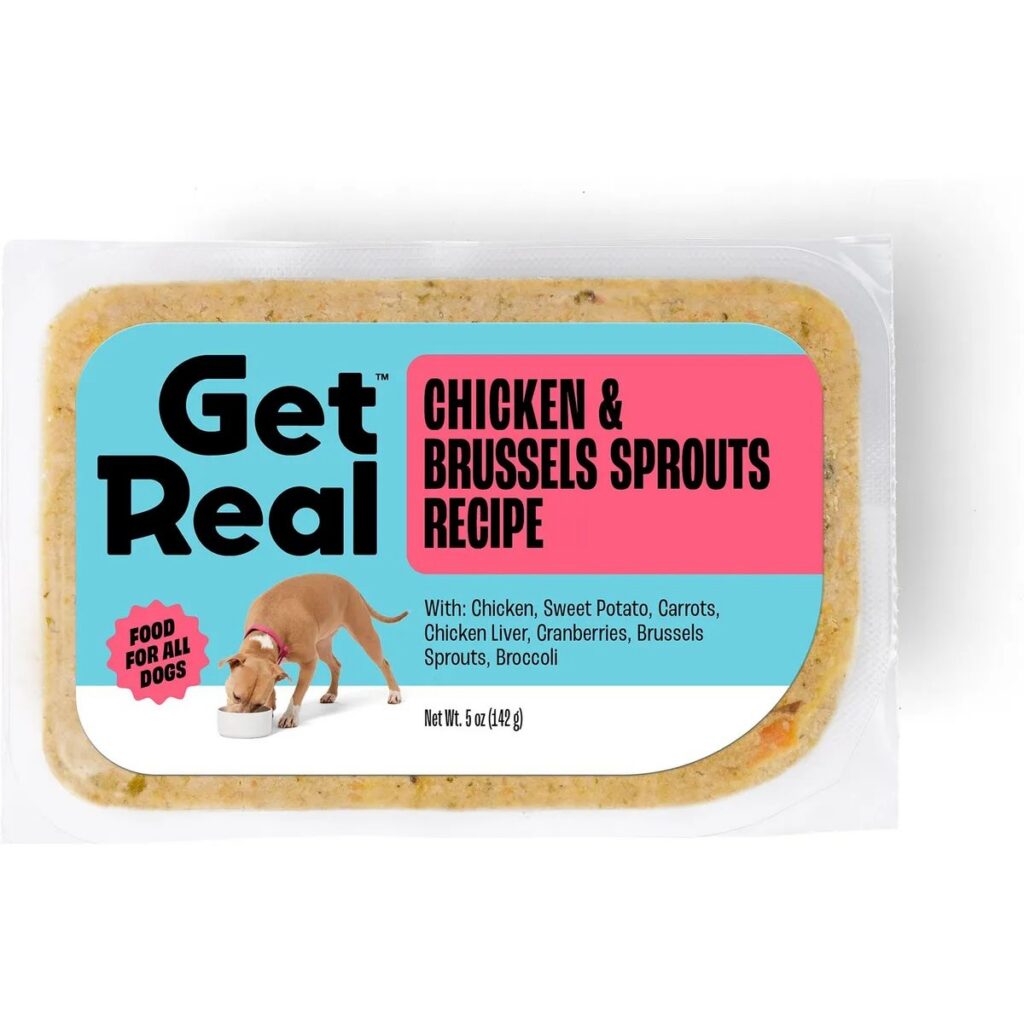
Here is a simple label check you can run on any food, fresh or dry, before your large breed puppy eats it:
- Growth statement: the label names growth of large size dogs, or all life stages including growth of large size dogs (70 lb. or more as an adult).
- Calcium not supplemented: you feed the recipe as the complete diet, with no calcium supplements, bone meal, or high-calcium extras added on top.
- Calories portioned to body condition: you know the calories per pack or per cup and adjust portions to keep your puppy lean.
- Adult switch timing: you have a planned age, set with your veterinarian, to move to an adult or all-life-stages adult portion.
On the first point, Chewy states that all three recipes are formulated with certified pet nutritionists to meet AAFCO nutrient profiles for all life stages, including growth of large size dogs (70 lb or more as an adult). That makes them a fit to consider for a large breed puppy as a complete diet. The Beef & Sweet Potato Recipe is the one with a fully published ingredient list: beef, sweet potato, carrots, beef liver, cranberries, Brussels sprouts, and spinach, followed by vitamins and minerals. For a puppy who does better on turkey than chicken, the Get Real Turkey & Cranberry Recipe carries the same all-life-stages statement.
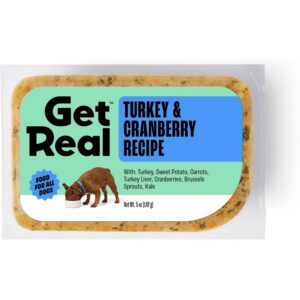
Get Real Turkey & Cranberry Recipe. A turkey recipe whose all-life-stages statement includes growth of large size dogs; portion it to body condition, since it is the most energy-dense of the three.
The recipes use 10 ingredients or less plus vitamins and minerals, with human-grade ingredients gently cooked and then frozen. They come in 12 oz and 24 oz packs for full meals, and in a pre-portioned 5 oz mixer pack for stirring into your puppy’s current food. The 5 oz pack works as a topper or kibble mixer, not as a full meal.
How much to feed a large breed puppy
Growth and weight charts are rough guides only. Two puppies of the same breed and age can need noticeably different amounts depending on genetics, activity, and how much they are still growing. The most reliable approach is to start from an estimate and then adjust based on your puppy’s body condition and regular weight checks.
Veterinarians often start with resting energy requirement, calculated as 70 multiplied by body weight in kilograms raised to the 0.75 power. Growing puppies under about 4 months typically need around three times that figure, and older puppies around twice that until they approach adult size, as summarized in the Merck Veterinary Manual. For a 20 kg (44 lb) puppy past 4 months, that works out to roughly 1,300 kilocalories per day as a starting estimate, not a prescription.
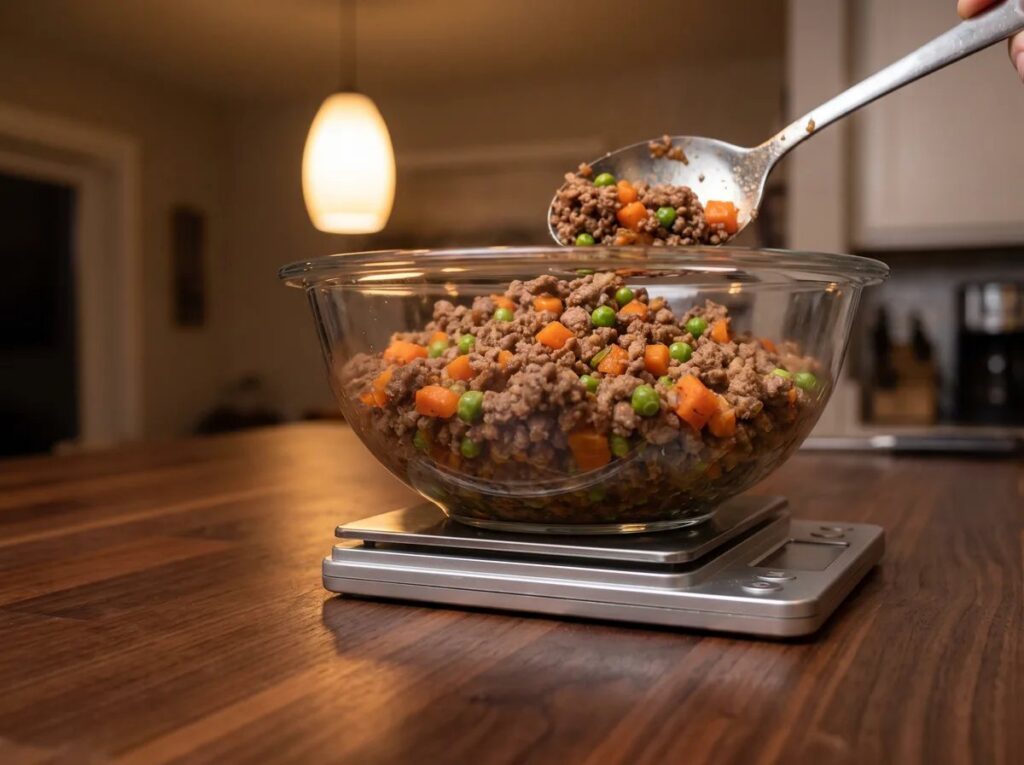
With fresh food, the Get Real online plan sets portions from your puppy’s weight, breed, age, and activity level, and pre-portioned packs make it simple to feed the same amount every day. Treat that as the starting point, then let body condition guide these adjustments:
- Weigh your puppy every two weeks and keep a log.
- Check body condition score: you should feel the ribs easily under a thin layer of fat and see a waist from above.
- Feed three or four meals a day until about 6 months, then two meals a day.
- Count treats within about 10 percent of daily calories.
- Reduce portions slightly if your puppy looks round, and increase them if ribs and hips become prominent.
The World Small Animal Veterinary Association publishes free body condition score charts in its global nutrition guidelines. Aim for a lean 4 to 5 on the 9-point scale throughout growth. Growth spurts are real, and appetite can jump for a few weeks, but a puppy that stays lean during a spurt is growing at a healthy pace. VetStreet’s guide to feeding your puppy covers meal routines and puppy basics, and its article on how to feed a growing puppy from small to large breeds compares needs by size.
Your puppy’s needs also change month to month, so revisit portions after each weigh-in. If you use the 24 oz packs for a big puppy, remember they take 35 to 48 hours to thaw in the refrigerator, compared with 12 to 24 hours for the 5 oz and 12 oz packs, and thawed food should be used within 3 to 5 days.
Choosing a protein for a puppy with a sensitive stomach
Some large breed puppies have a sensitive stomach, with soft stools, gas, or an uneven appetite. The protein source can matter for an individual puppy, but a sensitive stomach is more often about sudden diet changes, rich treats, or eating too fast than about one specific protein.
Start with the basics before changing proteins. Keep treats simple, feed measured meals rather than free choice, and make every food change gradually. If loose stools persist for more than a day or two, or your puppy is vomiting, lethargic, or losing weight, see your veterinarian, because parasites and infections are common in young dogs.
When you do choose a protein, pick one your puppy tolerates and stay with it. If your puppy seems to react to chicken, beef is the verified chicken-free choice in the Get Real line. Lamb- or salmon-based foods can also work for some dogs, provided the label covers large breed growth. A complete list of what each protein brings is in this comparison of chicken vs beef vs turkey for dogs.
- Chicken: mild and familiar, with the fewest calories per pack in the Get Real line.
- Beef: a chicken-free option, often appealing to picky eaters.
- Turkey: a poultry alternative to chicken with the most calories per pack of the three.
For a puppy who does well on turkey and needs a bit more energy, the Get Real Turkey & Cranberry Recipe is the most energy-dense of the three, which means slightly smaller portions for the same calories. Portion it carefully against body condition, because energy-dense food is easy to overfeed.
Whatever protein you choose, the same label check applies. For a sensitive stomach, the best food is still one that covers growth of large size dogs, keeps calcium in range, and is introduced slowly.
When to switch a large breed puppy to adult food
Most large breed puppies move to adult food between 12 and 24 months of age, with large breeds often ready around 12 to 18 months and giant breeds closer to 18 to 24 months. Ask your veterinarian to confirm the timing, because it depends on when your puppy approaches adult size.
The right time to switch depends less on a birthday than on growth. A puppy that has reached about 80 to 90 percent of its expected adult weight and whose growth has slowed is usually ready for adult portions.
With an all-life-stages recipe that includes growth of large size dogs, the switch is simpler. You may not need a new food at all; instead, the portion changes, because an adult dog needs fewer calories per kilogram than a growing puppy. Many dogs gain weight right after growth ends because owners keep feeding puppy-sized portions. For the adult stage, this guide to fresh dog food for large dogs covers portions and joint-friendly habits.
- Large breeds (about 70 to 100 lb as adults): typically 12 to 18 months.
- Giant breeds (over about 100 lb as adults): typically 18 to 24 months.
- All-life-stages recipe: keep the recipe and recalculate the portion with your veterinarian.
How to transition a large breed puppy to fresh food
A gradual switch protects your puppy’s stomach and gives you time to watch stools and appetite. The standard plan runs over 7 to 10 days, and 10 to 14 days for a puppy with a sensitive stomach.
- Days 1 to 3: about one quarter fresh food and three quarters current food.
- Days 4 to 6: about half and half.
- Days 7 to 9: about three quarters fresh food.
- Day 10 onward: fresh food alone, if stools are firm.
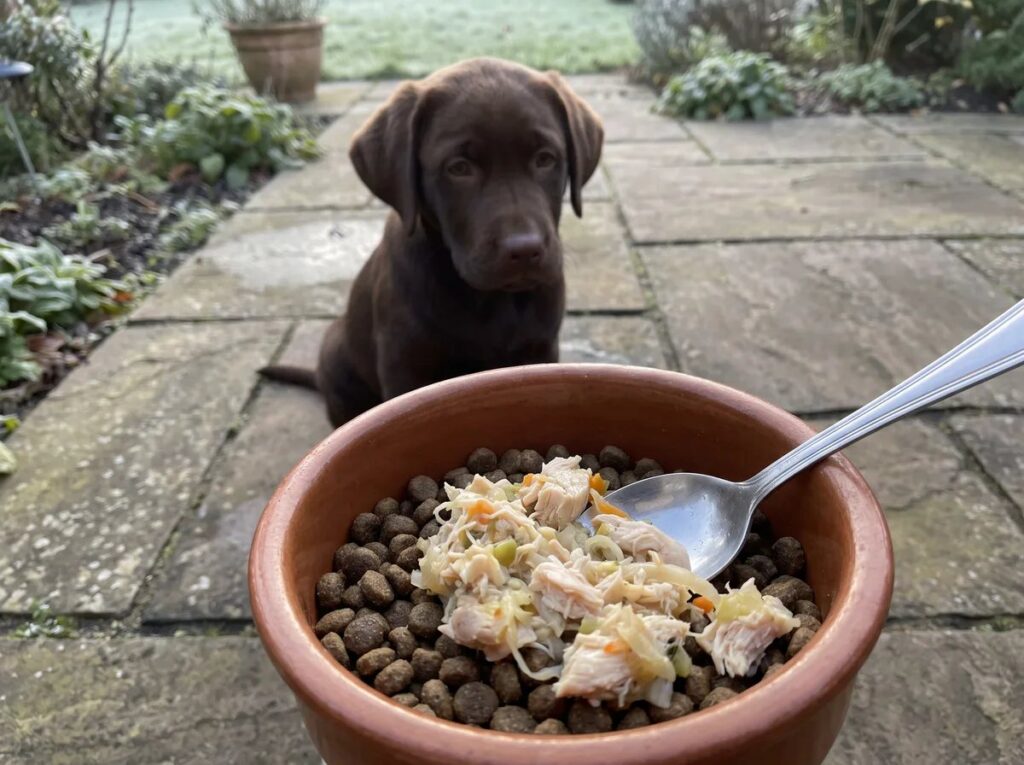
Watch for firm stools, steady energy, and a healthy appetite during the switch. If your puppy has diarrhea for more than a day or two, slow down and return to the previous ratio for a few days. If it does not settle, call your veterinarian.
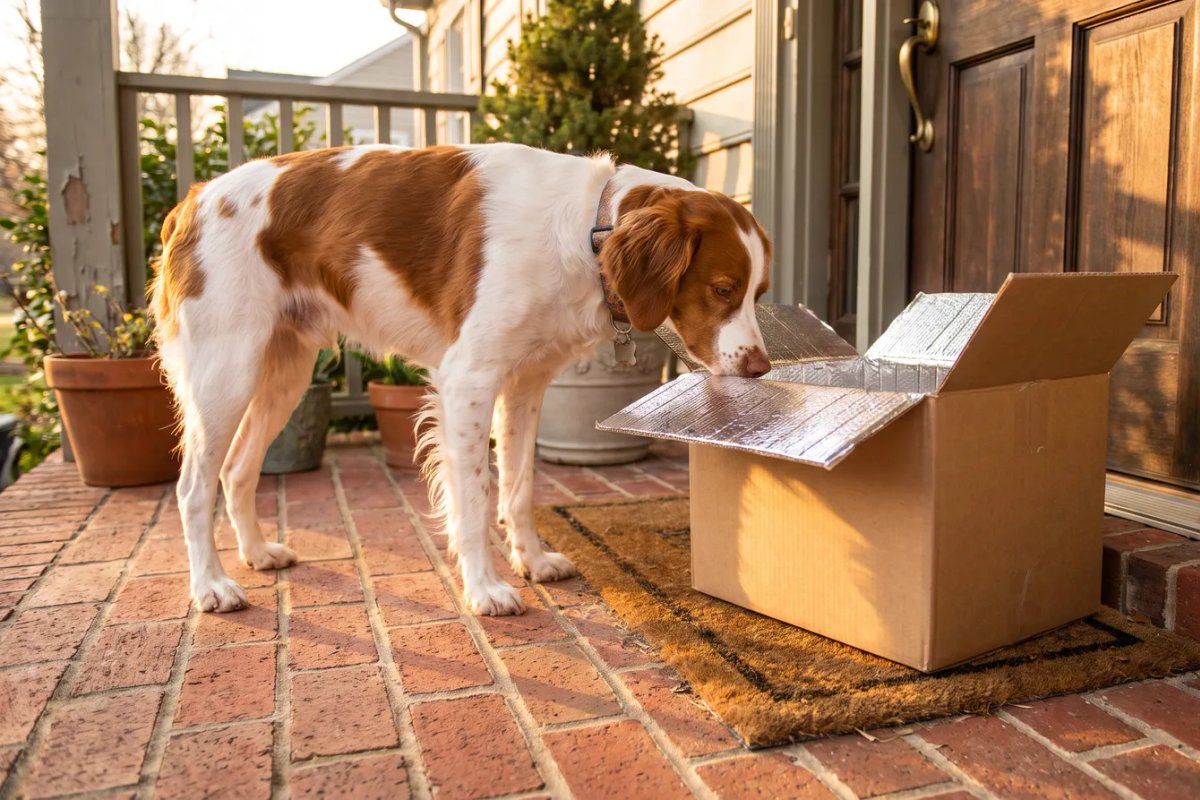
Fresh food adds a thaw and storage plan that kibble does not need. Put packs in the freezer as soon as they arrive. Thaw in the refrigerator for 12 to 24 hours for 5 oz and 12 oz packs, or 35 to 48 hours for 24 oz packs, and use thawed food within 3 to 5 days. Discard food that smells off or has sat at room temperature for more than 2 hours. For a growing large breed puppy eating several meals a day, thawing the next day’s packs each evening keeps the routine simple.
If you would rather keep kibble in the bowl, the 5 oz mixer pack is designed to be stirred into your puppy’s current food, and the Get Real Chicken & Brussels Sprouts Recipe is available in that size. Count the topper’s calories within the daily total so the puppy stays lean. Get Real is sold through Chewy by subscription, which you can change, pause, or cancel, and is available in select markets. For full-meal plans, the second order ships an extra week later to allow time for the transition.
Large breed puppy feeding: frequently asked questions
Frequently asked questions
Neither format is better for every dog. Dry, wet, and fresh foods can all be complete and balanced; the main differences are moisture content, texture, calorie density, and convenience. For a large breed puppy, the growth statement on the label matters more than the format.
Yes. AAFCO uses a 70 pound adult weight as the threshold for growth of large size dogs, so a puppy expected to reach 70 lb or more should eat a food formulated for large breed growth. Puppies expected to finish a little under that line can still benefit from the same careful approach to calories.
There is no single healthiest brand. The healthiest dog food for a large breed puppy is one with a growth statement that covers large size dogs, calcium within the AAFCO range, and controlled calories that keep your puppy lean. Fresh, canned, and dry foods can all meet those criteria.
Grain-free foods are not automatically better or worse, but the FDA has investigated reports of dilated cardiomyopathy in dogs eating many grain-free diets, and the cause has not been established. If you are considering a grain-free food for a large breed puppy, ask your veterinarian, and make sure the label covers growth of large size dogs.
Yes. Wet food and fresh food are fine for large breed puppies as long as the label carries a growth statement that includes large size dogs and you portion by calories. Because wet and fresh foods contain more water, a portion weighs more than the same calories of kibble. The FDA explains how pet food labels and safety are regulated.