How to Switch Dog Food: A 7 to 10 Day Transition Plan
Published on November 27, 2026
Sponsored by JustFoodForDogs. This article draws on published veterinary and nutrition sources. Vetstreet may earn a commission through links in this article.
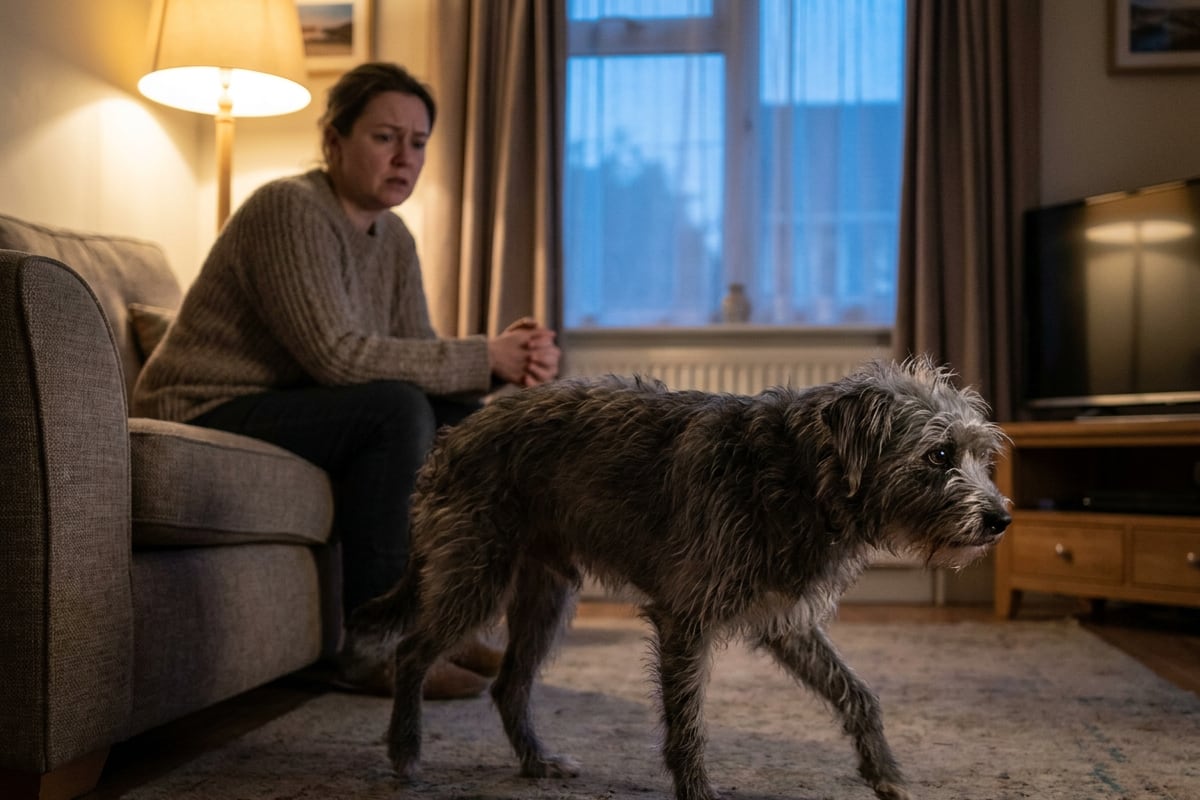
Knowing how to switch dog food the right way saves most dogs from the upset stomach, loose stool and skipped meals that come with an overnight change. The method is simple: mix the new food into the current one in small steps over 7 to 10 days, and slow down when your dog’s stool tells you to.
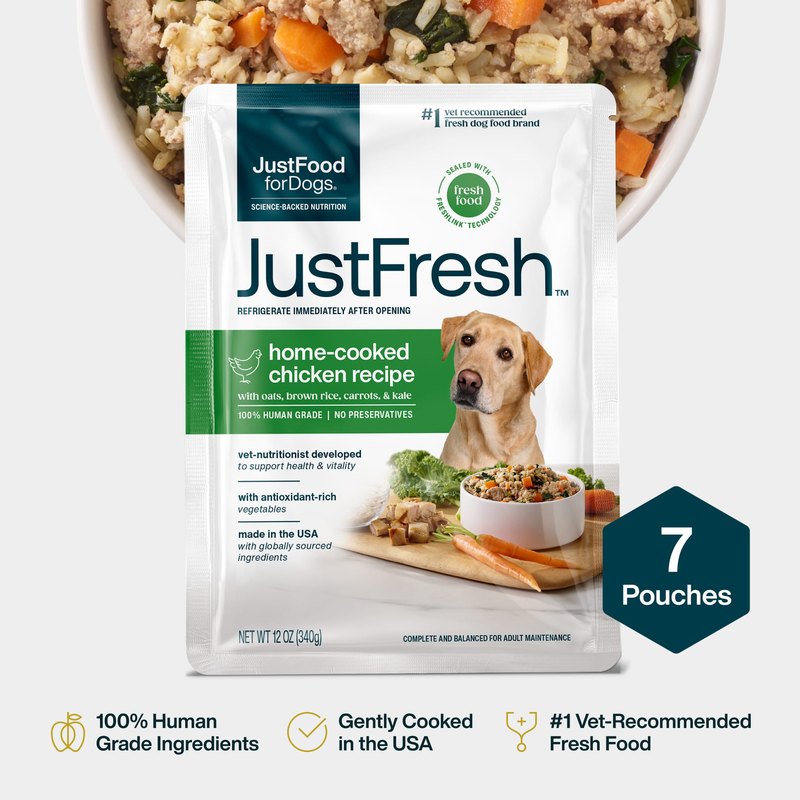
This guide gives you a day-by-day schedule, a slower plan for sensitive dogs, puppies and seniors, and a kibble-to-fresh section built on the published transition guidance from JustFoodForDogs. If you want an easy first step, a shelf-stable pouch such as JustFoodForDogs JustFresh Home-Cooked Chicken can be mixed into your dog’s current kibble before you move on to a full fresh meal.
How to Switch Dog Food Over 7 to 10 Days
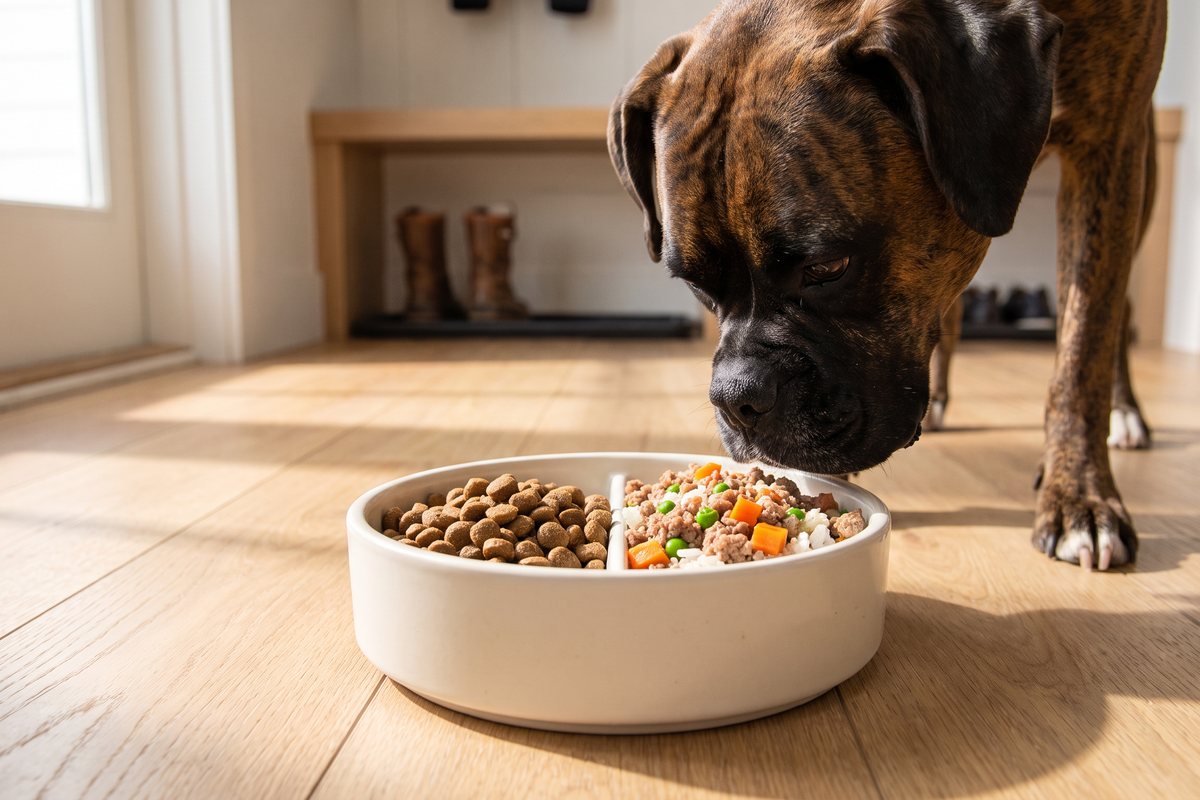
Start with about 25 percent new food mixed with 75 percent current food, move to half and half, then to 75 percent new food, and finish on the new food alone. Most healthy adult dogs can make each step every two or three days, which gives a 7 to 10 day dog food transition.
Key Takeaways
- Mix the new food into the current food in four steps, from 25 percent new food up to 100 percent, over 7 to 10 days.
- Sensitive stomachs, seniors, puppies and dogs coming off a very different diet often do better on a 10 to 14 day plan.
- If stool softens, hold at the last ratio that worked for a few extra days before increasing the new food again.
- Call your veterinarian for blood in the stool, repeated vomiting, lethargy or diarrhea that lasts more than two days.
A gradual change gives the gut bacteria and digestive enzymes time to adjust to new ingredients, fat levels and fiber, which helps avoid most gastrointestinal upset. Choosing a complete recipe that suits every life stage also keeps the switch simple in a home with both puppies and adult dogs.
Before day one, check that the new food carries an AAFCO nutritional adequacy statement for your dog’s life stage, and keep enough of the current food on hand to last through the whole mixing period.
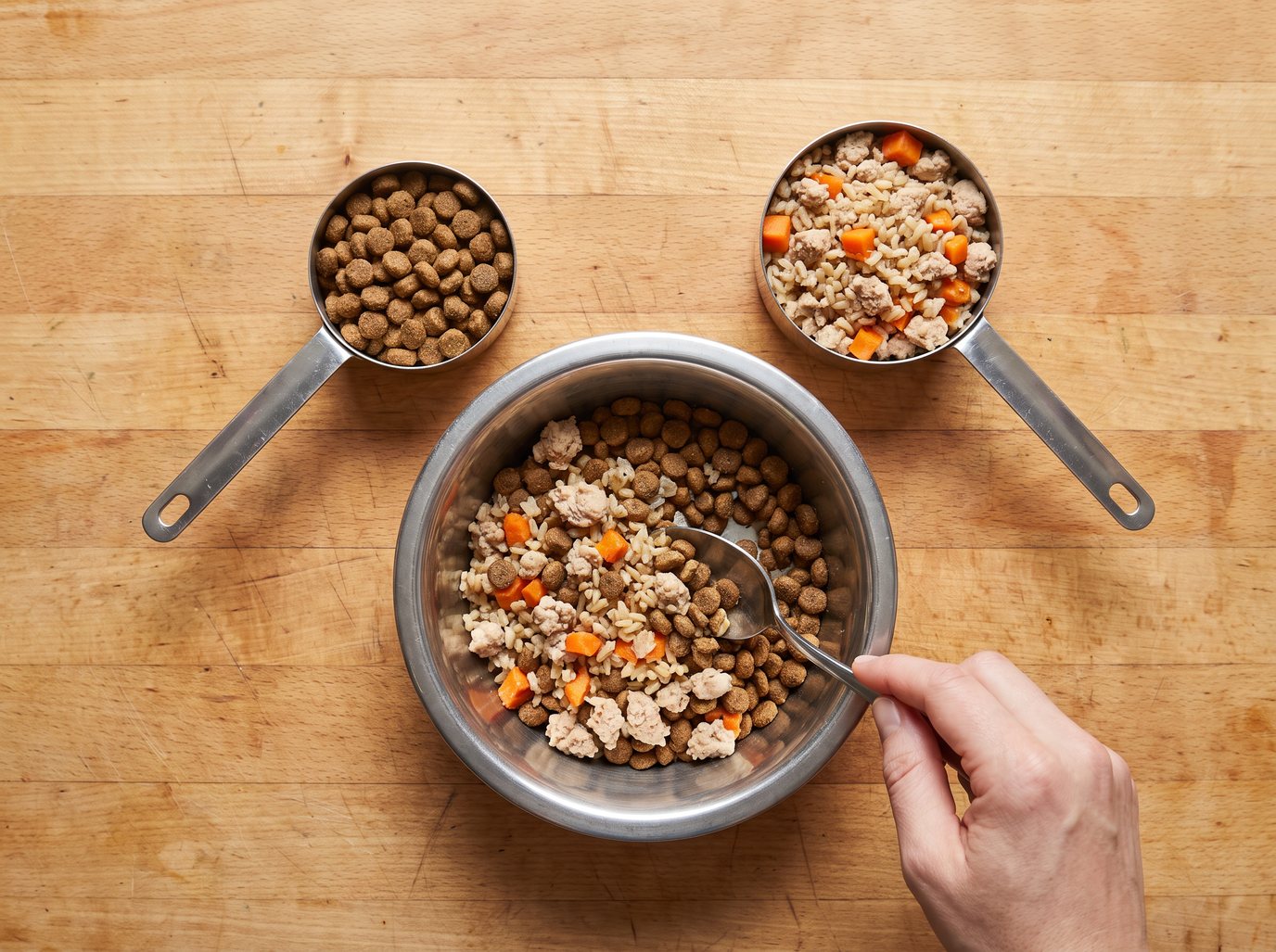
Here is how to transition dog food step by step:
- Measure the daily amount of both foods by calories, not by scoops, so your dog is not overfed or underfed during the mix.
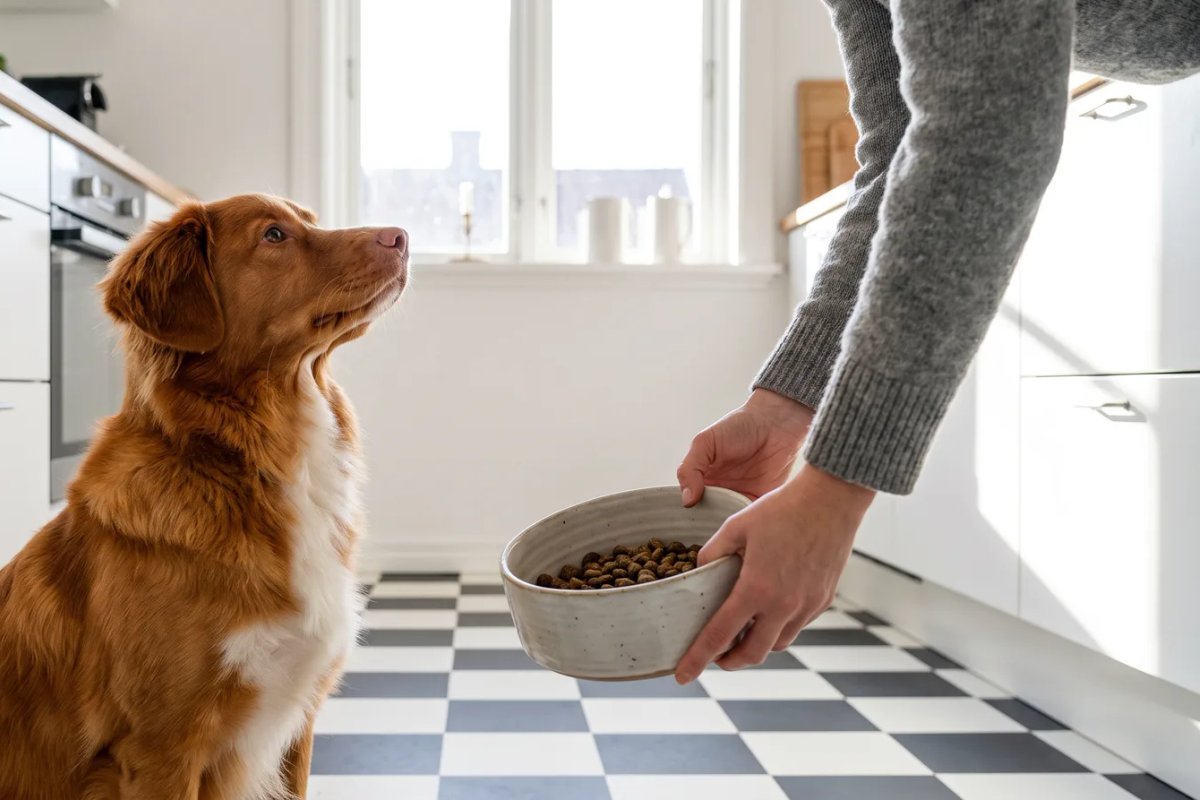
- Mix the two foods well in the same bowl so your dog cannot pick out one and leave the other.
- Keep meals at the same times and skip new treats, so any change in stool can be traced to the food.
- Check stool daily. Slightly softer stool is common in the first days; watery stool is not.
- Move to the next ratio only when stool has been normal for at least a day.
Use the chart below when changing dog food. It sets three plans side by side: a standard 7-day plan following the American Kennel Club schedule, the 10-day plan JustFoodForDogs publishes for fresh food, and an extended plan that stretches the same four steps across the 10 to 14 days JustFoodForDogs suggests for seniors, sensitive stomachs and dogs coming off a very different diet.
Dog food transition schedule
| Mix (new food and current food) | Standard 7-day plan | JustFoodForDogs 10-day plan | Extended 14-day plan | What to watch |
|---|---|---|---|---|
| 25 percent new food, 75 percent current food | Days 1-2 | Days 1-3 | Days 1-4 | Appetite and the first few stools |
| 50 percent new food, 50 percent current food | Days 3-4 | Days 4-7 | Days 5-9 | Stool shape, gas, interest in meals |
| 75 percent new food, 25 percent current food | Days 5-6 | Days 8-10 | Days 10-14 | Stool firmness and energy |
| 100 percent new food | Day 7 | Day 11 onward | Day 15 onward | Normal stool for several days |
The rule that makes any dog food transition schedule work is to hold at the last ratio that worked when stool softens:
- Go back to the previous mix your dog handled well.
- Stay there for a few extra days until stool is firm again.
- Then increase the new food again, using smaller steps if needed.
JustFoodForDogs gives the same advice in its own transition guidance, and the extended 14-day plan is the version to start with for a dog whose digestion you already know is delicate.
How Long Does It Take a Dog to Adjust to New Food?
Most healthy adult dogs adjust to a new food in 7 to 10 days when the change is made gradually. Dogs with sensitive stomachs, seniors, puppies and dogs moving to a very different style of food may need a slower 14-day plan.
The length of the transition also depends on how different the foods are. Moving between two similar recipes can go quickly, while moving from dry kibble to a fresh or wet food, or from a high-fat to a lower-fat food, usually needs the full 10 days or more. The American Kennel Club says transitions should ideally happen over 5 to 7 days, and that dogs with sensitive stomachs may need a longer transition period (AKC).
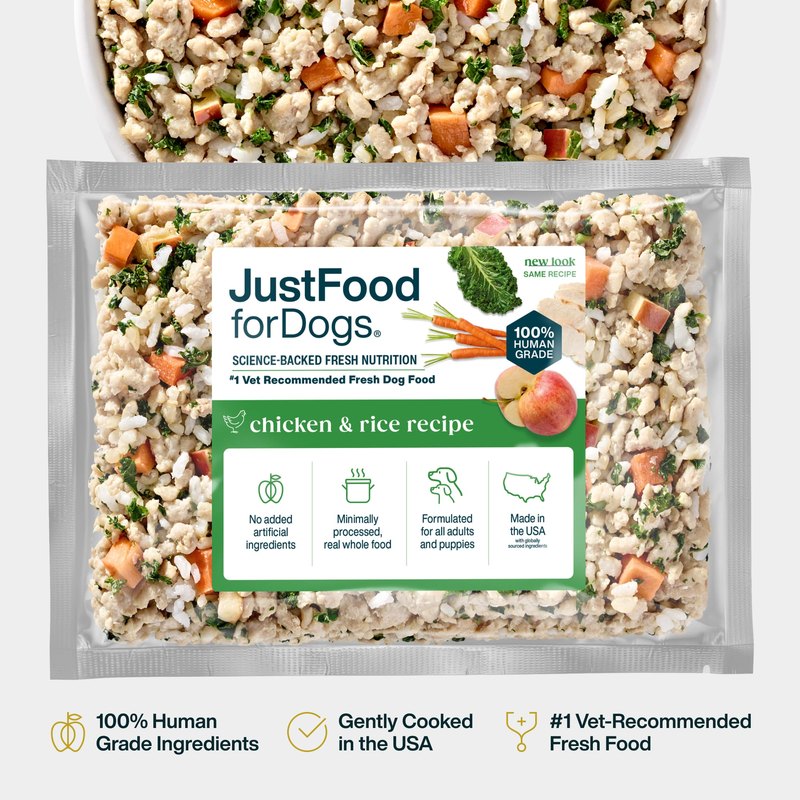
Full adjustment can take a little longer than the mixing schedule itself. Stool may look a little different in size or color once a dog is eating a complete recipe such as JustFoodForDogs Chicken & Rice, especially when the new food has more moisture or different fiber. Judge success by firm, regular stool, steady appetite and normal energy.
When Switching Dog Food Makes Sense
Should I switch my dog food? Switch when there is a clear reason, not out of habit. Good reasons to change include:
- Your dog is moving from puppy to adult food, or from adult to senior care.
- Your veterinarian recommends a different diet for weight, digestion or a medical condition.
- Your dog has ongoing soft stool, gas or itching that a different food might help.
- The current food is discontinued, recalled or no longer agrees with your dog.
- You want to move to a different format, such as fresh food.
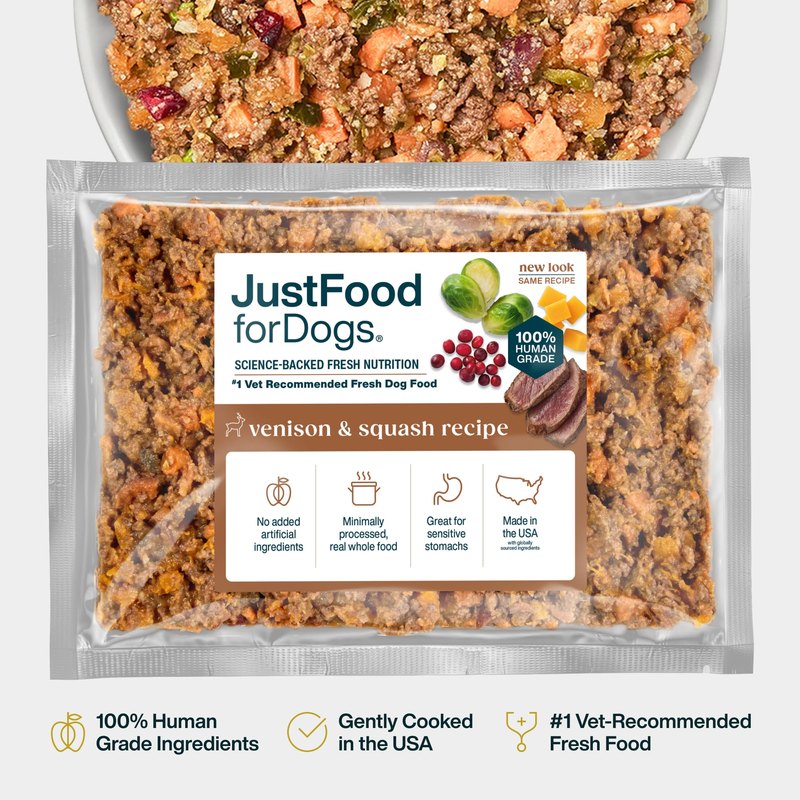
How often should you change dog food? There is no rule that you must. A dog doing well on a complete and balanced food can stay on it for years. Some owners rotate between recipes every few months for variety, which many dogs handle well if each change is gradual. Picky dogs sometimes enjoy a recipe with a different protein, such as JustFoodForDogs Venison & Squash, but frequent switching can also teach a dog to hold out for something new.
Whether it is time to switch comes down to how your dog looks and feels. A dull coat, persistent loose stool, weight changes or a vet’s advice are signals; boredom alone usually is not. When you compare labels for a new food, check the AAFCO statement for your dog’s life stage and the ingredient list, and remember that under the label naming rules a “chicken dinner” can contain far less chicken than a food named simply “chicken dog food” (Merck Veterinary Manual).
Switching From Kibble to Fresh Food
Moving from kibble to fresh food is a bigger change than switching between two dry foods, because fresh food has far more moisture, a different texture and often a different fat and fiber level. Some owners start gently by using fresh food as a topper on kibble for a few days before the formal schedule begins, and a shelf-stable pouch works well for that first step because it needs no thawing.
JustFoodForDogs recommends 10 days to transition to fresh food, and its published schedule is a useful model for a move to fresh food:
- Days 1-3: 25 percent fresh food, 75 percent current food
- Days 4-7: 50 percent fresh food, 50 percent current food
- Days 8-10: 75 percent fresh food, 25 percent current food
- Day 11 onward: 100 percent fresh food
JustFoodForDogs adds that senior dogs, dogs with sensitive stomachs and dogs coming off a very different diet may need closer to 10 to 14 days. Fresh food’s higher moisture and different texture are the main reasons this switch takes longer than a change between two dry foods.
Portion by calories, not by matching cups. A cup of kibble holds far more calories than the same volume of a fresh recipe such as JustFoodForDogs Chicken & Rice, so swapping scoop for scoop leaves a dog hungry. Work out how many calories your dog needs, then split them according to the day’s ratio; on a half-and-half day, half the calories come from each food. JustFoodForDogs also offers an online feeding calculator for daily amounts, and our sister site WebVet’s JustFoodForDogs feeding guide walks through portions in more detail.
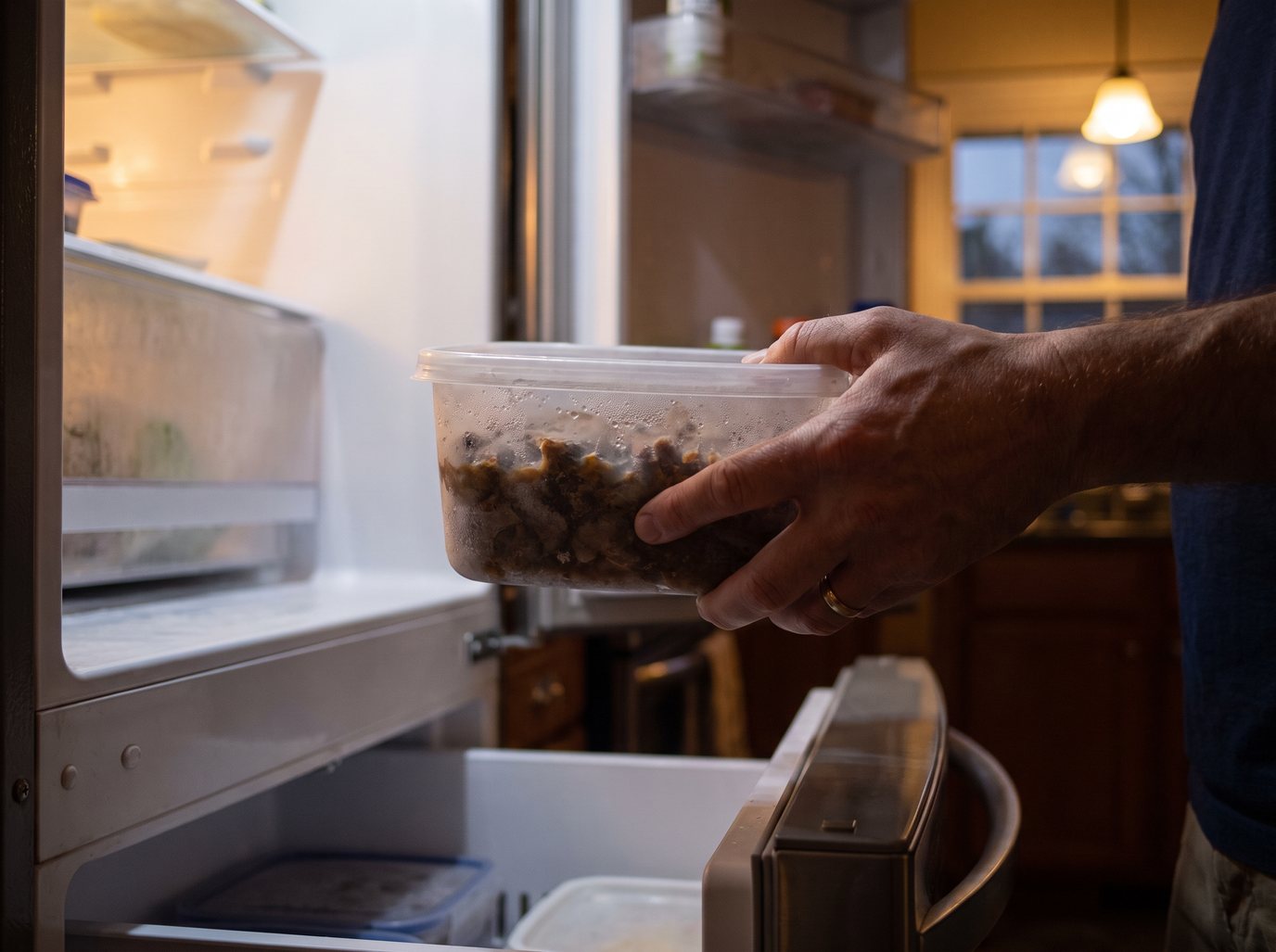
Thaw in the refrigerator, never on the counter. JustFoodForDogs says thawed meals stay fresh sealed in the original package for up to 7 days, and once opened you should use within 5 days.
Plan ahead so the next portions are thawed before you need them, and keep the rest frozen. JustFoodForDogs says frozen meals keep for up to 18 months in the freezer. Serve fresh food cool or at room temperature, and pick up and refrigerate or discard any uneaten portion rather than leaving it in the bowl.
Dogs coming off a raw diet rather than kibble often do best with a higher-protein fresh recipe. JustFoodForDogs describes its venison recipe as a seamless transition to a fresh whole-food diet for dogs currently eating raw.
Switching Puppies, Seniors, and Sensitive Stomachs
Some dogs need more time and closer attention during a switch. The slower 10 to 14 day plan suits:
- Puppies: JustFoodForDogs advises planning on 10 to 14 days and keeping puppies on its Chicken & Rice or Fish & Sweet Potato recipes, the two formulated for all life stages including growth.
- Seniors: older dogs often have more delicate digestion and less reserve if they stop eating.
- Sensitive stomachs: dogs with a history of loose stool or gas benefit from smaller steps and a low-fat recipe.
A puppy’s switch follows the same ratios, just stretched out. Puppies should eat a growth or all-life-stages food such as JustFoodForDogs Chicken & Rice, with meals split three or four times a day for young puppies.
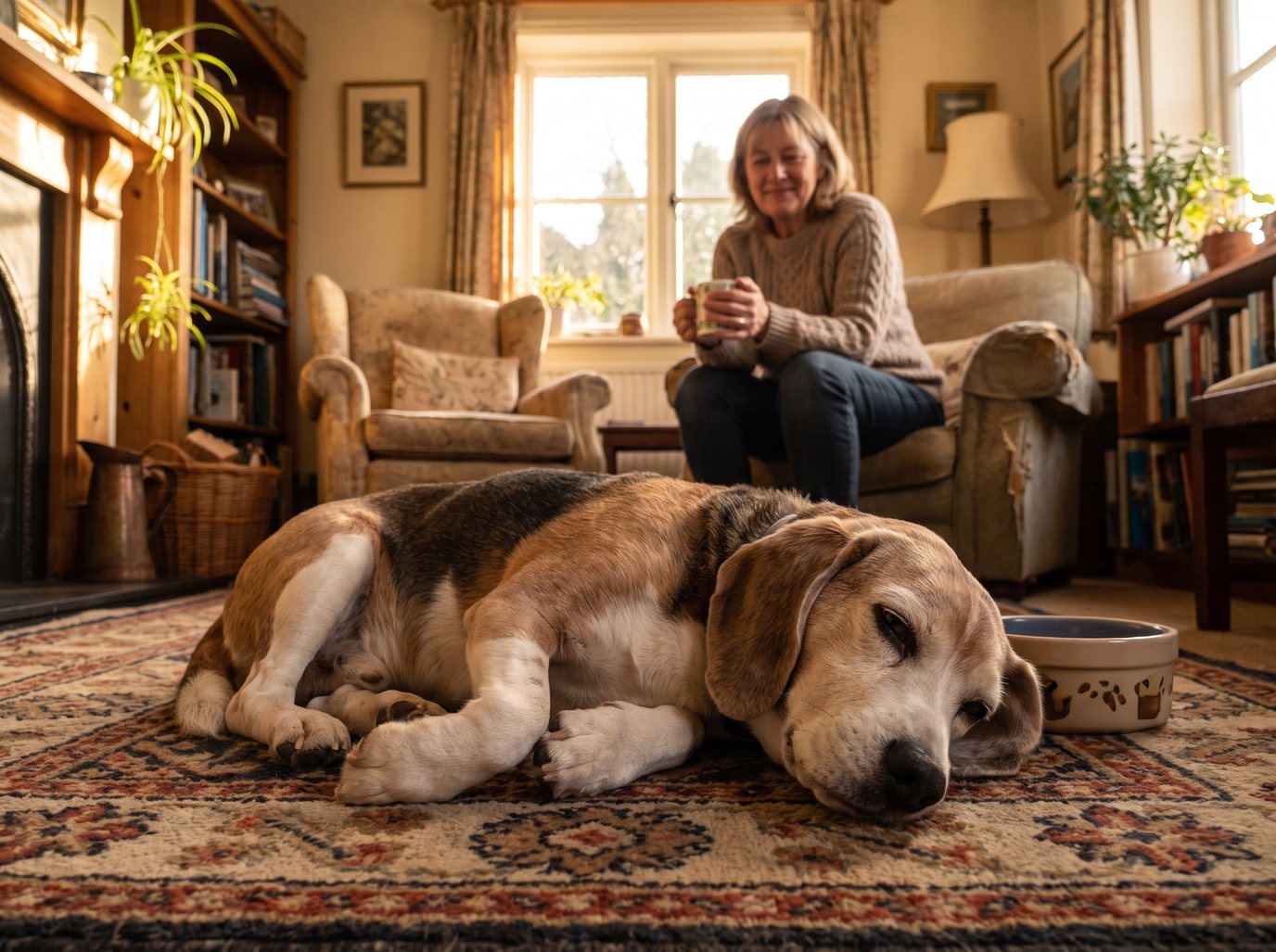
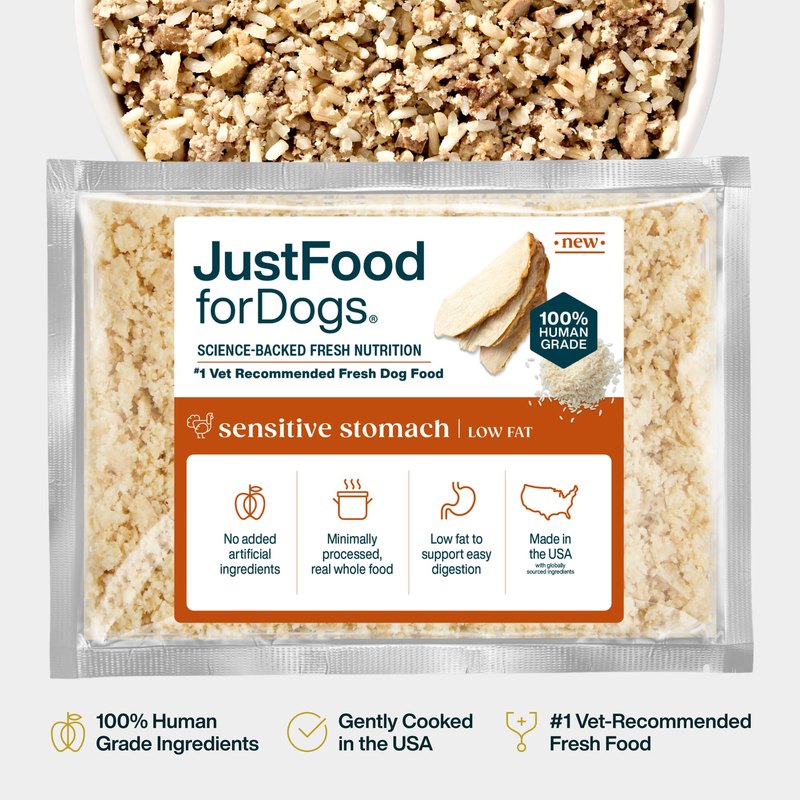
What should a dog with a sensitive stomach eat during a switch? Usually a complete, low-fat, highly digestible recipe with a short ingredient list, introduced slowly. One gentle option is JustFoodForDogs Sensitive Stomach, a low-fat turkey and rice recipe rich in natural prebiotics that can help support a healthy gut; Vetstreet’s review of the JustFoodForDogs Sensitive Stomach recipe covers it in more depth.
Some owners add a spoonful of plain canned pumpkin during a switch, because its fiber can help firm mildly soft stool. Use plain pumpkin, not pie filling, and keep the amount small. Dogs whose stomachs react to rich food may also need a lower-fat diet overall; Petful’s guide to low-fat dog food explains how to read fat levels.
Moving a Puppy to Adult Food
The move from puppy to adult food depends mostly on size. JustFoodForDogs gives a general guide of 6 to 12 months for small and medium breeds, 12 to 16 months for large breeds and 18 to 24 months for giant breeds. Use the same gradual schedule for this switch. Vetstreet’s guide to when to move a puppy to adult food explains why large and giant breeds wait longer.
Switching Brands, Flavors, or Formats
Can you change dog food flavors but stay with the same brand? Yes, but a new flavor within the same brand is still a diet change. Switching from chicken to lamb dog food changes the protein, fat and sometimes the fiber, so use at least a short transition. Here is how the common switches compare:
- A different brand: use the full 7 to 10 day schedule, since recipes vary more between brands than within one.
- Same brand, different flavor: a 5 to 7 day mix is often enough for a dog with a steady stomach.
- Dry to wet, or wet to dry food: wet and fresh foods have more moisture and fewer calories per cup, so portion by calories and give the change 7 to 10 days.
- Raw food to kibble: dogs moving from raw to kibble face a big change in texture and digestibility, so use the 10 to 14 days JustFoodForDogs suggests for dogs coming off a very different diet.
- To or from grain-free food: treat it like any other recipe change and follow the schedule.
The same gradual approach applies when a dog comes off a bland chicken and rice diet after an upset stomach. Once your dog’s stool is normal, mix the bland meal with the regular food gradually; VCA Animal Hospitals describes moving back to the regular diet over seven to ten days as stools return to normal (VCA), unless your veterinarian gave you a different recovery plan. A complete fresh recipe that dogs readily eat, such as JustFoodForDogs JustFresh Home-Cooked Chicken, is one way to move toward a different format without a jump in texture.
When You Have to Switch Dog Food Quickly
Sometimes a gradual change is not possible: the old food runs out, is recalled or your dog suddenly refuses it. Switching dog food without mixing is not ideal, but most healthy adult dogs get through it with mild, short-lived soft stool.
To switch dog food quickly with the least upset:
- Feed smaller meals more often for the first few days.
- Choose a gentle, lower-fat new food if you have the choice, such as JustFoodForDogs Sensitive Stomach.
- Keep fresh water available and skip treats and table scraps.
- If you can buy a small bag of the old food, use it to finish a short transition.
Can changing dog food kill a dog? A food change on its own is very unlikely to be dangerous for a healthy adult dog. The risk comes from severe vomiting or diarrhea that leads to dehydration, which matters most in puppies, small dogs, seniors and dogs with other illness, and from sudden rich, fatty meals, which can upset the pancreas. Rich foods and seasoned table meat, including rotisserie chicken skin and cooked bones, are not a safe stopgap; see Vetstreet’s list of human foods that are dangerous for dogs.
What happens if you don’t transition dog food? Many dogs have a few days of soft stool, gas or a skipped meal. Watch closely and use the signs below to decide when to call your veterinarian.
Signs to Slow Down the Switch
Changing dog food too quickly shows up in the stool first. Common symptoms include:
- Soft or loose stool, or diarrhea during the dog food transition
- Gas, gurgling stomach sounds or mild bloating
- Vomiting once, or eating less than usual
- Scooting or straining more than normal
If you see these, slow down and hold at the last mix your dog handled well for a few extra days, as JustFoodForDogs advises, and reach out to a veterinarian if softer stool persists or worsens. VCA Animal Hospitals advises consulting your veterinarian if frequent liquid or semi-liquid stools persist for more than two days (VCA).
What are signs of food intolerance in dogs? Ongoing soft stool, gas and vomiting point to a digestive problem with the food, while itching, ear infections and licking the paws point more toward a food allergy. A dog that keeps having trouble with a food even after a slow switch may need a different recipe; Vetstreet’s guide to food allergies in pets covers common triggers.
See a veterinarian promptly for blood in the stool, black or tarry stool, repeated vomiting, lethargy, a painful or swollen belly, refusing all food for more than a day, or diarrhea that lasts more than two days. Puppies and seniors should be seen sooner.
Questions Readers Ask
Most dogs do not need variety to stay healthy, and a complete and balanced diet can be fed every day for years. Dogs that seem bored are often showing picky eating habits that grow when meals change often or treats replace food. If you do want variety, rotate between complete recipes gradually.
Yes. Dogs are meant to eat a complete and balanced food as their main diet, and the same food daily is normal and healthy. Treats and extras should stay at about 10 percent of daily calories so they do not unbalance the diet (PetMD).
A food allergy is an immune response to a specific protein, and it often shows up as itchy skin, ear infections or paw licking, sometimes with digestive signs. A food sensitivity, or digestive intolerance, is a non-immune problem digesting something in the food, such as fat or a particular ingredient, and it usually causes soft stool, gas or vomiting.
Normal transition softness in the first few days is the most common mix-up. Intestinal parasites, stress, a recent change in treats, scavenging and infections can also cause loose stool that looks like a food problem, so a fecal test is worth doing before blaming the new food.
Common triggers include rich fatty foods, an abrupt diet change, table scraps, and specific ingredients a dog digests poorly. A dog may also react to a large jump in fiber or a sudden change from dry to very moist food.
Beef and dairy are the most commonly reported food allergens in dogs, followed by chicken and wheat, according to a review of published cases (BMC Veterinary Research). Animal protein sources are the usual culprits, and confirming an allergy needs a veterinarian-guided elimination diet.
For most adult dogs, two meals a day is a good routine. Split the daily ration into two measured meals; puppies need three or four meals, and some small or medical-needs dogs do better with more frequent feeding.
There is no single best time, but consistent feeding times help, especially during a switch. Many owners feed morning and evening, which makes it easier to link any change in stool to the food on a steady feeding schedule.