Is Beef Good for Dogs? Nutrition, Benefits, and When to Choose It
Published on November 03, 2026
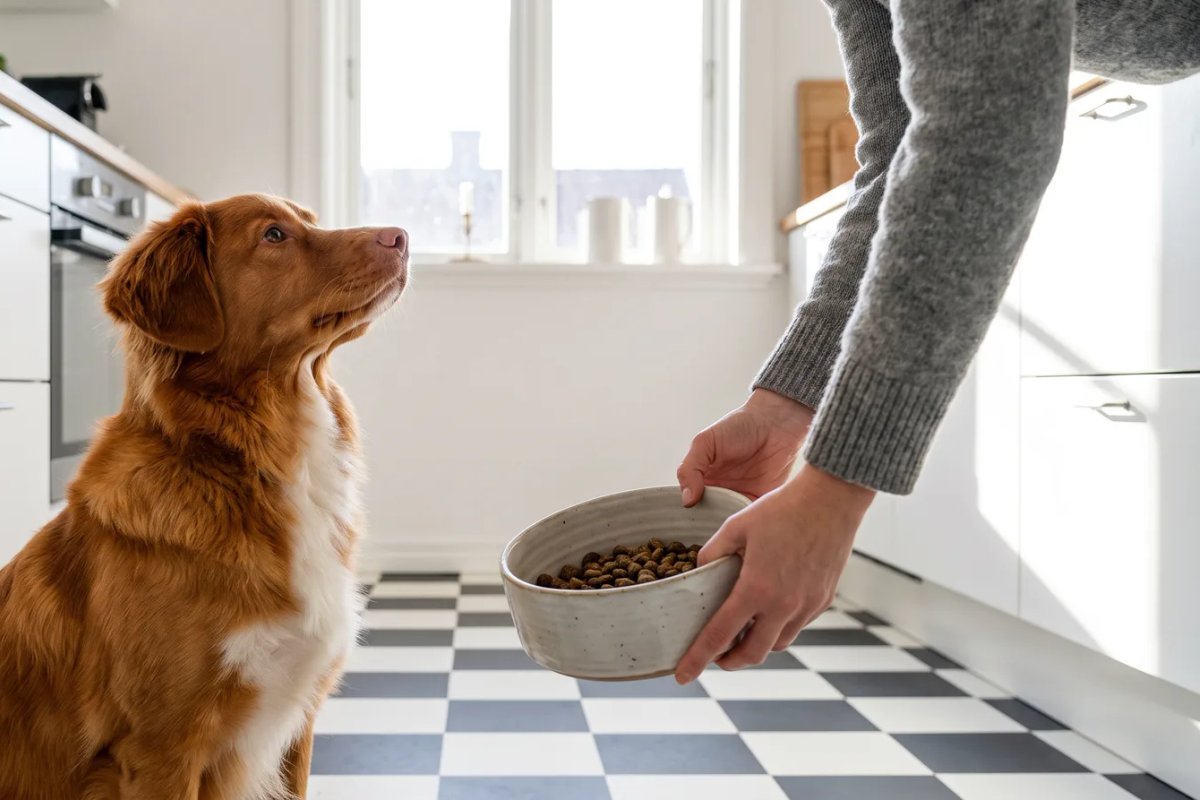
Is beef good for dogs? Yes. Lean, plain, cooked beef is a high-quality protein that most dogs digest well and eat eagerly, and it supplies iron, zinc, and B vitamins that support blood, skin, and energy metabolism. The conditions matter, though: fatty cuts can upset sensitive stomachs, some dogs are allergic to beef, and beef on its own is not a complete diet.
This guide walks through what beef actually brings to the bowl, how its fat compares with chicken and turkey, how to cook it safely at home, what the allergy research shows, and how to decide whether beef should be your dog’s main protein or an occasional extra. We also cover how to switch to a beef-based fresh recipe without upsetting digestion.
This article is sponsored by Get Real, Chewy’s gently cooked fresh dog food line. Vetstreet may earn a commission if you purchase through links in this article.
Key Takeaways
- Lean, plain, cooked beef is a safe and nutritious protein for most healthy dogs.
- Fat content varies widely by cut, so dogs with a history of pancreatitis or a sensitive stomach need the leanest options.
- Beef is one of the most commonly reported food allergens in dogs, so watch for itching, ear trouble, or loose stools after you introduce it.
- Plain beef added to a bowl is a topping, while a complete and balanced beef recipe can be a main meal.
- Any change to a new main protein should happen gradually over 7 to 10 days.
Is beef good for dogs?
For most healthy adult dogs, beef is a good choice. It is a complete animal protein, meaning it supplies all the essential amino acids dogs need to build and repair muscle, skin, coat, and immune cells. It is also naturally rich in heme iron and zinc, two minerals that are absorbed efficiently from meat. That is why beef has been a staple protein in commercial dog food for decades.
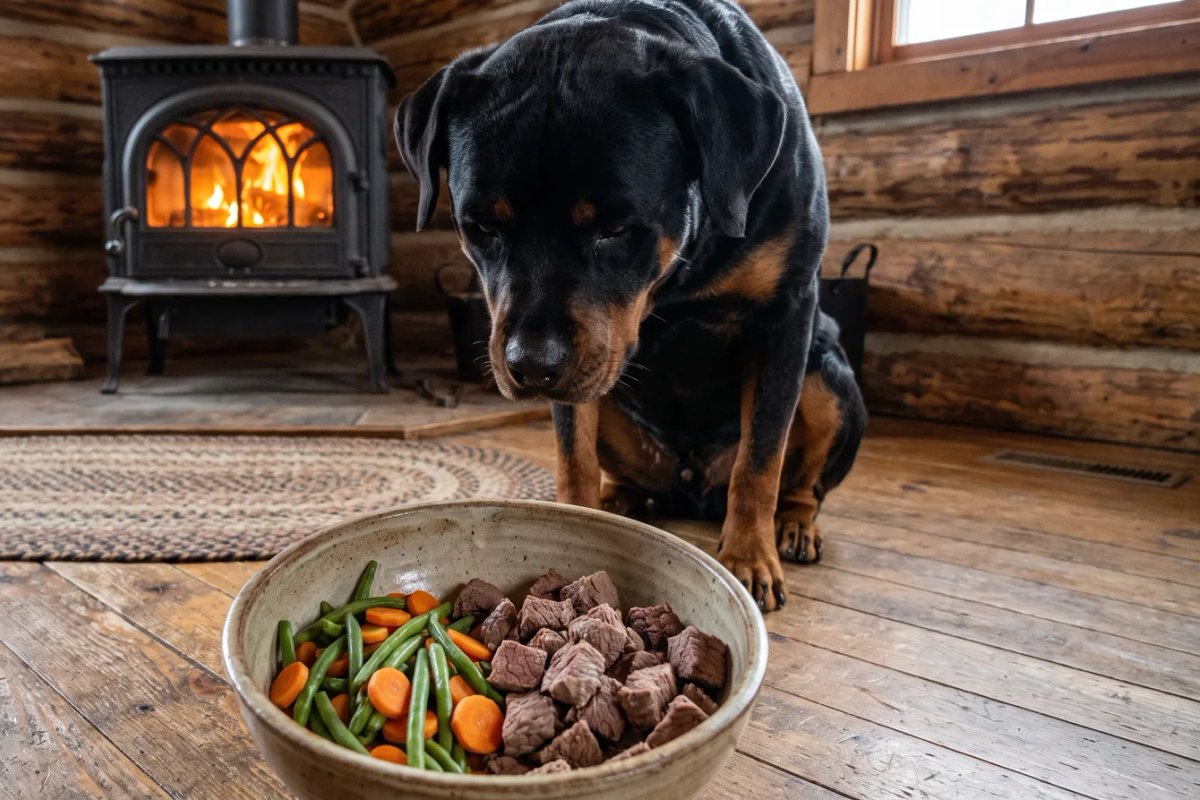
The other distinction is between beef as an ingredient and beef as a diet. A spoonful of cooked ground beef on kibble is a tasty extra. A bowl of nothing but beef, fed day after day, would leave a dog short on calcium and several vitamins. If you want beef to be the center of your dog’s meals, the safest route is a recipe formulated to be complete and balanced, such as the Get Real Beef & Sweet Potato Recipe, which pairs beef with vegetables, beef liver, and added vitamins and minerals.
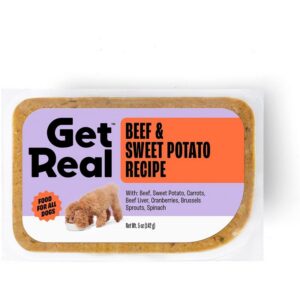
Get Real Beef & Sweet Potato Recipe. A gently cooked, complete and balanced recipe with beef as the first ingredient, for owners who want beef as the main protein rather than an extra on top.
The healthiest beef for dogs is lean, plain, and fully cooked. In practice that means:
- Lean ground beef (90 percent lean or higher) or trimmed cuts such as round or sirloin
- No added salt, onion, garlic, butter, sauces, or seasoning blends
- Cooked through, with visible fat drained or trimmed away
- Served in an amount that fits your dog’s daily calories, not piled on top of a full meal
Where beef becomes a problem is in the details. Fatty trimmings, greasy leftovers, and seasoned table food are the most common reasons a beef meal ends in vomiting or diarrhea. Processed beef such as deli meat, jerky made for people, and corned beef adds sodium and spices dogs do not need.
Beef nutrition for dogs: protein, fat, iron, and B vitamins
Beef earns its reputation as a high-quality protein. Muscle meat provides highly digestible protein along with iron, zinc, selenium, niacin, vitamin B6, and vitamin B12. Iron and B12 support healthy red blood cells, zinc supports skin and coat, and the B vitamins help convert food into energy. The Merck Veterinary Manual describes the role of protein quality and amino acid balance in canine diets, and beef scores well on both.
Fat is the variable that changes most from one beef product to the next. Ground beef sold as 80/20 is about 20 percent fat by weight before cooking, while 93/7 is about 7 percent. Fat is not bad for dogs. It is their most concentrated energy source and carries fat-soluble vitamins. But a sudden, large, fatty meal is a well-recognized trigger for stomach upset and, in susceptible dogs, pancreatitis. Beef fat trimmings and beef tallow belong in that higher-risk category, so we do not recommend adding them to a dog’s bowl.
You can read more about how veterinarians think about protein in dog food, including why quality and digestibility matter more than a single percentage on the label.
- Protein: complete amino acid profile for muscle, skin, and coat
- Iron and vitamin B12: support healthy red blood cells
- Zinc: supports skin, coat, and immune function
- Fat: concentrated energy, but the amount depends heavily on the cut
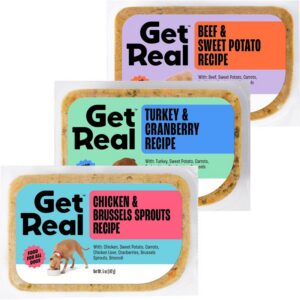
Get Real Sampler Pack, Beef, Chicken & Turkey Gently Cooked Fresh Dog Food, 6 pack bundle (2 of each recipe). If you are curious how your dog responds to beef compared with other proteins, a sampler lets you try more than one recipe before settling on a main protein.
To see where beef sits next to chicken and turkey in a real complete recipe, the published guaranteed analysis for the three Get Real recipes is a useful reference point. Guaranteed analysis lists minimum protein and fat and maximum fiber and moisture, which AAFCO requires on pet food labels.
| Get Real recipe | Crude protein (min) | Crude fat (min) | Crude fiber (max) | Calories per 12 oz pack |
|---|---|---|---|---|
| Beef & Sweet Potato | 9% | 7% | 1.5% | 451 kcal |
| Chicken & Brussels Sprouts | 10% | 8.5% | 1% | 428 kcal |
| Turkey & Cranberry | 8% | 10% | 1% | 474 kcal |
In this lineup, the beef recipe has the lowest printed fat minimum of the three, 7 percent, compared with 8.5 percent for chicken and 10 percent for turkey. Many owners assume poultry is always leaner than beef, but finished recipes depend on the cuts and other ingredients used, so the label is a better guide than the protein name. These are guaranteed minimums and maximums, not actual nutrient levels. The calorie column shows the calories listed for each 12 oz pack on Chewy’s product pages. All three recipes list moisture at 75 percent maximum, which is typical of fresh food and is why the percentages look lower than kibble labels. The AAFCO explains how guaranteed analysis is reported.
Ground beef and how to cook beef for dogs
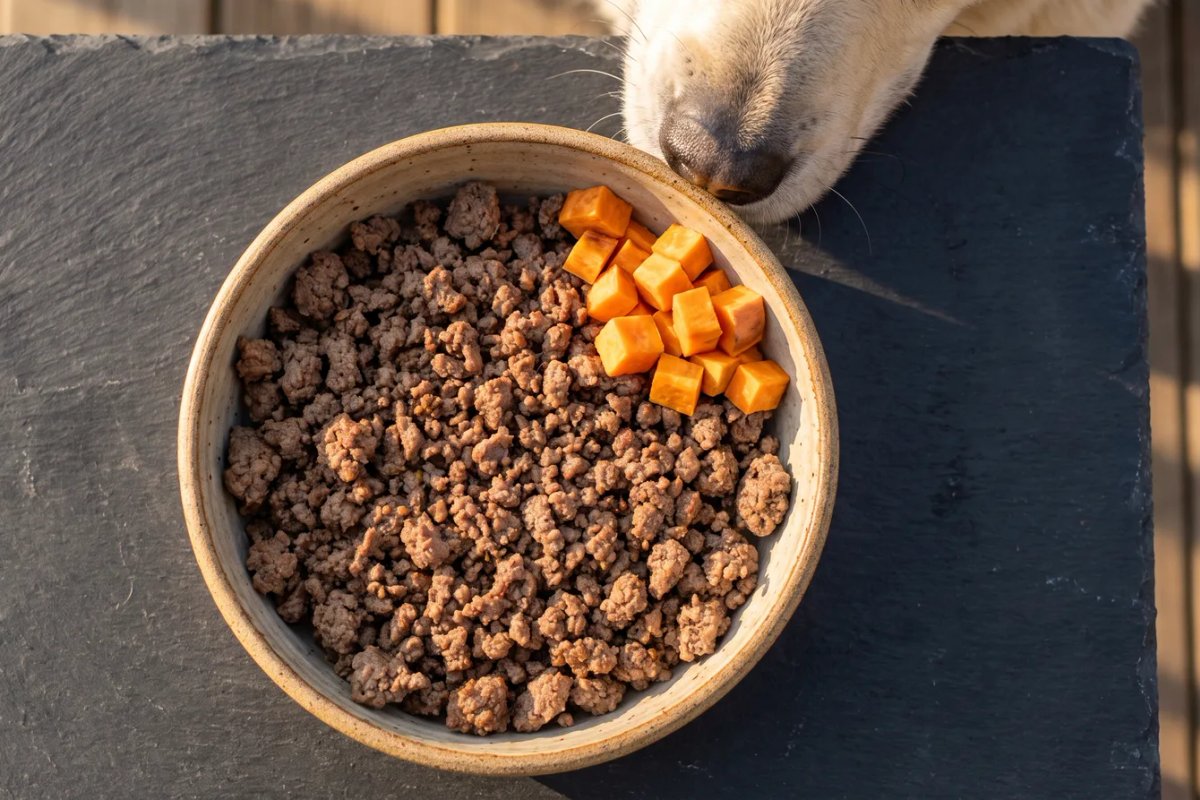
Ground beef is the easiest form of beef to feed at home, and cooked ground beef is good for dogs when it is lean and plain. It is often part of a short-term bland diet, sometimes paired with rice, when a veterinarian wants a simple, easily digested meal for a dog recovering from mild stomach upset.
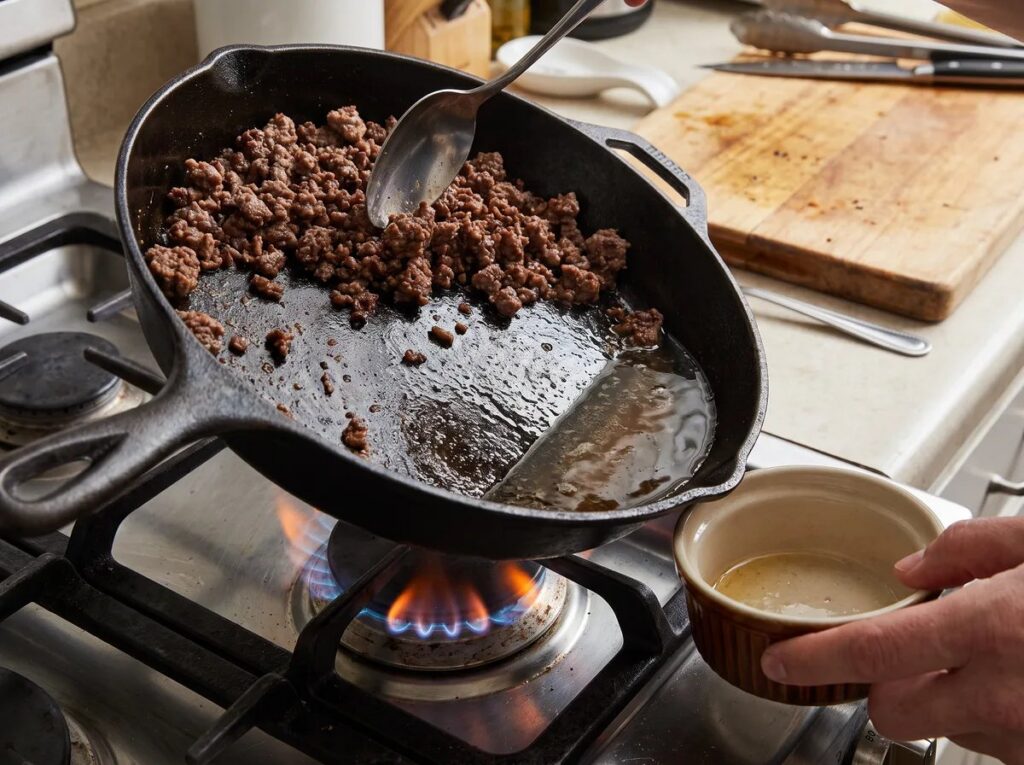
Here is how to cook beef for dogs safely:
- Choose lean ground beef, ideally 90 percent lean or higher, or a lean whole cut you can dice.
- Cook it in a dry pan or simmer it in plain water, with no oil, salt, onion, or garlic.
- Cook it until no pink remains. USDA guidance for people is an internal temperature of 160 degrees Fahrenheit for ground beef.
- Drain the fat thoroughly, and blot the meat with a paper towel if it still looks greasy.
- Let it cool, then serve a small portion.
Beef and rice is a classic combination, but it is meant for a few days, not as a long-term diet. Ground beef and rice lacks calcium and a range of vitamins and minerals, so dogs fed it for weeks can develop deficiencies. If your dog loves the taste of beef and you want it in every meal, a complete recipe is the better path. Many owners also rotate proteins for variety, and a poultry option such as the Get Real Chicken & Brussels Sprouts Recipe gives beef-loving dogs another complete choice on alternate weeks.
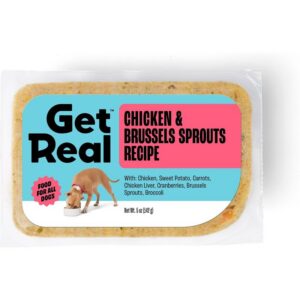
Get Real Chicken & Brussels Sprouts Recipe. A complete chicken-based recipe gives owners a second protein to rotate with beef, gently cooked and pre-portioned like the beef recipe.
How much is a small portion? As a topper or treat, extras should stay within about 10 percent of your dog’s daily calories, a common rule of thumb in veterinary nutrition. For a medium-size dog that is a few tablespoons of cooked lean beef, not a cupful. If you add more, reduce the main food to keep total calories steady.
Raw vs cooked beef for dogs
Is cooked meat better for dogs than raw meat? For most households, yes. Cooking beef kills the bacteria most often found on raw meat, including Salmonella, E. coli, and Listeria, which lowers the bacterial risk for both dogs and people.
Raw ground beef is the higher-risk form because grinding spreads surface bacteria throughout the meat. The FDA has found disease-causing bacteria in raw pet food samples, and the risk extends to people. Dogs can shed bacteria in their saliva and stool without looking sick, which matters most in homes with young children, older adults, or anyone with a weakened immune system.
Can dogs eat raw ground beef? It is not a safe choice for most households. Veterinary organizations including the AVMA discourage feeding raw or undercooked animal protein to pets because of that bacterial risk. If you like the idea of minimally processed food, gently cooked fresh food is a practical middle ground: it is cooked to reduce pathogen risk but not extruded at the high temperatures used for kibble.
Beef allergies in dogs: how common they are and what to watch for
Beef is one of the most frequently reported food allergens in dogs. In a 2016 review of published cases in BMC Veterinary Research, beef was the most commonly reported culprit, identified in about a third of 297 dogs with food allergies, followed by dairy, chicken, and wheat. That does not mean beef is dangerous. It mostly reflects how long beef has been used in dog food, since allergies develop to proteins a dog has eaten before.
Is beef good for dogs with allergies? It depends on which protein is the trigger. For a dog that reacts to chicken, beef is often a sensible alternative. If your dog needs a chicken-free food, read the full ingredient list, because poultry fat and broth turn up in many beef-labeled foods. For a dog that does better on poultry, a turkey or chicken recipe offers a different main protein.
True food allergies are uncommon overall, and most dogs eat beef for life without trouble. When an allergy does develop, the signs usually show up on the skin and in the gut:
- Itching, especially of the paws, ears, face, belly, and rear end
- Recurrent ear infections or red, inflamed ears
- Licking or chewing the paws
- Soft stools, more frequent bowel movements, or occasional vomiting

Diagnosing a food allergy takes an elimination diet trial, usually at least 8 weeks on a diet with a protein the dog has not eaten before or a hydrolyzed diet prescribed by a veterinarian. Blood, saliva, and hair tests sold to owners are not reliable for food allergy. VetStreet’s guide to food allergies in dogs explains the process in more detail.
If your dog develops itchy skin, repeated ear problems, or ongoing digestive upset after starting beef, call your veterinarian. Hives, facial swelling, or repeated vomiting need prompt attention.
Beef liver and other organ meats
Beef liver is good for dogs in small amounts, and it is one of the most nutrient-dense foods you can offer. It is rich in vitamin A, iron, copper, folate, and vitamin B12. That richness is also the reason to keep portions small. Too much liver over time can lead to excess vitamin A, which the Merck Veterinary Manual notes can affect bones and joints in dogs.
Beef heart is a different kind of organ meat. Nutritionally it behaves more like lean muscle, with plenty of protein, iron, and B vitamins, and it is far lower in vitamin A than liver. Cooked beef liver and cooked beef heart are both reasonable occasional extras when served plain.
- Keep organ meat to a small share of the diet, and liver to a smaller share still.
- Cook liver and heart plainly, and cut them into small pieces.
- Introduce one at a time, because liver can loosen stools.
Complete recipes handle this balance for you. Beef liver is the fourth ingredient in the Get Real Beef & Sweet Potato Recipe, after beef, sweet potato, and carrots, so it contributes nutrients without dominating the bowl.
Owners who like to rotate proteins can find the same gently cooked, pre-portioned format in the Get Real Turkey & Cranberry Recipe, which offers poultry in place of red meat on alternate weeks.
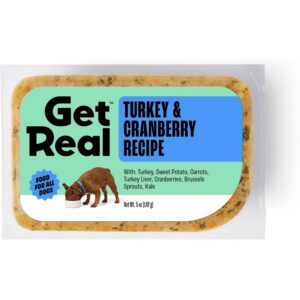
Get Real Turkey & Cranberry Recipe. For dogs that do better on poultry than red meat, a complete turkey recipe offers a different protein in the same gently cooked format.
When to choose beef as your dog’s main protein
Beef works well as a main protein for many dogs, but it is worth deciding deliberately rather than by default. Use this beef decision checklist to weigh fat tolerance, allergy history, and life stage before you commit.
Beef decision checklist
- Fat tolerance: Has your dog ever had pancreatitis or repeated upset after fatty food? If so, choose lean beef and a recipe with a moderate fat level, and involve your veterinarian.
- Allergy history: Has your dog eaten beef for years without itching or ear trouble? That is reassuring. A dog with a suspected beef allergy should avoid it until a veterinarian has worked through an elimination trial.
- Chicken sensitivity: If chicken is a confirmed trigger, beef is often a good replacement main protein, with your veterinarian’s agreement. Check every ingredient, since many beef foods, including all three Get Real recipes, also contain fish oil.
- Appetite: Picky eaters frequently prefer the aroma of beef, which can help when a dog is reluctant to eat.
- Life stage: Puppies, including large-breed puppies, need a recipe that meets AAFCO growth requirements, not just plain beef.
- Calories: Active dogs may welcome a richer recipe, while less active dogs need portions adjusted to stay lean.
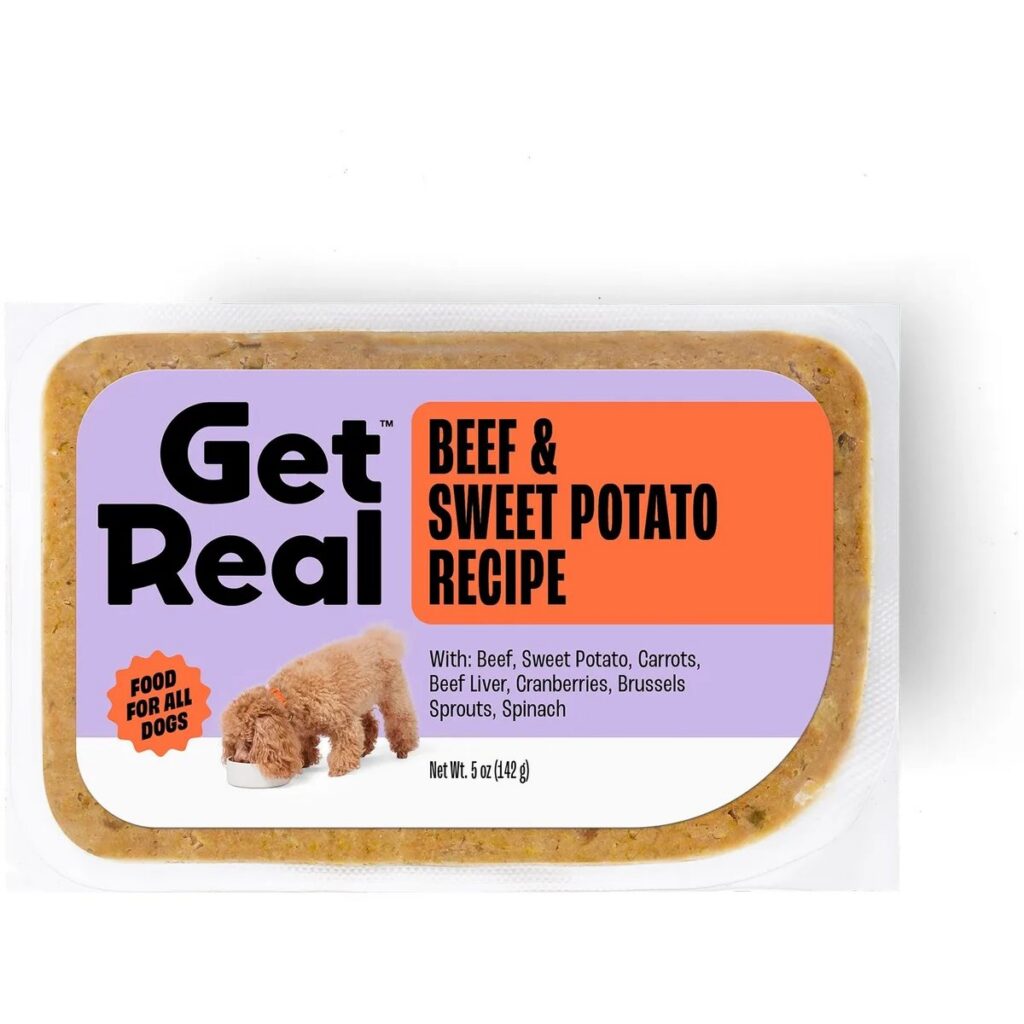
If your answers point toward beef, the Get Real Beef & Sweet Potato Recipe is one complete option to consider. Its guaranteed analysis lists 9 percent minimum protein and a 7 percent fat minimum, the lowest printed fat minimum of the three Get Real recipes, and Chewy’s product page lists 451 kilocalories per 12 oz pack. Its ingredients are beef, sweet potato, carrots, beef liver, cranberries, Brussels sprouts, and spinach, followed by oils, minerals, and vitamins. It is made with human-grade ingredients, gently cooked and then frozen, and formulated with certified pet nutritionists to meet AAFCO nutrient profiles for all life stages, including growth of large-size dogs.
Get Real can be served as a full meal, as a topper, or as a kibble mixer. For full meals, Get Real comes in 12 oz and 24 oz packs, while the pre-portioned 5 oz mixer pack is designed to be stirred into a dog’s existing food. You can review the Get Real Beef & Sweet Potato Recipe and set up a subscription you can change, pause, or cancel through Chewy, where it is available in select markets.
How to switch your dog to a beef-based fresh recipe
Changing a dog’s main protein too quickly is the most common reason a good food gets blamed for an upset stomach. A gradual transition gives the gut time to adapt. For most dogs, plan on 7 to 10 days. For dogs with sensitive stomachs, stretch it to 10 to 14 days.
A simple schedule looks like this:
- Days 1 to 3: about one quarter new food, three quarters current food.
- Days 4 to 6: about half and half.
- Days 7 to 9: about three quarters new food.
- Day 10 onward: the new food alone, if stools have stayed firm.
If you plan to use fresh beef as a topper rather than a full meal, the same principle applies: start with a small spoonful on the current food and increase gradually, trimming the base portion so total daily calories stay where your dog needs them. For full-meal subscriptions, Chewy ships the second Get Real order an extra week later to leave room for the transition.
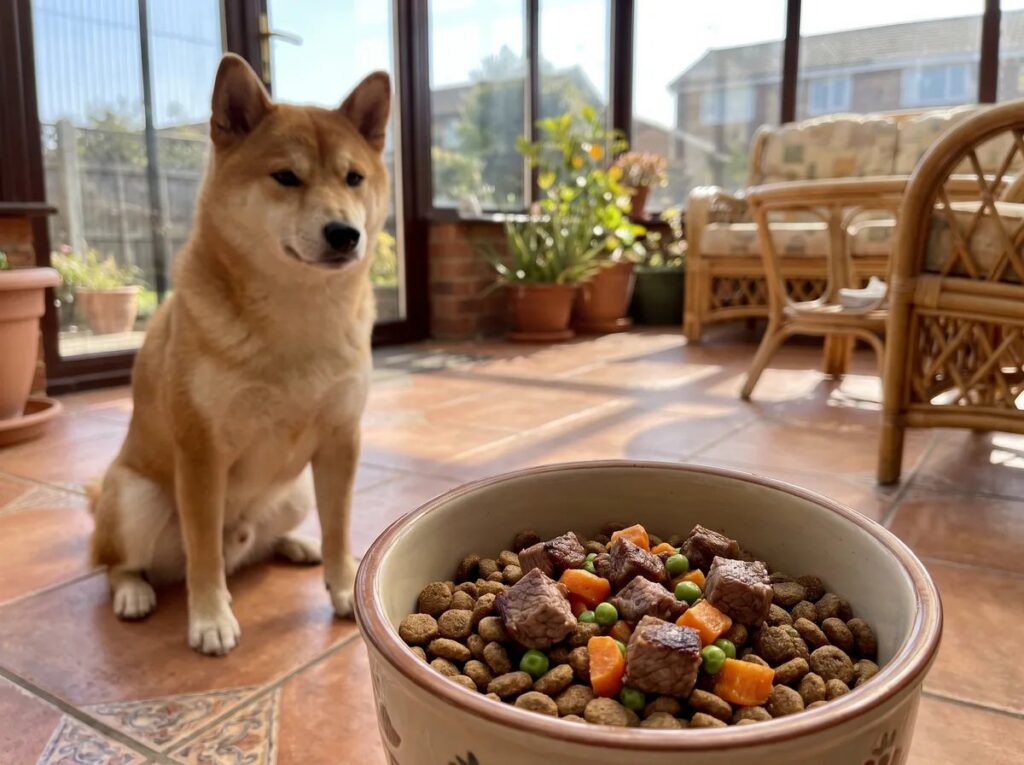
Fresh food needs a little planning. Keep packs frozen until you need them, then thaw them in the refrigerator for 12 to 24 hours for 5 oz and 12 oz packs, or 35 to 48 hours for 24 oz packs. Use thawed food within 3 to 5 days, and throw it out if it smells off or has sat at room temperature for more than 2 hours.
Watch your dog during the switch. A slightly softer stool for a day or two is common, but persistent diarrhea, vomiting, or new itching means you should slow down and check in with your veterinarian. If you are still deciding between proteins, our side-by-side guide to chicken vs beef vs turkey for dogs compares all three, and VetStreet’s overview of choosing the right food for your dog covers the basics of complete and balanced diets.
Related reading: Petful explains how the beef recipe pairs with sweet potato in its guide to feeding sweet potatoes to dogs, and WebVet covers the other common protein in Is Chicken Good for Dogs?.
Frequently Asked Questions
Frequently asked questions
Yes. Grass-fed beef is safe for dogs when it is cooked plain and lean, just like conventional beef. It tends to contain a little more omega-3 fat, but the omega-3 difference is small in absolute terms, so it is a personal preference rather than a nutritional necessity.
The meats most worth keeping out of the bowl are processed meats such as bacon, sausage, and deli meat, fatty trimmings and skin, and anything with cooked bones, which can splinter. Seasoned leftovers with onion or garlic also belong on the avoid list. Plain, lean, cooked beef, chicken, and turkey are the safer choices.
Most dogs are strongly drawn to meat aroma, and beef is a favorite for many picky eaters. As an extra on top of a complete diet, keep cooked lean beef within about 10 percent of your dog’s daily calories, which works out to a few tablespoons for a medium-size dog. If you want to serve more, reduce the main food to keep total calories steady, or switch to a complete beef recipe so the bowl stays balanced.
Beef jerky made for people is not a good choice, because it is usually high in sodium and seasoning and may contain garlic or onion powder. If you want a beef treat, choose pet-specific treats or small pieces of plain cooked beef instead.
Plain, low sodium beef broth can make a meal more appealing, but many store-bought broths contain onion and garlic, which are toxic to dogs, along with added salt. Check the label carefully, or make a plain broth at home with no seasonings.