Dog Won’t Eat Dry Food? Why It Happens and What to Try Next
Published on November 03, 2026
If your dog won’t eat dry food, start by checking for illness signs, then work through the simple fixes in order: fresher kibble, a little warm water, a set meal routine, and, if needed, a small fresh topper. Most dogs that refuse kibble are healthy and a bit picky, but a few have pain, nausea, or another medical problem, and those dogs need a veterinarian rather than a new bowl of food.
This guide helps owners tell the two apart. It starts with a quick triage, explains when a dog that is not eating needs to be seen, covers the common reasons dogs turn up their noses at kibble, and then walks through fixes that work, from texture and freshness to routine and fresh food toppers.
This article is sponsored by Get Real, Chewy’s gently cooked fresh dog food line. Vetstreet may earn a commission if you purchase through links in this article.
Key Takeaways
- Use three triage questions first: how long has it been, what else is your dog eating, and are there any illness signs.
- A dog that has eaten nothing for more than 24 hours, or that is vomiting, lethargic, or not drinking, should see a veterinarian.
- A dog that eats treats and table food but not kibble is usually showing learned pickiness, not illness.
- Try the fixes in order: fresher kibble, warm water, scheduled meals with fewer treats, then a small fresh topper.
- If kibble keeps failing, switch to a different complete and balanced food gradually over 7 to 10 days.
Dog won’t eat dry food? Start here
When a dog won’t eat, the first job is to decide whether you are dealing with a health problem or a preference. Three triage questions sort most cases quickly:
- How long has it been? A healthy adult dog that skips one meal is rarely a concern, but no food for more than 24 hours is a reason to call your veterinarian, and puppies and seniors need attention sooner.
- What else is your dog eating? A dog that refuses kibble but happily eats treats, chicken, or table scraps has an appetite; a dog that won’t eat anything at all may be unwell.
- Are there any illness signs? Vomiting, diarrhea, a stomach making loud noises, lethargy, drooling, pawing at the mouth, weight loss, or not drinking all point toward a medical cause.
If your answers point to illness, skip the food fixes and call your veterinarian. If your dog is bright, drinking, and eating other things, you are most likely looking at kibble refusal, and the fixes in order below usually help within a week or two.
A short food diary makes the fixes easier to judge: note what the dog was offered, what it ate, and when, and patterns usually show up within a few days.
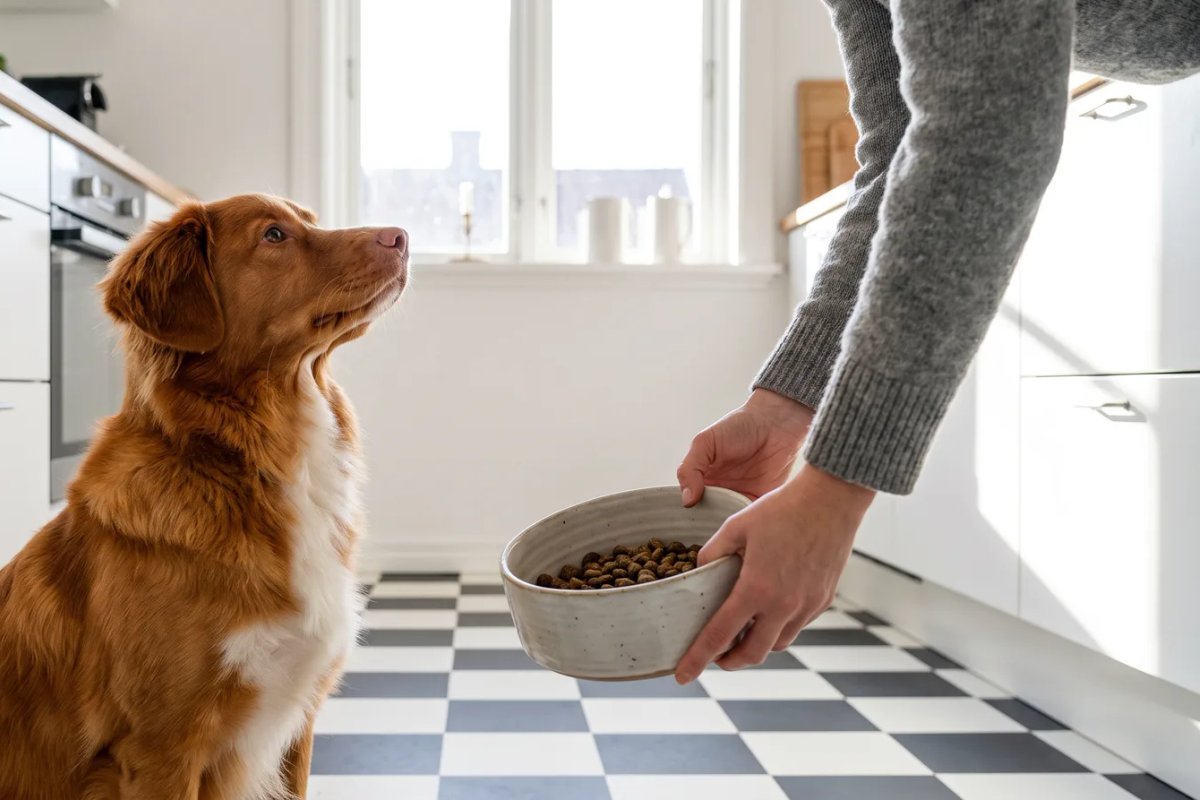
Start with the free, simple changes, such as a fresh bag of kibble and a set mealtime, before adding anything new to the bowl. If those steps do not restore interest, a spoonful of fresh food stirred into the kibble is the next step, and the Get Real Chicken & Brussels Sprouts Recipe is a mild, familiar protein many dogs accept readily as a topper once you have ruled out a health problem.
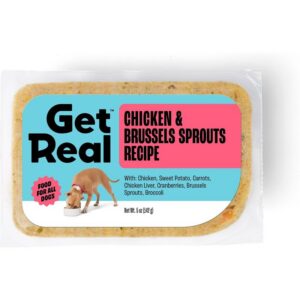
Get Real Chicken & Brussels Sprouts Recipe. A spoonful of gently cooked chicken and Brussels sprouts stirred into kibble is an easy, familiar first topper for a healthy dog that has gone off dry food.
When a dog that won’t eat its kibble is otherwise bright, the reason is usually one of these:
- Skips breakfast but eats dinner: many dogs simply are not hungry in the morning, and this is often normal as long as the dog eats well once a day and holds its weight.
- Won’t eat unless you watch him or hand feed: this is usually a learned habit or mild anxiety, and it fades when meals become calm and predictable.
- A new dog or rescue dog won’t eat after moving: stress commonly dulls appetite for a few days in a new home; offer quiet meals and call your veterinarian if the dog has not eaten within 24 hours.
- Won’t eat dog food but begs for human food: table scraps teach a dog to wait for something better, so they need to stop for the fixes to work.
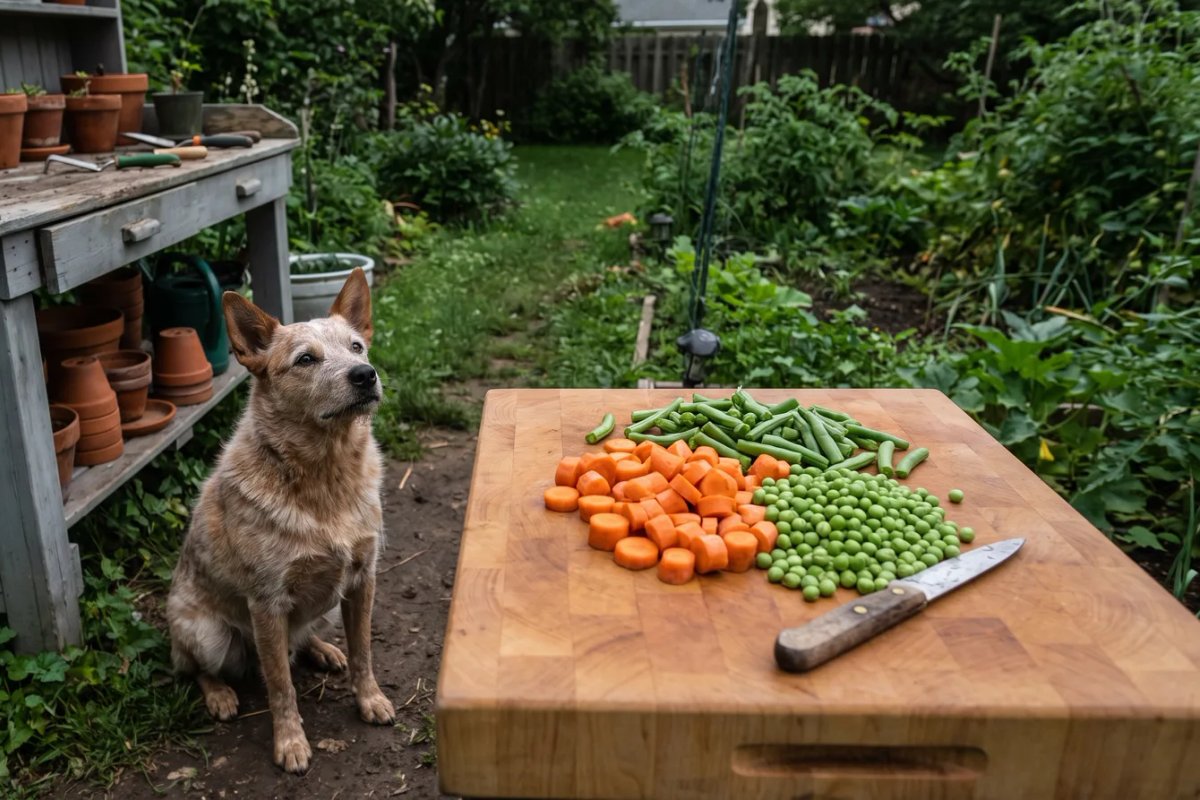
For the healthy dog that only wants human food, a better-smelling complete food can bridge the gap without teaching table-scrap habits. Rotating among proteins shows you what your dog prefers before you buy more of one, and the Get Real Sampler Pack puts several recipes in front of a picky dog at once.
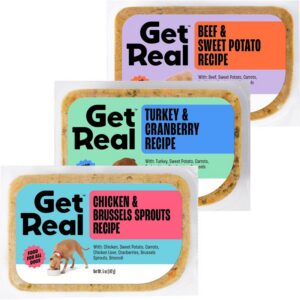
Get Real Sampler Pack, Beef, Chicken & Turkey Gently Cooked Fresh Dog Food, 6 pack bundle (2 of each recipe). Let a picky dog try more than one Get Real recipe before you commit, so you learn which protein it actually prefers.
A few more patterns are worth knowing:
- The dog won’t eat when the owner is away: some dogs eat only with company, which is behavioral as long as they eat normally when you return.
- The dog won’t eat new food: sudden food changes are often refused; mixing gradually helps.
- The dog won’t eat pills or medicine: hide a pill in a small piece of food or ask your veterinarian about other forms, and never stop a prescribed medication because the dog refuses it.
Health check first: when not eating needs a vet
Sudden refusal in a dog that used to eat well is the pattern most likely to have a medical cause, so it deserves a closer look than a dog that has always been fussy. Dental disease, a broken tooth, mouth sores, nausea, stomach upset, pain elsewhere in the body, fever, and many internal illnesses can all reduce appetite, and dry kibble is often the first food a sore mouth rejects. Trembling can signal pain or nausea, a pregnant dog’s intake affects her litter, and a dog with a diagnosed illness may need a specific diet, so in each of these cases the plan should come from your veterinarian rather than a menu change.
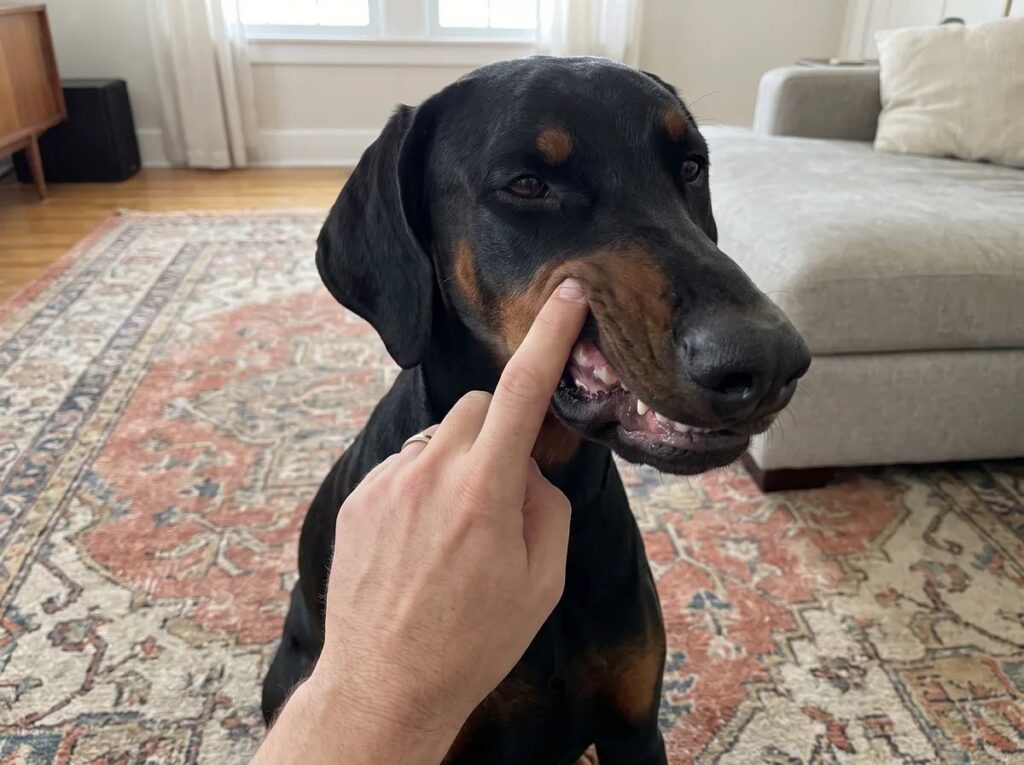
A quick home check can help you describe the problem to your veterinarian:
- Lift the lips and look at the gums and teeth for redness, swelling, broken teeth, heavy tartar, or bleeding.
- Notice whether your dog approaches the bowl, picks up kibble, and drops it, which suggests mouth pain.
- Watch for lip licking, drooling, swallowing hard, or eating grass, which can signal nausea.
- Check that your dog is drinking normally and producing normal urine and stool.
- Weigh your dog if you can, because unexplained weight loss in dogs always needs a veterinary exam.
A dog that is not eating but drinking water may have nausea, mouth pain, or an illness, so the water alone is not reassurance. For a dog that seems lethargic but is still eating and drinking, the lethargy itself is the concern, so book a visit even if the appetite seems fine. The Vetstreet guide to unexplained weight loss in dogs explains why weight changes deserve a workup.
Call your veterinarian today if your dog has had no food for 24 hours, is vomiting or has diarrhea, is lethargic, is not drinking, has a swollen belly, or is a puppy, senior, or toy breed that has skipped even one or two meals.
Water matters as much as food. A dog that will not eat or drink and lies around listlessly needs to be seen today. Make sure fresh water is always available indoors and out. A dog that stops drinking, or drinks far more than usual, needs a veterinary visit.
Common reasons dogs refuse kibble
Why does my dog refuse to eat their kibble but eat everything else? In most healthy dogs, the answer is too many treats or table scraps and the learned pickiness that follows: the dog has learned that holding out brings something tastier. That dog has an appetite, just not for what is in the bowl.
If the same dog accepts soft food but drops kibble, chews on one side, or paws at the mouth, chewing may hurt, and the health check above comes first. When the cause is behavior, the fixes below work best when you change one thing at a time, so you know which change helped.
These are the usual reasons:
- Too many treats, chews, or table scraps fill the dog up before mealtime.
- Free feeding, leaving the bowl out all day, removes the hunger that drives a dog to eat at mealtime.
- Stale kibble or a bag stored open loses aroma, and the fats can turn rancid over time.
- A recent food change, a new bowl, or a new feeding spot can put a sensitive dog off.
- Stress from a move, a new pet, visitors, or changes in the household routine can dull appetite.
- Dental pain or a sore mouth can make crunchy food uncomfortable, even when soft food is still accepted.
- Hot weather and lower activity naturally reduce how much some dogs want to eat.
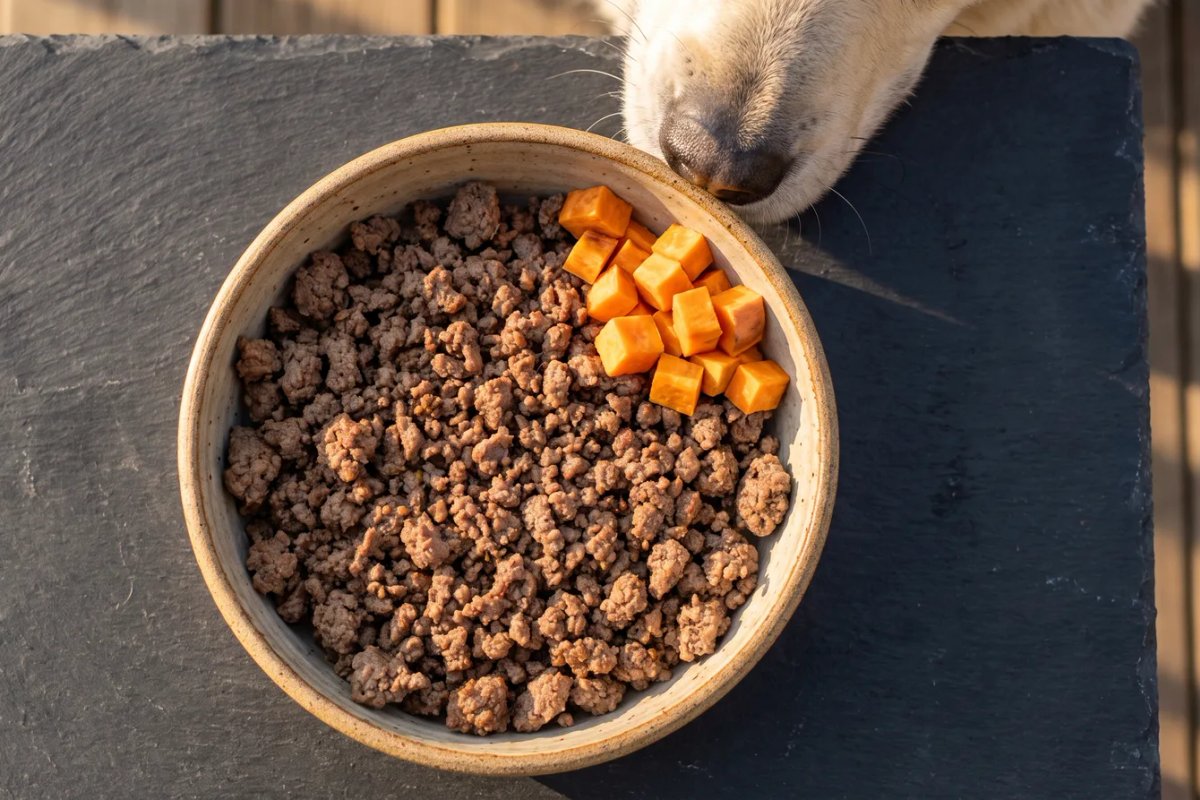
Once treats are cut back, a richer-smelling complete food can help a healthy dog that has simply tired of plain kibble, and the Get Real Beef & Sweet Potato Recipe leads with beef, sweet potato, carrots, and beef liver.
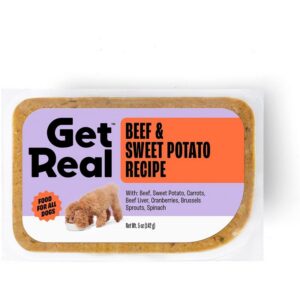
Get Real Beef & Sweet Potato Recipe. Beef, sweet potato, carrots, and beef liver lead the ingredient list, a rich-smelling option for healthy dogs that have tired of plain kibble.
Picky eating versus a real appetite problem
The clearest way to separate a picky eater from a dog with a medical appetite problem is a time threshold combined with what else the dog will eat. A picky dog skips kibble but eats treats, stays bright and active, and usually eats within a day when the routine tightens. A dog with a real appetite problem refuses most foods, or goes more than 24 hours without eating, and often shows other illness signs.
This comparison helps:
- Picky eating: refuses kibble, eats treats or people food, normal energy, normal stools and drinking, steady weight.
- Real appetite problem: refuses treats too, low energy, vomiting or diarrhea, weight loss, or no food for more than 24 hours.
- Puppies, seniors, and toy breeds: treat any refusal of more than one or two meals as a possible appetite problem until a veterinarian says otherwise.
If your dog fits the picky profile, the next decision is food choice. Foods sold for picky eaters usually lean on aroma and texture. Before you buy a new bag, it is worth trying the fixes below with the food you already have, because many picky dogs return to the same kibble once treats drop and meals get a schedule.
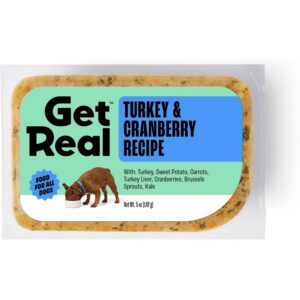
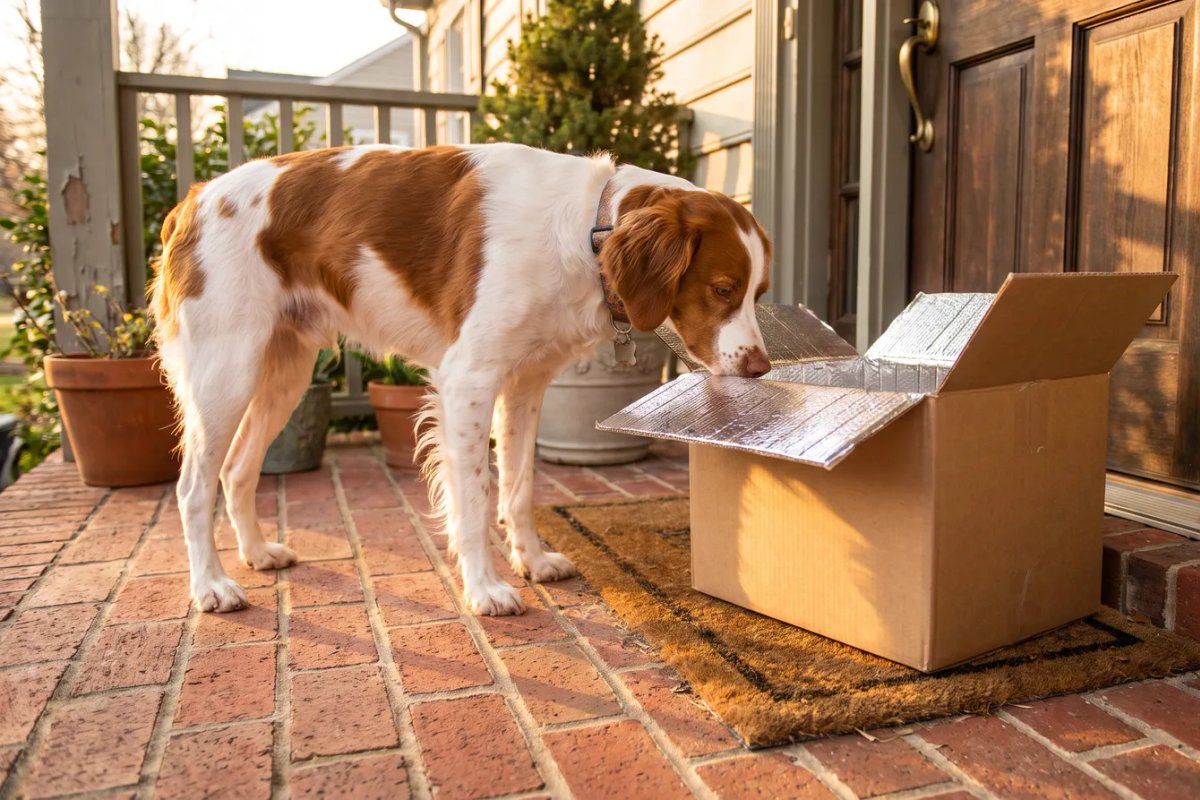
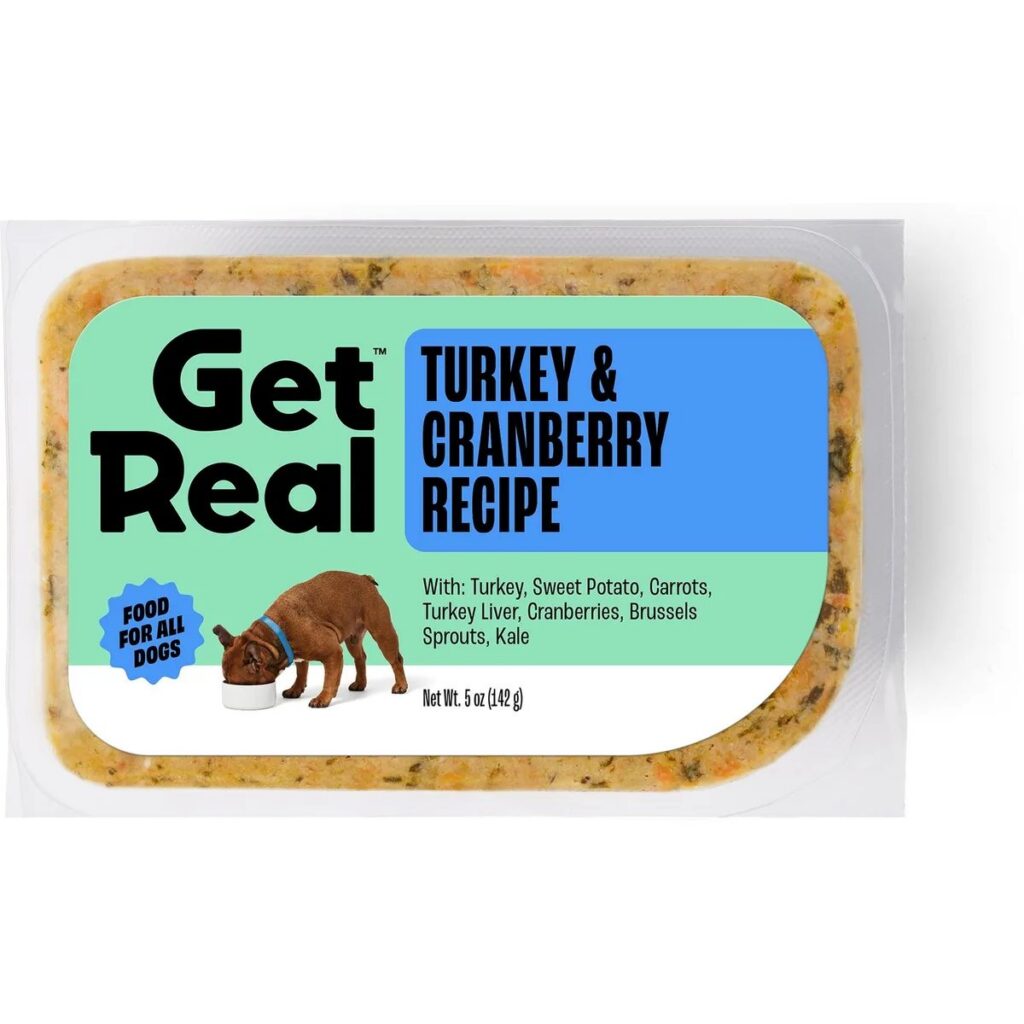
Get Real Turkey & Cranberry Recipe. Turkey and cranberry adds a different protein to the rotation, and its calorie density means a small spoonful is enough on top of kibble.
The picky profile also tells you what not to do. Offering a new food every time the bowl is ignored teaches a dog that refusal works. Settle on one plan, give it a week, and judge the result by how your dog eats across the whole week rather than at a single meal.
Texture, warmth, and freshness fixes to try
To get your dog to eat their dry food again, try these fixes in this order:
- Open a fresh bag of kibble and store it sealed in its original bag inside an airtight container.
- Add a few tablespoons of warm water to the kibble and let it sit for a few minutes to soften and release aroma.
- Offer meals at set times and pick the bowl up after 15 to 20 minutes.
- Cut treats back so your dog arrives at mealtime hungry.
- Stir in a small spoonful of a complete fresh food if the first four steps are not enough.
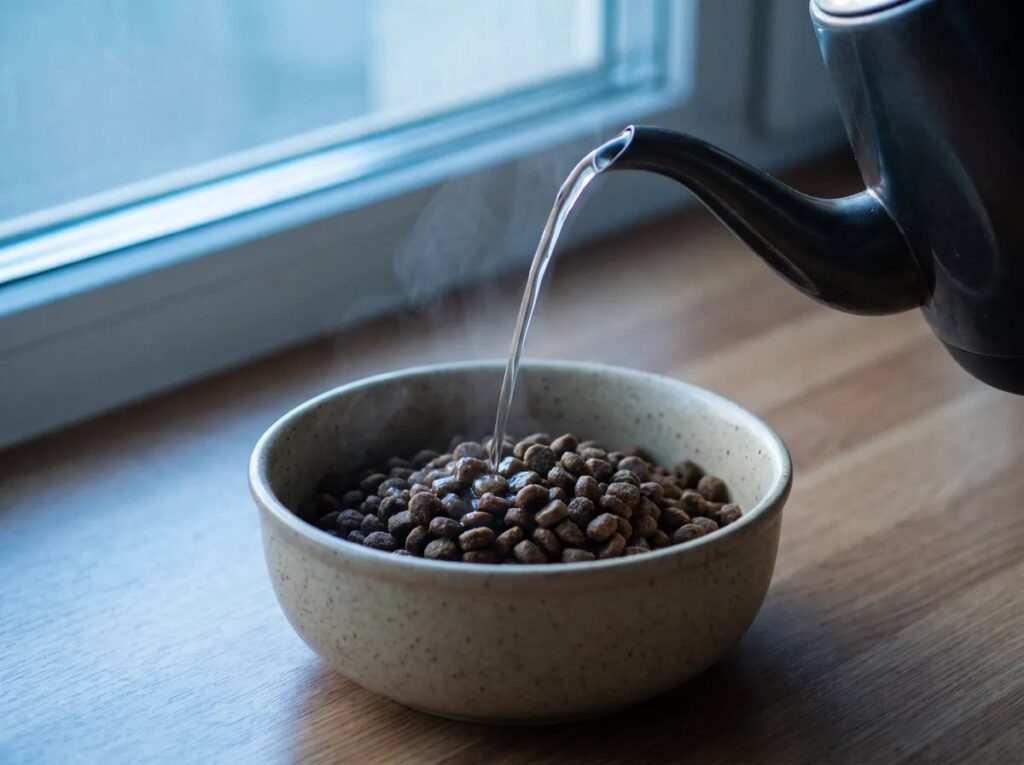
Warm water is the simplest texture fix. It softens kibble for a sore mouth and brings out the smell, which matters to dogs far more than appearance. Use water that is warm, not hot, and pick up any softened food that is not eaten, because moistened kibble should not sit out for hours.
Freshness is easy to overlook. Kibble begins to lose aroma once the bag is opened, and fats can go rancid if the bag is stored open, in heat, or in a container that is not cleaned between bags. A fresh bag stored sealed, used within a few weeks of opening, often solves the problem on its own. Give each fix the trial period below before moving to the next.
| Fix | What it addresses | How long to try |
|---|---|---|
| Fresh bag stored sealed | Stale or rancid kibble | Start today |
| Warm water on kibble | Low aroma or a sore mouth | 3 to 5 days |
| Scheduled meals, 15 to 20 minutes | Free feeding and grazing | 1 to 2 weeks |
| Fewer treats and no table scraps | Learned pickiness | 1 to 2 weeks |
| Small fresh topper | Low interest in a healthy dog | 1 to 2 weeks |
Using a fresh topper to restart interest in the bowl
For a healthy dog that still ignores kibble after the simpler fixes, a small fresh topper is often the most reliable next step. What that dog usually needs is more aroma and moisture while the diet stays balanced. A spoonful of complete, gently cooked fresh food stirred into kibble does both.
Get Real works well for this. Its recipes are gently cooked then frozen, made with human-grade ingredients and 10 ingredients or less plus vitamins and minerals, and meet AAFCO nutrient profiles for all life stages. Chewy sells pre-portioned 5 oz mixer packs designed for topping or mixing into kibble, and you can also use a spoonful from a 12 oz or 24 oz pack of any recipe. A topper is a way to restore interest in a balanced bowl, not a treatment for a medical appetite problem.
A fresh topper needs the same storage-safe portioning and thaw rules as a full meal, so give it the same care:
- Thaw packs in the refrigerator, not on the counter: 12 to 24 hours for 5 oz and 12 oz packs, and 35 to 48 hours for 24 oz packs.
- Portion one thawed pack over several meals, starting with a small spoonful stirred into the kibble.
- Keep the opened pack sealed in the fridge and use thawed food within 3 to 5 days.
- Never leave topped food out; discard anything that has sat for more than 2 hours at room temperature.
- Reduce the kibble slightly as you add the topper so daily calories stay steady.
Turkey is another option worth rotating in. Dogs that have tired of chicken and beef sometimes take to it, and the Get Real Turkey & Cranberry Recipe is the most calorie dense of the three, so a little goes a long way on top of kibble.
Start small and stir it in thoroughly, so your dog cannot pick out only the topper. If you are weighing whether fresh food should stay a topper or become the full meal, the Vetstreet guide to dog food topper vs full meal walks through that decision.
Mealtime routine changes that help
Routine is often the missing piece. Dogs that graze all day rarely show much interest at mealtime, while dogs fed on a schedule learn to eat when food appears. These changes help most picky dogs:
- Feed at the same times every day, usually twice a day for adult dogs.
- Put the bowl down for 15 to 20 minutes, then pick it up until the next meal, without offering anything else in between.
- Feed in a quiet spot, away from other pets that might crowd or steal food.
- Keep treats to about 10 percent of daily calories, and skip table scraps entirely during the reset.
- Add a walk or play session before mealtime, with time to settle before the food goes down.
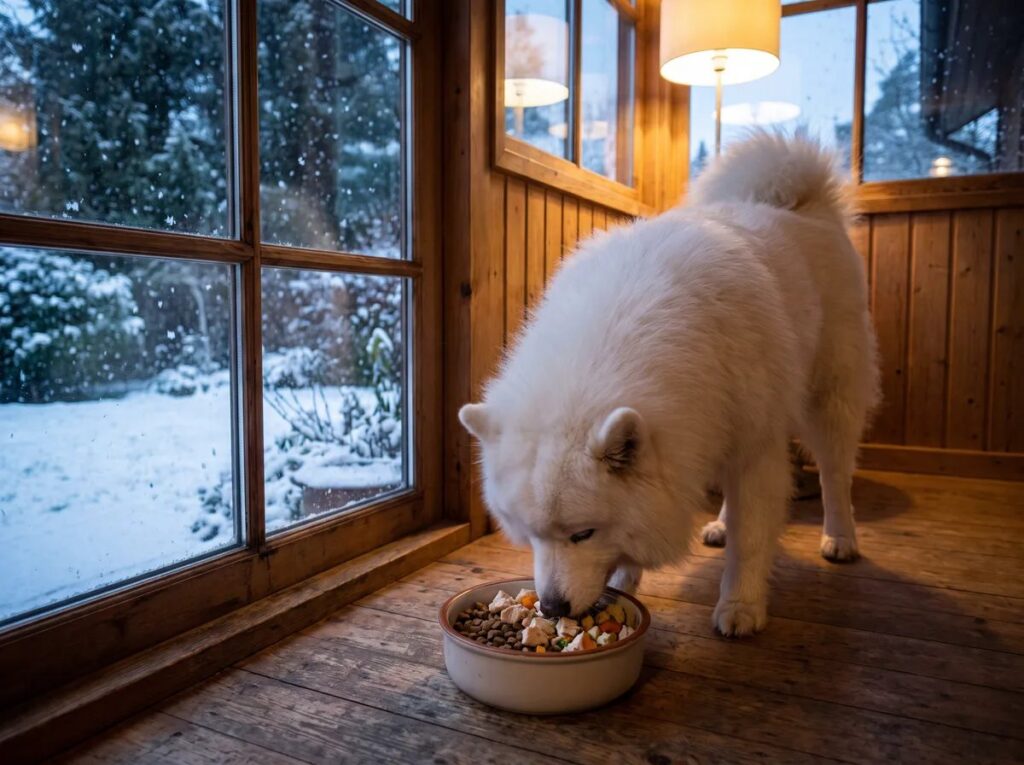
Stay calm and consistent. Hovering, coaxing, or hand feeding can turn mealtime into a negotiation. Most healthy dogs settle into a scheduled routine within a week, and many start eating dry food again once they learn that meals come at set times and nothing better follows a refusal.
Consistency includes the whole household. If one person offers scraps from the table, the routine falls apart, so agree on the plan before you start and keep a simple log of what your dog eats at each meal for the first week.
Switching to fresh food when kibble keeps failing
Sometimes a dog that is healthy still does not take to a particular kibble, even after the fixes above. In that case, a full switch to a different complete and balanced food is reasonable. Make the change gradually, mixing increasing amounts of the new food into the old over 7 to 10 days, or 10 to 14 days for dogs with sensitive stomachs.
If fresh food is the new direction, Get Real can be fed as the full meal using 12 oz or 24 oz packs, with the online plan setting portions by your dog’s weight, breed, age, and activity level. Subscriptions can be changed, paused, or canceled, and Get Real is sold only at Chewy in select markets. For guidance on choosing a replacement, see the Vetstreet primer on choosing the right food for your dog, and for the halfway option, Petful’s guide to mixing fresh dog food with kibble explains how to blend the two.
Whatever food you choose, judge it over a few weeks: steady appetite, good energy, firm stools, and a stable weight. If your dog’s appetite drops again, especially with any illness signs, go back to the health check before changing foods again.
- Related reading: WebVet lists the signs a dog food is right for your dog once the switch is made.
Dog won’t eat dry food: frequently asked questions
Frequently asked questions
A healthy adult dog can skip a meal without harm, but more than 24 hours without food is a reason to call your veterinarian. Puppies, seniors, and toy breeds need attention after one or two missed meals, and any dog that also has vomiting, diarrhea, or lethargy should be seen right away.
Yes, stress and appetite are closely linked in dogs. Moving, a new pet or baby, boarding, visitors, and other household routine changes can cause a dog to eat less for a day or two; keep meals quiet and predictable, and call your veterinarian if the appetite has not returned within about 24 hours.
A healthy adult dog will usually eat once it is hungry enough, so short food strikes over a disliked food are common and rarely dangerous. Still, do not wait days to see who gives in: a dog that eats nothing for more than 24 hours needs a veterinary check, and puppies and small dogs need help sooner.
Yes, a dog can thrive on dry food alone when the kibble is complete and balanced for its life stage, with an AAFCO statement on the label. An optional topper can add interest and moisture, but it is not required for good nutrition.
A dog that is not eating or drinking and lies around listlessly may be seriously ill, with causes ranging from severe nausea and pain to infection, poisoning, or organ disease. This calls for an emergency veterinarian visit today, not a food change, because dehydration and the underlying illness can worsen quickly.